
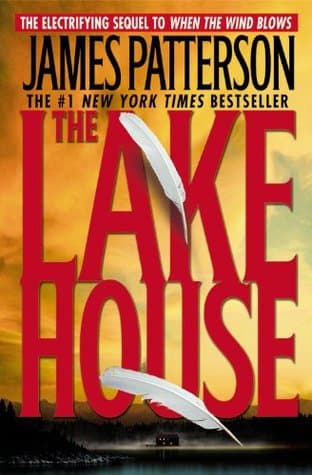
Synopsis
Covers the whole plot, including the ending.
- Difficulty
- Easy
- Pacing
- Fast
- Mood
- Suspenseful, Action-packed, Mysterious, Hopeful, Tense
- Read it if
- You enjoy fast-paced thrillers with a blend of sci-fi, mystery, and a touch of fantasy, featuring extraordinary children with special abilities.
- Skip it if
- You prefer realistic thrillers without any fantastical elements or government conspiracy plots involving genetic experimentation.
The Lake House Plot Summary
Covers the whole plot, including the ending.
The Aftermath and the Call
After escaping the 'School' and the death of Dr. Ethan Kane, Frannie O'Neill and Kit Harrison try to build a quiet life in Colorado, raising six genetically engineered, winged children: Max, Matthew, Peter, Wendy, Olivia, and Pierce. Frannie works as a veterinarian, and Kit, still suspended from the FBI, struggles with normal life. Their fragile peace ends when Dr. Michael Sullivan, a former colleague of Kane and a scientist who seems to care, contacts them. He warns them that the government agency that created the children, 'The Project,' is still hunting them, led by the ruthless Director. Sullivan urges them to move the children to a new, safer place he calls 'The Lake House,' promising it will be a true sanctuary.
Journey to The Lake House
Trusting Dr. Sullivan, Frannie and Kit pack their lives and prepare the children for another move. The journey is full of tension and fear, as they constantly worry about being found. The children, especially Max, use their senses and flying abilities to scout ahead and stay alert. They travel across state lines, avoiding major roads and relying on Kit's skills and Frannie's quick thinking. The children's unique features, like their growing wings, make blending in impossible, forcing them to stay hidden. They eventually reach a remote, private property in the Pacific Northwest, by a large, clean lake – The Lake House, which seems like a perfect and safe haven.
Life at The Lake House
At The Lake House, the children initially find peace and freedom. The isolated spot lets them practice flying openly, making their wings stronger and improving their abilities. Max, the oldest, leads her siblings, guiding them and keeping them safe. Frannie and Kit focus on their education and well-being, trying to create a normal childhood despite their unusual situation. Dr. Sullivan provides supplies and checks in regularly, making them believe in his good intentions. The children bond deeply, forming a strong group, and Frannie and Kit grow closer, becoming true parents.
Suspicion and Surveillance
Despite The Lake House's apparent security, Kit's FBI training makes him suspicious. He notices small oddities: disturbed plants, faint signals on their devices, and a supply flow that seems too convenient. His unease grows, and he starts looking for proof of surveillance. He finds hidden cameras and listening devices cleverly placed around the property, confirming his fears. The Project found them, or perhaps, they were led there. This discovery breaks the fragile peace and forces Frannie and Kit to face the terrifying truth that their sanctuary is compromised, and Dr. Sullivan's role becomes more doubtful.
The Betrayal of Dr. Sullivan
The discovery of surveillance leads to a confrontation with Dr. Michael Sullivan. Cornered by Kit, Sullivan confesses his true loyalty: he has been working for The Project all along. He reveals that The Lake House was not a sanctuary but a trap, a controlled place for more observation and study of the children. His caring manner was a careful lie. Sullivan explains that the Director, still wanting to use the children's powers for military uses, arranged their move to this isolated facility for more invasive experiments. This betrayal deeply hurts Frannie and Kit, who had trusted him with the children's lives.
The Infiltration and Escape Attempt
The Project's forces, led by armed agents, attack The Lake House. The agents, with advanced weapons and surveillance, quickly take over the property. Frannie and Kit, expecting the attack due to Kit's earlier discoveries, start their escape plan. The children, using their flying abilities, are key to their survival. Max leads her siblings in an attempt to create a distraction and draw the agents away. A chaotic chase follows through the forest, with gunfire and explosions. Frannie and Kit fight hard to protect the children, but the number of agents makes a direct fight impossible, forcing them to retreat.
The Capture of Frannie and Kit
During the escape, Frannie and Kit make a sacrifice for the children's safety. They create a diversion, drawing the Project agents' attention away from the children's escape route. In the struggle, Frannie is wounded, and both she and Kit are captured. The children, seeing their guardians captured, must continue their flight alone, a heartbreaking and scary moment for them. Max, now solely responsible for her siblings, must guide them through the wilderness, relying on their abilities and bond to survive. Frannie and Kit are taken to a secret facility for questioning, leaving the children vulnerable and hunted.
The Children Alone
Without Frannie and Kit, the six children – Max, Matthew, Peter, Wendy, Olivia, and Pierce – must rely on themselves. Max, with her strong leadership, guides her younger siblings through the dense forests and mountains. They use their flying abilities to cross difficult land and avoid Project search parties. Hunger, fear, and exposure are constant. They learn to hunt, find shelter, and work together, their bond growing stronger under pressure. The experience forces them to grow up fast, understanding how serious their situation is and the need to stay hidden. They are determined to find their guardians and expose The Project.
Max's Plan and the Search for Allies
Knowing they cannot survive alone forever, Max, with her siblings' help, plans a daring move. She realizes they need outside help but cannot trust just anyone. Using her senses and intelligence, Max tries to contact people who might sympathize with them, perhaps former colleagues of Dr. Kane or even unhappy members of The Project. She and the older children undertake scouting missions, flying silently over towns and watching, trying to find potential allies while staying hidden from The Project's relentless pursuit. Their goal is not just rescue, but to reveal the truth about their existence.
Frannie and Kit's Interrogation
Meanwhile, Frannie and Kit endure harsh questioning at The Project's secret facility. The Director, a cold and calculating person, tries to get information about the children's abilities, their location, and their weaknesses. He uses psychological tactics and threats, especially against Frannie, knowing her strong bond with the children. Kit, using his FBI training, resists and tries to learn about The Project's operations. Despite the pressure and physical pain, both Frannie and Kit remain firm, refusing to betray the children. Their resolve strengthens their determination to escape and ensure the children's safety, even if it means their own death.
The Children's Rescue Mission
After Max's scouting and unexpected information reveal the Project facility's location, the children start a dangerous rescue mission. Using their combined flying abilities, stealth, and natural understanding of each other, they enter the highly secured compound. Max shows bravery and strategic thinking, guiding her siblings through ventilation shafts and security systems. They meet Project guards and use their speed and agility to avoid or stop them. Their main goal is to find and free Frannie and Kit. The children's unique powers, once a source of fear, now become their greatest strength in this daring operation.
Confrontation with the Director
The rescue ends in a direct confrontation with the Director inside the facility. Frannie and Kit, freed by the children, join the fight. The children use their flying abilities and enhanced senses to confuse and overpower the Director's remaining guards. Max, showing her growing leadership, directly challenges the Director, exposing his cruel experiments and inhumane treatment. Evidence of The Project's crimes, including detailed files and experimental data, is secured. The confrontation is a moral battle, with the children representing hope and freedom against the Director's scientific arrogance and ruthless ambition. The truth about their existence begins to emerge.
Exposing The Project
With the Director and key Project staff caught, Frannie and Kit, with the children's help, gather clear evidence of The Project's illegal genetic engineering and human rights abuses. Kit uses his FBI connections and the evidence to expose the conspiracy to top government officials and the media. The existence of the winged children and the unethical science behind them becomes a global scandal. While the immediate threat from The Project is gone, the challenge of fitting the children into a world unprepared for them remains. The truth is out, but the world's reaction is uncertain.
A New Beginning, A New Threat
Afterward, Frannie and Kit find a new, truly safe and private home for the children, away from prying eyes. The children, now recognized for their unique existence, begin to adapt to a life of protected freedom. However, exposing The Project also means the world knows they exist, leading to both curiosity and fear. Scientists, governments, and ordinary people react with awe, suspicion, and a desire to understand or control them. While they have found temporary peace, the novel ends with the understanding that their fight for acceptance and true safety is not over, hinting at future challenges and the ongoing effects of their extraordinary nature.
The Lake House Characters
Frannie O'Neill
Protagonist
A compassionate veterinarian who becomes a fierce protector and surrogate mother to the winged children.
Frannie is a kind-hearted and intelligent veterinarian from Colorado. Initially a reluctant participant in the children's protection, she quickly develops a deep maternal bond with them, particularly Max. She is driven by an unwavering sense of morality and a fierce desire to protect the innocent. Her compassion and nurturing instincts provide emotional stability for the children, complementing Kit's more pragmatic and tactical approach. She struggles with the constant danger but finds strength in her love for the children.
Relationships: Kit Harrison (Romantic partner and co-guardian); Max (Surrogate mother-daughter bond); The winged children (Surrogate mother figure)
Kit Harrison
Protagonist
A suspended FBI agent whose skills are crucial in protecting the children from 'The Project'.
Kit is a resourceful and experienced FBI agent, currently under suspension, whose tactical training and investigative instincts are invaluable. He is pragmatic, cautious, and often cynical, but deeply committed to Frannie and the children's safety. He struggles with the extraordinary circumstances of the children's existence, but his loyalty is unwavering. His past experiences with government conspiracies make him inherently distrustful of authority, a trait that proves vital in navigating the threats posed by 'The Project'.
Relationships: Frannie O'Neill (Romantic partner and co-guardian); Max (Protective guardian figure); The winged children (Guardian figure)
Max
Supporting/Protagonist
The eldest of the winged children, a natural leader with exceptional intelligence and flying abilities.
Max is a twelve-year-old girl, the de facto leader and most developed of the winged children. She possesses extraordinary intelligence, courage, and a strong protective instinct for her younger siblings. Her flying abilities are the most refined, and she often takes the lead in scouting, strategizing, and defending the group. She is intensely loyal to Frannie and Kit, viewing them as her true parents. Max carries the heavy burden of responsibility for her siblings' safety and well-being, often making difficult decisions.
Relationships: Frannie O'Neill (Surrogate daughter-mother bond); Kit Harrison (Protective bond); Matthew, Peter, Wendy, Olivia, Pierce (Older sister and leader)
Dr. Michael Sullivan
Antagonist (initially Supporting)
A seemingly sympathetic scientist who betrays Frannie and Kit, leading them into a trap.
Dr. Sullivan initially presents himself as a benevolent former colleague of Dr. Kane, offering help and guidance to Frannie and Kit. He appears trustworthy and concerned for the children's welfare, providing them with the location of 'The Lake House' as a sanctuary. However, he is revealed to be a double agent, working for 'The Project' all along. His role is to lure the children into a controlled environment for further study. He is intelligent and manipulative, using a facade of kindness to achieve his sinister goals.
Relationships: Frannie O'Neill (Deceptive informant); Kit Harrison (Deceptive informant); The Director (Subordinate)
The Director
Antagonist
The ruthless, shadowy head of 'The Project', obsessed with controlling the winged children.
The Director is the primary antagonist, a cold, calculating, and powerful figure who leads 'The Project,' the clandestine government agency responsible for the children's creation. He is driven by an unyielding desire to harness the children's unique genetic abilities for military and scientific applications, showing no regard for their humanity or well-being. He employs ruthless tactics, advanced technology, and a network of operatives to track and capture the children. His motivations are rooted in a dangerous blend of scientific ambition and national security interests.
Relationships: Dr. Michael Sullivan (Superior, manipulative); The winged children (Obsessed captor)
Matthew
Supporting
One of the younger winged children, observant and often a source of quiet strength.
Matthew is one of the six genetically engineered children, slightly younger than Max. He is often depicted as observant and thoughtful, sometimes quiet, but possesses a strong sense of loyalty to his siblings and guardians. His flying abilities are developing, and he contributes to the group's survival through his keen awareness of their surroundings. He looks up to Max and relies on her leadership, but also demonstrates moments of individual bravery.
Relationships: Max (Younger brother, follower); The winged children (Sibling bond)
Peter
Supporting
Another of the winged children, often characterized by his adventurous spirit.
Peter is one of the winged children, known for his more adventurous and sometimes impulsive nature. He is eager to use his flying abilities and is often involved in the children's explorations and diversions. While he can be a handful, his energy and zest for life are a source of light for the group. He relies on Max's guidance but also contributes with his quick thinking and willingness to take risks when necessary.
Relationships: Max (Younger brother, follower); The winged children (Sibling bond)
Wendy, Olivia, and Pierce
Supporting
The youngest of the winged children, whose vulnerability underscores the stakes of their struggle.
Wendy, Olivia, and Pierce are the youngest of the six winged children. Their presence highlights the innocence and vulnerability that Frannie and Kit are fighting to protect. While their individual personalities are less developed than Max's, they collectively represent the hope and future that 'The Project' seeks to exploit. Their fear and dependence on their older siblings and guardians emphasize the gravity of their situation and the cruelty of their creators. They contribute to the group's morale and inspire their protectors.
Relationships: Max (Younger siblings, protected); Frannie O'Neill (Surrogate children); Kit Harrison (Protected children)
The Lake House Themes
The Definition of Family
This theme shows how family forms through love, loyalty, and shared experience, not just blood. Frannie and Kit, through their commitment to the children, become their true parents, despite no biological tie. The children, genetically engineered and without traditional parents, form a strong family bond among themselves, with Max acting as a mother figure. Their shared fight against 'The Project' confirms their identity as a family, showing that love and protection go beyond genetics. This is clear when Frannie and Kit risk their freedom for the children's escape.
“They weren't just kids; they were *our* kids. And we would die for them.”
The Ethics of Scientific Advancement
The novel explores the moral issues of genetic engineering and scientific ambition without ethical limits. 'The Project' represents the dark side of science, where humans are created and used for military purposes, losing their rights and humanity. Dr. Kane's early involvement and later regret, followed by Dr. Sullivan's betrayal, show the dangers of unchecked scientific pursuit. The children's existence forces a look at what it means to be human and the responsibilities of creating life, especially when that life is seen as a weapon. The Director's cold pursuit of the children embodies this theme.
“We created them. We don't own them.”
Freedom vs. Control
A main conflict in the story is the fight for freedom against oppressive control. The winged children are born into a world where a powerful, shadowy organization ('The Project') wants to control every part of their lives, from their existence to their abilities. Their journey is a constant fight for independence, to live free from experiments and exploitation. Frannie and Kit dedicate themselves to securing this freedom, often at great personal risk. The Lake House, initially a symbol of freedom, becomes a cage, showing how much 'The Project' wants to control them. The children's rescue of Frannie and Kit is a strong statement of their right to self-determination.
“They wanted to cage us, study us, use us. But we were meant to fly.”
Survival and Resilience
The novel shows the human (and superhuman) ability to survive and bounce back when facing huge challenges. The children, despite being young and extraordinary, show great adaptability, courage, and determination. After Frannie and Kit's capture, the children must survive alone in the wilderness, relying on their instincts and each other. Their ability to fly is not just a power but a symbol of their strong spirit and refusal to be beaten. Frannie and Kit also show great strength during interrogation, refusing to break and betray the children, which highlights their strong beliefs.
“Even without wings, we would find a way to keep moving, to keep fighting.”
Plot Devices & Literary Techniques
The MacGuffin (The Children's Genetic Code)
The unique genetic makeup and abilities of the children drive the entire plot.
The children's genetically engineered abilities, particularly their capacity for flight and enhanced senses, serve as the central MacGuffin. Their existence and the potential to replicate or control their powers are what 'The Project' relentlessly pursues. This device is crucial because it provides the primary motivation for the antagonists and dictates the constant need for the protagonists to evade capture. Without these unique abilities, the children would not be hunted, and the entire premise of the story would collapse. It is the ultimate prize sought by the villains and protected by the heroes.
The Betrayal (Dr. Sullivan)
A trusted ally reveals himself to be an agent of the enemy, creating a shocking twist.
Dr. Sullivan's betrayal is a classic plot device that creates a significant turning point and raises the stakes. By presenting him as a sympathetic figure who offers a 'sanctuary' at The Lake House, the narrative lulls both the characters and the reader into a false sense of security. His subsequent reveal as a double agent working for 'The Project' shatters trust, intensifies the feeling of paranoia, and demonstrates the cunning and reach of the antagonist. This betrayal forces Frannie, Kit, and the children into an even more desperate situation, highlighting the pervasive danger they face.
The Sanctuary (The Lake House)
A place believed to be safe, which turns out to be a trap.
The Lake House functions as a false sanctuary, a common plot device that builds tension and then delivers a powerful blow to the protagonists. It is initially presented as the perfect, isolated haven where the children can finally be safe and free. This promise of peace is then brutally subverted when it is revealed to be a meticulously designed observation and capture facility orchestrated by 'The Project.' This reversal amplifies the sense of danger and highlights the pervasive reach of the antagonists, making the children's subsequent escape and survival even more impactful.
Parental Sacrifice
Guardians willingly endanger themselves to protect the children.
The theme of parental sacrifice is a powerful emotional plot device. When Frannie and Kit are captured, it is a direct result of their deliberate actions to create a diversion, allowing the children to escape. This act underscores their deep love and commitment to the children, elevating their relationship beyond mere guardianship to true parenthood. This sacrifice not only demonstrates their character but also serves as a catalyst for the children's own growth and their subsequent daring rescue mission, propelling the narrative forward with heightened emotional stakes.
The Lake House Quotes
“The only thing worse than not knowing is knowing, but not being able to do anything about it.”
“They weren't just fast. They were... impossible.”
“Sometimes, the most beautiful things hide the darkest secrets.”
“Fear can be a powerful motivator, but hope is even stronger.”
“We are all products of our environment, but some of us are engineered.”
“The world isn't always what it seems, especially when you're looking through a microscope.”
“You can't outrun your past, especially when your past is still chasing you.”
“They were not just children; they were a future, a weapon, a miracle.”
“Trust is a luxury we can't afford, not when lives are on the line.”
“Sometimes, the only way to save someone is to let them go.”
“What defines humanity? Is it our flaws, our strengths, or our ability to dream?”
“The truth is out there, but it's buried under layers of lies and silence.”
“They were running from a nightmare, but running towards an unknown fate.”
Quiz
10 questions on the plot and the characters. Each answer comes with a short explanation.
Question 1
What is Frannie O'Neil's profession at the beginning of 'The Lake House'?
- FBI Agent
- Veterinarian
- Teacher
- Scientist
Show answer
B. Veterinarian Frannie O'Neil is introduced as a Colorado veterinarian, a key detail carried over from the previous book 'When the Wind Blows'.
Question 2
What unique ability do Max and the other five children possess?
- Telekinesis
- Invisibility
- The ability to fly
- Super strength
Show answer
C. The ability to fly The children's ability to fly is a central and defining characteristic mentioned explicitly in the book's premise.
Question 3
Who is the FBI agent under suspension in 'The Lake House'?
- Frannie O'Neil
- Max
- Kit Harrison
- Dr. Ethan Kane
Show answer
C. Kit Harrison Kit Harrison is identified as the suspended FBI agent who has witnessed unbelievable things.
Question 4
Why is the Lake House believed to be the only safe place for the children?
- It's a secret government facility for gifted individuals.
- It's a remote, isolated location where their unique abilities can be hidden.
- It's protected by an advanced security system designed by Frannie.
- It's a magical place that nullifies their powers, making them undetectable.
Show answer
B. It's a remote, isolated location where their unique abilities can be hidden. The Lake House is sought as a sanctuary due to its perceived isolation, offering a refuge for the children to be safe from those who would exploit or harm them for their abilities.
Question 5
What 'terrible secret' does Frannie O'Neil know that could change world history?
- The location of a hidden treasure.
- The existence and nature of the flying children.
- A conspiracy within the FBI.
- The formula for a new superweapon.
Show answer
B. The existence and nature of the flying children. Frannie's 'terrible secret' refers to her knowledge and involvement with the genetically engineered flying children, which has profound implications for humanity.
Question 6
How does 'The Lake House' connect to the previous novel, 'When the Wind Blows'?
- It features entirely new characters and a separate storyline.
- It continues the story of Frannie O'Neil, Kit Harrison, and the flying children.
- It's a prequel detailing the children's origins.
- It's a spin-off focusing on a minor character from the first book.
Show answer
B. It continues the story of Frannie O'Neil, Kit Harrison, and the flying children. The premise explicitly states that 'The memorable story begun in When the Wind Blows continues in this thrilling novel,' indicating it's a direct sequel involving the same core characters and ongoing narrative.
Question 7
What is the primary motivation for the antagonists pursuing the flying children?
- To protect humanity from their dangerous powers.
- To study and replicate their unique genetic abilities for military or scientific purposes.
- To recruit them for a secret organization.
- To cover up a past experiment gone wrong.
Show answer
B. To study and replicate their unique genetic abilities for military or scientific purposes. The antagonists, often government or corporate entities, are primarily driven by the desire to control and exploit the children's abilities for their own gain, whether for military applications or scientific advancement.
Question 8
The children's powers are a result of what kind of scientific intervention?
- Exposure to a rare cosmic radiation.
- An ancient magical ritual.
- Genetic engineering and experimentation.
- A viral mutation.
Show answer
C. Genetic engineering and experimentation. The children's abilities, particularly their flight, are a product of genetic manipulation and scientific experimentation, a core element of the science fiction aspect of the story.
Question 9
What overarching theme does the pursuit of the children and the 'terrible secret' most strongly represent in the novel?
- The triumph of good over evil in a classic sense.
- The ethical implications of scientific advancement and human experimentation.
- The importance of family bonds above all else.
- The struggle for individual freedom in a dystopian society.
Show answer
B. The ethical implications of scientific advancement and human experimentation. The existence of the flying children, Frannie's secret, and the relentless pursuit of them by various factions highlight the dangers and ethical dilemmas inherent in pushing the boundaries of science, particularly genetic engineering.
Question 10
What does Kit Harrison's suspension from the FBI imply about the nature of the threats he's encountered?
- He was involved in criminal activity.
- He violated protocol during an investigation.
- He witnessed events so unbelievable that his superiors deemed him unstable or untrustworthy.
- He refused to cooperate with a corrupt division of the FBI.
Show answer
C. He witnessed events so unbelievable that his superiors deemed him unstable or untrustworthy. Kit's suspension is directly linked to the unbelievable things he has seen, suggesting that the truth he uncovered was so far-fetched or inconvenient that his credibility was undermined by the authorities.
The Lake House FAQ
What is the core premise of 'The Lake House' and how does it connect to the previous book?
'The Lake House' continues the story of Frannie O'Neil and the genetically engineered bird-kids from 'When the Wind Blows'. It centers on their quest for safety and understanding of their origins, while being pursued by those who created them and wish to exploit their unique abilities, particularly their power of flight.
Who are the main protagonists in 'The Lake House' and what are their primary roles?
Frannie O'Neil, a veterinarian, acts as a maternal figure and protector for the bird-kids, especially Max. Kit Harrison, a suspended FBI agent, provides investigative support and a connection to the human world, helping to uncover the conspiracy behind the children's creation and protect them from government and corporate threats.
What is the significance of the 'Lake House' itself in the narrative?
The Lake House serves as a temporary sanctuary and a symbol of hope for Max and the other bird-kids. It's envisioned as a place where they can be safe from their pursuers and learn to control their powers, though its security proves to be more fragile than initially believed, leading to further conflict.
What unique abilities do Max and the other children possess, and how are these abilities central to the plot?
Max and the other children possess the ability to fly, a result of genetic engineering that spliced human and avian DNA. This power is central to their identity, their escape attempts, and makes them highly sought after by the scientists and organizations who wish to weaponize or control them, driving much of the book's conflict.
Who are the primary antagonists and what are their motivations for pursuing the children?
The primary antagonists are the scientists and agents from the clandestine organization that created the bird-kids, often referred to as 'The School' or 'The Project.' They are motivated by a desire to recapture, study, and control the children's unique abilities, intending to replicate or weaponize their genetic modifications for military or scientific gain.
Are there any subtle clues about the true extent of the children's powers beyond flight that are hinted at early on?
Yes, beyond flight, there are subtle hints of accelerated healing and enhanced senses among the children, particularly Max. These are often shown through their quick recovery from injuries or their heightened awareness of their surroundings, foreshadowing a broader range of abilities linked to their genetic modifications.
What is the deeper, unspoken connection between Frannie O'Neil and Max, beyond just protector and protected?
Frannie and Max share a deep, almost telepathic bond, which is hinted at through Frannie's intuitive understanding of Max's needs and emotions, even when unspoken. This connection suggests a profound maternal link that transcends their species differences, emphasizing their shared struggle for family and belonging.
How does the author subtly incorporate scientific ethics or bioethical questions into the narrative without explicitly stating them?
Patterson subtly raises bioethical questions by presenting the children as both miracles and victims of human hubris. The very existence of the bird-kids, created without consent and treated as property, implicitly questions the boundaries of genetic engineering and the moral responsibilities of scientific advancement.
What role does the setting of Colorado play in the story, beyond just being a location?
Colorado's vast, open landscapes and mountains symbolize both freedom and vulnerability for the flying children. Its remote areas offer temporary refuge but also highlight their isolation, while the contrast with urban environments emphasizes the constant threat of discovery and the difficulty of blending into human society.
How does the trauma of their creation and constant pursuit impact Max's psychological development?
Max exhibits a blend of fierce independence and deep-seated fear due to her traumatic origins and constant flight. Her psychological development is marked by a strong protective instinct for her 'flock' but also a struggle with trust and a yearning for a normal childhood that she can never truly have, leading to moments of profound sadness.
Discuss Frannie O'Neil's psychological burden as the primary caregiver for the bird-kids.
Frannie carries an immense psychological burden, feeling responsible for the children's survival and well-being. This manifests as constant anxiety, self-doubt, and a willingness to make extreme sacrifices, reflecting a deep maternal instinct that overrides her own safety and personal desires.
How does Kit Harrison's suspension from the FBI affect his psychological state and his approach to helping Frannie and the kids?
Kit's suspension leaves him feeling disenfranchised and driven by a need for redemption and justice, making him more willing to operate outside conventional legal boundaries. Psychologically, it fuels his determination to expose the truth and protect the vulnerable, as he has less to lose professionally and a strong personal conviction.
What internal conflicts do the bird-kids, particularly Max, face regarding their identity as part-human, part-bird?
Max and the other bird-kids grapple with an identity crisis, feeling neither fully human nor fully bird. They desire acceptance and belonging but are constantly reminded of their 'otherness,' leading to feelings of isolation and confusion about their place in the world, often expressed through their longing for a true home.
Is 'The Lake House' primarily a thriller about escape, or does it delve deeper into themes of identity and belonging?
While 'The Lake House' certainly excels as a thriller with its intense chase sequences, it profoundly explores themes of identity and belonging. The children's struggle to understand who and what they are, and their desperate search for a place where they are accepted, forms the emotional core of the narrative, elevating it beyond mere suspense.
Does the novel offer any hope for integration of the bird-kids into human society, or does it suggest they are destined for a separate existence?
The novel suggests a complex future. While there are moments of hope for limited integration, the pervasive threat and the unique nature of the children imply a separate, perhaps hidden, existence is more likely for their long-term safety. The ending leaves the full extent of their future integration somewhat ambiguous, leaning towards continued secrecy.
How does the concept of 'family' evolve and take on new meaning within the context of the bird-kids and their protectors?
The concept of family is redefined as a bond forged by shared experience, loyalty, and protection, rather than just blood. Frannie, Kit, and the bird-kids form an unconventional but deeply committed family unit, demonstrating that true family is about love, sacrifice, and mutual support in the face of adversity.
What is the author's message regarding unchecked scientific ambition, as conveyed through the creation of the bird-kids?
Patterson critiques unchecked scientific ambition, suggesting that the pursuit of knowledge without ethical boundaries can lead to devastating consequences. The bird-kids are a testament to scientific marvel, but also to the profound suffering caused when human lives are treated as experiments and property, highlighting the dangers of playing God.
To what extent is 'The Lake House' a commentary on societal fear of 'the other' or anything perceived as different?
'The Lake House' strongly comments on societal fear of 'the other.' The children, with their extraordinary abilities, are not celebrated but hunted due to fear, misunderstanding, and the desire for control. This mirrors real-world anxieties about genetic manipulation and those who deviate from perceived norms, highlighting humanity's struggle with embracing difference.
About the author
James Patterson is an American author known for his contributions to the thriller and fiction genres. His notable works include "Along Came a Spider," "Kiss the Girls," "1st to Die," "The Angel Experiment," "Suzanne's Diary for Nicholas," and "School's Out—Forever." Patterson has received multiple awards for his writing, including the Edgar Award.
Similar books
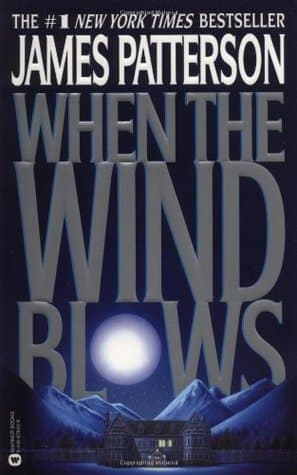
- When the Wind Blows
James Patterson
3.9 (46k) average on GoodreadsThrillerThis is the direct predecessor, continuing the story of Frannie, Kit, and the flying children.
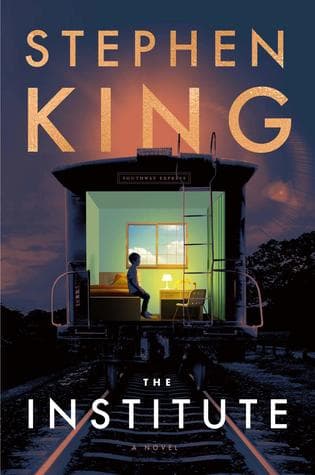
- The Institute
Stephen King
4.2 (127k) average on GoodreadsThrillerInvolves children with extraordinary abilities held captive in a secret facility, exploring themes of escape and government experimentation.
- Jurassic Park
Michael Crichton
4.0 (803k) average on GoodreadsThrillerWhile both The Lake House and Jurassic Park deal with scientific experimentation and its dangerous consequences, Crichton's novel provides a far more rigorous and believable exploration of genetic engineering, scientific ethics, and the potential for chaos theory. Crichton grounds his fantastical premise in detailed scientific exposition and creates complex, morally ambiguous characters, whereas Patterson's scientific elements are more superficial and serve primarily as plot drivers without deep exploration.
- Dark Matter
Blake Crouch
4.0 (11k) average on GoodreadsFantasyBoth books are sci-fi thrillers featuring protagonists in extraordinary circumstances. However, Crouch's Dark Matter excels in its intricate plot, profound philosophical questions about identity and choice, and deeply developed emotional stakes. Crouch integrates complex scientific concepts (quantum mechanics, parallel universes) seamlessly into the narrative, making them integral to the story's core. Patterson's The Lake House, in contrast, treats its scientific and fantastical elements with less depth, focusing more on immediate action over intellectual or emotional resonance, resulting in a less sophisticated and impactful narrative.
- Angels & Demons
Dan Brown
3.9 (2.7M) average on GoodreadsThrillerA Harvard symbologist races through Rome's ancient sites, deciphering cryptic clues to unmask the Illuminati and stop a vengeful plot to destroy the Vatican with a stolen antimatter weapon.
- Gone Girl
Gillian Flynn
4.1 (2.3M) average on GoodreadsThrillerA wife's sudden disappearance on her fifth anniversary reveals a web of lies and psychological warfare, exposing the secrets within a seemingly perfect marriage.


Enjoyed the summary?
A summary gives you the shape of the book. The book itself has the detail, the examples and the voice.
Find The Lake House on AmazonAs an Amazon Associate, BookBrief earns from qualifying purchases. How we're funded