

Synopsis
Covers the whole plot, including the ending.
- Difficulty
- Easy
- Pacing
- Moderate
- Mood
- Creepy, Suspenseful, Unsettling, Sinister
- Read it if
- You enjoy classic psychological thrillers with a dark, unsettling twist and masterful suspense building.
- Skip it if
- You prefer happy endings or shy away from stories with a strong sense of impending doom.
The Landlady Plot Summary
Covers the whole plot, including the ending.
A New City, A New Lodging
Seventeen-year-old Billy Weaver, a fresh and ambitious young man, travels by train from London to Bath for a new job. His manager tells him to find lodging close to the office. In Bath, Billy feels an unexpected urge to skip the grand Royal Hotel and instead look for a cheaper, more independent place to stay. As he walks, a 'BED AND BREAKFAST' sign in a window catches his eye. The sign seems to pull him in, almost hypnotically, even though he meant to keep walking.
The Alluring Sign
Billy Weaver, feeling a strange pull, stares at a Bed and Breakfast sign. He decides it would be cheaper than a hotel and goes to ring the doorbell. Before he touches the bell, the door opens, as if the landlady expected him. This quick opening, along with the house's inviting look – neat, clean, and with a cheerful fire – draws him in further. He feels relieved and comfortable, believing he has found the perfect place, and overlooks the unusually fast door opening.
An Overly Eager Welcome
The landlady, with a gentle smile and welcoming manner, greets Billy Weaver right away. She seems to have been waiting for him and invites him in. She quickly says she has a lovely room available, very cheap for its quality. Billy, charmed by her kindness and the cozy house, does not question the low price or her eager desire to get him as a guest. He feels more comfortable, despite a faint, unsettling feeling he cannot place.
The Guestbook's Familiar Names
After agreeing to the room, Billy Weaver is led to the sitting room. The landlady asks him to sign her guestbook, a large, old ledger. Billy notices only two previous entries, both male names, from the past two or three years. He finds this odd but dismisses it. However, the names – Christopher Mulholland and Gregory W. Temple – sound vaguely familiar. He is sure he has heard them before, perhaps in newspapers or on the radio, but he cannot recall the context, which slightly bothers him.
The Landlady's Peculiar Memory
Billy Weaver tells the landlady that the names Christopher Mulholland and Gregory Temple sound familiar. The landlady, with a knowing smile, confirms they were both 'charming boys' and 'absolutely perfect gentlemen.' She lists specific details about them – their age, habits, and preferences – as if they had just left. Billy finds her memory surprisingly precise, almost unnerving, considering how much time has supposedly passed since their stays. He feels a chill, but blames it on the cold evening rather than her unsettling recollections.
The Missing Gentlemen
Billy Weaver, still thinking about the familiar names, asks the landlady if Christopher Mulholland and Gregory Temple recently left. The landlady corrects him with a calm smile, saying 'they never left.' This shocks Billy. She explains they are still 'upstairs' in the house. Billy tries to understand this, at first thinking they moved in permanently, but the landlady's tone and gaze suggest something far more sinister than long-term renting. His unease grows.
The Stuffed Pets
As Billy Weaver talks with the landlady, his eyes go to the room's decor. He sees a beautiful parrot and a small, sleeping dachshund near the fireplace. He compliments the landlady on her pets. With a proud smile, she tells him they are not alive; they are both perfectly preserved taxidermy. Billy is impressed by how lifelike the stuffed animals are. This hobby, though unusual, does not immediately seem like a warning sign, but rather an eccentric pastime.
A Disturbing Revelation
Billy Weaver, still admiring the stuffed parrot and dachshund, asks the landlady if she had them professionally preserved. She laughs softly and says she did it herself. Even more unsettling, she admits these were her own beloved pets when they were alive. She talks about them with a chilling detachment, almost like remembering old friends. This detail makes Billy much more uncomfortable. The thought of someone preserving their own dead pets, and doing it so skillfully, gives a new, macabre view of her character and her house.
The Scent of Bitter Almonds
As the evening continues, and the landlady keeps offering Billy Weaver tea, he notices a faint, strange smell. It is subtle but distinct, and he struggles to name it. He thinks it might be like pickled walnuts or new leather, but then a more exact description comes to mind: bitter almonds. This scent, often linked to cyanide, is a classic sign of poison in literature. Billy, however, dismisses it as just an odd smell, unaware of its dark meaning, but the reader sees the strong foreshadowing.
The Final Offer
The landlady, with her calm smile, watches Billy Weaver as he sips his tea. She makes a final, seemingly innocent offer: 'You did sign the book, didn’t you?' she asks, confirming his commitment. Billy assures her he did. She then adds, 'And I’m just waiting for you.' Her words, along with her steady gaze and the lingering bitter almond scent, confirm the chilling realization for the reader that Billy is her next 'guest' to be preserved. The story ends with Billy about to meet his fate, completely unaware of the horror waiting for him.
The Landlady Characters
Billy Weaver
Protagonist
A naive and impressionable young man seeking his fortune.
Billy Weaver is a seventeen-year-old, handsome, and ambitious young man from London, embarking on his first job in the city of Bath. He is presented as somewhat naive and easily swayed, particularly by superficial charm and cheap prices. Despite his initial good judgment to seek out a hotel, he is inexplicably drawn to the landlady's house. He is polite, trusting, and lacks the cynical edge that might allow him to detect the danger he is in, making him a perfect victim.
Relationships: The Landlady (Victim-predator dynamic, where Billy is unknowingly the prey.)
The Landlady
Antagonist
A seemingly kind and eccentric woman with a sinister hobby.
The Landlady is an elderly woman, described as having a gentle smile, a sweet voice, and a peculiar kindness that masks a deeply disturbing obsession. She appears welcoming and accommodating, but her hospitality is a facade for her true intentions: to lure young men into her home, poison them, and then taxidermy their bodies. She is meticulous, patient, and possesses an unnerving ability to make her victims feel at ease, despite her increasingly bizarre revelations. Her mental state is clearly deranged, yet she maintains an outward appearance of normalcy.
Relationships: Billy Weaver (Predator-victim dynamic, where she is the predator.); Christopher Mulholland (Previous victim, now a preserved 'guest'.); Gregory W. Temple (Previous victim, now a preserved 'guest'.)
Christopher Mulholland
Mentioned
A previous victim of the Landlady.
Christopher Mulholland is one of the two previous guests mentioned in the landlady's guestbook. He was a Cambridge undergraduate, aged twenty-eight, and described by the landlady as 'a fine young man' and 'absolutely gorgeous.' He serves as a critical piece of exposition, revealing the landlady's pattern of charming and then preserving her male guests. His name, along with Gregory Temple's, is meant to trigger a sense of unease and familiarity in Billy, foreshadowing his own grim fate.
Relationships: The Landlady (Previous victim-predator dynamic.); Billy Weaver (A fellow, albeit past, victim.)
Gregory W. Temple
Mentioned
Another previous victim of the Landlady.
Gregory W. Temple is the second previous guest listed in the landlady's guestbook. He was a twenty-four-year-old from Bristol, described by the landlady as 'a wonderful person' and 'such a charming fellow.' Like Mulholland, his inclusion serves to establish the landlady's modus operandi. The fact that Billy recognizes both names from news reports underscores the landlady's consistent, unpunished pattern of murder and preservation. He further solidifies the ominous atmosphere and the impending doom for Billy.
Relationships: The Landlady (Previous victim-predator dynamic.); Billy Weaver (A fellow, albeit past, victim.)
The Landlady Themes
Appearance vs. Reality
This theme is key to the story. The landlady acts like a kind, gentle, and welcoming hostess, but she hides a sinister, murderous plan. Her house looks cozy and inviting, but it is a trap. Billy Weaver is repeatedly fooled by these appearances, from the 'charming' sign to the landlady's 'sweet' smile, missing the horror underneath. The difference between the quaint B&B and the macabre taxidermy shows how easily outward beauty can hide inner evil, leading Billy to his death. This theme is clear when Billy admires the 'lifelike' pets, unaware of the full extent of the landlady's 'art.'
“The old girl is slightly dotty, Billy told himself. She was half-crazy. But in a pleasant sort of way.”
The Danger of Naivety and Trust
Billy Weaver's youth and lack of experience make him easy for the landlady to manipulate. He trusts her at face value, ignores his own brief feelings of unease, and fails to see the many warning signs, such as the low price, the door opening by itself, the empty guestbook, or her eerily specific memories of past guests. His politeness and wish to avoid being rude stop him from questioning her directly or leaving when he has the chance. This theme warns about the dangers of blind trust and the importance of listening to one's instincts.
“He was a tremendous believer in all the homely little pleasures of life.”
The Irresistible Pull of Fate/Predestination
From the moment Billy Weaver decides against the Royal Hotel, an unseen force seems to guide him to the landlady's house. The 'BED AND BREAKFAST' sign 'compels' him, and the door opens 'by magic' before he can ring the bell. He feels an 'astonishing sense of satisfaction' and 'tremendous luck' upon entering, despite subtle hints that something is wrong. This theme suggests Billy's fate was sealed from the start, showing an inescapable doom beyond his control. His journey to the house feels less like a choice and more like an unavoidable path to his end.
“It was the third thing that caught his eye. It was a small notice propped up against the window pane, and it said BED AND BREAKFAST.”
Isolation and Vulnerability
Billy Weaver is new to Bath, alone, and without any immediate contacts, making him an ideal target for the landlady. His isolation means no one is there to warn him, check on him, or question his sudden disappearance. The landlady herself lives a solitary life, which lets her pursue her macabre hobby without being caught. The story highlights how being separated from a support system can expose people to unexpected dangers, especially in unfamiliar places. Billy's politeness, which keeps him from challenging the landlady, makes him even more vulnerable.
“He was an energetic young fellow, and he was taking a big step in his life.”
Plot Devices & Literary Techniques
Foreshadowing
Hints of future events or outcomes.
Dahl masterfully uses foreshadowing throughout the story to build suspense and hint at Billy's grim fate. Examples include the landlady's unnaturally quick appearance at the door, the unusually low price of the room, her precise memory of past guests, the revelation that the previous guests 'never left,' and most potently, the 'bitter almonds' scent of the tea. These subtle clues, though missed by the naive Billy, alert the reader to the impending danger, creating a sense of dread and inevitability.
Dramatic Irony
The audience knows more than the characters.
Dramatic irony is a key element in 'The Landlady.' The reader quickly understands the landlady's sinister intentions and Billy's impending doom, while Billy himself remains oblivious. For instance, when Billy admires the 'lifelike' stuffed animals, the reader understands the chilling implication that these were once her living pets, and that he will soon join them. Similarly, his recognition of the names Christopher Mulholland and Gregory Temple, coupled with the landlady's comments that they 'never left,' creates a terrifying realization for the reader that Billy misses entirely.
Symbolism (The Taxidermy)
The act of preserving dead animals as a symbol of the landlady's intentions.
The landlady's hobby of taxidermy is a powerful symbol. Initially, it seems merely eccentric, but it quickly becomes a chilling metaphor for her ultimate goal: to preserve her human victims. The 'lifelike' quality of the stuffed parrot and dachshund hints at her skill and her desire to keep her 'pets' with her forever. This symbolizes her control over life and death, and her desire to freeze moments in time, specifically the youth and charm of her male guests, preventing them from ever truly leaving her.
Chekhov's Gun
An apparently irrelevant detail that later proves important.
While not a literal gun, the names Christopher Mulholland and Gregory W. Temple serve as Chekhov's Guns. Billy's vague recognition of these names from newspaper reports, initially dismissed, later becomes crucial. It confirms that these young men were not just previous guests but were likely reported missing persons, solidifying the landlady's murderous pattern and the very real danger Billy is in. The 'bitter almonds' scent also functions similarly, an initially ambiguous detail that strongly implies poison.
The Landlady Quotes
“There was nothing else on the wall except a large, white-faced grandfather clock, which was ticking away grandly in the hall.”
“He pressed the bell. Far away in a back room he heard it ringing, and then at once—it must have been at once because he hadn’t even had time to take his finger from the bell-button—the door opened and the Landlady was standing there.”
“She had a round pink face and very gentle blue eyes.”
“‘It’s all ready for you, my dear,’ she said. She had a queer, faint smell of pickling walnuts or new leather or something like that.”
“We have it all to ourselves,’ she said. ‘No other lodgers. Only you.”
“I stuff all my little pets myself when they pass away. Will you have another cup of tea?”
“‘No, thank you,’ Billy said. The tea tasted faintly of bitter almonds, and he didn’t much care for it.”
“Mr. Temple,’ she said, ‘was a great one for his tea. Never in my life have I seen anyone drink as much tea as Mr. Temple.”
“‘But I’m sure you’ll like it here,’ she said. She gave him a slow, wide, beaming smile.”
“He noticed that she had an extraordinary way of speaking. She would never ask a question – or at any rate she never asked him one.”
“Such a charming face,’ she said, looking at him. ‘Such a lovely skin. And you have all your teeth. They’re not easy to get, you know.”
“No, my dear,’ she said. ‘Only you.”
“The parrot on the cage, for example, and the little dachshund curled up on the carpet. They looked absolutely alive.”
“But my dear boy, he never left. He’s still here. All of them are still here.”
“I pop him up here,’ she said, ‘and then I pop you up here too.”
Quiz
10 questions on the plot and the characters. Each answer comes with a short explanation.
Question 1
What is Billy Weaver's profession and where is he traveling for it?
- Salesman, to London
- Businessman, to Bath
- Journalist, to Bristol
- Student, to Salisbury
Show answer
B. Businessman, to Bath Billy Weaver is a seventeen-year-old businessman traveling to Bath for his new job.
Question 2
What specifically entices Billy to choose the landlady's bed and breakfast over the pub he initially considers?
- The low price advertised in the window.
- A mysterious force pulling him towards the house.
- A sign that says 'BED AND BREAKFAST' and a peculiar pull from the words.
- He recognized the house from a previous visit to Bath.
Show answer
C. A sign that says 'BED AND BREAKFAST' and a peculiar pull from the words. Billy is drawn to the bed and breakfast by a large, gleaming sign and feels an inexplicable compulsion to ring the bell, even though he had planned to go to The Bell and Dragon.
Question 3
What unusual hobby does the landlady reveal she has concerning her former guests?
- She collects their personal belongings.
- She writes detailed biographies about them.
- She stuffs her pets and her former guests.
- She keeps their photographs in a special album.
Show answer
C. She stuffs her pets and her former guests. The landlady reveals that she is a taxidermist, having stuffed her deceased pets and, more disturbingly, her previous male guests.
Question 4
What is the significance of the tea the landlady offers Billy?
- It's a special blend from her own garden.
- It tastes unusually bitter, making Billy suspicious.
- It contains a powerful sedative or poison.
- It's a traditional English tea to make him feel welcome.
Show answer
C. It contains a powerful sedative or poison. The tea likely contains a sedative, as Billy notes its faint bitter almond smell and taste, and he feels increasingly drowsy after drinking it, which is how the landlady incapacitates her victims.
Question 5
What does Billy notice about the names in the guest-book?
- They are all famous people.
- There are only two other entries, both male, and he recognizes one name from a newspaper.
- The names are all similar to his own.
- The entries are very old and faded.
Show answer
B. There are only two other entries, both male, and he recognizes one name from a newspaper. Billy finds only two previous entries, Christopher Mulholland and Gregory W. Temple, both male, and he vaguely remembers reading about Mulholland's disappearance in the newspapers.
Question 6
What unsettling detail does Billy observe about the landlady's pets?
- They are unusually aggressive towards him.
- They are alive but very old and sickly.
- They appear to be alive but are actually stuffed.
- She has an excessive number of them.
Show answer
C. They appear to be alive but are actually stuffed. Billy initially thinks the parrot and the dachshund by the fireplace are alive, only to discover they are perfectly preserved, taxidermied animals, hinting at the landlady's macabre skills.
Question 7
What is the primary theme explored in 'The Landlady'?
- The importance of trusting one's instincts.
- The dangers of urban living.
- The warmth of human hospitality.
- The beauty of old architecture.
Show answer
A. The importance of trusting one's instincts. A key theme is the danger of ignoring one's instincts and the deceptive nature of appearances, as Billy repeatedly dismisses his unease about the landlady.
Question 8
How does the landlady's demeanor change when Billy mentions the names Christopher Mulholland and Gregory W. Temple?
- She becomes visibly angry and defensive.
- She dismisses them as old acquaintances who left recently.
- She claims they are still staying upstairs, but are just 'sleeping'.
- She states they are still there, 'on the third floor, both of them together', implying they are stuffed.
Show answer
D. She states they are still there, 'on the third floor, both of them together', implying they are stuffed. When Billy brings up the names, the landlady calmly replies that 'they're on the third floor, both of them together,' which, given her hobby, strongly implies they are among her taxidermied 'guests'.
Question 9
What recurring thought does Billy have that serves as dramatic irony throughout the story?
- He continuously thinks about how much he misses his family.
- He repeatedly notes how lucky he is to have found such a cheap and comfortable place.
- He keeps worrying about being late for his new job.
- He wonders if the landlady has other lodgers he hasn't met yet.
Show answer
B. He repeatedly notes how lucky he is to have found such a cheap and comfortable place. Billy frequently congratulates himself on his 'extraordinary luck' in finding such a pleasant and inexpensive place, unaware of the sinister fate that awaits him, creating strong dramatic irony.
Question 10
What is the final, chilling implication at the end of the story regarding Billy's fate?
- He manages to escape the house in the morning.
- He becomes the landlady's next victim, destined to be taxidermied.
- He convinces the landlady to change her ways.
- The landlady reveals she was just testing him.
Show answer
B. He becomes the landlady's next victim, destined to be taxidermied. The story ends with Billy feeling drowsy from the tea and the landlady's final observation that 'You're just exactly right,' implying he is perfect for her collection, thus sealing his fate as her next stuffed 'guest'.
The Landlady FAQ
What is the basic premise of 'The Landlady'?
The story follows Billy Weaver, a young, ambitious businessman on a trip to Bath. He is drawn by a mysterious impulse to a seemingly charming bed and breakfast run by an eccentric landlady, despite having plans to stay at a hotel. He quickly finds himself ensnared in her peculiar hospitality.
Who is Billy Weaver and what are his initial impressions of the landlady?
Billy Weaver is a seventeen-year-old boy, new to the business world and eager to make a good impression. He initially finds the landlady to be kind, welcoming, and slightly dotty, noting her pleasant smile and eagerness to accommodate him. He views her as harmless, despite her slightly unusual demeanor.
What unusual details does Billy notice about the guestbook?
Billy notices that the guestbook only contains two names, both signed several years apart: Christopher Mulholland and Gregory Temple. He finds this odd given the apparent popularity and charm of the bed and breakfast. He also observes that the entries are from a long time ago, suggesting a lack of recent guests.
How does the landlady react when Billy mentions the names in the guestbook?
The landlady becomes evasive and deflective when Billy brings up the names, quickly changing the subject or making vague statements about the men being 'still here' or 'upstairs'. Her responses are designed to prevent further inquiry and maintain her control over the conversation, subtly hinting at their fate.
What is the significance of the stuffed pets in the living room?
The stuffed pets, particularly the parrot and the dachshund, are a crucial foreshadowing element. They are perfectly preserved and appear lifelike, revealing the landlady's skill in taxidermy and her macabre hobby. This detail hints at the fate of her previous guests, including Billy.
What subtle clues does the landlady give about her intentions before the climax?
The landlady repeatedly compliments Billy's youth and handsomeness, mentions that he is 'just right,' and offers him poisoned tea that 'tastes faintly of bitter almonds.' She also makes comments about her previous guests being 'perfect' and 'handsome,' aligning Billy with their characteristics and implying a similar destiny.
How does the landlady's tea contribute to the story's chilling atmosphere?
The tea, described as tasting faintly of bitter almonds, is a classic literary symbol for cyanide poisoning. This detail, combined with Billy's growing drowsiness, confirms the landlady's sinister intentions and the imminent danger he faces. It transforms a seemingly hospitable gesture into a deadly trap.
What is the implied fate of Billy Weaver at the end of the story?
The story strongly implies that Billy Weaver will become the landlady's next taxidermy victim. After drinking the poisoned tea and feeling increasingly drowsy, he is in her complete control, mirroring the 'perfect' and 'handsome' fate of Christopher Mulholland and Gregory Temple, who are 'still here' in a preserved state.
How does Billy Weaver's naivete contribute to his downfall?
Billy's naivete and youthful inexperience make him an easy target for the landlady. He is too trusting and polite to recognize the danger signs, dismissing her oddities as harmless eccentricity. His focus on politeness and making a good impression blinds him to the sinister reality unfolding around him.
Analyze the landlady's psychological manipulation of Billy.
The landlady employs a masterful blend of charm, flattery, and subtle intimidation. She immediately disarms Billy with her warmth and seemingly generous offer, then subtly steers his attention away from suspicious details like the guestbook. She preys on his politeness and desire to be agreeable, making it difficult for him to challenge her or leave.
What psychological need does the landlady fulfill through her actions?
The landlady appears to fulfill a need for control, companionship, and perhaps a twisted form of aesthetic perfection. By preserving young, handsome men, she creates an eternal 'family' or collection that is entirely hers, free from the complexities and unpredictability of genuine human interaction. She wants them to be 'perfect' and 'just right' forever.
How does the story explore the theme of appearance versus reality?
The story brilliantly illustrates how charming appearances can mask sinister realities. The cozy bed and breakfast, the welcoming landlady, and her seemingly benevolent nature hide a dark, murderous secret. Billy is drawn in by the deceptive facade, failing to see the danger beneath the surface until it is too late.
What is the 'sting in the tail' or twist ending of 'The Landlady'?
The 'sting in the tail' is the realization that the landlady's previous guests, Christopher Mulholland and Gregory Temple, are not just 'upstairs' but are taxidermied, just like her pets. The final implication is that Billy Weaver is about to suffer the same fate, becoming another permanent fixture in her macabre collection.
Discuss the symbolism of the 'bed and breakfast' setting.
The bed and breakfast, usually a place of comfort and temporary rest, becomes a symbol of entrapment and death in the story. It represents a deceptive haven where guests are welcomed only to be permanently confined. The warmth and coziness are a facade for a predatory environment.
How does Dahl use dramatic irony to build suspense in the story?
Dahl masterfully uses dramatic irony by allowing the reader to understand the landlady's sinister intentions long before Billy does. We grasp the meaning of the preserved animals and the guestbook entries, while Billy remains oblivious, creating a heightened sense of dread and suspense as he walks into his doom.
What is the significance of the landlady's repeated statement, 'I stuff all my little pets myself'?
This statement is a chilling double entendre. While she literally refers to her animals, it is a direct, albeit veiled, confession of her hobby of taxidermy that extends to humans. It serves as a stark warning to Billy, which he tragically misinterprets as harmless eccentricity, sealing his fate.
How does the story comment on the dangers of trusting strangers?
The story serves as a cautionary tale about the dangers of blindly trusting strangers, especially those who seem overly accommodating or 'too good to be true.' Billy's politeness and lack of suspicion lead him directly into a perilous situation, highlighting that outward charm can conceal deep malevolence.
What kind of horror does 'The Landlady' represent?
'The Landlady' represents a psychological and insidious form of horror, rather than overt gore. The terror stems from the slow, dawning realization of the landlady's true nature and the helplessness of the victim, combined with the chilling implication of his fate. It's a horror of quiet malevolence and entrapment.
About the author
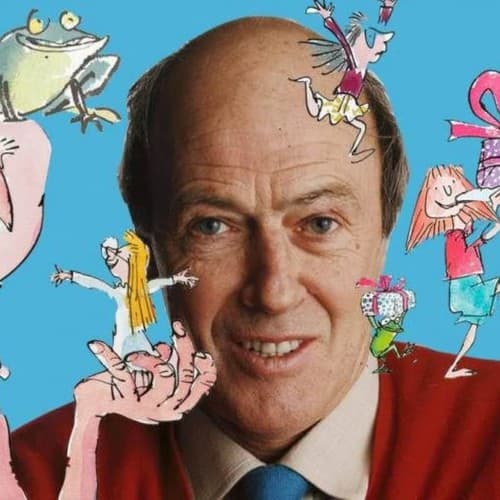
Roald Dahl was a British popular author of children's literature and short stories, a poet, and wartime fighter ace. His books have sold more than 300 million copies worldwide. Dahl has been called "one of the greatest storytellers for children of the 20th century".
Similar books
- The Lottery
Shirley Jackson
4.1 (58k) average on GoodreadsScience FictionBoth are classic short stories with shocking, dark twists and a chilling reveal.
- Angels & Demons
Dan Brown
3.9 (2.7M) average on GoodreadsThrillerA Harvard symbologist races through Rome's ancient sites, deciphering cryptic clues to unmask the Illuminati and stop a vengeful plot to destroy the Vatican with a stolen antimatter weapon.
- Gone Girl
Gillian Flynn
4.1 (2.3M) average on GoodreadsThrillerA wife's sudden disappearance on her fifth anniversary reveals a web of lies and psychological warfare, exposing the secrets within a seemingly perfect marriage.
- The Girl on the Train
Paula Hawkins
3.9 (2.1M) average on GoodreadsThrillerA woman’s fascination with a seemingly perfect couple she watches from her daily train commute leads her into a dark investigation when she witnesses something that shatters their idyllic image.
- The Da Vinci Code
Dan Brown
3.9 (1.9M) average on GoodreadsThrillerA symbologist and a cryptologist race through European landmarks, deciphering ancient codes and uncovering a conspiracy that could rewrite the foundations of Christianity.
- The Guest List
Lucy Foley
3.8 (1.3M) average on GoodreadsThrillerOn a remote Irish island, a glamorous wedding descends into a deadly whodunnit when a guest is found murdered, trapping everyone with their secrets as a storm rages.






Enjoyed the summary?
A summary gives you the shape of the book. The book itself has the detail, the examples and the voice.
Find The Landlady on AmazonAs an Amazon Associate, BookBrief earns from qualifying purchases. How we're funded