

Synopsis
Covers the whole plot, including the ending.
- Difficulty
- Medium
- Pacing
- Moderate
- Mood
- Atmospheric, Suspenseful, Dark, Unsettling
- Read it if
- You enjoy unsettling psychological horror, social commentary wrapped in seemingly mundane settings, and short stories that leave a lasting, chilling impact.
- Skip it if
- You prefer clear-cut resolutions, lighthearted plots, or shy away from themes of casual cruelty and mob violence.
The Lottery and Other Stories Plot Summary
Covers the whole plot, including the ending.
The Lottery: The Village Gathers
On a summer morning, villagers gather in the square for their annual lottery. Children collect stones, while adults chat. Mr. Summers, who runs the lottery, arrives with the black wooden box and a stool. Old Man Warner, the oldest resident, dislikes other villages giving up the tradition. Mrs. Tessie Hutchinson arrives late, joking about forgetting the date, and joins her family. The mood, though friendly at first, has an underlying tension as the community awaits the drawing.
The Lottery: The First Drawing
Mr. Summers starts the lottery by calling out the names of the family heads, all male, who draw a folded slip of paper from the black box. Each man keeps his slip folded until everyone has drawn. The villagers watch closely, a quiet anticipation building. When Bill Hutchinson draws his slip, his wife Tessie immediately says he 'didn't get a fair shake,' suggesting he was rushed, but her protests are ignored by her husband and neighbors. This first drawing narrows the selection to one family for the next stage.
The Lottery: The Family's Fate
After the first drawing, the Hutchinson family — Bill, Tessie, and their three children, Davy, Bill Jr., and Nancy — has drawn the marked slip. The five family members must draw again, this time from five slips put back into the black box. Tessie continues to protest the fairness of the first drawing, but her pleas are ignored. Each family member draws a slip. The children open theirs first, showing blank papers. Bill Jr. and Nancy show theirs, also blank, leaving only Bill and Tessie to reveal their fate.
The Lottery: The Unveiling and Stoning
As the Hutchinson family opens their slips, Tessie's paper has the black mark. Her repeated cries of 'It isn't fair, it isn't right!' are met with indifference from the crowd, including her own family. Immediately, the villagers, who were just her neighbors and friends, start gathering the stones they collected earlier. Her husband, Bill, forces a stone into their youngest child Davy's hand. Tessie is surrounded, and the stoning begins, a brutal and quick communal murder. The story ends with Tessie's final screams, showing how normal the ritual is for the villagers.
The Daemon Lover: A Woman's Search
On her wedding day, a woman wakes to find her fiancé, Jamie, gone from their apartment. She begins a desperate search through the streets of New York City, visiting his usual spots and asking strangers for help. As the day goes on, her anxiety grows, and the city seems like a maze of uncaring faces and closed doors. She meets various people who offer no real help, and her memory of Jamie starts to fade, blurring reality and her growing paranoia. The day ends with her still alone, Jamie's existence almost mythical.
The Daemon Lover: Jamie's Elusiveness
During her frantic search, the woman finds no solid proof of Jamie's existence. Landlords, shopkeepers, and even his supposed friends give vague or conflicting information, or claim not to know him. The more she searches, the more her certainty about Jamie disappears. The reader is left to wonder if Jamie ever existed or if he was just her imagination, a symbol of a deeper longing or mental instability. Her quest becomes a metaphor for searching for identity or belonging in an alienating city.
The Intoxicated: Uninvited Guests
Mr. and Mrs. Halloran host a party that quickly falls into chaos. What starts as a polite gathering turns into their home filling with people they don't know, brought by other guests. Conversation becomes nonsense, furniture is moved, and the atmosphere grows unsettling. The Hallorans lose control of their own home, becoming passive watchers of the strange events. The story explores the anxieties of social invasion and the loss of personal space and identity within a crowd.
The Intoxicated: Loss of Control
As the party continues, the Hallorans are essentially pushed out of their own house. They find themselves unable to assert authority or even understand what is happening. The guests make themselves at home, raiding the refrigerator and even suggesting the Hallorans leave. The story ends with the Hallorans forced to sleep in their car, strangers having completely taken over their property. This narrative is a darkly humorous, yet disturbing, comment on social rules, hospitality, and how easily personal boundaries can break down.
The Beautiful Stranger: A Mysterious Woman's Arrival
A man named John finds a woman in his house one evening who claims to be his wife, Margaret. However, John is sure she is a stranger. She knows private details about their lives, home, and children, yet John cannot shake the feeling that she is not Margaret. The children also seem to accept her without question, further isolating John in his unsettling belief. This immediately draws the reader into a psychological mystery, questioning identity and perception.
The Beautiful Stranger: John's Growing Doubt
Despite the woman's perfect imitation and the children's acceptance, John's doubt grows. He searches for a clear sign, a familiar gesture or look, that would confirm her identity as Margaret, but finds none. The woman is too perfect, too calm, making his unease grow. His internal struggle highlights memory, marital disappointment, and the terrifying chance of a loved one becoming a stranger. The story leaves the reader questioning John's sanity or the woman's true nature.
The Renegade: The Village Outcast
Mrs. Walpole lives in a secluded house, an outcast from the main village. The villagers see her as strange and different, viewing her with suspicion and dislike. Her interactions with the few people she meets are tense and show the community's deep-seated prejudices. The story explores isolation, conformity, and the fear of 'the other' in a small, closed society. Mrs. Walpole's story is a quiet tragedy of a woman ostracized for not fitting in.
The Renegade: Unseen Pressures
Despite her physical isolation, Mrs. Walpole is deeply affected by the unspoken judgment and expectations of the village. She struggles with her desire for independence versus the subtle pressures to conform. The story subtly builds a sense of dread as Mrs. Walpole deals with her place in the world, eventually giving in to the overwhelming, invisible forces of societal pressure and loneliness. Her narrative explores the psychological cost of being an outsider.
Principal Figures
Tessie Hutchinson
Protagonist/Victim
A seemingly ordinary villager who becomes the victim of the annual lottery.
Tessie Hutchinson is initially portrayed as a somewhat jovial, late-arriving housewife who jokes about forgetting the lottery. However, her character transforms into a desperate and frantic victim when her family, and then she herself, is chosen. She embodies the individual's struggle against an unyielding, cruel tradition, her pleas for fairness highlighting the horrific injustice of the ritual. Her initial lightheartedness makes her ultimate fate all the more shocking and tragic, underscoring the arbitrary nature of the violence.
Relationships: Bill Hutchinson (Husband who ultimately participates in her stoning); Davy Hutchinson (Youngest son, forced to stone her); Nancy Hutchinson (Daughter, also participates in the stoning); Bill Hutchinson Jr. (Son, also participates in the stoning)
Mr. Summers
Supporting/Antagonist
The village official who conducts the annual lottery with practiced ease.
Mr. Summers is a civic-minded man, well-off and jovial, who efficiently runs the lottery. He represents the bureaucratic, almost mundane, face of the horrific tradition. His pleasant demeanor and the casual way he handles the proceedings make the ritual's brutality even more chilling. He is the embodiment of the societal acceptance of violence, carrying out his duties without any apparent moral conflict, reinforcing the idea that evil can be perpetuated by seemingly ordinary people.
Relationships: Old Man Warner (Shares a bond over upholding tradition); Villagers (Maintains authority and respect as the lottery conductor)
Old Man Warner
Supporting/Antagonist
The oldest man in the village, a staunch defender of the lottery tradition.
Old Man Warner is a symbol of blind adherence to tradition. He vehemently opposes any suggestion of abandoning the lottery, citing old sayings and expressing disdain for other villages that have given it up. He believes the lottery is essential for the community's well-being, particularly for ensuring good harvests. His character highlights the danger of unquestioning loyalty to inherited customs, even when they involve unspeakable cruelty. He represents the conservative forces that resist change, even in the face of moral abhorrence.
Relationships: Mr. Summers (Supports his role in maintaining the lottery); Villagers (Seen as a respected elder whose views on tradition hold sway)
Bill Hutchinson
Supporting/Antagonist
Tessie's husband, who participates in her stoning.
Bill Hutchinson is Tessie's husband. Initially, he draws the marked paper for his family. When Tessie protests the fairness of the drawing, he silences her. Later, he forces a stone into his youngest son's hand to participate in his wife's stoning. His actions demonstrate the powerful pull of communal conformity and the way individuals can turn against their loved ones to uphold tradition, even a barbaric one. He prioritizes fitting in with the community over protecting his own wife, highlighting the story's chilling themes.
Relationships: Tessie Hutchinson (Husband, ultimately complicit in her death); Davy Hutchinson (Father, forces him to participate in the stoning)
The Woman (from 'The Daemon Lover')
Protagonist
A desperate woman searching for her missing fiancé on her wedding day.
The unnamed woman in 'The Daemon Lover' is consumed by anxiety and a growing sense of unreality as she searches for her fiancé, Jamie. She is a figure of increasing psychological distress, her perception of reality blurring as her search proves fruitless. Her journey through the indifferent city streets reflects her internal turmoil and the elusive nature of her love. She embodies vulnerability and the terrifying experience of gaslighting, whether by external forces or her own mind.
Relationships: Jamie (Elusive fiancé, possibly imagined)
Mr. and Mrs. Halloran (from 'The Intoxicated')
Protagonists
A couple whose home is invaded by increasingly strange and intrusive party guests.
The Hallorans are initially polite hosts, but they quickly become overwhelmed and displaced by their own party guests. They represent the erosion of personal space and control in the face of social pressure and the bizarre. Their passivity in the face of the invasion is both humorous and unsettling, highlighting the anxieties of modern life and the loss of individual agency within overwhelming social situations. They are victims of their own hospitality, unable to assert boundaries.
Relationships: Each other (Supportive but equally powerless couple); Party Guests (Initially hosts, then victims of their guests' intrusion)
John (from 'The Beautiful Stranger')
Protagonist
A man who believes the woman claiming to be his wife is a stranger.
John is a man tormented by doubt and a profound sense of cognitive dissonance. He is convinced that the woman who has returned to his home, claiming to be his wife Margaret, is an impostor, despite her perfect knowledge of their life and his children's acceptance. His struggle highlights themes of perception, identity, and the unsettling fear that reality itself can be questioned. He is a figure of quiet desperation, isolated in his certainty against the seemingly undeniable evidence.
Relationships: The Woman (claiming to be Margaret) (Object of his intense suspicion and fear); His Children (Unable to see his perspective, adding to his isolation)
Mrs. Walpole (from 'The Renegade')
Protagonist
A reclusive woman ostracized by her village for her independent nature.
Mrs. Walpole lives on the outskirts of her village, a self-imposed exile, yet she remains acutely aware of the community's judgment. She represents the individual who chafes against societal norms and expectations. Her internal struggles reveal the psychological weight of being an 'other' and the profound loneliness that can accompany independence in a conformist society. She embodies the quiet despair of those who do not fit in, even when they try to maintain their own space.
Relationships: Villagers (Object of their suspicion and judgment)
Themes & Insights
The Peril of Unquestioning Tradition
This theme is most clear in 'The Lottery,' where villagers blindly follow a brutal annual ritual simply because 'it's always been done.' Old Man Warner's strong defense of the lottery, despite its horrific outcome, shows the danger of tradition overriding morality. The casual way the community, including children, stones Tessie Hutchinson highlights how ingrained customs can lead to great cruelty. The story suggests that without careful thought, tradition can justify violence and inhumanity.
“Lottery in June, corn be heavy soon.”
The Fragility of Identity and Reality
Several stories, especially 'The Daemon Lover' and 'The Beautiful Stranger,' look at how unstable personal identity and reality can be. In 'The Daemon Lover,' the protagonist's desperate search for her fiancé makes her question if he even exists, blurring memory, desire, and delusion. Similarly, in 'The Beautiful Stranger,' John's inability to recognize his own wife, despite her knowing everything about their life, puts his sanity and the nature of identity into terrifying doubt. These stories suggest that who we are, and who others are to us, can change easily and be shattered.
“But it was not Margaret.”
Conformity and Social Pressure
This collection often examines the strong pressure to conform in communities. In 'The Lottery,' the entire village participates in the stoning, and even Tessie's own family turns on her, showing the immense pressure to follow group norms, no matter how terrible. Bill Hutchinson silencing his wife and forcing a stone into his son's hand are clear examples of this. 'The Renegade' also explores this, as Mrs. Walpole's isolation comes directly from her being seen as different from the villagers. Jackson shows how wanting to belong can make individuals ignore their conscience and take part in collective cruelty or exclusion.
“All right, folks,' Mr. Summers said. 'Let's finish this quickly.”
The Banality of Evil
Shirley Jackson shows evil not as a grand, monstrous force, but as something ordinary and everyday. In 'The Lottery,' the horrific stoning is done with almost bureaucratic efficiency by Mr. Summers and discussed like a normal civic event. The villagers are not shown as sadistic monsters, but as ordinary people doing a horrible act with casual indifference. This theme suggests that the greatest evil often comes from a lack of critical thought, a willingness to follow orders, and the acceptance of cruelty within a community, making it more chilling and relatable.
“'Clean forgot what day it was,' she said to Mrs. Delacroix, who stood next to her.”
Isolation and Alienation
Many of Jackson's characters feel deeply alone. In 'The Daemon Lover,' the protagonist is completely alone in her desperate search, surrounded by an uncaring city. John in 'The Beautiful Stranger' is isolated by his unique perception, unable to convince his family that his wife is an impostor. Mrs. Walpole in 'The Renegade' lives a life of physical and emotional isolation, a direct result of being different from her community. These stories explore the psychological cost of being an outsider, whether by choice or circumstance, and the deep loneliness that can come with breaking from societal norms or personal reality.
“No one would ever believe her.”
Plot Devices & Literary Techniques
Foreshadowing
Hints of future events or the true nature of a situation.
Jackson frequently employs subtle foreshadowing to build suspense and dread. In 'The Lottery,' the children gathering stones at the beginning, the villagers' nervous glances, and Tessie's initial unease about the process all hint at the violent climax. In 'The Daemon Lover,' the protagonist's blurring memory of Jamie and the vague responses she receives suggest his possible non-existence. This device creates a pervasive sense of unease and allows the horror to unfold gradually, often making the eventual reveal more shocking.
Situational Irony
A contrast between expectation and reality, often with a dark or tragic outcome.
This is a cornerstone of Jackson's style, particularly in 'The Lottery.' The story opens on a beautiful, sunny summer day, in a seemingly idyllic village, which sharply contrasts with the brutal ritual that takes place. Tessie Hutchinson's initial joking about being late for the lottery and her protests about fairness become tragically ironic when she becomes the victim. This device highlights the absurdity and horror of the situations, often making the reader confront uncomfortable truths about human nature and societal norms.
Unreliable Narrator/Ambiguity
A narrator whose credibility is compromised, or a story with intentionally unclear elements.
Jackson often leaves crucial elements of her stories ambiguous, forcing the reader to question what is real. In 'The Daemon Lover,' the reader is never definitively told if Jamie exists or if the protagonist is deluding herself. Similarly, in 'The Beautiful Stranger,' John's perception that his wife is an impostor is left unresolved, leaving the reader to wonder about his sanity or the woman's true nature. This ambiguity creates a deep sense of psychological unease and paranoia, drawing the reader into the characters' fractured realities.
Symbolism
The use of objects or ideas to represent deeper meanings.
Jackson uses potent symbols to convey her themes. In 'The Lottery,' the black box represents tradition, authority, and the unquestioning acceptance of outdated customs. The stones symbolize communal violence and the primitive, barbaric nature lurking beneath a civilized facade. The sunny summer day itself becomes a symbol of ironic contrast, making the horror of the ritual more jarring. These symbols add layers of meaning to the narratives, allowing for deeper interpretation of the stories' social and psychological commentaries.
The Lottery and Other Stories Quotes
“It isn't fair, it isn't right.”
“The morning of June 27th was clear and sunny, with the fresh warmth of a full-summer day; the flowers were blossoming profusely and the grass was richly green.”
“The whole world was a series of traps, and one had to be very careful.”
“No one had ever told her that the world was a place where things simply happened, with no rhyme or reason, and that people simply did things, for no reason at all.”
“Although the villagers had forgotten the ritual and lost the original black box, they still remembered to use stones.”
“She had only to turn her head and look behind her, and the street was gone. Nothing but shadows.”
“The children had stones already, and the older boys had a great pile of stones in one corner of the schoolyard, and even the very small children had some pebbles.”
“She was sure, absolutely sure, that the world was full of people who were all exactly like herself, and that they were all going to live happily ever after.”
“Used to be a saying about 'Lottery in June, corn be heavy soon.'”
“The world was full of men who looked like him, and they were all dangerous.”
“All the same, I wish they'd get a new box.”
“She felt a little as though she had been left behind, on the wrong side of a door.”
“He was a good-humored man and his jokes were usually received with a good deal of laughter.”
“She thought about how a door, once closed, could be so irrevocably closed, and what could be on the other side.”
Quiz
10 questions on the plot and the characters. Each answer comes with a short explanation.
Question 1
In 'The Lottery,' what is the approximate population of the village that participates in the annual ritual?
- Around 50 people
- Around 300 people
- Around 1,000 people
- Around 5,000 people
Show answer
B. Around 300 people Mr. Summers mentions that the lottery takes 'less than two hours' for their 'village of only three hundred people,' indicating the approximate population.
Question 2
What is the primary reason given by the villagers in 'The Lottery' for continuing the annual ritual, despite its brutal outcome?
- They believe it guarantees good harvests.
- It is a form of population control.
- It serves as a legal system for punishing criminals.
- It brings tourists and revenue to the village.
Show answer
A. They believe it guarantees good harvests. Old Man Warner frequently refers to the adage 'Lottery in June, corn be heavy soon,' highlighting the belief that the ritual ensures agricultural prosperity.
Question 3
Which character in 'The Lottery' arrives late to the gathering, joking about forgetting what day it is?
- Old Man Warner
- Mr. Summers
- Tessie Hutchinson
- Bill Hutchinson
Show answer
C. Tessie Hutchinson Tessie Hutchinson famously arrives late, proclaiming, 'Thought we were going to have to get along without you, Tessie,' to which she replies, 'Wouldn't have me leave m'dishes in the sink, now, would you, Joe?'
Question 4
What is the physical object used to draw lots in 'The Lottery'?
- A wooden bowl
- A black wooden box
- A metal urn
- A woven basket
Show answer
B. A black wooden box The story explicitly describes the 'black wooden box' as the central item for the lottery drawing, which has grown shabbier over the years.
Question 5
In 'The Lottery,' what is the initial reaction of the villagers when Tessie Hutchinson protests the unfairness of the drawing?
- They consider re-drawing the slips.
- They quickly dismiss her complaints as typical of her.
- They gather around her to offer comfort.
- They silently agree with her, but do not speak up.
Show answer
B. They quickly dismiss her complaints as typical of her. When Tessie cries, 'It wasn't fair!', her husband Bill tells her to 'Shut up, Tessie,' and others like Mrs. Delacroix and Mrs. Graves are quick to tell her to be a good sport, indicating their dismissal.
Question 6
What is the symbolic significance of the children gathering stones at the beginning of 'The Lottery'?
- It represents their innocent play before the serious event.
- It foreshadows the violent conclusion of the lottery.
- It is a traditional game played by the village youth.
- It shows their role in preparing the lottery slips.
Show answer
B. It foreshadows the violent conclusion of the lottery. The children's seemingly innocent act of collecting stones early in the story directly foreshadows the stoning of the 'winner' at the end, revealing the deep-seated, generational nature of the violence.
Question 7
Beyond 'The Lottery,' what overarching theme is frequently explored in Shirley Jackson's other stories, as suggested by the collection's description?
- The triumph of good over evil.
- The beauty of nature and rural life.
- The creeping unease of lives squandered and casual cruelty.
- The pursuit of wealth and social status.
Show answer
C. The creeping unease of lives squandered and casual cruelty. The description explicitly states, 'The creeping unease of lives squandered and the bloody glee of lives lost is chillingly captured in these tales of wasted potential and casual cruelty.'
Question 8
What happens to the original wooden box used for the lottery over the years?
- It is replaced with a new, more ornate one every decade.
- It is carefully preserved and maintained to look new.
- It becomes splintered, faded, and shabbier, yet is never fully replaced.
- It is accidentally destroyed and re-created from memory each year.
Show answer
C. It becomes splintered, faded, and shabbier, yet is never fully replaced. The story notes that 'The original paraphernalia for the lottery had been lost long ago... The black box grew shabbier each year: by now it was no longer completely black but splintered badly along one side.'
Question 9
Which of the following traditions associated with the lottery has been entirely forgotten by the villagers, save for a few fragments of memory?
- The reading of a ceremonial chant by the lottery official.
- The preparation of special food for the day.
- The wearing of specific traditional attire by participants.
- The construction of a temporary altar for the box.
Show answer
A. The reading of a ceremonial chant by the lottery official. The story mentions that 'There was a great deal of talk about 'going back to the old days'... There was a ritual salute, which the lottery official had to use in addressing each person who came up to draw from the box, but this had long since been discarded. Mr. Summers spoke of making up a new ceremony for the lottery...', indicating the chant is forgotten.
Question 10
The pervasive sense of 'casual cruelty' in the collection, particularly in 'The Lottery,' suggests a thematic critique of what societal tendency?
- The dangers of technological advancement.
- The human tendency to blindly follow tradition and groupthink.
- The corrupting influence of absolute power.
- The struggle between urban and rural lifestyles.
Show answer
B. The human tendency to blindly follow tradition and groupthink. The ease with which the villagers participate in the stoning, and their quick dismissal of Tessie's protests, highlights how tradition and conformity can lead to horrific acts when individuals fail to question or challenge the status quo.
The Lottery and Other Stories FAQ
What is the central premise of 'The Lottery'?
The central premise of 'The Lottery' revolves around a small, seemingly ordinary village that annually conducts a ritualistic lottery. However, instead of a prize, the 'winner' is stoned to death by the community, including their own family, as a human sacrifice for a good harvest.
Who is Tessie Hutchinson, and what is her role in 'The Lottery'?
Tessie Hutchinson is the protagonist of 'The Lottery' who initially arrives late and jokes about the ritual. She becomes the unfortunate 'winner' of the lottery, protesting its unfairness and tradition only when she and her family are targeted, ultimately being stoned to death by her fellow villagers.
What kind of themes are explored in 'The Lottery and Other Stories'?
The collection explores themes of conformity, mob mentality, the banality of evil, the fragility of identity, and the unsettling nature of domestic life. It often delves into the psychological undercurrents of seemingly normal situations, revealing underlying cruelty and despair.
How do readers typically react to 'The Lottery' upon its initial publication?
Upon its initial publication in The New Yorker in 1948, 'The Lottery' provoked widespread outrage and confusion, leading to hundreds of angry letters and hate mail sent to Shirley Jackson. Many readers found the story disturbing and incomprehensible, some even canceling their subscriptions.
Beyond 'The Lottery', what other notable stories are included in the collection?
The collection features a diverse range of stories, including 'The Daemon Lover,' where a woman frantically searches for her fiancé on their wedding day, and 'The Renegade,' where an excellent host finds himself unexpectedly cast out of his home by his own guests. Many stories explore domestic unease and psychological tension.
What is the significance of the black box and the slips of paper in 'The Lottery'?
The black box represents the village's deep-seated adherence to tradition, even as it decays and its original meaning is lost. The slips of paper, initially wood chips, symbolize the arbitrary nature of fate and the impersonal mechanism by which the community carries out its horrific ritual.
Are there any clues to the true nature of the lottery before the ending is revealed?
Yes, subtle clues include the children gathering stones before the lottery begins, the villagers' nervous and somber demeanor, and Old Man Warner's staunch defense of the tradition, muttering about 'Lottery in June, corn be heavy soon,' hinting at a harvest sacrifice.
How does the setting contribute to the horror in 'The Lottery'?
The story is set on a beautiful, clear summer day in a picturesque village, creating a stark contrast with the horrific ritual. This idyllic setting underscores the banality of evil, suggesting that such atrocities can occur anywhere, even in the most seemingly normal and pleasant environments.
What psychological phenomenon does the villagers' behavior in 'The Lottery' exemplify?
The villagers' behavior exemplifies mob mentality and the Stanford Prison Experiment's findings, where individuals conform to group norms and participate in atrocities when sanctioned by tradition or authority. They suppress individual conscience for collective, unexamined ritual.
How does Tessie Hutchinson's initial attitude change throughout 'The Lottery'?
Tessie initially treats the lottery with casualness, even humor, arriving late and joking. However, her attitude shifts dramatically to desperate protest and pleas for fairness once her family, and then she herself, are chosen, revealing a self-serving morality that only emerges when personally threatened.
What psychological impact does the story suggest tradition can have on a community?
The story suggests that unchecked tradition can lead to a dangerous psychological stagnation, where a community blindly adheres to cruel practices without questioning their purpose or morality. It fosters a collective amnesia regarding the ritual's origins and a reluctance to evolve, driven by fear of change.
In stories like 'The Daemon Lover,' what psychological state is often explored?
In 'The Daemon Lover,' the psychological state of anxiety, delusion, and the blurring of reality and imagination is deeply explored. The protagonist's frantic, increasingly desperate search suggests a mind grappling with isolation and a possible breakdown, questioning the very existence of her fiancé.
Is 'The Lottery' a critique of any specific historical event or simply human nature?
'The Lottery' is widely interpreted as a critique of blind adherence to tradition and the dangers of conformity, particularly in the aftermath of World War II and the Holocaust. While it doesn't target a specific event, it powerfully comments on the capacity for human cruelty and the banality of evil.
What does Old Man Warner represent in 'The Lottery'?
Old Man Warner represents the steadfast, unyielding force of tradition and resistance to change. He is the voice of the old ways, vehemently defending the lottery against any suggestion of modernizing or abandoning it, embodying the deep-seated fear of societal collapse without such rituals.
How does the story challenge the reader's perception of 'community'?
The story challenges the reader's perception of 'community' by presenting a seemingly idyllic village where social cohesion masks a brutal, unthinking cruelty. It reveals that community can be a source of terror and oppression, rather than just support, when individuals surrender their moral autonomy to groupthink.
What is the enduring legacy of 'The Lottery' in literature?
The enduring legacy of 'The Lottery' lies in its powerful examination of human nature, conformity, and the darkness lurking beneath polite society. It has become an iconic, frequently anthologized story that continues to provoke discussion and influence writers like Neil Gaiman and Stephen King with its chilling portrayal of casual cruelty.
Does Shirley Jackson offer any clear explanations for the lottery's origins or purpose?
Shirley Jackson deliberately offers very few clear explanations for the lottery's origins or purpose, leaving much to the reader's interpretation. This ambiguity heightens the horror, suggesting that the ritual persists not because of a logical reason, but simply because 'it's always been that way.'
How does the lack of character development contribute to the story's impact?
The lack of deep character development, particularly for the villagers, contributes to the story's impact by emphasizing the universal nature of the themes. The characters function more as archetypes of human behavior, highlighting that anyone, regardless of individual personality, can participate in or fall victim to such a system.
What message might 'The Lottery' convey about the dangers of blindly following authority or tradition?
'The Lottery' conveys a stark message about the dangers of blindly following authority or tradition without critical examination. It illustrates how such unthinking adherence can lead to horrific acts, where moral responsibility is abdicated in favor of maintaining an outdated and cruel status quo.
About the author

Shirley Hardie Jackson was an American writer known primarily for her works of horror and mystery. Over the duration of her writing career, which spanned over two decades, she composed six novels, two memoirs, and more than 200 short stories.
Similar books
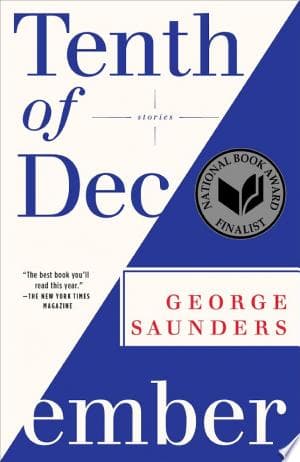
- Tenth of December
George Saunders
4.0 (62k) average on GoodreadsLiterary FictionExplores the darker side of human nature and societal quirks through a collection of thought-provoking short stories.
- Dubliners
James Joyce
3.9 (123k) average on GoodreadsLiterary FictionLike The Lottery and Other Stories, Joyce's Dubliners is a collection of short stories that offers a piercing critique of societal paralysis and spiritual malaise. Both authors use a collection of seemingly disparate narratives to build a cohesive thematic statement about their respective societies. However, Jackson's horror is often more overt and visceral, relying on shock and the grotesque, whereas Joyce's 'epiphanies' are typically subtler, focusing on internal psychological revelations and the suffocating atmosphere of Dublin life. Jackson's focus is often on the breakdown of community and the violence lurking beneath the surface, while Joyce explores individual disillusionment within a stagnant urban environment.
- Pastoralia
George Saunders
4.1 (18k) average on GoodreadsLiterary FictionSaunders' Pastoralia shares Jackson's sharp satirical edge and a keen eye for the absurdities and anxieties of modern life, particularly regarding work, identity, and the pressures of conformity. Both authors create worlds that feel eerily familiar yet profoundly unsettling. However, Saunders often employs humor, albeit dark humor, to deliver his social commentary, whereas Jackson's tone is almost uniformly grim and unsettling. While Jackson's stories often culminate in a shocking revelation of human cruelty or psychological breakdown, Saunders tends to focus more on the systemic pressures that lead to individual absurdity and quiet desperation, often with a glimmer of resilience or bizarre hope.
- Nineteen Eighty-Four
George Orwell
4.2 (5.5M) average on GoodreadsFictionWinston Smith dreams of truth and rebellion in a world where Big Brother watches all, but he confronts the terrifying power of a regime that controls not just actions, but thoughts.
- The Frozen River
Ariel Lawhon
4.4 (600k) average on GoodreadsFictionIn 1789 Maine, a heroic midwife's diary helps her expose a murder and get justice in a town that wants to silence her.
- A Man Called Ove
Fredrik Backman
4.4 (569k) average on GoodreadsFictionA stubborn widower, who lives by strict rules, finds his quiet world changed by a lively new family next door, making him face his past and find happiness in human connection.





Enjoyed the summary?
A summary gives you the shape of the book. The book itself has the detail, the examples and the voice.
Find The Lottery and Other Stories on AmazonAs an Amazon Associate, BookBrief earns from qualifying purchases. How we're funded