
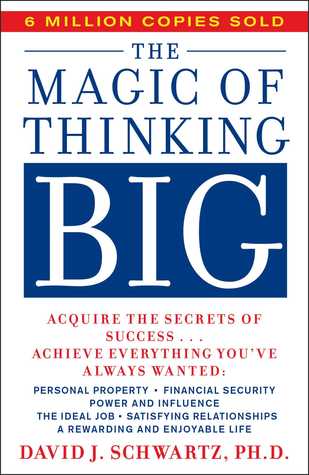
Core Idea
- Difficulty
- Easy
- Read it if
- You feel stuck in a rut, lack confidence in pursuing ambitious goals, or are looking for practical, actionable strategies to elevate your mindset and achieve greater success in your career and personal life.
- Skip it if
- You are looking for a book with deep psychological analysis or a highly academic approach to self-improvement, or if you already possess a strong, unwavering belief in your ability to achieve significant goals.
Key Takeaways from The Magic of Thinking Big
Cure Yourself of Excusitis
Identify and conquer the common excuses that limit your potential.
Schwartz explains that 'excusitis' is a 'sickness' that stops people from reaching their goals. He breaks down the four most common forms: health, intelligence, age, and luck. He asks readers to look closely at their self-imposed limits, often showing them to be groundless fears rather than real problems. By recognizing and fighting these excuses, one can find much untapped potential. The main idea is to stop explaining away inaction and instead focus on what can be done, not what supposedly cannot.
“The fellow who is going places is careful to avoid excusitis.”
In the book: Schwartz provides numerous anecdotes of individuals who achieved great success despite facing significant health challenges, perceived intellectual limitations, advanced age, or initial bad luck. He cites examples of people who turned physical disabilities into motivators or those who started successful ventures later in life.
Try this: When faced with a challenge, consciously identify any immediate excuses that come to mind. Then, actively reframe the situation by asking, 'What can I do despite this perceived limitation?' For example, if you think you're 'too old,' research successful people who started later in life and draw inspiration from their stories.
Related ideas: self-limiting-beliefs, procrastination, mindset-shift
Think Big, Achieve Big
The size of your success is directly proportional to the size of your thinking.
Schwartz says that most people unintentionally limit their achievements by thinking small. They aim for modest goals and get modest results. He states that the human mind is a 'thought factory,' and the quality and size of its output (ideas, plans, actions) depend on the 'raw materials' (thoughts) put into it. To achieve big things, one must first think big, imagining grand possibilities instead of settling for small improvements. This means expanding one's mental scope and believing in larger aspirations.
“Success is determined by the size of one's thinking.”
In the book: Schwartz illustrates this with a story of a salesman who consistently sold small orders until he was encouraged to 'think big' by a mentor. Upon changing his mental approach and expecting larger orders, his sales volume dramatically increased. He also refers to the power of belief in shaping outcomes.
Try this: For any goal you set, challenge yourself to double or triple its scope. Instead of aiming for a 10% increase, aim for 100%. Visualize the successful achievement of this larger goal and plan accordingly. Act as if success is inevitable, not just possible.
Related ideas: goal-setting, vision, self-belief
Develop the Power of Belief
Belief in success is the foundational ingredient for achieving it.
Schwartz stresses that belief is the 'master switch' to success. He argues that the mind naturally works to prove what you believe. If you believe you can succeed, your mind will look for solutions and chances; if you believe you will fail, it will find reasons and problems. This is not just wishful thinking but a strong psychological idea where conviction drives action. Real belief is not passive; it is an active, energizing force that makes you overcome challenges and keep going until your goal is met. Doubt, on the other hand, stops you.
“Believe it can be done. When you believe something, your mind finds ways to do it.”
In the book: He recounts an experiment where a 'sick' patient was given a placebo but told it was a powerful new drug, and their condition improved significantly due to their belief. Conversely, he cites instances where individuals with all the necessary skills failed because they lacked confidence.
Try this: Before starting any task, consciously affirm your belief in your ability to succeed. Write down your goals and the reasons you believe you *will* achieve them. When doubt creeps in, immediately challenge it with evidence of past successes or by visualizing the positive outcome.
Related ideas: positive-affirmations, self-efficacy, manifestation
Action Cures Fear
Overcome fear and build confidence by taking decisive action.
Schwartz strongly states that fear mostly comes from not acting and from imagination. He disagrees with the common advice to 'think your way out of fear,' saying that just thinking about fear makes it stronger. Instead, he suggests a direct approach: take action. Even small steps can start to lessen fear and build confidence. Each successful action, no matter how minor, gives positive reinforcement, showing the mind that the feared situation is manageable. This builds up, eventually replacing fear with confidence and ability.
“Action cures fear. Indecision, postponement, and inaction feed fear.”
In the book: Schwartz describes how public speaking fear can be overcome not by worrying about it, but by actually getting up and speaking. He also mentions how people who are afraid of flying often overcome it by simply taking the flight, realizing their fears were unfounded.
Try this: Identify one area where fear is holding you back. Break down the intimidating task into the smallest possible actionable step. Then, commit to taking that step immediately. Repeat this process, gradually increasing the size of your actions. Don't wait for confidence to appear; let action build it.
Related ideas: courage, proactive-thinking, confidence-building
Go the Extra Mile
Achieve extraordinary results by consistently doing more than is expected.
This idea is about doing more than expected and going beyond the minimum. Schwartz argues that average people do just enough, while successful people always look for chances to add value and do extra. This habit builds a good reputation, creates trust, and often leads to new opportunities and promotions. It is a mindset of generosity and excellence that sets you apart and shows real commitment to your work and your clients or colleagues. The 'extra mile' is where real difference and big growth happen.
“Go the extra mile. The rewards for going the extra mile are astonishing.”
In the book: Schwartz gives the example of a salesperson who, instead of just making the required number of calls, spent extra time researching clients and offering personalized solutions, leading to significantly higher sales and client loyalty. He also mentions executives who consistently took on more responsibility than their job description demanded.
Try this: In your job or personal life, identify one area where you can consistently do more than is expected. For example, if you're asked to complete a report, add an extra analysis or present it in a more engaging way. Always look for ways to add value without being asked.
Related ideas: excellence, proactivity, work-ethic
Think Like a Leader
Cultivate the qualities of leadership through thought and action, regardless of your formal title.
Schwartz states that leadership is not just about position or title; it is a way of thinking and acting. He lists several key leadership qualities anyone can develop: thinking about progress, asking for and giving useful criticism, and taking initiative. Leaders are proactive, solve problems, and inspire others. They do not wait for permission; they see what needs to be done and do it. By adopting a leadership mindset—taking responsibility, building positive relationships, and imagining solutions—people can influence others and earn respect, eventually moving into formal leadership roles.
“Think like a leader, and you will become a leader.”
In the book: He tells the story of a junior employee who, by consistently taking initiative and solving problems for his department, was eventually promoted over more senior colleagues who simply 'followed orders.' He also emphasizes the importance of 'selling' your ideas to others, a key leadership trait.
Try this: In your current role, identify a problem or inefficiency and propose a solution, even if it's outside your immediate responsibilities. Practice asking 'What can I do to improve this?' and 'How can I make things better?' regularly. Take responsibility for outcomes, good or bad.
Related ideas: initiative, problem-solving, influence
Use Your Imagination to Generate Ideas
Unleash creative problem-solving by actively employing your imagination.
Schwartz promotes imagination as a key tool for success, not just a childish activity. He argues that successful people actively use their imagination to picture solutions, create new products, and foresee future problems. Instead of just accepting things, they imagine possibilities and mentally 'try out' different approaches. He distinguishes between 'daydreaming' (unproductive fantasy) and 'creative imagination' (purposeful mental construction). By purposefully using your imagination, you can innovate, overcome problems, and find new ways to reach your goals, turning abstract thoughts into real plans.
“Imagination is the laboratory of the mind.”
In the book: He cites inventors and entrepreneurs who first 'saw' their creations in their minds before bringing them to reality. He encourages readers to ask 'How can I do this better?' and 'How can I do more?' to stimulate imaginative thinking.
Try this: When faced with a challenge, dedicate time to brainstorming without judgment. Imagine multiple solutions, even seemingly impossible ones. Visualize the ideal outcome and then work backward to identify the steps. Regularly ask 'What if...?' to explore new possibilities.
Related ideas: creativity, innovation, problem-solving
Invest in Yourself
Continuously learn and grow to expand your capabilities and value.
Schwartz emphasizes that personal growth is an ongoing process and an important investment. He encourages readers to always be learning, looking for new knowledge, skills, and viewpoints. This includes reading widely, watching successful people, and self-critiquing. The more you learn and grow, the more valuable you become to your employer, your community, and yourself. This is not just about formal education; it is about having a strong curiosity and a commitment to self-improvement in all parts of life. Standing still stops big thinking.
“Invest in yourself. Knowledge is power, and it pays the best interest.”
In the book: He highlights how successful individuals often dedicate time daily to reading or learning new skills, even after achieving significant success. He encourages readers to make a habit of reading books that inspire and educate, rather than just for entertainment.
Try this: Dedicate at least 30 minutes each day to learning something new related to your goals or personal development. This could be reading a non-fiction book, listening to an educational podcast, or taking an online course. Actively seek out mentors or individuals who can teach you new perspectives.
Related ideas: personal-development, lifelong-learning, self-improvement
Control Your Environment
Surround yourself with positive influences that uplift and inspire big thinking.
Schwartz makes a strong point about how much one's environment affects their thinking and success. He argues that you become like the people you spend the most time with, and that negative, small-minded people can subtly but strongly bring you down. On the other hand, being around positive, ambitious, and successful people can raise your aspirations and provide valuable support and inspiration. This does not mean leaving friends, but purposefully seeking out connections that support big thinking and positive action, and limiting time with those who create negativity and mediocrity.
“Guard your environment. Your environment makes you.”
In the book: He uses the analogy of 'social poison' – how associating with negative people can infect your own mindset. He contrasts this with individuals who actively sought out mentors and peers who were already successful, and how this drastically accelerated their own growth.
Try this: Evaluate the five people you spend the most time with. Do they uplift you, challenge you positively, and encourage your big dreams? If not, actively seek out new connections with people who embody the qualities you aspire to. Minimize time spent with consistently negative influences.
Related ideas: social-influence, networking, positive-mindset
Practice Self-Leadership in All Areas
Apply big thinking principles consistently across your job, home, and social life.
Schwartz does not limit big thinking to career goals; he applies it to all parts of life: marriage, family, and community. He argues that the same ideas of positive belief, action, and overcoming excuses are just as important for building strong relationships and contributing to society. True success is complete. By leading in your personal life—planning, communicating well, taking initiative, and focusing on solutions—you can create harmony, find personal satisfaction, and inspire those around you. This combined approach ensures that big thinking is not just a professional tool, but a full philosophy for a successful life.
“Success in anything begins with self-leadership.”
In the book: He gives examples of how applying 'big thinking' to marital problems (e.g., focusing on solutions instead of blame) can strengthen relationships. He also discusses how community leaders apply these principles to solve civic challenges.
Try this: Identify one area of your personal life (e.g., family relationship, personal finance, health) where you want to see significant improvement. Apply the 'think big' mindset by envisioning the ideal outcome and then taking concrete, leadership-oriented steps to achieve it. Don't let small problems become big ones through inaction.
Related ideas: holistic-success, personal-mastery, integrated-life
The Magic of Thinking Big Quotes
“Believe Big, and Success will be Big.”
“Action cures fear.”
“Think big and you'll live big. You'll live big in income. You'll live big in friends. You'll live big in respect. You'll live big in happiness.”
“Every time you find yourself thinking small, stop yourself and consciously make your thoughts bigger.”
“Success is not a matter of luck. Luck is a residue of design.”
“The person who thinks he can't is usually right.”
“Look at things not as they are, but as they can be.”
“Get the success habit: every day, do something that moves you toward your goals.”
“To activate others, you must first activate yourself.”
“People who succeed in a big way are not people who are afraid to make mistakes. They are people who learn from their mistakes.”
“The mind is a thought factory. It works overtime, producing countless thoughts, positive and negative. To be successful, we must program our thought factory to produce positive thoughts.”
“Remember, big ideas are a dime a dozen. The person who puts them into action is the one who really matters.”
“Growth comes from within. It's a personal decision.”
“The thinking that guides your intelligence is much more important than how much intelligence you have.”
Quiz
10 questions on the main ideas. Each answer comes with a short explanation.
Question 1
According to Dr. Schwartz, what is the 'magic' in 'The Magic of Thinking Big'?
- The power of supernatural forces guiding successful people.
- The magic is in thinking big itself, as it produces big results.
- A secret formula shared only with the most ambitious individuals.
- The inherent talent that some people are born with, leading to success.
Show answer
B. The magic is in thinking big itself, as it produces big results. Dr. Schwartz emphasizes that the 'magic' isn't external or innate talent, but rather the transformative power and results that come from adopting a mindset of thinking big.
Question 2
What is one of the key beliefs Dr. Schwartz encourages readers to adopt regarding their capabilities?
- You are inherently limited by your intelligence and background.
- Your actions are more important than your beliefs about your potential.
- Believe it can be done, and you will find the way to do it.
- Only those with exceptional talent can achieve extraordinary things.
Show answer
C. Believe it can be done, and you will find the way to do it. A core principle of the book is that belief in one's ability to achieve something is the first step to finding the means to accomplish it, emphasizing the power of self-belief.
Question 3
Which of the following is NOT a method Dr. Schwartz suggests for curing 'excusitis'?
- Analyzing the real reasons for inaction.
- Focusing on finding solutions instead of dwelling on problems.
- Reminding yourself of past failures to avoid future mistakes.
- Conquering fear by taking action.
Show answer
C. Reminding yourself of past failures to avoid future mistakes. Dr. Schwartz advises against dwelling on past failures; instead, he promotes focusing on solutions, taking action, and identifying the true roots of excuses to overcome them.
Question 4
Dr. Schwartz advises that to build confidence and destroy fear, one should:
- Avoid situations that cause fear.
- Isolate oneself to reflect on fears deeply.
- Take action and 'do what you are afraid to do'.
- Wait for fear to naturally subside over time.
Show answer
C. Take action and 'do what you are afraid to do'. A central teaching is that action is the cure for fear. By confronting what you are afraid of and taking action, you build confidence and diminish fear.
Question 5
What role does 'environment' play in shaping one's thinking, according_to Dr. Schwartz?
- Environment is largely irrelevant; personal willpower is everything.
- A negative environment inevitably leads to small thinking.
- Our environment profoundly influences our thinking, and we should manage it consciously.
- Only the physical environment matters, not the social one.
Show answer
C. Our environment profoundly influences our thinking, and we should manage it consciously. Dr. Schwartz dedicates a chapter to the impact of environment, emphasizing that our surroundings, especially the people we associate with, significantly shape our thinking, and we should choose them wisely.
Question 6
When it comes to developing creative thinking, Dr. Schwartz suggests that we should:
- Wait for inspiration to strike naturally.
- Rely solely on past experiences to solve new problems.
- Ask 'How can I do better?' and 'How can I do more?' to stimulate new ideas.
- Delegate all problem-solving to experts.
Show answer
C. Ask 'How can I do better?' and 'How can I do more?' to stimulate new ideas. Dr. Schwartz advocates for actively cultivating creative thinking by regularly asking questions that challenge the status quo and push for improvement and innovation.
Question 7
What specific advice does Dr. Schwartz give regarding the use of words in communication?
- Use complex vocabulary to impress others.
- Avoid using any superlatives to maintain objectivity.
- Use positive, bright, and optimistic words to influence your own and others' thinking.
- Focus only on factual statements, disregarding emotional language.
Show answer
C. Use positive, bright, and optimistic words to influence your own and others' thinking. The book stresses the power of language. Dr. Schwartz advises using positive and encouraging words to shape a positive mindset, both for oneself and in interactions with others.
Question 8
One of the 'Action Cures Fear' principles discussed by Dr. Schwartz is to:
- Analyze the fear until it dissipates.
- Wait for others to solve the problem causing the fear.
- Take decisive action, even if it's a small step, to break the grip of fear.
- Distract yourself from the fear until it's forgotten.
Show answer
C. Take decisive action, even if it's a small step, to break the grip of fear. Dr. Schwartz strongly advocates that fear is conquered not by thinking about it, but by taking action. Any step, no matter how small, helps to diminish fear and build confidence.
Question 9
Dr. Schwartz argues that 'thinking big' is primarily a function of:
- One's inherited IQ and natural intelligence.
- The amount of formal education one has received.
- Developing the habit of thinking and behaving in ways that lead to success.
- Having significant financial resources from the outset.
Show answer
C. Developing the habit of thinking and behaving in ways that lead to success. The core premise of the book is that success isn't about innate talent or intellect, but about learning and cultivating specific habits of thinking and behaving.
Question 10
What is Dr. Schwartz's perspective on 'failure' and how should one approach it?
- Failure is a permanent state that indicates a lack of ability.
- Avoid failure at all costs, even if it means not taking risks.
- See failure as a temporary setback and a valuable lesson to learn from.
- Blame external circumstances for all failures and move on.
Show answer
C. See failure as a temporary setback and a valuable lesson to learn from. Dr. Schwartz teaches that successful people don't see failure as a defeat but as a learning opportunity. They analyze what went wrong, adjust their approach, and persist.
The Magic of Thinking Big FAQ
What is the core message of 'The Magic of Thinking Big'?
The core message is that success is not determined by intellect or talent, but by the size of one's thinking. By adopting specific habits of thought and behavior, anyone can achieve greater success and satisfaction in all areas of life.
Does 'The Magic of Thinking Big' provide practical strategies or just motivational advice?
'The Magic of Thinking Big' provides practical, actionable methods and a carefully designed program for personal and professional growth. It goes beyond mere motivation to offer concrete techniques for thinking and behaving in ways that lead to success.
What is 'think-big' philosophy according to David J. Schwartz?
The 'think-big' philosophy, as described by Schwartz, is the belief that by thinking big, setting ambitious goals, and overcoming self-doubt, individuals can unlock their full potential and achieve extraordinary results. It emphasizes the power of positive, expansive thinking.
How does 'The Magic of Thinking Big' differ from other self-help books focusing on positive thinking?
While it incorporates positive thinking, 'The Magic of Thinking Big' distinguishes itself by focusing heavily on practical, actionable steps and a systematic program for applying these principles to real-world situations. It emphasizes action and habit formation over just mental exercises.
Does 'The Magic of Thinking Big' work for people who lack natural talent or intellect?
Yes, a central premise of the book is that innate talent or high intellect are not prerequisites for great success. Dr. Schwartz explicitly states that anyone can achieve their goals by learning and consistently applying the habits of thinking and behaving big.
What are some key principles taught in 'The Magic of Thinking Big'?
Key principles include believing you can succeed and you will, curing yourself of 'excusitis,' building confidence and destroying fear, thinking and dreaming creatively, and taking action. It also covers developing a positive attitude and seeing opportunities.
Is 'The Magic of Thinking Big' still relevant in today's business environment?
Absolutely. The timeless principles of belief, positive action, overcoming fear, and strategic thinking are highly relevant for business, entrepreneurship, and leadership in any era. Its focus on mindset and practical application remains valuable.
How can 'The Magic of Thinking Big' improve my career or leadership skills?
The book helps improve career and leadership skills by teaching you to set bigger goals, overcome self-imposed limitations, develop a confident and proactive approach, and inspire others. It fosters a mindset that seeks solutions and opportunities.
What is the concept of 'excusitis' in 'The Magic of Thinking Big'?
'Excusitis' is a term coined by Dr. Schwartz to describe the habit of making excuses for why one cannot achieve their goals. The book provides methods to identify and overcome common excuses like age, health, intelligence, and luck.
Similar books
- Think and Grow Rich
Napoleon Hill
4.2 (218k) average on GoodreadsBusinessBoth emphasize the power of thought and belief in achieving success and wealth.
- Atomic Habits: An Easy & Proven Way to Build Good Habits & Break Bad Ones
James Clear
4.3 (126k) average on GoodreadsBusinessFocuses on practical, actionable steps to build habits that lead to significant results, aligning with Schwartz's emphasis on action.
- The 7 Habits of Highly Effective People: Powerful Lessons in Personal Change
Stephen R. Covey
4.1 (524k) average on GoodreadsBusinessOffers a framework for personal and professional effectiveness through principle-centered thinking and action.
- Steve Jobs
Walter Isaacson
4.1 (957k) average on GoodreadsBusinessSteve Jobs was a visionary who fused creativity and technology to revolutionize six industries and shape our digital world.
- Freakonomics: A Rogue Economist Explores the Hidden Side of Everything
Steven D. Levitt
4.0 (709k) average on GoodreadsBusinessThis book uses economic principles to reveal the surprising incentives behind everything from drug dealing and real estate to cheating teachers and the decline of crime.
- The Tipping Point: How Little Things Can Make a Big Difference
Malcolm Gladwell
4.0 (690k) average on GoodreadsBusinessMalcolm Gladwell explains how small, targeted actions can start widespread changes in trends, behaviors, and ideas.





Enjoyed the summary?
A summary gives you the shape of the book. The book itself has the detail, the examples and the voice.
Find The Magic of Thinking Big on AmazonAs an Amazon Associate, BookBrief earns from qualifying purchases. How we're funded