
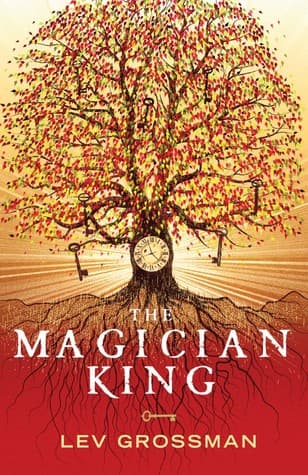
Synopsis
Covers the whole plot, including the ending.
- Difficulty
- Medium
- Pacing
- Variable
- Mood
- Dark, Cynical, Adventurous, Reflective
- Read it if
- You loved 'The Magicians' and want to continue the cynical, deconstructive fantasy journey, or if you enjoy morally gray characters and explorations of the darker side of magic.
- Skip it if
- You prefer lighthearted fantasy, dislike protagonists who are often unhappy despite having everything, or found the first book too bleak.
The Magician King Plot Summary
Covers the whole plot, including the ending.
The Burden of Rulership in Fillory
Years have passed since Quentin Coldwater, Eliot Waugh, Janet Way, and Josh Hoberman became Kings and Queens of Fillory. They live in Castle Whitespire, enjoying feasts, magic, and their subjects' admiration. However, the initial excitement has gone, replaced by boredom and a feeling of not being fulfilled. Quentin, especially, feels a deep sadness, wanting a new quest or purpose beyond their luxurious but aimless life. Eliot and Janet constantly try to outdo each other, while Josh mostly remains unaware, happy with simple pleasures. Fillory's magic, once amazing, now feels routine, and the four rulers find themselves lost in their own paradise.
The Quest for the Golden Key and Julia's Return
During a ceremonial hunt, a magic stag appears, speaking to Quentin and saying that Fillory is dying because a golden key is missing. This news makes Quentin want adventure again. Soon after, Julia Wicker, Quentin's childhood friend who was not allowed into Brakebills and found magic through illegal ways, suddenly appears in Fillory. She is no longer the innocent girl Quentin knew but a strong magician, changed by her experiences. Julia explains her journey, saying she has been to Fillory before, through a different, darker path. Together, Quentin and Julia decide to go on a quest to find the golden key, hoping it will bring Fillory and their own spirits back to life.
Banished to the Mundane World
Quentin and Julia hire a magic sailing ship, the Muntjac, to travel to Fillory's outer islands to find clues about the golden key. Their journey suddenly stops when, during a storm, a strong magic force takes them not to another part of Fillory, but back to Earth. They find themselves in Chesterton, Massachusetts, right outside Quentin's parents' house – the place he had desperately tried to leave. Without their Fillorian clothes and most of their direct magic, they must face the everyday world they had left, a sharp difference from the magic kingdom they ruled.
Julia's Dark Past Revealed
While stuck on Earth, Julia starts to tell Quentin her full past. After failing the Brakebills entrance exam, she became obsessed with learning magic. She joined a hidden group of street magicians, or 'hedge witches,' who practiced dangerous, forbidden magic. This path led her through increasingly dark and risky rituals, including sacrifices, dealing with small gods, and finally, a terrible meeting with a bad entity called 'the Shade.' Julia’s story is an honest look at the cost of magic when pursued outside regular schools, showing her strength but also the deep scars she carries from her experiences.
The Betrayal and the Beast
Julia's story ends with her group's desperate attempt to summon a small god, Our Lady of the Evergreens, hoping to get strong magic. The ritual goes very wrong, leading to many of her friends' deaths and Julia herself being hurt by a powerful magic entity, who is revealed to be the Beast, Martin Chatwin, in a weak state. During this traumatic event, Julia briefly sees Fillory, understanding that it is a real place. This experience fundamentally changes her, making her more determined and fueling her search for power and understanding, putting her on a path that would eventually lead her back to Fillory and Quentin.
The Search for the Third Key
Back in Fillory, Eliot, Janet, and Josh are struggling to manage the kingdom without Quentin. The prophecy of the seven golden keys becomes more urgent as Fillory's magic weakens. Quentin and Julia, having returned to Fillory through a Narnia-like portal in a clock, learn that there isn't just one missing key, but seven, and they already have two. Their quest leads them to the Neitherlands, a place connecting all magic worlds, and then to the Library at the End of the World. This large, magic library holds all knowledge and is a central place for their search, revealing more about Fillory's true nature and its magic.
The Library and the Dragons
Inside the Library's endless shelves, Quentin and Julia find old books telling Fillory's history, how the keys were made, and the quest's true goal. They learn that the keys are not just objects but basic parts of Fillory's existence. Their search for the third key leads them to a dragon, a powerful guardian of one of the keys. This meeting tests their magic skills and courage, making them work together and use Julia's darker, more practical magic knowledge to succeed. They eventually get the third key, but the quest's true meaning remains hidden.
The Voyage to the Edge of the World
The clues for the remaining keys lead Quentin and Julia, now with a librarian named Poppy, on a dangerous trip to Fillory's very edge. This journey takes them through dangerous seas and meetings with strange, mythical creatures. They eventually reach the 'End of the World,' a huge waterfall where Fillory's waters fall into nothing. To go on, they must pass through a magic barrier, a gate to another realm. This passage is full of danger and needs a leap of faith, testing their determination and pushing them further into Fillory's unknown mysteries.
The Secret of the Underworld and the Watcher
Beyond the waterfall, Quentin, Julia, and Poppy find themselves in a hidden underworld, a realm of the dead and forgotten within Fillory. Here, they meet the Watcher, a powerful, old being who has been guarding the remaining keys. The Watcher reveals the deeper truth about the keys: they are not just for Fillory, but for all magic, and getting them back is tied to existence itself. The Watcher challenges them, making them prove they are worthy and understand magic. This meeting is a turning point, as Quentin and Julia realize the true size of their mission and the huge power they are dealing with.
The Unveiling of the Creators and the Sacrifice
The journey ends with a meeting with Umber and Ember, the goat-gods who made Fillory. They say that Fillory is dying because they themselves are dying, and the keys are not to save Fillory, but to open a door to the 'real' Fillory, a new, untouched world. To use the keys and open this door, a big sacrifice is needed. Julia, driven by her past trauma and her deep understanding of magic's cost, makes the ultimate sacrifice: she offers herself to become a goddess, a Dryad, to give the necessary power. This act changes her, cutting her ties to humanity but saving Fillory.
A New Fillory and a New Purpose
With Julia's sacrifice, the seven keys activate, and a new, thriving Fillory is born, free from the old one's decay. Quentin, Eliot, Janet, and Josh are offered the chance to rule this new kingdom. However, Quentin, greatly changed by his experiences and Julia's sacrifice, chooses a different path. He decides to stay in the old, dying Fillory, now a desolate but still magic place, to protect Julia's new form as a Dryad and ensure the old world's peaceful end. He takes on a role as a guardian, finding a quiet purpose that he had not found as king, finally accepting his place in the magic world with new maturity and understanding.
The Magician King Characters
Quentin Coldwater
Protagonist
A melancholic King of Fillory, searching for meaning and purpose in a magical world.
Quentin, having achieved his childhood dream of becoming a King of Fillory, finds himself deeply unfulfilled and bored with the luxuries of royalty. He grapples with a pervasive ennui, longing for adventure and a true purpose. His journey in 'The Magician King' is one of self-discovery, moving from passive discontent to active seeking, and finally, to a mature acceptance of a guardianship role. He is often introspective, prone to self-pity, but ultimately driven by a desire for genuine magic and meaning beyond superficial pleasures. His past trauma of being an outsider and his deep love for the escapism of Fillory continue to shape him.
Relationships: Julia Wicker (Childhood friend, fellow quest-taker, complex magical bond); Eliot Waugh (Co-King of Fillory, close friend, often exasperated by Quentin); Janet Way (Co-Queen of Fillory, friend, often competitive); Josh Hoberman (Co-King of Fillory, friend, generally good-natured); Poppy (Fellow adventurer on the quest for the keys)
Julia Wicker
Co-protagonist/Supporting
Quentin's childhood friend, a powerful and hardened hedge witch with a traumatic past.
Julia is a formidable and complex character, whose narrative forms a significant portion of the book. Denied entry to Brakebills, she pursued magic through dangerous, unsanctioned channels, becoming a 'hedge witch.' Her experiences are harrowing, involving dark rituals, personal sacrifice, and a traumatic encounter with the Beast. She is driven by an intense desire for magical knowledge and power, having faced the harsh realities of magic outside of institutions. Her resilience is immense, but she carries deep scars. She is pragmatic, often cynical, but ultimately capable of profound selflessness, culminating in her transformation into a goddess.
Relationships: Quentin Coldwater (Childhood friend, fellow quest-taker, unrequited love/deep bond); Kady (Fellow hedge witch, friend); The Beast (Martin Chatwin) (Perpetrator of her trauma)
Eliot Waugh
Supporting
Co-King of Fillory, witty and cynical, struggling with the responsibilities of leadership.
Eliot is one of the four Kings of Fillory, known for his sharp wit, theatrical flair, and often cynical outlook. Despite his privileged position, he, like Quentin, feels a sense of emptiness and boredom with royal life. He often uses humor and alcohol as coping mechanisms for his underlying dissatisfaction. He is deeply loyal to his friends, particularly Quentin, and takes his responsibilities as king seriously, even if he complains about them. His interactions with Janet are often a source of comedic relief and underlying tension. He represents the struggle of finding purpose even in a seemingly perfect world.
Relationships: Quentin Coldwater (Co-King, close friend); Janet Way (Co-Queen, competitive friend); Josh Hoberman (Co-King, friend)
Janet Way
Supporting
Co-Queen of Fillory, fierce and fashionable, but also seeking more from life.
Janet is the other female King (Queen) of Fillory, characterized by her bold personality, fashion sense, and directness. She is often seen competing with Eliot and is fiercely independent. Like her fellow rulers, she finds the endless luxury of Fillory eventually unsatisfying, hinting at a desire for more meaningful engagement. She is practical and resilient, capable of holding her own in any situation. While not as overtly philosophical as Quentin, she shares a similar underlying search for purpose amidst their extraordinary lives.
Relationships: Quentin Coldwater (Co-King, friend); Eliot Waugh (Co-King, competitive friend); Josh Hoberman (Co-King, friend)
Josh Hoberman
Supporting
Co-King of Fillory, good-natured and hedonistic, often oblivious to deeper issues.
Josh is the fourth King of Fillory, generally portrayed as the most easygoing and least introspective of the group. He enjoys the pleasures of Fillory without much existential angst, often focusing on food, drink, and parties. While he can appear simple, he is a loyal friend and a capable magician. His presence provides a contrast to the often-brooding natures of Quentin and Eliot, highlighting different ways of coping with the extraordinary. He is a source of levity but also a reminder that even in paradise, some find contentment while others seek more.
Relationships: Quentin Coldwater (Co-King, friend); Eliot Waugh (Co-King, friend); Janet Way (Co-King, friend)
Poppy
Supporting
A librarian from the Library at the End of the World, who joins the quest for the keys.
Poppy is a resourceful and knowledgeable librarian encountered by Quentin and Julia in the Neitherlands. She is a skilled magician and possesses extensive knowledge of magical lore and the various worlds connected by the Library. She joins their quest for the golden keys, providing valuable insight and assistance. Her presence introduces another perspective on the magical world, one focused on preservation and knowledge. She is pragmatic and brave, proving to be a reliable companion during their perilous journey.
Relationships: Quentin Coldwater (Fellow quest-taker); Julia Wicker (Fellow quest-taker)
Umber and Ember
Supporting/Antagonists
The goat-god creators of Fillory, revealed to be dying and causing Fillory's decay.
Umber and Ember are the twin goat-gods who are the original creators of Fillory, revered by its inhabitants. They are ancient and powerful, but by the events of 'The Magician King,' they are slowly dying, which in turn causes Fillory to decay. They are the ultimate revealers of the true nature of the seven keys and the purpose of the quest. They represent the ephemeral nature of even godly power and the cyclical nature of creation and destruction. Their roles are both divine and tragically mortal, setting the stage for Fillory's rebirth.
Relationships: Fillorians (Creators and deities); Quentin Coldwater (Recipient of their revelations)
The Watcher
Supporting
An ancient, powerful being guarding the keys in the Fillorian underworld.
The Watcher is a mysterious and ancient entity encountered by Quentin and Julia in the underworld beneath Fillory. This being is the guardian of some of the golden keys and possesses deep knowledge of Fillory's history, magic, and its connection to other worlds. The Watcher challenges the protagonists, testing their understanding and worthiness, and provides crucial information about the true scope of the quest. The Watcher represents ancient, primordial magic and the deeper, often unsettling, truths of the magical universe.
Relationships: Quentin Coldwater (Challenger/student); Julia Wicker (Challenger/student)
The Magician King Themes
The Burden of Utopia and Disillusionment
The novel looks at how even getting one's ultimate fantasy, like ruling Fillory, can lead to boredom and a lack of purpose. Quentin and his friends find that endless luxury and easy magic do not mean happiness, leading to a deep feeling of sadness. This idea is clear in Quentin's constant search for new quests and Eliot's sarcastic humor, showing that true happiness comes from meaningful challenge and growth, not unchanging perfection. The first joy of Fillory gives way to the understanding that paradise without purpose is its own kind of prison.
“We'd won. We were Kings and Queens. And it turned out that being a king or queen in Fillory was a lot like being a rich kid in a major metropolitan city: You had a lot of stuff and a lot of time and very little to do.”
The Cost and Nature of Magic
Through Julia's detailed past, the novel explores the darker, more dangerous parts of magic when practiced without rules. Her journey as a hedge witch shows the sacrifices, physical and mental costs, and moral compromises needed to get magic power without proper guidance. This is a sharp contrast to Brakebills' relatively safe and structured magic. The theme looks at whether magic is naturally good or bad, or simply a force that shows its users' intentions and strength, often at a terrible price. Julia's change into a goddess is the strongest example of this cost and power.
“Magic was a gift. It was a power. But it was also a burden, a responsibility, and a curse. And if you didn't know what you were doing, it would eat you alive.”
Identity and Self-Discovery
Both Quentin and Julia go through big journeys of self-discovery. Quentin, at first defined by his obsession with Fillory and his feelings of not being good enough, struggles to find his place and purpose even after getting his dream. His quest for the keys makes him face his passivity and finally take on a selfless role as a guardian. Julia's journey is even more life-changing, as she takes back control after trauma and gives up her humanity to become a god, finding a powerful new identity. The novel suggests that true identity is made through hardship, choice, and often, big change.
“He hadn't found himself, not really. He'd just found a place where he could be himself, which was almost the same thing.”
Escapism vs. Engagement
The novel continues to look at the tension between avoiding reality and facing it. Fillory at first represents the ultimate escape for Quentin, but he learns that even a perfect fantasy world needs active involvement and responsibility. His being sent back to Earth makes him face the everyday world he ran from, while Julia's story shows the painful reality of trying to force magic into existence when it's denied. The final solution suggests that true fulfillment is not in escaping, but in actively shaping and protecting the world, whether magic or everyday, and accepting its challenges.
“Fillory wasn't just a place. It was an idea. And sometimes ideas were more powerful than places.”
Sacrifice and Redemption
Sacrifice is a repeated idea, most clearly seen in Julia's change into a Dryad goddess to save Fillory. Her act is not just a physical change but a spiritual one, making up for her past trauma and giving her a new, powerful purpose. Quentin's choice to stay in the old Fillory to protect Julia's new form is also a sacrifice, giving up a new paradise for a lonely guardianship. The novel suggests that true love and purpose often require a big personal cost, leading to a kind of redemption or higher calling.
“The only way to truly save anything, she realized, was to give something up for it.”
Plot Devices & Literary Techniques
Dual Narrative Perspective
Alternating chapters between Quentin's current quest and Julia's past experiences.
The novel expertly employs a dual narrative structure, switching between Quentin's present-day quest for the golden keys in Fillory and Julia's extensive flashback narrative detailing her harrowing journey through underground magic. This device not only provides crucial backstory for Julia, explaining her transformed character and formidable magical abilities, but also offers a contrasting perspective on the nature of magic – the institutional vs. the illicit. It builds suspense and deepens character understanding by revealing the parallel, yet vastly different, paths two childhood friends took to magic.
The Seven Golden Keys
A magical MacGuffin driving the primary quest and revealing deeper truths about Fillory.
The seven golden keys serve as the central MacGuffin of the plot, initially presented as a means to save Fillory from decay. As the quest progresses, their true nature and purpose are gradually revealed to be far more profound than simple magical artifacts. They are not merely objects but fundamental components of Fillory's existence, capable of opening the door to a new, untainted version of the world. This device propels the narrative forward, uncovers deeper lore, and forces the characters to confront the true stakes of their magical world.
The Neitherlands
A liminal, inter-dimensional space connecting all magical worlds.
The Neitherlands is a crucial plot device that functions as a magical hub or crossroads, allowing travel between different magical worlds, including Earth and Fillory. It is depicted as a vast, grey, empty space containing millions of 'pools' that serve as portals. This device facilitates the characters' movements across realms, particularly when Quentin and Julia are unexpectedly banished from Fillory to Earth and need a way back. It also houses the Library at the End of the World, which serves as a repository of knowledge vital to the quest.
The Library at the End of the World
A vast, magical library containing all knowledge, serving as a source of exposition and clues.
Located within the Neitherlands, the Library at the End of the World is an immense, magical repository containing every book ever written and those yet to be written, spanning all magical worlds. This device functions as a crucial source of exposition and plot advancement, as Quentin and Julia consult its vast archives to uncover clues about the golden keys, the history of Fillory, and the nature of the gods. It is also where they encounter Poppy, a key supporting character, and gain access to vital information that shapes the remainder of their quest.
The Magician King Quotes
“Magic is a language, and like any language, it can be used to tell lies.”
“You don't get to choose what you are. You only get to choose what you do with it.”
“The world is full of obvious things which nobody by any chance ever observes.”
“There are no happy endings, because nothing ends.”
“You can't go back and change the beginning, but you can start where you are and change the ending.”
“The only way to deal with an unfree world is to become so absolutely free that your very existence is an act of rebellion.”
“Magic doesn't come from talent. It comes from pain.”
“We are all stories in the end. Just make it a good one.”
“The price of getting what you want is getting what you once wanted.”
“You have to break a few eggs to make an omelet. But what if you're the egg?”
“The world is not a wish-granting factory.”
“Sometimes the only way to stay sane is to go a little crazy.”
“Adventure is just hardship with an inflated sense of self-importance.”
“The truth is a mirror in the hands of God. It falls, and breaks, and everybody picks up a piece and thinks they have the whole thing.”
Quiz
10 questions on the plot and the characters. Each answer comes with a short explanation.
Question 1
What position do Quentin and his friends hold in Fillory at the beginning of the book?
- Students at Brakebills
- Royal advisors to the Chatwins
- Kings and queens of Fillory
- Magical researchers exploring Fillory
Show answer
C. Kings and queens of Fillory At the start of 'The Magician King,' Quentin and his Brakebills friends have become the rulers of Fillory, having fled the mundane world after the events of 'The Magicians.'
Question 2
What event during a morning hunt prompts Quentin and Julia to embark on their journey?
- They discover a hidden treasure map
- They encounter a talking beast that gives them a quest
- The hunt takes a sinister turn
- Quentin receives a magical summons from Earth
Show answer
C. The hunt takes a sinister turn The book opens with a morning hunt that goes wrong in an unsettling way, which motivates Quentin to seek purpose beyond royal luxury, leading to his journey with Julia.
Question 3
Where are Quentin and Julia unexpectedly transported during their magical sailing trip?
- Back to Brakebills Academy
- To the Neitherlands
- To Quentin's parents' house in Chesterton, Massachusetts
- To the underground realms of Fillory
Show answer
C. To Quentin's parents' house in Chesterton, Massachusetts Their pleasure cruise turns into an adventure when magic dumps them back into the mundane world, specifically at Quentin's childhood home, a place he dislikes.
Question 4
What kind of magic does Julia use to help save them after their unexpected transport?
- Traditional Brakebills-style magic
- Magic learned from the Fillorian royals
- Black, twisted magic learned on the streets
- Ancient spells from Fillorian libraries
Show answer
C. Black, twisted magic learned on the streets Julia, who was rejected from Brakebills, learned raw and dangerous magic through underground means, which becomes crucial in their struggles.
Question 5
Why does Quentin feel dissatisfied with his life as a king in Fillory early in the book?
- He misses the academic challenges of Brakebills
- The days and nights of royal luxury are starting to pall
- He is in conflict with the other rulers
- Fillory is under attack by dark forces
Show answer
B. The days and nights of royal luxury are starting to pall Quentin's restlessness stems from the emptiness of his achieved fantasy; having become king, he finds the luxury unfulfilling and seeks new purpose.
Question 6
What is a key theme explored through Julia's character arc in this book?
- The importance of formal education in magic
- The thrill of royal adventure and conquest
- Angry genius and the cost of unconventional magic
- The simplicity of life in the mundane world
Show answer
C. Angry genius and the cost of unconventional magic Julia's storyline highlights themes of trauma, resilience, and the dark side of magic, as her 'angry genius' drives her powerful but perilous path.
Question 7
Which of the following best describes the overall quest in 'The Magician King'?
- A search for a lost magical artifact to save Fillory
- A grand voyage into the dark, glittering heart of magic
- A battle against a new enemy from Earth
- A diplomatic mission to unite Fillory's kingdoms
Show answer
B. A grand voyage into the dark, glittering heart of magic The book frames their journey as an epic exploration of magic's complexities, blending adventure with philosophical depth about power and desire.
Question 8
How does Julia's magical background differ fundamentally from Quentin's?
- She learned magic from books, while he learned from teachers
- She was formally trained at Brakebills, while he was self-taught
- She was rejected from Brakebills and learned magic through dangerous, informal means
- She inherited magic from her family, while he discovered it accidentally
Show answer
C. She was rejected from Brakebills and learned magic through dangerous, informal means Julia's rejection from Brakebills led her to seek magic in gritty, unsupervised ways, resulting in a raw and painful mastery contrasted with Quentin's structured education.
Question 9
What broader literary role does 'The Magician King' aim to fulfill, as suggested by the description?
- A light-hearted parody of fantasy tropes
- An epic quest for the Harry Potter generation
- A historical fiction about real magicians
- A strict sequel that only continues the previous plot
Show answer
B. An epic quest for the Harry Potter generation The book positions itself as a mature, literary fantasy that resonates with readers who grew up with series like Harry Potter, exploring darker, more complex themes.
Question 10
In what way does the book's structure blend Quentin and Julia's stories?
- Through alternating chapters that contrast their magical journeys
- By having them narrate the same events from different perspectives
- Through a single timeline focused only on their joint adventure
- By relegating Julia's past to a brief flashback
Show answer
A. Through alternating chapters that contrast their magical journeys 'The Magician King' interweaves Quentin's present-day quest with Julia's past experiences in separate chapters, deepening her character and themes of magic's costs.
The Magician King FAQ
What is 'The Magician King' about?
The novel follows Quentin Coldwater and Julia Wicker, now rulers of the magical land of Fillory, who embark on a quest to retrieve a golden key. Their journey takes them from Fillory's outer reaches back to Earth, where they must confront their pasts and unravel a cosmic crisis threatening all magic across multiple worlds.
Why should I read 'The Magician King'?
This sequel deepens the dark, adult-oriented fantasy of 'The Magicians' with richer world-building, higher stakes, and Julia's compelling backstory. It explores themes of power, trauma, and the cost of magic while delivering thrilling adventures across Fillory and Earth.
What is the background/setting of 'The Magician King'?
The story alternates between Fillory—a Narnia-like fantasy realm where Quentin and friends rule as kings and queens—and Earth, particularly Massachusetts and magical underworlds. It also delves into Julia's past through flashbacks to her time learning hedge magic after failing Brakebills' entrance exam.
What are the most memorable quotes?
Key quotes include Julia's 'Magic doesn't come from talent, it comes from pain' reflecting her traumatic journey, and Quentin's realization 'You don't get to choose what you are, but you get to choose what you do' during his quest. These capture the book's themes of sacrifice and agency.
What writing style does Lev Grossman use?
Grossman employs a literary, character-driven style blending fantasy tropes with psychological realism. The narrative alternates between Quentin's third-person perspective and Julia's first-person flashbacks, creating a gritty, introspective tone that deconstructs traditional fantasy heroism.
What minor details add significant meaning?
The golden key Quentin seeks is later revealed to be one of seven magical artifacts needed to restore balance to magic. Small details like Julia's scarred hands from hedge magic rituals symbolize her painful path to power, while the Talking Animals' subdued behavior in Fillory hints at the realm's decay.
What are some subtle foreshadowing moments?
Early scenes of Fillory's magic weakening—like the Unicorn's muted presence—foreshadow the larger crisis of magic draining from all worlds. Julia's flashbacks to her brutal initiation with the hedge witches subtly hint at her eventual role in reactivating magic through extreme sacrifice.
What unexpected character connections exist?
Julia's hedge magic mentor, Asmodeus, is revealed to be a powerful entity connected to the Neitherlands, linking her underground training to the cosmic magic system. Quentin's quest also ties back to the Chatwins from Fillory's history, showing how past actions ripple into the present.
What are unspoken character motivations?
Quentin's quest is driven by a deep-seated need to prove his worth beyond Fillory's throne, masking insecurities from his Earthly failures. Julia's relentless pursuit of magic stems from trauma and rejection, seeking control in a world that denied her entry to Brakebills.
What psychological complexities do characters exhibit?
Quentin grapples with depression and entitlement even as a king, while Julia embodies rage and resilience, her genius twisted by pain. Their dynamic shifts from rivalry to uneasy alliance, reflecting how trauma shapes their approaches to magic and power.
What are the major emotional turning points?
Key moments include Quentin's humbling return to his parents' house on Earth, stripping him of royal status, and Julia's horrific rape by a trickster god during her hedge magic training, which hardens her resolve. The climax where Julia sacrifices herself to become a goddess marks a tragic transformation.
How do relationship dynamics evolve?
Quentin and Julia's relationship evolves from distant acquaintances to reluctant partners, bonded by shared trauma and purpose. Eliot and Janet's roles as Fillory's other rulers diminish as Quentin's quest takes center stage, highlighting isolation in leadership.
Which parts remain ambiguous or open-ended?
The fate of the seven keys beyond the first two remains unresolved, setting up the sequel. Julia's new existence as a goddess is left enigmatic—whether she retains humanity or becomes an impersonal force of magic is unclear, inviting interpretation.
What are controversial scenes or decisions?
Julia's graphic rape by the trickster god Reynard is highly controversial, depicting trauma as a source of magical power. Quentin's decision to abandon Fillory's throne for his quest is debated, as it risks the kingdom for personal redemption.
'The Magician King' ending explained: how it ends & what it means
The novel ends with Julia ascending as a goddess to restart magic's flow, while Quentin returns to Fillory stripped of kingship but with newfound purpose. This suggests magic requires profound sacrifice, and heroism often involves loss rather than glory.
What is the significance of the quest for the golden key?
The key represents the first step in restoring magic's balance across worlds, but it also serves as a metaphor for Quentin's search for meaning. Its retrieval forces him to confront his past on Earth and reevaluate his role as a ruler in Fillory.
How does Julia's backstory change the reader's perspective?
Julia's flashbacks reveal the brutal, unglamorous side of magic learned outside Brakebills, contrasting with Quentin's privileged education. Her journey from rejected applicant to powerful hedge witch—and eventually a goddess—challenges notions of who deserves magic and at what cost.
What role does Fillory play compared to Earth?
Fillory serves as a fantastical escape that ultimately proves flawed, mirroring Quentin's disillusionment, while Earth represents harsh reality and unresolved trauma. The shifting settings highlight the characters' struggles to belong in either world.
How does the book subvert traditional fantasy tropes?
By depicting kingship as boring and unfulfilling, magic as painful and traumatic, and quests as messy rather than heroic, Grossman deconstructs ideals from series like 'Harry Potter' or 'Narnia.' Characters face psychological consequences often ignored in classic fantasy.
About the author

Lev Grossman is an American author known for his contributions to contemporary fantasy literature. He is best recognized for his novels "The Magicians" and its sequel "The Magician King," which explore themes of magic and self-discovery in a modern setting. Grossman has also worked as a journalist and critic, contributing to various publications.
Similar books
- The Name of the Wind
Patrick Rothfuss
4.5 (716k) average on GoodreadsFantasyFeatures a talented but flawed protagonist and a rich, detailed magical world.
- A Darker Shade of Magic
V.E. Schwab
4.1 (201k) average on GoodreadsFantasyExplores parallel magical worlds and features compelling, complex magical systems.
- Harry Potter and the Goblet of Fire
J.K. Rowling
4.6 (2.6M) average on GoodreadsFantasyInvolves a magical tournament/quest and the discovery of deeper, darker magical forces.
- Neverwhere
Neil Gaiman
4.2 (430k) average on GoodreadsFantasyWhile both books feature hidden magical worlds intertwined with mundane reality and a protagonist thrust into them, The Magician King delves far deeper into the internal psychological struggles and disillusionment of its characters. Gaiman's Richard Mayhew is more of a reactive observer, whereas Grossman's characters are actively grappling with the existential weight of their magical lives, making The Magician King more introspective and less adventure-driven.
- Harry Potter and the Sorcerer's Stone
J.K. Rowling
4.5 (7M) average on GoodreadsFantasyRescued from a miserable life under the stairs, an orphaned boy discovers he's a wizard destined for a magical school, where he uncovers a dangerous secret tied to the dark wizard who murdered his parents.
- The Hunger Games
Suzanne Collins
4.3 (6.4M) average on GoodreadsFantasyIn a future where children fight to the death on live television, Katniss Everdeen volunteers for the arena, turning a death sentence into a fight for survival and a spark of rebellion.



Enjoyed the summary?
A summary gives you the shape of the book. The book itself has the detail, the examples and the voice.
Find The Magician King on AmazonAs an Amazon Associate, BookBrief earns from qualifying purchases. How we're funded