

Synopsis
Covers the whole plot, including the ending.
- Difficulty
- Easy
- Pacing
- Moderate
- Mood
- Cozy, Witty, Atmospheric, Intricate
- Read it if
- You enjoy classic British village mysteries with quirky characters and a strong sense of place.
- Skip it if
- You prefer fast-paced, action-oriented thrillers or explicit violence.
The Man With a Load of Mischief Plot Summary
Covers the whole plot, including the ending.
A Body in the Beer Keg
The English village of Long Piddleton is shaken when a discovery is made at The Man With a Load of Mischief pub. The body of Simon Lean, a local solicitor, is found in a beer keg in the cellar. The pub's owner, Mrs. Ringer, makes the find. The local police, led by Inspector Macalvie, are puzzled by the death and the lack of obvious motive or suspects. The incident immediately casts a shadow over the peaceful community, drawing attention from outsiders and causing a stir among residents.
Scotland Yard Arrives
Because of the unusual circumstances of Simon Lean's murder and the local police's lack of progress, Scotland Yard is called in. Detective Chief Inspector Richard Jury arrives in Long Piddleton. He is struck by the village's almost too-perfect appearance and its peculiar residents. Jury begins his investigation by interviewing Mrs. Ringer and other villagers, trying to understand Lean's last movements and any potential enemies. He finds himself navigating village gossip, hidden resentments, and a general reluctance from locals to offer helpful information.
The Eccentric Melrose Plant
Soon after arriving, Jury meets Melrose Plant, an unemployed, aristocratic gentleman who lives in a large but crumbling manor house nearby. Plant, whose real name is the Earl of Caverness, has given up his title and lives a life of quiet observation, often visiting local pubs. Jury finds Plant to be a valuable, if unusual, ally. Plant understands human nature and the social dynamics of Long Piddleton, often pointing Jury toward subtle clues and hidden motives that villagers might overlook or hide. Their partnership quickly becomes important to the investigation.
A Second Bizarre Murder
Just as Jury starts to understand the first murder, a second, equally strange killing occurs. The body of George Cross, a clockmaker, is found hanging from the sign of The Jack and Hammer pub, replacing the mechanical figure that usually hangs there. This second murder, happening in such a similar, dramatic way, causes panic in Long Piddleton. It confirms that a killer is in the village and increases the pressure on Jury to solve the case. The connection between the two victims and the two pubs becomes a main focus of the investigation.
The Pubs and Their Patrons
Jury and Plant work to understand the meaning of the two pubs, The Man With a Load of Mischief and The Jack and Hammer. They interview the owners, bartenders, and regular customers, looking for common threads or rivalries. They learn about the pubs' long histories, their distinct atmospheres, and the types of people who frequent them. Plant, with his knowledge of local stories and gossip, helps Jury navigate the complex social circles in the village, revealing old feuds, secret love affairs, and hidden financial dealings that might provide a motive for the murders. The pubs become central characters in the mystery.
Uncovering Village Secrets
As Jury and Plant dig deeper, they discover that Long Piddleton, beneath its charming exterior, hides many secrets. Financial problems, illicit relationships, and old grudges begin to appear. Simon Lean, the first victim, was a solicitor involved in various village dealings, suggesting motives tied to money or property. George Cross, the second victim, was a clockmaker, and his connection to Lean or any other villager is initially unclear. The investigators realize that the killer is likely someone within the community, someone familiar with the victims and the village's hidden currents, rather than an outsider.
The Role of the Pub Names
Jury, with his eye for detail, considers the unusual names of the two pubs: 'The Man With a Load of Mischief' and 'The Jack and Hammer.' He wonders if these names, and their associated imagery, hold a symbolic key to the killer's motive or method. Plant, ever the literary mind, speculates on potential allegorical connections, suggesting that the killer might be acting with a twisted sense of justice or a desire to communicate a message through the macabre settings of the murders. This line of inquiry adds another layer to the investigation, moving beyond simple motives to a more psychological understanding of the perpetrator.
A Suspect Emerges
Through diligent interviewing and careful piecing together of alibis and motives, Jury and Plant begin to focus on a specific person in the village. This person, initially seeming harmless, gradually shows inconsistencies in their story and has a hidden connection to both victims. The motive appears to come from a long-standing grievance or a desire for revenge, perhaps related to past events that have been carefully hidden. The idyllic appearance of Long Piddleton truly cracks as the reality of a killer living among them becomes clear, forcing the villagers to confront their own part in keeping the village's secrets.
The Climax and Confrontation
The investigation ends in a tense confrontation where Jury and Plant, with their evidence and insights, corner the killer. The perpetrator, driven by a deep sense of injustice and a carefully planned revenge, reveals their scheme. The seemingly random nature of the murders is explained, showing a precise, symbolic connection between the victims, the pubs, and the killer's personal history. The confrontation exposes the dark side of Long Piddleton, showing how old resentments can grow and erupt into violence, shattering the peace of the village and leaving its residents changed.
Aftermath and Reflection
With the killer caught, Long Piddleton begins to heal and come to terms with the events. The idyllic image of the village is broken, replaced by the reality of human malice. Jury reflects on the case, the peculiar crimes, and the unexpected bond he formed with Melrose Plant. The experience shows him that even in the most beautiful places, darkness can hide. As Jury prepares to leave, a sense of melancholy hangs over the village, along with a renewed appreciation for the truth, however unsettling.
Principal Figures
Detective Chief Inspector Richard Jury
Protagonist
A sharp, observant Scotland Yard detective tasked with solving the Long Piddleton murders.
Richard Jury is a highly intelligent and intuitive detective from Scotland Yard. He possesses a calm demeanor, a sharp wit, and a keen eye for human nature, often seeing beyond the obvious to uncover deeper motives. He is a methodical investigator but also open to unconventional approaches, making him an ideal partner for Melrose Plant. Jury is somewhat melancholy, often reflecting on the darker aspects of humanity, but remains committed to justice. He is meticulous in his work, piecing together clues with precision while also understanding the psychological underpinnings of crime.
Relationships: Melrose Plant (Unconventional investigative partner and friend); Inspector Macalvie (Local police contact, initially resistant but grows to respect Jury)
Melrose Plant
Supporting
An eccentric, titled local observer who becomes Jury's invaluable confidant and assistant.
Melrose Plant is the Earl of Caverness by birth, but has renounced his title to live a life of quiet observation and intellectual pursuit in his crumbling ancestral home. He is highly intelligent, with a dry wit and a deep understanding of human psychology, particularly the quirks and secrets of his fellow villagers. Plant is an invaluable asset to Jury, offering insights into local gossip, historical connections, and character motivations that an outsider would never glean. He is charming, understated, and often uses humor to mask his acute observational skills. His lack of official standing allows him to move freely and gather information subtly.
Relationships: Richard Jury (Investigative partner and close friend); Various Villagers (Acquaintance and object of his observations)
Inspector Macalvie
Supporting
The local police inspector initially in charge of the case, somewhat overwhelmed by the complexity.
Inspector Macalvie is the local police officer in charge of the initial murder investigation in Long Piddleton. He is competent but somewhat out of his depth with the bizarre nature of the crimes and the intricate social dynamics of the village. Initially, he views Jury's arrival with a mix of relief and mild resentment, as is common when Scotland Yard takes over a local case. However, he soon recognizes Jury's superior experience and acumen, becoming a cooperative and respectful colleague. He represents the more traditional, procedural approach to policing, contrasting with Jury's more intuitive style.
Relationships: Richard Jury (Colleague, initially cautious but becomes respectful); Local Constabulary (Commander)
Simon Lean
Mentioned
The first murder victim, a local solicitor found in a beer keg.
Simon Lean was a local solicitor in Long Piddleton, known for his involvement in various village affairs and property dealings. His murder, found stuffed into a beer keg, is the catalyst for the entire investigation. While dead, his character is revealed through the testimonies of others, painting a picture of a man who likely had dealings, both good and bad, with many villagers. He was not universally liked, and his professional and personal life held several secrets that become central to understanding the motive behind his gruesome death. He represents the hidden complexities beneath the village's surface.
Relationships: Various Villagers (Client, acquaintance, or rival); The Killer (Victim)
George Cross
Mentioned
The second murder victim, a clockmaker found on a pub sign.
George Cross was a clockmaker in Long Piddleton, and his body is discovered gruesomely displayed on the sign of The Jack and Hammer pub, replacing a mechanical figure. His death confirms a serial killer is at work and escalates the urgency of Jury's investigation. Like Lean, Cross's character is reconstructed through interviews with those who knew him. He seemed less outwardly controversial than Lean, making his connection to the first victim and the killer more puzzling initially. His profession as a clockmaker might hold symbolic significance to the killer's motive or method.
Relationships: Various Villagers (Acquaintance or customer); The Killer (Victim)
Mrs. Ringer
Supporting
The owner of The Man With a Load of Mischief pub, who discovers the first body.
Mrs. Ringer is the proprietor of The Man With a Load of Mischief, a traditional English pub. She is the unfortunate individual who discovers Simon Lean's body in the beer keg, thrusting her into the center of the murder investigation. She is a practical, no-nonsense woman, typical of a village publican, who is deeply affected by the gruesome events but also fiercely protective of her establishment and its reputation. Her testimony and observations provide crucial early insights into the victim and the pub's clientele. She represents the hardworking, grounded backbone of the village.
Relationships: Richard Jury (Witness and informant); Simon Lean (Victim, regular patron of her pub)
Various Villagers
Supporting
The diverse, gossipy, and secretive inhabitants of Long Piddleton.
The villagers of Long Piddleton collectively form a crucial 'character' in the narrative. They are a colorful cast of individuals, each with their own quirks, secrets, and relationships, contributing to the village's complex social tapestry. They are initially resistant to Jury's probing, often preferring to keep up appearances and protect their privacy. Their gossip, long-held grudges, and hidden connections are integral to the unfolding mystery. They represent the collective consciousness and hidden darkness that can reside within an seemingly idyllic community, and their reactions to the murders reveal much about human nature.
Relationships: Richard Jury (Subjects of investigation); Melrose Plant (Acquaintances and objects of his observation)
Themes & Insights
Appearance vs. Reality
The novel explores the contrast between Long Piddleton's charming appearance and the dark realities beneath its surface. The village initially seems like a peaceful English haven. However, the murders quickly break this illusion, revealing a community full of hidden secrets, old resentments, illicit affairs, and financial problems. The killer is likely someone who seemed harmless, showing how easily evil can hide in plain sight. This theme is central to the mystery, as Jury and Plant must uncover layers of deception to find the truth, proving that beauty can often mask depravity.
“The village was a lie, a painted backdrop hiding a stage where dark deeds were played out.”
The Nature of Evil
The book looks into the nature of evil, suggesting it is not always external or monstrous, but can grow within seemingly ordinary people and communities. The murders are not random acts but come from deep motives—revenge, jealousy, or a twisted sense of justice—developed over time. The killer is not a stranger but someone from the close-knit village, highlighting how everyday resentments can become horrific acts. This theme forces characters and readers to consider that anyone is capable of darkness, and that evil can be a planned act rather than an impulsive one, reflecting the complexities of human morality.
“It wasn't the stranger you had to fear, Jury thought, but the face you saw every day.”
Community and Isolation
While Long Piddleton is a close-knit community, the novel also explores themes of isolation within it. Despite living close by, many villagers hide deep secrets and resentments, leading to emotional isolation. The murders make this worse, as suspicion falls on everyone, causing people to withdraw and distrust their neighbors. The killer acts from a place of deep isolation, driven by grievances that made them feel alienated from the community. Jury, as an outsider, initially feels isolated but slowly connects by forming a bond with Melrose Plant, showing how connection can be found even amidst widespread distrust.
“Even in a village, one could be utterly alone, especially with a secret to keep.”
Symbolism and Theatricality in Crime
A significant theme is the symbolic nature of the murders. The killer not only commits murder but stages the bodies in specific, grotesque ways—stuffed in a beer keg, replacing a mechanical figure on a pub sign. The names of the pubs, 'The Man With a Load of Mischief' and 'The Jack and Hammer,' are not coincidental but hold symbolic meaning for the perpetrator. This suggests a killer driven by motive and a desire to send a message, enact a twisted form of justice, or re-enact a past event. The dramatic staging makes the crimes more chilling and provides important clues for Jury and Plant to decipher.
“This wasn't just murder; it was a statement, a macabre performance.”
Plot Devices & Literary Techniques
The Closed Circle Mystery
The murders occur within a confined community, limiting the suspect pool.
The novel utilizes the classic 'closed circle' or 'locked room' mystery trope, where the murders occur within the isolated, self-contained village of Long Piddleton. This device immediately narrows the suspect pool to the residents of the village, increasing tension and suspicion among the characters. It allows for a deep exploration of the interpersonal relationships, secrets, and histories of the villagers, as the killer must be someone known to the community. This setup enhances the theme of appearance versus reality, as the killer is forced to hide in plain sight among their neighbors, making the familiar suddenly terrifying.
The Eccentric Observer/Sidekick
Melrose Plant, a keen but unofficial investigator, offers crucial insights.
Melrose Plant serves as the eccentric observer and sidekick, a common device in mystery fiction. Despite having no official police capacity, his aristocratic background, local knowledge, and sharp observational skills make him an invaluable asset to Detective Chief Inspector Jury. Plant's ability to blend into the village, gather gossip, and interpret subtle social cues allows him to uncover information that Jury, as an outsider, might miss. He provides a foil to Jury's more formal approach, often offering humorous commentary while also driving the plot forward with his unique insights into human nature and local lore. This dynamic adds both intellectual depth and charm to the investigation.
Symbolic Crime Scenes
The locations and methods of murder hold symbolic meaning for the killer.
The novel prominently features symbolic crime scenes, where the killer meticulously stages the bodies in ways that hold specific meaning. The first victim is found in a beer keg at 'The Man With a Load of Mischief,' and the second replaces a mechanical figure on the sign of 'The Jack and Hammer.' These aren't just random locations; the names of the pubs and the methods of disposal are deliberate, acting as a form of communication or a twisted re-enactment by the perpetrator. This device elevates the murders beyond simple acts of violence, providing critical clues about the killer's motive, psychological state, and connection to the victims, forcing Jury to interpret the 'message' behind the macabre displays.
Red Herrings
Misleading clues and false suspects divert the investigation.
As is typical in a mystery, the narrative employs several red herrings to misdirect both the investigators and the reader. These can take the form of suspicious characters with plausible motives, misleading pieces of evidence, or false leads that appear to point towards an obvious culprit. These diversions serve to increase suspense, complicate the investigation, and challenge Jury's deductive reasoning. By introducing multiple potential suspects and motives, the novel keeps the audience guessing, making the eventual revelation of the true killer more surprising and satisfying. The red herrings often play on the villagers' own hidden secrets and prejudices, making them seem more credible.
The Man With a Load of Mischief Quotes
“The fog was a living thing, a malevolent presence that had swallowed the village whole.”
“Richard Jury, for all his polished exterior, was a man who understood the dark corners of the human heart.”
“There's always a reason, even if it's a reason only a madman could understand.”
“Long Piddleton had a way of keeping its secrets, burying them deep beneath layers of ivy and complacency.”
“He found that the truth, much like a good ale, often had a bitter aftertaste.”
“The pub, 'The Man With a Load of Mischief,' seemed to hum with unspoken stories, a repository of village lore.”
“It wasn't the grand gestures that revealed a person, but the small, unconscious tells.”
“Even the most ordinary lives could harbor extraordinary darkness.”
“The past, like a persistent ghost, always found a way to haunt the present.”
“Curiosity, he mused, was both a blessing and a curse for a detective.”
“The quietest places often held the loudest secrets.”
“Justice wasn't always swift, and rarely clean.”
“He had learned that madness often wore the most convincing mask of sanity.”
“The scent of damp earth and old beer hung in the air, a peculiar perfume of English village life.”
Quiz
10 questions on the plot and the characters. Each answer comes with a short explanation.
Question 1
Where was the first dead body discovered in 'The Man With a Load of Mischief'?
- In the cellar of the Jack and Hammer
- Stuck in a keg of beer at the Man with a Load of Mischief
- On the roof of the Long Piddleton church
- Behind the bar at the Old Silk Mill
Show answer
B. Stuck in a keg of beer at the Man with a Load of Mischief The first body was found in a very unusual place: stuck inside a keg of beer at the Man with a Load of Mischief pub.
Question 2
What was unique about the second body found at the Jack and Hammer pub?
- It was dressed in a jester's costume.
- It was found floating in the nearby river.
- It had replaced the mechanical man on the pub's sign.
- It was discovered inside the pub's chimney.
Show answer
C. It had replaced the mechanical man on the pub's sign. The second body was dramatically displayed, replacing the mechanical man on the pub's sign, making it a macabre timepiece.
Question 3
Who is the Scotland Yard inspector called in to investigate the murders?
- Detective Sergeant Wiggins
- Detective Chief Inspector Richard Jury
- Superintendent Battle
- Inspector Roderick Alleyn
Show answer
B. Detective Chief Inspector Richard Jury Detective Chief Inspector Richard Jury is the protagonist from Scotland Yard dispatched to Long Piddleton to solve the crimes.
Question 4
What is the name of the village where the murders take place?
- Little Piddleton
- Great Piddleton
- Long Piddleton
- Upper Piddleton
Show answer
C. Long Piddleton The quaint, postcard-like village where the gruesome events unfold is named Long Piddleton.
Question 5
Who is Melrose Plant, and what is his role in the investigation?
- He is the local pub owner who becomes a suspect.
- He is a keen observer of human nature who helps Jury with insights.
- He is the victim of the second murder.
- He is a rival detective who complicates Jury's investigation.
Show answer
B. He is a keen observer of human nature who helps Jury with insights. Melrose Plant is a local resident, described as a keen observer of human nature, who provides crucial, locally-informed insights to DCI Jury.
Question 6
What is the initial inclination of the villagers regarding the killer's origin?
- They suspect a local feud between the two pubs.
- They believe the killer must be an outsider, from outside of town.
- They think a serial killer is targeting pub patrons.
- They blame a forgotten historical curse on the village.
Show answer
B. They believe the killer must be an outsider, from outside of town. The villagers of Long Piddleton initially look 'outside of town' for the killer, unwilling to believe one of their own could be responsible.
Question 7
What specific aspect of his neighbors does Melrose Plant suggest Jury investigate to find the killer?
- Their financial records and debts.
- Their forgotten family histories.
- The darkest parts of their hearts.
- Their alibis for the nights of the murders.
Show answer
C. The darkest parts of their hearts. Melrose Plant directs Jury to look beyond surface appearances, into 'the darkest parts of his neighbors’ hearts,' implying hidden motives and secrets.
Question 8
What is the symbolic significance of the 'mechanical man' being replaced by a body on the Jack and Hammer sign?
- It symbolizes a breakdown of traditional village life.
- It represents a macabre commentary on time running out for the killer.
- It indicates the killer's fascination with clockwork mechanisms.
- It suggests the victim was a watchmaker by trade.
Show answer
B. It represents a macabre commentary on time running out for the killer. The replacement of the mechanical man, who 'kept the time,' with a dead body turns the pub sign into a grim, symbolic statement about time, death, and perhaps a countdown for the killer.
Question 9
How do the two murder locations, 'The Man With a Load of Mischief' and 'The Jack and Hammer,' contribute to the overall atmosphere of the novel?
- They represent the only two social gathering places in a very isolated village.
- Their quaint, traditional names contrast sharply with the brutal crimes, creating an unsettling dichotomy.
- They are historical landmarks that hint at a long-standing village rivalry.
- They are owned by the primary suspects, narrowing down the investigation.
Show answer
B. Their quaint, traditional names contrast sharply with the brutal crimes, creating an unsettling dichotomy. The charming, almost whimsical names of the pubs ('Man With a Load of Mischief,' 'Jack and Hammer') create a stark and unsettling contrast with the violent, macabre murders, enhancing the mystery's dark atmosphere.
Question 10
What characteristic of Long Piddleton makes it a challenging setting for a murder investigation, despite its 'postcard village' appearance?
- Its large, transient population makes tracking suspects difficult.
- The close-knit community and shared secrets make people reluctant to speak.
- Its remote location means limited access to forensic resources.
- The local police force is notoriously corrupt and uncooperative.
Show answer
B. The close-knit community and shared secrets make people reluctant to speak. The 'postcard village' facade often hides a close-knit community with deeply intertwined lives and shared secrets, making residents hesitant to betray their neighbors, thus complicating an outsider's investigation.
The Man With a Load of Mischief FAQ
What is the central premise of 'The Man With a Load of Mischief'?
The novel kicks off with two bizarre murders in the seemingly idyllic village of Long Piddleton, each occurring at a different pub. Detective Chief Inspector Richard Jury is called in from Scotland Yard to investigate these peculiar deaths, which involve bodies being found in highly unusual, almost theatrical, positions.
Who are the primary investigators in the case?
The main investigator is Detective Chief Inspector Richard Jury, a Scotland Yard detective. He is significantly aided by Melrose Plant, a local resident and an astute observer of human nature, who often provides crucial insights and directs Jury's attention to the complexities of the villagers themselves.
Where do the initial murders take place, and what are the unusual circumstances surrounding them?
The first murder occurs at 'The Man With a Load of Mischief' pub, where a body is discovered grotesquely stuffed into a beer keg. The second victim is found at 'The Jack and Hammer' pub, impaled on the pub's sign beam, eerily replacing its mechanical time-keeping figure. These bizarre placements suggest a killer with a theatrical or symbolic motive.
What role does Long Piddleton play in the story?
Long Piddleton is a quintessential English village, picturesque and seemingly tranquil, which serves as a deceptive backdrop for the gruesome murders. Its small, close-knit community means everyone knows everyone, creating a rich pool of suspects and hidden resentments that Jury and Plant must navigate.
How does Melrose Plant contribute to the investigation, despite not being a professional detective?
Melrose Plant, an eccentric but brilliant local, acts as Jury's unofficial partner. His deep understanding of the villagers' personalities, their secrets, and their intricate relationships allows him to perceive motives and connections that Jury, as an outsider, might miss. He guides Jury to look inward at the community rather than outward.
Are there any recurring symbols or motifs in the murders, beyond their unusual placement?
The pub names themselves, 'The Man With a Load of Mischief' and 'The Jack and Hammer,' subtly hint at themes of burden, labor, and perhaps a darker, playful malice. The specific ways the bodies are displayed also suggest a deliberate, almost artistic, statement by the killer, linking to the pubs' identities.
Is there a significance to the victims being found in pubs, rather than other locations?
Pubs in English villages are often social hubs, places where gossip, secrets, and grievances are shared. Their selection as murder sites could symbolize the killer's desire to expose the community's hidden darkness or to use these public spaces to make a very public, disturbing statement about the victims or the village itself.
Does the novel drop any subtle clues about the killer's identity early on that only become clear in retrospect?
Grimes often weaves in seemingly innocuous conversations or observations about the villagers' eccentricities and strained relationships that, upon reflection, point to underlying tensions. Melrose Plant's early insights into the 'darkest parts of his neighbors’ hearts' are particularly crucial, hinting at the killer being someone within the community.
How does the author use the 'postcard village' setting to enhance the mystery?
The idyllic, picture-perfect facade of Long Piddleton creates a strong contrast with the brutal reality of the murders. This juxtaposition heightens the suspense and suggests that appearances can be deeply deceiving, making the discovery of the killer within such a charming setting all the more shocking and impactful.
How does the villagers' initial desire to look 'outside of town' for the killer reflect their psychological state?
This collective desire demonstrates a psychological defense mechanism, a reluctance to accept that one of their own could commit such heinous acts. It reveals a deep-seated fear of internal corruption and a wish to preserve the illusion of their community's innocence and harmony, even in the face of overwhelming evidence.
What psychological impact do the bizarre murder methods have on the residents of Long Piddleton?
The highly theatrical and public nature of the murders likely instills a profound sense of fear and paranoia among the villagers. The grotesque displays are designed to shock and disturb, breaking down their sense of security and forcing them to look at their neighbors with suspicion, eroding trust within the community.
How does Richard Jury's experience as an outsider affect his psychological approach to the case?
As an outsider, Jury brings an objective perspective, unburdened by the village's social dynamics or preconceptions. However, he initially struggles to understand the subtle cues and hidden histories of the locals, relying heavily on Melrose Plant to bridge this psychological gap and interpret the unspoken tensions.
What psychological insights does Melrose Plant offer into the human nature of the villagers?
Melrose Plant's keen observations reveal that even in a seemingly placid community, deep-seated jealousies, resentments, and hidden desires simmer beneath the surface. He understands that people often present a curated version of themselves, and the murders force these darker, suppressed aspects of their personalities to emerge.
Is the killer's motive primarily revenge, or is there a deeper psychological driver at play?
While elements of revenge or retribution may be present, the theatricality of the murders suggests a deeper psychological driver, possibly a need for control, a warped sense of justice, or a desire to expose perceived hypocrisies within the village. The killer seems to be making a statement beyond simple vengeance.
Could the unusual placement of the bodies be interpreted as a form of social commentary?
Yes, the bizarre and public displays of the bodies could be interpreted as a form of social commentary, perhaps on the 'mischief' or 'hammering' of societal norms, or the hidden darkness beneath a polished surface. The killer might be using the murders to highlight perceived moral failings or hidden truths within the community.
How does the novel challenge the traditional cozy mystery trope of an idyllic English village?
The novel subverts the cozy mystery trope by introducing exceptionally gruesome and disturbing murders into a quaint English village. It peels back the veneer of charm to expose the darker, more complex psychological undercurrents and human failings that exist even in the most picturesque settings, making it far from 'cozy.'
What is the significance of the title, 'The Man With a Load of Mischief,' in relation to the plot?
The title directly references one of the pubs where a murder occurs, but it also metaphorically alludes to the central theme of hidden burdens and malevolence. It suggests that someone in the village carries a significant 'load of mischief' – a burden of malice, secrets, or twisted intentions – that ultimately erupts in violence.
Does the ending offer a clear resolution, or are there lingering ambiguities about the characters or motives?
While the killer's identity is revealed, the novel often leaves a lingering sense of the complex motivations and the ripple effects of the crimes on the community. Grimes excels at depicting the multifaceted nature of human psychology, so readers might ponder the deeper societal or individual factors that led to such extreme acts, even after the case is 'closed.'
About the author

Martha Grimes is an American author known for her mystery novels. One of her notable works is "The Man With a Load of Mischief," which features her signature blend of intricate plots and character-driven storytelling. Grimes has written extensively in the genre, contributing to the landscape of contemporary fiction.
Similar books
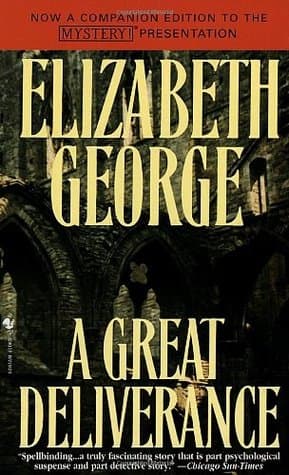
- A Great Deliverance
Elizabeth George
4.0 (40k) average on GoodreadsThrillerFeatures a Scotland Yard detective investigating a complex murder in a seemingly quiet English setting.
- Gaudy Night
Dorothy L. Sayers
4.2 (23k) average on GoodreadsHistorical FictionA classic Golden Age mystery with a focus on character, intellect, and atmospheric setting.
- Angels & Demons
Dan Brown
3.9 (2.7M) average on GoodreadsThrillerA Harvard symbologist races through Rome's ancient sites, deciphering cryptic clues to unmask the Illuminati and stop a vengeful plot to destroy the Vatican with a stolen antimatter weapon.
- Gone Girl
Gillian Flynn
4.1 (2.3M) average on GoodreadsThrillerA wife's sudden disappearance on her fifth anniversary reveals a web of lies and psychological warfare, exposing the secrets within a seemingly perfect marriage.
- The Girl on the Train
Paula Hawkins
3.9 (2.1M) average on GoodreadsThrillerA woman’s fascination with a seemingly perfect couple she watches from her daily train commute leads her into a dark investigation when she witnesses something that shatters their idyllic image.
- The Da Vinci Code
Dan Brown
3.9 (1.9M) average on GoodreadsThrillerA symbologist and a cryptologist race through European landmarks, deciphering ancient codes and uncovering a conspiracy that could rewrite the foundations of Christianity.




Enjoyed the summary?
A summary gives you the shape of the book. The book itself has the detail, the examples and the voice.
Find The Man With a Load of Mischief on AmazonAs an Amazon Associate, BookBrief earns from qualifying purchases. How we're funded