
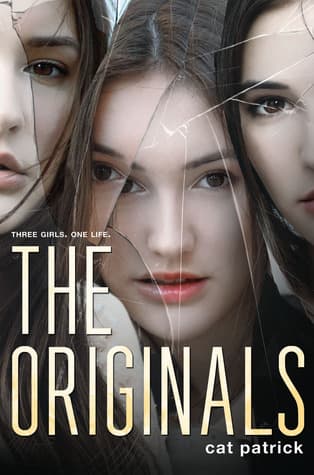
Synopsis
Covers the whole plot, including the ending.
- Difficulty
- Easy
- Pacing
- Moderate
- Mood
- Mysterious, Romantic, Thought-provoking, Emotional
- Read it if
- You enjoy YA mystery with a unique premise about identity, family secrets, and first love.
- Skip it if
- You prefer hard science fiction or dislike YA romance tropes.
The Originals Plot Summary
Covers the whole plot, including the ending.
The Best Family Secret
Lizzie Best introduces herself and her two identical sisters, Ella and Betsey. They are triplets, but to the outside world, only one daughter, Elizabeth Best, exists. This deception, set up by their mother, means they take turns being Elizabeth, going to school, joining activities, and seeing friends. Lizzie, Ella, and Betsey each have specific days when they are 'on' as Elizabeth, while the other two stay hidden at home, studying or pursuing hobbies. This system has been in place since they were young, and they are good at keeping the illusion, carefully sharing information and copying each other's ways to avoid being caught. Their mother protects their secret fiercely, stressing the dangers if anyone finds out.
Sean Kelly and a Crushing Encounter
When it is Lizzie's turn to be Elizabeth, she meets Sean Kelly in an art class. They feel an instant connection, and Lizzie likes his art and kind personality. Later, at a school event, Sean approaches 'Elizabeth' again, but this time it is Betsey's turn. Betsey, who is more reserved and less interested in romance, dismisses him. This confuses and hurts Sean, who does not understand Elizabeth's sudden change. Lizzie is upset when she hears about Betsey's interaction with Sean, realizing the emotional difficulty their shared identity causes, especially when real feelings are involved. She feels growing frustration with their arrangement's limits.
An Unforgettable First Date
Despite the earlier awkwardness, Sean asks 'Elizabeth' out, and it falls on Lizzie's day. She accepts, excited but also burdened by the secret. Their date is wonderful; they connect over art, shared interests, and a comfortable closeness Lizzie has never felt before. She wants to tell him the truth, to be truly seen by him, but fear of exposing their family's secret stops her. The date strengthens Lizzie's feelings for Sean and her wish for a life beyond their shared identity. She returns home feeling both thrilled by the connection and deeply conflicted about how impossible a normal relationship is.
The Stress of Deception
The pressure of keeping up the 'Elizabeth' facade, especially with Sean in the picture, starts to wear on the sisters. Ella, who is more outgoing, finds it easy to charm Sean, but Lizzie feels jealous. Betsey, on the other hand, struggles with the romance and almost reveals their secret during a casual talk with Sean, causing a tense argument among the sisters. Their mother, increasingly watchful, notices the strain and reminds them how important their secret is, warning of severe consequences if they are discovered. The girls' individual personalities are becoming harder to hide, making the shared identity more difficult to maintain without problems.
Lizzie's Growing Doubts
Lizzie starts to feel smothered by the deception. Her unique feelings for Sean make her question everything about their lives. She sees her mother's careful planning and the extreme steps taken to protect their secret, and starts to wonder about how their situation began. Why are they triplets, yet only one is allowed to exist publicly? She begins to search for clues, subtly asking her mother questions and looking for old documents or photos that might explain their past. This growing curiosity separates her from Ella and Betsey, who accept their circumstances more, and creates a rift between Lizzie and her family.
A Troubling Discovery
Driven by her suspicions, Lizzie searches her mother's room when she is out. She finds a locked box with old medical records, newspaper clippings, and a diary. The documents show that their mother, Dr. Best, was a brilliant geneticist who worked on human cloning. The newspaper articles detail a scandal involving unethical experiments and a mysterious disappearance of a research subject. The diary entries hint at a desperate attempt to protect her 'children' from discovery. This discovery shocks Lizzie, confirming her worst fears and changing her understanding of their family's past and her mother's true role in their creation. She realizes they are not just triplets, but something far more complex and scientifically made.
The Truth Revealed
With the evidence from the box, Lizzie confronts her mother. Dr. Best, seeing that the truth cannot be hidden, finally confesses. She reveals that Lizzie, Ella, and Betsey are not natural triplets, but clones she created to bring back her deceased daughter, Elizabeth. The original Elizabeth died tragically, and Dr. Best, consumed by grief and scientific ambition, used her research to replicate her. The reason for their secrecy is to protect them from the legal and ethical problems of her actions, as human cloning is illegal and controversial. The confession devastates Lizzie, who struggles to process being a copy, not an original.
The Sisters' Reactions
Lizzie shares the shocking truth with Ella and Betsey. Ella is at first upset and angry, feeling betrayed by their mother and questioning her own identity. She struggles with being a copy, not a unique person. Betsey, always practical, is more worried about the implications and dangers if their secret is exposed. She fears for their safety and what will happen to them. The revelation divides the sisters as they each deal with their new understanding of themselves and their family, further straining their fragile bond. Their shared identity as 'Elizabeth' now feels like a cage, not a shield.
Seeking Independence
The truth inspires Lizzie. She realizes she cannot keep living as 'Elizabeth' and sharing an identity with her sisters. She wants her own life, her own name, and her own future, especially with Sean. She begins to plan to leave, to find a way to exist as Lizzie Best, a unique person, despite the risks. This decision causes more conflict with her mother, who fears for Lizzie's safety and the exposure of their secret. It also creates tension with Betsey, who thinks Lizzie is being reckless, and Ella, who is still recovering from the revelation and unsure of her next steps. Lizzie's determination, however, is strong.
A Heartbreaking Confession to Sean
Lizzie decides she can no longer lie to Sean. She arranges to meet him and, with great courage and fear, tells him everything: that she is one of three identical clones, that 'Elizabeth Best' is a shared identity, and that she is Lizzie. Sean is understandably shocked and struggles to understand the strange truth. While at first overwhelmed, his true affection for Lizzie wins out. He is hurt by the deception but ultimately understands the impossible situation she was in. This confession is a major turning point for Lizzie, representing her first true step toward individual freedom and honesty, even if it means facing an uncertain future.
The Consequences of Truth
Lizzie's confession to Sean starts a chain of events. Though Sean promises to keep her secret, the Best family's delicate balance is broken. Their mother, Dr. Best, fears exposure and legal consequences. Ella and Betsey must face their situation more directly, as Lizzie's actions make their shared identity impossible. The threat of discovery is bigger than ever, forcing the family to consider drastic measures. Lizzie, though scared, feels a sense of freedom, knowing she has finally chosen her own path, even if it leads to an uncertain and possibly dangerous future for all of them.
The Originals Characters
Lizzie Best
Protagonist
The clone who yearns for individuality and true connection.
Lizzie is one of three clones created by Dr. Best, designed to be identical to the deceased original Elizabeth. She is artistic, sensitive, and deeply empathetic. Unlike her sisters, Lizzie struggles profoundly with the deception of their shared identity, especially after falling in love with Sean. She possesses a strong sense of self and a yearning for authenticity that drives her to question her origins and ultimately challenge her mother's control. Her desire for a unique life, separate from her sisters, is her primary motivator, leading her to make courageous and risky decisions.
Relationships: Ella Best (Sister (clone), initially close but strained by Lizzie's desire for individuality.); Betsey Best (Sister (clone), initially close but strained by Lizzie's desire for individuality and Betsey's pragmatism.); Dr. Best (Mother) (Creator and mother, a complex relationship of love, resentment, and a desire for independence.); Sean Kelly (Romantic interest, a catalyst for Lizzie's self-discovery and desire for an authentic life.)
Ella Best
Supporting
The social and adaptable clone who struggles with the truth.
Ella is the most outgoing and socially adept of the three sisters. She enjoys the social aspects of being 'Elizabeth' and is good at navigating school and friendships. While she initially accepts their shared identity, the revelation of their cloned origins deeply unsettles her. She struggles with feelings of betrayal and questions her own uniqueness, fearing she is merely a copy. Ella's reaction highlights the emotional turmoil of being a clone and the difficulty of finding one's own place when genetically identical to others. She is generally more compliant than Lizzie but less pragmatic than Betsey.
Relationships: Lizzie Best (Sister (clone), initially close, but their differing desires create tension.); Betsey Best (Sister (clone), a more stable relationship built on shared experience.); Dr. Best (Mother) (Creator and mother, a relationship of obedience and later, confusion.)
Betsey Best
Supporting
The pragmatic and cautious clone, focused on survival.
Betsey is the most pragmatic and logical of the three sisters. She is less interested in social interactions or romance, preferring to focus on her studies and maintaining the secrecy of their existence. When the truth of their cloned origins is revealed, Betsey's primary concern is the practical implications and the safety of their family. She is cautious and risk-averse, often clashing with Lizzie over her desire for independence. Betsey represents the survival instinct within the group, prioritizing their continued hidden existence over individual desires for freedom or authenticity.
Relationships: Lizzie Best (Sister (clone), often at odds due to their differing priorities and approaches to their secret.); Ella Best (Sister (clone), a more stable relationship based on shared experience.); Dr. Best (Mother) (Creator and mother, a relationship built on shared goals of secrecy and survival.)
Dr. Best (Mother)
Antagonist/Supporting
The brilliant geneticist who cloned her deceased daughter out of grief.
Dr. Best is Lizzie, Ella, and Betsey's creator and mother. Driven by immense grief over the loss of her original daughter, Elizabeth, she used her advanced genetic research to clone her, creating the three girls. She is highly intelligent, meticulous, and fiercely protective of her 'daughters' and their secret. Her actions, though born of love and loss, are ethically questionable and have trapped her daughters in a life of deception. She acts as an antagonist to Lizzie's desire for individuality, as revealing the truth would expose her own illegal actions and endanger her creations. Her love is possessive and controlling, stemming from her past trauma.
Relationships: Lizzie Best (Daughter and creation, a conflicted relationship marked by control, love, and Lizzie's rebellion.); Ella Best (Daughter and creation, a relationship of parental control and Ella's initial obedience.); Betsey Best (Daughter and creation, a relationship of shared goals in maintaining secrecy.)
Sean Kelly
Supporting
Lizzie's romantic interest and the catalyst for her self-discovery.
Sean is an artistic and kind-hearted boy who meets 'Elizabeth' (Lizzie) in art class. He is genuine, understanding, and quickly develops deep feelings for Lizzie. He serves as a catalyst for Lizzie's desire for individuality and her eventual decision to reveal the truth. Sean's unwavering acceptance of Lizzie, even after learning her extraordinary secret, highlights his compassionate nature and provides Lizzie with the external validation she needs to break free from her mother's control. He represents the possibility of an authentic life for Lizzie, outside the confines of her family's deception.
Relationships: Lizzie Best (Romantic interest and partner in truth, a relationship built on genuine connection despite the deception.)
Original Elizabeth Best
Mentioned
The deceased daughter whose clones are the protagonists.
The original Elizabeth Best is Dr. Best's deceased daughter, whose tragic death led Dr. Best to create Lizzie, Ella, and Betsey through cloning. She is never seen in the story but her memory and Dr. Best's grief are the central motivators for the entire plot. She represents the ideal that the clones are meant to embody and the trauma that shaped their mother's actions. Her existence, though absent, is the emotional and scientific origin point for the entire narrative.
Relationships: Dr. Best (Mother) (Deceased daughter, the source of Dr. Best's immense grief and motivation for cloning.)
The Originals Themes
Identity vs. Conformity
The main theme is the struggle of Lizzie, Ella, and Betsey to form individual identities while forced to be one person: Elizabeth. Lizzie's desire for individuality is especially strong, driven by her feelings for Sean. The constant need to copy each other and hide their personalities shows the psychological cost of conforming. The discovery of their cloned origins makes this struggle worse, making them question what it means to be 'original' versus a 'copy' and if they can truly be themselves. Their mother's control further shows the pressure to conform for safety.
“How could I be Elizabeth when Elizabeth was already dead? How could I be me when 'me' wasn't allowed to exist?”
The Ethics of Science and Grief
The novel explores the ethical issues of human cloning, caused by Dr. Best's deep grief. Her scientific skill is overshadowed by her moral compromise in creating the clones to replace her dead daughter. The story asks if the goal (bringing back a loved one) justifies the method (creating lives that are not truly free). The girls' existence as a secret experiment raises questions about scientific responsibility, the limits of genetic manipulation, and the harm caused when personal loss dictates scientific pursuits. Dr. Best's actions, though born of love, created a life of deception and limited freedom for her daughters.
“My mother didn't just give us life; she gave us a secret. And that secret was our cage.”
Love, Betrayal, and Family Secrets
This theme explores the complex dynamics of love and betrayal within the Best family. Dr. Best's love for her original daughter and her clones is clear, yet her actions betray their right to individual lives and freedom. The sisters' love for each other is tested by the deception and their different desires. Lizzie feels betrayed by her mother's lies, and by the limits her sisters place on her. Sean's love for Lizzie, despite the shocking revelation, contrasts with the family's complex and often harmful love. The entire family is built on a huge secret, and its slow unraveling reveals deep emotional wounds and the sacrifices made to keep it.
“Secrets are like bricks. You can build a wall around yourself, or you can use them to break free.”
The Desire for Authenticity
This theme is central to Lizzie's journey. She constantly fights the falseness of her life as 'Elizabeth,' wanting to be recognized and loved for who she truly is. Her romance with Sean increases this desire, as she realizes she cannot build a real relationship on lies. The need to express her own thoughts, pursue her own interests, and have her own name drives her to defy her mother and risk everything. The other sisters, to varying degrees, also deal with this, as their individual personalities clash with the shared persona, showing the human need for authenticity and self-expression.
“I didn't want to be a part of Elizabeth. I wanted to be Lizzie. Just Lizzie.”
Plot Devices & Literary Techniques
Shared Identity
Three individuals living as one person.
The central plot device is the shared identity of 'Elizabeth Best.' Lizzie, Ella, and Betsey take turns portraying this single persona, complete with shared memories, mannerisms, and a meticulously coordinated schedule. This device creates inherent conflict, as the girls' individual personalities and desires clash with the need to maintain a unified front. It generates suspense, as the constant threat of exposure looms, and serves as a metaphor for the suppression of individual identity under external pressures. The device drives the narrative by forcing the protagonist, Lizzie, to confront the limitations and psychological toll of this existence, ultimately leading to her rebellion.
The Hidden Box
A physical object containing crucial backstory information.
The hidden box in Dr. Best's room functions as a classic discovery device. It contains old medical records, newspaper clippings about human cloning, and a personal diary. This collection of documents serves to reveal the critical backstory of the girls' origins as clones and their mother's unethical scientific past. Its discovery by Lizzie is the turning point in the narrative, transforming her suspicions into concrete knowledge and providing the undeniable evidence needed for her to confront her mother. The box is a tangible representation of the family's deep-seated secrets and the truth that has been suppressed for years.
First-Person Narration (Lizzie)
The story is told exclusively from Lizzie's perspective.
The novel is narrated solely by Lizzie, providing an intimate and subjective view of her internal struggles, desires, and growing doubts. This device allows the reader to deeply empathize with Lizzie's yearning for individuality and her emotional turmoil as she navigates the complex deception. It also creates dramatic tension, as the reader experiences events through her limited knowledge, gradually uncovering the truth alongside her. The first-person perspective highlights Lizzie's unique voice among her identical sisters and underscores her journey of self-discovery, making her internal conflict the driving force of the narrative.
The Originals Quotes
“Every morning I wake up, I'm a new person. Literally.”
“It's like living in a perpetual state of amnesia, but with a friendly tour guide.”
“How can you love someone you don't remember loving?”
“My memory might reset, but my heart doesn't.”
“He looks at me like I'm the only person in the world, even though I'm a different person every day.”
“What if the things I don't remember are the most important things?”
“It's not about remembering every detail; it's about remembering how someone makes you feel.”
“Every day is a new first date.”
“The past is a foreign country; they do things differently there. For me, it's a blank slate.”
“I'm not broken. I'm just... rebooted.”
“You can't live a life if you don't remember living it.”
“Maybe being an original isn't about being the first, but about being uniquely you, every single day.”
“The notes are my anchor, my proof that I existed yesterday.”
“It's a strange kind of freedom, not being tied down by yesterday's mistakes.”
Quiz
10 questions on the plot and the characters. Each answer comes with a short explanation.
Question 1
What is the primary reason the Best sisters take turns going to school and living as one person?
- Their mother wants to save on school tuition.
- They are genetically identical and share a single identity to hide a secret.
- They are part of a social experiment.
- They are famous and trying to avoid paparazzi.
Show answer
B. They are genetically identical and share a single identity to hide a secret. The premise of the book is that Lizzie, Ella, and Betsey are 'originals' but live as one person named Elizabeth to the outside world, hiding their true nature.
Question 2
Which sister is the first to realize she is not a carbon copy of the others and begins to seek individuality?
- Ella
- Betsey
- Lizzie
- Elizabeth (their shared identity)
Show answer
C. Lizzie The synopsis explicitly states, 'Then Lizzie meets Sean Kelly, the one person who can help her realize she's not a carbon copy of the others - she's an individual with unique dreams and desires.'
Question 3
What is the name of the boy Lizzie meets who helps her question her identity?
- Mark Johnson
- Sean Kelly
- David Miller
- Kevin Smith
Show answer
B. Sean Kelly The synopsis clearly states Lizzie meets 'Sean Kelly, the one person who can help her realize she's not a carbon copy of the others.'
Question 4
What is the name the three sisters use when presenting themselves as a single individual to the outside world?
- Liza
- Eliza
- Elizabeth
- Beth
Show answer
C. Elizabeth The synopsis states, 'Now, to the outside world, the Best family appears to consist of a single mother with one seventeen-year-old daughter named Elizabeth.'
Question 5
What is a major theme explored through Lizzie's actions in the book?
- The importance of conformity and blending in.
- The struggle for individual identity and self-discovery.
- The benefits of a communal lifestyle.
- The dangers of scientific experimentation.
Show answer
B. The struggle for individual identity and self-discovery. Lizzie's journey to realize 'she's not a carbon copy of the others - she's an individual with unique dreams and desires' directly addresses the theme of individual identity.
Question 6
The 'delicate balance of an unusual family that only science could have created' refers to what specific aspect of the Best family?
- Their reliance on technology for daily tasks.
- The fact that the three sisters are 'originals' (clones) and must maintain the illusion of being one person.
- Their mother being a renowned scientist.
- Their use of a highly advanced communication system.
Show answer
B. The fact that the three sisters are 'originals' (clones) and must maintain the illusion of being one person. The book's title and the description 'The Originals' imply a scientific creation, and the 'delicate balance' is maintaining the secret of their existence as multiple individuals.
Question 7
What is the implied consequence of Lizzie 'dismantling the delicate balance' of her family?
- The family will become more cohesive and stronger.
- The secret of their existence as multiple individuals will be exposed.
- They will move to a new city and start over.
- The sisters will no longer need to attend school.
Show answer
B. The secret of their existence as multiple individuals will be exposed. If Lizzie 'dismantles the delicate balance' of living as one, the most logical consequence is that their secret—that there are three of them—will be revealed.
Question 8
What kind of 'truth' did the Best sisters learn about themselves that 'no one else can know'?
- They are adopted and from different families.
- They are 'originals' (clones) rather than naturally born identical triplets.
- They possess latent magical abilities.
- Their mother is a spy.
Show answer
B. They are 'originals' (clones) rather than naturally born identical triplets. The title 'The Originals' and the context of 'only science could have created' strongly imply they are not natural triplets but rather genetically engineered or cloned individuals.
Question 9
What is the primary conflict Lizzie faces as she begins to develop her own identity?
- Her sisters' disapproval of her new friends.
- The internal conflict between her desire for individuality and the need to maintain the family secret.
- Her mother forcing her to move to a new town.
- Sean Kelly asking her to choose between him and her family.
Show answer
B. The internal conflict between her desire for individuality and the need to maintain the family secret. Lizzie's 'unique dreams and desires' directly clash with the 'delicate balance' of her family's secret, creating a central internal conflict.
Question 10
Considering the genre elements of Fantasy, Mystery, and Science Fiction, which element is most directly related to the 'truth' the sisters learned about themselves?
- Fantasy, due to magical elements of their birth.
- Mystery, as they try to uncover who their real father is.
- Science Fiction, because their existence as 'originals' is a product of scientific creation.
- Romance, because their shared identity complicates their love lives.
Show answer
C. Science Fiction, because their existence as 'originals' is a product of scientific creation. The mention of 'only science could have created' them and the term 'The Originals' strongly points to a scientific origin, aligning with the Science Fiction genre.
The Originals FAQ
What is the core premise of 'The Originals'?
'The Originals' revolves around Lizzie, Ella, and Betsey Best, three seemingly identical triplets who are actually clones sharing one public identity as 'Elizabeth'. They take turns living as Elizabeth, attending school, and managing social interactions, all while keeping their true nature a secret from everyone outside their immediate family.
Who are the main characters and what is their relationship?
The main characters are Lizzie, Ella, and Betsey Best, who are genetic clones but behave as sisters. Their mother, a brilliant but secretive scientist, created them. Sean Kelly is a key character who becomes Lizzie's love interest and unknowingly helps her question her existence.
What significant event disrupts the Best sisters' carefully constructed life?
The delicate balance of their lives is disrupted when Lizzie meets Sean Kelly. Her developing romantic feelings and his genuine interest in 'Elizabeth' as an individual make Lizzie question her identity and the shared existence she has with her sisters, leading her to seek more personal freedom.
How do the sisters manage to maintain the illusion of being one person?
They maintain the illusion by meticulously coordinating their schedules, sharing information about their interactions, and even mimicking each other's mannerisms. They have strict rules about who goes where and when, ensuring that no one outside their family ever sees more than one of them at a time.
What is the mother's motivation for creating and raising her daughters this way?
The mother's primary motivation is rooted in her scientific ambition and a desire to correct a past failure or achieve a specific genetic outcome. She views her daughters as a scientific achievement and maintains tight control over their lives to protect her secret and continue her research, believing it's for their ultimate good.
Are there any subtle clues early in the book that hint at the sisters' true nature?
Yes, there are subtle clues, such as the sisters' uncanny ability to recall shared experiences they weren't individually present for, their occasional slips in personal memories, and the mother's overly protective and secretive behavior regarding their family history and origins. These hints become clearer upon rereading.
How does the author use the concept of 'originality' beyond the scientific aspect?
The author uses 'originality' to explore individuality and self-discovery. While the girls are genetically identical, the narrative delves into how each sister develops unique dreams, desires, and personalities, proving that experience and personal choice contribute more to identity than genetic makeup.
What is the significance of Lizzie's relationship with Sean Kelly?
Sean Kelly is significant because he sees 'Elizabeth' as a unique individual, which directly challenges the shared identity the sisters maintain. His genuine affection for Lizzie specifically helps her realize her own distinct personhood and empowers her to seek independence from her sisters and mother.
How do Ella and Betsey react to Lizzie's growing desire for individuality?
Ella and Betsey react with a mix of confusion, frustration, and fear. They are accustomed to their shared existence and see Lizzie's desire for independence as a threat to their carefully constructed lives and the safety of their secret. Their reactions highlight the deep bond but also the tension within their unique family structure.
What psychological impact does sharing an identity have on the sisters?
Sharing an identity creates a complex psychological impact, fostering a strong, almost telepathic bond but also suppressing individual development. It leads to feelings of anonymity, a struggle for self-definition, and internal conflict as they each grapple with their own desires versus the needs of the collective 'Elizabeth'.
How does the book explore the ethical implications of cloning and genetic engineering?
The book explores ethical implications by showcasing the human cost of scientific ambition. It questions the right to create life for specific purposes, the moral responsibility of the creator to their creations, and the inherent right of an individual to autonomy and a unique identity, even if scientifically manufactured.
Is the mother a sympathetic character, or is she portrayed as purely antagonistic?
The mother is a complex character, not purely antagonistic. While her actions are controlling and ethically questionable, the narrative suggests her motivations are rooted in a twisted sense of love, protection, and a deep-seated belief in the righteousness of her scientific pursuit. She believes she is doing what's best for her daughters.
What role does the 'mystery' element play in the story?
The mystery element primarily revolves around the 'truth' of the sisters' origins and their mother's past. Lizzie's investigation into her background and the scientific specifics of her creation drives much of the plot, gradually revealing the secrets that underpin their unusual family dynamic.
How does Lizzie's journey reflect a typical adolescent search for identity, despite her unique circumstances?
Lizzie's journey mirrors a typical adolescent search for identity by focusing on themes of self-discovery, challenging parental authority, seeking independence, and forming personal relationships that define her outside her family unit. Her unique circumstances amplify these universal struggles, making her quest more urgent and profound.
What is the significance of the title, 'The Originals'?
The title 'The Originals' is ironic and thought-provoking. While the sisters are clones, it suggests that despite being copies, each girl possesses an 'original' spirit and unique identity. It challenges the notion that being a clone negates one's originality or individuality.
Are there specific plot points that highlight the sisters' individual differences before the major conflict?
Early in the story, subtle differences in their preferences, academic strengths, and emotional responses during their shared 'Elizabeth' shifts hint at their individuality. For example, one might be better at math, another more artistic, or one more prone to anxiety, subtly differentiating them even before Lizzie's rebellion.
Does the book offer a definitive resolution to the sisters' shared identity, or is it left open-ended?
The book offers a resolution that challenges their previous shared identity, but the complete long-term implications for all three sisters are somewhat open-ended. While Lizzie makes significant strides toward independence, the path for Ella and Betsey and the future of their unique family structure is left with room for reader interpretation.
How does the romance element contribute to the overall themes of the book?
The romance with Sean is crucial as it acts as a catalyst for Lizzie's self-discovery. It highlights the impossibility of truly sharing intimate relationships as a collective 'Elizabeth' and forces Lizzie to confront her desire for an exclusive, personal connection, thus driving the theme of individuality.
Similar books
- Uglies
Scott Westerfeld
3.9 (560k) average on GoodreadsFantasyFeatures a dystopian society where individuality is suppressed and protagonists question their manufactured reality.
- The Memory Keeper's Daughter
Kim Edwards
3.7 (560k) average on GoodreadsHistorical FictionDeals with a long-held family secret that impacts multiple lives and explores moral dilemmas.
- The Giver
Lois Lowry
4.1 (1.8M) average on GoodreadsFantasyWhile both books explore themes of individuality and societal control within a unique setting, The Giver offers a far more profound and philosophical examination of these concepts, utilizing a dystopian world to critique conformity and the loss of emotion. The Originals focuses more on personal identity and romantic conflict, with less depth in its societal critique.
- Never Let Me Go
Kazuo Ishiguro
3.8 (471k) average on GoodreadsLiterary FictionNever Let Me Go provides a significantly more complex and emotionally devastating exploration of cloned individuals and their predetermined fates. Ishiguro delves into the psychological and emotional toll with a quiet intensity, prompting deeper existential questions. The Originals, in contrast, prioritizes plot-driven mystery and romance, offering a less nuanced and less impactful engagement with the ethics of cloning.
- Harry Potter and the Sorcerer's Stone
J.K. Rowling
4.5 (7M) average on GoodreadsFantasyRescued from a miserable life under the stairs, an orphaned boy discovers he's a wizard destined for a magical school, where he uncovers a dangerous secret tied to the dark wizard who murdered his parents.
- The Hunger Games
Suzanne Collins
4.3 (6.4M) average on GoodreadsFantasyIn a future where children fight to the death on live television, Katniss Everdeen volunteers for the arena, turning a death sentence into a fight for survival and a spark of rebellion.




Enjoyed the summary?
A summary gives you the shape of the book. The book itself has the detail, the examples and the voice.
Find The Originals on AmazonAs an Amazon Associate, BookBrief earns from qualifying purchases. How we're funded