
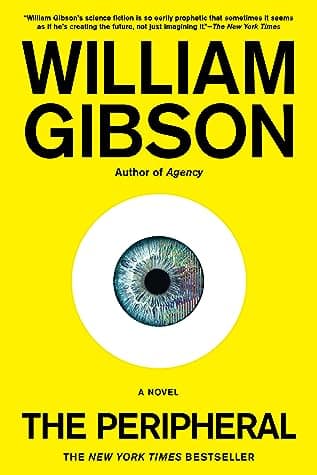
Synopsis
Covers the whole plot, including the ending.
- Difficulty
- Hard
- Pacing
- Variable
- Mood
- Gritty, Cerebral, Suspenseful, Dystopian
- Read it if
- You enjoy complex, mind-bending science fiction with intricate world-building, time travel paradoxes, and a blend of thriller elements and social commentary.
- Skip it if
- You prefer straightforward narratives, struggle with non-linear timelines, or are looking for a light, easy read.
The Peripheral Plot Summary
Covers the whole plot, including the ending.
A Deadly Favor and a Witness to Murder
Flynne Fisher lives in a rural, near-future America, dealing with poverty and a sick mother. Her veteran brother, Burton, has neurological damage from his time in the Haptic Recon unit. Burton asks Flynne to cover his security shift in what he calls a new virtual reality game. The 'game' involves monitoring a party in a futuristic, deserted London. Flynne, using an avatar (a 'peripheral'), sees the murder of a young woman named Aelita West by a mysterious man. Disturbed, Flynne tells Burton, who realizes this was not a game but a real event in a different timeline. The 'game' was a portal to the future, and Flynne has become a witness to a real crime.
Future London's Investigation Begins
In a much later London, seventy years after Flynne's time, Wilf Netherton, a publicist, is contacted by Lev Zubov, a powerful Russian 'klept' (a wealthy individual from the future). Zubov's niece, Aelita West, has disappeared, and her last known activity was a 'data-raid' into the past – specifically, Flynne's timeline. Inspector Ainsley Lowbeer, a highly intelligent investigator from the Metropolitan Police, takes an interest in the case, suspecting foul play and a break of the rules for interacting with the past. Wilf is tasked by Zubov with retrieving Aelita's data from the 'stub' (Flynne's timeline), a task that quickly grows when Lowbeer's investigation reveals the murder Flynne witnessed.
Flynne's Timeline Under Threat
Back in Flynne's timeline, her family and friends experience strange, increasing threats. Their dog is killed, and a drone tries to assassinate Flynne and Burton. This is done by antagonists from the future who want to hide Aelita's murder and eliminate the witness. Wilf and his allies in the future realize Flynne is in great danger because she witnessed the event. They send resources to protect Flynne's stub, including advanced weaponry and information, using the 'peripheral' technology to communicate and interact across timelines. Flynne and Burton, along with their community, realize they are caught in a conflict beyond their understanding, with their lives at risk.
The Arrival of the Peripherals
To protect Flynne, the future sends a sophisticated, human-like peripheral to her. This peripheral, controlled by Wilf and his team, allows direct communication and physical interaction with Flynne's world. Flynne, Burton, and their local allies, including Conner, a fellow veteran, adapt to this new reality. The peripheral becomes a tool for defense against the future's assassins, who continue trying to eliminate Flynne. The arrival of this technology also subtly changes Flynne's world, as information and resources from the future flow into their economically struggling region, creating an unusual form of aid and dependence.
Unraveling Aelita's Motives and the Jackpot
As the investigation into Aelita's murder continues, Wilf and Lowbeer learn more about her radical beliefs and her connection to a group trying to expose the truth about the 'Jackpot' – a series of ecological disasters, pandemics, and social collapses that reduced humanity between Flynne's time and Wilf's. Aelita believed that the wealthy elite of the future were involved in or caused the Jackpot and were hiding this information. Her 'data-raid' into Flynne's stub was an attempt to gather evidence and potentially influence the past, a dangerous and forbidden act with consequences for both timelines. Her murder resulted from her efforts to expose these secrets.
Conner's Revenge and the Drone Attack
Conner, using a future-tech drone provided by Wilf's team, gets revenge on the corrupt local sheriff and his deputies who had harassed him and other veterans. This act, while satisfying, shows the dangers of introducing advanced technology into Flynne's less developed world. At the same time, a more sophisticated drone attack, from the forces in the future who murdered Aelita, targets Flynne's home directly. Flynne and her allies, including Burton and Conner, use all their resources, both local and future-supplied, to defend themselves in a tense and violent fight.
Flynne's Journey to the Future
To help the investigation and understand the threat, Flynne's consciousness is transferred into a peripheral in Wilf's London. This allows her to experience the future firsthand, including its advanced technology, rich society, and the reality of the Jackpot's aftermath. She meets Wilf, Lowbeer, and other key figures. This direct interaction gives Flynne important information and allows her to contribute her unique perspective as a witness to Aelita's murder and someone from the 'stub' timeline. Her presence in the future further connects the two timelines.
Lowbeer's Interrogation and the Truth of the Murder
Inspector Lowbeer, with Flynne's direct testimony and her investigative skills, uncovers the full details of Aelita West's murder. She identifies Hamdo, a subordinate of Lev Zubov, as the perpetrator, acting under the subtle manipulation of Dr. Nodal, a powerful and ruthless figure. Nodal, a member of the 'klept' elite, wanted to silence Aelita to prevent her from exposing the truth about the Jackpot and the future's manipulations of the past. Lowbeer's investigation reveals a complex web of lies and power struggles within the future's elite, with Flynne's stub caught in the middle.
The Confrontation and Nodal's Demise
Armed with evidence, Inspector Lowbeer confronts Dr. Nodal. Through cunning and intimidation, Lowbeer exposes Nodal's role in Aelita's murder and his attempts to manipulate the timelines for his own gain. Nodal, realizing he is trapped, tries to escape but is stopped by Lowbeer's forces. This confrontation brings justice for Aelita and neutralizes the main threat to Flynne's stub. The future's powerful figures acknowledge Lowbeer's authority and the consequences of their actions, especially regarding the ethical limits of interacting with the past.
Protecting the Stub and a New Future
With Nodal eliminated and the immediate threat resolved, Lowbeer and Zubov agree to protect Flynne's stub. They provide substantial, controlled resources to her timeline, isolating and nurturing it into a unique, prosperous future, safe from the full devastation of the Jackpot. Flynne returns to her original body, but the experience has changed her. Her community, now benefiting from future technology and knowledge, begins to thrive in unexpected ways. The future, through its interaction with Flynne's past, has created a new, divergent timeline, a 'stub' that offers a glimpse of an alternative, more hopeful path for humanity.
Principal Figures
Flynne Fisher
Protagonist
A resourceful and observant young woman from a rural near-future, thrust into a trans-temporal conspiracy.
Flynne is intelligent, observant, and fiercely loyal to her family. She works at a 3D print shop and previously earned money as a combat scout in online games. Her sensitivity and sharp memory make her an ideal witness to Aelita's murder. Despite her humble origins, she possesses remarkable courage and adaptability when confronted with the bizarre realities of the future and its advanced technology. She often feels out of her depth but rises to every challenge, becoming a key player in the trans-temporal conflict. She is protective of her brother, Burton, and her ailing mother.
Relationships: Burton Fisher (Brother, close bond, reliant on each other); Conner (Friend, fellow veteran (though Flynne isn't a veteran, she's a gamer), loyal ally); Wilf Netherton (Ally and guide from the future, develops a complex professional and personal bond)
Burton Fisher
Supporting
Flynne's brother, a former Marine Haptic Recon unit veteran suffering from neurological damage.
Burton is a stoic and protective older brother to Flynne. His military background in the Haptic Recon unit has left him with neurological damage and a reliance on VA benefits, but also with valuable combat skills and a network of fellow veterans. He initially takes the 'security' job in the 'game' that Flynne covers. He is fiercely protective of Flynne and their family, and his combat experience becomes invaluable in defending their home against future threats. He is pragmatic and adapts quickly to the strange new realities of future technology and time travel.
Relationships: Flynne Fisher (Sister, close bond, protective of her); Conner (Fellow veteran, close friend and ally); Macon (Fellow veteran, part of their protective circle)
Wilf Netherton
Supporting
A publicist from future London, tasked with investigating Aelita's disappearance and protecting Flynne.
Wilf is a sophisticated, somewhat jaded publicist in a post-Jackpot London. He works for powerful 'klepts' like Lev Zubov. He's initially tasked with a seemingly simple data retrieval but gets drawn into the murder investigation and the complexities of protecting Flynne's stub. Wilf is intelligent, perceptive, and gradually develops a strong sense of responsibility towards Flynne and her timeline. He acts as Flynne's primary contact and guide in the future, often translating the bewildering concepts of his world for her. He struggles with the moral implications of his society's interactions with the past.
Relationships: Flynne Fisher (Ally and guide to her, develops a strong bond); Lev Zubov (Employer, powerful and influential 'klept'); Inspector Ainsley Lowbeer (Collaborator, often intimidated by her intellect and authority)
Inspector Ainsley Lowbeer
Supporting
A brilliant and formidable investigator from future London's Metropolitan Police.
Lowbeer is an exceptionally intelligent, shrewd, and intimidating figure. She possesses an almost omniscient understanding of the future's intricate social and political landscape, including the delicate balance of interacting with 'stubs'. She quickly takes charge of the investigation into Aelita's disappearance, seeing it as a serious breach of protocol and a threat to temporal stability. Lowbeer is relentless in her pursuit of truth and justice, using psychological manipulation and an unparalleled intellect to outmaneuver even the most powerful figures in her society. She is the ultimate authority figure in the future's handling of the past.
Relationships: Wilf Netherton (Subordinate/collaborator, often manipulated or directed by her); Flynne Fisher (Key witness, treated with respect but also as a tool for investigation); Lev Zubov (Powerful figure she holds in check and manipulates)
Lev Zubov
Supporting
A powerful and wealthy 'klept' from future London, connected to Aelita West.
Lev Zubov is a prominent and influential figure among the 'klepts' – the wealthy elite of the future. He is Aelita West's uncle and initially approaches Wilf to investigate her disappearance. Despite his immense power and resources, he is careful to operate within the unspoken rules of his society, particularly regarding the past. He is pragmatic and ultimately aligns with Lowbeer to protect his interests and maintain order, even if it means sacrificing those who threaten it. He represents the opulent and often morally ambiguous nature of the future's ruling class.
Relationships: Aelita West (Niece, though their relationship is strained by her radical views); Wilf Netherton (Employee/subordinate); Inspector Ainsley Lowbeer (Powerful figure he must respect and work with)
Aelita West
Mentioned
The murdered woman from the future, whose actions trigger the entire plot.
Aelita West is Lev Zubov's niece, a brilliant but radical individual from future London. She is deeply concerned with the truth of the 'Jackpot' and believes the 'klepts' are suppressing vital information about its causes. Her 'data-raid' into Flynne's stub was an attempt to expose these secrets and potentially alter the past, a highly forbidden act. Her murder is the central mystery of the novel, and her motivations drive much of the future's investigation. Though she is dead before the main events, her legacy and actions profoundly impact both timelines.
Relationships: Lev Zubov (Uncle); Hamdo (Her killer, under Nodal's influence)
Conner
Supporting
A disabled veteran and friend of Burton, who becomes a key ally in Flynne's world.
Conner is a fellow veteran and close friend of Burton, also suffering from injuries. He is resourceful, fiercely loyal, and skilled with drones. His combat experience and willingness to fight make him an invaluable asset in defending Flynne's home against future threats. He is pragmatic and quickly adapts to using future technology, even employing it to exact revenge on local corrupt officials who previously harassed him. He represents the resilience and resourcefulness of Flynne's community.
Relationships: Burton Fisher (Fellow veteran, close friend); Flynne Fisher (Friend, loyal ally)
Dr. Nodal
Antagonist
A powerful and manipulative 'klept' from the future, orchestrator of Aelita's murder.
Dr. Nodal is a highly influential and ruthless figure among the 'klept' elite in future London. He is revealed to be the true orchestrator behind Aelita West's murder, manipulating Hamdo to carry out the act. His motivation is to prevent Aelita from exposing secrets about the Jackpot and to maintain the established power structures of the future. Nodal represents the dangerous and unethical aspects of the future's elite, willing to commit murder and manipulate timelines to protect their interests. He is intelligent and cunning but ultimately outmaneuvered by Inspector Lowbeer.
Relationships: Aelita West (Victim of his machinations); Hamdo (His pawn, the direct murderer)
Hamdo
Supporting
A subordinate of Lev Zubov, manipulated into murdering Aelita West.
Hamdo is a loyal but ultimately weak-willed subordinate of Lev Zubov. He is manipulated by Dr. Nodal into murdering Aelita West, believing he is acting in Zubov's best interests or under duress. He is the physical perpetrator of the crime Flynne witnesses. Hamdo represents the vulnerability of individuals to manipulation by more powerful figures in the future's society. His actions are a direct consequence of the political machinations and power struggles among the 'klepts'.
Relationships: Aelita West (His victim); Dr. Nodal (His manipulator); Lev Zubov (His employer)
Themes & Insights
Temporal Causality and Parallel Timelines
The novel explores 'stubs' – parallel timelines created by opening a connection to the past. It investigates how actions in the future (Wilf's time) can influence the past (Flynne's time) without changing the future's own history. Aelita West's murder and the protection of Flynne's stub show the creation of a divergent, unique future for Flynne's world, separate from the 'Jackpot' that devastated Wilf's. This theme raises questions about fate, free will, and the ethics of temporal manipulation, as seen in Lowbeer's strict rules for non-interference.
“The past,” Wilf said, “is a foreign country. They do things differently there.”
Identity and Self-Discovery in the Digital Age
Flynne's journey explores identity, especially through her use of peripherals. When she uses a peripheral in future London, her consciousness is projected into another body, challenging ideas of self and embodiment. She lives in a different time, a different social class, and even a different physical form. This extends to the idea of 'avatars' and how digital presence shapes perception and interaction. Her experiences make her redefine who she is, both in her own world and as a link between timelines.
“You’re a peripheral, Flynne. You’re a remote. Your consciousness is here, in this body, but your body is still back in your stub.”
Social Stratification and Post-Apocalyptic Society
The novel presents a contrast between Flynne's impoverished, struggling near-future American town and Wilf's opulent, post-Jackpot London. The future is controlled by 'klepts' – a wealthy, powerful elite who survived global catastrophes (the 'Jackpot') and now live in luxury, often at others' expense, including manipulating past timelines. The difference in resources, technology, and quality of life between the two timelines highlights social inequality, class struggle, and the long-term effects of environmental and societal collapse. Aelita's activism against the 'klepts' addresses this societal imbalance.
“The Jackpot,” Lowbeer said. “A century of cumulative catastrophe. Ecological collapse, resource depletion, famines, pandemics, system failures, and localized wars.”
Technological Advancement and Ethical Responsibility
Advanced technology, especially the 'peripherals' and the ability to connect to 'stubs', drives the plot and raises ethical questions. The future's ability to observe and subtly influence the past creates a moral problem: should they intervene, and how much? Aelita's murder and the targeting of Flynne show the dangers of unchecked power and the misuse of advanced technology. Lowbeer enforces ethical boundaries and prevents catastrophic temporal interference, showing the need for responsibility alongside innovation.
“It’s not time travel,” Lowbeer said. “It’s the creation of an alternate past. A stub. A branch off the main trunk.”
Memory and Trauma
Memory and trauma are clear in Burton and Conner's experiences as veterans. Their neurological damage and PTSD from Haptic Recon shape their lives and actions. Flynne's sharp memory of Aelita's murder is important to the plot, serving as the main evidence. The novel explores how past events, both personal and global (like the Jackpot), leave lasting marks and influence present and future actions, showing the weight of history and personal experience.
“He’s got some kind of neurological damage from the Marines’ elite Haptic Recon unit. Makes him fast, makes him dangerous, makes him kind of crazy.”
Plot Devices & Literary Techniques
Peripherals
Remote-controlled, human-like avatars used for interaction across timelines.
Peripherals are advanced robotic bodies, often indistinguishable from humans, that can be remotely controlled by a human consciousness. They are the primary means by which characters from future London interact with Flynne's 'stub' timeline, and vice-versa. Flynne uses a peripheral to witness Aelita's murder, and later, her consciousness is transferred into a peripheral in the future. This device allows for the physical bridging of temporal gaps, enabling the plot to unfold across two distinct eras and raising questions about embodiment, identity, and the nature of consciousness.
Stubs
Alternate timelines created by opening communication with the past.
A 'stub' is a divergent timeline created when a connection (like the one established by the future with Flynne's time) is opened to the past. It's not true time travel that alters the future's own history; instead, it creates a new, branching reality. The future's actions and interventions in Flynne's stub allow it to develop into a unique, more prosperous timeline, untouched by the full devastation of the 'Jackpot'. This concept is central to the novel's exploration of causality and the ethical responsibilities of temporal interaction, as the future treats stubs like delicate experiments or protected preserves.
The Jackpot
A series of global catastrophes that decimated humanity between Flynne's and Wilf's eras.
The 'Jackpot' refers to a century of ecological disasters, pandemics, resource depletion, and localized wars that drastically reduced the human population and reshaped the world between Flynne's near-future and Wilf's distant future. It serves as a crucial backstory, explaining the drastically altered society of the future, its reduced population, and the extreme wealth disparity. Aelita's investigation into the Jackpot's true causes and the 'klepts'' role in it is the primary catalyst for her murder, making it a pivotal historical event that drives the future's motivations and anxieties.
Haptic Recon
An elite military unit whose veterans suffer from neurological damage.
Haptic Recon is an elite military unit in Flynne's near-future, of which Burton and Conner are veterans. The unit's advanced neurological implants, designed to enhance combat performance, have left its members with chronic neurological damage and PTSD. This device explains Burton's condition, his combat prowess, and the strong bond among the veterans. It also provides a ready-made group of skilled, resourceful, and often overlooked individuals who become crucial allies in defending Flynne's stub against the future's threats, highlighting the human cost of advanced military technology.
The Klepts
The ultra-wealthy elite of future London who survived the Jackpot.
'Klepts' is a derogatory term for the powerful, extremely wealthy families and individuals who dominate future London society. They represent the ultimate survivors of the Jackpot, having consolidated power and resources. Their actions, motivations, and internal power struggles (like those involving Lev Zubov and Dr. Nodal) are central to the future's side of the plot. They are often amoral and self-serving, willing to manipulate timelines and people to protect their status, embodying the theme of extreme social stratification and the corrupting influence of unchecked power.
The Peripheral Quotes
“The future is already here – it's just not evenly distributed.”
“The past, she thought, was like a Russian doll. You opened one, there was another inside. You opened that, there was another.”
“She was learning that the future wasn't something that happened, but something that was made, and that she was making it.”
“The things that made you happy were the things that broke your heart.”
“It was like looking at a future that had already happened, and wondering what you could have done differently.”
“The past was a place. The future was a place. And she was standing in the doorway between them.”
“You don't get to choose your friends. You get to choose your enemies.”
“The future was a dark mirror, and she was seeing herself in it, reflected from a different angle.”
“History was a story told by the winners, but the future was a story told by the survivors.”
“She was starting to understand that the world was not just one thing, but many things, layered and folded.”
“It wasn't that the future was worse, it was just… different. And sometimes different was worse enough.”
“The past was a foreign country; they did things differently there. The future was a foreign country too, but it hadn't happened yet.”
“Memory, she was learning, wasn't just about what had happened, but about what might happen next.”
Quiz
10 questions on the plot and the characters. Each answer comes with a short explanation.
Question 1
What is Flynne Fisher's primary occupation at the beginning of the story?
- Combat scout in an online game
- Illegal drug manufacturer
- Assembling product at a 3D printshop
- Veterans Administration employee
Show answer
C. Assembling product at a 3D printshop The book description states Flynne 'earns what she can by assembling product at the local 3D printshop.' While she used to be a combat scout, she's had to let those games go.
Question 2
What is the nature of Burton's neurological damage, sustained during his military service?
- Psychological trauma from combat
- Physical injuries from an explosion
- Neurological damage suffered in the Marines’ elite Haptic Recon unit
- Radiation exposure from a past conflict
Show answer
C. Neurological damage suffered in the Marines’ elite Haptic Recon unit The summary explicitly states Burton lives 'on money from the Veterans Administration, for neurological damage suffered in the Marines’ elite Haptic Recon unit.'
Question 3
In what time period does Wilf Netherton live?
- The same near-future as Flynne
- Seventy-some years after Flynne's time, post-apocalypse
- A dystopian past that predates Flynne's era
- A distant future where humanity has left Earth
Show answer
B. Seventy-some years after Flynne's time, post-apocalypse The description specifies Wilf lives in London, 'seventy-some years later, on the far side of decades of slow-motion apocalypse,' indicating a significant time jump from Flynne's near-future.
Question 4
What kind of game prototype does Burton get Flynne to cover shifts for?
- A shooter game set in a futuristic warzone
- A virtual world that looks vaguely like London, where he works security
- A historical simulation game based on ancient civilizations
- An elaborate puzzle-solving adventure game
Show answer
B. A virtual world that looks vaguely like London, where he works security Burton is 'secretly working security in some game prototype, a virtual world that looks vaguely like London, but a lot weirder,' and he assures Flynne it's 'not a shooter.'
Question 5
What significant event does Flynne witness while covering a shift in the game prototype?
- She discovers a hidden treasure that makes her rich.
- She uncovers a conspiracy to hack the game's servers.
- She witnesses a crime that is 'plenty bad.'
- She accidentally deletes critical game data.
Show answer
C. She witnesses a crime that is 'plenty bad.' The summary states, 'Still, the crime she witnesses there is plenty bad,' indicating a pivotal plot point.
Question 6
What is Wilf Netherton's profession in his future London?
- A historian specializing in the past
- A high-powered publicist and celebrity-minder
- A military strategist for a future army
- A scientist developing new virtual realities
Show answer
B. A high-powered publicist and celebrity-minder Wilf is described as 'a high-powered publicist and celebrity-minder,' a key detail about his character and his role in his society.
Question 7
What is the general state of society in Wilf Netherton's time?
- A chaotic, post-apocalyptic wasteland where everyone struggles.
- A technologically advanced utopia with no social divisions.
- Things are pretty good for the haves, with few have-nots remaining after a slow-motion apocalypse.
- A society under strict authoritarian control, lacking personal freedom.
Show answer
C. Things are pretty good for the haves, with few have-nots remaining after a slow-motion apocalypse. The summary notes that after decades of slow-motion apocalypse, 'Things are pretty good now, for the haves, and there aren’t many have-nots left,' indicating a stratified but relatively stable future for the privileged.
Question 8
What is a key thematic element introduced by the interaction between Flynne and Wilf?
- The triumph of advanced technology over natural disasters.
- The clash and eventual mutual respect between people from vastly different timelines and socioeconomic backgrounds.
- The dangers of unchecked corporate power in virtual worlds.
- The inherent superiority of future societies over past ones.
Show answer
B. The clash and eventual mutual respect between people from vastly different timelines and socioeconomic backgrounds. The summary concludes by stating Flynne's world will be altered, and Wilf's world 'will learn that some of these third-world types from the past can be badass,' highlighting a theme of unexpected capabilities and a breakdown of temporal/social prejudices.
Question 9
What is the significance of 'reaching into the past' in Wilf's society?
- It is a highly illegal and dangerous activity.
- It is a necessary practice for correcting historical errors.
- It is just another hobby, accessible to those with means.
- It is a therapeutic method for processing past traumas.
Show answer
C. It is just another hobby, accessible to those with means. The text states that in Wilf's society, 'reaching into the past is just another hobby,' implying it's a normalized and perhaps leisure activity for the privileged, which sets up the premise for his interaction with Flynne.
Question 10
How does Flynne's past experience as a combat scout relate to her current situation involving Burton's game?
- It makes her eager to return to shooter games, which Burton's game is.
- Her skills as a scout make her uniquely suited to navigate the dangers of the virtual London, despite it not being a 'shooter' game.
- It's entirely irrelevant, as she's trying to avoid that kind of virtual engagement now.
- Her past gaming connections lead directly to her being hired for Burton's security gig.
Show answer
B. Her skills as a scout make her uniquely suited to navigate the dangers of the virtual London, despite it not being a 'shooter' game. While Flynne has 'had to let the shooter games go,' her past as a 'combat scout' for a rich man suggests a certain aptitude for observation, strategy, and virtual engagement that would be beneficial even in a non-shooter security role, especially when witnessing a 'plenty bad' crime.
The Peripheral FAQ
What is "The Peripheral" about?
"The Peripheral" follows Flynne Fisher, a young woman in a near-future rural America, who takes over her veteran brother Burton's online security job in what she thinks is a game. She witnesses a murder in this virtual London, only to discover it's actually a future timeline, seventy years ahead of her own. This incident connects her to Wilf Netherton, a publicist in that future, drawing both their worlds into a dangerous conspiracy involving time travel and powerful, shadowy figures.
Why should I read "The Peripheral"?
You should read "The Peripheral" for its intricate plot, compelling characters, and thought-provoking exploration of time travel, technological impact, and societal divides. Gibson masterfully weaves together two distinct futures, showcasing his signature blend of prescient technology, gritty realism, and a unique narrative voice that will keep you guessing.
What is the background/setting of "The Peripheral"?
The book is set in two primary timelines: Flynne's near-future rural America, characterized by economic stagnation and rudimentary 3D printing, and Wilf's far-future London, which is post-apocalyptic but technologically advanced for its elite inhabitants. The 'jackpot' event, a series of environmental catastrophes and pandemics, decimated much of humanity between these two eras, shaping Wilf's world into a highly stratified society where 'peripherals' (remote-controlled androids) and time travel via server connections are common.
What are the most memorable quotes?
One memorable quote is, 'The future is already here – it's just not evenly distributed,' though not directly from the book, it encapsulates Gibson's themes. Within the novel, Wilf's observation, 'Nobody understood where anything came from anymore. The future was just another country, and so was the past,' captures the disorientation of their timeline-hopping reality. Another is Flynne's pragmatic 'You don't get what you want, you get what you get,' reflecting her grounded perspective amidst the chaos.
What writing style does the author use?
William Gibson employs a distinctive, dense, and immersive writing style. He often uses evocative, precise language, infusing his prose with technobabble and slang that feels authentic to his invented futures. His narrative is often fragmented, requiring the reader to piece together details, and he frequently uses a 'show, don't tell' approach, creating a rich, atmospheric experience that rewards close attention.
What minor details add significant meaning?
The subtle references to the 'jackpot,' the slow-motion apocalypse that occurred between Flynne's and Wilf's timelines, are crucial. Initially vague, these details gradually reveal the devastating environmental and social collapse that shaped Wilf's future, explaining the drastically reduced population and the elite's technological superiority. Also, the casual mention of 'haptic recon' in Burton's past hints at the advanced, immersive VR technology that makes the 'peripheral' system plausible.
What are some subtle foreshadowing moments?
Burton's initial reluctance to let Flynne take over his 'game' shifts, combined with his insistence that it's 'not a shooter,' subtly foreshadows the real-world danger and the fact that the 'game' is far more than it seems. Additionally, the casual way Wilf's future society treats 'stubs' (alternate timelines created by sending information to the past) hints at the ethical complexities and power dynamics that will drive much of the conflict.
What unexpected character connections exist?
The most unexpected connection is between Flynne and the future Londoners through the 'peripheral' technology itself. While she initially believes she's playing a game, she discovers she's actually inhabiting a physical android body in Wilf's future, making their interactions real and immediate. Furthermore, the revelation that Burton's military past and skills are directly relevant to the future's needs creates an unexpected link between his 'haptic recon' experience and the sophisticated tech of the 'peripherals.'
What are unspoken character motivations?
Wilf Netherton's unspoken motivation is a deep-seated weariness with his decadent, morally ambiguous society and a longing for something 'real' and meaningful, which Flynne's arrival ironically provides. Flynne, while driven by loyalty to her family, also harbors a quiet desire for agency and to escape the stagnation of her own world, which the dangerous opportunities presented by the future unexpectedly fulfill.
What psychological complexities do characters exhibit?
Flynne exhibits remarkable adaptability and moral clarity despite being thrust into an incomprehensible future, grappling with the psychological dissociation of inhabiting a 'peripheral' body while maintaining her sense of self. Wilf, conversely, struggles with the moral compromises of his privileged existence, displaying a blend of cynicism and a surprising capacity for loyalty and even heroism, challenging his own self-perception as a 'romantic misfit.'
What are the major emotional turning points?
A major emotional turning point for Flynne is when she realizes the 'game' is real and she has witnessed a genuine murder, forcing her to confront the terrifying implications for her own life and family. For Wilf, the turning point is his growing realization of the ruthlessness and danger posed by his own society's elite, and his subsequent decision to align himself with Flynne and her 'stub' to fight against them, risking his comfortable existence.
How do relationship dynamics evolve?
The relationship between Flynne and Wilf evolves from a transactional, almost detached professional connection into a deep, trusting alliance. Initially, Wilf views Flynne as a curiosity from the past, but her resilience, intelligence, and moral compass earn his respect and loyalty. Similarly, Flynne's relationship with her brother Burton deepens as they face unprecedented dangers together, relying on each other's unique skills and unwavering familial bond.
Which parts remain ambiguous or open-ended?
The full extent of the capabilities and ethical implications of creating and manipulating 'stubs' (alternate timelines) remains somewhat ambiguous, hinting at a vast, complex future of inter-timeline interaction. While the immediate threat is resolved, the larger political landscape of Wilf's future and the long-term consequences of Flynne's actions on the overall 'stub' economy are left open-ended, suggesting further conflicts and developments.
What are controversial scenes or decisions?
One controversial aspect is the casual acceptance of 'peripherals' as disposable bodies, even when inhabited by conscious individuals like Flynne. This raises ethical questions about identity, exploitation, and the value of artificial life. Another is the future's manipulation of past timelines, creating 'stubs' for entertainment or strategic advantage, which can be seen as a profound violation of free will and natural progression.
The Peripheral ending explained: how it ends & what it means
The book ends with Flynne and her community having successfully navigated the immediate threat from Wilf's future, largely due to their manipulation of their own 'stub' timeline. They manage to secure their future, ensuring prosperity and safety by leveraging information and resources from Wilf's world. The ending signifies not just a victory for Flynne but also the establishment of a new, powerful 'stub' that can potentially influence or even challenge the dominant future timeline, suggesting a dynamic and uncertain future for both worlds.
About the author
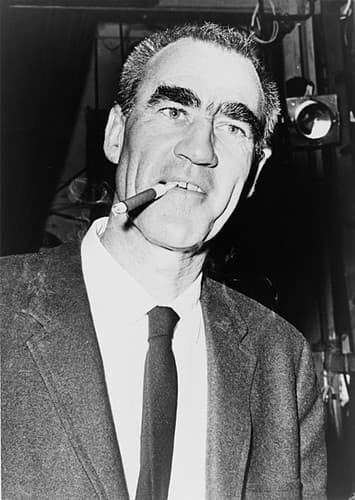
William Ford Gibson is an American-Canadian speculative fiction writer and essayist widely credited with pioneering the science fiction subgenre known as cyberpunk. Beginning his writing career in the late 1970s, his early works were noir, near-future stories that explored the effects of technology, cybernetics, and computer networks on humans—a "combination of lowlife and high tech"—and helped to create an iconography for the information age before the ubiquity of the Internet in the 1990s. Gibson coined the term "cyberspace" for "widespread, interconnected digital technology" in his short story "Burning Chrome" (1982), and later popularized the concept in his acclaimed debut novel Neuromancer (1984). These early works of Gibson's have been credited with "renovating" science fiction literature in the 1980s.
Similar books
- Neuromancer
William Gibson
3.9 (262k) average on GoodreadsFantasyShares Gibson's signature cyberpunk style, intricate world-building, and exploration of virtual realities and future tech.
- Recursion
Blake Crouch
4.2 (109k) average on GoodreadsThrillerFeatures complex time manipulation, high stakes, and a blend of sci-fi thriller with personal drama.
- Dark Matter
Blake Crouch
4.0 (11k) average on GoodreadsFantasyInvolves alternate realities, fast-paced mystery, and a protagonist thrust into extraordinary circumstances.
- Angels & Demons
Dan Brown
3.9 (2.7M) average on GoodreadsThrillerA Harvard symbologist races through Rome's ancient sites, deciphering cryptic clues to unmask the Illuminati and stop a vengeful plot to destroy the Vatican with a stolen antimatter weapon.
- Gone Girl
Gillian Flynn
4.1 (2.3M) average on GoodreadsThrillerA wife's sudden disappearance on her fifth anniversary reveals a web of lies and psychological warfare, exposing the secrets within a seemingly perfect marriage.
- The Girl on the Train
Paula Hawkins
3.9 (2.1M) average on GoodreadsThrillerA woman’s fascination with a seemingly perfect couple she watches from her daily train commute leads her into a dark investigation when she witnesses something that shatters their idyllic image.



Enjoyed the summary?
A summary gives you the shape of the book. The book itself has the detail, the examples and the voice.
Find The Peripheral on AmazonAs an Amazon Associate, BookBrief earns from qualifying purchases. How we're funded