
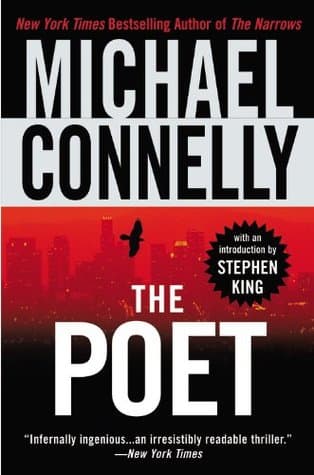
Synopsis
Covers the whole plot, including the ending.
- Difficulty
- Medium
- Pacing
- Moderate
- Mood
- Suspenseful, Dark, Intense, Investigative
- Read it if
- You enjoy intricate serial killer thrillers with a journalistic protagonist and a cat-and-mouse game.
- Skip it if
- You prefer less graphic crime details or a simpler, faster-paced narrative.
The Poet Plot Summary
Covers the whole plot, including the ending.
The Apparent Suicide
Denver crime reporter Jack McEvoy receives a devastating call: his twin brother, Sean McEvoy, a respected Los Angeles homicide detective, has apparently committed suicide. Sean is found dead in his car in the Hollywood Hills, having shot himself with his service weapon. The LAPD quickly rules it a suicide, attributing it to job stress and a recent divorce. Jack, however, struggles to accept this conclusion. He knew Sean to be a resilient man, and the circumstances feel wrong. Driven by grief and his journalistic instinct, Jack decides to write an obituary for the Los Angeles Times, intending to look into his brother's life and the events leading up to his death, hoping to find closure and honor Sean's memory.
A Cryptic Message
As Jack begins his research for the obituary, he carefully examines Sean's belongings and the suicide note. He notices a peculiar phrase in the note, 'The black box is open,' which seems out of place and too poetic for Sean's usual manner of speaking. Recalling a shared childhood memory of a secret code they used, Jack suspects the note contains a hidden message. After careful analysis, he deciphers the phrase, revealing it to be a reference to Edgar Allan Poe's poem 'The Raven.' This discovery immediately raises Jack's suspicions about the official suicide ruling, suggesting that Sean might have been trying to communicate something deeper, a final clue to a truth he couldn't openly state.
Connecting the Deaths
Following the lead from Sean's note, Jack begins to investigate other recent police suicides across the country. His journalistic skills lead him to uncover several cases with striking similarities: police officers, often with seemingly stable lives, found dead with cryptic, poetic messages or allusions left behind. He finds another case in Las Vegas and then one in Phoenix, each initially ruled a suicide, but bearing the subtle, almost artistic signature he now recognizes. Jack realizes he is not looking at isolated incidents but at a pattern, suggesting a sophisticated serial killer targeting law enforcement officers and leaving a trail of literary breadcrumbs, specifically from the works of Edgar Allan Poe.
The FBI Takes Notice
Jack publishes an article in the Los Angeles Times outlining his theory of a serial killer targeting police officers, linking Sean's death to the other 'suicides' he's uncovered. The article, while speculative, generates significant interest and catches the attention of the FBI. Agent Rachel Walling, a profiler, is assigned to investigate Jack's claims. Initially, Walling and her superiors are skeptical, viewing Jack's theory as sensational journalism and a grieving brother's delusion. They adhere to the official suicide rulings, reluctant to admit the possibility of a widespread, undetected serial killer within their ranks, especially one targeting law enforcement.
A New Victim and a Breakthrough
While Jack and Rachel are still at odds, another police officer is found dead in Miami, again an apparent suicide, but with the now familiar poetic signature. This new victim, a female detective, leaves behind a note containing a reference to Poe's 'Annabel Lee.' The undeniable pattern, along with Jack's persistent and detailed research, finally compels Agent Walling and the FBI to acknowledge his theory. They realize they are dealing with a highly intelligent, meticulous killer, dubbed 'The Poet' by Jack, who is taunting law enforcement with his literary clues. Jack is unofficially brought into the investigation due to his unique insight.
The Graveyard and the Dark Web
The investigation intensifies, with Jack and Rachel working together to decipher the Poet's clues. Their research leads them down a dark path, uncovering a hidden online community where individuals share and celebrate violent fantasies, particularly those involving the murder of law enforcement. This 'dark web' forum seems to be a gathering place for those with extreme anti-police sentiments. Further clues from the Poet's messages direct them to a remote, abandoned graveyard in the desert. This location proves to be a chilling discovery, revealing not just a burial site, but a place where the Poet has been disposing of his victims, indicating a much larger scale of murders than initially believed.
The Poet's Identity Revealed
Through careful detective work, combining the poetic clues, forensic evidence from the graveyard, and an analysis of the online forum, Jack and Rachel finally identify 'The Poet' as Robert Backus. Backus is a former FBI agent who had been presumed dead years earlier in a classified operation. His re-emergence as a serial killer targeting his former colleagues is a shocking revelation, indicating a deep-seated grievance and a psychological break. The FBI, initially reluctant to admit their own had gone rogue, is now forced to confront the truth of Backus's existence and his deadly vendetta against law enforcement.
A Confrontation and a Motive
Jack and Rachel track Backus to a remote cabin, leading to a tense confrontation. During their encounter, Backus reveals his twisted motive: he believes his former colleagues abandoned him during a critical, covert operation, leading to his 'death' and subsequent psychological trauma. He sees his murders as an act of poetic justice, a way to expose the hypocrisy and failures he perceives within the FBI. He confesses to killing Sean, revealing that Sean was close to uncovering Backus's activities and was silenced before he could expose him. Sean's 'suicide note' was indeed a coded message, a final, desperate plea for help that only Jack could understand.
The Poet's Plan and a Race Against Time
During the confrontation, Backus reveals that his killings are not merely isolated acts of revenge but part of a much larger, more elaborate plan. He intends to expose what he perceives as corruption and a cover-up within the FBI by releasing sensitive, classified information he acquired during his time as an agent. This information, if made public, could severely damage the agency's reputation and compromise numerous ongoing operations. Jack and Rachel realize they are not just dealing with a serial killer, but with a highly intelligent and dangerous individual determined to bring down the institution he once served, creating a race against time to stop his ultimate objective.
The Final Showdown
The climax sees Jack and Rachel in a desperate race to prevent Backus from executing his final, devastating plan. Backus intends to disseminate the classified information he possesses, potentially causing widespread chaos and exposing deep-seated secrets within the FBI. The pursuit leads them through a series of close calls and dangerous encounters. Ultimately, they manage to corner Backus, leading to a violent confrontation where Backus is finally stopped, though not without significant risk to Jack and Rachel. The immediate threat is neutralized, but the implications of Backus's actions and the secrets he held remain.
Aftermath and Revelation
In the aftermath, the FBI grapples with the fallout of Backus's reign of terror and the exposure of his internal secrets. The agency must confront the uncomfortable truths about its past and the circumstances that created 'The Poet.' Jack, having played a key role in stopping Backus, is left to process the full weight of his brother's death and the horrifying reality of the serial killer. He finds a grim satisfaction in bringing Sean's killer to justice but is deeply affected by the darkness he has uncovered. The experience changes him, solidifying his resolve to pursue truth, no matter how dangerous or uncomfortable.
Principal Figures
Jack McEvoy
Protagonist
A tenacious crime-beat reporter who uncovers a serial killer targeting police officers.
Jack McEvoy is a seasoned crime-beat reporter for the Los Angeles Times, known for his sharp investigative skills and a cynical, world-weary demeanor. He is driven by an innate curiosity and a relentless pursuit of truth, often pushing boundaries to get the story. His brother's death shatters his emotional defenses, transforming his professional drive into a deeply personal quest for justice. Despite his journalistic detachment, he possesses a strong moral compass and a keen intellect, allowing him to decipher the killer's complex clues.
Relationships: Sean McEvoy (Twin brother, shared a deep bond and secret childhood codes.); Rachel Walling (Initially skeptical FBI agent, becomes a trusting partner and ally in the investigation.); Robert Backus (The serial killer, Sean's murderer, and Jack's ultimate adversary.)
Sean McEvoy
Supporting/Victim
Jack's twin brother, an LAPD homicide detective whose apparent suicide sparks the investigation.
Sean McEvoy was a respected LAPD homicide detective, described as resilient and dedicated to his work. His apparent suicide serves as the catalyst for the entire plot. Though deceased, his presence is felt throughout the novel through Jack's memories and his cryptic suicide note. He was a man of integrity, deeply committed to justice, which ultimately put him on the path of the Poet. His character is revealed through Jack's recollections and the clues he left behind, showcasing his intelligence and his attempts to communicate beyond the grave.
Relationships: Jack McEvoy (Twin brother, shared a deep bond and secret childhood codes.); Robert Backus (His killer, whom Sean was investigating.)
Rachel Walling
Supporting
An FBI profiler who initially dismisses Jack's theory but later becomes his crucial ally.
Rachel Walling is a dedicated and intelligent FBI profiler, initially assigned to debunk Jack McEvoy's 'sensational' claims. She is professional, analytical, and adheres strictly to protocol, making her initially skeptical of Jack's unorthodox methods. However, as the evidence mounts and the Poet's pattern becomes undeniable, she proves to be adaptable and courageous. She forms a reluctant but ultimately trusting partnership with Jack, bringing her institutional knowledge and profiling expertise to the investigation, balancing Jack's more impulsive journalistic instincts.
Relationships: Jack McEvoy (Initially skeptical colleague, becomes a trusted partner and ally.); Robert Backus (The serial killer they are both hunting.)
Robert Backus (The Poet)
Antagonist
A former FBI agent turned serial killer, targeting his former colleagues and leaving poetic clues.
Robert Backus, known as 'The Poet,' is the brilliant and deranged serial killer at the heart of the story. He is a former FBI agent, presumed dead, who orchestrates a complex series of murders, meticulously planning each 'suicide' and leaving cryptic poetic clues. His intelligence is matched only by his profound psychological trauma and deep-seated desire for revenge against the FBI, whom he believes betrayed him. He is cunning, manipulative, and capable of extreme violence, using his knowledge of law enforcement to evade capture and taunt his pursuers. His motive is rooted in a warped sense of justice and a desire to expose perceived corruption.
Relationships: Jack McEvoy (His primary pursuer, the one who deciphers his clues.); Sean McEvoy (One of his victims, whom he killed to prevent exposure.); Rachel Walling (FBI profiler hunting him.)
Janice McEvoy
Supporting
Jack's ex-wife and a respected attorney.
Janice McEvoy is Jack's ex-wife, a successful attorney who maintains a civil, if strained, relationship with him. She provides emotional support to Jack during his initial grief over Sean's death and occasionally offers legal insights or serves as a sounding board for his theories. While not directly involved in the investigation, her presence grounds Jack and reminds him of the life outside his obsessive pursuit of the Poet. She represents a connection to his normal life, even as it unravels.
Relationships: Jack McEvoy (Ex-wife, maintains a supportive but distant relationship.)
Special Agent Gordon
Supporting
Rachel Walling's FBI superior, initially skeptical of Jack's theories.
Special Agent Gordon is Rachel Walling's direct superior within the FBI. He embodies the institutional skepticism and bureaucracy that Jack initially faces. Gordon is cautious, unwilling to prematurely declare a serial killer targeting police officers, fearing the potential panic and damage to the agency's reputation. He prioritizes procedure and official rulings, but eventually, the overwhelming evidence forces him to concede to Jack and Rachel's findings, allowing the full resources of the FBI to be deployed against the Poet.
Relationships: Rachel Walling (Subordinate.); Jack McEvoy (Initially views him as an unreliable outsider.)
Harvey 'Harv' Keck
Mentioned
A crime reporter colleague of Jack McEvoy.
Harv Keck is a fellow crime reporter and colleague of Jack McEvoy at the Los Angeles Times. He provides a glimpse into the newsroom environment and the competitive nature of journalism. Harv is a minor character, offering occasional banter or brief professional interactions with Jack, but does not play a direct role in the central investigation. He represents the everyday world Jack operates in before his personal tragedy consumes him.
Relationships: Jack McEvoy (Colleague.)
Themes & Insights
The Search for Truth vs. Institutional Cover-up
This theme explores the tension between an individual's pursuit of truth and the powerful forces of institutional denial and cover-up. Jack McEvoy, as a journalist, is driven to uncover the truth about his brother's death, even when the LAPD and initially the FBI dismiss his theories as grief-fueled delusion. The FBI's initial reluctance to acknowledge a serial killer targeting police officers comes from a desire to maintain public confidence and protect its image. This is evident when Agent Gordon resists Jack's claims, only to be forced to accept them as more officers die, revealing the high cost of denial.
“They want to bury it, Jack. That’s what they do. Bury the bad news and hope nobody digs it up.”
Grief as a Catalyst for Investigation
Grief is a powerful motivator for Jack McEvoy, transforming his professional curiosity into a deeply personal and obsessive quest. Sean's death is not just a story; it is a loss that fuels Jack's determination to understand what truly happened. His inability to accept the suicide ruling is rooted in his intimate knowledge of his twin brother, leading him to scrutinize details others overlook. This emotional investment allows him to see patterns and decipher clues that a detached investigator might miss, showing how personal anguish can unlock deeper insights and drive extraordinary efforts, as seen in his careful analysis of Sean's suicide note.
“Grief was a strange thing. It twisted you, turned you inside out, but it also sharpened your focus, made you see things you might have otherwise missed.”
The Power and Peril of Information
The novel highlights the dual nature of information: its power to expose and its potential for manipulation and destruction. Jack's journalistic skills are centered on gathering and disseminating information, which ultimately leads him to the Poet. The Poet himself uses information as a weapon, using cryptic clues to taunt authorities and planning to release classified FBI data to achieve his revenge. The internet, particularly the dark web forum, is a conduit for both investigation and for the spread of dangerous ideologies, illustrating how easily information can be twisted and used for nefarious purposes, while also being the key to solving the mystery.
“Information was power. And the Poet was a master of wielding it, both as a weapon and a shield.”
Justice vs. Revenge
This theme explores the blurred lines between seeking justice and enacting revenge. Jack McEvoy's initial drive is to find justice for his brother, a righteous pursuit. In contrast, Robert Backus, 'The Poet,' is motivated by a sense of betrayal and seeks revenge against the FBI, which he believes wronged him. Backus frames his murders as a form of 'poetic justice,' but his actions are clearly driven by a destructive desire for retribution, showing how a quest for justice can be perverted into a cycle of violence. The narrative contrasts Jack's pursuit of truth with Backus's twisted vendetta, showing the different paths individuals take when confronted with perceived wrongs.
“He called it justice. But it was just revenge, cold and bloody, dressed up in a poem.”
The Nature of Evil
The novel looks into the chilling nature of evil, particularly how it can appear in intelligent, seemingly ordinary individuals. Robert Backus, a former FBI agent, becomes a sophisticated and calculating serial killer. His evil is not random but carefully planned, driven by a deep-seated grievance and a warped ideology. The story explores how trauma and perceived betrayal can twist a brilliant mind into one capable of horrific acts, and how 'evil' can hide in plain sight, even within institutions designed to fight it. The discovery of the dark web forum further illustrates the insidious nature of collective evil and violent fantasies.
“Evil wasn’t always a monster in the shadows. Sometimes it wore a suit, spoke with a calm voice, and left poems behind.”
Plot Devices & Literary Techniques
The Coded Message
Sean McEvoy's suicide note contains a hidden reference to Edgar Allan Poe.
Sean McEvoy's suicide note, particularly the phrase 'The black box is open,' acts as the primary inciting incident and a crucial coded message. This device immediately raises Jack's suspicions, as he recognizes it as a reference to a childhood game and, more importantly, a clue to Edgar Allan Poe. This hidden message is the key that unlocks the entire mystery, transforming an apparent suicide into a serial killer investigation. It allows the deceased Sean to guide his brother from beyond the grave, providing the initial, vital piece of information that sets Jack on his dangerous path.
Poetic Clues
The serial killer leaves literary allusions as taunts and breadcrumbs.
The 'Poet' serial killer leaves a trail of cryptic clues derived from the works of Edgar Allan Poe at each crime scene. These poetic allusions serve multiple functions: they are a taunt to law enforcement, a signature for the killer, and a complex puzzle for Jack and Rachel to decipher. This device elevates the intellectual stakes of the chase, requiring literary analysis as much as forensic science. The clues not only point towards the killer's identity and motive but also create a distinctive, macabre style for the antagonist, making the investigation a battle of wits.
The Dark Web Forum
A hidden online community where violent fantasies against law enforcement are shared.
The discovery of a hidden online forum on the dark web, where individuals discuss and glorify violence against police officers, serves as a crucial plot device. This forum provides a window into the killer's mindset and potential motives, hinting at a larger network of anti-establishment sentiment. It also functions as a red herring and a source of misdirection, as the investigators initially suspect a group rather than a lone individual. This device highlights the contemporary dangers of online communities and provides a chilling backdrop to the Poet's actions, demonstrating a potential breeding ground for his ideology.
The Journalist as Detective
Jack McEvoy's journalistic skills drive the investigation, often ahead of official law enforcement.
Jack McEvoy's profession as a crime-beat reporter is a central plot device. His investigative techniques—interviewing, researching databases, connecting seemingly disparate events, and writing compelling narratives—are what initially uncover the serial killer's pattern, long before the FBI takes the threat seriously. His access to information and his ability to publish articles also serve to pressure authorities and disseminate information, albeit sometimes controversially. This device positions the journalist as a crucial, often maverick, figure in solving a crime, highlighting the power of independent inquiry when official channels are slow or unwilling to act.
The Poet Quotes
“Everybody counts or nobody counts.”
“The dead speak to us, if we listen.”
“You can't outrun the past. It always catches up.”
“There are monsters among us, and some of them wear suits.”
“The truth is a stubborn thing. It doesn't like to stay buried.”
“Sometimes the only way out is through.”
“Every secret has a price.”
“The darkness finds its own way in, if you let it.”
“The line between hunter and hunted can blur very quickly.”
“You have to be willing to look into the abyss, even if it looks back at you.”
“Some wounds never truly heal, they just scar over.”
“The most dangerous lies are the ones we tell ourselves.”
“Justice isn't always about the law. Sometimes it's about what's right.”
“The past is a powerful ghost, always lurking.”
Quiz
10 questions on the plot and the characters. Each answer comes with a short explanation.
Question 1
What is the initial event that prompts Jack McEvoy to begin his investigation?
- He is assigned to a new high-profile serial killer case.
- His brother, a homicide detective, commits suicide.
- He discovers a series of unsolved murders with poetic clues.
- A source tips him off about a corrupt police officer.
Show answer
B. His brother, a homicide detective, commits suicide. Jack McEvoy starts his personal investigation after his brother, Sean McEvoy, a homicide detective, is found dead in what is ruled a suicide.
Question 2
What is Jack McEvoy's profession at the beginning of the novel?
- FBI agent
- Homicide detective
- Crime-beat reporter
- Forensic pathologist
Show answer
C. Crime-beat reporter Jack McEvoy is introduced as a crime-beat reporter for the Rocky Mountain News, specializing in violent death.
Question 3
What kind of clues does the serial killer leave at the crime scenes?
- Cryptic symbols drawn in blood
- Specific items related to the victim's past
- Fragments of famous poems
- Handwritten notes with a specific signature
Show answer
C. Fragments of famous poems The killer, known as 'The Poet,' leaves behind fragments of famous poems, often related to death or the circumstances of the victim's demise.
Question 4
What is the primary motivation Jack suspects for the serial killer's actions?
- Revenge against the justice system
- To expose corruption within the police force
- To cover up a larger criminal enterprise involving child pornography
- To achieve notoriety and challenge law enforcement
Show answer
C. To cover up a larger criminal enterprise involving child pornography As the investigation progresses, Jack and Rachel Walling uncover that the murders are being committed to cover up a widespread child pornography ring, with the victims being those who were getting too close to uncovering it.
Question 5
Who is Rachel Walling in relation to Jack McEvoy's investigation?
- His editor at the newspaper
- An FBI agent assigned to the serial killer case
- A relative of one of the victims
- A rival reporter investigating the same story
Show answer
B. An FBI agent assigned to the serial killer case Rachel Walling is an FBI agent who becomes involved in the investigation into the series of apparent suicides, eventually working alongside Jack McEvoy.
Question 6
What is the significance of the initial 'suicides' of police officers?
- They are a distraction from the killer's true targets.
- They are the first victims of the serial killer, disguised to appear as suicides.
- They are actual suicides, unrelated to the later serial killings.
- They are a form of ritualistic sacrifice by a cult.
Show answer
B. They are the first victims of the serial killer, disguised to appear as suicides. The 'suicides' of the police officers, including Jack's brother, are actually the first victims of the serial killer, meticulously staged to avoid suspicion and cover up their connection to the child pornography ring.
Question 7
What theme is most prominent in 'The Poet' regarding the journalistic pursuit of truth?
- The importance of unbiased reporting above all else.
- The dangers and personal sacrifices involved in uncovering dark truths.
- The ethical dilemma of protecting sources versus breaking a story.
- The decline of print journalism in the digital age.
Show answer
B. The dangers and personal sacrifices involved in uncovering dark truths. Jack McEvoy puts his career and life at extreme risk to uncover the truth behind his brother's death and the subsequent serial killings, highlighting the theme of the personal cost of pursuing truth, especially against powerful, hidden forces.
Question 8
Who is ultimately revealed to be 'The Poet'?
- A high-ranking FBI official
- A disgruntled former police officer
- A renowned literature professor
- Jack McEvoy's newspaper editor
Show answer
A. A high-ranking FBI official The killer is revealed to be Robert Backus, a high-ranking FBI agent, who uses his position to manipulate investigations and cover his tracks.
Question 9
What specific detail about the victims' deaths initially makes Jack suspect foul play rather than suicide?
- The presence of a specific type of poison in their systems.
- The unusual method of suicide and the specific poetic clues left behind.
- Missing personal items from the crime scenes.
- Inconsistencies in the suicide notes' handwriting.
Show answer
B. The unusual method of suicide and the specific poetic clues left behind. Jack's suspicions are raised by the fact that several police officers, including his brother, appear to have committed suicide in similar, unusual ways, and the discovery of the poetic fragments that link them, suggesting a pattern inconsistent with genuine suicide.
Question 10
What is the ultimate fate of the child pornography ring that 'The Poet' was trying to protect?
- It remains active and undetected by authorities.
- It is ultimately exposed and dismantled due to Jack's and Rachel's efforts.
- It is taken over by a new, more dangerous criminal organization.
- It is partially exposed, but many members escape justice.
Show answer
B. It is ultimately exposed and dismantled due to Jack's and Rachel's efforts. Through the combined efforts of Jack McEvoy and Rachel Walling, 'The Poet' is exposed, and the extensive child pornography ring he was protecting is ultimately brought to justice.
The Poet FAQ
What prompts Jack McEvoy to investigate his brother's death, despite it being ruled a suicide?
Jack McEvoy, a crime-beat reporter, is driven by his professional instincts and personal grief. He notices inconsistencies at the scene of his brother's alleged suicide, such as the position of the body and the lack of a suicide note, which spark his suspicion that something more sinister occurred.
Who is the primary antagonist, and what is their motive for targeting law enforcement officials?
The primary antagonist is Robert Backus, also known as 'The Poet.' His motive stems from a deep-seated desire for revenge against the law enforcement system, specifically for perceived injustices and a personal vendetta related to past events and his own twisted sense of justice.
What role do the 'poetic clues' play in the killer's methodology?
The poetic clues are meticulously chosen lines from famous poetry, left at each crime scene. They serve as a macabre signature for The Poet, taunting investigators and showcasing his intelligence, while also providing hints that, when correctly interpreted, reveal aspects of his plan or identity.
How does FBI Agent Rachel Walling become involved in Jack McEvoy's investigation?
Rachel Walling is an FBI profiler assigned to the case once the scope expands beyond a single suicide and links to other law enforcement deaths emerge. She initially views McEvoy with suspicion due to his reporter status, but they eventually form a tense alliance, combining her profiling expertise with his investigative journalism skills.
What significant plot twist reveals the true identity and nature of the killer?
The major twist reveals that Robert Backus, the seemingly helpful and knowledgeable FBI agent assisting with the case, is in fact The Poet. This betrayal of trust and his deep infiltration into the investigation highlights his cunning and psychological manipulation, making him incredibly difficult to apprehend.
Are there any subtle foreshadowing elements pointing to Robert Backus's true identity before the reveal?
Yes, there are subtle hints. Backus often displays an unusually deep knowledge of poetry and serial killer psychology, sometimes even anticipating the killer's next move or offering insights that are almost too perfect. His calm demeanor under pressure and his readiness to dismiss alternative theories also subtly point to his hidden agenda.
What is the significance of the specific poems chosen by The Poet?
The poems chosen by The Poet, such as those by Edgar Allan Poe, often reflect themes of death, loss, madness, and the macabre. They are not random; they are carefully selected to mirror the killer's mindset, his victims' fates, and his twisted justification for his actions, adding a layer of intellectual sadism to his crimes.
Is there a deeper connection between The Poet's victims beyond their profession?
Beyond being law enforcement, it's revealed that some of the victims were indirectly connected to a past case or event that personally affected Robert Backus. The Poet is meticulously selecting targets who, in his mind, bear some responsibility or played a role in the circumstances that led to his vendetta, making his killings acts of calculated revenge.
How does Jack McEvoy's profession as a crime-beat reporter influence his investigation and personal journey?
McEvoy's journalistic instincts, access to information, and network of contacts are crucial to his investigation. However, his reporter's drive to 'get the story' also puts him in extreme danger and forces him to confront ethical dilemmas, blurring the lines between reporting the news and becoming part of it.
Analyze the psychological impact of his brother's death on Jack McEvoy.
Jack's brother's death is a profound trauma that shatters his sense of security and trust. It fuels an obsession to uncover the truth, acting as a coping mechanism for his grief and guilt. This personal stake in the investigation makes him reckless but also deeply empathetic towards the victims, driving his relentless pursuit of justice.
What does Robert Backus's use of poetry reveal about his psychological profile?
Backus's use of poetry reveals a highly intelligent, narcissistic, and deeply disturbed individual. It suggests a need for intellectual superiority and control, using art to elevate his horrific acts beyond mere murder. His theatricality and desire to leave a 'signature' point to a classic psychopathic need for recognition and power.
How does the dynamic between Jack McEvoy and Rachel Walling evolve throughout the novel?
Their dynamic begins with professional mistrust and antagonism, as Rachel views Jack as an interfering journalist. However, as they face increasing danger and share insights, their relationship evolves into one of grudging respect, then a tentative partnership, and eventually a deep personal connection based on shared trauma and mutual reliance.
Is 'The Poet' primarily a story about revenge, or does it explore broader themes?
'The Poet' is fundamentally a story about revenge, specifically Robert Backus's quest for it. However, it also delves into broader themes of justice, the fallibility of institutions, the ethics of journalism, and the psychological toll of violence on both victims and investigators, questioning where the line between good and evil truly lies.
How does the novel challenge the typical portrayal of FBI agents and law enforcement?
The novel challenges typical portrayals by presenting a high-ranking FBI agent, Robert Backus, as the ultimate villain. This subverts expectations, highlighting that evil can reside within trusted institutions and that even those sworn to uphold the law can be profoundly corrupt, forcing readers to question authority and appearances.
What is the symbolic meaning of the title, 'The Poet'?
The title 'The Poet' refers directly to the killer, Robert Backus, and his unique modus operandi of leaving poetic clues. Symbolically, it represents the killer's twisted artistry and intellectual arrogance, elevating his murders to a performance. It also alludes to the dark, expressive side of humanity and the power of words, even when used for malevolent purposes.
Could the novel be interpreted as a critique of modern media's role in crime reporting?
Yes, the novel can be interpreted as a critique. Jack McEvoy's relentless pursuit of the story, sometimes at the expense of his own safety or ethical boundaries, raises questions about sensation, exploitation, and the blurring lines between reporting and interfering in investigations. It highlights the power and potential pitfalls of media influence in high-profile criminal cases.
How does the ending of 'The Poet' resonate with readers, and is it a definitive conclusion?
The ending provides a thrilling and largely definitive conclusion to the immediate threat of The Poet, with his ultimate capture or demise. However, it leaves a lasting psychological impact on Jack McEvoy and Rachel Walling, suggesting that while the case is closed, the trauma and the moral ambiguities will continue to resonate, hinting at the potential for future stories.
About the author

Michael Connelly is an American author known for his crime fiction novels. His notable works include The Lincoln Lawyer, The Black Echo, The Poet, The Gods of Guilt, The Black Ice, and The Brass Verdict, which often feature complex characters and intricate plots. Connelly's writing frequently explores themes of justice and morality within the legal system.
Similar books
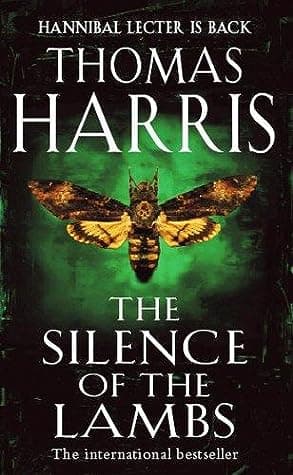
- The Silence of the Lambs
Thomas Harris
4.2 (464k) average on GoodreadsThrillerFeatures a brilliant serial killer, FBI involvement, and intense psychological suspense.
- Gone Girl
Gillian Flynn
4.1 (2.3M) average on GoodreadsThrillerInvolves complex, manipulative villains and a deep dive into dark human psychology.
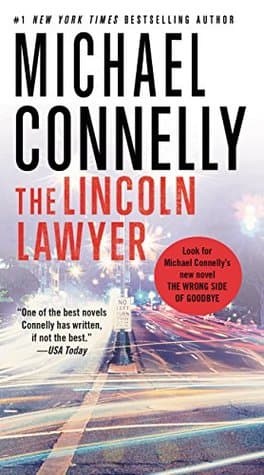
- The Lincoln Lawyer
Michael Connelly
4.2 (193k) average on GoodreadsThrillerAnother Michael Connelly novel with a strong investigative element and legal/criminal intrigue.
- Kiss the Girls
James Patterson
4.0 (313k) average on GoodreadsThrillerBoth The Poet and Patterson's Kiss the Girls involve serial killers targeting multiple victims across different states, drawing in federal agencies. However, Connelly's approach in The Poet is generally more nuanced and methodical in its reveal of the killer's identity and motive, building suspense through detailed investigation. Patterson's Alex Cross series, including Kiss the Girls, often features faster pacing, shorter chapters, and more overt action sequences, sometimes at the expense of the deep procedural detail that Connelly provides. The Poet prioritizes the 'how' and 'why' of the investigation with greater depth than Patterson typically does.
- Angels & Demons
Dan Brown
3.9 (2.7M) average on GoodreadsThrillerA Harvard symbologist races through Rome's ancient sites, deciphering cryptic clues to unmask the Illuminati and stop a vengeful plot to destroy the Vatican with a stolen antimatter weapon.
- The Girl on the Train
Paula Hawkins
3.9 (2.1M) average on GoodreadsThrillerA woman’s fascination with a seemingly perfect couple she watches from her daily train commute leads her into a dark investigation when she witnesses something that shatters their idyllic image.




Enjoyed the summary?
A summary gives you the shape of the book. The book itself has the detail, the examples and the voice.
Find The Poet on AmazonAs an Amazon Associate, BookBrief earns from qualifying purchases. How we're funded