

Synopsis
Covers the whole plot, including the ending.
- Difficulty
- Easy
- Pacing
- Fast
- Mood
- Suspenseful, Dark, Gritty, Vengeful
- Read it if
- You enjoy fast-paced, international thrillers with a detective driven by personal vengeance and a high body count.
- Skip it if
- You prefer character-driven mysteries over plot-driven action, or are sensitive to graphic descriptions of murder.
The Postcard Killers Plot Summary
Covers the whole plot, including the ending.
Rome: A Father's Grief and a Daughter's Death
NYPD Detective Jacob Kanon is called to Rome after his daughter, Kimmy Kanon, and her boyfriend, Simon, are found murdered in their hotel room. The scene is horrific, with the bodies posed grotesquely. Jacob, a seasoned detective, is overwhelmed by personal grief but also a professional instinct to understand what happened. Italian authorities, led by Inspector Moretti, investigate, but initial clues are scarce. Jacob observes the crime scene, noting the meticulous staging and lack of a clear motive, which immediately signals that this might not be a random act but something more sinister and planned. The experience leaves him shattered but resolute in his pursuit of justice for Kimmy.
A Pattern Emerges: Postcards and European Murders
Following Kimmy's murder, similar killings of young couples begin to appear across Europe, in cities like Paris, Copenhagen, and Frankfurt. Each crime scene mirrors the one in Rome, with the same brutal method and victims posed disturbingly. The only consistent clue is a postcard, always showing a famous local landmark, sent to a major newspaper in each city a day before the murders. The postcards bear the chilling message, 'Wish you were here.' Jacob, now on an unofficial investigation, tracks these murders, convinced they link to Kimmy's death. He feels a growing urgency and frustration with the lack of progress from different European police forces.
Stockholm and Dessie Larsson
Jacob Kanon's pursuit of the killer leads him to Stockholm, Sweden, after another postcard arrives at the Aftonbladet newspaper. The recipient is Dessie Larsson, a sharp crime reporter. Dessie, intrigued and disturbed by the postcard, has already begun her own investigation into the European murders, noticing the similarities. Their paths converge when Jacob contacts her, recognizing her unique position. Dessie, initially skeptical of the grieving American detective, quickly realizes his insights are valuable. They form an alliance, combining Jacob's police experience and personal drive with Dessie's journalistic resources and local knowledge, both determined to stop the killer before another couple is victimized in Stockholm.
The Hunt in Stockholm
Working together, Jacob and Dessie analyze the patterns of the previous postcards and murders, trying to predict the killer's next move in Stockholm. They search potential locations and investigate recent disappearances, driven by time running out. Despite their efforts and Dessie's connections within the Swedish police, they cannot prevent the next crime. A young Swedish couple is found murdered, their bodies posed in the familiar, macabre style, confirming the killer's presence in Stockholm. The failure is a blow, especially for Jacob, who feels the weight of his inability to protect others, mirroring his failure to protect Kimmy. This setback only strengthens their resolve to catch the elusive killer.
Identifying the Killers: A Twisted Duo
As Jacob and Dessie continue their investigation, a breakthrough occurs. Through analysis of the postcards, crime scene details, and victim profiles, they begin to piece together a disturbing picture. Dessie's journalistic research uncovers a connection to a wealthy, eccentric European family, and Jacob's detective instincts focus on specific psychological traits in the killings. They identify the perpetrators as Julian and Nini, a brother and sister who share a disturbed and incestuous relationship. The realization that they are hunting not one, but two intelligent and psychopathic killers, adds a new layer of complexity and horror to their pursuit. Their motive remains unclear, but their identities are now known.
The Art of Murder: Julian and Nini's Philosophy
The story often shifts to Julian and Nini's perspective, revealing their twisted internal world. They see their murders not as crimes, but as artistic expressions, meticulously staging each scene as a macabre tableau. Julian, the more dominant and intellectual, sees himself as a modern artist, using human life to create his masterpieces. Nini, equally complicit and disturbed, is devoted to her brother and finds pleasure in their shared acts. Their postcards are not just taunts but signatures, a way to announce their 'exhibitions.' They are driven by a sense of superiority and a disregard for human life, believing they bring beauty to a mundane world through their horrifying creations.
The Chase Across Europe Intensifies
With Julian and Nini's identities confirmed, Jacob and Dessie embark on a desperate chase across the continent. They follow the killers' trail through various European cities, using forensic evidence, witness testimonies, and their growing understanding of the siblings' psychology. They travel to places like Munich, Vienna, and even back to Paris, always arriving just a step behind. Frustration mounts as Julian and Nini prove cunning and elusive, often leaving behind taunting clues or narrowly escaping capture. Each near-miss fuels Jacob's determination and Dessie's journalistic zeal, pushing them to their physical and emotional limits.
Confrontation in Venice
The pursuit ends in Venice, Italy, a city known for its canals and narrow alleys. Jacob and Dessie, through deduction and a lucky break, track Julian and Nini to a remote, decaying palazzo. The stage is set for a final, violent confrontation. Jacob, fueled by Kimmy's memory, faces Julian, while Dessie struggles with Nini. The fight is brutal and desperate, with the killers proving formidable and unhinged. The Venetian setting provides a dramatic backdrop for the climax, as the pursuit of justice reaches its bloody conclusion amidst the ancient architecture.
The Aftermath and Loose Ends
In the aftermath of the Venice confrontation, Julian and Nini are stopped. The details of their demise are grim, but Jacob's primary mission is accomplished. European authorities arrive to process the scene, ending the reign of terror. While the immediate threat is neutralized, the emotional toll on Jacob and Dessie is immense. Jacob carries the grief of his daughter's loss, forever changed by the experience. Dessie, triumphant in breaking the story, is haunted by the horrors she witnessed. The ending suggests a lingering unease, as some psychological complexities of the killers remain unsettling, implying that true evil can never be fully understood or eradicated, only contained.
Jacob's Return and Lingering Trauma
After the resolution in Venice, Jacob Kanon returns to New York, a city that now feels both familiar and alien. He is no longer just a detective; he is a father who hunted his daughter's killers across a continent. The experience has left him with deep psychological scars, but also a sense of grim satisfaction that justice, however brutal, was served. He faces the task of rebuilding his life and coming to terms with the trauma he endured. While the immediate threat is gone, the memory of Kimmy and the horrific acts of Julian and Nini will forever be a part of him. His journey has transformed him, leaving him a more complex and haunted individual, but one who found a measure of peace through his relentless pursuit.
Principal Figures
Jacob Kanon
Protagonist
An NYPD detective driven by grief to hunt his daughter's killers across Europe.
Jacob Kanon is a seasoned NYPD detective whose life is shattered by the brutal murder of his daughter, Kimmy, in Rome. Grief-stricken but fueled by a fierce paternal love and professional instinct, he embarks on an unsanctioned, continent-spanning quest for justice. He is intelligent, methodical, and possesses a keen understanding of criminal psychology, which serves him well in deciphering the killers' patterns. Despite his professional stoicism, his personal loss makes him vulnerable and emotionally raw, often blurring the lines between detective and avenging father. His drive is singular: to find and stop the people who murdered his child.
Relationships: Kimmy Kanon (Daughter, whose murder drives his entire journey.); Dessie Larsson (Investigative partner and confidante.); Inspector Moretti (Italian police contact, initially skeptical but later cooperative.)
Dessie Larsson
Supporting
A tenacious Swedish crime reporter who partners with Jacob Kanon.
Dessie Larsson is a sharp, ambitious, and courageous crime reporter for the Swedish newspaper Aftonbladet. She is intelligent, resourceful, and possesses a strong journalistic integrity, always seeking the truth. When she receives one of the killers' postcards, she begins her own investigation, quickly realizing the scope of the European murders. She is initially wary of Jacob but soon recognizes his expertise and shared purpose. Dessie is driven by a desire to expose the truth and protect potential victims, often putting herself in danger. She serves as Jacob's eyes and ears in Europe, providing invaluable local knowledge and journalistic connections.
Relationships: Jacob Kanon (Investigative partner and confidante.); Julian and Nini (Adversaries she helps track and expose.)
Julian
Antagonist
The primary, psychopathic male killer, who views his murders as 'art'.
Julian is the elder brother and the dominant force behind the 'Postcard Killers'. He is highly intelligent, charismatic, and profoundly disturbed, suffering from extreme narcissism and a complete lack of empathy. He views his brutal murders not as crimes, but as artistic expressions, meticulously staging each scene as a macabre tableau. Julian is manipulative and cunning, easily evading authorities while indulging in his perverse 'art'. His relationship with his sister, Nini, is deeply incestuous and symbiotic, with him being the primary architect of their shared fantasies and violent acts. He embodies a chilling blend of intellect and pure evil.
Relationships: Nini (Sister and incestuous partner in crime.); Jacob Kanon (Primary adversary, the detective hunting him.); Dessie Larsson (Adversary, the reporter exposing him.)
Nini
Antagonist
Julian's equally disturbed sister and accomplice in the 'Postcard Killings'.
Nini is Julian's younger sister and his devoted, equally psychopathic accomplice. She is beautiful and outwardly charming, but beneath the surface lies a deep-seated depravity and a fierce loyalty to her brother. Her identity is largely subsumed by Julian's, and she finds perverse pleasure and purpose in assisting him with their murders, which she also perceives as a form of art. Her incestuous relationship with Julian is central to her character, binding them together in their shared madness. Nini is capable of extreme violence and cunning, often playing a more active, hands-on role in the physical aspects of their crimes, driven by a desire to please Julian and fulfill their twisted fantasy.
Relationships: Julian (Brother and incestuous partner in crime.); Jacob Kanon (Adversary, the detective hunting her.); Dessie Larsson (Adversary, the reporter exposing her.)
Kimmy Kanon
Mentioned
Jacob Kanon's murdered daughter, whose death sets the plot in motion.
Kimmy Kanon is Jacob Kanon's daughter, whose brutal murder in Rome, along with her boyfriend Simon, serves as the catalyst for the entire story. While she is only seen in flashbacks and memories, her presence is deeply felt throughout the novel. Her death transforms Jacob from a regular detective into a grieving father on a personal vendetta. She represents the innocent victims of Julian and Nini, and her memory fuels Jacob's relentless pursuit of justice. Her character symbolizes the profound impact of violent crime on individuals and families.
Relationships: Jacob Kanon (Father, whose love and grief are central to the story.); Simon (Boyfriend, murdered alongside her.)
Inspector Moretti
Supporting
The lead Italian detective investigating Kimmy Kanon's murder.
Inspector Moretti is the initial lead detective on Kimmy Kanon's murder case in Rome. He is a professional and competent Italian police officer, initially overwhelmed by the brutality and unusual nature of the crime. He is somewhat skeptical of Jacob Kanon's emotional involvement and unofficial investigation at first, but gradually comes to respect Jacob's instincts and experience. Moretti represents the official, bureaucratic arm of the investigation, providing a contrast to Jacob's more personal and often rogue approach. He eventually becomes a cooperative contact for Jacob as the European scope of the murders becomes clear.
Relationships: Jacob Kanon (Initial police contact, later a cooperative ally.); Kimmy Kanon (Victim in his initial investigation.)
Simon
Mentioned
Kimmy Kanon's boyfriend, murdered alongside her in Rome.
Simon is Kimmy Kanon's boyfriend, who is murdered with her in their Rome hotel room. Like Kimmy, he is an innocent victim whose death is a key part of the inciting incident. His character is not deeply explored but serves to emphasize the tragic nature of the killers' actions and the loss suffered by their families. His presence underscores the pattern of young couples being targeted by Julian and Nini, making the murders even more horrifying.
Relationships: Kimmy Kanon (Girlfriend, murdered alongside him.)
Themes & Insights
Grief and Vengeance
The novel explores the destructive and motivating power of grief, particularly through Jacob Kanon. His daughter Kimmy's murder transforms his grief into an unyielding drive for vengeance and justice. This theme appears in his relentless pursuit across Europe, pushing him beyond official channels and personal safety. The contrast between his professional detective's mindset and his raw paternal anguish highlights how personal loss can redefine one's purpose, as seen when he disobeys orders and risks his career to hunt the killers, fueled by the memory of Kimmy's brutal end.
“He wasn’t a cop anymore. He was a father, and a father had only one job now: find them.”
The Nature of Evil
The book explores the unsettling nature of pure evil as seen in Julian and Nini. Their murders are not for profit or passion, but for a twisted aesthetic pleasure, viewing their victims as 'art'. This theme explores the psychology of psychopathy, incest, and nihilism, where human life holds no value. The killers' thoughts reveal a chilling detachment and a grandiose self-perception, making their acts even more horrifying because they are driven by a lack of empathy and a desire for 'beauty' in destruction. Their 'art' is a manifestation of their moral void.
“Beauty was in the eye of the beholder, and Julian was the beholder. He was the artist.”
Justice Beyond Borders
This theme highlights the complexities and frustrations of international crime investigation. Jacob's journey across Europe shows the challenges of different police forces, jurisdictional issues, and cultural differences in solving a continent-spanning crime. His unofficial status often hinders him, but his determination forces cooperation. The theme emphasizes that while borders exist for nations, evil does not recognize them, requiring a more unified and persistent approach to justice, as shown by Jacob and Dessie's cross-national partnership to overcome these bureaucratic hurdles.
“The killers didn't care about borders. Why should he?”
The Media's Role in Crime
The novel explores the significant and often double-edged role of the media in high-profile crime. Dessie Larsson, as a crime reporter, is important to the investigation, using her journalistic skills and connections to uncover vital clues and share information. However, the killers also manipulate the media, sending postcards to newspapers to announce their 'art' and create fear. This theme examines how the media can both aid in solving crimes and inadvertently amplify the perpetrators' messages, creating a complex dynamic between reporting, investigation, and the public's perception of fear and justice.
“The postcard was a message. A taunt. And a promise.”
Plot Devices & Literary Techniques
The Postcards
Cryptic postcards sent to local newspapers before each murder.
The postcards are the central plot device, serving multiple functions. They are the killers' signature, a taunt to authorities, and a chilling announcement of their next 'exhibition'. Each postcard depicts a local landmark and bears the message 'Wish you were here,' turning a benign tourist sentiment into a sinister threat. For Jacob and Dessie, they are crucial clues, providing a timeline and geographical pattern that helps them track the killers. The postcards elevate the killers' acts beyond mere violence, framing them as a twisted performance intended for public consumption and a direct challenge to law enforcement.
The 'Art' of Murder
The killers' meticulous staging of their victims as macabre art installations.
This device highlights the unique psychological profile of Julian and Nini. They don't just kill; they meticulously pose their victims, often in sexually explicit and grotesque ways, viewing these scenes as their 'art'. This element is crucial in establishing the killers' motive—not financial gain or passion, but a profound, twisted aesthetic. It also complicates the investigation, as authorities struggle to comprehend the lack of conventional motive, making the killers harder to profile and predict. This 'art' is a window into their profound narcissism and nihilism, making their acts even more chilling.
The International Chase
The killers' pattern of moving across different European cities.
The international nature of the murders is a key plot device that allows the story to unfold across various iconic European backdrops, adding scale and complexity. It creates jurisdictional challenges for law enforcement, forcing Jacob to operate outside standard protocols and rely on a network of contacts. This device emphasizes the elusive nature of the killers and the global reach of their crimes, while also providing opportunities for Jacob and Dessie to explore different cultures and environments as they pursue their targets. It underscores the theme of 'justice beyond borders'.
The Incestuous Bond
The deeply disturbed and incestuous relationship between Julian and Nini.
The incestuous relationship between Julian and Nini is a critical plot device that explains their profound psychological connection and shared pathology. This bond is the foundation of their 'partnership' in crime, making them a uniquely cohesive and dangerous duo. It highlights the depth of their depravity and their isolation from normal human relationships, creating a closed, self-reinforcing system of evil. This device adds a layer of disturbing psychological complexity to the antagonists, making them more terrifying and their actions more incomprehensible to conventional morality, thereby intensifying the horror of their crimes.
The Postcard Killers Quotes
“They were on their honeymoon, but it was a honeymoon that would end in a bloodbath.”
“The killer wasn't just murdering people; he was making a statement. A very public, very gruesome statement.”
“Every city, every postcard, a new victim. It was a macabre travelogue.”
“He knew, with a chilling certainty, that this was just the beginning. The first act in a play no one wanted to see.”
“The postcards weren't just clues; they were taunts. A direct challenge to anyone trying to stop him.”
“Grief was a heavy cloak, suffocating him, but it also fueled a cold, burning rage.”
“He was hunting a ghost, a phantom who left behind a trail of blood and beautiful scenery.”
“The deeper he dug, the more twisted the roots became. A darkness far older than the current murders.”
“Sometimes, the most beautiful things can hide the most horrific secrets.”
“He wasn't just looking for a killer; he was looking for answers. Answers that might destroy him.”
“The line between justice and vengeance was blurring, and he wasn't sure he cared anymore.”
“The greatest trick the devil ever pulled was convincing the world he didn't exist. This killer was doing something similar.”
“He had walked into a nightmare, and the only way out was to face the monsters within it.”
“The silence after the storm was often the most deafening, filled with the echoes of what was lost.”
Quiz
10 questions on the plot and the characters. Each answer comes with a short explanation.
Question 1
What is the primary motivation for NYPD detective Jacob Kanon's tour of Europe?
- He is on a sabbatical to enjoy European culture.
- He is investigating the murder of his daughter and her boyfriend.
- He is a consultant for European police forces on cold cases.
- He is tracking a dangerous international art thief.
Show answer
B. He is investigating the murder of his daughter and her boyfriend. Jacob Kanon's daughter, Kimmy, and her boyfriend were murdered in Rome, leading him to tour Europe to find their killer.
Question 2
What is the only consistent clue connecting the murders of young couples across Europe?
- A specific type of weapon left at each scene.
- A note with a religious verse.
- A postcard sent to the local newspaper before each murder.
- The victims all knew each other.
Show answer
C. A postcard sent to the local newspaper before each murder. The recurring clue is a postcard sent to local newspapers, preceding each new set of victims.
Question 3
Which city was NOT mentioned as a location where young couples were found dead?
- Paris
- London
- Copenhagen
- Frankfurt
Show answer
B. London The book mentions murders in Rome, Paris, Copenhagen, Frankfurt, and Stockholm, but not London.
Question 4
Who is Dessie Larsson?
- An Interpol agent assigned to the case.
- A Swedish reporter who receives a killer's postcard.
- Jacob Kanon's estranged wife.
- The forensic expert on the Stockholm police force.
Show answer
B. A Swedish reporter who receives a killer's postcard. Dessie Larsson is a Swedish reporter who becomes involved in the case after receiving a postcard from the killer.
Question 5
What phrase is typically written on the postcards sent by the killer?
- Thinking of you.
- Wish you were here.
- Greetings from...
- See you soon.
Show answer
B. Wish you were here. Each postcard sent by the killer contains the chilling message, 'Wish you were here.'
Question 6
How does Jacob Kanon perceive the European cities he visits?
- As beautiful tourist destinations.
- Through the eyes of his daughter's killer.
- As potential retirement locations.
- As places to escape his past.
Show answer
B. Through the eyes of his daughter's killer. The text states that Kanon sees 'each museum, each cathedral, and each cafe through the eyes of his daughter's killer,' indicating his focus on the investigation and not tourism.
Question 7
What is the primary thematic element explored through Jacob Kanon's character arc?
- The pursuit of financial gain.
- The all-consuming nature of grief and vengeance.
- The challenges of international diplomacy.
- The beauty of European architecture.
Show answer
B. The all-consuming nature of grief and vengeance. Kanon's entire journey is driven by the murder of his daughter, highlighting themes of grief, personal justice, and vengeance.
Question 8
What is the significance of Dessie Larsson receiving a postcard in Stockholm?
- It means the killer is targeting reporters now.
- It confirms Stockholm as the next murder location, allowing Kanon and Larsson to predict the killer's next move.
- It's a red herring designed to mislead the investigation.
- It indicates the killer is an admirer of Dessie's work.
Show answer
B. It confirms Stockholm as the next murder location, allowing Kanon and Larsson to predict the killer's next move. The receipt of the postcard in Stockholm signifies that the city is the next target, allowing Kanon and Larsson to potentially anticipate the killer's actions.
Question 9
What characteristic defines the victims targeted by the killer?
- They are all wealthy individuals.
- They are always young couples.
- They are all involved in law enforcement.
- They are all American tourists.
Show answer
B. They are always young couples. The summary explicitly states that 'young couples' in various European cities have been found dead, and Kanon's daughter and her boyfriend were also a young couple.
Question 10
What is implied about the killer's modus operandi regarding the postcards?
- The killer is trying to confess their crimes.
- The killer enjoys taunting the authorities and the public.
- The postcards are a cry for help.
- The postcards contain hidden messages for a secret organization.
Show answer
B. The killer enjoys taunting the authorities and the public. Sending a postcard to the local newspaper before each murder, especially with a phrase like 'Wish you were here,' suggests a deliberate act of taunting and drawing attention to their crimes.
The Postcard Killers FAQ
What is the central premise of 'The Postcard Killers'?
NYPD detective Jacob Kanon embarks on a grim journey across Europe, retracing the steps of a serial killer who murdered his daughter, Kimmy, and her boyfriend in Rome. The killer targets young couples in picturesque cities, sending a postcard with the message 'Wish you were here' to local newspapers before each murder, prompting Kanon to hunt them down.
Who is Jacob Kanon, and what motivates him throughout the story?
Jacob Kanon is an NYPD detective whose life is shattered by the brutal murder of his daughter, Kimmy, and her boyfriend in Rome. His primary motivation is an intense, personal quest for vengeance and justice against the serial killer responsible, driving him to abandon his usual duties and pursue the case across international borders.
Who is Dessie Larsson and what is her role in the investigation?
Dessie Larsson is a tenacious Swedish reporter who becomes entangled in the case after receiving a 'Wish you were here' postcard in Stockholm, signaling the next potential murder. She forms an unlikely partnership with Jacob Kanon, using her journalistic skills and local contacts to help him track the killers and understand their patterns.
What is the signature calling card of the killers?
Before each murder of a young couple, the killers send a postcard featuring an image of the upcoming victim's city to a local newspaper. The postcard always bears the chilling, handwritten message: 'Wish you were here,' serving as both a taunt and a macabre announcement of their next act.
Which European cities are featured as murder locations in the book?
The murders begin in Rome, where Jacob Kanon's daughter Kimmy is killed, and subsequently occur in various other European capitals. These include Paris, Copenhagen, Frankfurt, and Stockholm, with the investigation leading Kanon and Larsson to anticipate future attacks in other major cities.
What is the true identity of the 'Postcard Killers'?
The 'Postcard Killers' are revealed to be a wealthy, incestuous brother and sister duo, Andreas and Frederika. They are driven by a twisted sense of aestheticism and a desire to create 'art' through their meticulously staged murders, seeing themselves as artists rather than criminals.
What is the significance of the 'Wish you were here' message on the postcards?
The message 'Wish you were here' is a deeply ironic and taunting message from the killers. It serves as an invitation to the public and authorities to witness their 'art,' while also mocking the victims' last moments and the longing for normalcy, creating a chilling contrast with the idyllic postcard images.
How do Andreas and Frederika choose their victims and locations?
Andreas and Frederika meticulously select young, attractive couples on vacation, often in historically significant or aesthetically pleasing European cities. Their choices are driven by their desire to create 'art' by framing the victims in picturesque settings, making the murders part of a grand, perverse artistic statement.
What specific 'artistic' elements do the killers incorporate into their crime scenes?
The killers go beyond simple murder, staging their victims in elaborate, tableau-like scenes, often recreating famous artworks or classical poses. They use specific lighting, props, and arrangements to transform the gruesome deaths into what they perceive as beautiful, albeit macabre, works of art, reflecting their twisted aesthetic.
How does Jacob Kanon's grief impact his detective work?
Kanon's grief over Kimmy's murder transforms his professional detachment into an intensely personal vendetta, making him reckless and emotionally driven. While his personal connection fuels his relentless pursuit, it also blurs lines, causing him to disregard protocols and sometimes cloud his judgment, making his quest a double-edged sword.
What psychological profile can be inferred about Andreas and Frederika?
Andreas and Frederika exhibit traits of extreme narcissism, psychopathy, and a deeply disturbed shared delusion. They see themselves as superior artists, devoid of empathy, driven by a perverse and incestuous bond, and a grandiose belief that their murders are legitimate works of art deserving of recognition.
How does Dessie Larsson's journalistic ethics conflict with her involvement in the case?
Dessie Larsson often grapples with the ethical dilemma of reporting on the very case she's actively involved in, balancing the need for public information with the risk of aiding the killers or compromising the investigation. Her desire for truth and justice sometimes clashes with the professional boundaries of objective journalism, creating internal conflict.
What is the nature of the relationship between Andreas and Frederika?
Andreas and Frederika share a deeply incestuous and co-dependent relationship, fueled by a shared pathology and artistic vision. Their bond is not merely romantic but a twisted fusion of identities, where they reinforce each other's delusions and commit heinous acts as a unified, inseparable entity.
Is the ending of 'The Postcard Killers' considered conclusive, or does it leave room for interpretation?
The ending provides a decisive resolution to the immediate threat posed by Andreas and Frederika, bringing their reign of terror to a halt. However, the psychological aftermath for Jacob Kanon and the lingering questions about the nature of evil and justice can leave readers contemplating the broader implications beyond the final confrontation.
How does the book explore themes of revenge versus justice?
The book deeply explores the blurred lines between revenge and justice through Jacob Kanon's character. While his initial drive is pure vengeance for Kimmy's death, his partnership with Dessie and the pursuit of the killers for the greater good gradually shifts his focus, questioning if his actions are solely personal or serve a broader justice.
What commentary does the book make on the media's role in sensational crimes?
The book subtly critiques the media's role, particularly through Dessie Larsson's experiences, by showing how news coverage can inadvertently give killers like Andreas and Frederika the attention they crave, feeding their narcissistic desires. It highlights the ethical tightrope reporters walk between informing the public and sensationalizing tragedy.
How does the setting of beautiful European cities contrast with the horrific crimes?
The juxtaposition of idyllic, culturally rich European cities with the brutal, artistically staged murders creates a powerful and unsettling contrast. This setting amplifies the horror, as the killers desecrate beauty and romance, turning places of love and history into canvases for their depravity, making the crimes feel even more shocking.
Does the book suggest any societal factors contributing to the killers' pathology?
While the book primarily focuses on the individual pathology of Andreas and Frederika, their background hints at the potential for extreme wealth and isolation to foster such deep-seated deviance. It suggests that privilege, unchecked by moral boundaries, can create an environment where twisted desires manifest as grandiose and destructive 'artistic' endeavors.
About the author

James Patterson is an American author known for his contributions to the thriller and fiction genres. His notable works include "Along Came a Spider," "Kiss the Girls," "1st to Die," "The Angel Experiment," "Suzanne's Diary for Nicholas," and "School's Out—Forever." Patterson has received multiple awards for his writing, including the Edgar Award.
Similar books
- The Da Vinci Code
Dan Brown
3.9 (1.9M) average on GoodreadsThrillerInternational setting, fast-paced chase, solving a dark mystery.
- Gone Girl
Gillian Flynn
4.1 (2.3M) average on GoodreadsThrillerTwisted killers, psychological elements, high stakes.
- The Likeness
Tana French
4.0 (126k) average on GoodreadsThrillerFrench's The Likeness offers meticulously crafted atmosphere, rich character psychology, and explores themes of identity with literary depth. 'The Postcard Killers' has a more direct, functional prose style and less focus on immersive sensory details or deep introspection compared to French's work.
- Angels & Demons
Dan Brown
3.9 (2.7M) average on GoodreadsThrillerA Harvard symbologist races through Rome's ancient sites, deciphering cryptic clues to unmask the Illuminati and stop a vengeful plot to destroy the Vatican with a stolen antimatter weapon.
- The Girl on the Train
Paula Hawkins
3.9 (2.1M) average on GoodreadsThrillerA woman’s fascination with a seemingly perfect couple she watches from her daily train commute leads her into a dark investigation when she witnesses something that shatters their idyllic image.
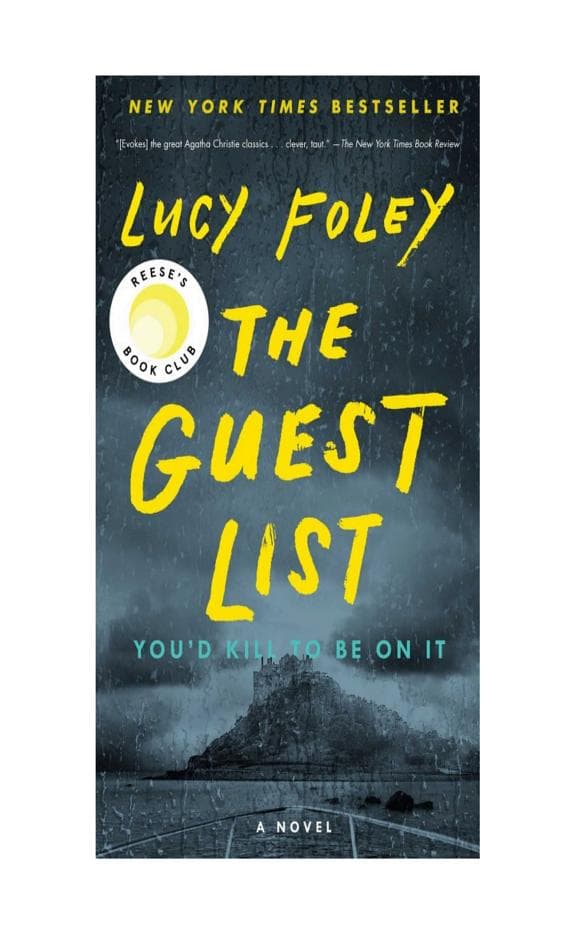
- The Guest List
Lucy Foley
3.8 (1.3M) average on GoodreadsThrillerOn a remote Irish island, a glamorous wedding descends into a deadly whodunnit when a guest is found murdered, trapping everyone with their secrets as a storm rages.





Enjoyed the summary?
A summary gives you the shape of the book. The book itself has the detail, the examples and the voice.
Find The Postcard Killers on AmazonAs an Amazon Associate, BookBrief earns from qualifying purchases. How we're funded