
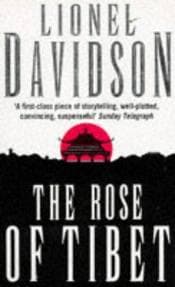
Synopsis
Covers the whole plot, including the ending.
- Difficulty
- Medium
- Pacing
- Moderate
- Mood
- Adventurous, Mysterious, Exotic, Suspenseful, Romantic
- Read it if
- You enjoy classic adventure thrillers with exotic settings, a blend of mystery and historical intrigue, and a dash of romance.
- Skip it if
- You prefer fast-paced, modern thrillers without extensive descriptions or a more contemplative tone.
The Rose of Tibet Plot Summary
Covers the whole plot, including the ending.
The Missing Brother and the Unlikely Heir
Charles Houston, a struggling screenwriter in London, hears that his estranged older brother, Peter, a mountaineer and gemologist, has disappeared in the Himalayas. Peter's will names Charles as his sole heir, stating Charles must go to Tibet to claim a mysterious 'rose' – a legendary ruby. Charles is skeptical and reluctant, but financial need and a vague sense of duty push him. He learns Peter was last seen with Sherpas heading toward the remote, unstable region of Sikkim, near Tibet. This news begins Charles's unwilling entry into a world far from his usual life, hinting at the dangerous adventure ahead in the high mountains.
Journey to Sikkim and the First Clues
Charles travels to Sikkim, a small kingdom between India and Tibet. There, he meets Colonel Douglas, a British officer, who dismisses Peter's activities and warns Charles against going into Tibet, citing political instability and dangerous terrain. Douglas reluctantly gives Charles a letter Peter left behind, which mentions a 'Rose of Tibet' and a 'hidden valley.' The letter also refers to Buddhist monks and a spiritual quest. Charles starts to realize Peter's disappearance is not a simple accident but something more significant and secret, involving ancient treasures and possibly dangerous groups in the region.
Encounter with the Lama and the Monastery of the Golden Flower
Following clues from Peter's letter, Charles finds a respected Lama in a remote Sikkimese village. The Lama confirms Peter's deep involvement with Tibetan Buddhism and his search for spiritual understanding, hinting at a specific, secluded monastery. The Lama explains Peter was not just a gemologist but on a spiritual journey, looking for a legendary ruby known as the 'Rose of Tibet,' believed to have mystical powers and guarded by a secret order of monks. The Lama gives Charles directions and an introduction letter to the Monastery of the Golden Flower, a hidden sanctuary deep in the Tibetan mountains, where Peter was last known to be going.
The Perilous Trek into Tibet
With the Lama's guidance and a local Sherpa, Charles begins his difficult trek into forbidden Tibetan territory. The journey is full of dangers: treacherous mountain passes, extreme weather, and the constant threat of Chinese patrols, as Tibet is under Chinese occupation. Charles, unprepared for such an expedition, struggles physically and mentally. During the journey, he learns about the harsh realities of Tibetan life and its people's deep spiritual beliefs. The Sherpa shares stories of the 'Rose of Tibet' and its legendary guardians, increasing Charles's curiosity and strengthening his resolve to find his brother and the truth, despite the dangers.
Arrival at the Monastery of the Golden Flower
After weeks of travel, Charles finally reaches the Monastery of the Golden Flower, an ancient Buddhist sanctuary hidden deep in a secluded valley. The monastery is unlike anything Charles has seen, a self-sufficient community of monks devoted to spiritual practice and preserving old knowledge. He learns Peter had indeed arrived there and lived among the monks, adopting their way of life. The monks, initially cautious, gradually accept Charles, recognizing his family connection to Peter. He discovers Peter had changed, moving beyond his material interests to a deeper spiritual understanding, becoming a part of their secluded society.
The Mystery of the 'Rose' and Peter's Role
Inside the monastery, Charles learns the true meaning of the 'Rose of Tibet.' It is not just a valuable ruby but a sacred jewel, an ancient relic believed to hold the spiritual essence of their lineage and protect their valley's unique ecosystem. He discovers Peter, through his gemological skills and spiritual commitment, had become the main guardian of the Rose, earning the monks' trust. Peter had recognized the ruby's unique properties and its importance to the monks' way of life. Charles realizes his brother's will was a test, a way to ensure the Rose's protection and to introduce Charles to the monastery's secrets, suggesting a deeper purpose for his own journey.
The Threat of the Chinese Invasion
The peaceful life of the Monastery of the Golden Flower is broken by the growing threat of the Chinese invasion of Tibet. News reaches the secluded valley that Chinese military forces are destroying monasteries, suppressing Tibetan culture, and taking valuable artifacts. The monks, led by their Abbot, realize their sanctuary and the sacred 'Rose of Tibet' are in great danger. Charles sees the monks' fear and determination to protect their heritage. This outside threat makes Charles face the real stakes of his journey and the responsibility his brother had taken on, pushing him to decide whether to flee or join the monks in their desperate efforts.
Peter's Sacrifice and the Plan to Save the Rose
Charles learns the full story of Peter's fate: Peter had sacrificed himself to distract Chinese forces, allowing the monks to hide the 'Rose of Tibet' and prepare to escape. The monks, with Charles's help, plan to smuggle the 'Rose' out of Tibet to safety. This involves a dangerous journey through the mountains, avoiding Chinese patrols and enduring the elements. Charles, initially a reluctant participant, now feels a strong connection to his brother's legacy and the monks' situation. He commits fully to the mission, understanding that protecting the Rose is about preserving a culture and a spiritual way of life, not just a jewel.
The Escape and the Pursuit
The escape from the Monastery of the Golden Flower is difficult. Charles, disguised as a monk, joins a small group chosen to carry the 'Rose of Tibet' to safety. They travel treacherous mountain paths, often at night, battling severe weather and constant fear of being discovered. Chinese soldiers, aware of the monastery's valuables, are actively pursuing them. Charles's resourcefulness and Peter's training help him guide the monks through dangerous terrain and evade patrols. The journey becomes a desperate race against time, with the fate of the Rose and the monks' survival at stake, forming a strong bond between Charles and his new companions.
The Final Confrontation and Deliverance
In a final confrontation, Charles and the surviving monks are cornered by Chinese soldiers near the border. Using his knowledge of the terrain and his growing courage, Charles creates a diversion, allowing the monks to cross into safety. He faces a small group of soldiers, using both his quick thinking and a desperate fight to protect the 'Rose.' Ultimately, Charles delivers the 'Rose of Tibet' to a British official working discreetly to help Tibetan refugees. Though physically and emotionally scarred, Charles has fulfilled his brother's legacy, ensuring the jewel's safety and preserving a piece of Tibetan heritage. He has changed from a cynical screenwriter into a courageous protector.
Return and Reflection
Charles Houston eventually returns to London, a changed man. The cynical, struggling screenwriter has been replaced by someone with a deeper understanding of life, spirituality, and sacrifice. He carries with him the memory of his brother, Peter, and the experiences of the Tibetan mountains and its people's resilient spirit. The 'Rose of Tibet,' now safely hidden, represents more than a jewel; it symbolizes a spiritual journey and the enduring power of culture against oppression. Charles's life is forever marked by his adventure, and he finds a new purpose, perhaps even a new direction for his writing, filled with the wisdom and courage he found in Tibet.
Principal Figures
Charles Houston
Protagonist
A cynical, struggling screenwriter who reluctantly embarks on a quest to find his missing brother in Tibet.
Charles Houston is initially portrayed as a somewhat jaded and self-absorbed London screenwriter, more concerned with his next meal and script than with grand adventures. He is pragmatic, skeptical, and physically unprepared for the rigors of the Himalayas. His initial motivation is financial gain from his brother's will, but as he delves deeper into Peter's world, he uncovers a latent courage and a sense of moral responsibility. He is intelligent and observant, which aids him in understanding the complex cultural and political landscape of Tibet.
Relationships: Peter Houston (Estranged brother; their quest posthumously unites them.); Colonel Douglas (Antagonistic British official who initially obstructs Charles.); The Abbot (Spiritual guide and mentor to Charles within the monastery.)
Peter Houston
Supporting/Catalyst
Charles's adventurous and spiritually-minded brother, a mountaineer and gemologist whose disappearance sets the plot in motion.
Peter Houston is Charles's older brother, a man of adventure, spiritual curiosity, and deep intellect. He is a skilled mountaineer and a knowledgeable gemologist, but his true calling proves to be spiritual enlightenment. Peter is presented largely through the memories and discoveries of Charles, revealing him to be courageous, altruistic, and deeply committed to the Tibetan people and their culture. His decision to become the guardian of the 'Rose of Tibet' and his ultimate sacrifice underscore his profound transformation.
Relationships: Charles Houston (Estranged brother; his will guides Charles's journey.); The Monks of the Golden Flower (Trusted companion and guardian of their sacred relic.)
The Abbot of the Golden Flower
Supporting
The wise and revered spiritual leader of the Monastery of the Golden Flower.
The Abbot is a figure of profound wisdom, serenity, and spiritual authority. He embodies the ancient traditions and peaceful resilience of Tibetan Buddhism. His interactions with Charles are calm and insightful, guiding Charles towards understanding Peter's path and the true significance of the 'Rose of Tibet.' He is a pragmatic leader, making difficult decisions to protect his community and their sacred heritage in the face of invasion. His presence provides a moral and spiritual compass for the narrative.
Relationships: Charles Houston (Spiritual mentor and entrusted leader.); Peter Houston (Spiritual guide and respected elder.)
Colonel Douglas
Supporting/Antagonist (initially)
A British political officer in Sikkim, wary of foreign involvement in Tibetan affairs.
Colonel Douglas is a gruff, pragmatic, and somewhat jaded British colonial official. He represents the British Empire's cautious and often cynical approach to the complex politics of the region. Initially, he views Charles and Peter's activities with suspicion and disapproval, seeing them as naive or troublesome. He tries to dissuade Charles from entering Tibet, citing the dangers and political sensitivities. While not overtly villainous, his bureaucratic and dismissive attitude poses an early obstacle for Charles, highlighting the geopolitical complexities of the era.
Relationships: Charles Houston (Initial antagonist; provides reluctant assistance.); Peter Houston (Viewed with suspicion and disapproval.)
The Lama (Sikkim)
Supporting
A wise and enigmatic Buddhist spiritual master in Sikkim who guides Charles towards the monastery.
This Lama is a pivotal, albeit brief, character who provides Charles with crucial information and spiritual insight early in his journey. He is a traditional Tibetan Buddhist teacher, deeply connected to the spiritual network of the region. His words are cryptic yet profound, hinting at Peter's true spiritual quest and the hidden location of the Monastery of the Golden Flower. He serves as a bridge between Charles's mundane world and the mystical, dangerous world of Tibet, legitimizing Peter's spiritual path in Charles's eyes.
Relationships: Charles Houston (Spiritual guide and informant.); Peter Houston (Spiritual connection; aware of Peter's quest.)
The Sherpa Guide
Supporting
A resilient and knowledgeable local guide who accompanies Charles on his perilous journey into Tibet.
The Sherpa guide is an anonymous but crucial character who embodies the resilience, practical skills, and deep knowledge of the Himalayan people. He is Charles's lifeline during the arduous trek, navigating treacherous terrain and extreme weather. His quiet strength and understanding of the local customs and dangers are invaluable. He represents the unsung heroes of such expeditions and provides Charles with practical assistance and cultural insights, helping him survive and adapt to the harsh environment.
Relationships: Charles Houston (Reliable and essential guide.); Peter Houston (Likely had a similar professional relationship with Peter.)
Chinese Soldiers
Antagonist
The invading military force threatening the Monastery of the Golden Flower and the Tibetan way of life.
The Chinese soldiers represent the external, oppressive force against which the monks and Charles must contend. They are portrayed as an impersonal, relentless military machine, driven by political ideology and the desire to assert control over Tibet and its resources. They are the primary physical threat, pursuing Charles and the monks, and their presence underscores the political tension and danger inherent in the story. They embody the destruction of culture and freedom.
Relationships: Charles Houston (Adversaries in a life-or-death pursuit.); The Monks of the Golden Flower (Oppressors and destroyers of their way of life.)
Themes & Insights
The Transformation of Self
This theme explores Charles Houston's personal change from a cynical, materialistic person into a courageous and spiritually aware one. At first motivated by money, Charles's journey into Tibet makes him confront his own limits. He lets go of his superficial concerns as he sees the deep spirituality and resilience of the Tibetan monks, and his brother Peter's selflessness. The harsh realities of the Himalayas and the Chinese invasion strip away his old identity, revealing a new purpose and an appreciation for non-material values. This change is clear in his commitment to protecting the 'Rose of Tibet' and the monks, a cause far from his initial goals.
“He had come to find a ruby, and instead found a reason.”
The Clash of Cultures and Ideologies
The novel shows the contrast between Western materialism and Tibetan spirituality, and the clash between Chinese communist expansion and the peaceful Tibetan way of life. Charles, representing the West, struggles to understand the monks' spiritual devotion and their reverence for the 'Rose of Tibet.' This cultural difference is set against the brutal reality of the Chinese invasion, which aims to destroy Tibetan identity, religion, and autonomy. The story highlights how fragile ancient cultures are when facing modern power struggles, and the desperate efforts to preserve heritage against overwhelming odds. The monastery's hidden valley becomes a symbol of this endangered cultural sanctuary.
“The rose was not merely a jewel; it was a heartbeat, a memory, a prayer. And they were coming to crush it.”
The Nature of Sacrifice and Duty
Sacrifice is a main theme, shown most strongly by Peter Houston and the Tibetan monks. Peter's sacrifice to protect the 'Rose of Tibet' and help the monks escape causes Charles's change and commitment. The monks, in turn, risk everything – their lives, their sanctuary – to preserve their sacred jewel and spiritual heritage. Charles, initially driven by self-interest, eventually accepts a sense of duty, understanding his mission goes beyond personal gain. This theme explores the idea that true value is not in material things, but in protecting what is sacred, whether it is a cultural artifact, a spiritual belief, or the lives of others.
“Peter had chosen a different path, one of devotion and ultimate sacrifice. Charles now understood why.”
The Search for Meaning and Belonging
Both Charles and Peter, in their own ways, are looking for deeper meaning in their lives. Peter finds it in the spiritual wisdom of Tibetan Buddhism and his role as guardian of the 'Rose.' Charles, at first aimless in London, goes on a journey that leads him to a strong sense of purpose and belonging. In the secluded monastery, he finds a community and a cause that connects with a part of himself he never knew existed. His search for a physical object becomes a spiritual journey, leading him to a sense of belonging not just to a place, but to a shared human effort of preserving beauty and spirit.
“He had spent his life searching for stories, but now he was living one, and it was more real than any script.”
The Power of the Natural World
The Himalayan landscape acts as a powerful element. Its immense scale, beauty, and harshness test Charles, helping him change. The mountains are both a barrier and a sanctuary, providing a natural defense for the Monastery of the Golden Flower while also testing human endurance. The harsh environment removes Charles's urban comforts and forces him to face his physical and mental vulnerabilities, creating a deeper connection to nature and a sense of humility. The landscape emphasizes the isolation and sacredness of the Tibetan culture it protects.
“The mountains were not merely scenery; they were a living, breathing entity, demanding respect, offering both sanctuary and peril.”
Plot Devices & Literary Techniques
The MacGuffin (The Rose of Tibet)
A mysterious and valuable object that drives the plot and motivates the characters.
The 'Rose of Tibet' functions as a classic MacGuffin, initially presented as a legendary, valuable ruby that Charles is tasked with claiming as his inheritance. Its perceived value and mystery propel Charles into his adventure. However, as the story progresses, the Rose transcends its role as a mere object of desire. It evolves into a powerful symbol of Tibetan culture, spirituality, and resistance against oppression, ultimately becoming a sacred artifact whose protection is paramount. Its true significance changes from a material treasure to a spiritual and cultural emblem, deepening the narrative's themes.
The Hero's Journey
The archetypal narrative pattern of a protagonist's quest, transformation, and return.
Charles Houston's journey perfectly aligns with the 'Hero's Journey' archetype. He begins in his 'ordinary world' (London screenwriter), receives a 'call to adventure' (Peter's disappearance and will), crosses the 'threshold' (entering Tibet), faces numerous 'trials and tribulations' (treacherous mountains, Chinese soldiers), and experiences a profound 'transformation' (from cynical to courageous). He undergoes a 'death and rebirth' of his former self and ultimately returns, though not to his original state, having gained wisdom and a new purpose. This structure provides a universal framework for his personal growth and the unfolding adventure.
The Mentor Figure
A wise and guiding character who assists the protagonist on their quest.
Several characters serve as mentor figures to Charles, most notably the Lama in Sikkim and the Abbot of the Monastery of the Golden Flower. The Lama provides the initial spiritual guidance and direction, legitimizing Peter's quest and pointing Charles towards the hidden monastery. The Abbot, in turn, acts as a profound spiritual and practical mentor within the monastery, helping Charles understand the true significance of the 'Rose' and the monks' way of life. These mentors provide knowledge, wisdom, and moral support, enabling Charles to navigate the unfamiliar cultural and spiritual landscape and ultimately fulfill his destiny.
The Fish Out of Water
A narrative device where a character is placed in an unfamiliar and often challenging environment.
Charles Houston is a quintessential 'fish out of water.' A sophisticated, albeit struggling, London screenwriter, he is utterly ill-equipped for the harsh realities of the Himalayan mountains and the secluded, spiritual world of Tibetan monasteries. His initial discomfort, physical struggles, and cultural misunderstandings highlight the stark contrast between his familiar world and the alien environment he enters. This device serves to emphasize his transformation, as he gradually adapts, learns, and ultimately thrives in circumstances that initially seemed insurmountable, making his journey of personal growth more pronounced and impactful.
The Rose of Tibet Quotes
“The wind had an edge to it, like a razor, and the cold was a living thing that tried to crawl inside your bones.”
“There are some places in the world where time itself seems to have lost its way, and Tibet is one of them.”
“Fear is a cold companion, but it can also be a spur.”
“The greatest mysteries are often hidden in plain sight, if only one has the eyes to see them.”
“A man's worth is not in what he possesses, but in what he is willing to lose.”
“Love, like a mountain path, can lead to heights of ecstasy or depths of despair.”
“The silence of the mountains was not empty, but full of ancient whispers.”
“To truly understand a place, you must eat its food, speak its tongue, and feel its earth beneath your feet.”
“Sometimes, the only way to find yourself is to get utterly lost.”
“The past is never truly dead; it merely waits for the right moment to return.”
“There's a fine line between courage and folly, and often it's only visible in hindsight.”
“The beauty of the world is often matched only by its indifference to human suffering.”
“One does not simply walk into Tibet; one is drawn by an irresistible, almost mystical, force.”
“Even in the darkest of places, a single spark of hope can ignite a revolution.”
Quiz
10 questions on the plot and the characters. Each answer comes with a short explanation.
Question 1
What is the name of the protagonist who travels to Tibet to find his missing brother?
- Richard Saville
- Charles Houston
- Arthur Pendelton
- Edward Thorne
Show answer
B. Charles Houston The protagonist of 'The Rose of Tibet' is Charles Houston, who embarks on a journey to find his brother.
Question 2
What is Charles Houston's profession before he embarks on his adventure?
- Journalist
- Archaeologist
- Screenwriter
- Cartographer
Show answer
C. Screenwriter Charles Houston is a screenwriter, a detail that adds to his unconventional approach to the dangerous mission.
Question 3
What is the primary reason Charles's brother, James Houston, went to Tibet?
- To establish a trade route
- To search for a legendary lost city
- To film a documentary about Tibetan culture
- To join a spiritual retreat
Show answer
C. To film a documentary about Tibetan culture James Houston, a documentary filmmaker, went to Tibet to film a documentary, which is why his disappearance is so concerning.
Question 4
Which historical event serves as a significant backdrop to the political turmoil in Tibet within the novel?
- The British expedition to Tibet (Younghusband Expedition)
- The Chinese invasion of Tibet
- The Russian Revolution
- World War II
Show answer
B. The Chinese invasion of Tibet The Chinese invasion of Tibet in the 1950s is a crucial historical context that shapes the dangers and political landscape Charles encounters.
Question 5
What unique skill or talent does Charles Houston possess that proves unexpectedly useful during his journey?
- He is a master of disguise.
- He has a photographic memory.
- He is an accomplished linguist, fluent in several Asian languages.
- He is surprisingly adept at drawing and sketching.
Show answer
D. He is surprisingly adept at drawing and sketching. Charles's ability to draw and sketch proves invaluable for communicating and documenting his experiences, especially when language barriers are present.
Question 6
What is the 'Rose of Tibet' referred to in the title?
- A rare species of flower found only in the Himalayas
- A beautiful Tibetan woman with whom Charles falls in love
- A legendary jewel hidden within a monastery
- A secret resistance movement against the Chinese occupation
Show answer
B. A beautiful Tibetan woman with whom Charles falls in love The 'Rose of Tibet' is a metaphorical name for the beautiful and enigmatic Tibetan woman, Amrita, with whom Charles develops a romantic relationship.
Question 7
What is the name of the remote monastery where much of the later action takes place and where James Houston was last seen?
- Rongbuk Monastery
- Potala Palace
- Karak Monastery
- Tashilhunpo Monastery
Show answer
C. Karak Monastery Karak Monastery is the secluded and ancient institution where Charles eventually traces his brother's last movements and uncovers a deeper mystery.
Question 8
What is the true nature of the 'treasure' that James Houston was involved with, which ultimately led to his predicament?
- A vast cache of gold and precious gems
- Ancient religious texts and artifacts of immense spiritual value
- A secret map leading to an untouched natural resource
- Advanced technological blueprints hidden by an ancient civilization
Show answer
B. Ancient religious texts and artifacts of immense spiritual value The 'treasure' is not material wealth but rather invaluable ancient religious texts and artifacts that hold profound cultural and spiritual significance for Tibet.
Question 9
What role does the character of the 'Abbot' play in the unfolding mystery?
- He is a benevolent guide who aids Charles unconditionally.
- He is the primary antagonist, working with the Chinese forces.
- He is a complex figure, initially suspicious but eventually revealing crucial information and protection.
- He is a passive observer, uninvolved in the central conflict.
Show answer
C. He is a complex figure, initially suspicious but eventually revealing crucial information and protection. The Abbot is a key, complex character who initially seems unhelpful but gradually becomes a protector and source of vital information, embodying the secretive nature of the monastery.
Question 10
What is the ultimate fate of the 'Rose of Tibet' (Amrita) by the end of the novel?
- She escapes Tibet with Charles and lives a new life in the West.
- She is killed during a conflict with the Chinese forces.
- She chooses to remain in Tibet to lead the resistance.
- She is revealed to be a spy and betrays Charles.
Show answer
B. She is killed during a conflict with the Chinese forces. In a tragic turn of events, Amrita is killed during the escalating conflict, a poignant loss that underscores the harsh realities of the political situation.
The Rose of Tibet FAQ
What is the core premise of 'The Rose of Tibet'?
The book follows Charles Houston, a disillusioned English schoolmaster, who embarks on a perilous journey to Tibet to investigate the disappearance of his half-brother, a documentary filmmaker named Giles. His quest leads him to a hidden monastery and a complex web of political intrigue, ancient traditions, and unexpected romance, all set against the backdrop of the impending Chinese invasion.
Who is the 'Rose of Tibet' and what is her significance?
The 'Rose of Tibet' refers to a beautiful and powerful Tibetan princess, referred to by various names including Princess Hlao-hsi and later as the Queen of the Hidden Valley. She is a central figure in the narrative, initially believed to be Giles's lover and later becoming Charles's romantic interest, embodying the mystical allure and political aspirations of the isolated Tibetan community.
What prompts Charles Houston to undertake such a dangerous journey?
Charles is initially motivated by a sense of duty and a desire to understand his half-brother's fate, especially after Giles's last known communication hints at a significant discovery. Beyond this familial obligation, Charles is also seeking an escape from his own mundane life and a sense of purpose, which the adventure in Tibet unexpectedly provides.
What is the primary historical context influencing the plot?
The novel is set against the very real historical backdrop of the imminent Chinese invasion of Tibet in the late 1950s. This geopolitical tension drives much of the narrative, forcing the isolated Tibetan community, including the hidden monastery, to confront their vulnerability and make difficult decisions about their future and survival.
How does the novel blend elements of different genres?
The Rose of Tibet masterfully combines the thrilling adventure of a quest into an unknown land with a deep sense of historical fiction rooted in the Chinese occupation of Tibet. It also incorporates elements of mystery surrounding Giles's disappearance, a poignant romance between Charles and the Princess, and a lifestyle exploration of ancient Tibetan culture and traditions.
What is the significance of the hidden valley and its inhabitants?
The hidden valley represents a pristine, untouched bastion of ancient Tibetan culture and spirituality, isolated from the encroaching modern world and Chinese influence. Its inhabitants, including the Princess and the monks, embody a way of life on the brink of extinction, making their survival and the preservation of their heritage a central conflict of the story.
Were Giles Houston's discoveries ever fully revealed, and how did they impact Charles?
Giles Houston's final documentary footage and notes, which Charles eventually recovers, reveal not only the existence of the hidden valley but also a deep understanding and appreciation for its unique culture and the Princess. This insight profoundly shapes Charles's own perception of Tibet and his brother, allowing him to connect with Giles's passion and ultimately take on his legacy.
What role do the various local guides and companions play in Charles's journey?
Charles relies heavily on a series of local guides, such as the enigmatic Tenzing, who not only provide practical assistance in navigating the treacherous terrain but also serve as cultural bridges. They offer insights into Tibetan customs, beliefs, and the political landscape, often acting as both protectors and sources of vital information, shaping Charles's understanding of the world he enters.
How does Charles Houston's character evolve throughout his adventure?
Charles begins as a somewhat passive and unremarkable schoolmaster, adrift in his own life. Through the extreme challenges of his journey, the exposure to a vastly different culture, and his developing relationship with the Princess, he transforms into a resourceful, courageous, and deeply committed individual, finding a purpose far beyond his initial expectations.
What psychological impact does the isolation and danger of Tibet have on Charles?
The extreme isolation, harsh environment, and constant threat of danger in Tibet force Charles to confront his own limitations and fears, stripping away his previous complacency. This intense pressure acts as a crucible, forging a stronger, more resilient self and allowing him to tap into reserves of courage and determination he never knew he possessed.
How does the novel explore themes of cultural clash and understanding?
The book vividly portrays the stark contrast between Charles's Western upbringing and the ancient, spiritual world of Tibet. It delves into the challenges and rewards of bridging this cultural divide, showing how Charles, initially an outsider, gradually learns to respect and integrate into Tibetan ways, ultimately becoming a protector of their heritage against external threats.
What is the nature of the romance between Charles and the Princess?
The romance between Charles and the Princess is a complex, initially unexpected, and deeply meaningful connection. It blossoms amidst extreme circumstances and cultural differences, representing a powerful bond built on mutual respect, shared purpose, and a profound emotional intimacy, transcending language barriers and societal expectations to become a central emotional anchor of the story.
Is the ending of the novel optimistic or tragic, considering the historical context?
The ending of 'The Rose of Tibet' is often seen as bittersweet and open to interpretation. While Charles and the Princess achieve a personal triumph in escaping and preserving a part of their culture, the overarching historical context of the Chinese invasion casts a shadow of tragedy over the fate of Tibet. It offers a glimmer of hope for individual survival and legacy, but acknowledges the immense loss.
How does the novel comment on the nature of 'civilization' versus 'primitivism'?
The novel subtly challenges conventional notions of 'civilization' by portraying the hidden Tibetan society, despite its 'primitive' technology, as possessing a profound spiritual wisdom, social harmony, and cultural richness often lacking in the 'civilized' world. It suggests that true civilization lies not in material advancement but in values, community, and respect for nature and tradition.
What is the lasting legacy or message of 'The Rose of Tibet'?
The lasting message of the novel lies in its powerful depiction of human resilience, the importance of cultural preservation, and the transformative power of adventure and love. It serves as a poignant reminder of the fragility of unique cultures in the face of geopolitical power and the enduring human spirit to fight for what is cherished, even against overwhelming odds.
How does the author use the character of Giles Houston, even in his absence?
Even though Giles Houston is absent for most of the narrative, his presence is strongly felt through Charles's quest to find him, the stories told about him, and the discovery of his work. Giles serves as a catalyst for Charles's journey and a symbolic representation of the Western fascination with, and often doomed attempts to preserve, exotic cultures.
Could the hidden valley represent an idealized vision of Tibet, rather than a realistic one?
The hidden valley certainly takes on an idealized quality, representing a pure, almost mythical Tibet untouched by external influences and modern corruption. While it serves a narrative purpose in highlighting what was lost, it also functions as a romanticized symbol of an ancient spiritual sanctuary, perhaps more a wishful embodiment of cultural purity than a strictly realistic depiction.
What role does the element of 'discovery' play for both Giles and Charles?
For Giles, discovery was about finding and documenting a hidden culture, driven by a filmmaker's passion. For Charles, discovery is multi-layered: finding his brother's fate, uncovering the hidden valley, and most importantly, discovering his own capabilities and true self amidst the challenges. Both brothers are defined by their pursuit of the unknown, though with different outcomes.
About the author

Lionel Davidson was a British author known for his works of fiction, particularly in the adventure and thriller genres. His notable books include "Kolymsky Heights," a gripping tale set in Siberia, and "The Rose of Tibet," which explores themes of exploration and spirituality. Davidson's writing often reflects his interest in remote locations and complex characters.
Similar books
- Lost Horizon
James Hilton
3.9 (18k) average on GoodreadsLifestyleExploration of a hidden, mystical Asian sanctuary and a sense of wonder.
- Kim
Rudyard Kipling
3.7 (33k) average on GoodreadsHistorical FictionKipling's Kim also explores themes of espionage and cultural immersion in the Indian subcontinent, with a young protagonist navigating complex political landscapes. While both authors showcase a deep understanding of the region, Davidson's The Rose of Tibet is a more focused, high-stakes thriller centered on a specific quest, whereas Kim is a broader coming-of-age story interwoven with the 'Great Game' of imperial espionage. Davidson's narrative is arguably more tightly plotted around a single objective, while Kipling's offers a sprawling tapestry of colonial India.
- Angels & Demons
Dan Brown
3.9 (2.7M) average on GoodreadsThrillerA Harvard symbologist races through Rome's ancient sites, deciphering cryptic clues to unmask the Illuminati and stop a vengeful plot to destroy the Vatican with a stolen antimatter weapon.
- Gone Girl
Gillian Flynn
4.1 (2.3M) average on GoodreadsThrillerA wife's sudden disappearance on her fifth anniversary reveals a web of lies and psychological warfare, exposing the secrets within a seemingly perfect marriage.
- The Girl on the Train
Paula Hawkins
3.9 (2.1M) average on GoodreadsThrillerA woman’s fascination with a seemingly perfect couple she watches from her daily train commute leads her into a dark investigation when she witnesses something that shatters their idyllic image.
- The Da Vinci Code
Dan Brown
3.9 (1.9M) average on GoodreadsThrillerA symbologist and a cryptologist race through European landmarks, deciphering ancient codes and uncovering a conspiracy that could rewrite the foundations of Christianity.




Enjoyed the summary?
A summary gives you the shape of the book. The book itself has the detail, the examples and the voice.
Find The Rose of Tibet on AmazonAs an Amazon Associate, BookBrief earns from qualifying purchases. How we're funded