
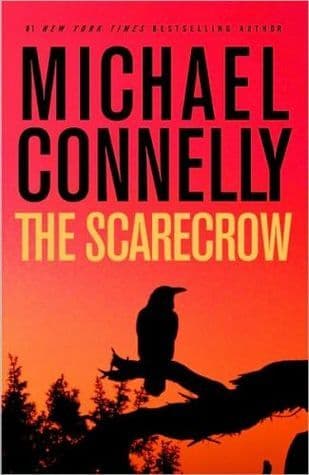
Synopsis
Covers the whole plot, including the ending.
- Difficulty
- Medium
- Pacing
- Fast
- Mood
- Suspenseful, Tense, Gripping, Action-packed
- Read it if
- You enjoy fast-paced thrillers with a focus on investigative journalism, digital crime, and a clever serial killer.
- Skip it if
- You prefer character-driven dramas over plot-heavy mysteries or are sensitive to detailed descriptions of violence.
The Scarecrow Plot Summary
Covers the whole plot, including the ending.
The Last Assignment
Jack McEvoy, a crime reporter for the Los Angeles Times, faces the end of his career due to newspaper buyouts. With only a few days left, he trains Angela Cook, a young journalism graduate. Jack resents the situation but sees a chance for one last, significant story: a Pulitzer Prize-winning expose. He focuses on Alonzo Winslow, a 16-year-old who confessed to the rape and murder of Crystal Williams. Jack initially plans to write about the societal issues that create young killers, manipulating Alonzo's mother into cooperating by falsely promising to prove his innocence. He begins to review the police file for angles for his final piece.
A Suspicious Confession
As Jack examines Alonzo Winslow's case, reviewing police interrogation tapes and reports, he finds inconsistencies. Alonzo's confession seems too perfect, too rehearsed, and includes details that don't match the crime scene. The language Alonzo uses in his confession is surprisingly advanced for a 16-year-old drug dealer, suggesting coaching or manipulation. Jack's journalistic instincts take over, overriding his initial cynical plan. He begins to suspect Alonzo is either covering for someone or was coerced into confessing. This realization shifts his focus from a sociological piece to a potential wrongful conviction, reigniting his passion for investigative reporting.
The Digital Trail
Jack's investigation leads him to examine the digital evidence around Crystal Williams's murder. He discovers Crystal was involved in online role-playing games and chat rooms, which the police largely overlooked. With help from a former colleague and cybercrime expert, Jack uncovers a highly sophisticated, hidden network. This network facilitates anonymous interactions, creates alibis, and manipulates individuals into committing crimes or taking the blame. The more Jack investigates, the more he realizes the killer is not just clever but a digital master, operating with an almost invisible online presence, meticulously planning every step and covering every trace.
Reunion with Rachel Walling
The killer's careful and cruel methods remind Jack of 'The Poet,' a serial killer he helped catch years ago. Recognizing the need for federal resources and a mind that understands such complex predators, Jack contacts FBI Agent Rachel Walling, with whom he has a complicated past. Rachel, initially hesitant due to their history and Jack's unofficial investigation, is eventually convinced by his evidence. She sees patterns of an organized, intelligent killer who operates outside typical criminal profiles, and the potential for a larger threat. Their reunion marks the beginning of a renewed, though strained, partnership.
The Scarecrow's Modus Operandi
Jack and Rachel begin to piece together the killer's methods. They realize the killer, whom they call 'The Scarecrow,' does not commit the murders directly but manipulates vulnerable individuals, often through online interactions, into carrying out the acts. 'The Scarecrow' then arranges for their capture and confession, using them as 'scarecrows' to divert attention while he continues his activities. This method allows him to remain anonymous and untraceable. They discover similar, seemingly unrelated crimes across different areas, all linked by the same digital fingerprints and a puppet-master's touch, indicating a prolific and dangerous individual.
Following the Digital Breadcrumbs
Their investigation becomes a deep dive into the internet's dark corners. Jack and Rachel, with the help of FBI cyber experts, trace IP addresses, decrypt communications, and analyze digital patterns. They uncover a network of proxy servers, encrypted chat rooms, and hidden forums where 'The Scarecrow' communicates with and controls his 'scarecrows.' The process is difficult and frustrating, as 'The Scarecrow' is always one step ahead, using advanced encryption and constantly changing his digital footprint. They identify several other victims and manipulated individuals, all pointing to a single, unseen orchestrator who leaves no direct evidence.
The Killer's Identity Revealed
Through forensic analysis and old-fashioned detective work, Jack and Rachel narrow down the suspect pool. They discover the killer is a highly intelligent, technologically skilled individual with a deep understanding of human psychology and digital security. This person, not a street criminal, has operated unnoticed for years, using his skills to exploit the internet and troubled individuals. The breakthrough comes when they link a specific coding signature to a former government contractor, a recluse named Anthony Butler, who had access to advanced surveillance and encryption technologies. Butler's motive appears to be a twisted form of social engineering and a desire to prove his intellectual superiority.
The Digital Tripwire
Anthony Butler, 'The Scarecrow,' has integrated advanced monitoring systems into his digital infrastructure. He becomes aware that Jack McEvoy is investigating him when Jack's inquiries begin to touch on his hidden networks. This triggers a digital tripwire. Butler, realizing his anonymity is threatened, shifts from passive manipulation to active retaliation. He begins to subtly infiltrate Jack's digital life, accessing his personal information, planting false leads, and eventually targeting those close to Jack. The stakes escalate dramatically as Jack's investigation becomes a personal battle, with Butler showing his ability to reach into the real world and inflict harm.
A Race Against Time
With Butler actively retaliating and his next plot nearing execution, Jack and Rachel are in a desperate race against time. They uncover evidence that Butler plans a large-scale, digitally orchestrated attack, possibly involving multiple 'scarecrows' simultaneously, to create widespread chaos or target high-profile individuals. The details are vague, but the potential for mass disruption and harm is clear. They must not only find Butler's physical location but also anticipate and dismantle his digital infrastructure to prevent the attack. The pressure mounts as Butler's digital attacks become more aggressive, directly threatening Jack's career, reputation, and even his life.
The Confrontation and Capture
After intense digital and physical chases, Jack and Rachel finally locate Anthony Butler's hidden lair, a highly secured server farm disguised as a legitimate business. They confront Butler, who is surrounded by his complex array of servers and monitors, still attempting to orchestrate his final plan. Butler, arrogant and convinced of his untouchability, tries to use his digital skills to evade capture and trigger his destructive schemes. A tense standoff follows, with Jack using his journalistic instincts to understand Butler's psychological profile, while Rachel and the FBI team work to physically subdue him and shut down his operations. Ultimately, Butler is captured, and his network is dismantled, preventing further harm.
Aftermath and Resolution
After Anthony Butler's capture, Alonzo Winslow is exonerated, his false confession exposed. Jack McEvoy writes the definitive story of 'The Scarecrow,' a groundbreaking piece that exposes the vulnerabilities of the digital age and the rise of a new criminal. The story wins a Pulitzer Prize, fulfilling Jack's ambition. While the Los Angeles Times still faces financial struggles, Jack's reputation is solid, and he finds renewed purpose in journalism, potentially moving to a new role focused on investigative cybercrime. His relationship with Rachel Walling remains complex but strengthened by their shared ordeal, leaving the door open for future collaborations.
The Scarecrow Characters
Jack McEvoy
Protagonist
A veteran crime reporter fighting for relevance and a final, impactful story.
Jack McEvoy is a cynical yet deeply principled crime reporter for the Los Angeles Times. Facing a forced buyout, he initially plans to exploit a young suspect's story for a Pulitzer but quickly pivots when his journalistic integrity is piqued by inconsistencies. He is relentless in his pursuit of truth, technologically savvy for his generation, and possesses an almost obsessive dedication to his craft. His past experience with 'The Poet' has left him with a keen understanding of complex criminal minds, making him uniquely suited to track 'The Scarecrow.'
Relationships: Rachel Walling (Former romantic interest and investigative partner, marked by professional respect and personal tension.); Angela Cook (His replacement and mentee, initially a source of resentment, later a professional ally.); Alonzo Winslow (The innocent suspect whose case reignites Jack's investigative drive.)
Rachel Walling
Supporting
An FBI Agent specializing in serial killers, Jack's former flame and investigative partner.
Rachel Walling is a sharp, experienced FBI Agent with a background in behavioral analysis and a formidable intellect. She has a complicated history with Jack McEvoy, marked by both professional success and personal heartbreak. Initially wary of Jack's unofficial investigation, she recognizes the sophistication of 'The Scarecrow' and commits her resources and expertise to the case. She is pragmatic, detail-oriented, and provides the necessary federal backing and law enforcement perspective to Jack's more maverick reporting style. Her past encounters with highly intelligent killers make her invaluable.
Relationships: Jack McEvoy (Former romantic interest and investigative partner, marked by professional respect and personal tension.)
Anthony Butler
Antagonist
The highly intelligent, digitally adept serial killer known as 'The Scarecrow'.
Anthony Butler is the chilling antagonist, 'The Scarecrow.' He is not a physical killer but a master manipulator who uses his advanced technological skills to orchestrate murders and frame others, remaining completely anonymous. Butler is a recluse, a former government contractor with a genius-level intellect and a deep understanding of cybernetics and human psychology. His motives are driven by a twisted desire for control, a belief in his intellectual superiority, and a fascination with exploiting the vulnerabilities of society and technology. He sees his victims and his 'scarecrows' as pawns in a grand, digital experiment.
Relationships: Jack McEvoy (His primary target and the one who ultimately exposes him.); Alonzo Winslow (One of his 'scarecrows,' manipulated into a false confession.)
Alonzo Winslow
Supporting
A 16-year-old drug dealer framed for murder, serving as the catalyst for Jack's investigation.
Alonzo Winslow is a 16-year-old from the projects, a low-level drug dealer who becomes 'The Scarecrow's' latest 'scarecrow.' He is a vulnerable, impressionable youth who is coerced into confessing to a brutal murder he did not commit. Alonzo represents the innocent victim of 'The Scarecrow's' manipulations, highlighting the killer's ability to exploit those on the fringes of society. His initial confession, though seemingly solid to the police, contains subtle inconsistencies that alert Jack McEvoy to the deeper truth. He is a symbol of the justice system's potential to fail the vulnerable.
Relationships: Jack McEvoy (His unlikely advocate who proves his innocence.); Anthony Butler (His manipulator and framer.)
Angela Cook
Supporting
Jack's young, ambitious replacement at the Los Angeles Times.
Angela Cook is a recent journalism school graduate, eager and ambitious, hired as Jack McEvoy's low-cost replacement at the Los Angeles Times. Initially, she is an object of Jack's resentment, symbolizing the changing landscape of journalism. However, she proves to be intelligent, digitally savvy, and quickly grasps the intricacies of investigative reporting when exposed to Jack's methods. She learns quickly and eventually becomes a valuable asset in the investigation, particularly with her understanding of modern digital tools and social media, bridging the generational gap in reporting.
Relationships: Jack McEvoy (His mentee and eventual professional ally.)
Crystal Williams
Mentioned
The victim whose murder sparks Jack's investigation.
Crystal Williams is the victim whose brutal rape and murder Alonzo Winslow is falsely accused of. She is a crack client, and her death initially appears to be a typical street crime. However, her involvement in online role-playing games and chat rooms becomes a crucial detail that Jack McEvoy uncovers, leading him down the digital rabbit hole to 'The Scarecrow.' Her death is the catalyst for the entire plot, demonstrating how even seemingly straightforward cases can hide deeper, more complex criminal enterprises.
Relationships: Alonzo Winslow (The individual falsely accused of her murder.); Anthony Butler (Her actual orchestrator of her murder.)
Mrs. Winslow
Supporting
Alonzo's mother, initially manipulated by Jack, then a desperate advocate for her son.
Mrs. Winslow is Alonzo's mother, a struggling woman from the projects who is desperate to believe in her son's innocence. She is initially manipulated by Jack McEvoy, who implies he will help prove Alonzo's innocence while secretly planning a different story. Her vulnerability and hope are palpable, making her a sympathetic figure caught in a tragic situation. She represents the human cost of 'The Scarecrow's' manipulations and the challenges faced by families in the justice system. Her cooperation, albeit under false pretenses, provides Jack with initial access to the case details.
Relationships: Alonzo Winslow (Her son, whom she fiercely defends.); Jack McEvoy (Initially a manipulator, then a true ally in her son's defense.)
The Scarecrow Themes
The Evolution of Journalism
The novel explores the changing nature of journalism, contrasting traditional investigative reporting with digital media and the challenges faced by established newspapers. Jack McEvoy, an experienced reporter, struggles with forced buyouts and the need to adapt to new technologies. The theme highlights the lasting value of thorough investigative work even as the industry changes, emphasizing that seeking truth is important, regardless of the medium or economic pressures. Jack's ultimate Pulitzer success shows that quality journalism can still thrive.
“'The internet was a vast ocean, and most of the police, most of the world, were still paddling in the shallow end.”
The Peril of the Digital Age
The story shows the dark side of interconnectedness and advanced technology. 'The Scarecrow' uses the internet's anonymity and complexity to commit crimes, manipulate individuals, and avoid detection. The theme illustrates how digital information can be used as a weapon, how privacy is increasingly at risk, and how sophisticated criminals can exploit tools meant for communication. The investigation into hidden networks and proxy servers highlights the novel's warning about the dangers of unchecked technological advancement and the potential for an unseen 'puppet master' to operate.
“'He'd created a system, a network of lies and manipulation that was invisible to the naked eye, but as real as any weapon.”
Justice vs. Truth
The novel examines the difference between legal justice and uncovering the full truth. Alonzo Winslow's false confession shows how the justice system can be misled, leading to a conviction that does not match reality. Jack McEvoy's pursuit is not just about getting a conviction but about revealing the full scope of 'The Scarecrow's' operations, exposing the systemic weaknesses that allowed him to succeed. The story questions whether a legal outcome truly serves justice if the underlying truth remains hidden, emphasizing the importance of persistent investigation beyond official reports.
“'A confession wasn't always the truth. Sometimes it was just the easiest way out.”
Redemption and Purpose
Jack McEvoy's journey is one of personal and professional renewal. Facing the end of his career and feeling disillusioned, his investigation into Alonzo's case rekindles his passion and purpose. The pursuit of 'The Scarecrow' gives him a final, impactful story that validates his career and proves his continued relevance. This theme explores how finding a meaningful challenge can revitalize a person, allowing them to overcome cynicism and find renewed fulfillment, even in the face of difficulty. His Pulitzer win symbolizes this personal and professional triumph.
“'He had one last chance to make it matter, to go out with a bang instead of a whimper.”
Plot Devices & Literary Techniques
The Unreliable Confession
A seemingly ironclad confession that is later revealed to be false, driving the initial investigation.
Alonzo Winslow's confession serves as the primary inciting incident and a crucial plot device. Initially, it provides a seemingly straightforward explanation for Crystal Williams's murder, which the police readily accept. However, Jack McEvoy's journalistic scrutiny uncovers subtle inconsistencies and improbable details within the confession. This unreliability acts as a catalyst, forcing Jack to look beyond the obvious and delve deeper, ultimately revealing the true nature of 'The Scarecrow's' manipulations and the existence of a larger, more complex criminal enterprise. It challenges the reader's assumptions and establishes the antagonist's cunning.
Digital Tripwire
A system designed by the antagonist to detect when his hidden operations are being investigated.
The 'digital tripwire' is a sophisticated plot device employed by Anthony Butler, 'The Scarecrow.' It is a monitoring system embedded within his hidden online networks that alerts him whenever his activities are being actively investigated or threatened. This device escalates the stakes significantly, transforming the investigation from a passive pursuit into a dangerous, real-time cat-and-mouse game. It allows Butler to anticipate Jack and Rachel's moves, retaliate, and create new challenges, making the antagonist a constantly active and dangerous force rather than a static target. It highlights the advanced nature of the killer's digital prowess.
The 'Scarecrow' Metaphor
The antagonist's method of using manipulated individuals to commit crimes and take the blame.
The 'scarecrow' metaphor is central to the antagonist's modus operandi and a key plot device. Anthony Butler doesn't directly commit the murders; instead, he manipulates vulnerable individuals (his 'scarecrows') through digital means to carry out the crimes and then orchestrates their capture and confession. This device allows Butler to remain anonymous and seemingly untouchable, creating layers of plausible deniability. It emphasizes the villain's psychological manipulation and technological expertise, making him a unique and terrifying kind of serial killer who exploits human weakness and the justice system itself. It also provides the novel with its evocative title.
The Veteran-Newcomer Dynamic
The generational clash and eventual mentorship between Jack McEvoy and Angela Cook.
The dynamic between Jack McEvoy and Angela Cook serves as a significant plot device, highlighting the generational shift in journalism and investigative techniques. Jack, the seasoned veteran, initially resents Angela, the young, digitally native newcomer. However, their interactions showcase how traditional journalistic instincts merge with modern technological skills. Angela's familiarity with social media and digital tools complements Jack's experience, providing crucial insights and practical assistance in navigating 'The Scarecrow's' online world. This dynamic not only develops their characters but also illustrates the evolving nature of the profession and the necessity of adapting to new challenges.
The Scarecrow Quotes
“Every secret has a shelf life.”
“The internet doesn't forget. It just waits.”
“You can't kill an idea, even if you kill the person who had it.”
“Sometimes the best way to hide something is in plain sight.”
“The truth is a weapon. You just have to know how to use it.”
“We are all just stories in the end.”
“Fear is a powerful motivator. But so is curiosity.”
“The past is never really dead. It's not even past.”
“Every connection leaves a trace.”
“The most dangerous lies are the ones you tell yourself.”
“You don't get to choose your demons. They choose you.”
“Journalism isn't about being liked, it's about telling the truth.”
“Sometimes the monster isn't under the bed, it's in the machine.”
Quiz
10 questions on the plot and the characters. Each answer comes with a short explanation.
Question 1
What is Jack McEvoy's primary motivation for pursuing a final big story before leaving the Los Angeles Times?
- To expose corruption within the LAPD.
- To win a Pulitzer Prize.
- To secure a new job at a rival newspaper.
- To clear his own name after a past journalistic mistake.
Show answer
B. To win a Pulitzer Prize. Jack explicitly plans to 'go out with a bang — a final story that will win the newspaper journalism's highest honor — a Pulitzer prize.'
Question 2
Who is Jack McEvoy training as his replacement at the Los Angeles Times?
- An experienced investigative journalist.
- A low-cost reporter fresh out of journalism school.
- His long-time protégé.
- A former colleague from a different department.
Show answer
B. A low-cost reporter fresh out of journalism school. The text states he is 'training his replacement, a low-cost reporter just out of journalism school.'
Question 3
What was Jack McEvoy's initial intention when he convinced Alonzo Winslow's mother to cooperate?
- To prove Alonzo's innocence from the outset.
- To expose the police for coercing a confession.
- To write a story about how societal dysfunction created a 16-year-old killer.
- To find the real killer immediately.
Show answer
C. To write a story about how societal dysfunction created a 16-year-old killer. Jack's 'real intention is to use his access to report and write a story that explains how societal dysfunction and neglect created a 16-year-old killer.'
Question 4
Who is Alonzo Winslow?
- A seasoned criminal Jack has been tracking for years.
- A 16-year-old drug dealer who confessed to murder.
- Jack's new journalism school replacement.
- An FBI agent assisting Jack with his investigation.
Show answer
B. A 16-year-old drug dealer who confessed to murder. Jack focuses on 'Alonzo Winslow, a 16-year-old drug dealer from the projects who has confessed to police that he brutally raped and strangled one of his crack clients.'
Question 5
What prompts Jack to realize Alonzo Winslow's confession might be 'bogus'?
- Alonzo's mother provides an alibi.
- The police admit to errors in the interrogation.
- Details emerge as Jack delves into the story that contradict the confession.
- FBI Agent Rachel Walling immediately dismisses the confession.
Show answer
C. Details emerge as Jack delves into the story that contradict the confession. The text states, 'But as Jack delves into the story he soon realizes that Alonzo's so-called confession is bogus.' This implies his own investigation uncovered inconsistencies.
Question 6
Which past adversary is mentioned as a benchmark for the new killer Jack pursues?
- The Watchman
- The Poet
- The Shadow
- The Collector
Show answer
B. The Poet The text states, 'He is soon off and running on the biggest story he's had since The Poet crossed his path years before.' The opening also mentions, 'For Jack McEvoy, the killer named The Poet was the last word in evil.'
Question 7
What is the primary characteristic of the new killer Jack is tracking, regarding their operational methods?
- They leave a distinct calling card at every crime scene.
- They operate with a large, organized network.
- They have worked completely below police and FBI radar.
- They only target victims in specific, high-profile locations.
Show answer
C. They have worked completely below police and FBI radar. Jack and Rachel go after a killer 'who has worked completely below police and FBI radar—and with perfect knowledge of any move against him.'
Question 8
What is the consequence of Jack's investigation, unbeknownst to him?
- It leads to his immediate dismissal from the newspaper.
- It causes a rift between him and Rachel Walling.
- It sets off a digital tripwire, alerting the killer.
- It exposes a new layer of corruption in the justice system.
Show answer
C. It sets off a digital tripwire, alerting the killer. The text explicitly states, 'What Jack doesn't know is that his investigation has inadvertently set off a digital tripwire. The killer knows Jack is coming—and he's ready.'
Question 9
Why is Jack McEvoy leaving the Los Angeles Times?
- He found a better job opportunity.
- He was fired for a previous journalistic error.
- He was forced to take a buy-out due to dwindling newspaper revenues.
- He decided to retire from journalism altogether.
Show answer
C. He was forced to take a buy-out due to dwindling newspaper revenues. He is 'Forced to take a buy-out from the Los Angeles Times as the newspaper grapples with dwindling revenues.'
Question 10
What specific characteristic does the new killer possess that makes them difficult to track?
- They operate exclusively in foreign countries.
- They leave no forensic evidence behind.
- They have perfect knowledge of any move against them.
- They only target victims who are themselves criminals.
Show answer
C. They have perfect knowledge of any move against them. The killer operates 'with perfect knowledge of any move against him,' indicating a sophisticated level of awareness and counter-surveillance.
The Scarecrow FAQ
What is Jack McEvoy's primary motivation at the beginning of 'The Scarecrow'?
Jack McEvoy's primary motivation is to win a Pulitzer Prize with a final, impactful story before being forced out of the Los Angeles Times. He initially plans to write about Alonzo Winslow's case as a commentary on societal dysfunction, not necessarily to prove his innocence.
Who is Alonzo Winslow and what is his initial role in the plot?
Alonzo Winslow is a 16-year-old drug dealer from the projects who has confessed to the rape and strangulation of one of his crack clients. Jack McEvoy initially intends to use Alonzo's case to write a story about how societal neglect creates young criminals, rather than focusing on his potential innocence.
How does Jack McEvoy's initial investigation into Alonzo Winslow's case change course?
Jack's investigation changes course when he realizes Alonzo's confession is bogus and that the boy is innocent. This revelation shifts his focus from a sociological commentary to a full-blown murder investigation, leading him to uncover a much larger and more dangerous criminal enterprise.
Who is the main antagonist, and what makes him particularly dangerous?
The main antagonist is a highly intelligent and technologically sophisticated killer operating completely off the radar, with perfect knowledge of any investigative moves against him. He uses advanced digital methods to monitor and anticipate his pursuers, making him incredibly difficult to track.
What is the significance of the title 'The Scarecrow'?
The title 'The Scarecrow' refers to the killer's method of using a seemingly innocuous, easily dismissible figure or event as a decoy or distraction, while the real crime or threat operates unseen. It symbolizes the killer's ability to operate in plain sight without detection, much like a scarecrow in a field.
How does Rachel Walling become involved in the investigation?
FBI Agent Rachel Walling, a former associate of Jack's from 'The Poet' case, is brought into the investigation once the scope and technological sophistication of the killer become apparent. Her expertise in tracking elusive and dangerous criminals, especially those with a digital footprint, proves crucial.
What is the 'digital tripwire' mentioned in the synopsis, and how does it affect Jack?
The 'digital tripwire' refers to the killer's advanced surveillance and monitoring systems that detect any investigation into his activities. When Jack inadvertently triggers it, the killer becomes aware of Jack's pursuit, turning the hunter into the hunted and putting Jack in immediate danger.
What connection does this book have to 'The Poet'?
'The Scarecrow' directly references 'The Poet' case, establishing a continuity for Jack McEvoy's character and his past encounters with extreme evil. It also explains the existing professional and personal relationship between Jack and FBI Agent Rachel Walling, who worked together on that previous case.
How does the killer manage to stay 'below police and FBI radar' for so long?
The killer stays below radar by leveraging sophisticated technological skills, creating elaborate digital false trails, and operating within the dark corners of the internet. He also exploits the gaps and inefficiencies in traditional law enforcement investigation methods, anticipating their moves.
How does Jack McEvoy's impending redundancy affect his decision-making throughout the novel?
Jack's impending redundancy fuels his desperation to secure a Pulitzer, initially clouding his judgment and leading him to exploit Alonzo Winslow's situation. This pressure makes him more reckless and determined, pushing him deeper into the dangerous investigation even when his life is threatened.
Discuss the psychological impact of the killer's technological prowess on Jack McEvoy.
The killer's technological prowess deeply unsettles Jack, forcing him to confront a new, more insidious form of evil that operates beyond traditional investigative methods. It creates a sense of helplessness and paranoia, as Jack realizes his every move could be monitored, blurring the lines between the digital and physical threats.
How does the novel explore themes of journalistic ethics through Jack's character arc?
The novel explores journalistic ethics through Jack's initial intent to exploit Alonzo Winslow for a Pulitzer, contrasting it with his eventual commitment to uncovering the truth and ensuring justice. It highlights the tension between career ambition and the moral responsibility of a reporter, ultimately affirming the latter.
What role does Alonzo Winslow's mother play in Jack's initial investigation, and how does she influence his perspective?
Alonzo Winslow's mother initially cooperates with Jack, believing he will help her son. Jack's realization that he 'tricked' her, coupled with the discovery of Alonzo's innocence, triggers a moral awakening in him, shifting his focus from personal gain to genuine justice for the family.
Is the ending of 'The Scarecrow' a complete resolution, or does it leave room for future development for Jack McEvoy?
While the immediate threat of the killer is resolved, the ending leaves room for Jack's future development. His career at the newspaper is fundamentally changed, and his experience with this technologically advanced criminal marks a significant evolution in his understanding of modern crime, suggesting new journalistic paths.
How does 'The Scarecrow' reflect contemporary fears about technology and privacy?
'The Scarecrow' directly reflects contemporary fears about technology and privacy by showcasing a killer who weaponizes digital surveillance, data exploitation, and the anonymity of the internet. It highlights the vulnerability of individuals in an increasingly interconnected world and the challenges law enforcement faces against such threats.
What is the broader commentary the book makes about the state of journalism in the digital age?
The book offers a poignant commentary on the decline of traditional journalism, as seen with Jack's forced buyout from the Los Angeles Times and the emphasis on 'low-cost' replacements. It suggests that while the medium changes, the core pursuit of truth and justice remains vital, even as it becomes more dangerous.
How does the killer's motivation differ from that of 'The Poet'?
While 'The Poet' was driven by a twisted artistic and psychological need for control and recognition, the killer in 'The Scarecrow' is motivated by financial gain and a desire for absolute digital dominance. His crimes are meticulously planned business operations, making him less emotionally driven but equally, if not more, dangerous.
Could Jack McEvoy have solved the case without Rachel Walling's involvement?
It is highly unlikely Jack McEvoy could have solved the case without Rachel Walling. Her FBI resources, specialized knowledge of cybercrime, and experience with similar high-stakes investigations were crucial in understanding the killer's digital footprint and coordinating the broader law enforcement response, which was beyond Jack's journalistic capabilities.
About the author
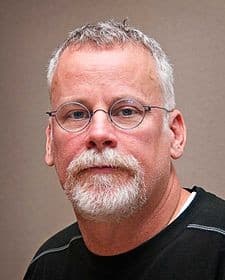
Michael Connelly is an American author known for his crime fiction novels. His notable works include The Lincoln Lawyer, The Black Echo, The Poet, The Gods of Guilt, The Black Ice, and The Brass Verdict, which often feature complex characters and intricate plots. Connelly's writing frequently explores themes of justice and morality within the legal system.
Similar books
- The Lincoln Lawyer
Michael Connelly
4.2 (193k) average on GoodreadsThrillerFeatures another compelling Connelly protagonist navigating the legal system with unexpected twists.
- Gone Girl
Gillian Flynn
4.1 (2.3M) average on GoodreadsThrillerInvolves a cat-and-mouse game with a highly intelligent, manipulative antagonist.
- Digital Fortress
Dan Brown
3.7 (561k) average on GoodreadsThrillerFocuses on high-stakes digital crime and government intelligence.
- Angels & Demons
Dan Brown
3.9 (2.7M) average on GoodreadsThrillerA Harvard symbologist races through Rome's ancient sites, deciphering cryptic clues to unmask the Illuminati and stop a vengeful plot to destroy the Vatican with a stolen antimatter weapon.
- The Girl on the Train
Paula Hawkins
3.9 (2.1M) average on GoodreadsThrillerA woman’s fascination with a seemingly perfect couple she watches from her daily train commute leads her into a dark investigation when she witnesses something that shatters their idyllic image.
- The Da Vinci Code
Dan Brown
3.9 (1.9M) average on GoodreadsThrillerA symbologist and a cryptologist race through European landmarks, deciphering ancient codes and uncovering a conspiracy that could rewrite the foundations of Christianity.




Enjoyed the summary?
A summary gives you the shape of the book. The book itself has the detail, the examples and the voice.
Find The Scarecrow on AmazonAs an Amazon Associate, BookBrief earns from qualifying purchases. How we're funded