

Core Idea
- Difficulty
- Medium
- Read it if
- You are fascinated by the science behind *Interstellar*, want to understand black holes and wormholes from a leading expert, or enjoy accessible explanations of complex theoretical physics.
- Skip it if
- You dislike physics, prefer pure narrative non-fiction without scientific diagrams and equations, or are looking for a casual read.
Key Takeaways from The Science of Interstellar
Wormholes as Cosmic Shortcuts
Interstellar travel via warped spacetime is theoretically plausible, not pure fantasy.
Thorne clearly explains the wormhole concept, not as a magical plot device, but as a real, though highly speculative, way to cover vast interstellar distances. These 'tunnels' through spacetime come from Einstein's theory of general relativity, which says the universe's fabric can be warped and folded. While physicists accept the theoretical existence of wormholes, creating and stabilizing them would require exotic matter with negative energy density—a substance not yet seen and possibly impossible to create in large enough amounts. The book discusses the math and huge gravitational forces involved, stressing that while physics allows for them, the engineering is currently beyond our reach. The film's portrayal, while stylized, is remarkably close to theoretical models of traversable wormholes.
“A wormhole is a tunnel through spacetime, connecting two distant regions of our universe (or even two different universes) as though they were right next to each other.”
In the book: The film's initial journey through a wormhole near Saturn is a direct visualization of Thorne's theoretical work on traversable wormholes, specifically the 'Morris-Thorne wormhole' model, which postulates the need for exotic matter to keep the throat open.
Try this: Understand that 'science fiction' often pushes the boundaries of 'science fact.' When encountering seemingly impossible concepts in fiction, research their theoretical basis to discern the line between pure fantasy and speculative science grounded in established physics.
Related ideas: wormhole, spacetime, general-relativity, exotic-matter
Gargantua: A Realistic Black Hole
The film's black hole is the most scientifically accurate depiction ever rendered.
Thorne describes the scientific and computational work behind rendering Gargantua, the supermassive black hole in 'Interstellar.' Unlike earlier cinematic black holes, which were often simplified or wrong, Gargantua's visual effects were based directly on Thorne's complex equations from general relativity. This involved simulating extreme gravitational lensing, the accretion disk's Doppler shifting, and the complex movement of light around the event horizon. The result was visually stunning and a major scientific achievement, giving physicists new insights into how black holes would appear to a human observer. The 'spaghettification' effects and time dilation near Gargantua are also explained as direct results of its immense gravity.
“My goal was not just to make the black hole Gargantua scientifically accurate, but also to make it beautiful.”
In the book: The collaboration between Thorne and the VFX team (led by Paul Franklin at Double Negative) resulted in new rendering software that could accurately simulate light paths through the warped spacetime around a spinning black hole, leading to a peer-reviewed scientific paper on the visualization techniques.
Try this: Appreciate the intersection of art and science. When consuming visual media, consider the scientific principles that might underpin even the most fantastical elements, and how scientific accuracy can enhance aesthetic impact.
Related ideas: black-hole, gargantua, gravitational-lensing, accretion-disk, event-horizon
Time Dilation's Relativistic Grip
Gravity and velocity can warp personal time, with profound consequences.
One of the most moving and scientifically accurate parts of 'Interstellar' is its depiction of time dilation. Thorne explains how Einstein's theories predict that time will pass slower in stronger gravitational fields and for objects moving faster relative to an observer. The film dramatically shows this on Miller's Planet, where one hour spent near Gargantua's huge gravity equals seven years passing on Earth. This is not just a plot device; it is a direct result of general and special relativity. The book breaks down the math and the huge implications for interstellar travel, where crew members could age at very different rates depending on their closeness to massive objects or their speed, leading to heartbreaking separations across time.
“Time is not absolute. It flows differently for different observers, depending on their relative speeds and the strength of the gravity they experience.”
In the book: The specific calculation of 1 hour on Miller's Planet = 7 years on Earth is derived from the planet's proximity to Gargantua's event horizon and the principles of gravitational time dilation, meticulously worked out by Thorne for the film's script.
Try this: Reflect on the non-absolute nature of time. Consider how our perception of time is often relative, and how scientific understanding can challenge our most fundamental assumptions about reality. This also highlights the immense challenges (and potential benefits) of high-speed or high-gravity space travel.
Related ideas: time-dilation, relativity, gravitational-time-dilation, special-relativity, general-relativity
The Fifth Dimension: Bulk and Brand's World
Higher dimensions offer a theoretical framework for ultimate cosmic understanding.
Thorne discusses the highly theoretical idea of higher dimensions, specifically the 'bulk' and 'brane' theory, which forms the basis for the Tesseract sequence in 'Interstellar.' While speculative, this idea suggests that our familiar 3D universe (a 'brane') might exist within a larger, higher-dimensional space (the 'bulk'). The book explains how such extra dimensions could potentially allow for shortcuts through spacetime (like wormholes) or even a way for gravity to 'leak' into other dimensions. The Tesseract, where Cooper experiences time as a navigable spatial dimension, is an imaginative but physics-inspired visualization of how a 5D being might see and control our 4D spacetime. Thorne emphasizes that while there is no direct observational evidence for these extra dimensions, they are a lively area of theoretical physics research, especially in string theory and M-theory.
“The 'bulk' is the name physicists use for the higher-dimensional space in which our three-dimensional universe (our 'brane') might be embedded.”
In the book: The Tesseract's design and functionality, allowing Cooper to interact with specific moments in Earth's past, are a fictionalized yet conceptually consistent application of how a higher-dimensional entity might manipulate our 4D reality, as theorized by Thorne.
Try this: Embrace the speculative frontiers of science. Recognize that scientific inquiry isn't limited to what we can currently observe but extends to theoretical frameworks that push the boundaries of our understanding, even if they seem like science fiction today.
Related ideas: higher-dimensions, bulk, brane, tesseract, string-theory
Gravitational Waves and the 'Ghost'
Gravitational anomalies hint at unseen forces and interdimensional communication.
Thorne explains the scientific basis for the 'ghost' phenomena in 'Interstellar,' linking it to gravitational anomalies and, eventually, a form of interdimensional communication. Before the Tesseract is revealed, the 'ghost' appears as books falling from shelves and dust patterns. The book clarifies that while the film takes creative liberties, the underlying idea of gravity being a fundamental force that can transmit information (via gravitational waves) is sound. Gravitational waves, predicted by Einstein and later detected by LIGO, are disturbances in spacetime itself. The film extends this to suggest that a higher-dimensional entity could manipulate gravity to affect our 3D world, essentially 'sending' messages through gravitational changes. This links observable phenomena with highly speculative, but physics-rooted, possibilities.
“Gravitational waves are ripples in the fabric of spacetime, produced by accelerating masses, much like ripples on a pond's surface.”
In the book: The dust patterns, particularly the binary code forming coordinates, are presented as a form of communication mediated by gravity, a concept rooted in the understanding that gravity is a force that can transmit information, albeit in a highly advanced and speculative manner.
Try this: Consider the invisible forces at play in the universe. Understand that even subtle, seemingly inexplicable phenomena might have profound scientific explanations, pushing us to explore beyond our current observational limits. This also highlights the potential of gravity as a medium for communication, however far-fetched it currently seems.
Related ideas: gravitational-waves, gravity, spacetime-ripples, ligo, interdimensional-communication
The Physics of Endurance's Spin
Centripetal force provides artificial gravity, a necessity for long-term space habitation.
Thorne details the practical and scientific reasons behind the 'Endurance' spacecraft's spinning ring design. The book explains that in space, without a planet, there is no natural gravity. Long exposure to zero gravity causes serious health problems for astronauts, including bone density loss and muscle atrophy. The solution, as shown in 'Interstellar' and explored in real-world space station concepts, is artificial gravity generated by rotation. By spinning the spacecraft, a centripetal force is created, pushing the crew and objects towards the outer hull, simulating gravity. Thorne describes the physics of this rotation, the necessary radius and speed to achieve comfortable 'gravity,' and the engineering challenges in maintaining such a structure for years.
“To create artificial gravity in space, you spin your spaceship. Centrifugal force pushes you against the outer wall, mimicking gravity.”
In the book: The 'Endurance' spacecraft's design, with its rotating ring sections for crew habitation, directly applies the principle of centripetal force to generate artificial gravity, a well-understood concept in physics and aerospace engineering.
Try this: Appreciate the engineering marvels required for sustained space exploration. Understand how fundamental physics principles are applied to overcome the challenges of the space environment, making long-duration missions feasible and humane.
Related ideas: artificial-gravity, centripetal-force, endurance-spacecraft, space-habitation, zero-gravity
Planetary Habitation: Beyond Earth
Finding a new home requires specific conditions, even in alien star systems.
The main idea of 'Interstellar' is humanity's desperate search for a new habitable planet. Thorne discusses the scientific requirements for planetary habitability, going beyond just liquid water to include atmospheric composition, stable orbits, and protection from radiation. The book explains the challenges of the planets explored in the film: Miller's Planet's extreme time dilation and tidal waves, Mann's Planet's frozen ammonia atmosphere and deceptive ice clouds, and Edmunds' Planet's eventual suitability. Thorne stresses that finding a truly Earth-like planet is incredibly hard, and even small changes in conditions can make a world uninhabitable, showing how precious Earth is and the huge task of interstellar colonization.
“The search for a new home for humanity means finding a planet that not only has liquid water but also a stable environment and a suitable atmosphere.”
In the book: The detailed descriptions of Miller's, Mann's, and Edmunds' planets, and their respective challenges or suitability for life, are based on scientific projections of what conditions might exist on exoplanets within different star systems.
Try this: Cultivate a deeper appreciation for Earth's unique habitability. Understand the immense scientific challenges in exoplanet research and the search for extraterrestrial life, recognizing the delicate balance of factors that allow life to flourish.
Related ideas: exoplanets, habitability, colonization, miller's-planet, mann's-planet
The Grand Unified Theory's Promise
Unifying gravity with quantum mechanics is the ultimate quest of physics.
Thorne touches on the scientific ambition that quietly supports 'Interstellar': the search for a Grand Unified Theory (GUT) or a Theory of Everything (TOE). The film's 'Lazarus missions' are, in essence, attempts to gather data that could lead to a new understanding of gravity, one that might eventually lead to such a theory. Thorne explains that while general relativity describes gravity on cosmic scales, quantum mechanics governs the subatomic world, and these two fundamental theories are currently incompatible. The book highlights that a GUT would not only resolve these differences but could also unlock revolutionary technologies, such as manipulating gravity for propulsion or creating stable wormholes. The 'answer' Cooper seeks to save humanity is, in essence, a piece of this larger puzzle, hinting at the future of physics.
“The quest for a Grand Unified Theory, a theory of everything, is the holy grail of modern physics, aiming to reconcile gravity with the other fundamental forces.”
In the book: Professor Brand's 'Equation' and the mission's ultimate goal of understanding gravity to enable mass exodus from Earth represent the film's metaphorical pursuit of a Grand Unified Theory, where a deeper understanding of gravity could unlock new capabilities.
Try this: Recognize the ongoing intellectual quest in fundamental physics. Understand that our current scientific models are incomplete, and there are still profound mysteries about the universe waiting to be solved, potentially leading to paradigm-shifting discoveries.
Related ideas: grand-unified-theory, theory-of-everything, quantum-mechanics, general-relativity, fundamental-forces
The Power of Scientific Storytelling
Science fiction can inspire and educate, making complex physics accessible.
Beyond the specific scientific ideas, Thorne's book shows the great value of science fiction as a way to educate and inspire scientifically. His role as the scientific advisor for 'Interstellar' was not just to ensure accuracy but to expand what could be visually and narratively achieved while staying based in plausible physics. The cooperation between a theoretical physicist and a visionary filmmaker shows how art can use science to create compelling stories that connect with audiences and spark curiosity. Thorne argues that by presenting complex ideas like wormholes, black holes, and time dilation in an engaging cinematic context, the film (and his book) can make these concepts clearer and encourage a deeper interest in physics and space exploration, especially among younger generations.
“My hope is that 'Interstellar' will inspire a new generation to pursue science, not just because it's cool, but because it's profoundly beautiful and full of wonder.”
In the book: Thorne's direct involvement in the scripting and visualization processes, ensuring that even the most fantastical elements had a scientific basis, exemplifies the synergy between scientific accuracy and compelling storytelling.
Try this: Seek out and support science-informed storytelling. Use science fiction as a starting point for learning about real scientific principles, and recognize its power to inspire future scientists and innovators.
Related ideas: science-fiction, scientific-accuracy, inspiration, education, interdisciplinary-collaboration
The Science of Interstellar Quotes
“The movie Interstellar is a work of fiction, but it's fiction that's firmly rooted in science.”
“Wormholes are not science fiction. They are theoretical solutions to Einstein's equations.”
“The key to traversing a wormhole is to hold its mouth open, and that requires exotic matter.”
“Time dilation near a black hole is not a movie special effect; it's a real consequence of general relativity.”
“Gargantua is a spinning black hole, and its spin is crucial for the movie's plot.”
“The tidal forces near a non-spinning black hole would spaghettify you long before you reached the event horizon.”
“Gravitational waves are ripples in the fabric of spacetime, predicted by Einstein and recently observed.”
“The five-dimensional bulk is a mathematical construct, but it provides a framework for understanding gravity's weakness.”
“Accretion disks around black holes are incredibly hot and bright, emitting X-rays and gamma rays.”
“The 'Slingshot' maneuver around Gargantua is an example of a gravitational assist, a common technique in space travel.”
“The 'tesseract' is a visual representation of a higher-dimensional space, allowing Cooper to interact with past moments.”
“The survival of humanity depends on finding a new home, and the science of Interstellar explores how that might be possible.”
“The movie's depiction of a habitable exoplanet orbiting a black hole is scientifically plausible, given the right conditions.”
“Science is not just about facts; it's about asking questions and pushing the boundaries of what we know.”
Quiz
10 questions on the main ideas. Each answer comes with a short explanation.
Question 1
According to Kip Thorne in 'The Science of Interstellar,' what specific type of black hole was depicted in the film, and what key scientific principle allowed for its visual realism?
- A stellar-mass black hole, using a simplified accretion disk model.
- A supermassive black hole (Gargantua), modeled using Einstein's field equations for general relativity, including gravitational lensing.
- A primordial black hole, visualized through quantum mechanics principles.
- A rotating micro-black hole, based on Newtonian physics approximations.
Show answer
B. A supermassive black hole (Gargantua), modeled using Einstein's field equations for general relativity, including gravitational lensing. Thorne details how Gargantua, a supermassive black hole, was rendered with unprecedented accuracy by solving Einstein's field equations to depict the extreme gravitational lensing and the appearance of its accretion disk, a first in cinematic history.
Question 2
What was the primary scientific reason Thorne emphasized for the 'spaghetti-like' appearance of the wormhole in 'Interstellar'?
- To suggest it was a natural phenomenon formed by cosmic strings.
- To indicate it was being held open by exotic matter, which distorts spacetime.
- To visually represent the effects of dark energy on spacetime fabric.
- To simplify the visual effects rendering process for the film.
Show answer
B. To indicate it was being held open by exotic matter, which distorts spacetime. Thorne explains that the 'spaghetti' look of the wormhole's throat was a visual representation of how exotic matter, with its negative energy density, would warp spacetime to keep the wormhole open and traversable.
Question 3
In 'The Science of Interstellar,' what specific characteristic of Miller's Planet made time pass significantly slower there compared to the Endurance, according to general relativity?
- Its proximity to a nebula that generated a time-dilating field.
- Its incredibly strong gravitational field due to its orbit very close to Gargantua.
- Its unique atmospheric composition that slowed down biochemical processes.
- Its rapid rotation, causing extreme centrifugal forces.
Show answer
B. Its incredibly strong gravitational field due to its orbit very close to Gargantua. The extreme time dilation on Miller's Planet is a direct consequence of its very close proximity to the supermassive black hole Gargantua, where gravitational time dilation effects are immensely powerful.
Question 4
What was the 'tesseract' featured in the film, from a scientific perspective explained by Thorne?
- A naturally occurring singularity that allowed for instantaneous travel.
- A fictional representation of a higher-dimensional space, specifically a 4D cube, allowing communication across different points in spacetime.
- An advanced alien technology that manipulated quantum entanglement.
- A holographic projection system used for interstellar navigation.
Show answer
B. A fictional representation of a higher-dimensional space, specifically a 4D cube, allowing communication across different points in spacetime. Thorne describes the tesseract as a visual metaphor for a higher-dimensional space (a 4-dimensional cube) that enables interaction with 3-dimensional spacetime in a non-linear fashion, allowing Cooper to 'see' and 'affect' different moments in his daughter's life.
Question 5
Thorne discusses the viability of 'Plan A' and 'Plan B' for humanity's survival. What was the central scientific challenge that made Plan A, the mass evacuation of Earth, extremely difficult or impossible without external aid?
- The lack of sufficient rocket fuel on Earth.
- The immense gravitational pull of Earth, requiring an unrealistic amount of energy to lift a large population.
- The inability to construct large enough spacecraft with existing technology.
- The rapid deterioration of Earth's atmosphere, making launch conditions too hazardous.
Show answer
B. The immense gravitational pull of Earth, requiring an unrealistic amount of energy to lift a large population. Plan A involved lifting a massive population off Earth in large habitats. Thorne explains that the energy required to overcome Earth's gravity for such a large-scale exodus is astronomically high, making it practically impossible without some form of advanced, perhaps higher-dimensional, gravitational manipulation.
Question 6
What concept, central to the film's plot, did Thorne explain as being necessary to traverse vast interstellar distances in a human lifetime, and how was it achieved in the movie?
- Faster-than-light warp drives, achieved through advanced alien propulsion.
- Cryosleep technology, allowing astronauts to hibernate for centuries.
- Wormholes, created and placed by an advanced civilization (the 'Bulk Beings').
- Solar sailing, utilizing the sun's radiation pressure for acceleration.
Show answer
C. Wormholes, created and placed by an advanced civilization (the 'Bulk Beings'). Thorne clarifies that wormholes are the only known scientifically plausible (though not proven to exist) way to shorten vast cosmic distances, and in the film, the one near Saturn was posited to be placed there by an advanced, five-dimensional civilization.
Question 7
According to Thorne, what was the scientific justification for the relatively calm and stable appearance of Gargantua's accretion disk in the film, despite it being a violent environment?
- The film intentionally simplified the disk for aesthetic reasons, ignoring scientific accuracy.
- The disk was modeled as a 'thin disk' of gas with low viscosity, meaning less turbulence and heat compared to a 'thick disk.'
- The black hole's rapid spin stabilized the disk through frame-dragging.
- The disk was composed of dark matter, which does not interact violently.
Show answer
B. The disk was modeled as a 'thin disk' of gas with low viscosity, meaning less turbulence and heat compared to a 'thick disk.' Thorne worked with the visual effects team to depict a 'thin disk' accretion disk for Gargantua. This type of disk, with low viscosity, would be less turbulent and cooler than a 'thick disk,' allowing for a more visually striking yet scientifically plausible representation.
Question 8
What crucial piece of scientific data did Cooper send back from inside the black hole, and why was it so vital for humanity's survival?
- Coordinates to a new habitable planet, allowing for immediate evacuation.
- Gravitational data necessary to understand and manipulate gravity, enabling 'Plan A' (mass emigration from Earth).
- A new formula for exotic matter, essential for creating more stable wormholes.
- Proof of extraterrestrial life, uniting humanity for a common goal.
Show answer
B. Gravitational data necessary to understand and manipulate gravity, enabling 'Plan A' (mass emigration from Earth). From the tesseract within Gargantua, Cooper transmitted the quantum data about gravity's singularities, which was crucial for Murph to complete her unified field theory. This theory would allow humanity to control gravity, making 'Plan A' (lifting massive populations off Earth) possible.
Question 9
Thorne discusses the concept of 'relativity of simultaneity' in the context of interstellar travel. How does this concept primarily manifest for the characters in 'Interstellar'?
- Different observers experience time passing at different rates depending on their relative speed and gravitational environment.
- The speed of light varies for observers moving at different velocities.
- The order of events can be reversed for observers traveling near the speed of light.
- Mass increases infinitely as an object approaches the speed of sound.
Show answer
A. Different observers experience time passing at different rates depending on their relative speed and gravitational environment. Relativity of simultaneity, a core concept of special and general relativity, is dramatically shown in the film through time dilation. For example, while minutes pass for Cooper on Miller's Planet, decades pass for Romilly on the Endurance and for Murph on Earth, due to the extreme gravitational field.
Question 10
What was Kip Thorne's specific role in the production of 'Interstellar,' beyond general scientific advice, that contributed directly to the film's visual accuracy?
- He designed the spacecraft and their propulsion systems.
- He provided mathematical equations and physical laws that allowed the visual effects team to render scientifically accurate black holes and wormholes.
- He wrote key dialogue for the scientific explanations given by the characters.
- He acted as a consultant for the film's score to ensure it evoked scientific wonder.
Show answer
B. He provided mathematical equations and physical laws that allowed the visual effects team to render scientifically accurate black holes and wormholes. Thorne's most significant contribution was providing the underlying mathematical equations and physical principles of general relativity to the visual effects company Double Negative, enabling them to create the unprecedentedly accurate visualizations of Gargantua and the wormhole.
The Science of Interstellar FAQ
Does interstellar travel work the way it's portrayed in the movie?
While 'Interstellar' takes creative liberties for its narrative, the scientific concepts underpinning its portrayal of interstellar travel, such as wormholes and time dilation, are grounded in real theoretical physics. Kip Thorne, the book's author and the film's science advisor, explains the current scientific understanding and speculative possibilities that inspired these scenes.
What is a wormhole and how could it facilitate space travel?
A wormhole, theoretically, is a hypothetical 'shortcut' through spacetime, connecting two distant points in the universe. In 'The Science of Interstellar,' Kip Thorne delves into the physics of how such a phenomenon might work and how it could drastically reduce the travel time required for interstellar journeys, as depicted in the film.
How accurate are the black hole visuals in 'Interstellar' compared to real science?
The black hole 'Gargantua' in 'Interstellar' is considered one of the most scientifically accurate depictions ever created for film. Kip Thorne worked closely with the visual effects team, using Einstein's equations to simulate how light would bend around such a massive object, resulting in the stunning and realistic visuals seen in the movie.
How different is 'The Science of Interstellar' from other popular science books about space?
'The Science of Interstellar' distinguishes itself by directly correlating real scientific principles with specific scenes and concepts from a major motion picture. Unlike general space science books, it uses the narrative of 'Interstellar' as a framework to explore complex topics like relativity, black holes, and wormholes, often revealing scientific insights triggered during the film's production.
Does time dilation really happen, and how is it explained in the book?
Yes, time dilation is a real phenomenon predicted by Einstein's theory of relativity, where time passes differently for observers in different gravitational fields or relative motion. The book explains how this effect is magnified near massive objects like black holes, causing the significant time differences experienced by characters in the film.
What role did Kip Thorne play in the making of the movie 'Interstellar'?
Kip Thorne served as an executive producer and the scientific consultant for 'Interstellar,' ensuring that the film's depiction of scientific phenomena, particularly black holes and wormholes, was as accurate as possible within the confines of dramatic storytelling. His book details his experiences and the scientific challenges faced during production.
Are the planets visited in 'Interstellar' based on real exoplanets?
While the specific planets in 'Interstellar' are fictional creations for the film's narrative, their characteristics and environments are inspired by current scientific understanding of exoplanets and the extreme conditions that could exist in other star systems. The book explores the scientific plausibility of such worlds.
How does the book explain the concept of a 'tesseract'?
The book delves into the theoretical physics behind higher dimensions and how a 'tesseract' could represent a manifestation of these. Kip Thorne explains the scientific basis and imaginative leap required to depict such a complex concept, linking it to the film's climactic events and the bending of spacetime.
Is the 'Science of Interstellar' accessible to readers without a physics background?
Yes, Kip Thorne has carefully crafted 'The Science of Interstellar' to be accessible to a broad audience, including those without a strong background in physics. He uses clear explanations, analogies, and the engaging context of the movie to make complex scientific concepts understandable and fascinating.
About the author
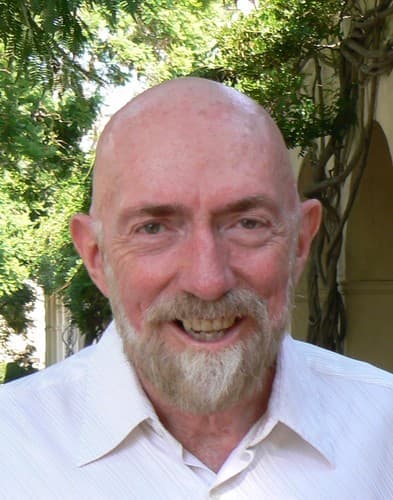
Kip S. Thorne is an American theoretical physicist known for his contributions to gravitational physics and astrophysics. He is the author of "The Science of Interstellar," which explores the scientific principles behind the film "Interstellar." Thorne has received significant recognition for his work, including the Nobel Prize in Physics in 2017.
Similar books
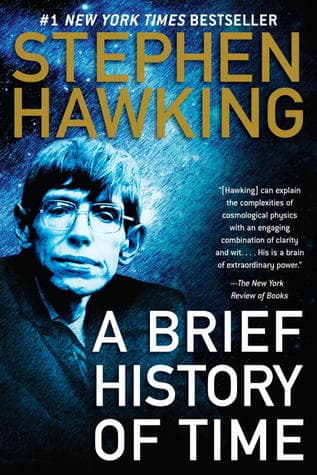
- A Brief History of Time
Stephen Hawking
4.2 (303k) average on GoodreadsHistoryDelves into cosmology, black holes, and the origins of the universe, albeit with a more theoretical focus than Interstellar.
- Steve Jobs
Walter Isaacson
4.1 (957k) average on GoodreadsBusinessSteve Jobs was a visionary who fused creativity and technology to revolutionize six industries and shape our digital world.
- Elon Musk: Tesla, SpaceX, and the Quest for a Fantastic Future
Ashlee Vance
4.2 (241k) average on GoodreadsBusinessAshlee Vance chronicles Elon Musk's journey from a South African childhood to leading revolutions in space and sustainable energy, showing him as a modern industrial titan aiming to invent humanity's future.
- The Lean Startup: How Today's Entrepreneurs Use Continuous Innovation to Create Radically Successful Businesses
Eric Ries
4.1 (235k) average on GoodreadsBusinessLearn how to manage startups through rapid experimentation, validated learning, and constant adjustment, building sustainable businesses instead of untested plans.
- Zero to One: Notes on Startups, or How to Build the Future
Peter Thiel
4.2 (189k) average on GoodreadsBusinessTo build the future, Peter Thiel argues, you must embrace the idea that true innovation lies not in small improvements, but in creating something entirely new that avoids competition.
- The Circle
Dave Eggers
3.4 (183k) average on GoodreadsThrillerA young woman's dream job at a powerful tech company spirals into a terrifying loss of privacy and identity as the corporation's quest for ultimate transparency consumes everything in its path.




Enjoyed the summary?
A summary gives you the shape of the book. The book itself has the detail, the examples and the voice.
Find The Science of Interstellar on AmazonAs an Amazon Associate, BookBrief earns from qualifying purchases. How we're funded