

Synopsis
Covers the whole plot, including the ending.
- Difficulty
- Medium
- Pacing
- Moderate
- Mood
- Intricate, Suspenseful, Dark, Analytical
- Read it if
- You enjoy intricate, character-driven mysteries with a classic detective feel, a strong sense of place (London's publishing world), and a focus on psychological depth and motive.
- Skip it if
- You prefer fast-paced, action-heavy thrillers or are sensitive to graphic descriptions of murder and psychological manipulation.
The Silkworm Plot Summary
Covers the whole plot, including the ending.
A Missing Author and a Distraught Wife
Private investigator Cormoran Strike is approached by Leonora Quine, the seemingly downtrodden wife of controversial novelist Owen Quine. Leonora explains that Owen often disappears for days, but this time feels different, and she worries. She wants Strike to find him. Strike and his assistant Robin Ellacott begin by visiting the Quine's chaotic London home and interviewing Leonora, who describes a difficult, unpredictable husband prone to dramatic exits. Strike learns Owen had recently completed a highly inflammatory manuscript, 'Bombyx Mori' (Latin for silkworm). This book was circulating among his literary acquaintances and was rumored to contain thinly veiled, damaging caricatures of almost everyone in his professional and personal life.
The Incendiary Manuscript
Strike and Robin begin to look into Owen Quine's world, a nest of literary ambition, jealousy, and betrayal. They learn about 'Bombyx Mori,' a manuscript so libelous and personally devastating that its potential publication could ruin careers and lives. The novel features thinly disguised versions of his agent, Elizabeth Tassel; his editor, Daniel Chard; his former lover, Kathryn Kent; his mentor, Jerry Waldegrave; and even his protégé, Michael Fancourt. Each character in 'Bombyx Mori' suffers a grotesque, often symbolic, demise, mirroring medieval torture methods described in the text. This discovery immediately broadens the suspect pool to include almost everyone in Quine's circle, as many would have a strong motive to prevent the book's release or seek revenge.
First Interviews and Growing Tensions
Cormoran Strike methodically interviews the various individuals who had access to Owen Quine's manuscript and were depicted within it. He speaks with Elizabeth Tassel, Quine's long-suffering agent, who expresses frustration with Quine's erratic behavior and the difficulty of finding a publisher for 'Bombyx Mori.' Daniel Chard, Quine's editor at Roper Chard, appears dismissive and concerned only with damage control. Kathryn Kent, a former lover and literary critic, reveals a complicated, often bitter, history with Quine. Michael Fancourt, a younger novelist Quine had mentored, shows a mix of admiration and resentment. Jerry Waldegrave, an older, respected author, offers a more detached but still critical perspective. Each interview uncovers deeper layers of animosity, professional rivalry, and personal grievances against the missing author.
A Gruesome Discovery
The investigation takes a horrific turn when Owen Quine's body is discovered in a derelict house. The scene is meticulously staged to replicate a gruesome torture sequence from 'Bombyx Mori.' Quine has been ritualistically murdered, disemboweled, and his body arranged in a grotesque tableau, mirroring the fate of the 'Silkworm' character in his own novel. The police, led by Inspector Wardle, quickly become involved, and Leonora Quine is immediately arrested as the prime suspect, largely due to her history of domestic disputes with Owen and the convenience of the evidence. Strike, however, is not convinced of her guilt, finding the staging too elaborate and deliberate for Leonora.
Leonora's Arrest and Strike's Doubts
Following the discovery of Owen Quine's body, Leonora Quine is arrested by the Metropolitan Police. The evidence against her seems compelling: a history of arguments, her initial call to Strike, and the fact that Quine's death seems to fulfill a dark fantasy of hers. However, Cormoran Strike has serious doubts about her culpability. He believes the murder is too sophisticated and the staging too theatrical for Leonora, who appears simple and lacks the intellectual capacity to conceive such a complex revenge plot. Strike is convinced that the killer is someone intimately familiar with 'Bombyx Mori' and the intricate literary world Quine inhabited, someone using the manuscript as a blueprint for murder.
Unraveling the Manuscript's Secrets
With Leonora in custody, Strike and Robin intensify their efforts to understand the true nature of 'Bombyx Mori' and its connection to Owen Quine's murder. They meticulously analyze the manuscript, searching for hidden meanings, allegories, and clues that might point to the real killer. Strike realizes that the killer is not just replicating the novel's events but is also manipulating perceptions, using the book as a weapon and a smokescreen. Robin, with her keen eye for detail, proves invaluable in deciphering the complex literary allusions and identifying the real-life inspirations behind Quine's fictional characters, which helps Strike piece together the intricate web of relationships and resentments surrounding the deceased author.
The Publisher's Role and Financial Woes
Strike turns his attention to Roper Chard, Owen Quine's publishing house, and its editor, Daniel Chard. He discovers that Roper Chard was in significant financial trouble, and Quine, despite his controversial nature, was one of their few authors with a guaranteed readership. The disappearance of 'Bombyx Mori' and Quine's subsequent death could have significant implications for the struggling publisher. Strike suspects that the motivations behind the murder might extend beyond personal vendettas to include financial gain or the desire to suppress a damaging truth about the publishing industry itself. He questions Daniel Chard more rigorously, sensing a hidden agenda behind his seemingly professional demeanor and his evasiveness regarding Quine's final manuscript.
A Second Manuscript and a Crucial Deception
Through diligent investigation, Strike uncovers the existence of a second manuscript, a much milder, less inflammatory version of 'Bombyx Mori' that Owen Quine had been working on. This discovery is important. Strike realizes that the highly offensive 'Bombyx Mori' that circulated among Quine's associates was not his final work but a cleverly crafted forgery, designed to incriminate and enrage. This 'false' manuscript served as the perfect red herring, directing suspicion towards numerous individuals and providing a blueprint for the murder. The real killer, Strike deduces, must have had access to Quine's home, his work, and the means to create such a convincing literary fabrication, all while possessing a deep understanding of Quine's writing style.
The Web of Lies Unravels
Cormoran Strike, piecing together the subtle clues and contradictions, eventually identifies Owen Quine's agent, Elizabeth Tassel, as the true killer. He confronts her, revealing her intricate plan. Tassel, a frustrated writer herself, had meticulously crafted the inflammatory 'Bombyx Mori' manuscript, imitating Quine's style, to frame his literary rivals and ensure his murder would be attributed to one of them. Her motive was a complex blend of revenge for Quine's past slights, a desire to destroy the people she believed had wronged her and Quine, and an ambition to be recognized for her literary cunning, even if it meant through murder. She had orchestrated the entire elaborate deception, including the staging of the body.
Confession and Resolution
Cornered by Cormoran Strike's relentless logic and evidence, Elizabeth Tassel finally confesses to the murder of Owen Quine. She explains in chilling detail how she murdered Quine, making it appear as though he was a victim of the very plot he had supposedly written. Tassel reveals the depth of her resentment towards the literary establishment and her bitter jealousy of Quine's talent, despite his flaws. She admits to fabricating the incendiary 'Bombyx Mori' manuscript, using it as a blueprint for the murder and a tool to frame Quine's enemies. With Tassel's confession, Leonora Quine is released from prison, and justice is finally served, albeit through a harrowing investigation that leaves a lasting impression on Strike and Robin.
The Silkworm Characters
Cormoran Strike
Protagonist
A cynical, intelligent private investigator with a prosthetic leg and a complicated past.
Cormoran Strike is a private detective operating out of a small office in London. A veteran of the Royal Military Police, he lost a leg in Afghanistan, leaving him with both physical and emotional scars. He is observant, resourceful, and possesses a sharp, analytical mind, often seeing what others miss. Despite his gruff exterior and a tendency towards cynicism, he has a strong moral compass and a deep sense of justice. He is fiercely loyal to his assistant, Robin, and often relies on her insights.
Relationships: Robin Ellacott (His highly capable and increasingly indispensable assistant.); Leonora Quine (His client, whom he believes to be innocent despite police evidence.); Elizabeth Tassel (The murderer, whom Strike methodically unmasks.)
Robin Ellacott
Supporting
Strike's intelligent and dedicated assistant, eager to learn the art of detection.
Robin Ellacott continues to work for Strike, proving herself an invaluable asset to his agency. She is intelligent, perceptive, and possesses a keen eye for detail, often noticing subtle clues that aid Strike's investigations. Her initial fascination with detective work deepens into a genuine passion, and she actively seeks to develop her skills, sometimes pushing against Strike's protective instincts. She balances her professional ambitions with her complicated personal life, including her engagement to Matthew Cunliffe, which often causes tension.
Relationships: Cormoran Strike (Her employer and mentor, with a growing, complex professional and personal bond.); Matthew Cunliffe (Her fiancé, whose disapproval of her career choice creates friction.)
Owen Quine
Victim
A controversial, provocative novelist whose disappearance and murder drive the plot.
Owen Quine is a once-successful but now struggling novelist known for his confrontational and often offensive literary style. He is depicted as erratic, attention-seeking, and prone to dramatic outbursts, using his writing to provoke and expose those around him. His final, unpublished manuscript, 'Bombyx Mori,' is a thinly veiled attack on his literary peers and personal acquaintances, which ultimately becomes the blueprint for his own gruesome murder. Quine's character is explored through the perspectives of those who knew him, revealing a complex man capable of both brilliance and cruelty.
Relationships: Leonora Quine (His long-suffering and often abused wife.); Elizabeth Tassel (His agent and eventual murderer, with a deep-seated resentment.); Daniel Chard (His editor, whose publishing house is struggling.); Kathryn Kent (His former lover and fellow writer.); Michael Fancourt (His protégé and rival.); Jerry Waldegrave (His literary mentor.)
Leonora Quine
Supporting
Owen Quine's seemingly simple wife, initially accused of his murder.
Leonora Quine is Owen Quine's wife, a seemingly unsophisticated and rather dim woman who endures her husband's erratic behavior and infidelity. She is depicted as deeply loyal, if somewhat resigned, to Owen, despite his mistreatment of her. Her initial concern for Owen's disappearance leads her to hire Strike. When Owen is found murdered, she becomes the prime suspect due to her history of domestic disputes and her apparent lack of alibi. Strike, however, believes she is innocent, seeing her as too simple to orchestrate such a complex crime.
Relationships: Owen Quine (Her murdered husband, whom she loved despite his flaws.); Cormoran Strike (Her private investigator, who believes in her innocence.); Elizabeth Tassel (The true killer, who framed her.)
Elizabeth Tassel
Antagonist
Owen Quine's agent and the manipulative, resentful murderer.
Elizabeth Tassel is Owen Quine's literary agent, a woman with a sharp mind and a bitter disposition. She is a frustrated writer herself, harboring deep resentments against the literary world and many of its inhabitants, including Quine, for perceived slights and unrealized ambitions. She is meticulously organized and highly intelligent, capable of crafting elaborate deceptions. Her professional facade masks a deep-seated anger and a desire for revenge, which ultimately drives her to commit murder and frame others.
Relationships: Owen Quine (Her client and victim, whom she resented and ultimately murdered.); Cormoran Strike (Her interrogator, who exposes her as the killer.); Daniel Chard (A professional colleague whom she attempts to frame.)
Daniel Chard
Supporting
Owen Quine's editor and head of the struggling Roper Chard publishing house.
Daniel Chard is the editor at Roper Chard, Owen Quine's publishing house. He is a shrewd and somewhat aloof businessman, primarily concerned with the financial stability of his company and the marketability of his authors. He initially dismisses Quine's disappearance as another one of his stunts and is more concerned with the damage 'Bombyx Mori' could do to his reputation and business. He is depicted as having a complex and often strained relationship with Quine, balancing professional obligation with personal distaste.
Relationships: Owen Quine (His problematic author, whose death impacts his business.); Elizabeth Tassel (A professional colleague, whom she attempts to frame.); Cormoran Strike (The investigator whom he initially obstructs.)
Kathryn Kent
Supporting
A literary critic and Owen Quine's former lover, bitter about their past.
Kathryn Kent is a literary critic and a former lover of Owen Quine. She is intelligent, articulate, and possesses a sharp wit, but also harbors significant bitterness and resentment towards Quine for their past relationship and his subsequent portrayal of her in his work. She is one of the many individuals who received a copy of 'Bombyx Mori' and whose fictional counterpart suffers a grotesque fate within its pages. Her interviews with Strike reveal the emotional scars left by her involvement with Quine.
Relationships: Owen Quine (Her former lover, whose betrayal still affects her.); Cormoran Strike (The investigator to whom she provides insights into Quine's character.)
Michael Fancourt
Supporting
A younger novelist mentored by Quine, struggling with his own career and Quine's influence.
Michael Fancourt is a younger, somewhat insecure novelist whom Owen Quine had taken under his wing as a protégé. He shows a mixture of admiration for Quine's talent and resentment for his manipulative and often cruel behavior. Fancourt is also featured in 'Bombyx Mori' in a highly unflattering light, giving him a strong motive for revenge. He is ambitious but also sensitive, and his relationship with Quine was fraught with professional jealousy and personal dependency.
Relationships: Owen Quine (His mentor and tormentor.); Cormoran Strike (The investigator to whom he reluctantly provides information.)
The Silkworm Themes
The Destructive Power of Art and Revenge
The novel explores how art, specifically Owen Quine's 'Bombyx Mori,' can be used as a weapon, inflicting deep personal and professional damage. The manuscript itself, filled with venomous caricatures, becomes the blueprint for a real-life murder, blurring the lines between fiction and reality. The killer, Elizabeth Tassel, uses the novel for her own elaborate revenge, not only against Quine but against the entire literary establishment she resents. This theme highlights how creative expression, when fueled by malice, can lead to catastrophic consequences, transforming artistic endeavor into a tool for destruction.
“Nobody writes a book to get rich. They write books because they are human beings, and because they are human beings they have to write.”
Appearance Versus Reality
A central theme is constant deception and misdirection. Nothing and no one is quite as they seem. Leonora Quine, initially appearing simple and guilty, is revealed to be innocent. Owen Quine's 'Bombyx Mori' is not his final, authentic work but a forgery designed to mislead. The murderer, Elizabeth Tassel, expertly crafts an elaborate illusion, using the fictional world of the manuscript to stage a real-life crime and deflect suspicion. Strike's investigation is a continuous process of peeling back layers of lies and carefully constructed facades to uncover the hidden truths beneath, emphasizing that initial impressions and presented narratives can be unreliable.
“The truth, it turns out, is a dirty, complicated business, and not always worth the pain of finding.”
The Corrupting Influence of the Literary World
The novel paints a cynical and unflattering portrait of the publishing industry, depicting it as a nest of jealousy, backstabbing, professional rivalries, and unfulfilled ambitions. Authors, agents, and editors are shown to be driven by ego, greed, and resentment, often at the expense of genuine artistic merit. Quine's 'Bombyx Mori' is a direct product of this environment, a retaliatory strike against those he felt had wronged him. The killer's motives are deeply rooted in the frustrations and perceived injustices of this cutthroat world, suggesting that the literary sphere, despite its intellectual veneer, can be as brutal and corrupting as any other.
“The publishing industry was a feeding frenzy of desperate, pretentious people, all trying to steal each other’s ideas.”
Loyalty and Betrayal
Relationships in 'The Silkworm' are often defined by shifting loyalties and deep betrayals. Owen Quine betrays virtually everyone he knows in 'Bombyx Mori,' using his art to settle scores. This act of literary betrayal then triggers a cycle of real-world revenge. Elizabeth Tassel, as Quine's agent, betrays her professional duty and personal trust by murdering him and framing others. Conversely, Strike's unwavering loyalty to Leonora Quine, despite the police's conviction of her guilt, shows a steadfast commitment to justice. Robin's loyalty to Strike, even when her personal life suffers, highlights the importance of trust in a world full of deceit.
“Betrayal, I found, was a kind of alchemy, transforming affection into the basest metal.”
Plot Devices & Literary Techniques
The Manuscript as a Weapon/Blueprint
Owen Quine's 'Bombyx Mori' serves as both the motive and the guide for his murder.
The fictional manuscript 'Bombyx Mori' is the central plot device. Initially, it appears to be the motive for murder, enraging those it caricatures. However, it is revealed to be a fabricated document by the killer, Elizabeth Tassel, designed to mimic Quine's style and provide a detailed blueprint for his ritualistic murder. The novel's gruesome descriptions of torture and death are directly mirrored in Quine's actual demise, making the manuscript an integral part of the crime itself and a key to solving it. Strike's analysis of the text is crucial for understanding the killer's elaborate plan and uncovering the deception.
Red Herring
Multiple characters with strong motives are presented to mislead the investigation.
The novel masterfully employs red herrings through the numerous individuals depicted unflatteringly in 'Bombyx Mori.' Almost everyone in Owen Quine's circle — his agent, editor, former lover, protégé, and mentor — has a plausible motive for wanting him dead or silenced due to the damaging nature of the manuscript. This broadens the suspect pool considerably and distracts both the police and the reader from the true culprit, Elizabeth Tassel, who carefully orchestrates these misdirections. The initial arrest of Leonora Quine further serves as a significant red herring, allowing the real killer to remain hidden for a longer period.
Forensic Linguistics / Textual Analysis
Analysis of the 'Bombyx Mori' manuscript to determine authorship and intent.
Strike and Robin's investigation heavily relies on forensic linguistics and textual analysis of 'Bombyx Mori.' They scrutinize the writing style, allusions, and character portrayals within the manuscript to determine its true authorship and purpose. This device is crucial for uncovering the fact that the circulating manuscript is a forgery, not Quine's original work. By comparing the 'fake' Bombyx Mori with Quine's known writing and the 'real' manuscript, Strike deduces that the killer had a deep understanding of Quine's literary voice and used it to create a convincing, yet deceptive, piece of evidence, ultimately leading him to Elizabeth Tassel.
The Unreliable Narrator (of events)
Character testimonies and initial perceptions are often misleading, requiring Strike to uncover the true sequence of events.
While the novel is told from a third-person perspective focused on Strike, the information he receives from characters initially creates an unreliable narrative of events surrounding Quine's disappearance and murder. Characters like Elizabeth Tassel and Daniel Chard present carefully constructed versions of events or omit crucial details, leading Strike and the reader down false paths. The initial belief that Leonora Quine is the obvious suspect is also part of this device, challenging Strike to look beyond the surface and piece together the true story from contradictory accounts and subtle clues. This device highlights Strike's skill in discerning truth from deception.
The Silkworm Quotes
“The past is a foreign country; they do things differently there.”
“A book is a magical thing, a gateway to other worlds, other lives.”
“The truth, like a cat, will always find its way home.”
“People always want to be told they’re special, that their suffering is unique.”
“There are no secrets in a small world, only carefully constructed illusions.”
“Every writer is a vampire, feeding on the lives of others.”
“Grief is a peculiar thing. It can make you do the most illogical things.”
“The greatest trick the devil ever pulled was convincing the world he didn't exist.”
“Nobody owns the dead, but everyone wants a piece of them.”
“Fear is a powerful motivator, capable of driving people to extreme lengths.”
“The line between genius and madness is often blurred, especially in the creative arts.”
“Sometimes, the most obvious answer is the one staring you in the face, yet you refuse to see it.”
“A good story, no matter how dark, always has a kernel of truth at its heart.”
“Every secret eventually finds its way out, usually at the most inconvenient time.”
Quiz
10 questions on the plot and the characters. Each answer comes with a short explanation.
Question 1
Who initially hires Cormoran Strike to find her missing husband, Owen Quine?
- Elizabeth Tassel
- Leonora Quine
- Kathryn Kent
- Pippa Midgley
Show answer
B. Leonora Quine Leonora Quine, Owen's wife, is the one who first contacts Strike, believing her husband has just wandered off as he often does.
Question 2
What is the controversial title of Owen Quine's unpublished manuscript that features 'poisonous pen-portraits'?
- The Black Heart
- The Silkworm
- Bombyx Mori
- Paper Dolls
Show answer
B. The Silkworm Owen Quine's final, highly controversial manuscript is titled 'Bombyx Mori,' which is the scientific name for the silkworm, giving the book its title 'The Silkworm.'
Question 3
Which character is Owen Quine's literary agent, who also becomes a suspect in his disappearance?
- Jerry Waldegrave
- Daniel Chard
- Elizabeth Tassel
- Michael Fancourt
Show answer
C. Elizabeth Tassel Elizabeth Tassel is Owen Quine's long-suffering literary agent, and her strained relationship with him makes her an early person of interest for Strike.
Question 4
What bizarre and gruesome detail is central to Owen Quine's murder, mirroring a scene from his own manuscript?
- He is found drowned in a bathtub full of ink.
- He is found disemboweled and posed like a character from his novel.
- He is found encased in a giant cocoon of silk.
- He is found poisoned by a rare literary toxin.
Show answer
B. He is found disemboweled and posed like a character from his novel. Quine's body is discovered in a manner that grotesquely mimics the death of a character in his manuscript 'Bombyx Mori,' specifically disemboweled and staged.
Question 5
What is the primary motivation behind the killer's actions in 'The Silkworm'?
- To prevent the publication of 'Bombyx Mori' and protect reputations.
- Revenge for Owen Quine's literary critiques and personal betrayals.
- To steal Quine's unpublished manuscript and claim it as their own.
- A random act of violence by a disturbed fan.
Show answer
B. Revenge for Owen Quine's literary critiques and personal betrayals. The killer's motive is deeply rooted in a desire for revenge against Owen Quine for his past actions and the damaging portrayals in his writing.
Question 6
Which of the following characters is a rival author who had a public feud with Owen Quine?
- Michael Fancourt
- Jerry Waldegrave
- Daniel Chard
- Pippa Midgley
Show answer
A. Michael Fancourt Michael Fancourt is a well-known author who had a very public and bitter feud with Owen Quine, making him a prime suspect.
Question 7
What is the name of the publishing house that was considering 'Bombyx Mori'?
- Crossbow Books
- Penguin Random House
- Little, Brown Book Group
- Bloomsbury Publishing
Show answer
A. Crossbow Books Crossbow Books is the specific publishing house where Daniel Chard works, and they were in discussions about publishing Quine's controversial manuscript.
Question 8
How does Robin Ellacott's role evolve during the investigation, particularly regarding her aspirations?
- She decides to quit and pursue a career as a novelist herself.
- She becomes more actively involved in the detective work, solidifying her desire to be a private investigator.
- She focuses solely on administrative tasks, losing interest in the case.
- She gets engaged and shifts her focus entirely to wedding planning.
Show answer
B. She becomes more actively involved in the detective work, solidifying her desire to be a private investigator. This case allows Robin to take on more significant investigative duties, proving her capabilities and strengthening her resolve to become a fully qualified private investigator, much to Strike's approval.
Question 9
What literary concept, frequently discussed by Quine and his circle, plays a significant symbolic role in the novel's themes of identity and creation?
- Deconstructionism
- The death of the author
- Magical realism
Show answer
B. The death of the author The 'death of the author' is a recurring theme and concept among the literary set in the book, ironically culminating in Quine's actual death and the subsequent interpretations of his work.
Question 10
What specific detail about the murder scene initially misleads Strike and the police, making them believe Owen Quine was the victim of a ritualistic killing by a stranger?
- The presence of obscure Latin inscriptions near the body.
- The body being found in an abandoned, locked room with no clear entry.
- The highly theatrical and grotesque staging of the body, mimicking a scene from Quine's manuscript.
- The lack of any defensive wounds on the victim.
Show answer
C. The highly theatrical and grotesque staging of the body, mimicking a scene from Quine's manuscript. The killer meticulously staged Quine's body to replicate the gruesome 'Bombyx Mori' scene, making it appear as if a deranged fan or someone with a literary obsession was responsible, rather than someone within his immediate circle.
The Silkworm FAQ
What is the central mystery Cormoran Strike investigates in 'The Silkworm'?
Cormoran Strike is initially hired by Leonora Quine to find her missing husband, controversial novelist Owen Quine. The mystery deepens significantly when Quine is found brutally murdered, mimicking a scene from his unpublished, highly defamatory manuscript, 'Bombyx Mori'. Strike must then uncover who killed Quine and why, sifting through a long list of suspects who were all maligned in the manuscript.
Who are the primary suspects in Owen Quine's murder?
The primary suspects include almost everyone connected to Quine due to his scandalous manuscript 'Bombyx Mori'. This list features his wife Leonora, his agent Elizabeth Tassel, his editor Daniel Chard, his former lover Kathryn Kent, his rival Michael Fancourt, and even his assistant Pip. Each character had motives ranging from ruined reputations to financial desperation, all exposed or threatened by Quine's work.
What is 'Bombyx Mori' and why is it so significant to the plot?
'Bombyx Mori' is Owen Quine's unpublished manuscript, a roman à clef that savagely depicts and defames nearly everyone in his professional and personal life. It's significant because its contents provide a motive for almost every character to want Quine silenced, and the manner of Quine's murder directly mirrors a gruesome scene described within the manuscript, making it a crucial piece of evidence.
How does Robin Ellacott contribute to the investigation in 'The Silkworm'?
Robin Ellacott plays a crucial and expanded role, moving beyond administrative tasks to actively assist Strike in the field. She conducts interviews, performs surveillance, and even goes undercover, demonstrating her keen observational skills and resourcefulness. Her contributions prove invaluable in gathering information and connecting disparate clues, solidifying her place as Strike's indispensable partner.
What is the significance of the title 'The Silkworm'?
The title 'The Silkworm' refers to the Bombyx mori moth, which spins a cocoon of silk but is ultimately destroyed in the process of harvesting that silk. This directly parallels Owen Quine's fate: he creates a work, 'Bombyx Mori', that reveals secrets and harms others, but ultimately leads to his own gruesome destruction, much like the silkworm sacrifices itself for its creation.
What specific literary references or allusions are woven into the mystery?
The novel is rich with literary allusions, particularly to Renaissance and Jacobean drama, with 'Bombyx Mori' itself being a pastiche of such styles. The murder scene's elaborate staging, including disembowelment and being covered in ink, directly references the grotesque punishments and symbolic deaths found in works by authors like Christopher Marlowe or John Webster. These allusions deepen the thematic exploration of art, revenge, and suffering.
How does the publishing industry itself become a character or a force in the narrative?
The publishing industry is portrayed as a cutthroat, insular world driven by ego, ambition, and financial pressures. It acts as a backdrop where rivalries fester, reputations are made and broken, and ethical lines are blurred. The industry's dynamics, particularly the desperation for a bestseller and the power struggles between authors, agents, and editors, directly fuel many characters' motives and contribute to the toxic environment surrounding Quine.
What is the true identity and motive of the killer?
The killer is Leonora Quine, Owen's seemingly frail and devoted wife. Her motive was a complex blend of revenge for Owen's repeated betrayals and abuse, financial desperation, and a desire to secure her daughter's future by ensuring Owen's estate and royalties. She meticulously framed others and manipulated Strike, using her appearance of vulnerability to deflect suspicion.
How does Owen Quine's personality and past contribute to his demise?
Owen Quine is depicted as a self-absorbed, manipulative, and often cruel individual who exploited those around him for his art and personal gain. His history of infidelity, financial irresponsibility, and emotional abuse, culminating in the creation of 'Bombyx Mori', cultivated a vast network of resentful individuals. His disregard for others' feelings and his 'art for art's sake' philosophy directly led to the intense hatred that ultimately resulted in his murder.
Discuss the psychological impact of 'Bombyx Mori' on the characters depicted within it.
'Bombyx Mori' inflicts severe psychological damage on its subjects, exposing their deepest secrets, insecurities, and flaws to a potentially vast audience. Characters like Elizabeth Tassel and Michael Fancourt are driven to intense anger and humiliation, while others like Daniel Chard face professional ruin. The manuscript's existence creates an atmosphere of paranoia and betrayal, forcing characters to confront their public and private selves.
How does Leonora Quine's psychological state enable her to commit such a gruesome act and deceive Strike?
Leonora's psychological state is one of deep-seated trauma and resentment, stemming from years of emotional abuse and betrayal by Owen. This simmering rage, combined with a fierce protectiveness of her daughter and a desperate need for financial security, hardened her resolve. She meticulously planned the murder and subsequent deception, using her perceived fragility and Owen's reputation as a provocateur to manipulate Strike and divert suspicion effectively.
Explore the themes of authorship, creation, and destruction in the novel.
The novel deeply explores the interconnectedness of authorship, creation, and destruction. Owen Quine's creative act of writing 'Bombyx Mori' is simultaneously a destructive act, tearing down reputations and relationships. The very nature of artistic creation is questioned, particularly whether the pursuit of 'art' justifies the harm it inflicts. Ultimately, Quine's creation directly leads to his own destruction, highlighting the dangerous power of the written word.
How does 'The Silkworm' explore the concept of truth versus fiction, particularly in the context of roman à clef?
'The Silkworm' intricately blurs the lines between truth and fiction, especially through 'Bombyx Mori,' a roman à clef that purports to expose 'truths' about its real-life counterparts. The novel questions how much of 'fiction' is based on reality and how much 'truth' is distorted by artistic license or personal bias. This ambiguity makes it difficult for Strike to discern genuine motives from fictional grievances, highlighting the subjective nature of narrative.
What role does public perception and reputation play in the narrative, both for Owen Quine and the suspects?
Public perception and reputation are paramount in 'The Silkworm.' Owen Quine's controversial public persona as a literary provocateur both fueled his career and made him a target. For the suspects, 'Bombyx Mori' threatened to shatter their carefully constructed public images, leading to intense fear and anger. The novel demonstrates how easily reputations can be manipulated, destroyed, or weaponized, influencing both the characters' actions and Strike's investigation.
What is the significance of the recurring motif of 'eating' or 'devouring' in the novel?
The motif of 'eating' or 'devouring' is deeply significant, reflecting the parasitic nature of the publishing world and Quine's own relationships. The silkworm itself is 'devoured' by its creation, mirroring Quine's fate. Characters are metaphorically 'eaten alive' by gossip, criticism, or financial woes. The gruesome murder scene, where Quine is disemboweled, literally depicts this motif, symbolizing how his own toxic creations ultimately consumed him.
How does Cormoran Strike's personal life intersect with the professional investigation in 'The Silkworm'?
While less central than in 'The Cuckoo's Calling,' Strike's personal life still subtly intersects. His financial struggles are a constant pressure, driving his need to solve the case. His complicated relationship with Charlotte Campbell continues to be a background presence, causing occasional emotional distraction. More significantly, his growing professional respect and personal bond with Robin deepen, influencing his trust and reliance on her during the intense investigation.
What challenges does Robin face as she takes on more investigative responsibilities?
Robin faces significant challenges, including navigating the misogynistic attitudes prevalent in some areas of the publishing world and dealing with the emotional toll of the gruesome case. She also grapples with her own insecurities and the pressure to prove her capabilities to Strike and herself. Her engagement to Matthew also creates tension, as her increasing involvement with Strike's work strains their relationship.
How does the novel critique the nature of fame and literary celebrity?
The novel offers a biting critique of fame and literary celebrity, portraying it as a double-edged sword that can bring both adoration and intense scrutiny. Owen Quine's celebrity is shown to be a corrosive force, enabling his bad behavior while simultaneously making him a target. The desperation of other characters for literary success highlights the superficiality and often destructive pursuit of fame within the publishing world.
About the author

Robert Galbraith is the pseudonym of British author J.K. Rowling, known for her crime fiction series featuring private detective Cormoran Strike. The series includes notable works such as The Cuckoo's Calling, The Silkworm, Career of Evil, and Lethal White, which explore complex mysteries and character-driven narratives.
Similar books
- The Cuckoo's Calling
Robert Galbraith
3.9 (482k) average on GoodreadsThrillerFirst book in the Cormoran Strike series, similar detective style and character development.
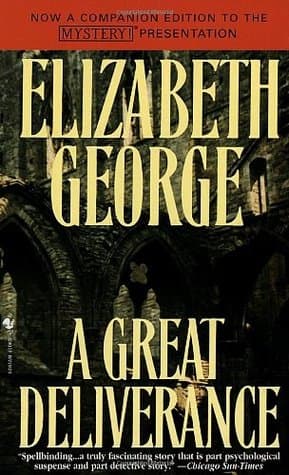
- A Great Deliverance
Elizabeth George
4.0 (40k) average on GoodreadsThrillerClassic British detective fiction with complex plots, psychological insights, and a focus on the darker aspects of human nature.
- Angels & Demons
Dan Brown
3.9 (2.7M) average on GoodreadsThrillerA Harvard symbologist races through Rome's ancient sites, deciphering cryptic clues to unmask the Illuminati and stop a vengeful plot to destroy the Vatican with a stolen antimatter weapon.
- Gone Girl
Gillian Flynn
4.1 (2.3M) average on GoodreadsThrillerA wife's sudden disappearance on her fifth anniversary reveals a web of lies and psychological warfare, exposing the secrets within a seemingly perfect marriage.
- The Girl on the Train
Paula Hawkins
3.9 (2.1M) average on GoodreadsThrillerA woman’s fascination with a seemingly perfect couple she watches from her daily train commute leads her into a dark investigation when she witnesses something that shatters their idyllic image.
- The Da Vinci Code
Dan Brown
3.9 (1.9M) average on GoodreadsThrillerA symbologist and a cryptologist race through European landmarks, deciphering ancient codes and uncovering a conspiracy that could rewrite the foundations of Christianity.





Enjoyed the summary?
A summary gives you the shape of the book. The book itself has the detail, the examples and the voice.
Find The Silkworm on AmazonAs an Amazon Associate, BookBrief earns from qualifying purchases. How we're funded