

Synopsis
Covers the whole plot, including the ending.
- Difficulty
- Medium
- Pacing
- Fast
- Mood
- Suspenseful, Dark, Intense, Gripping
- Read it if
- You love medical thrillers with a strong female protagonist, intricate police procedural elements, and a relentless cat-and-mouse chase.
- Skip it if
- You are sensitive to graphic descriptions of violence, particularly sexual assault and torture, or prefer less intense mysteries.
The Surgeon Plot Summary
Covers the whole plot, including the ending.
A New Reign of Terror in Boston
Boston detectives Thomas Moore and Jane Rizzoli go to a murder scene. The victim, Claire Drake, a young nurse, was tortured and surgically cut open in her apartment. The killer left no fingerprints but used precise surgical technique, making police suspect a medical professional. As the investigation continues, another woman, Diane Sterling, is found murdered in a similar way. The pattern suggests a serial killer, called 'The Surgeon' by the media. He is doing more attacks and taunting police. Moore, an experienced detective, and Rizzoli, a sharp but often overlooked female detective, struggle to find a lead in the random attacks.
Catherine Cordell's Traumatic Past Resurfaces
As Moore and Rizzoli investigate, they find similarities between the Boston murders and killings from two years before in Savannah, Georgia. In those cases, victims were also young women, tortured and killed with surgical precision. The Savannah case ended with Dr. Catherine Cordell, a skilled surgeon, shooting her attacker, Andrew Capra, in self-defense after being tortured and raped. Cordell, now living in Boston and working at Bayside Hospital, has rebuilt her life. The new crimes make her afraid, thinking her past is not gone. The detectives visit her and see her trauma.
The Stalker's Shadow Lengthens
Catherine Cordell starts to experience unsettling events. Her apartment is broken into, but nothing is stolen, only subtly moved. She feels violated. She gets anonymous threats and sees glimpses of a figure she thinks is Andrew Capra, the man she thought she killed. Police are skeptical, but Catherine believes Capra is alive and has followed her to Boston to finish his plan. Her fear is dismissed by some as PTSD, but Moore and Rizzoli, especially Rizzoli, start to take her claims seriously as the Boston murders continue to match the Savannah incidents. Catherine feels alone and vulnerable.
A Near-Fatal Attack
Catherine's fears are confirmed when she is attacked at home. The masked attacker overpowers her, but she escapes using her quick thinking and self-defense training. She does not see his face clearly, but his methods and presence are familiar, making her believe Andrew Capra is alive. The incident leaves her shaken but more determined to prove her attacker's identity. Moore and Rizzoli arrive, finding evidence of a struggle. They confirm Catherine is a direct target. This attack makes police rethink the Savannah case and the possibility of Capra's survival.
The Search for Answers in Savannah
Detective Moore goes to Savannah, Georgia, to re-investigate the Andrew Capra case. He reviews reports, evidence, and interviews original detectives and the medical examiner. The medical examiner's office reveals an error: the body identified as Andrew Capra was severely burned, making identification hard. Dental records were not fully checked. Moore finds Capra had a twin brother, Warren, who was never found and had a similar medical background. This changes the assumption of Capra's death and creates a new possibility: the 'Surgeon' could be Warren Capra, getting revenge for his brother, or Andrew himself, having faked his death.
The Twin Theory and a Dark Family History
Back in Boston, Moore and Rizzoli look into the Capra family history. They learn Andrew and Warren Capra were identical twins with a troubled past, including animal cruelty and sociopathic traits. Both were smart and had some medical training, making either capable of the surgical precision in the murders. The 'twin theory' explains how Capra could be 'alive' and why the attacks match the Savannah incident. The detectives realize they are dealing with a disturbed person, perhaps acting out of twisted family loyalty or revenge, and Catherine is at the center of his plan.
Unmasking the Imposter
As the investigation continues, Moore and Rizzoli consider suspects with medical backgrounds who might have known Catherine. They focus on Dr. Richard Tremaine, a former colleague of Catherine's from Savannah who also moved to Boston. Tremaine was obsessed with Catherine and showed possessive behavior. Rizzoli finds inconsistencies in Tremaine's alibis and clues connecting him to the victims. His medical expertise and knowledge of Catherine's past make him a compelling suspect. The detectives start to build a case against him, but they need concrete evidence to link him to the murders and the stalking of Catherine. The pressure increases as they fear he may attack again.
Catherine's Desperate Plan
Feeling alone and thinking police might not catch her tormentor in time, Catherine makes a dangerous plan. She decides to use herself as bait, hoping to draw out the killer. She puts herself in risky situations, knowing the danger is great but feeling she has no other choice. Her actions worry Moore and Rizzoli, who try to protect her while pursuing their own leads. Catherine's resolve comes from her past trauma and her determination to end the attacks, even if it means risking her life. She believes she knows who is hunting her and is ready to face him.
The Final Showdown
Catherine's plan leads to a terrifying confrontation. The killer, Dr. Richard Tremaine, corners her. Tremaine confesses his obsession with Catherine and his role in the murders. He explains he planned the original Savannah attacks with Andrew Capra and then continued the pattern in Boston. He reveals Andrew Capra was killed by Catherine, but he, Tremaine, took over, wanting to 'finish' Andrew's work and claim Catherine. He confesses to faking Capra's 'survival' to torment her. A struggle begins, with Catherine fighting for her life. Moore and Rizzoli, having followed Catherine and figured out Tremaine's guilt, arrive in time.
Justice and Lingering Scars
In a struggle, Detective Moore and Rizzoli subdue and arrest Dr. Richard Tremaine. The attacks by 'The Surgeon' end. Catherine Cordell, though wounded, is alive, having faced her tormentor again. The revelation that Tremaine was the true mastermind, not Andrew Capra, gives a different kind of closure. The trauma will likely stay with her. Moore and Rizzoli have shown their skill, and their partnership is strong. The immediate threat is gone, but the psychological scars on Catherine, and to a lesser extent on the detectives, show the lasting impact of such evil.
Principal Figures
Dr. Catherine Cordell
Protagonist
Gifted surgeon haunted by a past assault, now targeted by a new killer.
Catherine Cordell is a highly skilled and respected surgeon, known for her composure under pressure. Two years prior to the events in Boston, she survived a horrific rape and torture at the hands of Andrew Capra in Savannah, ultimately killing him in self-defense. This trauma has left deep emotional scars, but she has meticulously rebuilt her life in Boston. She is intelligent, resilient, and possesses a strong will to survive. When the Boston murders begin to mirror her past, her strength is tested, and she battles intense fear and paranoia, ultimately choosing to confront her tormentor.
Relationships: Detective Thomas Moore (Investigator and eventual protector/love interest); Detective Jane Rizzoli (Investigator, initially skeptical but later an ally); Andrew Capra (Her original attacker (deceased)); Dr. Richard Tremaine (Obsessed colleague and the true 'Surgeon')
Detective Thomas Moore
Supporting
Seasoned Boston homicide detective leading the 'Surgeon' investigation.
Thomas Moore is a dedicated and experienced homicide detective for the Boston Police Department. He is intelligent, methodical, and possesses a strong sense of justice. Initially intrigued by Catherine's story, he becomes increasingly convinced of her credibility as the investigation progresses. He is empathetic and protective, especially towards Catherine, and is willing to challenge conventional thinking to solve the case. He often plays the role of the steady, calming influence in his partnership with the more volatile Rizzoli.
Relationships: Dr. Catherine Cordell (Subject of investigation, later love interest); Detective Jane Rizzoli (Partner); Andrew Capra (The presumed killer from Catherine's past); Dr. Richard Tremaine (The actual killer)
Detective Jane Rizzoli
Supporting
Sharp but often underestimated female detective, partner to Moore.
Jane Rizzoli is a sharp, tenacious, and often abrasive homicide detective. As a woman in a male-dominated field, she is constantly striving to prove herself, sometimes coming across as overly aggressive or defensive. She is highly intelligent and observant, noticing details that others miss. While initially skeptical of Catherine's claims, her professional curiosity and keen instincts lead her to dig deeper, eventually becoming a crucial advocate for Catherine and a key player in unmasking the true killer. She often clashes with superiors but is fiercely loyal to her partner and dedicated to solving cases.
Relationships: Detective Thomas Moore (Partner); Dr. Catherine Cordell (Subject of investigation, later an ally); Andrew Capra (The presumed killer from Catherine's past); Dr. Richard Tremaine (The actual killer)
Andrew Capra
Antagonist (initially perceived)
Catherine's original attacker in Savannah, presumed dead.
Andrew Capra was a sadistic and highly intelligent individual with surgical skills, responsible for a series of brutal murders and the torture and rape of Catherine Cordell in Savannah. He exhibited extreme psychopathic tendencies and a chilling precision in his crimes. Catherine shot and killed him in self-defense, and his death was confirmed by authorities at the time. However, the Boston murders, mirroring his modus operandi, lead to the terrifying possibility that he might still be alive, or that someone is meticulously replicating his crimes, leading to the 'twin theory'.
Relationships: Dr. Catherine Cordell (Victimizer of Catherine); Warren Capra (His identical twin brother (mentioned)); Dr. Richard Tremaine (Accomplice in the Savannah crimes)
Dr. Richard Tremaine
Antagonist
Obsessed former colleague of Catherine's and the true 'Surgeon'.
Dr. Richard Tremaine is initially presented as a former colleague of Catherine Cordell from Savannah who has also moved to Boston. He harbored a deep, unrequited obsession with Catherine. He is revealed to be the true 'Surgeon' in Boston, having colluded with Andrew Capra in Savannah and then continued the killings himself, driven by a twisted desire to 'finish' Capra's work and claim Catherine. He is highly intelligent, manipulative, and possesses the surgical skills to commit the gruesome murders, meticulously staging scenes to implicate Capra and torment Catherine.
Relationships: Dr. Catherine Cordell (Object of his obsession, his primary target); Andrew Capra (His accomplice in the Savannah crimes)
Warren Capra
Mentioned
Andrew Capra's identical twin brother.
Warren Capra is Andrew Capra's identical twin brother, whose existence is discovered during Moore's investigation in Savannah. He had a similar background to Andrew, including some medical training, and was never fully accounted for after Andrew's presumed death. The 'twin theory' — that Warren might be the new 'Surgeon' exacting revenge for his brother — becomes a significant red herring and a plausible explanation for how Andrew could 'return'. His existence complicates the investigation and heightens the suspense, though he is ultimately not the killer.
Relationships: Andrew Capra (Identical twin brother)
Detective Barry Frost
Supporting
Fellow Boston detective, often providing comic relief or technical support.
Barry Frost is another detective in the Boston homicide unit, often working alongside Moore and Rizzoli. He provides technical support, handles background checks, and sometimes offers a lighter counterpoint to the intensity of the main investigation. He's generally competent and reliable, though not as central to the psychological unraveling of the case as Moore or Rizzoli.
Relationships: Detective Thomas Moore (Colleague); Detective Jane Rizzoli (Colleague)
Captain Daniel Harper
Supporting
Moore and Rizzoli's superior officer.
Captain Daniel Harper is the head of the Boston homicide unit. He is a pragmatic and often pressured superior, concerned with public perception and departmental politics. While he generally trusts Moore and Rizzoli, he can be quick to dismiss theories that seem too outlandish or lack concrete evidence, particularly in the face of intense media scrutiny. He represents the institutional pressures faced by the detectives.
Relationships: Detective Thomas Moore (Subordinate); Detective Jane Rizzoli (Subordinate)
Themes & Insights
Trauma and Resilience
The novel explores the psychological effects of trauma, especially through Dr. Catherine Cordell. Her past assault in Savannah leaves her with lasting scars, like PTSD, paranoia, and a struggle to rebuild her life. Despite this, Catherine shows resilience, surviving and fighting back against her tormentor. The theme shows the lasting impact of violence but also human strength and survival. Catherine chooses to confront her fears instead of remaining a victim.
“She had survived once. She would do it again, no matter the cost.”
The Nature of Evil
The book looks at the nature of psychopathic evil, mainly through Dr. Richard Tremaine and Andrew Capra. It explores how people can have high intelligence and extreme sadism, using their professional skills for horrible purposes. The surgical precision of the murders suggests a cold, calculating evil, without empathy. The reveal of Tremaine's long obsession and manipulation shows the disturbing depths of human depravity, where evil is planned and executed.
“Some monsters don't hide under the bed. They walk among us, wearing a human face.”
Identity and Impersonation
A main theme is the uncertainty of identity and the possibility of impersonation. The initial belief that Andrew Capra has returned, followed by the 'twin theory' with Warren Capra, creates uncertainty. This theme disorients both Catherine and the police, making it hard to find the killer. The reveal that Dr. Richard Tremaine created the illusion of Capra's return shows how identity can be used as a weapon of psychological torment, blurring the lines of who is dead, who is alive, and who is truly behind the mask.
“He was a ghost, a nightmare made flesh. Or was he?”
Justice vs. Revenge
The novel explores the line between seeking justice and personal revenge. Catherine Cordell's self-defense against Andrew Capra, though right, starts a chain of events driven by the killer's twisted desire for revenge. Catherine's decision to act as bait can be seen as her taking justice into her own hands, driven by a need for closure and to end the terror. The police are meant to deliver official justice, but the personal stakes for Catherine make the conflict more than just legal, showing the emotional need for retribution.
“She wasn't just fighting for her life. She was fighting for her sanity, for the right to finally be free.”
Plot Devices & Literary Techniques
Red Herring (The Twin Theory)
Misdirection using the possibility of Andrew Capra's identical twin.
The discovery of Andrew Capra's identical twin brother, Warren, serves as a significant red herring. This possibility provides a plausible explanation for how Andrew could be 'alive' and committing the new Boston murders, diverting the police's attention and increasing the psychological torment for Catherine. It makes the reader and the characters question the killer's true identity, adding layers of suspense and complexity before the real perpetrator, Dr. Richard Tremaine, is unmasked. This device effectively prolongs the mystery and maintains high tension.
Flashback / Traumatic Memory
Recurrent memories of Catherine's past assault.
The novel frequently uses flashbacks and vivid traumatic memories to immerse the reader in Catherine Cordell's past ordeal in Savannah. These fragmented recollections of her rape and torture by Andrew Capra are not presented chronologically but surface in moments of stress or when the current events trigger her PTSD. This device effectively conveys Catherine's ongoing psychological battle, her fear, and her determination. It also provides crucial background information about the killer's original methods, allowing the audience to understand the terrifying parallels with the Boston murders.
Mistaken Identity / Impersonation
The killer's manipulation of identity to torment Catherine.
A key plot device is the killer's deliberate use of mistaken identity and impersonation. Dr. Richard Tremaine meticulously orchestrates the Boston murders to mimic Andrew Capra's style, leading Catherine and the police to believe Capra is alive. He uses subtle clues, anonymous threats, and even staged events to reinforce this illusion, effectively weaponizing Catherine's past trauma against her. This device creates immense psychological suspense, forcing Catherine to question her sanity and blurring the lines between her past nightmare and present reality until the true identity of the 'Surgeon' is revealed.
The Unreliable Narrator (Catherine's Perspective)
Catherine's trauma-induced paranoia affecting her perception of events.
While not a full unreliable narrator, Catherine Cordell's perspective is often influenced by her severe PTSD and paranoia. Her absolute conviction that Andrew Capra is alive, despite police skepticism and apparent evidence of his death, makes her an 'unreliable witness' in the eyes of some characters and initially to the reader. This device heightens the tension, as the audience is left to wonder if Catherine is truly being targeted by her past tormentor or if her trauma is causing her to misinterpret events. It underscores the psychological impact of her past and makes the eventual reveal of the true killer more impactful.
The Surgeon Quotes
“He knew she was still alive. He could feel it. The thrill of the hunt hadn't ended.”
“The past, after all, was never truly past. It was a shadow that followed you, sometimes close, sometimes far, but always there.”
“Sometimes the only way to escape the darkness is to become a part of it, to understand its language.”
“Every scar tells a story, and some stories are best left untold.”
“He didn't just want to kill them. He wanted to possess them, to own their last breath.”
“Fear was a powerful motivator, a primal scream that could either paralyze you or push you to do the impossible.”
“The operating room was a sacred space, a place where life and death hung in a delicate balance.”
“The line between genius and madness was often blurred, especially when it came to the human mind.”
“She was a survivor, not a victim. The distinction was crucial.”
“The greatest monsters often wore the most convincing disguises.”
“Justice wasn't about revenge; it was about balance, about setting things right.”
“The city at night was a different beast, full of shadows and secrets, where anything could happen.”
“Sometimes, the only way to truly see was to close your eyes and listen to the whispers of the past.”
“He was a ghost, a phantom, leaving behind only echoes of terror.”
Quiz
10 questions on the plot and the characters. Each answer comes with a short explanation.
Question 1
What is the primary characteristic of the killer's methods that leads police to suspect he is a physician?
- He leaves behind surgical instruments at the crime scenes.
- He targets women who are also doctors.
- He performs ritualistic acts of torture with surgical precision.
- He uses medical-grade anesthetics on his victims.
Show answer
C. He performs ritualistic acts of torture with surgical precision. The killer's use of 'surgical skills' and 'ritualistic acts of torture' are explicitly mentioned as clues pointing towards a physician, indicating precision in his gruesome acts.
Question 2
Which of the following characters is a homicide detective investigating the case?
- Catherine Cordell
- Thomas Moore
- Jane Rizzoli
- The Surgeon
Show answer
B. Thomas Moore The description states that 'homicide detective Thomas Moore and his partner Jane Rizzoli begin their investigation.'
Question 3
What is Catherine Cordell's connection to the current killings?
- She is one of the killer's recent victims who survived.
- She is a police profiler assisting with the case.
- She was subjected to a similar attack two years prior and believes her attacker is back.
- She is a colleague of the suspected physician killer.
Show answer
C. She was subjected to a similar attack two years prior and believes her attacker is back. The text states, 'Closely linked to these killings is Catherine Cordell... Two years ago she was subjected to a horrifying rape and shot her attacker dead. Now the man she believes she killed seems to be stalking her once again.'
Question 4
What significant event happened to Catherine Cordell two years before the current killings?
- She moved to Boston to start a new medical practice.
- She was attacked, raped, and subsequently killed her assailant.
- She was involved in a medical malpractice suit.
- She witnessed a murder similar to the current pattern.
Show answer
B. She was attacked, raped, and subsequently killed her assailant. The synopsis explicitly states, 'Two years ago she was subjected to a horrifying rape and shot her attacker dead.'
Question 5
What is the general location where the killer operates?
- In remote, isolated cabins outside the city.
- Within hospitals, targeting patients or staff.
- In the apartments of lone women in Boston.
- Public parks and recreational areas.
Show answer
C. In the apartments of lone women in Boston. The book description states, 'IN BOSTON, THERE'S A KILLER ON THE LOOSE...A killer who targets lone women, who breaks into their apartments.'
Question 6
What is Detective Jane Rizzoli's role in the investigation?
- She is a medical examiner assisting the police.
- She is Catherine Cordell's lawyer.
- She is Thomas Moore's partner in the homicide division.
- She is a journalist covering the serial killings.
Show answer
C. She is Thomas Moore's partner in the homicide division. The text clearly states, 'homicide detective Thomas Moore and his partner Jane Rizzoli begin their investigation,' identifying her as Moore's partner.
Question 7
What is the killer's primary method of gaining access to his victims?
- He lures them out of their homes.
- He meets them online and arranges dates.
- He breaks into their apartments.
- He ambushes them in public places.
Show answer
C. He breaks into their apartments. The description states the killer 'breaks into their apartments' to target lone women.
Question 8
The central conflict for Catherine Cordell is that she believes her attacker from two years ago is:
- Imprisoned and seeking revenge.
- Dead, but has an accomplice mimicking his style.
- The same person responsible for the current serial killings and is now stalking her.
- A different killer entirely, but with similar methods.
Show answer
C. The same person responsible for the current serial killings and is now stalking her. The text states, 'Now the man she believes she killed seems to be stalking her once again, and this time he knows exactly where to find her,' directly linking her past attacker to the present threat.
Question 9
What makes the killer particularly terrifying, beyond his violent acts?
- His ability to disappear without a trace after each crime.
- His apparent background as a physician, suggesting a perversion of life-saving skills.
- His specific targeting of women with medical professions.
- His detailed knowledge of police procedures.
Show answer
B. His apparent background as a physician, suggesting a perversion of life-saving skills. The description highlights the irony and horror of 'a physician - a physician who, instead of saving lives, takes them,' emphasizing the twisted nature of his skills.
Question 10
What is suggested about Catherine Cordell's past beyond the attack two years prior?
- She was a decorated police officer before becoming a doctor.
- She has a 'mysterious past' that is 'closely linked' to the current killings.
- She was a former colleague of Detective Thomas Moore.
- She previously worked for the FBI as a profiler.
Show answer
B. She has a 'mysterious past' that is 'closely linked' to the current killings. The text states that Catherine Cordell is 'a beautiful doctor with a mysterious past,' indicating there's more to her background than just the attack mentioned.
The Surgeon FAQ
What is "The Surgeon" about?
"The Surgeon" is a chilling thriller set in Boston, focusing on Homicide Detective Thomas Moore and his partner Jane Rizzoli as they hunt a serial killer targeting women. The killer, dubbed 'The Surgeon' due to his precise, ritualistic attacks, mirrors a past case involving Dr. Catherine Cordell, who two years prior killed her own attacker. The book explores the terrifying possibility that her past assailant, Warren Hoyt, is alive and recreating his crimes, now specifically targeting Catherine.
Why should I read "The Surgeon"?
You should read "The Surgeon" for its relentless suspense, intricate plot, and the introduction of iconic character Jane Rizzoli. It offers a gripping cat-and-mouse game between the police, a brilliant but sadistic killer, and a haunted survivor, Dr. Catherine Cordell, all while delving into the psychological scars of trauma and the dark side of medical knowledge. The novel is a masterclass in building tension and delivering shocking twists.
What is the background/setting of "The Surgeon"?
The book is primarily set in Boston, Massachusetts, focusing on the city's underbelly and its medical community. The narrative moves between police precincts, crime scenes in various apartments, and the Boston Medical Center where Dr. Catherine Cordell works. The urban setting provides a stark backdrop for the brutal crimes and the intense investigation, highlighting both the anonymity and the close-knit professional circles within the city.
What are the most memorable quotes?
While specific quotes aren't provided in the summary, Gerritsen's style often features taut, atmospheric prose. Memorable lines typically involve Rizzoli's dry wit, Moore's reflective observations, or the chilling internal monologues of the killer, highlighting the psychological torment of the victims and the investigators' grim determination.
What writing style does the author use?
Tess Gerritsen employs a fast-paced, visceral, and highly detailed writing style characteristic of medical thrillers. She excels at creating palpable tension, graphic yet purposeful descriptions of forensic details, and deep dives into the psychological states of her characters. Her prose is direct and suspenseful, often utilizing multiple points of view to heighten the mystery and character development.
What minor details add significant meaning?
The precise, surgical nature of the killer's methods is a crucial minor detail that immediately links the new murders to Catherine Cordell's past trauma and suggests a medical background for the perpetrator. Also, the detail that the killer specifically targets lone women in their apartments highlights a pattern of vulnerability and control that resonates deeply with Catherine's own past attack.
What are some subtle foreshadowing moments?
Subtle foreshadowing includes the initial skepticism from some officers about Catherine's story of killing her attacker, suggesting there might be more to her past event than meets the eye. Additionally, the increasing psychological torment Catherine experiences, feeling watched and hunted, subtly hints that the killer is indeed fixated on her long before direct evidence emerges.
What unexpected character connections exist?
The most unexpected connection is between the current serial killer and Warren Hoyt, the man Dr. Catherine Cordell believed she had killed two years prior. This connection suggests a terrifying resurrection of her past trauma and implies a deeper, more personal vendetta against her, making her a direct target rather than just a witness to similar crimes.
What are unspoken character motivations?
Detective Jane Rizzoli's unspoken motivation is a fierce drive to prove herself in a male-dominated field, often manifesting as an aggressive, no-nonsense approach to her work, driven by a desire for respect and recognition. Dr. Catherine Cordell's unspoken motivation is a profound need for closure and safety, constantly battling her past trauma while trying to maintain a semblance of normalcy and control over her life.
What psychological complexities do characters exhibit?
Catherine Cordell exhibits significant PTSD, manifested through her constant vigilance, nightmares, and the re-traumatization caused by the new murders. Detective Rizzoli displays complex insecurities and a fierce ambition, often overcompensating with aggression. The killer, Warren Hoyt, exhibits extreme psychopathy, deriving pleasure from control, torture, and the terror he inflicts, coupled with a chilling intelligence and manipulation.
What are the major emotional turning points?
A major emotional turning point for Catherine is the realization that the new killer is likely Warren Hoyt, forcing her to confront the possibility that her past trauma was never truly resolved. For Detective Moore, it's the growing empathy and protectiveness he feels towards Catherine, shifting his perspective from a detached investigator to someone deeply invested in her safety and justice.
How do relationship dynamics evolve?
The relationship between Detective Thomas Moore and Dr. Catherine Cordell evolves from a professional, somewhat wary investigator-witness dynamic into one of deepening trust and mutual concern, bordering on romance, as Moore becomes her protector. The dynamic between Moore and Rizzoli, initially a standard partnership, is strained by Rizzoli's ambition and Moore's growing attachment to Catherine, highlighting Rizzoli's feelings of being overlooked.
Which parts remain ambiguous or open-ended?
The immediate aftermath of Warren Hoyt's capture and the full extent of his psychological impact on Catherine Cordell, beyond the scope of this book, remain somewhat open-ended. While the primary threat is neutralized, the long-term healing process for Catherine and the implications for Rizzoli's career are left to be explored in subsequent novels in the series.
What are controversial scenes or decisions?
A controversial decision might be Catherine Cordell's initial choice to keep certain details of her past attack ambiguous or her reluctance to fully trust the police, which could be seen as hindering the investigation. Also, the graphic descriptions of the killer's 'surgical' methods, while central to the thriller genre, can be controversial for some readers due to their disturbing nature.
"The Surgeon" ending explained: how it ends & what it means
The book culminates in a tense confrontation where Warren Hoyt, the presumed dead attacker and current serial killer, is finally apprehended. The ending means that Catherine Cordell is freed from her immediate tormentor, offering a sense of justice and temporary peace. However, it also signifies the beginning of Detective Jane Rizzoli's prominent role in the series, establishing her as a formidable force, and leaves a lasting psychological impact on all involved, particularly Catherine, highlighting the enduring scars of trauma even after the threat is neutralized.
About the author

Tess Gerritsen is an American author known for her work in the thriller and medical fiction genres. Her notable books include The Surgeon, The Mephisto Club, The Bone Garden, Harvest, Gravity, and The Sinner, which often explore themes of crime and human anatomy. Gerritsen's writing has garnered a significant readership and has been adapted into television series.
Similar books
- The Silent Patient
Alex Michaelides
4.1 (507k) average on GoodreadsThrillerFeatures a psychological thriller with a shocking twist and a focus on trauma and its aftermath.
- Gone Girl
Gillian Flynn
4.1 (2.3M) average on GoodreadsThrillerExplores dark psychological themes, unreliable narrators, and a complex game of deception.
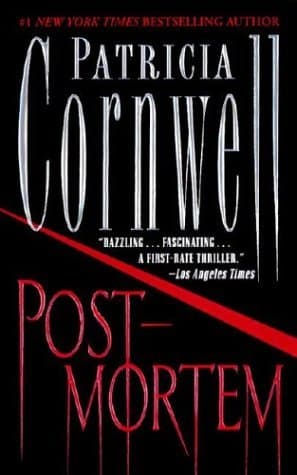
- Postmortem
Patricia Cornwell
4.0 (212k) average on GoodreadsThrillerSimilar to Cornwell's Postmortem (1990), which introduced Dr. Kay Scarpetta, The Surgeon establishes a female forensic expert/investigator as the central figure in a medical thriller. Both authors excel at integrating forensic science into their plots. However, Gerritsen's style in The Surgeon tends to be more overtly graphic and action-oriented, whereas Cornwell's early Scarpetta novels often focused more on the meticulous, internal process of forensic investigation and psychological profiling, with less direct confrontation in the initial stages.
- The Silence of the Lambs
Thomas Harris
4.2 (464k) average on GoodreadsThrillerWhile The Surgeon shares thematic elements with Harris's The Silence of the Lambs (1988) – particularly the hunt for a serial killer with a distinct modus operandi and the psychological game between investigators and criminals – Gerritsen's approach is more grounded in police procedural and medical realism. Harris's work delves deeper into the grotesque and the profoundly disturbed psyche, often elevating the villain to an almost mythic status. Gerritsen's killer, while terrifying, feels more tangible and less fantastical, and the focus remains firmly on the investigation and the protagonists' personal stakes rather than a deep dive into pure psychopathy from the killer's perspective.
- Angels & Demons
Dan Brown
3.9 (2.7M) average on GoodreadsThrillerA Harvard symbologist races through Rome's ancient sites, deciphering cryptic clues to unmask the Illuminati and stop a vengeful plot to destroy the Vatican with a stolen antimatter weapon.
- The Girl on the Train
Paula Hawkins
3.9 (2.1M) average on GoodreadsThrillerA woman’s fascination with a seemingly perfect couple she watches from her daily train commute leads her into a dark investigation when she witnesses something that shatters their idyllic image.





Enjoyed the summary?
A summary gives you the shape of the book. The book itself has the detail, the examples and the voice.
Find The Surgeon on AmazonAs an Amazon Associate, BookBrief earns from qualifying purchases. How we're funded