
Synopsis
Covers the whole plot, including the ending.
- Difficulty
- Medium
- Pacing
- Fast
- Mood
- Dark, Gripping, Gruesome, Suspenseful, Morally Challenging
- Read it if
- You enjoy dark, gritty, and morally ambiguous crime thrillers with a high body count and a focus on uncovering systemic corruption.
- Skip it if
- You are sensitive to graphic violence, disturbing themes, or prefer your protagonists to operate within clear moral boundaries.
The Teacher Plot Summary
Covers the whole plot, including the ending.
The Headteacher's Demise
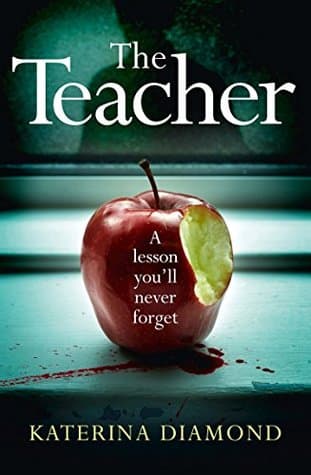
The novel begins with the discovery of Marcus Thorne, headteacher of the prestigious St. Augustine's School in Exeter, hanging from the assembly hall rafters. His death is quickly ruled a murder. Hours before his death, Thorne received a mysterious package containing an old wooden building block. This item holds a terrifying meaning only he understood, hinting at a past connection that has now reappeared. Detective Imogen Grey, haunted by personal demons and recent trauma, and her partner Adrian Miles are assigned to the case. Their initial investigation into Thorne's life uncovers a man with a carefully built public image that hides a darker reality beneath the elite school's surface.
The Second Victim and a Disturbing Pattern
Soon after Thorne's death, another victim is found: wealthy businessman and school governor, Julian Davies. Davies is discovered in a similarly gruesome manner, also with a matching wooden building block near his body. The police quickly see a pattern: both men were powerful figures connected to St. Augustine's School, and both were killed with extreme, almost ritualistic violence, with the building block as the killer's signature. Imogen and Miles realize they are dealing with a serial killer who is meticulously targeting individuals and sending a clear message. Pressure mounts on the police as Exeter is gripped by fear, and media attention grows.
Unearthing Old Secrets and Corruption
As Detectives Grey and Miles investigate further, they uncover a disturbing connection between Marcus Thorne and Julian Davies that goes back decades. Both men attended St. Augustine's as children, and their paths crossed with a third person, Christopher 'Kit' Thorne, Marcus's younger brother. The detectives begin to piece together a history of abuse, cover-ups, and exploitation involving a secret society within the school, called 'The Brotherhood,' which operated as an exclusive club. They discover that the victims were not merely successful community members, but perpetrators of horrific crimes against vulnerable children, specifically in the school's boarding facilities.
Kit Thorne's Return
The evidence eventually points to Christopher 'Kit' Thorne, Marcus's estranged younger brother, as the main suspect. Kit, who was severely abused during his time at St. Augustine's, disappeared years ago after a traumatic event. He has now returned to Exeter, meticulously planning revenge against those who wronged him and other victims. His motive is a deep desire for justice, targeting the men who carried out and covered up the abuse, using the wooden blocks as a reminder of their childhood crimes. Imogen and Miles learn that Kit is not just a killer, but a survivor, driven by an understandable, though violent, quest for retribution.
The Moral Dilemma
As Detectives Grey and Miles uncover the full extent of the horrific crimes committed by the victims, they face a moral dilemma. The men Kit Thorne is systematically murdering are revealed to be truly monstrous individuals who escaped justice for decades. Imogen, in particular, struggles with the idea of stopping a killer who is, in a twisted way, delivering justice the legal system failed to provide. The investigation becomes less about catching a murderer and more about confronting the systemic failures that allowed such atrocities to occur. Miles, while more by-the-book, also grapples with the unsettling truth, questioning the definition of 'good' and 'evil' in this complex case.
The Third Victim and Escalation
The killer strikes again, claiming the life of another prominent figure connected to St. Augustine's and 'The Brotherhood.' This third murder further confirms the pattern and the killer's resolve. Each victim's death is more elaborately staged and gruesome than the last, designed to send a clear message to the remaining conspirators and the wider community. The police are under immense pressure to apprehend Kit Thorne, but Imogen and Miles are increasingly torn. They understand Kit's pain and the righteousness of his cause, even as duty binds them to stop the killings. The public, too, begins to react with a mix of fear and a strange understanding as details of the victims' past misdeeds slowly become known.
The Betrayal and the Cover-Up
Imogen and Miles discover that the abuse and cover-up extended far beyond the immediate victims. They uncover evidence of complicity from other powerful figures in Exeter, including police officers and local government officials, who actively suppressed investigations and protected the perpetrators for years. This revelation deeply shakes Imogen, reinforcing her distrust in institutions and highlighting the pervasive corruption that allowed the 'Brotherhood' to operate unchecked. The case evolves from a simple murder investigation into a complex web of institutional failure and moral compromise, making the pursuit of Kit Thorne even more complicated.
Imogen's Personal Struggles
Throughout the investigation, Detective Imogen Grey's own traumatic past, involving a previous case and personal loss, becomes prominent. She struggles with insomnia, nightmares, and isolation, often using unhealthy coping mechanisms. The nature of the crimes committed by the victims, especially child abuse, resonates deeply with her own buried pain and sense of injustice. This personal connection makes her increasingly empathetic towards Kit Thorne's motivations, blurring the lines between right and wrong for her. Her partner, Adrian Miles, observes her struggles with concern, offering support while trying to keep her focused on their professional duties.
The Confrontation
The investigation ends in a dramatic confrontation between Detective Imogen Grey and Kit Thorne. Imogen, having pieced together Kit's hideouts and his next target, tracks him down. The encounter is tense, as Imogen tries to reason with Kit, acknowledging his pain and the monstrous acts of his victims, but also appealing to his humanity to stop the cycle of violence. Kit, driven by years of unaddressed trauma and a burning need for finality, is about to claim his last target. Imogen faces an agonizing choice: uphold the law by stopping a man who is delivering brutal, yet arguably deserved, justice, or allow him to complete his mission.
The Aftermath and Lingering Questions
The novel concludes with the immediate aftermath of Kit Thorne's rampage. While the killings stop, the profound impact of the case remains. The full extent of the abuse and cover-up is brought to light, leading to significant consequences for some of the corrupt figures in Exeter, though not all. Imogen and Miles are deeply changed by the experience, their views of justice, morality, and the law forever altered. The ending leaves some questions unanswered, particularly regarding the long-term consequences for those who enabled the abuse, and the personal toll on Imogen, suggesting that some wounds, both societal and individual, may never fully heal.
Principal Figures
DS Imogen Grey
Protagonist
A troubled detective haunted by her past, struggling with moral ambiguities.
DS Imogen Grey is a sharp, intuitive detective with a dark past. She carries the weight of a previous traumatic case and personal loss, which manifests as insomnia, nightmares, and a reliance on alcohol. Her personal struggles make her deeply empathetic to victims, but also blur her ethical lines when confronted with the 'justice' delivered by Kit Thorne. She is driven by a strong sense of right and wrong, yet questions the efficacy of the legal system when faced with systemic corruption. Her resilience is tested throughout the investigation, forcing her to confront her own demons.
Relationships: DS Adrian Miles (Detective partner, supportive colleague, and friend); Kit Thorne (Antagonist, but also a figure with whom she feels a profound, conflicted empathy)
DS Adrian Miles
Supporting
Imogen's steadfast partner, more by-the-book but increasingly challenged by the case's moral complexities.
DS Adrian Miles is Imogen's reliable and observant detective partner. He is generally more grounded and adheres strictly to police procedure, providing a contrast to Imogen's more impulsive and emotionally driven approach. However, as the investigation unravels the horrific truths of the St. Augustine's abuse, Miles also finds his own moral framework challenged. He is a loyal friend and colleague, often acting as Imogen's anchor, offering pragmatic advice and support while also expressing concern for her well-being. He represents the traditional face of justice, grappling with its limitations.
Relationships: DS Imogen Grey (Detective partner, supportive colleague, and friend)
Christopher 'Kit' Thorne
Antagonist/Vigilante
The vengeful killer, a survivor of horrific abuse, seeking brutal justice.
Christopher 'Kit' Thorne is the enigmatic and brutal serial killer, initially known only as 'The Teacher.' He is revealed to be the younger brother of the first victim, Marcus Thorne, and a survivor of severe child abuse at St. Augustine's School. Kit is intelligent, meticulous, and deeply traumatized, driven by a burning desire for retribution against those who abused him and countless others, and those who covered it up. His methods are gruesome and symbolic, reflecting the pain and injustice he suffered. He views himself not as a murderer, but as an instrument of justice, delivering what the legal system failed to provide.
Relationships: Marcus Thorne (Older brother, also a victimizer and one of Kit's targets); DS Imogen Grey (Detective pursuing him, but who also understands his motives); Julian Davies (Victimizer and one of Kit's targets)
Marcus Thorne
Victim/Antagonist (posthumous)
The headteacher whose murder initiates the investigation, revealed to be a perpetrator of abuse.
Marcus Thorne is the headteacher of St. Augustine's School, whose brutal murder opens the novel. Initially presented as a respected figure, the investigation quickly uncovers his dark past. He was not only a victimizer of children during his own time at the school but continued to be complicit in the abuse and its cover-up in his adult life. His public persona was a carefully constructed facade, hiding a monstrous reality. His death is the catalyst for Kit Thorne's revenge, and his past actions are central to understanding the killer's motives.
Relationships: Christopher 'Kit' Thorne (Younger brother and his murderer, whom he also abused); Julian Davies (Fellow perpetrator and conspirator)
Julian Davies
Victim/Antagonist (posthumous)
A wealthy businessman and school governor, the second victim, deeply involved in the abuse and cover-up.
Julian Davies is a prominent and wealthy businessman, a governor at St. Augustine's School, and the second victim of 'The Teacher.' Like Marcus Thorne, he maintained a respectable public image, but was deeply implicated in the historical child abuse at the school and its subsequent cover-up. He was a key member of 'The Brotherhood,' a secret society that facilitated the abuse. His murder reinforces the pattern of the killer's targets, further exposing the widespread corruption within the Exeter elite.
Relationships: Christopher 'Kit' Thorne (His murderer and a survivor of his abuse); Marcus Thorne (Fellow perpetrator and conspirator)
DCI Robert Miller
Supporting
Imogen and Miles's superior officer, under pressure to solve the case.
DCI Robert Miller is the senior officer overseeing the investigation into 'The Teacher.' He is under immense pressure from the media and the public to apprehend the killer quickly. Miller is pragmatic and focused on results, sometimes struggling to understand the deeper moral complexities that Imogen and Miles uncover. He represents the institutional demand for order and resolution, often at odds with the team's growing empathy for the killer's motives. He is a figure of authority who must navigate the political landscape of a high-profile case.
Relationships: DS Imogen Grey (Subordinate, whom he trusts but sometimes questions); DS Adrian Miles (Subordinate)
Dr. Sarah Miller
Mentioned/Supporting
Forensic psychologist who provides insights into the killer's psyche.
Dr. Sarah Miller is a forensic psychologist who assists the police in profiling 'The Teacher.' Her expertise helps Imogen and Miles understand the psychological motivations behind the gruesome killings and the symbolic nature of the wooden blocks. She provides an external, clinical perspective on the killer's trauma and their drive for revenge, helping the detectives to build a more complete picture of Kit Thorne's internal world and his meticulous planning. Her insights validate some of Imogen's more intuitive leaps.
Relationships: DS Imogen Grey (Professional consultant); DS Adrian Miles (Professional consultant)
The Brotherhood
Antagonist (collective)
A secret society of perpetrators and enablers of abuse at St. Augustine's School.
The Brotherhood is not a single character but a clandestine, powerful network of individuals connected to St. Augustine's School. Comprising former students, staff, and influential figures in Exeter, they were responsible for perpetrating and covering up decades of child abuse. They operated with impunity, using their wealth and influence to silence victims and evade justice. This collective entity serves as the overarching antagonist, representing systemic corruption and the abuse of power. Kit Thorne's revenge is primarily aimed at dismantling and punishing this insidious group.
Relationships: Marcus Thorne (Member); Julian Davies (Member); Christopher 'Kit' Thorne (Victim of their collective actions)
Themes & Insights
Justice vs. Vengeance
This theme is central to the novel, exploring the blurred lines between legal justice and personal retribution. Kit Thorne's actions, while horrific, are driven by a deep desire for justice that the legal system failed to provide for him and other victims of the St. Augustine's abuse. Detective Imogen Grey, in particular, grapples with this dilemma, finding herself empathetic to the killer's motives even as duty binds her to stop him. The novel forces the reader to question if the law always serves true justice, especially when institutions are corrupt and fail to protect the vulnerable. The gruesome nature of the killings highlights the intensity of the killer's need for justice.
“Once you learn what’s motivating this killer, will you truly want to stop him?”
The Corrupting Nature of Power
The novel portrays how power, especially within an elite institution like St. Augustine's School, can be used to exploit, abuse, and cover up heinous crimes. The members of 'The Brotherhood' used their influence and wealth to protect themselves, silence victims, and manipulate the legal system for decades. This theme is clear in how Marcus Thorne and Julian Davies maintained respected public appearances while committing unspeakable acts. The corruption extends beyond the immediate perpetrators, showing how societal structures and influential figures can become complicit in protecting the powerful at the expense of the vulnerable.
“Every step brings them closer to grim secrets hidden at the heart of their community.”
Trauma and Its Long-Term Impact
Trauma is a pervasive theme, explored through both the killer, Kit Thorne, and the protagonist, Detective Imogen Grey. Kit's quest for vengeance is a direct result of the profound and unaddressed trauma he suffered as a child. The novel shows how such deep psychological wounds can fester for decades, eventually resulting in extreme, violent acts. Similarly, Imogen's own struggles with past trauma, including sleeplessness and emotional detachment, illustrate the lasting effects of horrifying experiences, creating a powerful parallel between the detective and the killer. The book suggests that trauma, when ignored, has devastating consequences for individuals and society.
“He’d received a package, and only he could understand the silent message it conveyed. It meant the end.”
Institutional Failure and Moral Compromise
This theme highlights the devastating consequences when institutions, designed to protect, fail in their duty. St. Augustine's School, the police force, and parts of the wider community are all involved in either committing, enabling, or covering up the horrific child abuse. The novel exposes how a culture of silence, fear, and complicity allowed 'The Brotherhood' to operate unchecked for years. Imogen and Miles discover that the systems meant to uphold justice were compromised, leading to a crisis of faith in the established order. The plot forces characters and readers to confront the uncomfortable truth that evil can thrive when good people, or institutions, do nothing.
“You think you know who to trust? You think you know the difference between good and evil? You’re wrong...”
Plot Devices & Literary Techniques
The Wooden Building Blocks
A symbolic and macabre signature left by the killer.
The wooden building blocks serve as a potent symbol and the killer's signature. Each victim of 'The Teacher' is found with one of these old-fashioned blocks. They symbolize childhood, innocence, and the foundation of St. Augustine's School, but are twisted into a reminder of the innocence lost and the horrific abuses that occurred there. For Kit Thorne, they are a personal memento of his own childhood trauma and a direct, silent message to his victims and the police, linking the present murders to past crimes and the specific location where they transpired.
The Brotherhood
A secret society that enabled the abuse and cover-up.
The Brotherhood functions as a classic 'secret society' plot device. It is a clandestine group of powerful and influential men connected to St. Augustine's School, who were both perpetrators and enablers of child abuse. This device creates a vast, insidious network of antagonists, making the killer's targets part of a larger, systemic evil. It amplifies the stakes of the investigation beyond individual murders, transforming it into a battle against widespread corruption and institutional failure, and providing a clear, collective target for Kit Thorne's vengeance.
The Traumatized Detective
A protagonist burdened by personal demons, creating internal conflict and empathy.
DS Imogen Grey embodies the 'traumatized detective' trope. Her past experiences, including a previous traumatic case and personal loss, leave her with emotional scars that deeply affect her present. This device allows for internal conflict, as Imogen's personal pain and sense of injustice resonate with the killer's motives, blurring her moral compass. It creates empathy in the reader for her struggles and adds depth to her character, making her more than just a law enforcer, but a complex individual grappling with the nature of good and evil.
Flashbacks/Revealed History
Gradual unveiling of past events to explain present motivations.
The novel heavily relies on the gradual unveiling of past events, specifically the history of abuse at St. Augustine's School and the formation of 'The Brotherhood.' This device is crucial for explaining Kit Thorne's motivations and the victims' culpability. Instead of presenting all information upfront, the details of the decades-old crimes are revealed piecemeal through investigation and interrogation, building suspense and continuously re-contextualizing the present-day murders. This slow reveal allows the moral dilemma to intensify as the true horrors of the past come to light.
The Teacher Quotes
“The past is never really gone, is it? It just waits for the right moment to surface.”
“Sometimes the most dangerous people are the ones who seem the most ordinary.”
“Fear is a powerful motivator. It can make people do terrible things, and it can make them keep terrible secrets.”
“You can never truly know what goes on behind closed doors.”
“The truth has a way of coming out, no matter how deeply buried.”
“Grief can twist a person into something unrecognizable.”
“Every secret has a cost.”
“Justice isn't always about punishment; sometimes it's about understanding.”
“The quiet ones are often the ones you need to watch.”
“Some wounds never truly heal, they just scar over.”
“Children see more than you think, and remember even more.”
“The line between protecting someone and controlling them can be dangerously thin.”
“Even the most carefully constructed lies eventually crumble.”
Quiz
10 questions on the plot and the characters. Each answer comes with a short explanation.
Question 1
Where is the body of the head teacher initially discovered?
- In his office
- In the school library
- Hanging from the rafters in the assembly hall
- Outside the school gates
Show answer
C. Hanging from the rafters in the assembly hall The head teacher's body is found hanging from the rafters in the assembly hall, a dramatic and public discovery that sets the tone for the investigation.
Question 2
Which city is experiencing a rising count of gruesome deaths in the novel?
- Plymouth
- Bristol
- Exeter
- Torquay
Show answer
C. Exeter The story explicitly states that 'Exeter suffers a rising count of gruesome deaths,' making it the primary setting for the police investigation.
Question 3
What did the head teacher receive hours before his death that conveyed a 'silent message'?
- An anonymous letter
- A phone call
- A package
- An email
Show answer
C. A package The text mentions, 'Hours earlier he’d received a package, and only he could understand the silent message it conveyed. It meant the end.' This package is a key detail in the initial mystery.
Question 4
Which two detectives are tasked with solving the case in Exeter?
- DI Thomas and DC Miller
- DS Imogen Grey and DS Adrian Miles
- Inspector Black and Sergeant White
- DS Roberts and DS Jenkins
Show answer
B. DS Imogen Grey and DS Adrian Miles The main protagonists introduced are 'troubled DS Imogen Grey and DS Adrian Miles' who 'must solve the case and make their city safe again.'
Question 5
What kind of network do the detectives become drawn into as they investigate?
- An international espionage ring
- A network of corruption, lies and exploitation
- An underground gambling syndicate
- A child trafficking ring
Show answer
B. A network of corruption, lies and exploitation The summary states, 'But as they’re drawn into a network of corruption, lies and exploitation, every step brings them closer to grim secrets.' This highlights the central theme of the investigation.
Question 6
The description suggests that the killer's motivation is tied to what hidden aspect of the community?
- A forgotten historical treasure
- Grim secrets hidden at the heart of their community
- A deep-seated family feud
- Political power struggles
Show answer
B. Grim secrets hidden at the heart of their community The synopsis explicitly mentions, 'every step brings them closer to grim secrets hidden at the heart of their community,' implying the killer's motives are rooted in these secrets.
Question 7
What is a key characteristic used to describe DS Imogen Grey?
- Experienced
- Troubled
- Naive
- Ruthless
Show answer
B. Troubled DS Imogen Grey is specifically referred to as 'troubled DS Imogen Grey,' indicating a personal struggle or complexity to her character.
Question 8
The summary poses a significant moral dilemma for the detectives. What is it?
- Whether to reveal the killer's identity to the public
- Whether they truly want to stop the killer once they learn his motivation
- Whether to pursue the case or let it be covered up
- Whether to trust each other or work alone
Show answer
B. Whether they truly want to stop the killer once they learn his motivation The final line of the summary, 'And once they learn what’s motivating this killer, will they truly want to stop him?', highlights the central moral conflict and depth of the thriller.
Question 9
The book is described as 'Most definitely not for the faint-hearted!' What aspect of the narrative does this warning primarily refer to?
- Its complex legal jargon
- Its intellectual difficulty
- Its gruesome and dark content
- Its lengthy and detailed descriptions
Show answer
C. Its gruesome and dark content The summary uses adjectives like 'GRUESOME' and the warning 'Most definitely not for the faint-hearted!' directly implying the graphic and disturbing nature of the crimes and content.
Question 10
The setting of the initial crime (an exclusive Devon school) combined with the developing 'network of corruption, lies and exploitation' suggests a thematic focus on:
- The challenges of rural policing
- The hidden darkness within seemingly respectable institutions and communities
- The impact of budget cuts on education
- The psychological toll of teaching
Show answer
B. The hidden darkness within seemingly respectable institutions and communities The contrast between an 'exclusive school' and the discovery of 'corruption, lies and exploitation' points to a theme of uncovering the dark underbelly of seemingly perfect or respected parts of society.
The Teacher FAQ
What is the central premise of 'The Teacher'?
The novel begins with the discovery of the head teacher of an exclusive Devon school, Mr. Davies, found hanged in the assembly hall. This incident, preceded by a mysterious package he received, kicks off a series of gruesome murders in Exeter, which DS Imogen Grey and DS Adrian Miles are tasked with investigating.
Who are the main protagonists investigating the crimes?
The primary investigators are DS Imogen Grey, a troubled detective grappling with her own past, and her partner, DS Adrian Miles. Together, they navigate the dark underbelly of Exeter to uncover the truth behind the escalating body count and the head teacher's death.
What kind of crimes are Imogen and Miles dealing with?
They are investigating a series of gruesome and increasingly violent murders that appear to be linked to the initial death of Mr. Davies. The nature of the killings suggests a killer with a specific motive, targeting individuals connected to a hidden network of exploitation.
What is the significance of the package Mr. Davies received?
The package Mr. Davies received hours before his death contained a silent message that he alone understood, signaling 'the end' for him. This package acts as a catalyst, indicating that his death was not random but a targeted act linked to his past actions or involvement in the corrupt network.
How does the 'exclusive Devon school' setting contribute to the plot?
The exclusive school serves as an initial focal point for the investigation, suggesting that the corruption and exploitation have roots within seemingly respectable institutions. It highlights the facade of innocence that often conceals dark secrets within the community.
What are some of the 'grim secrets' Imogen and Miles uncover?
As the investigation progresses, they uncover a deeply entrenched network of corruption, lies, and exploitation operating within the community. These secrets involve powerful individuals and institutions, revealing a systemic abuse of power and trust.
How does DS Imogen Grey's 'troubled' nature impact her work?
Imogen's troubled past and psychological state often provide her with a unique perspective on the crimes, allowing her to empathize or understand the darker motivations at play. However, it also makes her vulnerable and sometimes clouds her judgment, adding a personal layer of complexity to the investigation.
What is the killer's primary motivation?
The killer is motivated by a desire for retribution against those involved in the network of corruption, lies, and exploitation. Their actions are driven by a profound sense of injustice, seeking to punish individuals who have seemingly escaped accountability for their horrific deeds.
Why might Imogen and Miles 'not truly want to stop' the killer?
Upon understanding the killer's motivation and the horrific nature of the crimes committed by their victims, Imogen and Miles face a moral dilemma. The killer is targeting individuals who have caused immense suffering, making their actions, though illegal, feel justified in a twisted sense, challenging the detectives' sense of justice.
How does the book explore the theme of good versus evil?
The novel directly challenges conventional notions of good and evil by presenting a killer whose victims are morally reprehensible, and whose actions, while violent, serve a form of vigilante justice. It forces readers, along with the detectives, to question where the line between right and wrong truly lies.
What role does the city of Exeter play in the story?
Exeter serves as more than just a backdrop; it becomes a character itself, with its seemingly peaceful facade concealing a dark underbelly of corruption. The rising count of gruesome deaths exposes the hidden depravity within the community, making the city a central element of the unfolding mystery.
Are there any red herrings or misleading clues in the narrative?
Yes, the narrative is crafted to mislead the reader and the detectives, initially pointing towards conventional motives or suspects. The complexity of the corruption network and the killer's carefully orchestrated plan introduce multiple false leads, keeping the true nature of the crimes obscured until later in the story.
How does the book delve into the psychology of the victims?
While the focus is often on the killer's motivation, the book also subtly explores the psychology of the victims by revealing their past actions and the extent of their involvement in the exploitation. This helps to contextualize the killer's rage and the moral ambiguity surrounding their fate.
What is the significance of the title, 'The Teacher'?
The title can be interpreted in multiple ways: it directly refers to the initial victim, the head teacher, but also metaphorically to the killer who 'teaches' their victims a brutal lesson, or even to the revelations that 'teach' Imogen and Miles about the true nature of justice and morality.
Does the book offer a clear resolution, or is it ambiguous?
The book offers a resolution to the immediate case of the murders, identifying the killer and exposing the network of corruption. However, it leaves a lingering sense of moral ambiguity regarding the nature of justice and whether the 'right' outcome was achieved, given the killer's motivations.
How does the author create suspense and tension throughout the novel?
Katerina Diamond builds suspense through a combination of gruesome descriptions, a relentless pace, and the gradual unveiling of dark secrets. The moral dilemma faced by the detectives, coupled with the increasing body count and the personal stakes for Imogen, keeps the tension high.
What makes this a 'psychological crime thriller in a class of its own'?
The book earns this description by not just focusing on solving the crime, but by deeply exploring the psychological impact on the detectives, the complex motivations of the killer, and the moral quandaries presented by vigilante justice. It challenges the reader's perceptions of morality and justice in a profound way.
Similar books
- The Cuckoo's Calling
Robert Galbraith
3.9 (482k) average on GoodreadsThrillerFeatures a detective duo uncovering dark secrets in a seemingly respectable setting.
- In the Woods
Tana French
3.8 (304k) average on GoodreadsThrillerWhile stylistically different, both "The Teacher" and French's In The Woods utilize a detective's personal connection to the crime and a dual timeline to uncover past traumas. French, however, is often lauded for her more literary approach to psychological depth and ambiguous endings. Diamond's narrative is more direct and propulsive, aiming for a clearer, albeit complex, resolution to its central mysteries. Where French might leave significant questions unanswered to emphasize the elusive nature of truth, Diamond generally provides more definitive, if shocking, answers regarding the perpetrators and cover-ups.
- Angels & Demons
Dan Brown
3.9 (2.7M) average on GoodreadsThrillerA Harvard symbologist races through Rome's ancient sites, deciphering cryptic clues to unmask the Illuminati and stop a vengeful plot to destroy the Vatican with a stolen antimatter weapon.
- Gone Girl
Gillian Flynn
4.1 (2.3M) average on GoodreadsThrillerA wife's sudden disappearance on her fifth anniversary reveals a web of lies and psychological warfare, exposing the secrets within a seemingly perfect marriage.
- The Girl on the Train
Paula Hawkins
3.9 (2.1M) average on GoodreadsThrillerA woman’s fascination with a seemingly perfect couple she watches from her daily train commute leads her into a dark investigation when she witnesses something that shatters their idyllic image.
- The Da Vinci Code
Dan Brown
3.9 (1.9M) average on GoodreadsThrillerA symbologist and a cryptologist race through European landmarks, deciphering ancient codes and uncovering a conspiracy that could rewrite the foundations of Christianity.





Enjoyed the summary?
A summary gives you the shape of the book. The book itself has the detail, the examples and the voice.
Find The Teacher on AmazonAs an Amazon Associate, BookBrief earns from qualifying purchases. How we're funded