
Synopsis
Covers the whole plot, including the ending.
- Difficulty
- Medium
- Pacing
- Variable
- Mood
- Mysterious, Suspenseful, Epic, Intriguing
- Read it if
- You enjoy complex historical thrillers with multiple timelines, ancient mysteries, and geopolitical intrigue.
- Skip it if
- You prefer straightforward narratives without extensive historical detail or a large cast of characters across different eras.
The Vault of Vishnu Plot Summary
Covers the whole plot, including the ending.
The Pallava Prince and the Sacred Scroll
In 630 CE, Pallava Prince Narasimha Varman I, heir to the Kanchipuram throne, travels to Cambodia. He carries the 'Vault of Vishnu,' a sacred palm-leaf manuscript containing ancient, powerful knowledge. This vault is a key to understanding the universe and manipulating its energies, entrusted to him by his dying father. Narasimha's mission is to safeguard this knowledge and establish his authority in the region, wary of rival kingdoms. His journey is dangerous, hinting at the immense power he now possesses and its long-term consequences, which will ripple through centuries.
Xuanzang's Quest for Buddhist Sutras
Around the same period, in Tang Dynasty China, the Buddhist monk Xuanzang begins his pilgrimage to India. His main goal is to retrieve authentic Buddhist scriptures to correct misinterpretations and enrich the faith in China. However, Xuanzang is also subtly tasked by Emperor Taizong to seek out other forms of ancient knowledge and powerful artifacts, especially those related to esoteric sciences and statecraft. His travels through treacherous terrains and encounters with various cultures are not just spiritual, but also a hidden search for a deeper understanding of the world's hidden truths, possibly linked to the secrets Narasimha Varman carries.
The Neolithic Tribe and the Sacred Site
In a remote valley near the modern-day Indo-China border, a Neolithic tribe lives in harmony with nature, preserving ancestral knowledge. They are the custodians of an ancient sacred site, a natural energy vortex, and a repository of wisdom passed down through generations. This knowledge includes an understanding of Earth's energies and unique healing practices. Their leader, an elder shaman, senses an impending shift in the world, an imbalance that threatens their way of life and the secrets they guard. The tribe's isolation is their strength, but geopolitical tensions in the region threaten to expose them to the outside world and its hunger for power.
Professor Arumugam's Decipherment
In contemporary Kanchipuram, Professor Arumugam, a brilliant but reclusive epigraphist, dedicates his life to deciphering ancient Pallava texts and cryptic inscriptions. His work, initially academic, begins to reveal astonishing insights into advanced scientific concepts and hidden historical narratives, far beyond conventional understanding. He is slowly piecing together fragments of information that point towards a powerful ancient technology or knowledge system. Unknown to him, his research has attracted the attention of powerful, shadowy organizations and intelligence agencies, who believe his findings hold the key to immense power. A team of secret agents is already monitoring his every move, ready to intervene.
Ritika's Introduction to the Covert World
Ritika Sharma, a sharp and resourceful investigator with a complex past, is pulled into a high-stakes covert operation. She is initially tasked with what seems like a routine intelligence gathering mission, but it quickly escalates. Her superiors, from a clandestine Indian intelligence unit, hint at the geopolitical implications of her assignment. Ritika's personal history, marked by a traumatic event and a quest for answers, makes her uniquely suited for navigating the moral ambiguities of this world. She is introduced to a network of individuals, some allies, some adversaries, all orbiting around the central mystery of the ancient knowledge Professor Arumugam is uncovering.
The Chase for the Vault
As Professor Arumugam gets closer to fully deciphering the ancient texts, the race to acquire his knowledge intensifies. Ritika and her team are tasked with protecting him and ensuring that the 'Vault of Vishnu' – or what remains of its secrets – does not fall into the wrong hands. They find themselves in a dangerous cat-and-mouse game with a ruthless international syndicate and other state actors, all vying for control. The stakes are global, as the ancient knowledge could tip the balance of power. Ritika uses her combat skills, deductive reasoning, and network of contacts to navigate betrayals, narrow escapes, and shocking revelations about the true nature of the ancient secrets.
Connecting the Ancient Threads
Through Professor Arumugam's discoveries and her own investigations, Ritika starts to connect the historical narratives. She realizes that the Pallava prince Narasimha Varman I's journey, Xuanzang's quest for knowledge, and the secluded Neolithic tribe's ancient wisdom are all linked. The 'Vault of Vishnu' is not just a single manuscript but a multi-faceted ancient knowledge system, fragments of which were dispersed across different cultures and time periods. The ancient texts speak of advanced scientific principles, energy manipulation, and even a form of ancient weaponry, hinting at a sophisticated civilization far predating common understanding.
The Revelation of the True Threat
Ritika unearths the true identity of the primary antagonist: a charismatic but ruthless figure with a vast network and a dangerous ideology, driven by a desire to use the ancient knowledge for global domination. This antagonist, operating under the guise of various organizations, believes they are destined to control the power contained within the Vault. Ritika learns of their elaborate plan to synthesize the ancient secrets with modern technology, creating a weapon or influence mechanism of unprecedented scale. The revelation of their true motives and the extent of their resources shows the urgency and gravity of Ritika's mission.
The Confrontation at the Sacred Site
The climax unfolds at the ancient sacred site protected by the Neolithic tribe, the convergence point of all the historical and contemporary threads. Professor Arumugam's complete decipherment reveals the site's significance as a power nexus where the ancient knowledge can be fully activated or neutralized. Ritika and her team, along with the tribe's surprising assistance, confront the antagonist and their forces. The battle is fierce, blending ancient wisdom with modern combat. Ritika must not only fight physically but also grapple with the philosophical implications of the knowledge she is protecting, facing choices that could alter humanity's future.
The Vault's Legacy and Ritika's Future
Ritika successfully thwarts the antagonist's plan, securing the 'Vault of Vishnu's' secrets. However, the ancient knowledge is too potent to be simply buried. The experience leaves Ritika changed, forcing her to confront her own past and her role in this shadowy world. The ending suggests that while the immediate threat is neutralized, the knowledge itself remains a powerful force, requiring constant vigilance. Ritika, now with a deeper understanding of humanity's history and potential, accepts her destiny as a guardian of these ancient secrets, hinting at future challenges and her continued involvement in maintaining the delicate balance of power.
The Vault of Vishnu Characters
Ritika Sharma
Protagonist
A sharp, resourceful investigator with a complex past, tasked with protecting ancient secrets.
Ritika Sharma is a highly skilled field agent, intelligent and capable in both combat and deduction. She carries the weight of a personal tragedy, which fuels her determination and gives her a unique perspective on justice and morality. Her past involves a significant loss that she is still processing, making her emotionally resilient yet vulnerable. She is initially presented as a professional operative but evolves into a guardian of profound ancient knowledge. Her drive is to prevent catastrophic misuse of power and to find meaning in her own life through her work.
Relationships: Professor Arumugam (Protector and intellectual partner); Her Superiors (Subordinate but earns their trust and respect); The Antagonist (Archnemesis)
Professor Arumugam
Supporting
A brilliant but reclusive epigraphist whose research unearths dangerous ancient knowledge.
Professor Arumugam is an elderly, dedicated scholar, living a life consumed by ancient texts and inscriptions. He is brilliant, meticulous, and somewhat oblivious to the dangers his discoveries pose. His primary motivation is the pursuit of knowledge for its own sake, driven by an insatiable curiosity about the past. He represents the academic ideal, uncorrupted by power or greed, but his discoveries thrust him into the dangerous world of espionage. He is a fount of information, providing the intellectual backbone to the mystery.
Relationships: Ritika Sharma (His protector and conduit to understanding the modern world's threats); Ancient Texts (His life's work and passion)
Narasimha Varman I
Historical Figure/Catalyst
A Pallava prince who carried the 'Vault of Vishnu' to Cambodia, initiating centuries of conflict.
Narasimha Varman I is depicted as a powerful and strategic Pallava prince in 7th century India. He is a visionary leader, entrusted with ancient, powerful knowledge. His actions are driven by a sense of duty to his kingdom and a desire to secure its future, but also by an understanding of the immense power he holds. He represents the ancient lineage of custodians of the 'Vault of Vishnu,' a figure whose decisions in the past directly influence the present-day conflict. He is portrayed with a blend of regal authority and a deep understanding of esoteric knowledge.
Relationships: His Father (Mahendra Varman I) (Recipient of sacred knowledge); The 'Vault of Vishnu' (Custodian and protector)
Xuanzang
Historical Figure/Catalyst
A Buddhist monk whose pilgrimage to India was also a quest for hidden ancient knowledge.
Xuanzang is presented as the historical Buddhist monk, renowned for his extensive travels to India. While primarily driven by spiritual devotion and the desire to bring back authentic Buddhist scriptures, he also serves a subtle, clandestine purpose for the Tang Emperor. He is intelligent, observant, and deeply spiritual, but also pragmatic and resourceful in his travels. His role highlights the cross-cultural exchange of knowledge in ancient times and the hidden agendas that often accompanied such quests. He represents the pursuit of wisdom beyond the purely religious.
Relationships: Emperor Taizong (Patron and subtle taskmaster); Buddhist Sutras (His primary pursuit)
The Antagonist (Nameless/Codename)
Antagonist
A ruthless, shadowy figure or organization seeking to control the 'Vault of Vishnu' for global power.
The antagonist is a cunning and powerful individual (or the leader of a well-organized syndicate) driven by an insatiable hunger for power and a dangerous ideological vision. They possess vast resources, a global network, and a deep understanding of both ancient history and modern technology. Their motivation stems from a belief in their own superiority and a desire to reshape the world according to their will, using the ancient knowledge as their ultimate tool. They are ruthless, manipulative, and willing to sacrifice anyone to achieve their goals.
Relationships: Ritika Sharma (Primary adversary); Professor Arumugam (Target for their knowledge); Their Henchmen/Organization (Commanding figure)
The Shaman/Elder (Neolithic Tribe)
Supporting
The wise leader of a secluded Neolithic tribe, custodian of ancient Earth energies.
The Shaman is the venerable leader of the Neolithic tribe, a deeply spiritual and knowledgeable figure. They possess an innate understanding of nature, ancient healing practices, and the Earth's energetic ley lines, passed down through generations. Their wisdom is rooted in harmony with the environment and a profound respect for ancient traditions. They are initially wary of outsiders but recognize the imminent threat to their sacred site and the world. Their role is to represent the uncorrupted, intuitive knowledge that contrasts with the technological and power-driven ambitions of the modern world.
Relationships: The Neolithic Tribe (Spiritual and temporal leader); Ritika Sharma (Unexpected ally and guide to ancient wisdom)
The Vault of Vishnu Themes
The Nature of Power and Knowledge
The novel explores how ancient knowledge, when rediscovered, becomes a potent form of power. It questions whether such power should be controlled, shared, or hidden. The 'Vault of Vishnu' represents a knowledge system capable of altering the geopolitical landscape, leading characters like Narasimha Varman I to safeguard it and the antagonist to covet it. The story highlights the tension between academic pursuit (Professor Arumugam) and the military/political exploitation of knowledge, forcing characters like Ritika to grapple with the ethical implications of power.
“Knowledge, like fire, can warm a home or burn down a city. It is the hand that wields it that defines its nature.”
The Interconnectedness of History
The narrative weaves together multiple timelines and historical figures, showing that past events and ancient secrets have lasting repercussions on the present. The actions of Narasimha Varman I in the 7th century directly influence the contemporary crisis involving Professor Arumugam's discoveries. Xuanzang's spiritual journey also plays a role in the dispersal of ancient knowledge. This theme emphasizes that history is not a series of isolated incidents but a continuous, evolving story, where echoes of ancient wisdom and conflict resonate through millennia, shaping modern geopolitics and individual destinies.
“The past is not dead; it is not even past. It is merely waiting for the right moment to reveal its enduring truth.”
Cultural Preservation vs. Global Ambition
The book contrasts the quiet, dedicated efforts to preserve ancient cultures and knowledge (like the Neolithic tribe and Professor Arumugam's academic work) with the aggressive, global ambitions of those seeking to exploit such knowledge for personal or national gain. The secluded tribe's struggle to maintain their traditions against external forces, and the antagonists' attempts to weaponize the 'Vault of Vishnu,' highlight this conflict. The theme questions the value of indigenous wisdom and cultural heritage in a world driven by technological advancement and power-hungry agendas, advocating for respectful stewardship over exploitation.
“Some secrets are meant to remain buried, not because they are forgotten, but because humanity is not yet ready for their burden.”
Destiny and Free Will
Ritika's complex past and her being drawn into the covert world suggest elements of destiny, as if she was fated to play a role in protecting the 'Vault of Vishnu.' However, her choices, sacrifices, and personal growth throughout the narrative show the importance of free will. The historical figures, too, make choices that have cascading effects. The story explores whether the ancient knowledge itself dictates a certain path for humanity, or if individuals, through their moral decisions and actions, can alter that trajectory. It is a balance between a predetermined cosmic order and human agency.
“Perhaps the universe lays out the cards, but it is we who decide how to play the hand.”
Plot Devices & Literary Techniques
The 'Vault of Vishnu'
A sacred palm-leaf manuscript containing ancient, powerful knowledge.
The 'Vault of Vishnu' serves as the central MacGuffin and the ultimate object of desire for all factions. It is not just a physical manuscript but represents a fragmented, esoteric knowledge system encompassing advanced science, philosophy, and potentially destructive power. Its contents are gradually revealed through Professor Arumugam's decipherment, creating suspense and driving the plot. It links all the disparate historical timelines and characters, acting as the nexus around which the entire narrative revolves, representing both ultimate power and ultimate danger.
Multiple Timelines/Interweaving Narratives
The story unfolds across ancient and modern eras, revealing connections.
This device involves presenting parallel narratives set in different historical periods (7th century Pallava, Tang Dynasty China, Neolithic past) that gradually converge with the contemporary storyline. It builds suspense by withholding information and then revealing how ancient events directly impact the present. This structure allows Sanghi to explore the long-term consequences of actions and the cyclical nature of history, creating a rich tapestry where each timeline provides context and depth to the others, ultimately explaining the origins and significance of the 'Vault of Vishnu'.
The Sacred Site/Energy Vortex
An ancient, geographically significant location imbued with unique energetic properties.
The sacred site, protected by the Neolithic tribe, functions as a crucial plot device by serving as the ultimate convergence point for the ancient knowledge. It is depicted as a place of immense natural energy, capable of either amplifying or neutralizing the 'Vault of Vishnu's' power. Its existence provides a tangible, physical location for the climax, and its unique properties explain why the ancient knowledge was placed there. It also symbolizes the harmonious integration of ancient wisdom with nature, contrasting sharply with the destructive intentions of the antagonist.
The Reclusive Scholar (Professor Arumugam)
A brilliant but isolated academic whose discoveries inadvertently trigger a global crisis.
Professor Arumugam embodies the classic trope of the genius scholar whose groundbreaking, purely academic work unexpectedly unearths secrets of immense practical and dangerous value. His isolation and single-minded focus make him both vulnerable and invaluable. He serves as the primary source of intellectual exposition, translating complex ancient texts for the reader and other characters. His character highlights the potential for knowledge, even when pursued innocently, to become a catalyst for global conflict, drawing the protagonist into the high-stakes world of espionage.
The Vault of Vishnu Quotes
“History is not what happened, but what is recorded.”
“The greatest truths are often hidden in the simplest of stories.”
“Sometimes, the only way to find yourself is to lose yourself completely.”
“Faith is not about believing in something you can prove, but in something you can't.”
“Power is not given, it is taken.”
“Every secret has a shelf life.”
“The past is never truly dead. It isn't even past.”
“What one generation hides, the next generation seeks.”
“The line between genius and madness is often blurred.”
“Sometimes, the greatest weapon is not a sword, but a secret.”
“Destiny is not a road we follow, but a road we pave.”
“The world is full of answers, if you only know how to ask the right questions.”
“Fear is a powerful motivator, but hope is an even stronger one.”
“Truth, like water, always finds a way to surface.”
Quiz
10 questions on the plot and the characters. Each answer comes with a short explanation.
Question 1
Which ancient Indian dynasty is associated with the Pallava prince who travels to Cambodia in the story?
- Chola Dynasty
- Gupta Dynasty
- Pallava Dynasty
- Maurya Dynasty
Show answer
C. Pallava Dynasty The book description explicitly mentions a 'Pallava prince' traveling to Cambodia, indicating his association with the Pallava Dynasty.
Question 2
What is the primary motivation for the Buddhist monk in ancient China to travel to India?
- To spread Buddhism in India
- To find missing pieces of a puzzle that could make his emperor all-powerful
- To escape political persecution in China
- To study ancient Indian scriptures
Show answer
B. To find missing pieces of a puzzle that could make his emperor all-powerful The book description states the Buddhist monk is 'searching for the missing pieces of a puzzle that could make his emperor all-powerful.'
Question 3
In which temple town is the reclusive scientist deciphering ancient texts?
- Madurai
- Kanchipuram
- Varanasi
- Rameswaram
Show answer
B. Kanchipuram The description clearly states that the scientist is in 'the temple town of Kanchipuram'.
Question 4
What is the main concern of the Neolithic tribe mentioned in the book?
- Expanding their territory
- Developing new agricultural techniques
- Preserving their sacred knowledge
- Forming alliances with other tribes
Show answer
C. Preserving their sacred knowledge The text states the Neolithic tribe 'fights to preserve their sacred knowledge,' indicating this as their primary concern amidst looming conflict.
Question 5
What is the primary role of the young investigator with a complex past?
- To assist the Buddhist monk in his quest
- To document ancient historical events
- To race against time to maintain the balance of power in the new world
- To protect the Pallava prince on his journey
Show answer
C. To race against time to maintain the balance of power in the new world The description states the investigator 'must race against time to maintain the balance of power in the new world,' highlighting her crucial role in the contemporary timeline.
Question 6
What type of conflict is the Neolithic tribe oblivious to, despite its proximity?
- A natural disaster
- War drums on the Indo-China border
- An internal tribal dispute
- A famine
Show answer
B. War drums on the Indo-China border The text mentions the Neolithic tribe is 'oblivious to the war drums on the Indo-China border,' indicating a geopolitical conflict they are unaware of.
Question 7
What is the overarching characteristic of Ashwin Sanghi's world, as described in the summary?
- A purely historical narrative with factual accounts
- A futuristic dystopian society
- Where myth and history blend into edge-of-the-seat action
- A romantic drama set in ancient times
Show answer
C. Where myth and history blend into edge-of-the-seat action The final sentence of the description explicitly states Sanghi's world is 'where myth and history blend into edge-of-the-seat action.'
Question 8
What is the primary consequence of the secrets carried by the Pallava prince to Cambodia?
- The establishment of a lasting peace between kingdoms
- The creation of a new religious sect
- The cause of great wars many centuries later
- The discovery of a new trade route
Show answer
C. The cause of great wars many centuries later The description states the Pallava prince carries 'secrets that will be the cause of great wars many centuries later,' indicating the long-term historical impact.
Question 9
What is the specific danger faced by the reclusive scientist in Kanchipuram?
- He is suffering from a terminal illness.
- He is being shadowed by a team of secret agents.
- His ancient texts are being stolen.
- He is being pressured to reveal his findings prematurely.
Show answer
B. He is being shadowed by a team of secret agents. The text explicitly states 'a team of secret agents shadows his every move,' indicating the direct threat to the scientist.
Question 10
How do the multiple timelines and seemingly disparate events (Pallava prince, Buddhist monk, Neolithic tribe, scientist, investigator) primarily connect within the novel's premise?
- They are unrelated stories meant to showcase different historical periods.
- They all contribute to a single overarching mystery or threat, influencing the 'balance of power in the new world.'
- Each timeline represents a different author's contribution to the anthology.
- The connections are purely thematic, without direct plot linkages.
Show answer
B. They all contribute to a single overarching mystery or threat, influencing the 'balance of power in the new world.' Ashwin Sanghi's novels are known for weaving together multiple historical and contemporary threads that ultimately converge to impact a present-day crisis or balance of power, as hinted by the investigator's role.
The Vault of Vishnu FAQ
What is the central conflict or mystery driving the plot of 'The Vault of Vishnu'?
The central mystery revolves around ancient secrets, specifically the 'Vault of Vishnu' and its contents, which hold immense power. This power, if deciphered and utilized, could shift global dynamics, leading various factions, from ancient emperors to modern intelligence agencies, to seek control over it.
Who are the main protagonists across the different timelines?
The main protagonists include a Pallava prince journeying to Cambodia in ancient times, a Buddhist monk from ancient China on a quest for knowledge, and a reclusive scientist in modern Kanchipuram. Additionally, a young investigator with a complex past is central to the contemporary narrative, tying the threads together.
What role does the 'Vault of Vishnu' play in the story?
The 'Vault of Vishnu' is a metaphorical and possibly literal repository of ancient knowledge and power, hinted to be capable of making an emperor all-powerful. Its secrets, carried by the Pallava prince and later sought by others, are the catalyst for centuries of conflict and the ultimate prize for various power-hungry entities.
How does the book connect ancient history with contemporary events?
The book intricately weaves together multiple timelines, showing how ancient secrets and actions, such as those of the Pallava prince and the Buddhist monk, directly influence modern geopolitical struggles. The reclusive scientist's deciphering of ancient texts in Kanchipuram directly informs the contemporary race for power, demonstrating a continuous historical thread.
What is the significance of the Indo-China border in the modern timeline?
The Indo-China border serves as a flashpoint for geopolitical tensions in the modern timeline, where a Neolithic tribe unwittingly protects ancient knowledge. The 'war drums' mentioned suggest an imminent conflict, with the ancient secrets being the underlying cause or a critical factor in the escalating modern-day power struggles between these nations.
What is the true nature of the 'secrets' carried by the Pallava prince?
The secrets carried by the Pallava prince are deeply rooted in ancient knowledge, possibly related to advanced technology or esoteric wisdom that could be weaponized or provide immense strategic advantage. These aren't just political secrets but fundamental insights that, when rediscovered, trigger widespread conflict due to their profound implications.
How does the Buddhist monk's quest for 'missing pieces of a puzzle' relate to the Pallava prince's secrets?
The Buddhist monk's quest is directly linked to the Pallava prince's secrets, as he seeks the 'missing pieces' necessary to complete a powerful understanding or device. It implies that the Pallava prince's knowledge was either fragmented or intentionally obscured, requiring a dedicated search across continents to reassemble its full potential.
What is the 'sacred knowledge' of the Neolithic tribe, and how is it connected to the larger plot?
The 'sacred knowledge' of the Neolithic tribe is likely an ancient, perhaps primal, form of the same overarching secret being pursued across all timelines. They are unknowingly safeguarding a crucial component or an original source of the power, making their remote location a critical, yet vulnerable, piece of the global puzzle.
Are the 'secret agents' shadowing the reclusive scientist working for a specific government or a more clandestine organization?
The text suggests the secret agents are part of a larger, potentially global, intelligence network, though their specific allegiance (e.g., Indian, Chinese, or a supra-national entity) is left ambiguous. Their presence highlights the high stakes involved in the scientist's work and the international race to control the ancient secrets.
How does the young investigator's 'complex past' influence her role in the story?
The young investigator's 'complex past' likely provides her with unique insights, skills, or motivations that make her uniquely suited to navigate the intricate web of ancient mysteries and modern espionage. It could involve a personal connection to the secrets, a history with the shadowy organizations, or a deeply ingrained moral compass driving her actions.
What psychological motivations drive the various characters across different eras to seek or protect this power?
Across eras, characters are driven by a mix of power (the emperor), preservation (Neolithic tribe), knowledge (Buddhist monk, scientist), and a sense of duty or justice (young investigator). These motivations reflect fundamental human desires to control destiny, understand the world, or maintain balance, showing how ancient power appeals to timeless psychological needs.
How does the author explore the psychological burden of holding immense secrets, as exemplified by the Pallava prince?
The Pallava prince, burdened with secrets that will cause centuries of war, likely experiences profound isolation, paranoia, and moral conflict. His journey to be crowned king, while carrying such a dangerous legacy, suggests an internal struggle between personal ambition and the immense responsibility of his hidden knowledge, shaping his decisions and character.
In what ways does the book delve into the psychology of power and its corrupting influence?
The book explores how the pursuit of ultimate power, whether by ancient emperors or modern nations, can corrupt individuals and institutions, leading to endless conflict. It likely examines the moral compromises made, the paranoia engendered, and the dehumanizing effects of an insatiable desire to control the 'Vault of Vishnu' and its secrets.
Is the 'Vault of Vishnu' a literal vault, a metaphorical concept, or both?
The 'Vault of Vishnu' is likely both a metaphorical concept, representing a repository of profound ancient knowledge and power, and possibly a literal, hidden location or artifact. Sanghi often blends myth and history, suggesting it could be a physical place containing tangible secrets, imbued with metaphorical significance.
How does the book's blend of 'myth and history' contribute to its themes?
The blend of myth and history suggests that ancient narratives and spiritual beliefs often contain kernels of truth or veiled scientific principles. This fusion allows the author to explore how humanity's understanding of power, spirituality, and existence has evolved, demonstrating that seemingly disparate elements are deeply interconnected across time.
What philosophical questions does the book raise about knowledge and its control?
The book raises profound questions about who should control powerful knowledge, the ethics of its discovery, and its potential for both creation and destruction. It probes whether certain truths are too dangerous for humanity, and if the pursuit of ultimate knowledge inevitably leads to conflict rather than enlightenment.
Does the book present a definitive answer to the nature of the power, or leave it open to reader interpretation?
Ashwin Sanghi's works often provide detailed explanations, but the ultimate 'nature of power' might remain partly open to interpretation, inviting readers to consider its broader implications. While the specific mechanisms might be revealed, the philosophical weight and moral dilemmas associated with such power often resonate beyond a simple solution.
What is the significance of Kanchipuram as the location for the modern scientist's work?
Kanchipuram, a historic temple town, is significant due to its deep roots in ancient Indian scholarship, spirituality, and architecture, making it a fitting place for deciphering ancient texts. Its historical context suggests a continuity of knowledge and power, linking the present-day scientific endeavor directly to the ancient legacies of the region.
About the author

Ashwin Sanghi is a critically acclaimed Indian author known for his bestselling thriller novels. His works, including "The Krishna Key," "The Rozabal Line," and "The Sialkot Saga," blend mythology, history, and suspense. Sanghi's ability to weave intricate plots with ancient Indian lore has earned him a significant readership in the Indian fiction scene and beyond.
Similar books
- The Da Vinci Code
Dan Brown
3.9 (1.9M) average on GoodreadsThrillerFeatures a blend of historical mystery, ancient secrets, and a race against time.
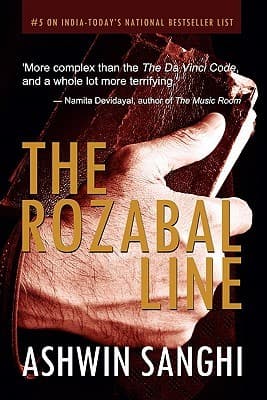
- The Rozabal Line
Ashwin Sanghi
3.3 (8k) average on GoodreadsThrillerWhile both books share Sanghi's signature style of blending history, mythology, and conspiracy, "The Vault of Vishnu" feels more ambitious in its scope, stretching across a wider array of ancient civilizations and historical figures (Pallavas, Xuanzang, Neolithic tribes vs. Jesus in Kashmir). "The Rozabal Line" is perhaps tighter in its focus, making its central mystery more digestible, whereas "The Vault of Vishnu" risks diffusion due to its numerous parallel narratives. However, both showcase Sanghi's deep research and ability to construct compelling historical thrillers.
- Nineteen Eighty-Four
George Orwell
4.2 (5.5M) average on GoodreadsFictionWinston Smith dreams of truth and rebellion in a world where Big Brother watches all, but he confronts the terrifying power of a regime that controls not just actions, but thoughts.
- The Frozen River
Ariel Lawhon
4.4 (600k) average on GoodreadsFictionIn 1789 Maine, a heroic midwife's diary helps her expose a murder and get justice in a town that wants to silence her.
- A Man Called Ove
Fredrik Backman
4.4 (569k) average on GoodreadsFictionA stubborn widower, who lives by strict rules, finds his quiet world changed by a lively new family next door, making him face his past and find happiness in human connection.
- The Art of Racing in the Rain
Garth Stein
4.2 (452k) average on GoodreadsFictionThrough the eyes of Enzo, a wise and observant dog, a race car driver's family navigates a journey of love, loss, and resilience, learning that life's most important lessons often come in the curves, not just on the straightaways.





Enjoyed the summary?
A summary gives you the shape of the book. The book itself has the detail, the examples and the voice.
Find The Vault of Vishnu on AmazonAs an Amazon Associate, BookBrief earns from qualifying purchases. How we're funded