
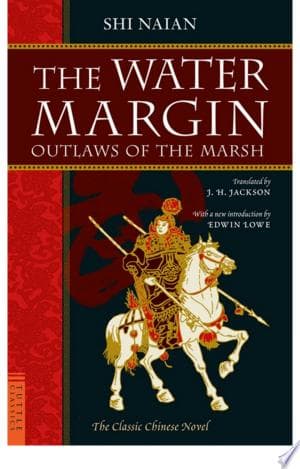
Synopsis
Covers the whole plot, including the ending.
- Difficulty
- Medium
- Pacing
- Variable
- Mood
- Epic, Rebellious, Tragic, Adventurous, Historical
- Read it if
- You enjoy epic tales of rebellion, honor among outlaws, and complex character development set against a rich historical backdrop, similar to classic adventure stories like Robin Hood.
- Skip it if
- You prefer fast-paced, concise narratives and are not interested in long, episodic stories with a large cast of characters and detailed military campaigns.
The Water Margin Plot Summary
Covers the whole plot, including the ending.
Marshal Hong Releases the 108 Demon Stars
The story starts with Marshal Hong. Emperor Renzong sends him to Dragon Tiger Mountain to get the Celestial Master to cure a plague in Kaifeng. Hong ignores warnings and opens a sealed hall, thinking a true Celestial Master is inside. Instead, he unseals a stone tablet showing the names of 108 Demon Stars. These stars fly out as light. These 108 spirits are to be reborn as human heroes who will gather at Liangshan Marsh. This event sets up the gathering of the bandit heroes who will form the Water Margin's story, connecting their future rebellion to a supernatural beginning.
Gao Qiu's Rise and Wang Jin's Escape
Gao Qiu, a former idler known for his football skills, gains favor with Emperor Huizong and quickly becomes a powerful military leader, Grand Marshal. His past dislike for Wang Jin, a martial arts instructor, returns. Gao Qiu, now in charge, seeks revenge. Wang Jin, fearing for his life and his mother's, leaves the capital. This event shows Gao Qiu as a main villain and shows the corruption and misuse of power in the Song Dynasty government, which will push many heroes to become outlaws. Wang Jin's escape also introduces the idea of injustice forcing good men into exile.
Lu Zhishen's Monastic Life and Outlawry
Lu Da, an army officer, helps a father and daughter who have been cheated and abused by the local butcher, Zheng Tu. In anger, Lu Da beats Zheng Tu to death. Forced to run, he becomes a monk at Wutai Mountain, taking the name Lu Zhishen. His loud and unusual behavior, including drinking and breaking monastic rules, leads to his expulsion. He then finds safety at Xiangguo Temple in Kaifeng but eventually must become an outlaw at Mount Twin Dragons, showing how injustice and personal honor can make people into bandits.
Lin Chong's Tragic Exile to Liangshan
Lin Chong, an Imperial Guard instructor, is targeted by Gao Qiu's adopted son, Gao Yanei, who wants Lin Chong's wife. Gao Qiu plans against Lin Chong, falsely accusing him of carrying a knife into a forbidden area and sending him to Cangzhou. Even in exile, attempts are made on his life. After finding a plot to kill him and seeing his family destroyed by Gao Qiu's men, Lin Chong, in anger, kills his attackers and eventually flees to Liangshan Marsh, becoming a leader among the outlaws. His story is a strong condemnation of official corruption and injustice.
Chao Gai's Robbery of the Birthday Gifts
Chao Gai, the headman of Dongxi Village, with six friends including Wu Yong and the Ruan brothers, plans and carries out the robbery of birthday gifts meant for the corrupt Grand Tutor Cai Jing. These gifts, valuable gold and jewels, are being moved by a group led by Yang Zhi, a former officer. Using a trick with drugged wine, Chao Gai and his men successfully take the treasure. When their involvement is found, they must flee to Liangshan Marsh, where they remove Wang Lun, the original leader, and Chao Gai becomes the new chief, making the bandit stronghold much stronger.
Song Jiang's Journey to Outlawry
Song Jiang, a county clerk known as 'Timely Rain' for his generosity, accidentally kills his mistress, Yan Poxi, after she blackmails him about a letter showing his connections to the Liangshan outlaws. He is exiled and later falsely accused by officials who fear his influence. During his exile, he meets many future Liangshan heroes and often shows his compassion and leadership. Finally, after being forced to kill a corrupt official and facing execution, he is saved by the Liangshan heroes and reluctantly joins them, becoming an important figure because of his charisma and strategic thinking.
The Gathering of the 108 Heroes
After Song Jiang arrives, more heroes, driven by injustice, poverty, or friendship, gather at Liangshan Marsh. These include warriors like Lu Junyi and Guan Sheng, strategists like Zhu Wu, and others from all walks of life — fishermen, blacksmiths, scholars, and even former imperial officers. Each hero has a story explaining why they became an outlaw, often involving corrupt officials, local tyrants, or personal revenge. The marsh becomes a strong fortress, a safe place for those wronged by the Song government, with a large army and a growing reputation.
Liangshan's Campaigns and Strategic Victories
Under Chao Gai and later Song Jiang, the Liangshan heroes repel many imperial campaigns sent to stop them. They use clever plans, knowledge of the land, and their warriors' skills to defeat larger government armies. Victories include defeating Gao Qiu's forces and capturing cities. These wins not only strengthen Liangshan's position as a fortress but also show the imperial military's weakness and the outlaws' courage, adding to their legendary status among the common people.
Song Jiang's Pursuit of Amnesty
After Chao Gai's death, Song Jiang takes full leadership of Liangshan. Despite their military successes, Song Jiang's main goal is not to overthrow the Song Dynasty but to be pardoned by the emperor and serve the state. He believes the heroes' talents should be used to defend the country. This goal causes disagreement among some of the more rebellious heroes, especially Li Kui. Song Jiang often tries to start talks with the imperial court, often through captured generals, hoping to prove the loyalty and worth of the Liangshan forces to the emperor.
The Grand Amnesty and Imperial Campaigns
Through constant efforts and help from sympathetic officials, Emperor Huizong finally pardons the Liangshan heroes. They are forgiven for their crimes and join the imperial army. Song Jiang and his brothers are then assigned to stop other rebellions, especially the forces of Fang La in the south. These campaigns are harsh and costly, leading to the deaths of many of the 108 heroes. This shows the tragic results of their return to a corrupt system and the realities of war. The heroes, despite their loyalty, are often treated with suspicion by court officials.
The Tragic End of Song Jiang and His Brothers
After stopping Fang La's rebellion, only a few of the 108 heroes remain. When they return, corrupt officials, especially Gao Qiu and Cai Jing, see the remaining Liangshan heroes as a threat and plan to remove them. Song Jiang is poisoned by imperial order, a cruel betrayal after his loyalty. Wu Yong and Hua Rong kill themselves at his grave. Li Kui drinks poisoned wine to die with Song Jiang. Other surviving heroes either die of illness, are executed, or leave official life. The story ends with most of the heroes' tragic deaths, showing the corruption of the Song court and the pointlessness of seeking justice within such a system.
Principal Figures
Song Jiang
Protagonist
The 'Timely Rain', a compassionate and chivalrous county clerk who becomes the leader of Liangshan
Song Jiang, initially a low-ranking county clerk in Yuncheng, is renowned for his generosity, chivalry, and willingness to help others, earning him the nickname 'Timely Rain.' He is a master of strategy and leadership, deeply respected by both commoners and outlaws. Despite his outlaw status, Song Jiang harbors a profound loyalty to the Song Dynasty and dreams of being granted amnesty to serve the emperor, believing the heroes' talents should be used for the state rather than against it. His moral compass often guides his actions, though he can be ruthless when necessary. His ultimate goal is to legitimize the Liangshan forces.
Relationships: Yan Poxi (Mistress, whom he kills); Chao Gai (Sworn brother and predecessor as Liangshan leader); Li Kui (Devoted follower and sworn brother); Wu Yong (Chief strategist and close confidant)
Li Kui
Supporting
'Black Whirlwind', a fierce, impulsive, and loyal warrior
Li Kui is a rough, short-tempered, and incredibly strong warrior known for his dark complexion, wild hair, and axe-wielding ferocity. He is fiercely loyal to Song Jiang, almost to a fault, and harbors a deep hatred for corrupt officials and injustice. While often crude, impulsive, and prone to violence, he possesses a simple, honest heart. He frequently acts as Song Jiang's personal bodyguard and enforcer, but his uncontrolled rage often leads to unnecessary bloodshed. His character provides a stark contrast to Song Jiang's more refined nature, representing the raw, untamed spirit of rebellion.
Relationships: Song Jiang (Devoted sworn brother and master); Zhu Tong (Initially his jailer, later a fellow outlaw)
Lu Zhishen
Supporting
'Flowery Monk', a righteous but boisterous former officer turned monk
Lu Zhishen, originally Lu Da, is a powerful and righteous army officer who, in a fit of anger, beats a corrupt butcher to death for exploiting a family. To escape justice, he becomes a Buddhist monk, adopting the name 'Flowery Monk' due to his tattoos. Despite his monastic vows, he struggles with his temper, love for wine, and his strong sense of justice, often breaking rules to help the oppressed. He is a formidable fighter, known for his directness and immense strength. His journey from officer to monk to outlaw highlights the theme of how injustice can force good men into unconventional paths.
Relationships: Lin Chong (Friend and fellow outlaw); Yang Zhi (Fellow outlaw, initially an opponent)
Lin Chong
Supporting
'Panther Head', an honorable imperial guard instructor driven to outlawry by corruption
Lin Chong is an upright and skilled martial arts instructor for the Imperial Guards, known for his spear fighting. He is a man of honor and loyalty, deeply devoted to his wife. However, his life is systematically destroyed by the machinations of Gao Qiu's adopted son, Gao Yanei, who lusts after Lin Chong's wife. Framed, exiled, and with his wife driven to suicide, Lin Chong is eventually pushed to his breaking point, killing his tormentors and seeking refuge at Liangshan Marsh. His story is one of the most poignant examples of how official corruption can turn loyal subjects into desperate outlaws.
Relationships: Gao Qiu (Arch-enemy, responsible for his suffering); Lu Zhishen (Friend and fellow outlaw)
Wu Yong
Supporting
'Profound Star', the chief strategist and military advisor of Liangshan
Wu Yong is the brilliant and cunning chief strategist of the Liangshan Marsh outlaws. A former village teacher, he is known for his intelligence, resourcefulness, and ability to devise complex plans and stratagems. He is instrumental in many of Liangshan's victories, often outwitting imperial forces through clever ruses and psychological warfare. Wu Yong is a close confidant of both Chao Gai and Song Jiang, providing invaluable advice and often tempering the impulsiveness of other heroes. He is fiercely loyal to his comrades and the cause of justice, though he is pragmatic and willing to use deception when necessary.
Relationships: Chao Gai (Close friend and co-conspirator in the birthday gifts robbery); Song Jiang (Chief strategist and trusted advisor)
Gao Qiu
Antagonist
The corrupt Grand Marshal whose personal grudges drive many heroes to outlawry
Gao Qiu is the primary antagonist of The Water Margin. Initially a street ruffian with a talent for football, he gains favor with Emperor Huizong and rapidly rises to the position of Grand Marshal, wielding immense power. He is depicted as arrogant, vindictive, and thoroughly corrupt, using his authority to settle personal scores and enrich himself. His relentless persecution of figures like Wang Jin and Lin Chong is a major catalyst for many heroes joining Liangshan. He embodies the systemic corruption and abuse of power within the imperial court that forces righteous men into rebellion.
Relationships: Wang Jin (Victim of his revenge); Lin Chong (Target of his persecution); Emperor Huizong (His patron)
Chao Gai
Supporting
'Pagoda-Bearing Heavenly King', the initial leader of Liangshan Marsh
Chao Gai is the headman of Dongxi Village and the initial leader of the Liangshan Marsh outlaws. He is a righteous and generous man, known for his martial prowess and his willingness to help the oppressed. He becomes famous for orchestrating the robbery of the birthday gifts for Grand Tutor Cai Jing. After fleeing to Liangshan, he overthrows the corrupt Wang Lun and establishes a more just and capable leadership for the bandits. He serves as a moral compass and a symbol of righteous rebellion before his death, which paves the way for Song Jiang's ascension.
Relationships: Wu Yong (Close friend and strategist); Song Jiang (Sworn brother and successor)
Lu Junyi
Supporting
'Jade Unicorn', a wealthy and skilled martial artist coerced into joining Liangshan
Lu Junyi is a wealthy and renowned martial artist from Daming Prefecture, famed for his combat skills and sophisticated demeanor. He is initially reluctant to join the outlaws, preferring his respectable life. However, he is tricked by Wu Yong and Song Jiang into visiting Liangshan and is subsequently framed by his treacherous steward, Li Gu, and his wife, who conspire to seize his property. Imprisoned and nearly executed, he is rescued by the Liangshan heroes and eventually becomes the second-in-command, despite his initial reservations about outlawry. His story further illustrates the pervasive corruption that forces even the elite into rebellion.
Relationships: Song Jiang (Leader and sworn brother); Li Gu (Treacherous steward); Yan Qing (Loyal servant and bodyguard)
Yan Qing
Supporting
'Prodigy', Lu Junyi's loyal and multi-talented servant
Yan Qing is Lu Junyi's loyal servant, renowned for his exceptional martial arts skills, wrestling prowess, musical talent, and intelligence. He is deeply devoted to his master and repeatedly attempts to warn and rescue Lu Junyi from the machinations of Li Gu and the imperial authorities. Yan Qing is also notable for his charm and diplomatic skills, which he uses to great effect, particularly in his interactions with Emperor Huizong. He is one of the few heroes who recognizes the futility of serving the corrupt court after the amnesty and wisely chooses to retire from official life, escaping the tragic fate of many of his comrades.
Relationships: Lu Junyi (Loyal servant and bodyguard); Li Shishi (Courtesan and imperial confidante, whom he charms)
Themes & Insights
Justice and Injustice
This theme is central to 'The Water Margin,' as almost all 108 heroes become outlaws because of injustice from corrupt officials, greedy landlords, or local tyrants. Characters like Lin Chong are persecuted by Gao Qiu, while Lu Zhishen must flee after killing a predatory butcher. Liangshan Marsh becomes a safe place where a rough justice is given, often through violent revenge, a contrast to the corrupt imperial court. The heroes' fight for justice, even outside the law, forms the moral center of their rebellion.
“'In the world, there are many upright men, but few high officials.'”
Loyalty and Brotherhood
Loyalty is a main value among the Liangshan heroes, forming the base of their community. The idea of 'brotherhood' (yìqì) connects them, despite social status and past conflicts. Song Jiang's ability to inspire loyalty, especially from figures like Li Kui, is key to his leadership. The heroes often risk their lives to save imprisoned friends, showing strong commitment. However, this loyalty is often compared with the betrayal in the imperial court, showing the moral strength of the outlaws' code.
“'Though we are not born on the same day, we wish to die on the same day.'”
Corruption of Power
The widespread corruption in the Song Dynasty government is the main reason for the entire story. Figures like Grand Marshal Gao Qiu and Grand Tutor Cai Jing show official wrongdoing, using their positions for personal gain, revenge, and oppressing the innocent. This corruption goes from the top levels of government down to local judges and jailers. The novel consistently shows the imperial court as wasteful, unfit, and unaware of the common people's suffering, justifying the heroes' rebellion and their fight against a broken system.
“'The court is filled with treacherous ministers and sycophants, while loyal and good men are suppressed.'”
The Nature of Heroism
The Water Margin explores what heroism means. The Liangshan heroes are not perfect; many are violent, impulsive, and do things that could be seen as criminal. However, their heroism is defined by their willingness to stand against injustice, protect the weak, and follow a code of honor and brotherhood when the official system fails. Characters like Lu Zhishen and Lin Chong show that true heroism can come from unexpected places and often means breaking usual rules. The novel asks the reader to consider who truly represents 'good' and 'evil' in a morally unclear world.
“'When the road is uneven, someone must step forward to make it smooth.'”
Fate and Destiny
The novel begins with the release of the 108 Demon Stars, directly linking the heroes' existence and their gathering at Liangshan to a set celestial plan. This supernatural part suggests their rebellion is not just a human uprising but a cosmic event. Many characters have prophetic dreams or meet mystical figures who predict their future. This theme of fate often shows the inevitability of their actions and their tragic end, despite their individual choices, suggesting a large, overall plan beyond human control.
“'The 108 stars, having descended to earth, are destined to gather at Liangshan.'”
Plot Devices & Literary Techniques
The 108 Demon Stars
A supernatural origin for the heroes, linking them to celestial destiny
This is a foundational mythical element where Marshal Hong accidentally releases 108 powerful spirits (36 Heavenly Spirits and 72 Earthly Fiends) from a sealed hall on Dragon Tiger Mountain. These spirits are destined to be reborn as the heroes of Liangshan Marsh. This device imbues the heroes' gathering and their rebellion with a sense of cosmic inevitability and divine sanction, suggesting their actions are part of a larger, predetermined plan. It elevates the narrative beyond a simple bandit story, giving it an epic, mythological scope and providing a supernatural justification for their extraordinary abilities and eventual unity.
The Stone Tablet of Heavenly Books
A prophetic artifact revealing the heroes' celestial names and ranks
After Song Jiang becomes the leader of Liangshan, a stone tablet is unearthed, revealing the celestial names of all 108 heroes and their precise ranks within the brotherhood. This device serves several crucial functions: it solidifies the concept of destiny, legitimizes Song Jiang's leadership by indicating a divine order, and provides a clear hierarchy for the vast number of characters. It marks a turning point, symbolizing the official formation of the Liangshan brotherhood and their recognition as a collective force, not just disparate individuals. It also foreshadows their collective fate, as their names are now inscribed for posterity.
The 'Timely Rain' (及时雨, Jíshíyǔ)
A recurring epithet symbolizing Song Jiang's generosity and leadership
This epithet, meaning 'Timely Rain,' is applied to Song Jiang and functions as a powerful symbol of his character and influence. In agrarian China, timely rain is essential for life and prosperity. By associating Song Jiang with this, the novel highlights his benevolence, his willingness to help those in need, and his ability to bring relief and hope to the suffering. It underscores his moral authority and charisma, which attract many heroes to his cause. The epithet is not just a nickname but a narrative device that reinforces his reputation as a benevolent leader, contrasting him with the oppressive imperial government.
The Amnesty Motif
A recurring plot point driving the narrative towards reintegration into the state
The pursuit and eventual granting of amnesty by the imperial court is a central and recurring motif, particularly for Song Jiang. It represents the heroes' desire to legitimize themselves and serve the state rather than remain outlaws. This motif creates significant internal conflict within Liangshan, as some heroes prefer continued rebellion. It also serves as a tragic irony, as the amnesty ultimately leads to the demise of many heroes in imperial campaigns and through betrayal, highlighting the pervasive corruption of the court and the futility of their aspirations for honorable service within a flawed system.
The Water Margin Quotes
“When a man meets his master, he's like a dragon meeting the clouds.”
“To rob the rich and help the poor is the way of a true hero.”
“Where there are people, there are factions.”
“A man's worth is not in his clothes, but in his heart.”
“Better to die standing than live kneeling.”
“The tiger's strength is in its roar, but the snake's power is in its venom.”
“Heaven has its way, and earth has its will. Man's will is but a flicker between the two.”
“One loyal heart can move mountains.”
“Even the mightiest tree can be felled by a single axe blow.”
“When the wine is good, friends gather; when the cause is just, heroes unite.”
“A true hero does not fear death, but fears living without honor.”
“The world is a chessboard, and we are but pieces upon it.”
“Though a dragon may fall into a shallow pond, it will still rise to the clouds.”
Quiz
10 questions on the plot and the characters. Each answer comes with a short explanation.
Question 1
Which historical figure is 'The Water Margin' primarily based upon?
- Cao Cao
- Song Jiang
- Zhuge Liang
- Qin Shi Huang
Show answer
B. Song Jiang 'The Water Margin' is based on the historical bandit Song Jiang and his companions, who led a rebellion during the Song Dynasty.
Question 2
What is the primary theme of 'The Water Margin' as described in the introduction?
- The pursuit of eternal life
- Rebellion against tyranny
- The importance of filial piety
- The rise and fall of dynasties
Show answer
B. Rebellion against tyranny The introduction explicitly states that the book is an 'epic tale of rebellion against tyranny,' which is a central driving force for the characters.
Question 3
Who provided the new preface and introduction for the updated J. H. Jackson translation?
- Pearl S. Buck
- Shi Naian
- Edwin Lowe
- J. H. Jackson himself
Show answer
C. Edwin Lowe The description states that 'this edition of the classic J. H. Jackson translation features a new preface and introduction by Edwin Lowe.'
Question 4
What was the title of Pearl S. Buck's 1933 English translation of 'Shuihui Zhuan'?
- The Water Margin
- Bandits of Liangshan
- All Men Are Brothers
- Outlaws of the Marsh
Show answer
C. All Men Are Brothers Pearl S. Buck's first English translation in 1933 was titled 'All Men Are Brothers.' 'The Water Margin' was the title of J.H. Jackson's 1937 translation.
Question 5
Which aspects of the original Chinese version were 'sanitized out' of the first 1937 J.H. Jackson translation but restored in the updated edition?
- Descriptions of landscapes and poetry
- Sexual seduction, explicit brutality, and profane language
- Detailed battle strategies and military tactics
- The names of various Chinese provinces and cities
Show answer
B. Sexual seduction, explicit brutality, and profane language The updated edition 'replaces the original grit and flavor of Shuihui Zhuan... including the sexual seduction, explicit descriptions of brutality and barbarity, and the profane voices of the thieving, scheming, drinking, fighting, pimping lower classes.' These elements were sanitized out of the 1937 version.
Question 6
The character Ximen Qing is specifically mentioned as having what characteristic that was sanitized in earlier translations?
- His intellectual prowess
- His unwavering loyalty
- His lecherous, over-sexed nature
- His skill in martial arts
Show answer
C. His lecherous, over-sexed nature The text states that 'the lecherous, over-sexed and ill-fated Ximen Qing' has reclaimed his true name and characteristics, implying this was an aspect sanitized in earlier versions.
Question 7
In what year did the original J.H. Jackson translation, titled 'The Water Margin,' first appear?
- 1933
- 1937
- 1949
- 2000
Show answer
B. 1937 The description specifies: 'the original edition of the J.H. Jackson translation appeared under the title The Water Margin in 1937.'
Question 8
What is the English classic that 'The Water Margin' is compared to in the description?
- King Arthur and the Knights of the Round Table
- Beowulf
- Robin Hood and His Merry Men
- Canterbury Tales
Show answer
C. Robin Hood and His Merry Men The book is described as 'this Chinese equivalent of the English classic Robin Hood and His Merry Men,' highlighting its similar theme of outlaws fighting injustice.
Question 9
The updated edition of 'The Water Margin' specifically mentions the restoration of true names for which group of entities?
- Provinces and cities
- Historical emperors and officials
- Chinese deities, Bodhisattvas, gods and demons
- Martial arts schools and techniques
Show answer
C. Chinese deities, Bodhisattvas, gods and demons The text states that 'the Chinese deities, Bodhisattvas, gods and demons have reclaimed their true names,' which were also sanitized in earlier versions.
Question 10
Despite its Chinese origin, what characteristic of 'The Water Margin' is cited as a reason for its continued inspiration in modern media?
- Its unique historical setting
- Its complex poetic structure
- Its universal themes
- Its focus on specific ancient Chinese philosophies
Show answer
C. Its universal themes The description notes: 'While Chinese in origin, the themes of The Water Margin are universal enough that it has served as a source of inspiration for numerous movies, television shows and video games.'
The Water Margin FAQ
What is "The Water Margin" about?
"The Water Margin" is an epic Chinese novel about 108 outlaws who gather at Mount Liang (Liangshan Marsh) during the Song Dynasty to rebel against corrupt officials and tyrannical rule. Led by the historical bandit Song Jiang, they form a formidable force, embodying a code of brotherhood and justice, often redistributing wealth and punishing the wicked.
Why should I read "The Water Margin"?
You should read "The Water Margin" for its thrilling tales of rebellion, its exploration of justice and morality, and its vibrant cast of 108 unique heroes, each with distinct skills and backstories. It offers a fascinating glimpse into Song Dynasty China, showcasing themes of loyalty, betrayal, and the struggle against systemic corruption that remain universally relevant.
What is the background/setting of "The Water Margin"?
The story is set during the Northern Song Dynasty in China, specifically during a period of widespread corruption and inefficiency within the imperial court. The outlaws gather in the remote Liangshan Marsh, a natural stronghold that provides them refuge and a base for their operations against corrupt officials and local tyrants.
What are the most memorable quotes?
While specific verbatim quotes are extensive in such a long epic, the spirit of "The Water Margin" is often captured in phrases emphasizing brotherhood, loyalty, and the pursuit of justice, such as 'All men are brothers' (the title of Pearl S. Buck's translation) and sentiments like 'Heaven's Way is clear, the wicked will be punished,' reflecting the outlaws' moral code.
What writing style does the author use?
Shi Naian employs a robust and often gritty narrative style, rich in detail and characterization. The J.H. Jackson translation, especially in its updated edition by Edwin Lowe, restores the original flavor, including explicit descriptions of violence, sexual seduction, and the profane voices of the lower classes, providing a vivid and unvarnished portrayal of Song Dynasty life.
What minor details add significant meaning?
The specific weapons and fighting styles of each of the 108 heroes, like Wu Song's tiger-slaying prowess or Lu Zhishen's monk's spade, are not just action details but define their character and contribute to their legendary status. Even the detailed descriptions of feasts and drinking bouts underscore the camaraderie and the 'outlaw' lifestyle.
What are some subtle foreshadowing moments?
The initial gathering of the 108 'Stars of Destiny' is subtly foreshadowed by the opening legend of the release of the demonic spirits, implying a preordained fate for these heroes. Also, early acts of betrayal or moral compromise by certain characters often hint at their eventual downfall or the challenges the group will face.
What unexpected character connections exist?
Beyond the immediate brotherhood at Liangshan, many characters have complex pasts that intertwine, such as Lin Chong's tragic history with corrupt officials leading him to Liangshan, which then connects him to other outlaws who suffered similar injustices. The network of grievances and injustices often links seemingly disparate characters before they even meet.
What are unspoken character motivations?
While many characters explicitly state their desire for justice, an unspoken motivation for some, like Song Jiang, might be the yearning for imperial recognition and a return to legitimate service, even amidst their rebellion. For others, it's sheer survival and a desperate need for a place where their skills are valued, rather than purely ideological rebellion.
What psychological complexities do characters exhibit?
Characters like Song Jiang grapple with the conflict between loyalty to the emperor and loyalty to his sworn brothers, often displaying internal turmoil. Wu Song, despite his strength, is tormented by personal vengeance, while Lu Zhishen, the 'Flowery Monk,' struggles with his monastic vows versus his violent nature and desire for justice, showcasing deep moral ambiguities.
What are the major emotional turning points?
Major emotional turning points include characters' initial acts of rebellion against injustice (e.g., Lin Chong's flight after being framed), the heartfelt oaths of brotherhood at Liangshan, and the tragic betrayals or deaths of beloved comrades that galvanize the remaining outlaws. Song Jiang's decision to accept amnesty is also a significant emotional shift for the entire group.
How do relationship dynamics evolve?
Relationships evolve from individual acts of vengeance or desperation into a powerful collective brotherhood based on mutual respect and shared ideals. However, these dynamics are tested by internal disagreements, the pressures of war, and the ultimate decision to seek amnesty, leading to fractures and betrayals as individual aspirations clash with collective loyalty.
Which parts remain ambiguous or open-ended?
The true extent of the imperial court's corruption and the possibility of genuine reform remain somewhat ambiguous, as the outlaws' efforts often lead to temporary successes rather than systemic change. Also, the ultimate fate and motivations of some characters who disperse after the amnesty are left open to interpretation, leaving readers to ponder their long-term impact.
What are controversial scenes or decisions?
Controversial elements include the explicit brutality and barbarity depicted, such as cannibalism or gruesome killings, which challenge modern sensibilities. Song Jiang's repeated insistence on seeking imperial amnesty, even after numerous betrayals and losses, is a highly debated decision among readers and within the narrative itself, questioning the outlaws' ultimate purpose.
"The Water Margin" ending explained: how it ends & what it means
The novel typically ends with the Liangshan outlaws accepting imperial amnesty and being sent to fight other rebels on behalf of the Song court. This decision, championed by Song Jiang, leads to heavy losses and the eventual dispersal or tragic deaths of many heroes, often at the hands of the very court they sought to serve. It's a poignant and tragic ending, suggesting the futility of seeking justice within a corrupt system and the ultimate cost of compromise.
About the author

Shi Nai'an was a Chinese writer from the Yuan and early Ming periods. Shuihu zhuan, one of the Four Great Classical Novels of Chinese literature, is traditionally attributed to him. There are few reliable sources for his biography, much less his literary activity.
Similar books
- Journey to the West
Wu Cheng'en
4.3 (1k) average on GoodreadsFantasyBoth are fantastical adventure narratives, but 'The Water Margin' is largely grounded in historical and social realism, depicting human rebellion and political corruption. 'Journey to the West,' in contrast, is a high fantasy epic featuring gods, demons, and supernatural powers, focused on a spiritual pilgrimage. While both feature a diverse group of protagonists on a quest, the motivations and challenges faced by the characters in 'Water Margin' are rooted in earthly concerns of justice and survival, whereas those in 'Journey to the West' are primarily spiritual and mythological. 'Journey to the West' often employs more overt allegorical elements.
- Nineteen Eighty-Four
George Orwell
4.2 (5.5M) average on GoodreadsFictionWinston Smith dreams of truth and rebellion in a world where Big Brother watches all, but he confronts the terrifying power of a regime that controls not just actions, but thoughts.
- The Frozen River
Ariel Lawhon
4.4 (600k) average on GoodreadsFictionIn 1789 Maine, a heroic midwife's diary helps her expose a murder and get justice in a town that wants to silence her.
- A Man Called Ove
Fredrik Backman
4.4 (569k) average on GoodreadsFictionA stubborn widower, who lives by strict rules, finds his quiet world changed by a lively new family next door, making him face his past and find happiness in human connection.
- The Art of Racing in the Rain
Garth Stein
4.2 (452k) average on GoodreadsFictionThrough the eyes of Enzo, a wise and observant dog, a race car driver's family navigates a journey of love, loss, and resilience, learning that life's most important lessons often come in the curves, not just on the straightaways.
- The Colour of Magic
Terry Pratchett
4.0 (425k) average on GoodreadsFictionOn a discworld hurtling through space on the back of a giant turtle, an inept wizard and his naive, walking-luggage-toting tourist embark on a chaotic, belief-fueled journey to the very edge of their flat planet, encountering dragons that only exist if you believe in them.





Enjoyed the summary?
A summary gives you the shape of the book. The book itself has the detail, the examples and the voice.
Find The Water Margin on AmazonAs an Amazon Associate, BookBrief earns from qualifying purchases. How we're funded