
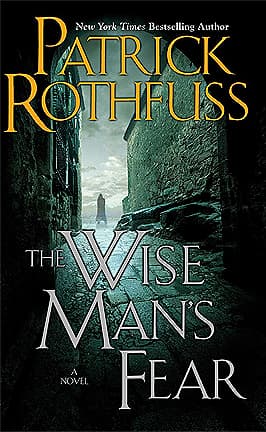
Synopsis
Covers the whole plot, including the ending.
- Difficulty
- Medium
- Pacing
- Variable
- Mood
- Epic, Adventurous, Romantic, Mysterious, Philosophical
- Read it if
- You love richly detailed world-building, a charismatic protagonist, and a story that blends adventure, magic, and courtly intrigue with a deep dive into character development.
- Skip it if
- You prefer fast-paced plots with immediate gratification, or dislike long, descriptive prose and a story that is part of an unfinished series.
The Wise Man's Fear Plot Summary
Covers the whole plot, including the ending.
A Dangerous Rivalry and Departure
Kvothe's continuing conflict with Ambrose Jakis becomes intense when Ambrose tries to falsely accuse him. Though Kvothe clears his name, the political maneuvering and Ambrose's family power make his position at the University uncertain. To avoid more trouble and follow a lead on the Amyr, Kvothe accepts an offer of support from Maer Alveron, a powerful nobleman in Vintas, and leaves the University. This marks a significant change in his life, taking him from academics to the complex, often dangerous, world of high society and politics.
Life at the Maer's Court
In Vintas, Kvothe quickly finds himself in the complex world of court etiquette and political schemes at Maer Alveron's estate. He struggles at first with the unspoken rules but gradually learns to adapt, even impressing the Maer with his cleverness and skills. He becomes a trusted advisor, helping the Maer with money matters and even discovering a plot to poison him. During this time, Kvothe develops a strong attraction to Lady Meluan Lackless, the Maer's intended bride and a noblewoman connected to the Chandrian through her family name. Their developing romance is complicated by her strong prejudice against the Edema Ruh, Kvothe's people.
Hunting Bandits in the Eld
The Maer gives Kvothe a important mission: to lead a group of mercenaries into the Eld, a dangerous wilderness, to hunt down bandits who have been attacking travelers on the King's Road. Kvothe, despite his lack of military experience, proves to be a surprisingly good leader, earning the respect of his tough companions, including Tempi. During this trip, Kvothe meets Felurian, a legendary fae creature, though he does not know it at the time. He also continues his personal search for information about the Amyr and the Chandrian, hoping the bandits might offer some clues.
Encounter with Felurian
While tracking the bandits in the Eld, Kvothe accidentally enters the Fae realm and meets Felurian, a legendary faerie woman known for seducing mortals and never letting them leave. He is captivated by her beauty and power, spending an unknown amount of time with her. Felurian teaches him deep secrets about shaping and naming, and he learns to speak her language, Faen. Against all odds, Kvothe manages to escape her, the first mortal to ever do so, and even receives a magical cloak from her before returning to the mortal world, changed by the experience.
Training with the Adem
After returning from the Fae, Kvothe travels with Tempi to Ademre, the home of the legendary Adem mercenaries. There, he undergoes strict training to learn the Ketan, their silent martial art, and the Lethani, their complex philosophy of action and intention. He struggles at first with their culture and silent communication but eventually earns their respect and a sword, Saicere, which he renames Caesura. This period of intense physical and mental discipline changes Kvothe, teaching him control, patience, and a new understanding of himself and the world.
Return to the Maer and Marriage
Returning from Ademre, Kvothe rejoins the Maer's service. He successfully leads the mercenaries to defeat the remaining bandits, revealing their leader to be a former arcanist named Cinder, a member of the Chandrian. This meeting gives Kvothe a direct, though brief, confrontation with his parents' killers. He also plays an important part in securing Lady Meluan's marriage to the Maer, despite her initial hesitation due to Kvothe's Ruh background. His actions earn him wealth, a title, and the Maer's lasting trust, but also make him a target for future political plots.
The University's Shadow
Back at the University, Kvothe's reputation has spread. He is now a legendary figure, both admired and feared, which complicates his life. His relationship with Denna suffers due to his growing fame and his inability to be honest about his experiences. His studies are also affected, as he finds himself increasingly distracted by his reputation and the political consequences from his time in Vintas. The University, once a safe place, now feels like another stage where he must perform, and his increasing control over Naming and Sympathy also attracts unwanted attention.
The Nature of Denna's Patron
Throughout his travels and back at the University, Kvothe continues to see Denna, their relationship a complex dance of affection, misunderstanding, and unspoken desires. He becomes increasingly worried about her mysterious patron, 'Master Ash' or 'Cinder,' whom Denna describes as charming but also demanding and controlling. Kvothe suspects the patron is connected to the Chandrian, especially after his meeting with Cinder in the Eld, and fears for Denna's safety. This unresolved mystery creates significant tension and distrust between Kvothe and Denna, hindering their potential romance.
Deepening Mysteries
Kvothe's time in Vintas and Ademre gives him more pieces of information about the Amyr and Chandrian. He learns about the Cthaeh, a prophetic, evil creature in the Fae, and the true nature of Cinder as one of the Chandrian. The Adem's stories and the Maer's historical records offer glimpses into ancient conflicts and the reasons of these elusive groups. However, each piece of the puzzle only seems to show how vast the mystery is, and the true nature of the Amyr, their purpose, and their connection to the Chandrian remain mostly hidden, leaving Kvothe with more questions than answers.
The Weight of a Legend
As Kvothe's adventures happen, stories about him spread quickly across the Four Corners. He becomes 'Kvothe the Arcane,' 'Kvothe the Bloodless,' and 'Kvothe the Kingkiller.' He finds himself less and less able to control the stories about him, and the gap between the man and the legend grows. This creates both opportunities and significant burdens, affecting his relationships, his studies, and his mental state. The book explores the dangers of fame and how a man can become trapped by the stories people tell about him, hinting at the tragic future of Kote, the innkeeper.
Principal Figures
Kvothe
Protagonist
A gifted arcanist, musician, and adventurer seeking the truth about the Chandrian.
Kvothe is a brilliant, quick-witted, and charismatic young man with an insatiable curiosity and a burning desire for knowledge, particularly concerning the Chandrian and Amyr. He is a skilled musician, a powerful arcanist, and surprisingly adept at combat and leadership despite his academic background. Beneath his bravado lies a deep sense of loyalty and a vulnerability, especially concerning Denna and the memory of his family. He is driven by a quest for revenge and understanding, which often leads him into dangerous situations. His struggle with his growing legend is a central conflict.
Relationships: Denna (Complicated romantic interest and muse, often estranged by circumstance and secrets.); Maer Alveron (Patron and benefactor, a powerful nobleman Kvothe serves and advises.); Tempi (Adem warrior and mentor, teaches Kvothe the Ketan and Lethani.); Felurian (Powerful faerie who seduces and teaches Kvothe in the Fae realm.); Ambrose Jakis (Bitter rival at the University, a wealthy and vindictive nobleman.)
Denna
Supporting
Kvothe's enigmatic muse and love interest, caught in a mysterious web.
Denna is a beautiful, intelligent, and independent woman with a talent for music and a captivating charm. She is fiercely independent and often elusive, traveling frequently and maintaining a mysterious life. While she clearly cares for Kvothe, she also keeps secrets, particularly concerning her enigmatic patron, Master Ash. Her desire for freedom and her inability to fully trust or commit create a constant push-pull dynamic in her relationship with Kvothe. She is often seen as a catalyst for Kvothe's actions and a reflection of his own hidden desires.
Relationships: Kvothe (Complicated romantic interest and muse, often estranged by circumstance and secrets.); Master Ash/Cinder (Her mysterious and manipulative patron, whose true identity Kvothe suspects.)
Maer Alveron
Supporting
A powerful Vintish nobleman who becomes Kvothe's patron.
The Maer Alveron is a shrewd, influential, and generally honorable nobleman in Vintas, suffering from a chronic illness. He is a discerning judge of character, recognizing Kvothe's talents despite his humble origins and unconventional ways. He offers Kvothe patronage and tasks him with significant responsibilities, viewing him as a valuable asset. The Maer is deeply involved in Vintish politics and is determined to secure his legacy and power. He is a complex figure, capable of both generosity and ruthlessness in pursuit of his goals.
Relationships: Kvothe (Patron and benefactor, he entrusts Kvothe with important tasks and values his counsel.); Lady Meluan Lackless (His betrothed, whose marriage Kvothe helps secure.)
Tempi
Supporting
An Adem warrior who becomes Kvothe's martial arts instructor and friend.
Tempi is a stoic, disciplined, and initially bewildered Adem warrior who serves in the Maer's mercenary company. He becomes Kvothe's primary instructor in the Ketan and the Lethani during their time in Ademre. Despite the language barrier and cultural differences, Tempi develops a deep respect and affection for Kvothe, recognizing his potential and unique spirit. He embodies the Adem ideals of silent action and precise intention, offering Kvothe a stark contrast to his own more expressive nature. His patience and dedication are crucial to Kvothe's training.
Relationships: Kvothe (Martial arts instructor and friend, guiding Kvothe through Adem culture and combat.)
Felurian
Supporting
A powerful and ancient faerie creature who seduces mortals.
Felurian is an ancient and immensely powerful faerie, a creature of pure desire and beauty who resides in the Fae realm. She is legendary for luring mortal men into her embrace, from which none have ever returned, retaining their sanity or life. She is a shapeshifter, embodying ultimate sensuality and primal magic. Despite her dangerous nature, she is also a teacher, imparting deep knowledge of shaping and naming to Kvothe during their time together. Her existence highlights the thin veil between the mortal and fae worlds and the profound dangers and rewards of crossing it.
Relationships: Kvothe (Seducer and teacher, she takes Kvothe as her lover and imparts ancient knowledge.)
Cinder (Master Ash)
Antagonist
A member of the Chandrian and Denna's manipulative patron.
Cinder is one of the seven Chandrian, a mysterious and ancient group responsible for the death of Kvothe's parents. He is characterized by his cold, cruel demeanor and his silver hair. He appears as the leader of the bandits Kvothe hunts in the Eld, demonstrating a chilling command and a casual brutality. He is also revealed to be Master Ash, Denna's patron, a connection that deeply disturbs Kvothe. Cinder embodies a subtle, insidious evil, manipulating situations from the shadows while possessing immense, ancient power, making him a formidable and personal foe for Kvothe.
Relationships: Kvothe (Personal nemesis, responsible for Kvothe's parents' death and a recurring threat.); Denna (Her mysterious and manipulative patron, 'Master Ash'.)
Lady Meluan Lackless
Supporting
A Vintish noblewoman, the Maer's intended, and a relative of the Lackless family.
Lady Meluan Lackless is a high-born Vintish noblewoman, beautiful and initially reserved, who becomes the Maer's betrothed. She carries a deep-seated prejudice against the Edema Ruh, viewing them as little more than thieves and vagabonds, a sentiment that creates tension with Kvothe. Her family, the Lacklesses, is ancient and holds secrets connected to the Chandrian and the old world. Despite her initial coldness, she is capable of warmth and respect, particularly after Kvothe's actions benefit her and the Maer. Her character highlights the societal biases Kvothe constantly faces.
Relationships: Maer Alveron (Her betrothed and eventual husband.); Kvothe (Initially prejudiced against him due to his Ruh heritage, later indebted to him.)
Bast
Supporting
Kvothe's fae assistant and student, listening to his master's story.
Bast is Kvothe's devoted fae assistant, apprentice, and companion in the present-day narrative. He is charming, mischievous, and fiercely loyal to Kvothe (Kote), often concerned with his master's melancholy and faded glory. As a fae, he possesses a different moral compass and understanding of the world, often encouraging Kvothe to reclaim his old self. He serves as a crucial audience for Kvothe's story, interjecting with questions and comments that provide insight into Kvothe's character and the world. Bast represents the lingering magic and danger that still surrounds Kvothe.
Relationships: Kvothe/Kote (Loyal apprentice, friend, and fae servant.)
Themes & Insights
The Weight of Legend and Storytelling
This theme explores how stories shape what people believe and what is real, and the difficulty of living up to a legendary reputation. Kvothe actively creates his story, but also finds himself caught by the tales others tell about him, often exaggerating or misrepresenting his actions. His time in Vintas and Ademre sees his legend spread quickly, forcing him to face the difference between his true self and the 'Kvothe the Arcane' that people imagine. This hints at his current identity as Kote, an innkeeper trying to escape his past.
“There are three things all wise men fear: the sea in storm, a night with no moon, and the anger of a gentle man.”
Identity and Self-Discovery
Kvothe's journey is one of continuous self-discovery, as he learns about his own abilities, limits, and the true nature of the world. His time with Felurian teaches him about shaping and the deeper magic of naming, while his training with the Adem forces him to confront his impulsiveness and learn discipline. He constantly struggles with his Edema Ruh background versus his intellectual pursuits at the University and his noble role in Vintas. Each experience changes who he is, revealing parts of his complex identity and the potential for both greatness and destruction within him.
“It’s like trying to catch a fish in the air. Or like trying to teach a pig to sing. It’s hard to make a thing go where it doesn’t want to go.”
Love, Loss, and Betrayal
Kvothe's romantic relationships and strong friendships are central to the story. His complicated, often frustrating relationship with Denna is a constant source of both happiness and pain, marked by unspoken desires and the shadows of her mysterious patron. The loss of his family drives his quest, and his experiences with betrayal, both small and potentially disastrous (like Ambrose's plans), shape his cautious nature. Even his time with Felurian, while seductive, carries a risk of losing himself, highlighting the high stakes of emotional connections in his life.
“Love is a thing that is sometimes cursed, and sometimes it is a blessing. It is the best and worst of all things.”
The Nature of Power and Magic
The book explores different forms of power and magic beyond just Sympathy. Kvothe learns the ancient art of Naming from Felurian and the Adem, understanding its deep connection to the true nature of things. He also sees the raw, ancient power of the Fae realm and the subtle, dangerous influence of the Chandrian. Political power, used by figures like Maer Alveron and Ambrose Jakis, is also explored, showing its ability to shape destinies and cause harm, often without obvious magic. This theme shows that power takes many forms, all with consequences.
“The greatest power is often that which is not seen.”
Prejudice and Social Stratification
Kvothe regularly faces prejudice because of his Edema Ruh background, especially in Vintish high society. Lady Meluan's initial dislike of him, based solely on his background, shows the deep-seated biases within the social hierarchy. Despite his great talents and good deeds, Kvothe struggles to overcome the stigma associated with his people. This theme highlights the unfairness of social classes and how it affects individuals, even those as gifted as Kvothe, shaping their opportunities and interactions. It is a constant reminder of the world's harsh realities.
“A man’s good name is not so easily bought, nor so easily lost. Unless it is given away by a fool.”
Plot Devices & Literary Techniques
Frame Story
The main narrative is told as a flashback by an older Kvothe (Kote) to Chronicler.
The entire story of Kvothe's life is presented as a lengthy flashback, narrated by an older, seemingly broken Kvothe, now an innkeeper named Kote, to Chronicler and Bast. This device allows for an omniscient, reflective perspective on past events, with Kote often interjecting with commentary or hints about his future. It also creates a sense of dramatic irony, as the reader knows Kvothe's legendary past will lead to his current, diminished state, building suspense about what caused his fall.
The Cthaeh
A malevolent, omniscient fae creature whose prophecies always come true.
The Cthaeh is a powerful and ancient fae creature, trapped in a tree, with the ability to see all possible futures. Its words are always true, but it uses its knowledge to subtly manipulate events for the worst possible outcome, sowing discord and tragedy. Kvothe's encounter with the Cthaeh in the Fae realm is a pivotal moment, as the creature provides him with crucial, yet terrifying, information about the Chandrian and Denna's patron. This device introduces a powerful element of fate and free will, hinting at the predetermined nature of Kvothe's future misfortunes.
Naming
The ancient magic of knowing the true name of things to control them.
Naming is a profound and ancient form of magic, distinct from Sympathy, where a practitioner learns the true, underlying name of an object or concept, granting them immense power over it. Kvothe begins to truly understand and practice Naming during his time with Felurian and the Adem. This device represents a deeper, more intuitive connection to the world's fundamental forces. It emphasizes the power of language and understanding, contrasting with the more scientific, rule-based Sympathy taught at the University, and hints at the vast, untapped magical potential within Kvothe.
The Lethani
The Adem philosophy of action, intention, and balance.
The Lethani is the complex and nuanced philosophy that guides the Adem people, encompassing their martial art (the Ketan), their silent communication, and their entire way of life. It emphasizes understanding the true intention behind an action, finding balance, and moving with purpose and grace. Kvothe's struggle to learn and embody the Lethani is a significant part of his character development. This device provides a unique cultural lens through which to explore themes of discipline, self-control, and the ethical implications of power, offering a profound counterpoint to the more impulsive aspects of Kvothe's personality.
The Wise Man's Fear Quotes
“It was not a house, it was a home. It was not a place, it was a feeling.”
“Words are pale shadows of forgotten names. As names have power, words have power. Words can light fires in the minds of men. Words can tear down a nation's walls of defense. Words can raise children from the dead.”
“The greatest danger in the world is to be afraid of it.”
“There are three things all wise men fear: the sea in storm, a night with no moon, and the anger of a gentle man.”
“It's not a matter of whether or not you'll get hurt. It's a matter of how badly and how long.”
“When you have nothing left to lose, you have everything to gain.”
“A man who cannot stand to have his own company is a man who cannot stand to be alone.”
“The truth is a fickle thing. It can be beautiful and terrible, gentle and cruel.”
“Knowledge is a good thing, but it is not the only thing.”
“Love is a thing that can make a man do beautiful things. And terrible things.”
“A story is a way to say things that can't be said any other way.”
“There are no heroes. There are only people. And people are complicated.”
“The road to hell is paved with good intentions. But the road to heaven is paved with them too.”
“It is not the task of a storyteller to make you remember. It is the task of a storyteller to make you wonder.”
Quiz
10 questions on the plot and the characters. Each answer comes with a short explanation.
Question 1
Why does Kvothe initially leave the University in 'The Wise Man's Fear'?
- He was expelled for a serious magical incident.
- He sought to find the Chandrian abroad.
- An escalating rivalry with a powerful member of the nobility forced him to leave.
- He chose to travel to the Fae realm to meet Felurian.
Show answer
C. An escalating rivalry with a powerful member of the nobility forced him to leave. The synopsis explicitly states that 'an escalating rivalry with a powerful member of the nobility forces Kvothe to leave the University and seek his fortune abroad.'
Question 2
Which of the following describes Kvothe's encounter with Felurian?
- He fought her in a magical duel and won.
- He spent the night with her and left with both his sanity and his life.
- He was tricked by her and lost his memory.
- He convinced her to join him on his travels.
Show answer
B. He spent the night with her and left with both his sanity and his life. The introductory paragraph, spoken by Kvothe, states: 'I have spent the night with Felurian and left with both my sanity and my life.' This highlights the unique nature of his survival.
Question 3
What is one of the 'three things all wise men fear' mentioned in the book's opening quote?
- A king's decree
- The sea in storm
- A broken promise
- The bite of a dragon
Show answer
B. The sea in storm The opening quote directly states: 'There are three things all wise men fear: the sea in storm, a night with no moon, and the anger of a gentle man.'
Question 4
In which region does Kvothe become entangled in courtly politics after leaving the University?
- The Commonwealth
- The Eld
- Vintas
- Modeg
Show answer
C. Vintas The synopsis mentions that 'he travels to Vintas, where he quickly becomes entangled in the politics of courtly society.'
Question 5
What specific task does Kvothe undertake that involves leading a group of mercenaries?
- To protect a caravan from bandits.
- To solve the mystery of who (or what) is waylaying travelers on the King's Road.
- To retrieve a stolen artifact from a rival noble.
- To assist in a war against a neighboring kingdom.
Show answer
B. To solve the mystery of who (or what) is waylaying travelers on the King's Road. The synopsis details that Kvothe 'leads a group of mercenaries into the wild, in an attempt to solve the mystery of who (or what) is waylaying travelers on the King's Road.'
Question 6
What group puts Kvothe on trial during his travels?
- The Maer's court
- The Masters of the University
- The legendary Adem mercenaries
- The Amyr
Show answer
C. The legendary Adem mercenaries The synopsis states, 'Along the way, Kvothe is put on trial by the legendary Adem mercenaries.'
Question 7
What is Kvothe's primary goal in searching for answers about the Amyr and the Chandrian?
- To gain magical power from them.
- To avenge the death of his parents.
- To impress Felurian with his knowledge.
- To write a book about their history.
Show answer
B. To avenge the death of his parents. The synopsis explicitly links his search to 'uncover the truth about the mysterious Amyr, the Chandrian, and the death of his parents.' The context of the first book implies his parents' death is the driving force.
Question 8
What specific honor is Kvothe forced to reclaim during his adventures?
- The honor of the Edema Ruh
- The honor of a knight of the King's Guard
- The honor of the University's Arcanum
- The honor of a master musician
Show answer
A. The honor of the Edema Ruh The synopsis states that Kvothe 'is forced to reclaim the honor of the Edema Ruh,' his nomadic performer heritage.
Question 9
The synopsis mentions Kvothe uncovers an assassination attempt while trying to curry favor with a powerful noble. What does this reveal about the nature of courtly society in Vintas?
- It is a place where magical duels are common.
- It is a dangerous environment riddled with political intrigue and hidden threats.
- It is a peaceful society focused on artistic endeavors.
- It is a meritocracy where skill is always rewarded.
Show answer
B. It is a dangerous environment riddled with political intrigue and hidden threats. The discovery of an assassination attempt, coupled with Kvothe's entanglement in courtly politics and conflict with a rival arcanist, strongly implies a dangerous environment of intrigue.
Question 10
The introduction states Kvothe 'tread paths by moonlight that others fear to speak of during day.' What does this phrase primarily suggest about Kvothe's character and experiences?
- He is a nocturnal creature who avoids sunlight.
- He possesses knowledge and experiences of dangerous, perhaps forbidden, magical or supernatural realms.
- He is a master thief who operates only under the cover of darkness.
- He frequently travels through literal dark forests.
Show answer
B. He possesses knowledge and experiences of dangerous, perhaps forbidden, magical or supernatural realms. This phrase, especially in a fantasy context, metaphorically suggests Kvothe has delved into secrets, dangerous magic, or realms (like the Fae, mentioned later) that most people are too afraid to even acknowledge, let alone explore.
The Wise Man's Fear FAQ
What prompts Kvothe to leave the University and what is his initial goal?
Kvothe is forced to leave the University due to escalating tensions and a duel with Ambrose Jakis, a powerful noble. His initial goal is to travel to Vintas and seek patronage from Maer Alveron, hoping to gain financial support and potentially uncover information about the Chandrian and Amyr.
What significant event occurs during Kvothe's time with Maer Alveron?
While in the Maer's service, Kvothe uncovers a plot to poison the Maer, identifying Baron Jakis (Ambrose's father) as the orchestrator. He also leads a mercenary company into the Eld to deal with bandits, which turn out to be false bandits led by the skin dancer.
How does Kvothe end up in the Fae realm and what is his experience there?
Kvothe enters the Fae realm through a greystone arch while tracking a skin dancer. There, he encounters Felurian, a powerful fae creature who enchants him. He spends an extended period with her, learning about the Fae and shaping, and remarkably, leaves with his sanity and life intact.
What is the significance of Kvothe's time with the Adem mercenaries?
Kvothe is put on trial by the Adem for his lack of understanding of their customs and for killing a skin dancer. He learns their unique martial art, Ketan, and their philosophy, earning the name 'Maedre' (The Flame, The Thunder, The Broken Tree) and receiving Caesura, a legendary sword.
What is the outcome of Kvothe's romantic pursuit of Denna in this book?
Kvothe and Denna continue their complicated, on-again, off-again relationship. They share several intimate moments and deep conversations, but Denna's mysterious patron and her secretive travels prevent any lasting commitment, leaving Kvothe frustrated and lovelorn.
What clues about the Chandrian and Amyr does Kvothe discover?
Kvothe learns more about the Chandrian's signs and their fear of the Amyr, particularly from Felurian. He also finds a vase with the imagery of the Amyr in the Maer's collection, suggesting their continued existence, though their true nature remains elusive.
What is the significance of the Cthaeh's prophecy or words to Kvothe?
The Cthaeh, a malevolent, all-knowing oracle in the Fae, reveals painful truths and future possibilities to Kvothe. It hints at Denna's patron being Cinder and subtly manipulates Kvothe's path by revealing information that drives him towards certain actions, effectively setting his tragedy in motion.
How does Kvothe's encounter with the skin dancer foreshadow future events or reveal deeper magic?
The skin dancer demonstrates a terrifying form of body-possession magic, a rare and dangerous art. This encounter not only introduces a new magical threat but also hints at the darker, more ancient forms of magic that exist, potentially connected to the Chandrian or other powerful entities.
What is the full meaning behind Kvothe's Adem name, Maedre?
Maedre translates to 'The Flame, The Thunder, The Broken Tree.' 'The Flame' refers to his passion and destructive potential, 'The Thunder' to his powerful voice and music, and 'The Broken Tree' hints at his eventual downfall or a significant loss yet to come, as prophesied by the Cthaeh.
How does Kvothe's pursuit of knowledge about the Amyr and Chandrian reflect his psychological state?
Kvothe's obsessive pursuit of the Amyr and Chandrian is driven by a deep-seated trauma from his parents' murder. It's a quest for understanding and revenge, but also a way to define himself and find purpose, often leading him to disregard personal safety and emotional well-being.
Analyze Kvothe's relationship with Felurian from a psychological perspective.
Kvothe's time with Felurian represents a profound psychological journey. He confronts raw desire and vulnerability, yet emerges having retained his identity. This experience, unlike others, strengthens his self-knowledge and understanding of powerful, primordial forces, rather than breaking him.
How does Kvothe's constant need to prove himself affect his decisions and relationships?
Kvothe's deep-seated insecurity, masked by bravado, constantly drives him to prove his worth, intelligence, and strength. This often leads him to take unnecessary risks, alienate potential allies, and push Denna away due to his own pride and inability to fully trust or be vulnerable.
Discuss the psychological impact of Kote's narration on the reader's perception of Kvothe.
Kote's melancholic and often self-deprecating narration frames Kvothe's heroic tale with a sense of impending tragedy. This creates dramatic irony, as the reader knows the hero's fall is coming, prompting questions about the reliability of the narrative and the nature of Kvothe's 'legend.'
Is Kvothe a hero or an anti-hero by the end of 'The Wise Man's Fear'?
Kvothe embodies traits of both. He performs heroic deeds like saving the Maer and fighting the skin dancer, but his arrogance, impulsiveness, and sometimes selfish motivations, particularly concerning Denna and his revenge, lean towards an anti-heroic portrayal, setting him up for a complex future.
What is the true nature of Denna's relationship with her patron, and what does it imply?
The true nature of Denna's patron remains ambiguous, but the Cthaeh strongly implies it is Cinder, a Chandrian. This suggests Denna is either unknowingly entangled with a dangerous entity, or perhaps has her own hidden agenda, making her a potentially tragic or even complicit figure.
How does the encounter with the Cthaeh challenge the idea of free will in the story?
The Cthaeh's ability to see all possible futures and subtly guide Kvothe's actions raises significant questions about free will. If the Cthaeh's words inevitably lead to Kvothe's downfall, it suggests a predetermined fate, or at least a powerful influence that makes true choice difficult.
What is the significance of the title, 'The Wise Man's Fear,' in relation to Kvothe's journey?
The title refers to the three things wise men fear: the sea in storm, a night with no moon, and the anger of a gentle man. Kvothe experiences elements of all three (e.g., the unpredictability of the Fae, the darkness of his own past, his own 'gentle' rage), hinting at the profound dangers he faces and the wisdom he gains through fear and hardship.
What role does music play in Kvothe's character development and his interactions with the world?
Music is central to Kvothe's identity and power. It's his primary mode of expression, a tool for manipulation, and a source of deep connection (with Denna) and profound sorrow. His mastery of music allows him to influence others and even touch the magic of the world, shaping his legend.
About the author
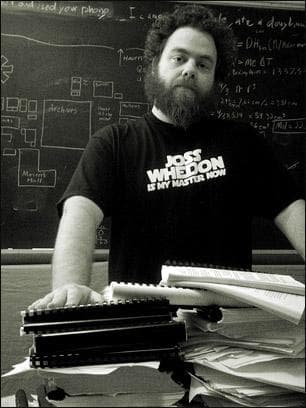
Patrick Rothfuss is an American author known for his fantasy novels. He is best known for "The Name of the Wind" and its sequel "The Wise Man's Fear," which follow the story of Kvothe, a gifted young man. Rothfuss also wrote "The Slow Regard of Silent Things," a companion novella set in the same universe.
Similar books
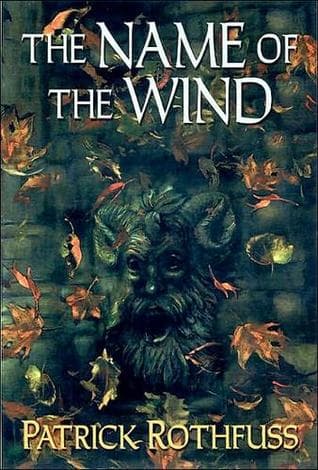
- The Name of the Wind
Patrick Rothfuss
4.5 (716k) average on GoodreadsFantasyThe first book in the same series, essential for context and continuing the story.
- The Way of Kings
Brandon Sanderson
4.6 (305k) average on GoodreadsFantasyFeatures a vast fantasy world, complex magic systems, and a compelling hero's journey.
- A Wizard of Earthsea
Ursula K. Le Guin
4.0 (241k) average on GoodreadsFantasyExplores themes of coming-of-age, magic, and the consequences of power with a thoughtful, reflective tone.
- A Storm of Swords
George R.R. Martin
4.5 (666k) average on GoodreadsFantasyCompared to George R.R. Martin's A Storm of Swords (1999), The Wise Man's Fear offers a much more focused narrative on a single protagonist, Kvothe. A Storm of Swords excels in its multi-POV structure, driving numerous interconnected plotlines forward simultaneously and delivering significant plot twists and resolutions. While Rothfuss delves deeply into Kvothe's internal world and skills, Martin's third A Song of Ice and Fire installment is praised for its relentless plot progression and major character developments across a vast ensemble, making The Wise Man's Fear feel slower and less impactful in terms of plot advancement by comparison. Martin's work often sees major characters die and power dynamics shift dramatically, whereas Rothfuss largely maintains Kvothe's journey of learning and growth without major external shake-ups to the larger world.
- Harry Potter and the Sorcerer's Stone
J.K. Rowling
4.5 (7M) average on GoodreadsFantasyRescued from a miserable life under the stairs, an orphaned boy discovers he's a wizard destined for a magical school, where he uncovers a dangerous secret tied to the dark wizard who murdered his parents.
- The Hunger Games
Suzanne Collins
4.3 (6.4M) average on GoodreadsFantasyIn a future where children fight to the death on live television, Katniss Everdeen volunteers for the arena, turning a death sentence into a fight for survival and a spark of rebellion.





Enjoyed the summary?
A summary gives you the shape of the book. The book itself has the detail, the examples and the voice.
Find The Wise Man's Fear on AmazonAs an Amazon Associate, BookBrief earns from qualifying purchases. How we're funded