

Synopsis
Covers the whole plot, including the ending.
- Difficulty
- Easy
- Pacing
- Fast
- Mood
- Whimsical, Adventurous, Thought-provoking, Humorous
- Read it if
- You enjoy short stories with a touch of magic, clever characters, and a clear moral compass, or if you're a fan of Roald Dahl's distinctive narrative voice and wit.
- Skip it if
- You prefer single, continuous narratives over anthologies, or if you're looking for deeply complex character studies rather than engaging plot-driven tales.
The Wonderful Story of Henry Sugar and Six More Plot Summary
Covers the whole plot, including the ending.
The Boy Who Talked With Animals: Turtle Rescue
On Grand Cayman island, tourists find a huge sea turtle, weighing over 500 pounds, on a beach. It cannot get back to the sea alone and becomes a sight for people. Mr. Tufnell, a hotel owner, decides to keep it as a tourist attraction, naming it Esmeralda. A young, sensitive boy, David, feels very upset by the turtle's situation and the crowds' thoughtless curiosity. He feels a strong bond with the creature and spends hours with it, trying to talk to it, believing it understands him and is sad about being held captive. David's parents and the hotel staff find his unusual focus amusing, but David's care for the turtle is real and strong.
The Boy Who Talked With Animals: The Escape
David, increasingly bothered by Esmeralda's captivity and the hotel's plan to make her into turtle soup, makes a big decision. One morning, Esmeralda is gone from the beach, and David is also missing. A note from David says that he and Esmeralda have gone to a place where they will be free. Despite wide searches by police and local officials, no one ever sees David or the giant turtle again. The event becomes a local story, with some believing David truly could talk to animals and chose to live away from people, protecting creatures like Esmeralda.
The Hitchhiker: The Pickpocket's Trick
The narrator, driving his new BMW, picks up a hitchhiker on a country road. The hitchhiker, a small, thin man with quick eyes, says he is a 'fingersmith,' a professional pickpocket. He talks about his work with pride, explaining the exactness and skill it takes. The narrator is at first unsure but becomes interested by the man's honesty. The hitchhiker shows his skills by quietly taking the narrator's watch and wallet without him noticing, then returning them. He says he only targets rich people and never uses violence, seeing himself as a highly skilled professional, not a common criminal. The narrator, despite his first worries, is impressed by the man's quickness and charming confidence.
The Hitchhiker: Escaping the Law
As they continue their drive, a police officer stops the narrator for speeding. The officer, a serious man, gets ready to write a ticket. The hitchhiker, watching, quietly uses his skills. While the officer is busy with his notepad, the hitchhiker manages to pickpocket the officer's ticket book and pen. When the officer turns back to the car, he finds his items missing and is completely confused. The hitchhiker, pretending to be innocent, suggests the officer might have lost them. The officer, annoyed and puzzled, eventually gives up and lets them go, unable to finish the ticket. The narrator is amazed and amused by the hitchhiker's bold and clever trick.
The Mildenhall Treasure: A Discovery in the Field
In 1942, during World War II, a farmer named Gordon Butcher is plowing a field near Mildenhall, Suffolk, England. His friend, Sydney Ford, a tractor driver, helps him. As Sydney plows, his tractor hits something hard. They check it out and find a large, detailed silver platter. Realizing it is an old artifact, they keep digging and soon uncover a grand collection of Roman silver, including bowls, dishes, and other fancy pieces. The treasure is in great condition and clearly has huge historical and money value. Sydney, understanding how important it is, wants to report it right away, but Gordon, worried about official problems and losing the treasure, at first hesitates.
The Mildenhall Treasure: The Lost Opportunity
Gordon Butcher, fearing he would lose the treasure to the government without fair payment, hides the Mildenhall Treasure for years. He and Sydney sometimes show pieces to friends, but it stays mostly secret. Eventually, officials learn about the treasure. Under the Treasure Trove Act, any old gold or silver found in the ground, where the first owner cannot be found, belongs to the Crown, but the finder gets a reward equal to its market value. However, because Gordon had hidden the treasure for so long and not reported it right away, it was argued that it was no longer 'in the ground' when reported. As a result, they received only a small part of what the treasure was worth, just £1000, while the British Museum got the priceless artifacts for the country.
The Wonderful Story of Henry Sugar: The Book's Secret
Henry Sugar is a very rich and self-centered man, living a life of ease and gambling. One day, while visiting a friend's country home, he finds an old exercise book in the library. The book, written by Dr. Z.Z. Chatterjee, tells the true story of Imhrat Khan, an Indian man who said he could see without his eyes. Khan had learned this amazing skill through years of deep meditation and self-control, taught by a mysterious guru. The book describes Khan's demonstrations, where he could identify objects and even read while blindfolded, surprising audiences and doctors. Henry is fascinated by this story, seeing it as a way to win even more money at the casino.
The Wonderful Story of Henry Sugar: Mastering the Skill
Inspired by Imhrat Khan's story, Henry Sugar, despite being usually lazy, starts a strict and lonely training plan to get the same ability. He follows the instructions and meditation methods in Dr. Chatterjee's book, practicing for three years. His first reason is purely selfish: he plans to use this power to cheat at cards and roulette, winning huge amounts of money. He keeps to himself, dealing with discomfort and boredom, slowly but surely making progress. Finally, through sheer hard work, he succeeds. He gains the ability to see through playing cards, dice, and even into people's minds, understanding their thoughts and plans. His new power is complete and frightening in what it could do.
The Wonderful Story of Henry Sugar: The Casino Heist
With his amazing ability, Henry Sugar travels to different casinos around the world, steadily winning huge sums of money at blackjack and roulette. He is careful in his method, winning enough to cause suspicion but never so much that he is caught cheating directly. He collects millions, far more than he could ever spend. However, instead of feeling happy or satisfied, Henry feels an unexpected emptiness. The excitement of gambling is gone, replaced by a hollow certainty. Winning becomes mechanical and meaningless, leaving him deeply unhappy. He realizes that his initial greedy goal has led him to a dead end, and his vast wealth brings him no joy.
The Wonderful Story of Henry Sugar: A New Purpose
Overwhelmed by his ill-gotten gains and a deep lack of purpose, Henry Sugar has a sudden realization. He decides to use his extraordinary skill for good. He starts giving his winnings to orphanages, but finds simply giving money away is not enough. He then creates a system: he keeps winning at casinos, but now he does it openly, showing his powers to the casino owners. He demands they match his winnings, threatening to show how vulnerable they are to his powers if they refuse. He then uses all the money to start and fund a large network of orphanages worldwide, providing food, shelter, and education for countless children. He becomes a modern-day Robin Hood, secretly helping those in need, finally finding real happiness and meaning in his life.
The Wonderful Story of Henry Sugar: The Legacy
Henry Sugar continues his work for many years, traveling the world, winning money from casinos, and funding his charities. He works in secret, always careful to avoid full public exposure, though his legend grows in the gambling world. After his death, his accountant, John Winston, tells the full story of Henry Sugar's life and his good deeds. Winston explains how Henry carefully managed the huge amounts of money, making sure every penny went to the orphanages. The story shows Henry's change from a selfish, idle rich man to a kind helper, using an almost magical ability to make a big positive difference in the world, leaving a legacy of kindness and generosity that is much greater than his first greedy plans.
The Wonderful Story of Henry Sugar and Six More Characters
David
Protagonist
A sensitive young boy who communicates with animals.
David is a young boy on vacation in Grand Cayman, characterized by his profound empathy and unusual connection to animals. Unlike the adult tourists, he sees the captured sea turtle, Esmeralda, not as an attraction but as a suffering creature. He spends hours trying to communicate with her, displaying a deep understanding of her distress. He is quiet, observant, and possesses a moral compass that guides him to protect the vulnerable, even if it means drastic action.
Relationships: Esmeralda (deep, empathetic bond; protector and companion); Mr. Tufnell (antagonistic, as Tufnell exploits Esmeralda)
The Hitchhiker
Supporting
A charming and highly skilled professional pickpocket.
The Hitchhiker is a small, wiry man who prides himself on his exceptional dexterity and cunning. He is a 'fingersmith,' a pickpocket who operates with precision and a unique code of ethics – he only targets the wealthy and never resorts to violence. He is articulate, confident, and possesses a mischievous sense of humor. He views his craft as an art form, not mere crime, and delights in demonstrating his abilities, often to the astonishment of others. He is resourceful and quick-witted, capable of outsmarting authority with ease.
Relationships: Narrator (Driver) (temporary companion; mentor in the art of pickpocketing); Police Officer (antagonistic, but outsmarted)
Henry Sugar
Protagonist
A wealthy idler who gains the ability to see through objects and transforms into a philanthropist.
Henry Sugar begins as a supremely wealthy, bored, and self-indulgent bachelor, living a life devoted to luxury and gambling. He is initially driven by pure greed, seeking to use his newfound psychic abilities to win even more money. Despite his initial laziness, he possesses a remarkable capacity for discipline and perseverance when motivated by a clear goal. His transformation is profound: from a selfish hedonist, he evolves into a compassionate, anonymous benefactor, driven by a deep sense of purpose and a desire to alleviate suffering, particularly among orphaned children.
Relationships: Imhrat Khan (inspiration and teacher (posthumously) through his writings); Dr. Z.Z. Chatterjee (author of the book that guides Henry's training); John Winston (loyal accountant and chronicler of his life's work)
Imhrat Khan
Supporting
An Indian man who developed the ability to see without his eyes.
Imhrat Khan is a mysterious and disciplined Indian yogi or fakir, whose life story is detailed in Dr. Z.Z. Chatterjee's book. He is presented as a real historical figure who, through years of intense meditation and self-discipline, learned to achieve extraordinary feats of perception, such as seeing through blindfolds and objects. He is a symbol of the power of the human mind and the potential for spiritual and mental development, serving as the catalyst for Henry Sugar's own journey of self-discovery and transformation. His methods, though seemingly magical, are rooted in ancient meditative practices.
Relationships: Henry Sugar (inspirational figure and indirect mentor); Dr. Z.Z. Chatterjee (biographer)
Esmeralda
Supporting
A massive sea turtle captured on a beach.
Esmeralda is a magnificent, ancient sea turtle, weighing over 500 pounds, found stranded on a beach in Grand Cayman. She represents the beauty and vulnerability of nature when confronted by human interference. Her silent suffering in captivity evokes pity and empathy, particularly from young David. She is a catalyst for David's actions and symbolizes the wild, free spirit that yearns for its natural habitat. Her disappearance with David adds a layer of mystery and wonder to her character, suggesting a deeper understanding or magical connection.
Relationships: David (protected and liberated by him); Mr. Tufnell (exploited by him)
Gordon Butcher
Protagonist
A farmer who discovers the Mildenhall Treasure.
Gordon Butcher is an English farmer, practical and initially cautious. He is one of the two discoverers of the priceless Mildenhall Treasure. His character is marked by a pragmatic, almost fearful, approach to his extraordinary find. He struggles with the dilemma of reporting the treasure versus keeping it, ultimately choosing to hide it due to anxieties about bureaucracy and losing control of his discovery. This decision, though understandable from his perspective, ultimately costs him and his friend a significant reward. He represents the common person grappling with an immense, unexpected fortune.
Relationships: Sydney Ford (friend and co-discoverer); British Museum (recipient of the treasure)
Sydney Ford
Supporting
A tractor driver and friend of Gordon Butcher, co-discoverer of the treasure.
Sydney Ford is Gordon Butcher's friend and co-worker, the tractor driver who first unearths the Mildenhall Treasure. He is portrayed as more straightforward and honest than Gordon, immediately recognizing the historical significance of the find and advocating for its prompt reporting to authorities. His initial desire to do the right thing is overridden by Gordon's caution, leading to the delayed revelation of the treasure. Sydney is a loyal friend but also a victim of the circumstances created by Gordon's decision, ultimately sharing in the lost reward.
Relationships: Gordon Butcher (friend and co-discoverer)
John Winston
Supporting
Henry Sugar's loyal accountant and the narrator of his true story.
John Winston serves as Henry Sugar's meticulous and trustworthy accountant. He is the guardian of Henry's secret life as a philanthropic gambler. After Henry's death, Winston takes on the role of chronicler, revealing the full, extraordinary story of Henry's transformation and his charitable endeavors. He provides the factual and logistical details of how Henry managed to fund his worldwide orphanages, adding credibility and depth to the fantastical elements of Henry's abilities. Winston represents the practical, grounded aspect of Henry's life, ensuring his legacy is properly understood and documented.
Relationships: Henry Sugar (loyal employee and confidant)
The Wonderful Story of Henry Sugar and Six More Themes
The Corrupting Nature of Greed and the Redemption of Philanthropy
This idea is clearest in 'The Wonderful Story of Henry Sugar.' Henry first wants a special ability for selfish, greedy reasons—to win a lot of money gambling. While he achieves his goal, the huge wealth brings him no joy, only emptiness. This leads to his big change, where he finds real purpose and happiness by using his special skill and wealth to help others, specifically by funding orphanages globally. His journey shows that money alone is not enough, and true happiness comes from giving without expecting anything in return.
“He had achieved his ambition. He had become a millionaire ten times over. But he had not become a happy man. Instead, he felt absolutely rotten.”
The Extraordinary Potential of the Human Mind
Several stories explore the idea that the human mind has hidden, almost magical, abilities. Imhrat Khan in 'Henry Sugar' shows he can see without his eyes through meditation, inspiring Henry to do the same. David in 'The Boy Who Talked With Animals' seems to have a natural ability to talk to creatures, hinting at a connection beyond normal human understanding. This idea suggests that with practice, belief, or a special sensitivity, people can go beyond usual human limits.
“What a mind can do, what a mind can achieve, is truly beyond the comprehension of most ordinary men.”
The Conflict Between Humanity and Nature
This idea is central to 'The Boy Who Talked With Animals.' The story contrasts the thoughtless use of the giant sea turtle, Esmeralda, by the hotel owner and curious tourists, with David's deep care and wish to protect her. The human desire to own or profit from nature is shown as harmful, while David's connection represents a balanced, respectful relationship. His final disappearance with Esmeralda symbolizes an escape from human society's bad effects on nature, suggesting that true balance might only be found away from it.
“The great turtle lay absolutely still, as though resigned to her fate, and David felt a huge lump forming in his throat.”
Justice, Fairness, and the Flaws of Systems
This idea is explored in 'The Mildenhall Treasure' and subtly in 'The Hitchhiker.' In 'Mildenhall,' the legal system (Treasure Trove Act) is shown to be strict and unyielding, denying the honest finders a fair reward because of a technicality caused by their first fear and lack of knowledge. This shows how rules, even good ones, can lead to unfairness. In 'The Hitchhiker,' the pickpocket works outside the law but claims a moral code, targeting the rich and showing a kind of 'justice' against an impersonal speeding ticket, suggesting that official systems can sometimes be outsmarted or are less 'just' than they seem.
“The law is a funny thing. It's often not about what's right or wrong, but about what's written down.”
Plot Devices & Literary Techniques
Frame Story/Narrative within a Narrative
A story told by one character, often the author, about another's experiences, or a story found within another story.
This device is prominently used in 'The Wonderful Story of Henry Sugar' and 'The Mildenhall Treasure.' In 'Henry Sugar,' Roald Dahl himself acts as the narrator, explaining how he came to know the 'true' story of Henry Sugar, which then includes Henry reading Dr. Chatterjee's account of Imhrat Khan. This layering adds a sense of authenticity and wonder. In 'The Mildenhall Treasure,' the story is presented as a 'true' account, with the narrator recounting events as if they were historical facts, enhancing its impact and credibility.
Deus ex Machina (subtly applied)
An unexpected power or event saving a seemingly hopeless situation.
While not a literal 'god from the machine,' the sudden acquisition of extraordinary abilities by characters like Henry Sugar and David (the boy who talked with animals) functions similarly. Henry's ability to see through objects, learned through extreme discipline, is a fantastical solution to his gambling boredom, allowing him to embark on his philanthropic quest. David's presumed ability to communicate with Esmeralda and lead her to freedom is also a convenient, magical resolution to the turtle's seemingly hopeless captivity, allowing for a fantastical escape from an impossible situation.
The Unreliable Narrator (implied/partial)
A narrator whose credibility has been compromised or is questionable.
This device is subtly at play in stories like 'The Hitchhiker' and even 'The Boy Who Talked With Animals.' In 'The Hitchhiker,' the narrator (the driver) is so captivated by the hitchhiker's charm and skill that he largely accepts the pickpocket's self-serving philosophy and exaggerated claims without critical analysis. The reader is invited to question if the hitchhiker is truly a 'professional artist' or just a clever thief. In 'The Boy Who Talked With Animals,' the miraculous disappearance of David and Esmeralda is presented through the lens of local legend, leaving room for skepticism about the supernatural elements, even as the narrative encourages belief.
Moral Parable
A short story designed to illustrate or teach some truth, religious principle, or moral lesson.
Many of these stories, particularly 'The Wonderful Story of Henry Sugar,' function as moral parables. Henry's journey from greedy self-indulgence to selfless philanthropy teaches a clear lesson about the emptiness of material wealth and the fulfillment found in generosity. Similarly, 'The Boy Who Talked With Animals' carries a moral message about empathy for nature and the consequences of human exploitation. Even 'The Mildenhall Treasure' implicitly warns against greed and the folly of circumventing legal processes.
The Wonderful Story of Henry Sugar and Six More Quotes
“It is a curious thing, the fate of a book.”
“If a person has a thing that he can do better than anyone else in the world, then he should do it.”
“The greatest secrets are always hidden in the most unlikely places.”
“You can always tell a first-class human being by the way he treats an animal.”
“There are no secrets in the world that time does not reveal.”
“The best way to get rid of an enemy is to make him a friend.”
“It is not so much what you say, as the way you say it.”
“Imagination is a quality that cannot be taught.”
“A little nonsense now and then is relished by the wisest men.”
“Money is a blessing when it is used for good, and a curse when it is used for evil.”
“He had discovered the greatest secret of all, which is that a man's true wealth is not in the things he owns but in the good he does.”
“The world is full of people who are trying to catch you.”
“You must be very careful when you are reading a book, and when you are writing one.”
“There is no such thing as an impossible dream.”
Quiz
10 questions on the plot and the characters. Each answer comes with a short explanation.
Question 1
In 'The Wonderful Story of Henry Sugar', what specific skill does Henry Sugar acquire that allows him to see through playing cards?
- Telekinesis
- X-ray vision
- The ability to see without his eyes, as described in the stolen book
- Precognition
Show answer
C. The ability to see without his eyes, as described in the stolen book Henry Sugar learns the meditation and concentration techniques described in the doctor's stolen book, which allow him to 'see' the back of his own head and then through objects, effectively seeing without using his eyes.
Question 2
What is the primary motivation for Henry Sugar to start giving away his winnings?
- He gets bored of winning
- He feels guilty about cheating the casinos
- He realizes the money is not bringing him happiness and wants to do good
- He is blackmailed by someone who knows his secret
Show answer
C. He realizes the money is not bringing him happiness and wants to do good After winning vast sums, Henry finds himself miserable. He attempts to throw money from a balcony and then decides to create orphanages and hospitals with his winnings, realizing the money can bring happiness to others.
Question 3
In 'The Boy Who Talked With Animals', what kind of animal does the boy, David, primarily communicate with?
- A dolphin
- A sea turtle
- A parrot
- A monkey
Show answer
B. A sea turtle The story centers around David's unique connection and communication with a giant sea turtle that is stranded on the beach.
Question 4
What unusual item does the Hitchhiker steal from the narrator during their journey?
- His wallet
- His watch
- His car keys
- His identity papers
Show answer
B. His watch The Hitchhiker, a master pickpocket, demonstrates his skill by stealing the narrator's watch without him noticing, even after being explicitly told he could try.
Question 5
In 'The Mildenhall Treasure', what is the specific historical period of the treasure discovered by Gordon Butcher?
- Saxon
- Viking
- Roman
- Bronze Age
Show answer
C. Roman The Mildenhall Treasure consists of magnificent Roman silver plate, dating back to the 4th century AD.
Question 6
What specific challenge does Henry Sugar face when he first tries to use his newly acquired 'seeing' ability in a casino?
- He gets caught by security
- He struggles to control the amount of money he wins, attracting too much attention
- He loses his focus and fails to see the cards
- He is too nervous to place a bet
Show answer
B. He struggles to control the amount of money he wins, attracting too much attention Henry initially struggles with controlling his winnings, making it obvious he's cheating by winning too much, too quickly, forcing him to devise a system to win just enough to avoid suspicion.
Question 7
The narrator in 'The Hitchhiker' works as a writer. What type of writing does he specifically mention doing?
- Novels
- Children's books
- Stories for magazines
- Poetry
Show answer
C. Stories for magazines The narrator explicitly states he is a writer of stories for magazines, which is how he knows about the police code for 'wanted' criminals.
Question 8
What is the ultimate fate of the sea turtle in 'The Boy Who Talked With Animals'?
- It is taken to a marine sanctuary
- It dies on the beach
- It is returned to the sea with David, who disappears with it
- It becomes a local tourist attraction
Show answer
C. It is returned to the sea with David, who disappears with it The story concludes with David and the sea turtle disappearing into the ocean, implying David chose to live among the animals, having found his true calling.
Question 9
What is the key ethical dilemma presented in 'The Mildenhall Treasure' regarding the treasure's discovery?
- Whether the finders should sell it on the black market
- Whether the landowners or the finders truly own the treasure according to the law
- Whether to keep the discovery a secret from the authorities
- Whether the treasure should be melted down for its silver
Show answer
B. Whether the landowners or the finders truly own the treasure according to the law The central conflict revolves around the legal concept of 'treasure trove' and whether the finders (Gordon Butcher) or the landowners (the Rolfe family) were entitled to the treasure or its value, leading to a complex legal battle.
Question 10
What is the name of the Indian doctor whose manuscript inspires Henry Sugar to learn his unique ability?
- Dr. Singh
- Dr. Chatterjee
- Dr. Chang
- Dr. Vita-Muz
Show answer
D. Dr. Vita-Muz Henry Sugar finds and reads a stolen manuscript detailing the extraordinary abilities and training of Dr. Vita-Muz, a practitioner of yoga and meditation who could see without his eyes.
The Wonderful Story of Henry Sugar and Six More FAQ
What is the central premise of 'The Wonderful Story of Henry Sugar'?
Henry Sugar, a wealthy man, discovers a book detailing the incredible abilities of an Indian mystic, Imhrat Khan, who can see without his eyes. Sugar spends years mastering this skill to cheat at casinos, but ultimately finds himself unfulfilled and decides to use his winnings to establish orphanages worldwide, becoming a modern-day Robin Hood.
How does Henry Sugar acquire his extraordinary ability?
Henry Sugar learns about Imhrat Khan, a man who mastered the art of seeing without his eyes through intense yoga and meditation, by reading a doctor's report. Sugar meticulously practices the described techniques for years, developing the same clairvoyant ability to see through playing cards and other objects.
What prompts Henry Sugar's transformation from a selfish gambler to a philanthropist?
Initially, Henry uses his power for personal gain by cheating casinos, but the thrill quickly fades, leaving him feeling empty and guilty. A moment of self-reflection, coupled with the realization that he cannot spend his ill-gotten gains without suspicion, leads him to decide to dedicate his fortune to helping orphans.
In 'The Boy Who Talked With Animals', what is the special connection between David and the giant sea turtle?
David, a young boy, discovers a giant sea turtle stranded on a beach and feels a deep empathy for it. He is the only one who truly understands the turtle's plight and, through an unexplained telepathic or intuitive connection, manages to communicate with it, ultimately leading to its rescue and their shared departure into the ocean.
What unique skill does the Hitchhiker possess that proves useful to the narrator?
The Hitchhiker is a highly skilled professional pickpocket, capable of stealing objects with incredible speed and dexterity without anyone noticing. This talent becomes invaluable when he helps the narrator steal back important documents from a police officer who has confiscated the narrator's license.
What is the significance of the character Imhrat Khan in 'The Wonderful Story of Henry Sugar'?
Imhrat Khan is not just a character but a catalyst; his documented life story and extraordinary abilities inspire Henry Sugar's own transformation. Khan represents the potential for human achievement beyond the ordinary, and his detailed methods provide the blueprint for Henry's clairvoyance.
Are there any subtle indications of the Hitchhiker's profession before his skills are explicitly revealed?
Yes, the Hitchhiker makes several observations about people's pockets and valuables, and his hands are described as unusually quick and nimble, hinting at his profession. He also expresses a keen interest in the narrator's wallet and watch, subtly setting up the later reveal of his pickpocketing prowess.
What is the underlying message or moral presented in 'The Mildenhall Treasure'?
The story, based on a true account, highlights the tragic loss of opportunity and the injustice faced by Gordon Butcher, the farmer who actually discovered the treasure. It underscores themes of bureaucratic inefficiency, the exploitation of ordinary people, and the often unfair distribution of wealth and recognition.
How does Henry Sugar's initial motivation for acquiring his power reflect a common human psychological flaw?
Henry's initial motivation is purely selfish and materialistic – to gain immense wealth through cheating. This reflects the human flaw of greed and the desire for easy riches, demonstrating how even extraordinary abilities can be initially misdirected by base desires before a moral awakening occurs.
Analyze the psychological shift Henry Sugar undergoes from a life of luxury to one of service.
Henry's shift is driven by profound boredom and a growing sense of emptiness despite his wealth. The 'thrill' of cheating fades, replaced by a moral discomfort and a realization that his actions are ultimately meaningless. His decision to help orphans represents a search for purpose and genuine fulfillment beyond material gain.
What psychological elements contribute to David's unique connection with the animals in 'The Boy Who Talked With Animals'?
David exhibits a profound empathy and sensitivity that allows him to connect with animals on a deeper level than adults. His innocence and lack of preconceived notions enable him to 'hear' and understand the turtle's distress, suggesting a pure, uncorrupted form of communication based on shared feeling rather than language.
How does the Hitchhiker's character challenge societal perceptions of 'good' and 'bad'?
The Hitchhiker, despite being a professional criminal, is portrayed as charming, witty, and ultimately helpful to the narrator. He challenges the rigid definition of morality by showing that someone who breaks the law can still possess admirable qualities and even act as a 'pal' in a difficult situation, blurring ethical lines.
Is Henry Sugar's transformation truly altruistic, or are there lingering elements of self-interest in his philanthropy?
While Henry's actions become outwardly altruistic, his initial motivation for giving away money is partly pragmatic – he cannot spend it without suspicion. However, the sustained effort and joy he derives from helping orphans suggest a genuine shift towards altruism, indicating that his self-interest evolved into a deeper, more meaningful purpose.
Could 'The Boy Who Talked With Animals' be interpreted as a metaphor for humanity's relationship with nature?
Yes, David's ability to communicate with the turtle and his eventual departure with it can be seen as a metaphor for humanity's potential to live in harmony with nature, if only we were more empathetic and willing to listen. The adults' inability to understand the turtle represents humanity's disconnection from the natural world.
What is the implied fate of Henry Sugar at the end of his story, and why is it left ambiguous?
The story implies Henry Sugar eventually dies, presumably from the sheer exhaustion of managing his vast charitable empire, but his exact end is left untold, only that he 'worked himself to death.' This ambiguity allows the legacy of his good deeds to take precedence over the details of his demise, emphasizing the impact of his life rather than its conclusion.
Does 'The Mildenhall Treasure' serve as a critique of the legal system or human nature?
It functions as both. The story critiques the legal system for its perceived unfairness and complex bureaucracy that prevented Gordon Butcher from rightfully benefiting from his discovery. It also critiques aspects of human nature, such as the avarice of those who sought to claim the treasure and the lack of compassion shown to the true discoverer.
How does the narrative structure of 'The Wonderful Story of Henry Sugar' enhance its themes?
The story is presented as a 'true tale' within a fictional framework, with the narrator claiming to have known Henry Sugar. This meta-narrative structure lends an air of authenticity to the fantastical elements, making Henry's journey from selfish gambler to selfless philanthropist feel more impactful and believable, reinforcing the moral transformation.
About the author
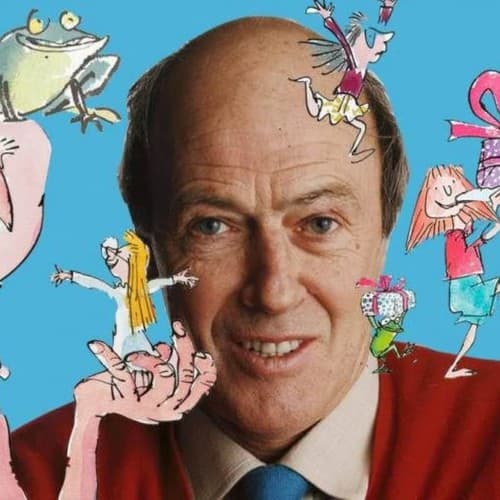
Roald Dahl was a British popular author of children's literature and short stories, a poet, and wartime fighter ace. His books have sold more than 300 million copies worldwide. Dahl has been called "one of the greatest storytellers for children of the 20th century".
Similar books
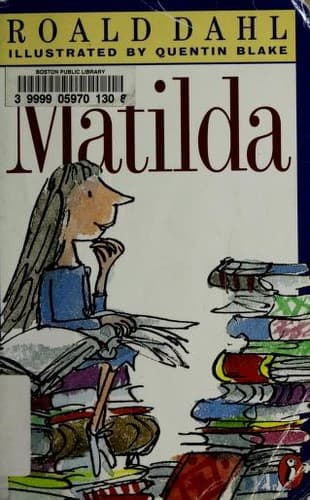
- Matilda
Roald Dahl
4.3 (648k) average on GoodreadsFantasyFeatures a child with extraordinary abilities and a strong sense of justice, similar to elements in 'Henry Sugar'.
- Fantastic Mr. Fox
Roald Dahl
4.1 (105k) average on GoodreadsFantasyShowcases clever characters outsmarting adversaries, with a blend of animal and human elements.
- The Twits
Roald Dahl
4.0 (118k) average on GoodreadsFantasyContains Dahl's signature dark humor and inventive, often mischievous plots.
- Stardust
Neil Gaiman
4.1 (359k) average on GoodreadsFantasyGaiman's work often features more overtly poetic prose and intricately built, consistently magical fantasy worlds. Dahl, conversely, frequently introduces a single, extraordinary element into an otherwise realistic setting, making the fantastical feel more sudden and impactful, and his narrative style is more direct and conversational.
- Harry Potter and the Sorcerer's Stone
J.K. Rowling
4.5 (7M) average on GoodreadsFantasyRescued from a miserable life under the stairs, an orphaned boy discovers he's a wizard destined for a magical school, where he uncovers a dangerous secret tied to the dark wizard who murdered his parents.
- The Hunger Games
Suzanne Collins
4.3 (6.4M) average on GoodreadsFantasyIn a future where children fight to the death on live television, Katniss Everdeen volunteers for the arena, turning a death sentence into a fight for survival and a spark of rebellion.




Enjoyed the summary?
A summary gives you the shape of the book. The book itself has the detail, the examples and the voice.
Find The Wonderful Story of Henry Sugar and Six More on AmazonAs an Amazon Associate, BookBrief earns from qualifying purchases. How we're funded