
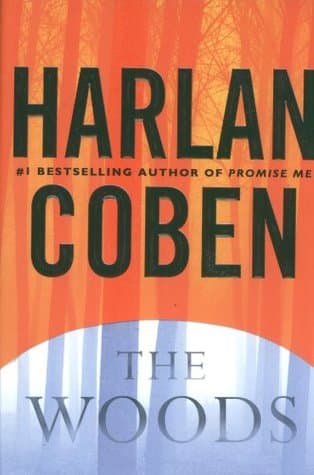
Synopsis
Covers the whole plot, including the ending.
- Difficulty
- Medium
- Pacing
- Moderate
- Mood
- Suspenseful, Dark, Mysterious, Reflective
- Read it if
- You enjoy complex mysteries with a dual timeline, uncovering long-buried secrets, and a protagonist driven by personal loss.
- Skip it if
- You prefer lighthearted reads or dislike stories with dark themes and a focus on past trauma.
The Woods Plot Summary
Covers the whole plot, including the ending.
A Body in the Woods and a Past Resurfaces
Paul Copeland, an Essex County prosecutor, is called to a murder scene. The victim, a college professor named Paul Saviano, has a distinct tattoo. This tattoo reminds Paul of one worn by Lucy Dane, a woman he knew twenty years ago at Camp Chewonki. Lucy was one of four teenagers who disappeared from the camp that summer, including Paul's sister, Camille. Two bodies were found, but Lucy and Camille's were not. The case was blamed on a serial killer, Ira Friedler. Saviano's murder reopens old wounds and raises questions about what happened that summer.
Lucy Dane's Reappearance and the Unraveling Truth
The investigation into Saviano's murder leads Paul to a discovery: Lucy Dane is alive. She is now a successful attorney living under a new name. Their reunion is tense and full of unspoken secrets. Lucy confirms that Saviano was one of the other campers present during the summer of the disappearances, though not one of the four missing. Her sudden reappearance changes Paul's belief that Camille was dead. He becomes determined to find out what happened to Camille and the others, convinced that Lucy has important pieces of information. This new hope, mixed with fear, makes Paul re-examine every detail of that summer.
The Trial of Robert Conklin and a Web of Lies
At the same time, Paul is prosecuting Robert Conklin, a wealthy man accused of raping and murdering Sheila Buckman. As the trial continues, Paul's investigations into the Camp Chewonki disappearances start to connect with the Conklin case. He discovers that Conklin had ties to the camp, through his father, a judge who owned land nearby. This link makes Paul suspect the Conklin family might have been involved in a cover-up related to the events twenty years ago. Paul's work duties conflict with his personal search, making him question the justice system and the people in it.
The Confession of Ira Friedler and Its Flaws
Paul looks into Ira Friedler's original confession to the Chewonki murders. He finds inconsistencies and doubts if Friedler was solely responsible. Friedler, who was mentally unstable, confessed to killing all four teens, even though only two bodies were found. Paul learns that Friedler knew Judge Conklin, who had presided over a previous case involving Friedler. This revelation further involves the Conklin family and suggests a deeper conspiracy to protect someone. Paul realizes that the official story of the Chewonki murders was likely false, making him more determined to find the real person responsible and Camille's fate.
Flashbacks to Camp Chewonki and Forbidden Love
The story often flashes back to the summer of Camp Chewonki, showing Paul and Lucy's secret, intense relationship. They would meet in the woods, away from others. These flashbacks show the summer becoming dangerous when the disappearances start. Paul remembers the fear, the frantic searches, and his hope that Camille would be found alive. He also remembers arguments and tensions among the campers, especially involving a manipulative counselor named Todd and a troubled camper named Max. These memories are important as Paul tries to put together the truth of that summer.
The Role of Judge Conklin and the Cover-Up
Paul discovers that Judge Conklin, Robert Conklin's father, helped cover up the Chewonki disappearances. The Judge used his power and influence to control the police investigation, making sure Ira Friedler was blamed. He did this to protect his son, Robert, who was involved in the events leading to the disappearances. The Judge bribed officials and hid evidence. Paul realizes that the corruption was deep, and many people helped keep the lie for two decades. This shatters his trust in the system he works for.
The Truth About Max and Todd
Paul finds that Max, one of the original missing campers, and Todd, the manipulative counselor, were both involved in a drug incident with Robert Conklin on the night of the disappearances. Robert Conklin killed Max during a fight, and Todd, afraid of consequences, helped Robert get rid of Max's body. The two bodies found twenty years ago were Max and a drifter, not the original missing campers as people thought. This means Camille and the other missing girl, Laura, were not among the initial victims, making Paul hope that Camille might still be alive and that Lucy knows more.
Lucy's Confession and the Real Story of Camille
Under pressure from Paul, Lucy confesses the full truth. She says Camille was not killed by Ira Friedler. Instead, Camille fought with Robert Conklin after she saw him attacking another camper. During the struggle, Robert accidentally pushed Camille, causing her to fall and hit her head, killing her. Lucy, who was there, helped Robert cover up the death. She was scared of the consequences and manipulated by Robert and his powerful father, Judge Conklin. They buried Camille's body in a remote part of the woods. Lucy had kept this secret for twenty years, burdened by guilt and fear, believing it was the only way to protect herself and Paul from the Conklin family.
Confronting Robert Conklin and Justice Served
With Lucy's confession and his own investigation, Paul confronts Robert Conklin. He uses the new evidence in the Conklin trial to expose Robert's past crimes and his father's cover-up. During a tense confrontation, Robert Conklin, cornered and desperate, tries to escape and is killed, either by accident or by a calculated action, by the authorities. This brings an end to the man responsible for Camille's death and the two-decade-long lie. The truth about the Camp Chewonki disappearances finally comes out, showing the corruption and the lengths a powerful family would go to protect their own.
Finding Camille and Moving Forward
After Lucy's detailed confession, Paul and the authorities return to the woods near Camp Chewonki. After a long search, Camille's remains are found, exactly where Lucy said they would be. The discovery, while sad, gives Paul a deep sense of closure. He can finally bury his sister, twenty years after her disappearance. The experience has changed Paul, making him re-evaluate his understanding of justice, truth, and family. He finds some peace, knowing that the truth, however painful, has finally been revealed and that his sister can now rest.
Principal Figures
Paul Copeland
Protagonist
Essex County prosecutor haunted by his sister's disappearance twenty years ago.
Paul Copeland is a dedicated and successful Essex County prosecutor, a widower raising his daughter, Tara. His life is defined by the unsolved disappearance of his sister, Camille, from Camp Chewonki two decades prior, a trauma he has suppressed but never truly overcome. He is driven by a deep sense of justice, both professionally and personally, which intensifies when new evidence suggests Camille might still be alive. Paul is intelligent, tenacious, and morally upright, though his personal quest often blurs the lines of his professional ethics. He is deeply protective of his family and those he cares about.
Relationships: Camille Copeland (Younger sister, disappeared from camp); Lucy Dane (Ex-girlfriend from camp, central to the mystery); Tara Copeland (Daughter); Hester Crimstein (Friend and fellow attorney); Loren Muse (Detective, professional colleague)
Lucy Dane
Supporting
Paul's former girlfriend from camp, whose reappearance sparks the new investigation.
Lucy Dane was Paul's secret girlfriend at Camp Chewonki. After the disappearances, she vanished, resurfacing twenty years later as a successful attorney living under a new identity. She carries immense guilt and fear, having been a witness to Camille's death and complicit in its cover-up. Lucy is intelligent, resilient, and deeply scarred by the past, initially reluctant to reveal the truth due to the danger posed by the Conklin family. Her love for Paul is still evident, and she ultimately provides the crucial information needed to solve the mystery.
Relationships: Paul Copeland (Former lover, central to her past); Camille Copeland (Friend, witnessed her death); Robert Conklin (Coerced accomplice in cover-up)
Camille Copeland
Supporting/Victim
Paul's younger sister, whose disappearance from camp twenty years ago drives the plot.
Camille Copeland is Paul's younger sister, who disappeared from Camp Chewonki at age sixteen. She is depicted through Paul's memories as a vibrant, spirited, and somewhat rebellious teenager. Her disappearance is the central mystery of the novel, fueling Paul's lifelong grief and his eventual quest for the truth. Though her body was never found, her presumed death by a serial killer has haunted Paul for two decades. Her actual fate, revealed late in the novel, is the ultimate resolution of the central mystery.
Relationships: Paul Copeland (Brother); Lucy Dane (Friend); Robert Conklin (Accidental killer)
Robert Conklin
Antagonist
Wealthy man on trial for murder, secretly involved in the Camp Chewonki disappearances.
Robert Conklin is a privileged and arrogant man from a powerful family, currently on trial for the rape and murder of Sheila Buckman. He is revealed to be the true perpetrator of Camille's death and a key figure in the Camp Chewonki cover-up. Robert is manipulative, violent, and protected by his influential father, Judge Conklin. He embodies the corrupting influence of power and wealth, using his family's status to evade justice for two decades. His past actions directly link to the current murder investigation Paul is handling.
Relationships: Judge Conklin (Father, orchestrator of the cover-up); Camille Copeland (Victim); Lucy Dane (Coerced accomplice); Max (Victim of his violence)
Judge Conklin
Antagonist
Robert's powerful father, who orchestrated the cover-up of the Chewonki disappearances.
Judge Conklin is a highly influential and corrupt judge, the father of Robert Conklin. He used his power, connections, and wealth to meticulously cover up his son's involvement in Camille's death and the other events at Camp Chewonki. He manipulated the police investigation, fabricated evidence, and coerced witnesses to protect his son, ensuring that Ira Friedler was blamed. He is a formidable opponent for Paul, representing the systemic corruption that can shield the powerful from justice. His actions have had a devastating, long-lasting impact.
Relationships: Robert Conklin (Son, whom he protected at all costs)
Ira Friedler
Mentioned/Victim
Mentally unstable man wrongly accused of the Chewonki murders.
Ira Friedler is a mentally unstable individual who was coerced into confessing to the Camp Chewonki murders twenty years prior. He was a convenient scapegoat for Judge Conklin's cover-up, despite inconsistencies in his confession. Friedler's fragile mental state made him an easy target for manipulation. His false confession allowed the true perpetrators to escape justice for decades, highlighting the corrupt nature of the original investigation. Paul's investigation into Friedler's past reveals the initial flaws in the case.
Relationships: Judge Conklin (Presided over his previous case, manipulated his confession)
Hester Crimstein
Supporting
Paul's wise and sharp-witted friend and fellow attorney.
Hester Crimstein is a seasoned and sharp-witted criminal defense attorney, and a trusted friend and confidante to Paul. She often provides him with legal advice, insights, and a dose of reality when his personal and professional lives collide. Hester is fiercely loyal and intelligent, acting as a sounding board for Paul's theories and offering practical assistance. Her experience in the legal world makes her an invaluable ally in navigating the complex web of corruption and secrets.
Relationships: Paul Copeland (Close friend and colleague)
Loren Muse
Supporting
Detective working with Paul on the current murder case.
Loren Muse is a diligent and competent detective working alongside Paul Copeland on the murder of Paul Saviano and the prosecution of Robert Conklin. She is initially unaware of the deeper connections to Paul's past but becomes an integral part of the investigation as the Chewonki secrets begin to surface. Loren is professional, observant, and committed to finding the truth, even when it leads to uncomfortable revelations about the justice system. She respects Paul's judgment and assists him in uncovering the long-buried secrets.
Relationships: Paul Copeland (Professional colleague)
Tara Copeland
Supporting
Paul's teenage daughter.
Tara Copeland is Paul's teenage daughter, living with him after the death of her mother. She represents Paul's present life and his motivation to move forward, providing a grounding force amidst the chaos of his resurrected past. Tara is a typical teenager, sometimes challenging but deeply loved by her father. Her presence reminds Paul of the importance of family and the future, even as he grapples with the traumatic events of his past.
Relationships: Paul Copeland (Father)
Themes & Insights
The Enduring Power of the Past
The novel shows how past events, especially unresolved trauma, continue to shape and haunt the present. Paul Copeland's adult life is affected by his sister Camille's disappearance, influencing his career and relationships. Lucy Dane's reappearance and Paul Saviano's murder force Paul to confront the twenty-year-old mystery. This shows that secrets, no matter how hidden, eventually resurface. The past is an active force that requires resolution, impacting every character's choices and behaviors.
“The past, Paul knew, was never truly past. It just waited, patient and deadly, for its moment to strike.”
Justice vs. Truth
A central theme is the connection between legal justice and uncovering the full truth. Paul, as a prosecutor, believes in the legal system. However, he finds that powerful figures deliberately hid the truth about Camille's disappearance. The initial 'justice' of Ira Friedler's confession was a lie, meant to protect the guilty. Paul's personal search for the truth about Camille often conflicts with his work duties, making him question the system he supports. The novel suggests that true justice needs an honest look at the truth, no matter how inconvenient or painful.
“He was a prosecutor, dedicated to justice. But what if justice had been a lie all along?”
Corruption and Abuse of Power
The novel shows how corruption works, especially within the justice system, and how power can be misused to protect the privileged. Judge Conklin uses his influence, connections, and wealth to cover up his son Robert's crimes for decades, manipulating police, evidence, and public opinion. This corruption allows Robert to avoid justice for twenty years, showing how powerful people can operate above the law. Paul's fight is not just against a killer, but against a system designed to protect the powerful, making his search for truth more difficult and dangerous.
“Some people, Paul realized, were simply too powerful to ever truly be held accountable.”
Grief and Closure
The emotional core of the story is Paul's unresolved grief for his sister, Camille. For two decades, he has lived with the uncertainty of her disappearance and the belief that a serial killer took her, without a body or a clear understanding of what happened. Reopening the case forces him to confront this lingering grief. Finding Camille's remains and learning the full truth of her death gives Paul a deep, though painful, sense of closure, allowing him to finally mourn and begin to heal. The novel explores the human need for understanding and resolution after loss.
“Closure, he thought. It was a word people used, but he'd never truly understood it until now.”
The Nature of Memory and Trauma
The story looks at how memory, especially after trauma, can be fragmented, unreliable, and suppressed. Paul's flashbacks to Camp Chewonki are initially unclear, with gaps and distortions from time and grief. Lucy's memories are similarly affected by fear and guilt, causing her to hide details for years. Finding the truth involves putting together these fragmented memories, acknowledging their subjective nature, and understanding how trauma can make people repress or change their recollections to cope. The novel shows the psychological effect of traumatic events and the long process of remembering accurately.
“Memory was a tricky thing, especially when tinged with pain and fear. It could twist, omit, even invent.”
Plot Devices & Literary Techniques
Dual Timeline/Flashbacks
Alternates between Paul's present-day investigation and his memories of Camp Chewonki.
The novel employs a dual timeline structure, frequently shifting between Paul Copeland's present-day life as a prosecutor investigating a new murder and his vivid, often fragmented, memories of the summer at Camp Chewonki twenty years prior. This device effectively builds suspense, gradually revealing crucial details about the past that directly impact the present investigation. The flashbacks not only provide context for the core mystery but also deepen character understanding, showing the origins of Paul's relationship with Lucy and the innocent world shattered by the disappearances, making the eventual revelations more impactful.
The Unreliable Narrator (to an extent)
Paul's initial understanding of the past is based on incomplete and fabricated information.
While Paul Copeland is the primary narrator, his perspective on the Camp Chewonki events for two decades is based on a fabricated narrative (Ira Friedler's confession) and his own suppressed, incomplete memories. This makes his initial understanding of the past 'unreliable' in the sense that it is fundamentally flawed. As he investigates, he must deconstruct his own long-held beliefs, making the journey of discovery more personal and challenging. The reader experiences the unraveling of the truth alongside Paul, sharing in his shock and disbelief as the true events are revealed, highlighting how easily 'truth' can be manipulated.
Red Herrings
Misleading clues and suspects designed to divert the reader's attention.
Coben masterfully uses red herrings to keep the reader guessing. The initial belief that Ira Friedler was the sole killer, the focus on the 'serial killer' angle, and the various connections Paul uncovers that seem to point in different directions all serve as diversions. For example, the early suspicion around other campers or counselors, and the initial lack of clarity around Paul Saviano's connection, are designed to mislead. These carefully placed misdirections heighten the mystery and ensure that the ultimate revelation of Robert Conklin's and Judge Conklin's involvement is genuinely surprising and impactful.
The 'Body' That Isn't There
The absence of Camille's body fuels hope and uncertainty for two decades.
The fact that Camille Copeland's body was never found after her disappearance is a crucial plot device. This absence prevents true closure for Paul and allows for the lingering hope that she might still be alive. It also creates ambiguity around the official story of the serial killer, as only two out of four bodies were recovered. This missing body is a constant source of tension and motivation for Paul, driving his relentless pursuit of the truth and ensuring that the ultimate discovery of her remains provides a powerful, emotional climax to the narrative, finally bringing resolution to a twenty-year mystery.
The Woods Quotes
“The past is never dead. It's not even past.”
“Sometimes the only way to move forward is to go back.”
“Fear is a powerful motivator, but so is hope.”
“The woods hold secrets that the trees whisper only to the wind.”
“Trust is a fragile thing, easily broken and hard to rebuild.”
“In the darkness, even the smallest light can guide you home.”
“The truth is a double-edged sword; it can set you free or cut you deep.”
“We are all haunted by the ghosts of our choices.”
“Justice is not always found in a courtroom; sometimes it's in the woods.”
“Silence can be louder than any scream.”
“The line between good and evil is often blurred in the shadows.”
“Every lie we tell plants a seed that grows into a forest of deceit.”
“Courage is not the absence of fear, but the will to face it.”
“In the end, we are all just trying to find our way out of the woods.”
Quiz
10 questions on the plot and the characters. Each answer comes with a short explanation.
Question 1
What is Paul Copeland's profession in the present-day timeline of the book?
- Police detective
- Defense attorney
- County prosecutor
- Private investigator
Show answer
C. County prosecutor Paul Copeland is the prosecutor for Essex County, New Jersey, which is central to the plot as his current high-profile case triggers revelations about his past.
Question 2
What happened to Paul Copeland's sister twenty years before the main events of the book?
- She was kidnapped and held for ransom
- She died in the woods, allegedly killed by a serial killer
- She ran away from home and was never seen again
- She was found murdered in her summer camp cabin
Show answer
B. She died in the woods, allegedly killed by a serial killer Paul's sister died in the woods at summer camp, with authorities attributing it to a serial killer, but her body was never found, creating the central mystery.
Question 3
Why is the lack of a body significant in the case of Paul's sister?
- It prevents a proper burial and closure for the family
- It means no forensic evidence was available to identify the killer
- It leaves open the possibility that she might still be alive
- It complicates the legal proceedings for the serial killer's trial
Show answer
C. It leaves open the possibility that she might still be alive The absence of a body fuels doubts and theories throughout the story, including the haunting question of whether Paul's sister could have survived.
Question 4
How does Paul's current case as a prosecutor connect to his past?
- It involves the same serial killer from his sister's case
- It reveals new evidence that his sister's death was an accident
- It forces him to confront buried truths about the summer camp events
- It leads him to discover his sister living under a new identity
Show answer
C. It forces him to confront buried truths about the summer camp events The high-profile case Paul is handling in the present triggers a series of events that unravel long-hidden secrets about what really happened at the summer camp.
Question 5
What role does the setting of Essex County, New Jersey, play in the story?
- It is where Paul grew up and where the summer camp was located
- It serves as the jurisdiction for Paul's professional work and personal investigation
- It is the primary location for all flashback scenes in the book
- It is where the serial killer was finally apprehended
Show answer
B. It serves as the jurisdiction for Paul's professional work and personal investigation Essex County is where Paul works as a prosecutor, and the legal and investigative resources there become crucial as he delves into the past.
Question 6
Which theme is most prominently explored through Paul's character in 'The Woods'?
- The corrupting influence of power in the legal system
- The struggle between duty and personal desire
- The impact of unresolved trauma on one's life and decisions
- The importance of family loyalty over professional ethics
Show answer
C. The impact of unresolved trauma on one's life and decisions Paul's journey is driven by his unresolved grief and guilt over his sister's death, shaping his career and personal relationships as he seeks the truth.
Question 7
In the context of the book, what does the 'truth' that Paul discovers ultimately involve?
- A conspiracy involving multiple people from the summer camp
- Proof that his sister died of natural causes in the woods
- Evidence that Paul himself was responsible for her death
- Revelation that the serial killer was innocent all along
Show answer
A. A conspiracy involving multiple people from the summer camp The truth Paul uncovers is complex, involving hidden actions and cover-ups by several individuals connected to the summer camp, beyond a simple serial killer narrative.
Question 8
How does the structure of the book, alternating between past and present, enhance the mystery?
- It allows for detailed character development of the serial killer
- It gradually reveals clues that connect the two timelines, building suspense
- It focuses primarily on the legal procedures of Paul's current case
- It provides a clear chronological account of all events
Show answer
B. It gradually reveals clues that connect the two timelines, building suspense By shifting between the summer camp events twenty years ago and Paul's present-day investigation, the book slowly unveils connections, keeping readers engaged in piecing together the puzzle.
Question 9
What is a key challenge Paul faces in reconciling his professional role with his personal quest?
- Balancing the demands of his high-profile case with the time needed for his investigation
- Navigating ethical boundaries and potential conflicts of interest
- Hiding his investigation from his colleagues to avoid embarrassment
- Choosing between prosecuting a suspect and seeking personal revenge
Show answer
B. Navigating ethical boundaries and potential conflicts of interest As a prosecutor, Paul must adhere to legal and ethical standards, which complicates his personal mission to uncover the truth about his sister, risking his career and integrity.
Question 10
Which detail from the book's description hints at a twist in the conventional serial killer narrative?
- The mention that Paul's sister was 'the alleged victim'
- The setting of the story in New Jersey
- Paul's role as a prosecutor
- The fact that the case will change what Paul believes
Show answer
A. The mention that Paul's sister was 'the alleged victim' The phrase 'alleged victim' suggests uncertainty about whether Paul's sister was actually killed by the serial killer, foreshadowing that the truth may be more complicated than initially presented.
The Woods FAQ
What is 'The Woods' by Harlan Coben about?
The novel follows Paul Copeland, an Essex County prosecutor, whose sister Camille disappeared 20 years ago at summer camp, presumed killed by a serial killer. When a murder victim is linked to that night, Paul's investigation unravels buried secrets about his sister's fate, his family, and the camp's dark history, forcing him to confront his past while handling a high-profile case.
Why should I read 'The Woods'?
It's a gripping thriller that masterfully blends a cold-case mystery with legal drama, featuring twists that challenge perceptions of truth and memory. Coben's tight pacing and emotional depth make it compelling for fans of psychological suspense and character-driven plots.
What is the background/setting of 'The Woods'?
The story alternates between the present-day legal world of Essex County, New Jersey, where Paul works as a prosecutor, and flashbacks to a 1980s summer camp in the woods of upstate New York, where the initial tragedy occurred. This dual setting highlights the contrast between Paul's controlled professional life and the chaotic, unresolved past.
What are the most memorable quotes?
Key quotes include Paul's reflection, 'The past is never dead. It's not even past,' emphasizing the novel's theme of unresolved trauma, and a line about truth: 'Sometimes the truth doesn't set you free; it just shows you the bars of your cage.' These capture the book's exploration of memory and consequence.
What writing style does Harlan Coben use?
Coben employs a fast-paced, first-person narrative from Paul's perspective, interspersed with third-person flashbacks, creating suspense through short chapters and cliffhangers. His prose is direct and dialogue-driven, focusing on plot twists and emotional realism without excessive description.
What minor details add significant meaning?
The recurring motif of a locket Camille wore, which later surfaces as evidence, symbolizes lost connections and hidden truths. Small mentions of Paul's father's alcoholism subtly foreshadow family secrets that impact the investigation.
What are some subtle foreshadowing moments?
Early references to Paul's unreliable memories of the camp night, such as blurred details about his sister's last moments, hint at repressed trauma. The casual introduction of a minor character from the camp who reappears in the present case also sets up later revelations.
What unexpected character connections exist?
A victim in Paul's current murder case is revealed to have been at the same camp, linking the past and present. Additionally, a trusted colleague in the prosecutor's office has hidden ties to the camp's events, complicating Paul's trust and the investigation.
What are unspoken character motivations?
Paul is driven by guilt over failing to protect his sister, which fuels his career as a prosecutor seeking justice. His father's silence about the past stems from shame and a desire to protect the family, masking deeper complicity in the events.
What psychological complexities do characters exhibit?
Paul grapples with survivor's guilt and repressed memories, leading to obsessive behavior in his search for truth. Supporting characters like his mother show denial and grief, while antagonists display manipulation rooted in long-held secrets, highlighting themes of trauma and deception.
What are the major emotional turning points?
Key moments include Paul discovering his sister might be alive, shattering his grief-stricken worldview, and a confrontation with his father that reveals family betrayals. The climax where Paul uncovers the full truth about the camp night forces him to reconcile with his past.
How do relationship dynamics evolve?
Paul's relationship with his father deteriorates as secrets emerge, moving from distant respect to conflict and eventual understanding. His bond with his daughter strengthens as he seeks to protect her from similar trauma, reflecting his growth from isolation to connection.
Which parts remain ambiguous or open-ended?
The exact fate of Camille is left partially ambiguous, with hints she might have survived but chose to disappear, leaving Paul to ponder her motives. Some secondary characters' roles in the cover-up are not fully resolved, inviting reader interpretation.
What are controversial scenes or decisions?
Paul's decision to prioritize the cold case over his high-profile prosecution raises ethical questions about professional duty versus personal obsession. A scene where he withholds evidence to protect family members sparks debate on morality and justice.
'The Woods' ending explained: how it ends & what it means
The ending reveals that Camille faked her death to escape a dangerous situation at camp, with complicity from others, and Paul ultimately accepts her choice to remain hidden. It signifies that truth is complex and sometimes letting go is necessary for healing, challenging notions of closure.
About the author

Harlan Coben is an American author known for his suspenseful fiction. His notable works include "Tell No One," "The Woods," "Six Years," "Hold Tight," "Stay Close," and "No Second Chance." Coben's writing often features intricate plots and unexpected twists, earning him a significant readership and multiple awards in the mystery and thriller genres.
Similar books
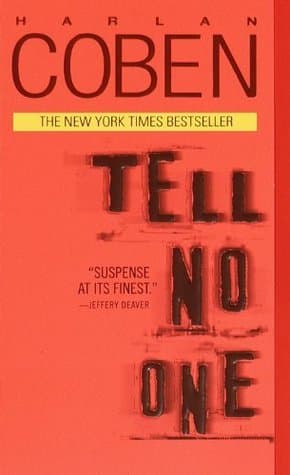
- Tell No One
Harlan Coben
4.1 (120k) average on GoodreadsThrillerFeatures a protagonist whose past trauma resurfaces and unravels a complex mystery.
- Gone Girl
Gillian Flynn
4.1 (2.3M) average on GoodreadsThrillerExplores dark secrets, unreliable narratives, and a thrilling unraveling of truth.
- The Silent Patient
Alex Michaelides
4.1 (507k) average on GoodreadsThrillerA psychological thriller centered on uncovering a traumatic past event and its consequences.
- Mystic River
Dennis Lehane
4.2 (128k) average on GoodreadsThrillerBoth novels explore childhood trauma haunting adult lives and the ripple effects of past violence. However, Lehane's novel delves deeper into the societal and moral decay within a specific community, offering a grittier, more character-centric exploration of guilt and justice, with a broader social commentary. Coben's focus is more on the individual's quest for truth and intricate plot mechanics.
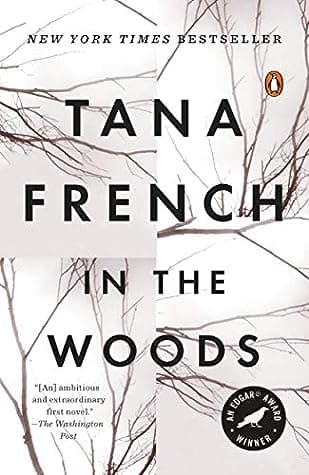
- In the Woods
Tana French
3.8 (304k) average on GoodreadsThrillerBoth feature a detective grappling with a traumatic childhood disappearance. French's novel offers a more literary and atmospheric approach, with a greater emphasis on psychological ambiguity and the unreliable nature of memory, often leaving questions unanswered. Coben, in contrast, provides a more definitive, albeit complex, resolution, catering to readers who prefer a tightly wrapped mystery and faster pacing.
- Angels & Demons
Dan Brown
3.9 (2.7M) average on GoodreadsThrillerA Harvard symbologist races through Rome's ancient sites, deciphering cryptic clues to unmask the Illuminati and stop a vengeful plot to destroy the Vatican with a stolen antimatter weapon.




Enjoyed the summary?
A summary gives you the shape of the book. The book itself has the detail, the examples and the voice.
Find The Woods on AmazonAs an Amazon Associate, BookBrief earns from qualifying purchases. How we're funded