
Synopsis
Covers the whole plot, including the ending.
- Difficulty
- Easy
- Pacing
- Fast
- Mood
- Humorous, Silly, Lighthearted, Wacky
- Read it if
- You enjoy silly, exaggerated humor and short, self-contained stories about quirky characters, especially if you're a young reader who loves David Walliams's other books.
- Skip it if
- You prefer realistic fiction, complex plots, or subtle humor, or if you dislike slapstick and gross-out comedy.
The World’s Worst Teachers Plot Summary
Covers the whole plot, including the ending.
Mrs. Splutter's Spluttering
Mrs. Splutter is a teacher at Rotten House School with an extreme spitting problem. Every time she speaks, saliva erupts from her mouth, drenching her students and their work. During a lesson on the water cycle, her spitting becomes so intense that it creates a mini-flood in the classroom, ruining textbooks. Children try to create makeshift umbrellas from their jotters. Eventually, the headmaster, Mr. Gruff, intervenes, but even he is not immune to Mrs. Splutter's watery onslaught. The story ends with the entire school affected by her uncontrollable spitting, making for a messy and unforgettable day.
Dr. Dread's Dissections
Dr. Dread is the science teacher at a school where rumors say he is half-man, half-monster, with a grotesque appearance and an unsettling interest in dissection. His lessons involve gruesome experiments, often using real animals, to the horror of his students. During one particularly macabre class, he brings in a live frog for dissection, causing a student named Barnaby to faint. Dr. Dread's goal is to create a 'perfect' hybrid creature, using parts from various animals. He sees his students' fear as a sign of his success. His classroom is a chilling chamber of horrors, filled with preserved specimens and the tools of his strange trade.
Miss Seethe's Fury
Miss Seethe is a teacher whose default emotion is extreme fury. She is constantly red-faced, veins bulging, and her voice a perpetual roar. Any minor transgression, real or imagined, results in an immediate and lengthy detention. During a seemingly normal art class, a student named Sophie accidentally drops a crayon, which Miss Seethe sees as deliberate defiance. This starts a chain reaction of detentions, as other students are punished for sniggering, looking out the window, or even just breathing too loudly. Her detentions are legendary, involving endless lines and no breaks, making her the most feared teacher in the school.
Mr. Phobe's Phobias
Mr. Phobe is a primary school teacher with an unusual and debilitating fear: he is absolutely terrified of children. His classroom is arranged to keep students as far away from him as possible, with his desk on a raised platform and a complex system of ropes and pulleys to deliver assignments. During a lesson, a child named Timmy accidentally sneezes, causing Mr. Phobe to shriek and hide under his desk, convinced he's been attacked. The children, realizing his fear, begin to exploit it, making loud noises and sudden movements to send him into a panic. This means lessons are abandoned as Mr. Phobe spends most of his time cowering in fear.
Mrs. Grumbles' Grub
Mrs. Grumbles is the dinner lady at the school, known for her truly abysmal cooking. Her meals are unidentifiable, often gray, and smell dreadful. She takes pleasure in forcing children to eat every last bite, no matter how nauseating it is. During lunch, a student named Chloe tries to hide her 'mystery meat' under her potato, but Mrs. Grumbles, with her sharp eyes, spots the deception. She then makes Chloe eat it in front of everyone, threatening her with extra chores if she refuses. Her rule over the school canteen is one of culinary terror; children often try elaborate schemes to avoid her ghastly food.
Mr. Flat's Fables
Mr. Flat is the history teacher, and his lessons are known for their mind-numbing dullness. He speaks in a monotone, never varies his expression, and his stories of historical events are completely without excitement or drama. During a lesson on the Roman Empire, a student named Leo tries desperately to stay awake, but Mr. Flat's droning voice and endless recitation of dates and facts are too much. One by one, the entire class falls asleep, their heads resting on their desks. Mr. Flat, unaware of his audience's slumber, continues his lecture, seemingly content to teach to a room full of unconscious children.
Mademoiselle Ma'am's Mayhem
Mademoiselle Ma'am is the French teacher, a strict, unyielding woman who insists that only French be spoken in her classroom. Any English, even an accidental 'oops,' is met with severe punishment, often involving bizarre and humiliating tasks. During a lesson, a student named Daisy accidentally says 'oops' in English. Mademoiselle Ma'am immediately acts, forcing Daisy to wear a beret filled with snails for the rest of the day. Her teaching methods instill fear and absolute adherence to her rules, making French class a terrifying experience for all her pupils.
Mr. Gulp's Greed
Mr. Gulp is the greedy headmaster of the school, more interested in his own stomach than his students' welfare. He constantly devises schemes to acquire children's lunch money, snacks, and any other edible treats they bring to school. During break time, he patrols the playground, confiscating crisps and chocolate bars under the guise of 'healthy eating' or 'checking for allergens,' only to eat them himself in his office. A student named Sam tries to hide his chocolate biscuits, but Mr. Gulp's keen sense of smell leads him directly to the contraband, which he promptly 'confiscates' and eats with relish. His office is often filled with the wrappers of his ill-gotten gains.
The Beastly Building Caretaker
The Beastly Building Caretaker, whose name is never fully revealed, is a menacing figure who lurks around the school, taking pleasure in making the children's lives difficult. He is responsible for all maintenance, but often uses his position to cause inconvenience and misery. During a particularly rainy day, he 'accidentally' locks the children out of the school during break time, forcing them to get soaked. He also trips students, hides their belongings, and generally makes their school experience as unpleasant as possible. His gruff demeanor and constant scowl make him a universally disliked figure among the student body.
The Artful Dodger (Art Teacher)
The Artful Dodger, the school's art teacher, is a cunning, unscrupulous individual who takes credit for his students' best artwork. He enters their masterpieces into competitions under his own name, hoping to win prizes and accolades for himself. During an art lesson, a talented student named Lily creates a breathtaking landscape painting. The Artful Dodger immediately recognizes its potential and, under the guise of 'framing it for display,' secretly submits it to a national competition as his own work. He manipulates and praises students just enough to get them to produce excellent art, then steals the glory for himself, leaving the children unknowingly robbed of their achievements.
The World’s Worst Teachers Characters
Mrs. Splutter
Antagonist
The spitting teacher of Rotten House School.
Mrs. Splutter is a science teacher whose defining characteristic is her uncontrollable spitting. She is oblivious to the chaos and discomfort her bodily function causes, believing she is simply teaching with enthusiasm. Her appearance is often described as disheveled and damp, a direct result of her condition. She is not intentionally malicious, but her lack of self-awareness makes her a nightmare for her students. She represents the messy, unhygienic aspects of a bad teacher.
Relationships: Students (Victims of her spitting, constantly trying to avoid her watery onslaught.); Mr. Gruff (Her headmaster, who is exasperated by her but unable to control her spitting.)
Dr. Dread
Antagonist
The monstrous, dissection-obsessed science teacher.
Dr. Dread is a terrifying science teacher, rumored to be half-man, half-monster. His appearance is grotesque, and he revels in the fear he instills in his students. His passion lies in gruesome experiments and dissections, often involving live animals. He is driven by a desire to create unusual hybrid creatures and sees his classroom as a laboratory for his dark ambitions. He is intentionally cruel and enjoys the discomfort of his students, embodying the truly sinister teacher.
Relationships: Barnaby (A student who faints during one of his dissections, highlighting Dr. Dread's terrifying nature.); Students (His terrified subjects, forced to witness his gruesome lessons.)
Miss Seethe
Antagonist
The perpetually furious teacher who gives out endless detentions.
Miss Seethe is a teacher whose defining trait is her extreme and constant anger. She is always red-faced, veins bulging, and her voice is a perpetual roar. She finds fault in every student action, no matter how small, and her solution to everything is detention. She is driven by a need for absolute control and sees any deviation from her strict rules as a personal affront. She takes sadistic pleasure in punishing students, representing the authoritarian and unfairly punitive teacher.
Relationships: Sophie (A student who accidentally drops a crayon, becoming a victim of Miss Seethe's disproportionate anger.); Students (Her intimidated pupils, constantly trying to avoid her wrath and detentions.)
Mr. Phobe
Antagonist (unintentionally)
The teacher who is terrified of children.
Mr. Phobe is a primary school teacher with an extreme and irrational fear of children. Despite his profession, he is bone-shakingly terrified of his pupils, often hiding or panicking at their slightest movements or sounds. He tries to maintain distance and control in his classroom to manage his phobia, but his fear often leads to absurd and comical situations. He is not malicious but his phobia makes him utterly ineffective and provides ample opportunity for the children to exploit his weakness.
Relationships: Timmy (A student whose sneeze triggers one of Mr. Phobe's panic attacks.); Students (They quickly learn to exploit his fear, making his life a misery.)
Mrs. Grumbles
Antagonist
The dinner lady who serves disgusting food and forces children to eat it.
Mrs. Grumbles is the school's dinner lady, known for her truly vile cooking and her cruel insistence that children finish every bite. She takes sadistic pleasure in forcing students to consume her unappetizing creations, often watching them with a menacing glare. She is driven by a desire for control over the children's eating habits and a perverse satisfaction in their discomfort. She represents the unpleasant and unhygienic aspects of school food and the authoritarian figures in the canteen.
Relationships: Chloe (A student who tries to hide her food, only to be caught and forced to eat it by Mrs. Grumbles.); Students (Her unwilling diners, who dread lunch and try to avoid her food.)
Mr. Flat
Antagonist (unintentionally)
The incredibly dull history teacher.
Mr. Flat is the history teacher whose lessons are synonymous with boredom. He speaks in a monotone, shows no emotion, and presents historical facts in the driest possible manner. His teaching style is so unengaging that he invariably puts his entire class to sleep. He is not intentionally bad but his complete lack of charisma and passion makes him an ineffective and forgettable educator. He represents the teachers who suck all joy and interest out of learning.
Relationships: Leo (A student who struggles to stay awake during Mr. Flat's history lesson.); Students (His captive audience, who routinely fall asleep during his lectures.)
Mademoiselle Ma'am
Antagonist
The strict French teacher who punishes students for speaking English.
Mademoiselle Ma'am is the school's French teacher, a formidable woman who demands absolute adherence to her 'French only' rule in class. She is unyielding and employs bizarre, humiliating punishments for any student who dares to utter a word of English. She is driven by a strict adherence to her teaching methods, believing that fear and humiliation are effective motivators. She embodies the overly strict and culturally insensitive teacher.
Relationships: Daisy (A student who accidentally speaks English and is subjected to one of Mademoiselle Ma'am's strange punishments.); Students (Her intimidated students, who carefully monitor their language in her class.)
Mr. Gulp
Antagonist
The greedy headmaster who steals children's snacks.
Mr. Gulp is the gluttonous headmaster, whose primary concern is satisfying his own appetite. He is cunning and devious, constantly finding excuses to confiscate and consume students' lunch money and snacks. He uses his position of authority to justify his thievery, often under the guise of enforcing school rules. He is driven by pure self-interest and a voracious appetite, representing the corrupt and selfish authority figure.
Relationships: Sam (A student whose chocolate biscuits are 'confiscated' and eaten by Mr. Gulp.); Students (His unwitting victims, whose snacks are constantly at risk.)
The Beastly Building Caretaker
Antagonist
The menacing caretaker who delights in making children miserable.
The Beastly Building Caretaker is a gruff and malevolent figure who takes sadistic pleasure in causing discomfort and inconvenience for the students. He uses his role in school maintenance to his advantage, often 'accidentally' creating problems for the children. He is driven by a general misanthropy and a desire to exert petty power over the younger generation. He embodies the grumpy and unhelpful school staff member who makes school life unnecessarily difficult.
Relationships: Students (His victims, who frequently suffer from his 'accidents' and general unpleasantness.)
The Artful Dodger
Antagonist
The art teacher who steals students' artwork for his own gain.
The Artful Dodger is the school's art teacher, a cunning and deceitful individual. He manipulates his talented students into producing exceptional artwork, only to then claim it as his own and submit it to competitions for personal glory. He is driven by vanity and a desire for recognition, willing to exploit the creative efforts of children to achieve it. He represents the dishonest and exploitative teacher who takes advantage of their students' talents.
Relationships: Lily (A talented student whose painting is stolen by the Artful Dodger for a competition.); Students (His unsuspecting victims, whose artistic talents are exploited for his gain.)
The World’s Worst Teachers Themes
Abuse of Power
Many teachers in the collection misuse their authority to terrorize or exploit students. Miss Seethe uses her power to dish out endless, often unwarranted, detentions, simply because she enjoys being angry. Mr. Gulp, the headmaster, uses his position to steal children's snacks and lunch money. The Beastly Building Caretaker uses his access to school facilities to deliberately make children's lives harder. This theme shows how those in authority can use their power for selfish or cruel purposes, creating an environment of fear and injustice for the children. This is clear when Mr. Gulp confiscates Sam's chocolate biscuits under the guise of 'healthy eating,' showing his blatant abuse of his headmaster role.
“The headmaster’s office was often filled with the wrappers of his ill-gotten gains.”
The Absurdity of Adult Behavior
The book often shows the ridiculous, nonsensical behavior of adults from a child's perspective. Mr. Phobe, a teacher terrified of children, is an inherently absurd concept, leading to comical situations where students deliberately exploit his fear. Mrs. Splutter's uncontrollable spitting, while disgusting, becomes an exaggerated, almost farcical, problem. These characters' actions are often disproportionate or illogical, highlighting the arbitrary nature of the adult world as seen through the eyes of children. Mademoiselle Ma'am's punishment of wearing a snail-filled beret for speaking English is another example of this over-the-top absurdity, emphasizing the bizarre rules adults impose.
“Mr. Phobe, a primary school teacher with an unusual and debilitating fear: he is absolutely terrified of children.”
Childhood Resilience and Mischief
Despite facing truly awful teachers, the children in the stories often show resilience, adaptability, and a knack for mischief. They find ways to cope with or even subtly rebel against their tormentors. Students under Mrs. Splutter's reign try to create makeshift umbrellas, while those under Mr. Phobe's care quickly learn to exploit his fear for their own amusement. This theme celebrates the ingenuity and spirit of children, showing how they handle challenging situations with humor and cleverness, often turning the tables on their grown-up oppressors. The students trying to hide food from Mrs. Grumbles or falling asleep en masse during Mr. Flat's lessons are small acts of defiance.
“The children, realizing his fear, began to exploit it, making loud noises and sudden movements to send him into a panic.”
The Horrors of School Life
The main theme is a satirical portrayal of the worst aspects of school life, exaggerated for comedic and cautionary effect. From disgusting school lunches served by Mrs. Grumbles to mind-numbingly boring lessons from Mr. Flat, and the constant threat of detention from Miss Seethe, the book presents school as a place of potential dread and discomfort. It taps into common childhood anxieties about strict teachers, bad food, and unfair rules, amplifying them to create a relatable yet comically extreme vision of educational institutions. Dr. Dread's gruesome science lessons perfectly show the 'horror' aspect of this theme.
“His classroom is a chilling chamber of horrors, filled with preserved specimens and the tools of his peculiar trade.”
Plot Devices & Literary Techniques
Exaggeration/Hyperbole
Over-the-top descriptions of character flaws and situations.
This is the primary comedic device used throughout the book. Every teacher's negative trait is amplified to an absurd degree, making them comically awful. Mrs. Splutter's spitting isn't just a minor annoyance; it causes floods. Miss Seethe isn't just strict; she's perpetually furious and gives detentions for breathing. This exaggeration makes the characters memorable and the situations entertaining, while also highlighting the inherent 'badness' of the teachers in an amusing way. It allows the book to explore serious themes of bad teaching in a lighthearted, accessible manner for young readers.
Caricature
Characters defined by a single, prominent, often negative, trait.
Each teacher is essentially a caricature, embodying one dominant, highly exaggerated negative characteristic. Dr. Dread is solely defined by his monstrous appearance and love for dissection; Mr. Flat by his extreme dullness; Mr. Phobe by his fear of children. This simplifies the characters, making them instantly recognizable and their flaws immediately apparent. It allows the author to focus on the humor and horror derived from that single trait without needing complex character development, serving the book's episodic, sketch-like structure.
Situational Irony
The outcome of events is contrary to what is expected.
Situational irony is used to create humor and highlight the absurdity of the teachers. For instance, a teacher whose job is to educate children, Mr. Phobe, is terrified of them, leading to him hiding under his desk instead of teaching. Another example is the Artful Dodger, an art teacher who should be fostering creativity, but instead steals his students' artwork. This contrast between expectation and reality provides comedic relief and underscores the 'worst' qualities of these educators, making their incompetence or malice more pronounced.
Understatement (by children)
Children's reactions are sometimes downplayed in the face of extreme adult behavior.
While the teachers' actions are exaggerated, the children's reactions are often presented with a degree of deadpan acceptance or pragmatic adaptation, creating a subtle layer of humor. For example, instead of outright panic, children under Mrs. Splutter simply try to make umbrellas. This understatement from the children's perspective contrasts sharply with the exaggerated adult behavior, highlighting the resilience and often cynical worldview of the young protagonists. It shows them as resourceful and often unfazed by the adults' extreme antics.
The World’s Worst Teachers Quotes
“The worst teachers in the world are about to unleash their unique brand of terror on some unsuspecting pupils.”
“Mrs. Bixby was a PE teacher who believed that the only way to make children fit was to make them utterly miserable.”
“There was nothing Miss Root loved more than a good old-fashioned telling off. Especially if it involved shouting.”
“Mr. Gumdrop was a science teacher who thought that experiments should be as dangerous and explosive as possible.”
“The children of Doom’s Day School knew that if they ever saw Miss Seethe, it meant trouble. Big trouble.”
“He didn't teach history; he told stories. Terrifying, exaggerated, utterly made-up stories.”
“Some teachers are bad. Some teachers are worse. And then there are the ones in this book.”
“She was so mean, even the school bullies were scared of her.”
“Mr. Grime was an art teacher who believed that art should be messy, disgusting, and preferably made from old socks.”
“The only thing worse than being taught by a bad teacher, is being taught by a bad teacher who thinks they're brilliant.”
“Her lessons were like a trip to the dentist, except the drill was made of boredom.”
“He wasn't just old; he was ancient. So ancient, he probably taught the dinosaurs.”
“Every school has one. That teacher who makes you want to hide under your desk and never come out.”
“The children braced themselves. Another day, another dose of dreadful teaching.”
Quiz
10 questions on the plot and the characters. Each answer comes with a short explanation.
Question 1
Which teacher, according to the description, is 'half man, half monster' and teaches science?
- Miss Seethe
- Phobe
- Dr Dread
- Mr Grumbles
Show answer
C. Dr Dread The book description explicitly states that 'Dr Dread teaches science and is half man, half monster'.
Question 2
What is the primary characteristic of Miss Seethe, as described in the book's synopsis?
- She is always happy and gives out rewards.
- She is ALWAYS furious and on a detention rampage.
- She is terrified of children.
- She teaches with a real difference, being half monster.
Show answer
B. She is ALWAYS furious and on a detention rampage. The synopsis describes Miss Seethe as being 'ALWAYS furious – and she’s on a detention rampage'.
Question 3
What is unique about the teacher named Phobe?
- He gives out too much homework.
- He is bone-shakingly terrified of children.
- He is secretly a superhero.
- He only teaches in the dark.
Show answer
B. He is bone-shakingly terrified of children. The text states, 'And as for Phobe, he’s a teacher with a real difference. He is bone-shakingly terrified of... children!'
Question 4
Who is the illustrator for 'The World’s Worst Teachers'?
- Quentin Blake
- Tony Ross
- Chris Riddell
- Axel Scheffler
Show answer
B. Tony Ross The description clearly states the book is 'illustrated in glorious colour by the artistic genius, Tony Ross'.
Question 5
What previous series by David Walliams is mentioned as being loved by young readers, leading into 'The World’s Worst Teachers'?
- The World’s Worst Parents
- The World’s Worst Children
- The World’s Worst Pets
- The World’s Worst Villains
Show answer
B. The World’s Worst Children The synopsis mentions, 'Millions of young readers have loved the World’s Worst Children tales – now they will revel in this delightfully dreadful collection of the most gruesome grown-ups ever: The World’s Worst Teachers.'
Question 6
How many individual tales of teachers are featured in 'The World’s Worst Teachers'?
- Seven
- Eight
- Ten
- Twelve
Show answer
C. Ten The text states, 'These ten tales of the world’s most splendidly sinister teachers will have you running for the school gates.'
Question 7
What is the overarching theme or promise of the book 'The World’s Worst Teachers'?
- To celebrate the best educators in the world.
- To introduce readers to the most delightful and kind teachers.
- To present a collection of the most gruesome and sinister teachers.
- To provide practical advice for becoming a better teacher.
Show answer
C. To present a collection of the most gruesome and sinister teachers. The book is described as a 'delightfully dreadful collection of the most gruesome grown-ups ever' and 'ten tales of the world’s most splendidly sinister teachers'.
Question 8
What specific reaction does the book suggest readers will have after meeting the featured teachers?
- They will want to invite them home for tea.
- They will be inspired to become teachers themselves.
- They will be running for the school gates.
- They will want to write thank you letters.
Show answer
C. They will be running for the school gates. The synopsis claims, 'These ten tales of the world’s most splendidly sinister teachers will have you running for the school gates.'
Question 9
How does the book describe the illustrations by Tony Ross?
- Monochrome and simple
- Black and white sketches
- In glorious colour
- Minimalist and abstract
Show answer
C. In glorious colour The text highlights the illustrations as being 'in glorious colour by the artistic genius, Tony Ross'.
Question 10
What kind of 'grown-ups' does 'The World’s Worst Teachers' specifically focus on, as implied by the title and description?
- Parents
- Librarians
- Teachers
- School principals
Show answer
C. Teachers The title itself, 'The World’s Worst Teachers', and the entire description explicitly focus on teachers as the 'gruesome grown-ups'.
The World’s Worst Teachers FAQ
What is the overarching theme of 'The World's Worst Teachers'?
'The World's Worst Teachers' is a collection of ten humorous and exaggerated stories about incredibly awful educators. Each tale features a unique teacher with a distinctively terrible personality or peculiar habit, designed to entertain young readers with their outrageous antics and comeuppances.
Who is Dr. Dread and what makes him one of the 'worst teachers'?
Dr. Dread is a science teacher who is literally half-man, half-monster, making him a terrifying figure in the classroom. His monstrous experiments and bizarre appearance contribute to his dreadful reputation, creating a sense of fear and awe among his students.
Can you describe Miss Seethe's primary characteristic?
Miss Seethe is characterized by her perpetual fury and her insatiable desire to issue detentions. She is constantly enraged, finding any excuse to punish her students, which makes her a particularly ghastly and feared figure in the school.
What makes Phobe a unique addition to the collection of 'worst teachers'?
Phobe is unique because, unlike the other teachers who terrorize their students, he is absolutely terrified of children himself. His bone-shaking fear of his pupils leads to comical situations as he tries to avoid them at all costs, despite being their teacher.
How many individual teacher stories are included in the book?
The book features ten distinct stories, each dedicated to a different 'worst teacher.' This structure allows for a variety of outrageous characters and scenarios, keeping the collection fresh and engaging for young readers.
Are there any recurring characters or subtle connections between the stories, beyond the general theme of bad teachers?
While each story focuses on a different teacher and their unique brand of awful, the primary connection is the shared universe of exaggerated school experiences. There are no explicit recurring student characters or plotlines that link the individual tales, maintaining their standalone nature.
Do any of the teachers have a 'redemption arc' or learn from their bad behavior?
Generally, the teachers do not experience redemption arcs; their 'worst' qualities are celebrated for comedic effect. The humor often comes from their unrepentant bad behavior and the often-deserved, though exaggerated, comeuppances they receive.
Is there a specific moral lesson intended for children in these stories, or are they purely for entertainment?
The stories are primarily for entertainment, reveling in the absurd and the comedic. While children might implicitly learn about the importance of good behavior or the consequences of being mean, the explicit focus is on humor and exaggerated scenarios rather than overt moral instruction.
Are there any subtle nods to classic children's literature or horror tropes within the character designs of the teachers?
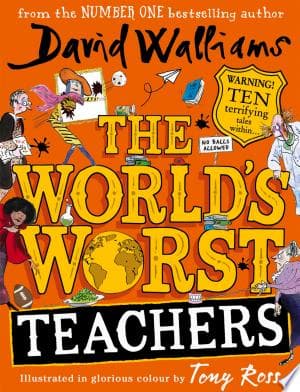
Tony Ross's illustrations and Walliams's descriptions often employ classic caricatures and exaggerated features reminiscent of traditional fairy tale villains or monster archetypes. Dr. Dread, for instance, evokes classic mad scientists or Frankenstein's monster, while Miss Seethe embodies the archetypal 'angry old hag.'
How does Walliams use exaggeration to explore the psychological impact of authority figures on children?
Walliams uses extreme exaggeration to lampoon the concept of oppressive authority. By creating teachers who are monstrous, perpetually furious, or even terrified themselves, he comically highlights the anxieties children can feel towards adults in power, making these fears absurd and manageable through humor.
What psychological effect might Phobe's character have on young readers who might also feel fear or anxiety?
Phobe's character might be comforting or relatable to children who experience their own fears or anxieties. Seeing a teacher, an adult in a position of authority, be utterly terrified of children themselves, can invert power dynamics in a humorous way, potentially validating or normalizing a child's own feelings of apprehension.
How does the book address or subvert the typical 'teacher as a role model' trope?
The book completely subverts the 'teacher as a role model' trope by presenting educators who are the antithesis of ideal. Instead of being figures of inspiration or guidance, these teachers are sources of dread, amusement, or pity, offering a humorous alternative perspective on authority figures.
In what ways do the exaggerated punishments or behaviors of teachers like Miss Seethe reflect common childhood anxieties?
Miss Seethe's constant detentions and irrational anger tap into common childhood anxieties about unfair punishment and arbitrary rules. Her character exaggerates the fear of being wrongly accused or disciplined by an adult, making these fears humorous rather than genuinely distressing.
Is the book suggesting that all teachers are inherently bad, or is it merely using hyperbole for comedic effect?
The book is unequivocally using hyperbole for comedic effect, not making a serious statement about all teachers. It plays on common childhood perceptions and anxieties about strict or unusual teachers, blowing them up to ridiculous proportions for entertainment.
How do Tony Ross's illustrations contribute to the overall tone and interpretation of the stories?
Tony Ross's distinctive, often grotesque and highly expressive illustrations are crucial to the book's tone. His vivid, cartoonish style perfectly complements Walliams's exaggerated prose, visually reinforcing the humor and absurdity of the characters and their situations, making the 'worst' teachers delightfully dreadful rather than genuinely scary.
Could the book be interpreted as a cathartic release for children who have experienced difficult teachers?
Yes, for many children, the book can serve as a cathartic experience. By presenting universally recognized 'bad' teacher traits in an over-the-top, humorous way, it allows children to laugh at situations that might otherwise cause stress, providing a safe outlet for processing their own school experiences.
What is the significance of the book being part of 'The World's Worst Children' series?
Being part of 'The World's Worst Children' series establishes a familiar brand of humor and a stylistic expectation for readers. It signals that this book will similarly delight in exaggerated misbehavior and comedic comeuppance, but this time from the perspective of adults, creating a parallel universe of delightful dread.
How does the book balance its 'dreadful' content with being appropriate for young readers?
The book balances its 'dreadful' content with being appropriate for young readers through its use of humor, exaggeration, and the clear distinction between fantasy and reality. The characters are so over-the-top that they are funny rather than truly frightening, and the illustrations further soften any potentially scary elements.
About the author

David Walliams is a celebrated British author, comedian, and television personality, best known for his hugely popular children's books. His works, including "Gangsta Granny," "Mr Stink," and "The World's Worst Teachers," are characterized by humor, heart, and often a touch of the absurd. Walliams's distinctive storytelling has made him a household name in children's literature.
Similar books
- Matilda
Roald Dahl
4.3 (648k) average on GoodreadsFantasyFeatures memorable, exaggeratedly terrible adult characters (like Miss Trunchbull) and a child-centric perspective.
- Harry Potter and the Sorcerer's Stone
J.K. Rowling
4.5 (7M) average on GoodreadsFantasyRescued from a miserable life under the stairs, an orphaned boy discovers he's a wizard destined for a magical school, where he uncovers a dangerous secret tied to the dark wizard who murdered his parents.
- The Hunger Games
Suzanne Collins
4.3 (6.4M) average on GoodreadsFantasyIn a future where children fight to the death on live television, Katniss Everdeen volunteers for the arena, turning a death sentence into a fight for survival and a spark of rebellion.
- Nineteen Eighty-Four
George Orwell
4.2 (5.5M) average on GoodreadsFictionWinston Smith dreams of truth and rebellion in a world where Big Brother watches all, but he confronts the terrifying power of a regime that controls not just actions, but thoughts.
- Pride & Prejudice
Jane Austen
4.3 (4.9M) average on GoodreadsElizabeth Bennet and Mr. Darcy navigate love and misunderstanding, learning that first impressions can be wrong.
- To Kill a Mockingbird
Harper Lee
4.3 (4.5M) average on GoodreadsHistorical FictionIn the 1930s Jim Crow South, Harper Lee writes about racial injustice, moral growth, and the quiet courage of a lawyer father, Atticus Finch, as seen through his young daughter's eyes.
Enjoyed the summary?
A summary gives you the shape of the book. The book itself has the detail, the examples and the voice.
Find The World’s Worst Teachers on AmazonAs an Amazon Associate, BookBrief earns from qualifying purchases. How we're funded