

Synopsis
Covers the whole plot, including the ending.
- Difficulty
- Medium
- Pacing
- Moderate
- Mood
- Poetic, Romantic, Bittersweet, Intimate, Mind-bending
- Read it if
- You love poetic prose, unconventional romance, epistolary novels, and mind-bending time travel stories where the characters' emotional journey is as important as the plot.
- Skip it if
- You prefer straightforward narratives, hard sci-fi with strict rules, or traditional plot structures, and dislike ambiguous endings or highly metaphorical writing.
This Is How You Lose the Time War Plot Summary
Covers the whole plot, including the ending.
The First Letter: A Taunt Across Timelines
On a war-torn battlefield, an agent named Blue, working for the cybernetically enhanced Garden, finds a letter left for her. The note, marked 'Burn before reading,' is from an agent of the opposing faction, the biologically engineered Agency, named Red. It is a taunt, a boast of Red's manipulation of a timeline Blue was trying to secure. This first exchange, a challenge across the vast, branching timelines of their perpetual Time War, starts an unexpected series of secret communications. Despite the danger and the rules of their sides, Blue is intrigued, and Red wants to engage, setting the stage for their unique and forbidden relationship.
The Game Begins: Letters Hidden in Plain Sight
After the first letter, Blue responds, and their elaborate game of hide-and-seek across time begins. They leave messages for each other in clever ways: carved into tree rings, embedded in geological layers, woven into tapestries, whispered into ancient winds, or encoded in the genetic material of an evolving species. Each letter shows their skill and deepens their connection, revealing glimpses of their personalities, missions, and the complex war they fight. Finding and leaving these letters becomes a ritual, a secret world they build together amidst the war's chaos.
Unveiling Selves: Sharing Stories and Vulnerabilities
As their correspondence continues, the letters go beyond taunts and strategic boasts. Blue, with her analytical and often poetic observations, and Red, with her passion and occasional vulnerability, begin to share details about their lives, missions, and the philosophies of their warring factions. Blue describes the Garden's pursuit of a 'perfect' timeline through technology, while Red explains the Agency's organic, evolving approach to history. They discuss the loneliness of their work, the toll of constant temporal manipulation, and the ethical questions of their war. These revelations create intimacy and understanding between them, bridging the ideological gap that separates their sides.
A Shared Universe: Building a Secret World
The letters become a universe for them, a sanctuary where Blue and Red can be vulnerable and authentic in ways they cannot be with their own factions. They share poetry, philosophical thoughts, and even everyday observations about the timelines they traverse. This shared space allows them to develop an emotional connection that goes against their conflict's nature. They begin to anticipate each other's thoughts, understand each other's humor, and even develop a unique language within their correspondence. The war, while still raging, starts to feel distant, a backdrop to the deeper connection they are forming.
The Inevitable Question: Love Across the Divide
As their bond deepens, the tone of their letters shifts from rivalry to affection, and then to something romantic. They acknowledge the impact they have had on each other, challenging their loyalty to their respective sides. The question of love, unspoken for a long time, finally comes up. They deal with the implications of their feelings, understanding that such a connection is forbidden and could be fatal if discovered by their superiors. This realization adds a new layer of tension and danger to their already precarious situation, forcing them to confront the choice between their duties and their hearts.
Escalating Danger: The War Closes In
While their personal connection grows, the Time War itself continues. Both the Garden and the Agency push harder for victory. Blue and Red find themselves in dangerous situations, their missions intertwining in ways that make their secret correspondence even riskier. Pressure from their superiors mounts, and the possibility of their letters being intercepted or their connection being exposed becomes a real threat. They are constantly aware that a single mistake could lead to their demise, making every hidden message a gamble with their lives and the fate of their love.
The Trap: A Calculated Risk
Driven by their longing to truly meet, Red devises a daring and risky plan. She manipulates a timeline, creating an isolated pocket of time and space where they might physically meet without immediate detection. This act is a gamble, a direct defiance of all rules and a potential betrayal of her faction. Blue, upon deciphering Red's plan, understands the danger but also wants to finally bridge the physical gap. This moment is a turning point, as their abstract connection threatens to become tangible.
The Meeting: A Moment of Reality
In a carefully constructed temporal anomaly, Blue and Red finally meet. The encounter is brief, intense, and emotional. They confirm the reality of their connection, the depth of their affection, and the physical presence they had only imagined. However, this meeting also shows the impossible nature of their love. The world they inhabit is one of constant conflict, where their existence as agents depends on the destruction of the other's side. The brief, stolen moment solidifies their bond but also highlights the reality that their love is a direct threat to the Time War and to their own lives.
The Ultimatum: Forced to Choose
Their secret correspondence and the true nature of their relationship are discovered by their superiors. Both the Commandant of the Garden and the Agency's leadership see their bond as treason, a catastrophic security breach that could destabilize the entire Time War. Blue and Red are given an ultimatum: eliminate the other, or face termination themselves. This revelation shatters their fragile world, forcing them to confront the brutal reality that their love has become a weapon, and they are now caught in a deadly trap.
A New Timeline: The Impossible Choice
Faced with an impossible choice, Blue and Red refuse to betray each other. Instead, they use their talents and knowledge of temporal mechanics to attempt an audacious, unprecedented feat: to forge an entirely new timeline, a 'third way' where they can exist together, free from the war and their factions. This involves complex manipulation of causality, a final, desperate act of creation and defiance against the systems that created them. Their plan shows their love and their shared desire for a future beyond the endless conflict, a future they must literally build themselves.
The Escape: Forging Their Own Future
Through their combined efforts, using their unique skills and understanding of time, Blue and Red execute their plan. They sever their ties to their original timelines and factions, creating a new, stable reality where they can finally be together, unburdened by the war. This act of creation is their ultimate victory, not over each other, but over the war itself. They find themselves in a peaceful, garden-like setting, a world of their own making, where their love can flourish. The story ends with them living a life together, having transcended the conflict that once defined them, proving that love can win the Time War.
Principal Figures
Blue
Protagonist
An agent of the Garden, precise and poetic, who falls in love with her rival.
Blue is an agent of the Garden, a faction that uses advanced technology and cybernetic enhancements to achieve its temporal objectives. She is characterized by her analytical mind, her meticulous precision, and a surprising poetic sensibility. Her letters often reflect a detached, observational tone, yet they are filled with profound insights and a growing emotional depth. She is initially drawn to Red's audacious taunts, finding a kindred spirit in her rival. Blue's loyalty to the Garden is slowly eroded by her deepening connection with Red, leading her to question the very purpose of the war. She represents a blend of logic and burgeoning emotion, capable of both fierce strategy and tender vulnerability.
Relationships: Red (rival, then lover and partner); The Commandant (superior, distant and demanding)
Red
Protagonist
An agent of the Agency, fiery and passionate, who forms an unbreakable bond with her enemy.
Red is an agent of the Agency, a faction that employs biological manipulation and organic evolution to shape timelines. She is passionate, impulsive, and fiercely independent, often leaving behind taunting, almost aggressive, letters that mask a deep longing for connection. Her writing style is more visceral and emotionally direct than Blue's. Red is the initiator of the correspondence, driven by a desire to engage with a worthy opponent. Her experiences in the war have made her resilient and cunning, but her letters reveal a vulnerability and a profound capacity for love. She is willing to take immense risks for what she believes in, including orchestrating their first physical meeting.
Relationships: Blue (rival, then lover and partner); The Agency (faction she serves, until her allegiance shifts to Blue)
The Commandant
Antagonist/Mentioned
The shadowy, unseen leader of the Garden, representing its cold, logical authority.
The Commandant is the unseen, authoritative leader of the Garden, Blue's faction. Representing the cold, logical, and technologically driven ethos of the Garden, the Commandant communicates through directives and the pervasive influence of the Garden's systems. This character embodies the impersonal, almost algorithmic nature of the war, prioritizing the 'optimal' timeline above all else. The Commandant's discovery of Blue's and Red's correspondence leads to the ultimate ultimatum, making them an antagonist by proxy, representing the forces that seek to prevent Blue and Red's union and maintain the status quo of the Time War.
Relationships: Blue (superior to agent)
The Agency
Antagonist/Mentioned
The collective leadership of Red's faction, representing its organic, ruthless authority.
The Agency refers to the collective, often amorphous, leadership of Red's faction. In contrast to the Garden's technological precision, the Agency embodies a more organic, evolving, and sometimes brutal approach to temporal manipulation. They represent the opposing ideological force to the Garden, equally ruthless in their pursuit of victory in the Time War. Like the Commandant, the Agency's discovery of Red's and Blue's forbidden connection leads to a death sentence, making them an antagonistic force. They symbolize the oppressive, all-consuming nature of the war that Red and Blue must escape.
Relationships: Red (faction she serves)
The War
Antagonist
The perpetual, all-consuming conflict between the Garden and the Agency.
While not a character in the traditional sense, 'The War' functions as a primary antagonist, a pervasive force that shapes the lives of Blue and Red and threatens their existence. It is the backdrop against which their love story unfolds, a constant threat that seeks to divide them and ultimately destroy them. The War is an endless, complex conflict fought across countless timelines, with each side vying for the 'best' future. It forces Blue and Red into roles of opposition, making their connection a profound act of rebellion. The War is a symbol of division, destruction, and the forces that resist connection and peace.
Relationships: Blue (employer/master); Red (employer/master)
The Scribe
Mentioned
An ancient, enigmatic entity that predates the Time War, occasionally referenced by Red.
The Scribe is an ancient, enigmatic figure occasionally referenced by Red, particularly in her more philosophical or poetic letters. The Scribe represents a deeper, perhaps primordial, understanding of time and narrative, predating the current Time War and its factions. Red implies that the Scribe is a keeper of stories, a witness to the unfolding of countless timelines, and perhaps an inspiration for her own narrative sensibilities. This character adds a layer of cosmic mystery and hints at a larger, more ancient history of time itself, suggesting that the current conflict is but one chapter in a much grander story.
Relationships: Red (source of inspiration/mythology)
Themes & Insights
Love as an Act of Rebellion and Creation
The novel's main theme is how love between Blue and Red is not just an emotion, but an act of defiance against the destructive forces of war and an act of creation. Their correspondence, and eventually their shared timeline, represent a choice to build something new and nurturing in a universe based on conflict and erasure. Their love creates a new future, going beyond the opposition of their warring factions. This is clear in their final act of forging a unique timeline where they can exist together, a rejection of the war's destructive goal.
“I love you. I love you. I love you. I will burn the world to the ground to keep you.”
Identity and Self-Discovery Through Connection
Blue and Red, initially defined by their roles as agents of opposing factions, undergo a journey of self-discovery through their correspondence. Their letters allow them to shed the strictures of their identities and explore deeper aspects of themselves – their vulnerabilities, their poetic inclinations, their longing for connection. Through the eyes of the other, they understand who they are beyond the war. Their evolving relationship challenges their loyalties and forces them to re-evaluate their purpose, leading them to forge new identities together outside the war.
“I find myself in your words, Blue. I find myself in your silence, too.”
The Nature of Time and Narrative
The book explores time not as a linear progression but as a fluid, changeable entity, constantly being written and rewritten. The Time War is a battle over narrative – whose version of history will prevail. Blue and Red's letters are acts of storytelling, weaving their personal narrative into time. The novel suggests that narratives, whether personal or historical, are tools that can shape reality. By creating their own timeline, they don't just escape the war; they write their own story, asserting their control over the grand narrative of existence.
“Time is a story. We are all writing it, all the time.”
Communication and Connection in Isolation
Despite being rivals in a vast, impersonal war, Blue and Red form a deep connection through written communication. Their letters become a lifeline, a shared secret world built amidst isolation and danger. Writing, hiding, and finding these messages is a ritual that binds them. The novel emphasizes the power of words to bridge distances and ideological divides, creating intimacy and understanding where none should exist. Their struggle shows the human need for connection, even under extreme circumstances, proving that communication can overcome barriers.
“I want to be able to tell you things that are not for burning.”
The Futility and Cycle of War
The Time War is an endless, self-perpetuating conflict that has lost its original meaning, becoming an existential state rather than a means to an end. Both factions are trapped in a cycle of destruction and temporal manipulation, constantly erasing and rewriting history without achieving victory. Blue and Red's relationship shows the futility of this cycle, as their connection offers a path to peace and creation that the war itself cannot provide. Their escape comments on the emptiness of perpetual conflict and the possibility of breaking free from destructive patterns.
“The war is not a place, but a state of being. An endless becoming.”
Plot Devices & Literary Techniques
Epistolary Narrative
The primary storytelling method, composed of letters between the two protagonists.
The entire novel is structured as an epistolary narrative, consisting solely of the letters exchanged between Blue and Red. This device allows for an intimate, subjective exploration of their developing relationship, revealing their personalities, philosophies, and the nuances of the Time War through their own voices. The letters also serve as the central plot mechanism, driving the story forward as each message responds to and builds upon the last. The varying forms and hiding places of the letters themselves become part of the narrative's charm and complexity, illustrating the agents' ingenuity and the deepening of their bond.
Dual Perspective
Alternating viewpoints between Blue and Red, each contributing to the narrative.
The epistolary format inherently creates a dual perspective, with the narrative alternating between Blue's and Red's letters. This allows the reader to experience the Time War and their growing connection from two distinct ideological and personal viewpoints. Blue's Garden-influenced, more analytical voice contrasts with Red's Agency-influenced, more passionate and visceral prose. This dual perspective enriches the story by providing different interpretations of events, showcasing the evolving dynamic between them, and highlighting the unique ways they perceive their shared universe and each other.
Temporal Manipulation/Time Travel
The core mechanic of the Time War and the means by which agents operate.
Temporal manipulation and time travel are not just plot devices but the fundamental premise of the Time War. Both the Garden and the Agency constantly alter timelines, erasing and rewriting history to gain an advantage. This device creates a fluid, non-linear narrative where past, present, and future are constantly in flux. It also allows Blue and Red to leave messages for each other across vast stretches of time and in impossible locations, making their communication itself an act of temporal defiance. Ultimately, it is their mastery of temporal mechanics that enables their escape and the creation of their own timeline.
The Letters as Artifacts
The physical form and hiding places of the letters are integral to the plot and character development.
Beyond their content, the letters themselves, as physical (or sometimes conceptual) artifacts, are a crucial plot device. They are hidden in incredibly imaginative ways—embedded in geological strata, carved into a tree's rings, woven into tapestries, or even genetically encoded. The creativity and effort required to hide and find these messages reflect the agents' skills and the increasing depth of their connection. The evolution of the letters' hiding places, from simple battleground notes to intricate temporal puzzles, mirrors the growing intimacy and risk of their relationship, making the medium as important as the message.
Metaphor of the Garden and the Agency
Symbolic representations of opposing ideologies and approaches to life/time.
The names of the two warring factions, the 'Garden' and the 'Agency,' function as powerful metaphors. The Garden represents order, control, technological precision, and a desire to cultivate an 'ideal' future, often at the expense of natural growth. The Agency, conversely, embodies organic evolution, wildness, adaptation, and a more chaotic, vital approach to time. These contrasting metaphors extend to the personalities of Blue and Red, who initially embody aspects of their factions but ultimately transcend them. Their union, creating a new, harmonious 'garden' of their own, symbolically resolves these opposing philosophies.
This Is How You Lose the Time War Quotes
“When we meet on the battlefield, it will be a clash of titans. But here, in this quiet moment, we are just two people, sharing a secret.”
“I have built a thousand bridges, and I have burned a thousand more. But I have never built a bridge to you.”
“The war is a lie. The future is a lie. But this? This is real.”
“You are the only enemy I have ever feared, and the only friend I have ever loved.”
“Time is a river, and we are the stones that break its flow.”
“I have seen the end of the world, and it is beautiful. But it is not as beautiful as you.”
“We are not soldiers. We are gardeners, tending to the weeds of history.”
“Every letter is a treason, and every word is a victory.”
“The future is not written. It is woven, thread by thread, and we are the weavers.”
“I would burn a thousand worlds to keep you safe.”
“Our love is a secret history, written in the margins of time.”
“You are the anomaly I cannot predict, the variable that changes everything.”
“In the silence between heartbeats, I find you.”
“We are not on opposite sides. We are the two halves of a whole, broken apart by war.”
Quiz
10 questions on the plot and the characters. Each answer comes with a short explanation.
Question 1
What is the first letter Red finds that begins the correspondence in 'This Is How You Lose the Time War'?
- A letter hidden in a beehive
- A letter tucked inside a book
- A letter found among the ashes of a dying world
- A letter delivered by a mechanical bird
Show answer
C. A letter found among the ashes of a dying world The novel opens with Red, an agent of the Commandant, discovering a letter among the ashes of a dying world, which reads 'Burn before reading.' This moment initiates the secret correspondence between Red and Blue.
Question 2
Which of the following best describes the factions that Red and Blue belong to in the time war?
- Red represents a technological utopia, while Blue represents a biological utopia
- Red works for Garden (a biological collective), and Blue works for the Agency (a technological collective)
- Red is from the Agency (a technological collective), and Blue is from Garden (a biological collective)
- Both are independent agents with no allegiance to any faction
Show answer
C. Red is from the Agency (a technological collective), and Blue is from Garden (a biological collective) Red is an agent of the Agency, which values technology and order, while Blue serves Garden, which emphasizes organic growth and nature. Their factions are locked in a war to shape the timeline.
Question 3
How do Red and Blue primarily exchange their letters without detection?
- Through encrypted digital messages
- By leaving them in pre-arranged dead drops
- By embedding them in natural or historical elements, such as in honey or tree rings
- Using time-traveling couriers
Show answer
C. By embedding them in natural or historical elements, such as in honey or tree rings To avoid detection, Red and Blue hide their letters in creative ways within the timeline, such as in the taste of honey, the growth rings of a tree, or the patterns of a tapestry, making them part of the world's fabric.
Question 4
What significant risk do Red and Blue face if their correspondence is discovered?
- Exile to a neutral timeline
- Forced retirement from their agencies
- Death, as their factions would execute them for treason
- Loss of their time-travel abilities
Show answer
C. Death, as their factions would execute them for treason The discovery of their bond would mean certain death for both Red and Blue, as their factions are at war and view any fraternization with the enemy as treasonous, threatening their entire missions.
Question 5
In the context of the novel, what does the phrase 'burn before reading' symbolize?
- A standard security protocol for all Agency messages
- A warning about the dangerous content of the letters
- The forbidden and secretive nature of the correspondence, urging destruction to protect the reader
- A code phrase to identify fellow agents
Show answer
C. The forbidden and secretive nature of the correspondence, urging destruction to protect the reader 'Burn before reading' appears on the first letter and sets the tone for their clandestine exchange. It symbolizes the perilous secrecy of their relationship, advising the recipient to destroy evidence to avoid detection.
Question 6
Which event marks a turning point where Red and Blue's relationship deepens from rivalry to romance?
- When they save each other from a temporal anomaly
- When they exchange gifts, such as a locket or a poem, showing personal investment
- When they agree to a temporary truce in the war
- When they meet face-to-face for the first time
Show answer
B. When they exchange gifts, such as a locket or a poem, showing personal investment Their relationship evolves as they begin exchanging more intimate gifts and letters, like a locket or poetic verses, moving beyond taunts to reveal vulnerabilities and affection, solidifying their romantic bond.
Question 7
What is a key theme explored through Red and Blue's correspondence in the novel?
- The inevitability of technological progress
- The power of love and connection to transcend ideological divides
- The importance of winning wars at all costs
- The superiority of biological over technological systems
Show answer
B. The power of love and connection to transcend ideological divides A central theme is how love and personal connection can bridge vast ideological gaps, as Red and Blue's romance grows despite their allegiance to opposing factions in a brutal time war.
Question 8
How does the novel structure the narrative of Red and Blue's letters?
- Through alternating third-person perspectives focused on each agent
- As a series of epistolary exchanges, with the letters themselves driving the plot
- Via a linear timeline from the war's beginning to end
- Using flashbacks narrated by a neutral observer
Show answer
B. As a series of epistolary exchanges, with the letters themselves driving the plot The story is primarily told through the letters between Red and Blue, an epistolary format that reveals their thoughts, emotions, and the evolving plot directly, making their correspondence the core of the narrative.
Question 9
What role do the 'strands' play in the time war as described in the book?
- They are physical threads used to weave timelines together
- They represent different possible timelines or realities that agents manipulate
- They are communication devices for sending letters across time
- They are weapons designed to erase specific events from history
Show answer
B. They represent different possible timelines or realities that agents manipulate In the novel, 'strands' refer to various potential timelines or realities. Red and Blue, as agents, work to influence these strands to secure their factions' desired futures, central to the war's mechanics.
Question 10
Towards the end of the novel, what drastic action do Red and Blue consider to preserve their relationship?
- Surrendering to a neutral third faction
- Faking their deaths to escape their agencies
- Attempting to end the time war entirely by unraveling its causes
- Convincing their commanders to negotiate peace
Show answer
C. Attempting to end the time war entirely by unraveling its causes As their love deepens and the threat of discovery looms, Red and Blue contemplate extreme measures, including trying to undo the time war itself to create a reality where they can be together, highlighting their commitment.
This Is How You Lose the Time War FAQ
What is 'This Is How You Lose the Time War' about?
The novel follows Red, an agent of the technocratic Agency, and Blue, an agent of the organic Garden, who are rival operatives in a temporal war across multiple timelines. They begin exchanging secret letters that evolve from taunts into a deep, forbidden romance, risking execution if discovered by their factions while navigating a conflict where victory means rewriting all of history.
Why should I read 'This Is How You Lose the Time War'?
It offers a unique blend of poetic prose, intricate world-building across countless timelines, and a compelling enemies-to-lovers romance that explores themes of connection, identity, and rebellion against rigid systems. The novel's epistolary structure and lyrical writing create an immersive experience that stands out in both science fiction and romance genres.
What is the background/setting of 'This Is How You Lose the Time War'?
The setting spans countless alternate timelines and realities shaped by a war between two factions: the Agency (a technocratic, logical society) and the Garden (an organic, nature-based civilization). Agents like Red and Blue manipulate events across these timelines to ensure their faction's preferred future dominates, with scenes ranging from ancient battlefields to futuristic cities and surreal landscapes.
What are the most memorable quotes from the book?
Key quotes include 'Burn before reading' from the first letter, 'I want to meet you in every place I ever loved' expressing Red's longing, and 'You are a garden, tangled and overgrown' from Blue's poetic descriptions. These lines capture the novel's blend of romance, danger, and lyrical beauty.
What writing style does the author use?
Amal El-Mohtar and Max Gladstone employ a highly poetic, epistolary style with lush, metaphorical prose. The narrative unfolds through Red and Blue's letters, which are rich with sensory details, wordplay, and evolving intimacy, blending science fiction concepts with romantic and philosophical depth.
What minor details add significant meaning to the story?
Details like the materials used for letters—such as seeds, blood, or circuitry—reflect the factions' ideologies (Garden's organic vs. Agency's technological). The specific timelines visited, like a world of singing crystals or a drowned city, subtly mirror Red and Blue's emotional states and the war's impact on reality.
What are some subtle foreshadowing moments in the book?
Early letters hint at the romance through increasingly personal metaphors, such as Blue comparing Red to a 'knot in time.' The Commandant's suspicion of Red and mentions of 'seeds' that could grow into rebellion foreshadow the climax where the lovers' bond is discovered and they must choose between war and each other.
What unexpected character connections exist beyond Red and Blue?
Minor characters like the Commandant and Garden's leaders are revealed to have their own hidden agendas and past entanglements in the time war, suggesting that Red and Blue's rebellion is part of a larger, cyclical pattern of resistance within the factions' histories.
What are the unspoken motivations driving Red and Blue?
Beyond their factional duties, both are motivated by a deep loneliness and desire for genuine connection in a war that treats them as tools. Red seeks freedom from the Agency's cold logic, while Blue yearns to transcend the Garden's collective consciousness, making their romance a rebellion against dehumanization.
What psychological complexities do Red and Blue exhibit?
Red struggles with guilt over her violent missions and a logical mindset that conflicts with her growing emotions, while Blue balances poetic sensitivity with ruthless loyalty to the Garden. Their correspondence allows them to explore identities beyond their roles, revealing vulnerabilities like fear of betrayal and longing for authenticity.
What are the major emotional turning points in Red and Blue's relationship?
Key moments include the first letter that shifts from taunt to curiosity, the midpoint where they confess feelings despite the risk, and the crisis when the Commandant discovers their secret. The climax involves a sacrificial choice to protect each other, leading to an emotional resolution that redefines their connection.
How do the relationship dynamics between Red and Blue evolve?
They progress from rivals exchanging witty barbs to confidants sharing intimate fears, then to lovers planning a future together. Their dynamic shifts from competition to collaboration as they secretly aid each other's missions, culminating in a partnership that challenges the very war they serve.
Which parts of the book remain ambiguous or open-ended?
The ultimate fate of the time war and the broader factions is left unresolved, focusing instead on Red and Blue's personal journey. The mechanics of time travel and the full history of the conflict are hinted at but not fully explained, leaving room for interpretation about whether their actions truly change the future.
What are controversial scenes or decisions in the story?
Some readers debate the ethics of Red and Blue betraying their factions for love, potentially dooming countless timelines. The ending, where they seemingly escape the war's consequences, raises questions about responsibility and whether personal happiness justifies abandoning their duties in a cosmic conflict.
How does 'This Is How You Lose the Time War' end, and what does it mean?
The ending sees Red and Blue escaping their factions by weaving a new, shared timeline where they can be together, symbolized by planting a seed from their letters. It suggests that love and connection can transcend even a war across time, offering a hopeful, if ambiguous, resolution about changing destiny through personal choice.
About the author

Amal El-Mohtar is an award-winning author known for her evocative and genre-bending fiction. Alongside Max Gladstone, she co-authored the Hugo and Nebula Award-winning novel "This Is How You Lose the Time War," a science fiction romance celebrated for its intricate narrative and lyrical prose. Her work often explores themes of identity, memory, and the power of stories.
Similar books
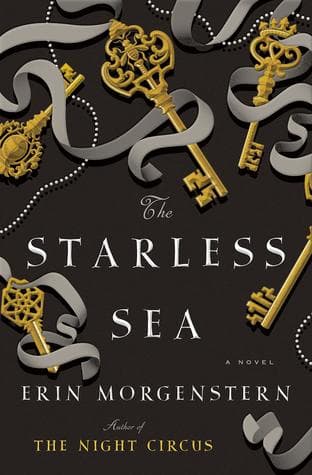
- The Starless Sea
Erin Morgenstern
3.9 (89k) average on GoodreadsFantasyFeatures lush, metaphorical prose, a sense of wonder, and a hidden world.
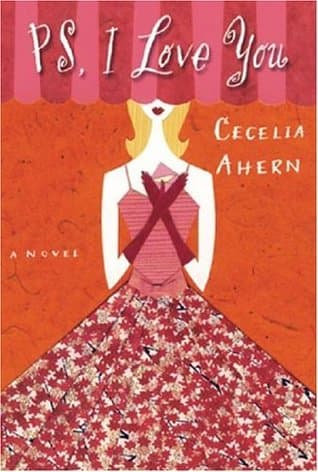
- P.S. I Love You
Cecelia Ahern
4.0 (337k) average on GoodreadsRomanceAn epistolary romance where letters drive the emotional narrative and character development.
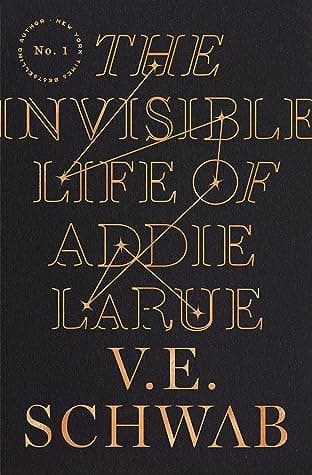
- The Invisible Life of Addie LaRue
V.E. Schwab
4.5 (17k) average on GoodreadsFantasyExplores themes of love across vast spans of time and the impact of individual choices on history.
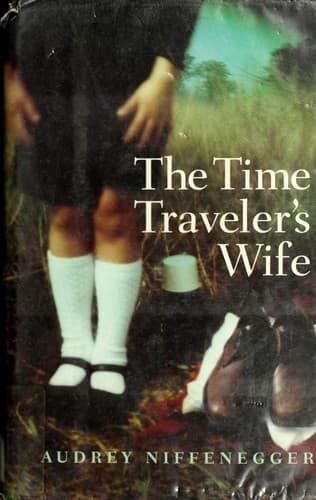
- The Time Traveler's Wife
Audrey Niffenegger
4.0 (1.6M) average on GoodreadsFantasyWhile both books feature time travel and a central romance, 'The Time Traveler's Wife' grounds its narrative more firmly in a contemporary setting and explores the practical and emotional challenges of involuntary time displacement on a marriage. 'This Is How You Lose the Time War' is far more experimental in its structure and language, focusing on the intellectual and emotional evolution of two warring agents through their correspondence, with the 'time war' serving as a grander, more abstract backdrop for their connection rather than a personal affliction.
- Harry Potter and the Sorcerer's Stone
J.K. Rowling
4.5 (7M) average on GoodreadsFantasyRescued from a miserable life under the stairs, an orphaned boy discovers he's a wizard destined for a magical school, where he uncovers a dangerous secret tied to the dark wizard who murdered his parents.
- The Hunger Games
Suzanne Collins
4.3 (6.4M) average on GoodreadsFantasyIn a future where children fight to the death on live television, Katniss Everdeen volunteers for the arena, turning a death sentence into a fight for survival and a spark of rebellion.


Enjoyed the summary?
A summary gives you the shape of the book. The book itself has the detail, the examples and the voice.
Find This Is How You Lose the Time War on AmazonAs an Amazon Associate, BookBrief earns from qualifying purchases. How we're funded