

Synopsis
Covers the whole plot, including the ending.
- Difficulty
- Medium
- Pacing
- Moderate
- Mood
- Atmospheric, Reflective, Hopeful, Melancholy
- Read it if
- You enjoy atmospheric, character-driven mysteries set against a backdrop of natural disaster and themes of resilience and memory.
- Skip it if
- You prefer fast-paced thrillers with clear-cut villains and solutions, or are sensitive to themes of loss and devastation.
This Is the Story of You Plot Summary
Covers the whole plot, including the ending.
The Calm Before the Storm
Mira Banul, a sixteen-year-old 'Year-Rounder' on the barrier island of Haven, loves her life and connection to the island. She spends her days with her friends, especially the artistic Poppy. Mira's family, including her mother and younger brother, Jude, prepare for an approaching hurricane. The islanders, used to storms, are not worried by the initial forecasts. Mira’s father, a fisherman, is at sea. The community is close-knit and believes they can handle anything, but Mira feels an unsettling unease, a feeling of the coming devastation.
Superstorm Haven
The superstorm, named Haven, defies all predictions, growing stronger and heading directly for the island. Mira's mother and Jude are stuck on the mainland when the bridge becomes impassable, leaving Mira alone on the island with her grandmother. The storm hits with immense force, flooding homes, tearing apart the land, and making the island unrecognizable. Mira and her grandmother take shelter, enduring the terrifying night as their home is damaged. The storm's power and destruction are beyond anything the islanders have ever known, creating a clear 'before and after' for Haven.
The Aftermath and the Stranger
As the storm ends, Mira steps into a changed world. Her home is badly damaged, and the island is a wasteland of debris. In the chaos, Mira finds a young man, a stranger, sheltering in the remains of her house. He is confused and seems to have no memory of how he arrived or who he is. At the same time, Mira learns that her best friend, Poppy, who was fascinated by vanishing, is gone. Poppy's disappearance and the presence of the stranger add to the tragedy.
Searching for Answers
Mira, with her remaining friends, especially the loyal Jace, starts a frantic search for Poppy. The island is cut off from the mainland, making efforts difficult. The stranger, whom Mira calls 'Boy,' joins their makeshift community, his quiet presence a constant mystery. Mira feels a strange connection to Boy, even as she worries for Poppy and grieves for her familiar world. The search for Poppy is hard due to blocked roads and the scale of the disaster.
Fragments of Memory
As weeks pass, Boy slowly starts to recall fragmented memories, often triggered by sights or sounds on the damaged island. These memories are jumbled, but they suggest a deeper connection to Haven and possibly to Poppy. Mira watches him closely, trying to solve the puzzle of his identity and arrival. His emerging recollections hint he might have been on the island before the storm, or caught in it. The mystery around Boy deepens, connecting with the unanswered questions about Poppy’s disappearance.
The Weight of Loss
The reality of the storm's devastation weighs heavily on Mira and the entire island. Homes are destroyed, livelihoods are lost, and Haven's future is uncertain. Mira struggles with her mother and Jude's absence, and the growing fear that Poppy may not be found alive. The initial hope fades, replaced by grief and helplessness. The islanders, once so strong, now face a test of their spirit, and Mira feels the pressure of hoping while confronting the possibility of permanent loss.
A Clue from the Past
While sifting through Poppy's home, Mira finds a hidden journal. The entries show Poppy's long-standing obsession with vanishing, with becoming 'unseen,' a theme in her art and thoughts. The journal gives a new perspective on Poppy's disappearance, suggesting it might have been a deliberate act, not an accident. This discovery complicates the search, making Mira rethink everything she knew about her friend and her disappearance.
Boy's Revelation
Boy's fragmented memories come together into a shocking revelation: he is Poppy's older brother, Lucas, who left the island years ago after a family tragedy. He had returned to Haven just before the storm, hoping to reconnect with Poppy. He remembers a traumatic incident during the storm where Poppy, distressed, ran towards the ocean, seemingly fulfilling her wish to vanish. This revelation provides a heartbreaking answer to Poppy’s fate, confirming Mira’s fears and adding more grief to the community.
Acceptance and Rebuilding
With Lucas's memories confirming Poppy's likely death, Mira must face the truth. Though heartbroken, she finds some peace in understanding Poppy's choices, even if tragic. The community, still recovering, begins the long process of rebuilding. Mira's mother and Jude eventually return to Haven, bringing a sense of family reunion amidst the devastation. Mira, changed, finds strength in her family and friends, and starts to imagine a future for herself and the island.
A New Beginning
As Haven slowly heals, Mira, now stronger, helps with rebuilding. She carries Poppy's memory, understanding that while the past is changed, the future is hers to shape. The novel ends with Mira looking towards the horizon, acknowledging the losses but also embracing the possibilities of a new future for herself, her family, and her home. She understands that true strength is not in clinging to the past, but in finding hope and purpose in what can be.
Principal Figures
Mira Banul
Protagonist
A resilient Year-Rounder on Haven island, navigating loss and a changed world.
Mira is a strong, observant, and deeply empathetic sixteen-year-old girl who loves her island home, Haven. She possesses an artistic sensibility, often noticing the subtle beauty in her surroundings, much like her best friend Poppy. Initially, she is somewhat naive to the true dangers of nature, but the superstorm forces her to mature rapidly. She is driven by loyalty to her friends and family, and a fierce desire to understand the mysteries that unfold around her, particularly Poppy's disappearance and the identity of the stranger. Her inner strength allows her to cope with immense loss and adapt to a radically altered future.
Relationships: Poppy (Best friend, deeply connected, seeks to understand her.); Jace (Close friend, reliable and supportive.); Boy/Lucas (Initially a mysterious stranger, later a confidante and brother of Poppy.); Mira's Mother (Loving mother, separated by the storm.); Jude (Younger brother, separated by the storm.); Mira's Grandmother (Supportive guardian during the storm's immediate aftermath.)
Poppy
Supporting/Mentioned
Mira's artistic and enigmatic best friend, obsessed with vanishing.
Poppy is Mira's best friend, an artistic and introspective girl with a deep fascination for the concept of disappearing. Her art often reflects this theme, and she frequently speaks of wanting to become 'unseen.' She is sensitive and perhaps somewhat troubled, hinting at a desire to escape her reality. Her disappearance after the superstorm is the central mystery driving Mira's actions. Through her journal entries, her complex inner world and her profound longing for escape are revealed, suggesting a vulnerability that ultimately leads to her tragic fate.
Relationships: Mira (Best friend, muse for her art and thoughts.); Boy/Lucas (Older brother, estranged but returns to find her.)
Boy / Lucas
Supporting
An amnesiac stranger found in Mira's home, later revealed as Poppy's brother.
Initially known only as 'Boy,' he is a mysterious figure found disoriented and amnesiac in the wreckage of Mira's home. He is quiet and withdrawn, struggling to piece together his past. As his memories slowly return, he is revealed to be Lucas, Poppy's older brother, who had left Haven years prior. His return to the island, just before the storm, was an attempt to reconnect with his family. His presence brings both hope and eventually, the heartbreaking truth about Poppy's fate. He becomes a symbol of the island's lost past and its potential for healing.
Relationships: Mira (Initially a mystery, later a confidante and friend.); Poppy (Younger sister, returns to find her.)
Jace
Supporting
Mira's pragmatic and loyal friend, a constant source of support.
Jace is one of Mira's closest friends, known for his practicality, loyalty, and unwavering support. He is more grounded than Poppy, often providing a voice of reason and strength amidst the chaos. He actively participates in the search for Poppy and helps Mira navigate the devastation of the island. Jace represents the enduring spirit of the Year-Rounder community, demonstrating resilience and a commitment to helping his friends and rebuilding their home. He is a reliable presence for Mira, offering comfort and steadfast companionship.
Relationships: Mira (Close friend, supportive and reliable.); Poppy (Friend, participates in the search for her.)
Mira's Mother
Supporting
Mira's loving mother, stranded on the mainland during the storm.
Mira's mother is a caring and protective figure, whose primary concern is the safety and well-being of her children. She is separated from Mira during the superstorm when she and Jude are caught on the mainland. Her absence creates significant emotional distress for Mira, highlighting the profound disruption to their family unit. Her eventual return to Haven symbolizes hope and the possibility of rebuilding, bringing a much-needed sense of reunion and stability back into Mira's life. She represents the enduring strength of family bonds.
Relationships: Mira (Mother-daughter bond, separated by storm.); Jude (Mother-son bond, stranded with him.)
Jude
Supporting
Mira's younger brother, stranded on the mainland with their mother.
Jude is Mira's younger brother, a child who, like his mother, is caught on the mainland when the superstorm hits Haven. His youth and vulnerability underscore the dangers of the storm and the family's separation. While he doesn't have a prominent role in the immediate aftermath of the storm, his absence is a constant source of worry for Mira. His eventual return with their mother signifies the slow return to normalcy and the rebuilding of their family unit, providing comfort and a sense of completeness for Mira amidst the devastation.
Relationships: Mira (Brother-sister bond, separated by storm.); Mira's Mother (Son-mother bond, stranded with her.)
Themes & Insights
Loss and Grief
The novel explores loss, from the physical destruction of homes and the island to the emotional devastation of losing loved ones and a familiar life. Mira experiences grief from separation from her family, the potential death of her friend Poppy, and the change of her beloved Haven. The community struggles with the loss of their identity and security. The story shows that grief is not a straight path, appearing as denial, searching, and eventually, a painful acceptance, as seen in Mira's journey to understand Poppy's disappearance.
“This is the story of you, and it has no end. But it has a beginning, and it has a middle, and it has a place where the world breaks open.”
Resilience and Hope in the Face of Tragedy
Despite the tragedy and loss, the novel shows human resilience and hope. The islanders, though devastated, begin the hard process of rebuilding their homes and community. Mira, after personal loss, finds strength to look towards a new future, carrying her memories without being consumed by them. Her mother and brother's return, and the island's slow healing, symbolize recovery and renewal, showing that even after great storms, life can persist and rebuild.
“There are things that break and things that hold. And the things that hold are the ones that save you.”
The Power of Memory and Storytelling
Memory is important in the story, acting as both comfort and burden. Mira holds onto memories of pre-storm Haven and her friendship with Poppy, using them to ground herself in a changed world. Storytelling, both Mira's thoughts and Poppy's journal, is a way to process trauma, understand the past, and keep what has been lost. The 'Story of You' refers to Mira's ongoing life, emphasizing that while events may shatter, the story continues, shaped by past and present.
“How do you hold your memories in place when everything around you has been swept away?”
Nature's Destructive and Healing Force
Superstorm Haven is a central force, showing nature's destructive power, able to reshape land and lives in an instant. The island, once beautiful and comforting, becomes a symbol of nature's indifference and raw power. However, the novel also suggests nature's ability to heal and renew. As the storm passes, the island, though scarred, begins its slow recovery, with new growth appearing amidst the ruins. This dual aspect of nature mirrors the human experience of destruction and rebuilding.
“The island was a living thing, and it had been broken.”
Plot Devices & Literary Techniques
The Superstorm (Haven)
A catastrophic natural disaster that acts as the primary inciting incident and catalyst for change.
The superstorm, aptly named 'Haven,' is the central plot device. It serves as the inciting incident, immediately transforming the setting and initiating all subsequent conflicts and mysteries. It physically separates Mira from her family, devastates the island, and directly leads to Poppy's disappearance and the arrival of the mysterious stranger (Lucas). The storm acts as a reset button, forcing all characters to confront profound loss and adapt to an entirely new reality, driving the themes of resilience and rebuilding.
Poppy's Journal
A discovered personal journal that reveals crucial backstory and motivations.
Poppy's journal is a vital plot device that provides exposition and deepens the mystery surrounding her disappearance. Discovered by Mira, it offers direct insight into Poppy's inner world, her artistic sensibilities, and, most importantly, her long-standing obsession with vanishing. The journal transforms the understanding of Poppy's fate from a simple accident to a potentially deliberate act, adding layers of complexity and tragedy to her character and the overall narrative. It serves as a narrative bridge, connecting Mira's present search with Poppy's past thoughts and desires.
Amnesia (Boy/Lucas)
A character's temporary loss of memory that creates mystery and delays crucial revelations.
The amnesia suffered by the character initially known as 'Boy' (later Lucas) is a significant plot device. It generates suspense and mystery around his identity and his connection to the island and Poppy. His fragmented memories are slowly recovered throughout the narrative, mirroring Mira's own process of piecing together the events of the storm and Poppy's disappearance. The amnesia allows for a gradual unveiling of his true identity and, crucially, his eyewitness account of Poppy's final moments, delivering a powerful emotional impact when the truth is finally revealed.
The Barrier Island Setting (Haven)
An isolated, vulnerable setting that is integral to the plot's conflicts and themes.
The setting of Haven, a six-mile long, half-mile-wide barrier island, is more than just a backdrop; it is a character in itself and a crucial plot device. Its isolation makes it particularly vulnerable to the superstorm, intensifying the devastation and cutting off communication and aid. The island's unique ecosystem and community foster a strong sense of identity among the 'Year-Rounders,' making its destruction deeply personal. The struggle to rebuild Haven mirrors Mira's personal journey of healing and finding hope, emphasizing the theme of nature's power and human resilience.
This Is the Story of You Quotes
“There are some things in this world that are not meant to be found. Some people who are not meant to be known. Some stories that are not meant to be told.”
“Every secret has a weight. The longer you carry it, the heavier it becomes.”
“The past is never truly gone. It just waits for the right moment to surface.”
“Sometimes the greatest mysteries are found in the places we least expect to look.”
“To know someone is to know their stories, even the ones they don't tell.”
“Fear is a powerful thing. It can make you see things that aren't there, and blind you to things that are.”
“The truth isn't always pretty, but it's always necessary.”
“We build our lives on stories, some true, some we wish were. And sometimes, the lines blur.”
“It's not about finding the answers, it's about asking the right questions.”
“Grief is a landscape you have to walk through, not around.”
“The most dangerous lies are the ones we tell ourselves.”
“Sometimes, the only way to move forward is to look back, one last time.”
“Every person carries a silent history, a collection of moments that shape who they are.”
“A photograph can capture a moment, but it can never tell the whole story.”
Quiz
10 questions on the plot and the characters. Each answer comes with a short explanation.
Question 1
What is the name of the barrier island where Mira and her friends live?
- Sanctuary
- Haven
- Refuge
- Paradise
Show answer
B. Haven The story explicitly states that Mira lives on a barrier island named Haven.
Question 2
What natural disaster devastates the island and initiates the main conflict?
- An earthquake
- A wildfire
- A superstorm
- A tsunami
Show answer
C. A superstorm The synopsis clearly states that 'a superstorm defies all predictions and devastates the island'.
Question 3
Who is stranded on the mainland after the storm, leaving Mira alone on the island?
- Her father and sister
- Her best friend and grandmother
- Her mother and brother
- Her aunt and uncle
Show answer
C. Her mother and brother The summary mentions that the superstorm 'strands Mira’s mother and brother on the mainland'.
Question 4
What unusual event occurs in the wreck of Mira's home after the storm?
- A hidden treasure chest is discovered
- A stranger appears
- A rare animal is found
- Her mother and brother return unexpectedly
Show answer
B. A stranger appears The synopsis states, 'A stranger appears in the wreck of Mira’s home,' adding to the post-storm mysteries.
Question 5
What is a key characteristic of one of Mira's friends that becomes a central mystery after the storm?
- Obsessed with building boats
- Obsessed with vanishing and then is gone
- Obsessed with documenting the storm
- Obsessed with finding lost items
Show answer
B. Obsessed with vanishing and then is gone The text highlights, 'A friend obsessed with vanishing is gone,' indicating a significant mystery.
Question 6
What is Mira's primary internal struggle as the mysteries deepen and her world is upended?
- To forget the past and embrace only the new
- To blame herself for the storm's destruction
- To hold her memories in place while trusting a reinvented future
- To escape the island at all costs
Show answer
C. To hold her memories in place while trusting a reinvented future Mira 'must find the strength to carry on—to somehow hold her memories in place while learning to trust a radically reinvented future.'
Question 7
What are the Year-Rounders described as having proudly done before the storm?
- Hosted annual island festivals
- Risen to every challenge
- Maintained the island's tourism
- Explored every inch of the mainland
Show answer
B. Risen to every challenge The text states, 'Mira Banul and her Year-Rounder friends have proudly risen to every challenge' prior to the storm.
Question 8
Which of the following is NOT explicitly mentioned as a theme or message of the book?
- The beauty of nature
- The power of family
- The importance of technological advancement
- Finding hope in the wake of tragedy
Show answer
C. The importance of technological advancement The description highlights 'the beauty of nature and the power of family, about finding hope in the wake of tragedy and recovery in the face of overwhelming loss.' Technological advancement is not listed.
Question 9
What is the approximate size of Haven island, as described?
- Ten miles long, one mile wide
- Six miles long, half-mile wide
- Twenty miles long, two miles wide
- Three miles long, quarter-mile wide
Show answer
B. Six miles long, half-mile wide Haven is described as 'a six-mile long, half-mile-wide stretch of barrier island'.
Question 10
The book is described as 'gripping and poetic.' How does this stylistic choice likely contribute to the reader's experience of the story's themes?
- It focuses solely on scientific explanations of the storm.
- It emphasizes the emotional depth and profound impact of loss and recovery.
- It prioritizes fast-paced action over character development.
- It downplays the severity of the disaster for a lighter tone.
Show answer
B. It emphasizes the emotional depth and profound impact of loss and recovery. The 'gripping and poetic' style suggests an emphasis on emotional resonance and the profound, often beautiful, way the story explores themes like loss, hope, and recovery, rather than just factual reporting or pure action.
This Is the Story of You FAQ
What is the central conflict Mira faces at the beginning of the story?
Mira's initial conflict revolves around surviving the aftermath of a devastating superstorm that has ravaged her home island of Haven. She is separated from her mother and brother, stranded with limited resources, and forced to contend with the immediate dangers and overwhelming destruction.
Who is the 'stranger' that appears in the wreck of Mira's home, and what is his initial role?
The stranger is a young man named Jude, who Mira initially finds sheltering in her damaged house after the storm. He seems disoriented and doesn't offer much explanation for his presence, creating an immediate mystery and a source of both suspicion and potential companionship for Mira.
Which of Mira's friends becomes a central mystery due to their disappearance?
Mira's friend Finn, who was always fascinated by the idea of vanishing and had a habit of exploring hidden places, goes missing after the storm. His disappearance becomes a significant driving force for Mira as she tries to understand what happened to him amidst the chaos.
How does the superstorm physically transform the island of Haven and Mira's perception of it?
The superstorm utterly devastates Haven, erasing familiar landmarks, destroying homes, and altering the very landscape. Mira experiences a profound sense of loss and disorientation, as the island she knew and loved is unrecognizable, forcing her to confront a radically changed reality.
What is the significance of the 'Year-Rounder' identity among Mira and her friends?
Being a 'Year-Rounder' signifies a deep connection to Haven, distinguishing Mira and her friends from seasonal visitors. It imbues them with a sense of pride, resilience, and a shared understanding of the island's unique challenges and beauty, which is tested severely after the storm.
Are there any clues early on that hint at Jude's true identity or connection to the island?
While Jude is initially mysterious, subtle clues like his familiarity with certain island features or his seemingly knowing glances might hint at a deeper connection to Haven or its inhabitants. His quiet observations and hesitant responses can be interpreted as more than just storm-induced confusion.
What specific details about Finn's character or habits foreshadow his eventual disappearance?
Finn's obsession with disappearing, his love for exploring hidden nooks and crannies of the island, and his somewhat melancholic nature all foreshadow his vanishing. He often spoke of wanting to be unseen or finding secret places, making his absence both shocking and, in a way, characteristic.
Is there a symbolic significance to the recurring imagery of the ocean or the changing tides throughout the book?
The ocean and tides symbolize both destructive power and relentless change, mirroring the storm's impact and Mira's journey of rebuilding. They also represent the enduring forces of nature that shape life on Haven, suggesting both loss and the potential for renewal.
How does Mira's attachment to her memories influence her ability to adapt to the post-storm reality?
Mira's strong attachment to her pre-storm memories initially hinders her adaptation, as she clings to what was lost. However, these memories also provide a foundation of identity and a motivation to rebuild, eventually helping her integrate the past with a new future.
What psychological coping mechanisms does Mira employ to deal with the trauma of the storm and her separation from family?
Mira copes by focusing on immediate survival tasks, forming new bonds with Jude, and holding onto the hope of reunion. She also uses her memories as a form of emotional anchor, even as she grapples with the disorientation and grief of her changed world.
How does the isolation on Haven after the storm impact the characters' decision-making and trust?
The extreme isolation on Haven forces characters to rely on each other in unprecedented ways, but also heightens suspicion and anxiety. Mira's trust in Jude is a delicate balance, born of necessity but also tempered by the unknown circumstances of his arrival.
In what ways does Mira's relationship with Jude evolve from initial suspicion to something deeper?
Mira's relationship with Jude transforms as they navigate shared dangers and vulnerabilities. Their initial suspicion gives way to a cautious alliance, then to mutual reliance and a growing emotional connection, built on the unique bond formed in extreme circumstances.
What is the primary message about 'home' that the book conveys through Mira's experience?
The book conveys that 'home' is not just a physical place, but also a feeling, a collection of memories, and the people one loves. Even when the physical structure of home is destroyed, the essence of it can be rebuilt or rediscovered within oneself and new connections.
How does the book explore the theme of grief and recovery, particularly in a young adult context?
The book explores grief as a multifaceted process, showing Mira experiencing shock, denial, sadness, and eventually acceptance. It highlights how young adults can demonstrate profound resilience and strength in the face of overwhelming loss, finding new ways to heal and move forward.
Is Finn's disappearance meant to be a literal event, or does it carry a deeper, symbolic meaning related to loss?
Finn's disappearance is presented as a literal event that Mira actively investigates, yet it also carries significant symbolic weight. It represents the sudden, inexplicable loss of the familiar and the innocent that the storm brought, embodying the idea of things simply 'vanishing' from existence.
What role does the natural beauty of Haven play in contrast to its destruction, and what message does this convey?
The stark contrast between Haven's inherent natural beauty and its post-storm devastation highlights nature's dual capacity for creation and destruction. It conveys a message of resilience and the cyclical nature of life, suggesting that even after immense destruction, beauty and life can re-emerge.
How does the book balance the elements of mystery with the emotional journey of its protagonist?
The book skillfully intertwines the external mysteries of Finn's disappearance and Jude's past with Mira's internal emotional journey. The mysteries provide plot momentum, while Mira's grief, hope, and resilience give the story its emotional depth and resonance.
What does the ending suggest about Mira's future and her ability to trust a 'radically reinvented future'?
The ending suggests that Mira has found a way to integrate her past and present, embracing the possibility of a new future on Haven. It implies she has learned to trust in her own strength, the support of others, and the ongoing process of rebuilding, both physically and emotionally.
Similar books
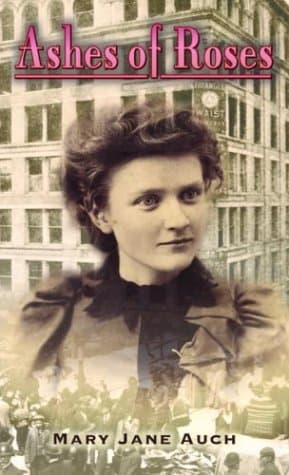
- Ashes of Roses
Mary Jane Auch
4.0 (4k) average on GoodreadsChildren'sExplores a historical disaster (Titanic) through a young protagonist's eyes, focusing on survival and aftermath.
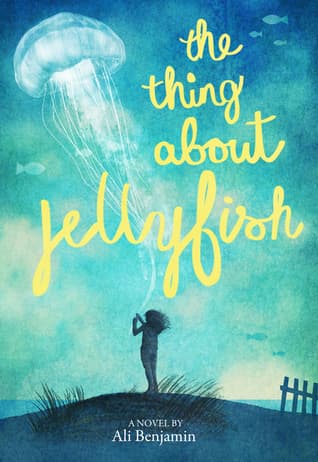
- The Thing About Jellyfish
Ali Benjamin
4.1 (27k) average on GoodreadsChildren'sFeatures a young protagonist grappling with grief and mystery, using a unique narrative structure.
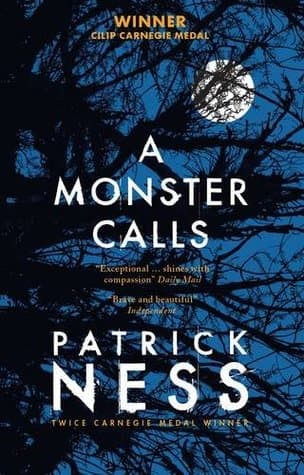
- A Monster Calls
Patrick Ness
4.3 (208k) average on GoodreadsFantasyA Monster Calls by Patrick Ness, while also dealing with grief and the supernatural, offers a more allegorical and overtly fantastical approach to processing loss. Ness uses a literal monster to represent the protagonist's inner turmoil and the difficult truths of terminal illness, leading to a more direct and often brutal confrontation with complex emotions. Kephart's narrative, in contrast, grounds its exploration of grief more firmly in a realistic setting and the aftermath of a natural disaster, with the 'stranger' being a more human, albeit mysterious, element. While both effectively portray the pain of loss in YA, Ness's work is perhaps more unflinching in its portrayal of the darkest aspects of grief through its fantastical lens, while Kephart's offers a more grounded, albeit still deeply emotional, journey towards acceptance.
- Angels & Demons
Dan Brown
3.9 (2.7M) average on GoodreadsThrillerA Harvard symbologist races through Rome's ancient sites, deciphering cryptic clues to unmask the Illuminati and stop a vengeful plot to destroy the Vatican with a stolen antimatter weapon.
- Gone Girl
Gillian Flynn
4.1 (2.3M) average on GoodreadsThrillerA wife's sudden disappearance on her fifth anniversary reveals a web of lies and psychological warfare, exposing the secrets within a seemingly perfect marriage.
- The Girl on the Train
Paula Hawkins
3.9 (2.1M) average on GoodreadsThrillerA woman’s fascination with a seemingly perfect couple she watches from her daily train commute leads her into a dark investigation when she witnesses something that shatters their idyllic image.



Enjoyed the summary?
A summary gives you the shape of the book. The book itself has the detail, the examples and the voice.
Find This Is the Story of You on AmazonAs an Amazon Associate, BookBrief earns from qualifying purchases. How we're funded