
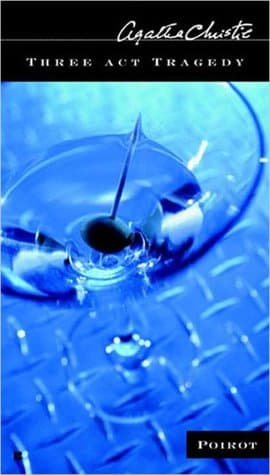
Synopsis
Covers the whole plot, including the ending.
- Difficulty
- Easy
- Pacing
- Moderate
- Mood
- Intriguing, Puzzling, Classic Mystery
- Read it if
- You enjoy classic Golden Age mysteries with a meticulous detective, a contained cast of suspects, and a clever, almost impossible-seeming murder method.
- Skip it if
- You prefer fast-paced thrillers, graphic content, or mysteries with complex psychological depth over intricate plotting.
Three Act Tragedy Plot Summary
Covers the whole plot, including the ending.
The Dinner Party at Sir Charles Cartwright's
Sir Charles Cartwright, a retired actor, hosts a dinner party at his country estate, Crow's Nest. Among the thirteen guests are Hercule Poirot, Mr. Satterthwaite, Hermione 'Egg' Lytton Gore, and Reverend Stephen Babbington. During pre-dinner cocktails, Reverend Babbington chokes, goes into convulsions, and dies. The immediate thought is a heart attack or stroke. Dr. Bartholomew, another guest, examines him and confirms his death, calling it natural. Poirot, watching, notes the unusual death but finds no clear signs of foul play. The evening ends on a somber note, leaving guests and hosts shaken.
Poirot's Initial Observations and Doubts
After Reverend Babbington's death, no official investigation begins as Dr. Bartholomew certifies it as natural. However, Poirot, a guest at the party, feels disturbed. He remembers a slight tremor in Babbington's hand and a strange look in his eyes just before he collapsed. He discusses his unease with Mr. Satterthwaite, who often helps him. Poirot thinks that if it was murder, the poison must have been given in a way that leaves no trace or mimics natural causes. He asks for the cocktail glass to be analyzed, but no poison is found, seemingly confirming the natural death and frustrating Poirot's intuition.
The Second Death: Sir Charles's Friend
Several months later, Sir Charles Cartwright stays at the home of his friend, Sir Bartholomew Strange, a neurologist, in Lyme Regis. Sir Bartholomew hosts a dinner party, and among the guests is Lady Mary Lytton Gore, Egg's mother, who was also at Sir Charles's first party. During the evening, Sir Bartholomew Strange falls ill and dies after drinking a glass of crème de menthe. This death immediately alarms Sir Charles and Mr. Satterthwaite, as the circumstances mirror Reverend Babbington's death. Poirot is contacted, and murder becomes undeniable, especially with the connection to the previous event and shared guest list.
Poirot Takes the Case
Upon hearing of Sir Bartholomew Strange's death, Hercule Poirot believes the two incidents are linked and involve murder. He travels to Lyme Regis and begins his investigation. He interviews the remaining guests from both dinner parties, including Sir Charles, Mr. Satterthwaite, Egg, and Lady Mary. Poirot focuses on the details of both deaths: the drinks consumed (cocktail for Babbington, crème de menthe for Strange), the lack of immediate poison detection, and the unusual timing. He starts to build a profile of the killer, realizing the method is designed to appear natural and the motive might be deeply hidden or simple.
The Search for Motive and Method
Poirot, helped by Mr. Satterthwaite and sometimes Egg, looks into the backgrounds of Reverend Babbington and Sir Bartholomew Strange, seeking connections or secrets that might provide a motive. He finds that Sir Bartholomew was a wealthy man with many acquaintances, and his will is of interest. For Babbington, a quiet vicar, a clear motive is harder to find. The poisoning method is also a major puzzle. Poirot considers various scenarios: poison in the drink, on the glass rim, or ingested earlier. The fact that the first death showed no trace of poison in the glass is a significant challenge, suggesting a sophisticated or unusual approach.
The Third Victim: Miss Milray
The investigation takes a shocking turn when Miss Milray, Sir Charles Cartwright's secretary, is found dead in her room at Crow's Nest, an apparent suicide by sleeping pills. A suicide note is found, confessing to the murders of Reverend Babbington and Sir Bartholomew Strange. This development initially seems to close the case, explaining the events. However, Poirot remains unconvinced. He knows Miss Milray well and finds it hard to believe she is the killer, or that she would commit suicide after confessing. He suspects this is another layer of deception meant to mislead the investigation.
Poirot's Doubts Intensify
Poirot carefully examines the scene of Miss Milray's death and the alleged suicide note. He finds subtle inconsistencies that strengthen his belief that she was murdered and the confession faked. The handwriting, the note's phrasing, and Miss Milray's character do not match the suicide scenario. Poirot deduces that the killer, desperate to tie up loose ends and deflect suspicion, staged her death to appear as a confession and suicide. This realization makes the case more complex, showing a ruthless killer willing to eliminate anyone who might pose a threat or reveal their identity. Poirot now understands the killer is playing a dangerous game.
The Pursuit of the True Killer
With Miss Milray's death confirmed as murder, Poirot focuses more on the remaining guests from the original party, especially those also present at Sir Bartholomew's. He re-interviews everyone, paying close attention to their reactions, alibis, and any small details they might have missed or hidden. Mr. Satterthwaite and Egg help him, providing observations and insights. Poirot starts to concentrate on the relationships between the characters, their financial situations, and any personal grievances. He also re-examines the poisoning method, convinced it must be something that could be subtly introduced and then disappear without a trace quickly.
The Revelation of the Method
Poirot finally solves the mystery of the poisoning method. He realizes the poison was not in the drinks or on the glass rims, but on the killer's fingernail. The killer would offer a cigarette or other item to the victim, then subtly touch their hand, transferring a small amount of nicotine poison (or a similar fast-acting, easily absorbed poison) from under their fingernail. The victim, unknowingly, would then touch their lips or mouth while drinking, ingesting the poison. This method explains why no poison was found in the glasses and why the deaths appeared to be natural, as the poison would be quickly absorbed and metabolized.
Unmasking the Killer
Gathering all the suspects, Poirot dramatically reveals the killer: Sir Charles Cartwright. The motive was to marry Egg, who would inherit a large fortune. Reverend Babbington was killed because he had seen Sir Charles's manipulative nature and was about to expose him. Sir Bartholomew Strange was killed because he was a psychiatrist who had treated a patient with a similar psychological profile to Sir Charles and might have recognized his manipulative tendencies, threatening his plans. Miss Milray was murdered because she had become suspicious and was close to discovering the truth. Sir Charles, the charming host, used his acting skills to deceive everyone, carefully planning each death to appear as natural causes or suicide, even framing his own secretary.
Principal Figures
Hercule Poirot
Protagonist
The renowned Belgian detective whose keen intellect solves the complex murders.
Poirot is a meticulous and observant detective, famous for his 'little grey cells.' He is characterized by his precise habits, fastidious appearance, and deep understanding of human psychology. Despite initial dismissals of the deaths as natural, his intuition and keen eye for discrepancies drive him to pursue the truth. He relies on logic and psychological insight rather than physical evidence, often allowing the killer to make mistakes while he observes. His vanity is often played for comedic effect, but it belies a formidable intellect.
Relationships: Mr. Satterthwaite (trusted confidant and occasional assistant); Sir Charles Cartwright (acquaintance, then suspect); Hermione 'Egg' Lytton Gore (young woman who assists and is personally involved in the case)
Sir Charles Cartwright
Antagonist
A charming retired actor and the cunning murderer.
Sir Charles is a celebrated former stage actor, known for his charisma, social grace, and ability to command attention. He projects an image of a kind, benevolent, and slightly eccentric host, making him an unlikely suspect. Beneath this facade, he possesses a ruthless and manipulative mind. His acting background allows him to convincingly feign emotions and create elaborate schemes to deflect suspicion. He is driven by a desire for wealth and a need to control his circumstances, leading him to eliminate anyone who stands in his way or threatens to expose him.
Relationships: Hermione 'Egg' Lytton Gore (romantic interest, target for marriage and fortune); Reverend Stephen Babbington (victim, witness to his true nature); Sir Bartholomew Strange (victim, potential threat to his plans); Miss Milray (secretary, then victim for knowing too much)
Mr. Satterthwaite
Supporting
A keen observer of human nature and Poirot's trusted assistant.
Mr. Satterthwaite is an elderly, aristocratic gentleman with a passion for observing people and an almost preternatural ability to be present at critical moments. He is quiet, unassuming, and often overlooked, which allows him to gather information unobtrusively. He has a deep respect for Poirot and often acts as his sounding board, providing insights and sometimes even leading questions that help Poirot connect the dots. His role is primarily that of an intellectual companion and a secondary investigator, helping to bridge the gap between Poirot's genius and the more conventional world.
Relationships: Hercule Poirot (close friend and investigative partner); Hermione 'Egg' Lytton Gore (mentor figure and confidant)
Hermione 'Egg' Lytton Gore
Supporting
A spirited young woman caught in the web of the murders.
Egg is a lively and impulsive young woman, initially infatuated with Sir Charles Cartwright. She is kind-hearted and intelligent but somewhat naive about the true nature of people. Her personal connection to Sir Charles and her presence at both dinner parties make her a significant character. She assists Poirot and Mr. Satterthwaite, often providing emotional insights or practical help. Her journey involves grappling with her feelings for Sir Charles and slowly coming to terms with the horrifying truth about his character, forcing her to mature and see beyond superficial charm.
Relationships: Sir Charles Cartwright (initially romantic interest, later horrified by his true nature); Hercule Poirot (ally and mentor figure); Mr. Satterthwaite (confidant and friend); Lady Mary Lytton Gore (mother)
Reverend Stephen Babbington
Victim
The unassuming vicar who is the first victim of the murderer.
Reverend Babbington is portrayed as a gentle, mild-mannered, and rather unmemorable vicar. His life is one of quiet service and routine. He is not known to have any enemies or significant secrets, making his death seem purely accidental. However, his quiet observation skills prove to be his undoing, as he unknowingly witnesses something that places him in the killer's crosshairs. His death is initially dismissed as natural, highlighting the cleverness of the killer's method and the difficulty of detecting the crime.
Relationships: Sir Charles Cartwright (acquaintance, host of the fatal dinner party); Hercule Poirot (his death sparks Poirot's interest)
Sir Bartholomew Strange
Victim
A renowned neurologist and the second victim of the murderer.
Sir Bartholomew Strange is a distinguished and wealthy psychiatrist, a friend of Sir Charles Cartwright. He is intelligent and perceptive, accustomed to analyzing human behavior. His profession makes him a significant threat to the killer, as his psychological insights could potentially unmask the murderer's true nature. His death, mirroring Babbington's, is crucial in convincing Poirot that murder is afoot. He embodies the 'danger' of knowledge and intelligence when faced with a ruthless criminal mind.
Relationships: Sir Charles Cartwright (old friend, host of the fatal dinner party); Hercule Poirot (his death draws Poirot into the case fully)
Miss Milray
Victim
Sir Charles's devoted secretary, who becomes the third victim.
Miss Milray is depicted as a loyal, efficient, and somewhat reserved secretary to Sir Charles Cartwright. She is deeply devoted to her employer and manages his household with precision. Her quiet nature, however, allows her to observe details and gradually piece together inconsistencies. As she grows suspicious of Sir Charles, she becomes a liability to him. Her death, staged as a suicide with a false confession, is a desperate act by the killer to mislead the investigation and eliminate a witness. She represents the innocent caught in a deadly web.
Relationships: Sir Charles Cartwright (employer, then murderer); Hercule Poirot (her death is crucial in Poirot's understanding of the killer's methods)
Lady Mary Lytton Gore
Supporting
Egg's mother, a somewhat flighty but kind woman.
Lady Mary is Hermione 'Egg' Lytton Gore's mother. She is a rather aristocratic and somewhat scatterbrained woman, known for her social graces and concern for appearances. She is present at both the initial dinner party and Sir Bartholomew Strange's gathering. While not actively involved in the investigation, her presence as a recurring guest provides continuity and her observations, though sometimes vague, contribute to the social fabric of the story. She represents the upper-class society that is initially oblivious to the dark undercurrents.
Relationships: Hermione 'Egg' Lytton Gore (mother); Sir Charles Cartwright (social acquaintance)
Themes & Insights
Appearance vs. Reality
This theme is central to the novel, as the killer, Sir Charles Cartwright, is skilled at disguise and deception, both as a retired actor and in his social interactions. He presents himself as charming, kind, and grief-stricken, completely hiding his ruthless nature. The deaths themselves are made to look like natural causes or suicides, further hiding the reality of murder. Poirot's insight comes from seeing past these appearances, trusting his intuition that something is 'not right' despite all evidence, as when he insists on a chemical analysis of Babbington's glass even when no one else suspects foul play.
“'The trouble with you, Poirot, is that you see too much. And the trouble with me is that I see too little.'”
The Nature of Evil
The novel explores how evil can exist within seemingly respectable and charming individuals, making it more insidious. Sir Charles Cartwright shows a type of evil driven by ambition, greed, and a lack of empathy, hidden by a perfect social facade. His willingness to murder multiple people, including his devoted secretary, for personal gain, and his ability to manipulate those around him, highlights that villains are not always easy to spot. The story suggests that true evil often hides in plain sight, using charm and trust as its most powerful tools.
“'Evil is not a thing to be trifled with. It is a force, a power, and it can take many forms.'”
The Dangers of Naiveté and Trust
Many characters, especially Hermione 'Egg' Lytton Gore, initially trust and like Sir Charles, blinded by his charm and reputation. This shows the danger of being too trusting and failing to look past surface appearances. Egg's journey includes a painful realization that the man she admired is a cold-blooded killer. The initial dismissal of Reverend Babbington's death as natural also shows how collective naiveté and a desire to believe the best can allow a murderer to operate unnoticed. Poirot's role is to challenge this naiveté and make others face uncomfortable truths.
“'It is a dangerous thing, Mademoiselle, to be too trusting. Especially when one is dealing with a serpent.'”
The Role of Performance and Artifice
Given that the killer, Sir Charles, is a retired actor, the theme of performance and artifice is deeply part of the story. Sir Charles uses his acting skills not just to entertain but to deceive, manipulating situations and emotions for his murderous goals. His life becomes a grand performance where he plays the role of the grieving friend, the charming host, or the misunderstood lover. This theme also extends to how he stages the deaths, making them appear as natural 'acts' in his deadly play. Poirot, in turn, must 'read' these performances and find the true script behind them.
“'He was always an actor, you see. And a very good one. He played the part perfectly.'”
Plot Devices & Literary Techniques
The Unseen Poison
A method of poisoning designed to leave no trace in the victim's drink.
This is the central plot device that makes the murders so puzzling. The poison is not in the drink itself but administered subtly, often via a contaminated fingernail, and then ingested by the victim when they touch their lips to the glass. This method explains why chemical analyses of the drinks yield no results, leading initial investigators to conclude natural causes. It highlights the killer's cunning and the difficulty of proving murder when the evidence is so ephemeral, forcing Poirot to rely on psychological insight and meticulous observation rather than conventional forensics.
The 'Three Act' Structure
The murders unfold in a theatrical sequence, mirroring a play.
The title 'Three Act Tragedy' directly refers to the unfolding of the murders: Reverend Babbington's death (Act One), Sir Bartholomew Strange's death (Act Two), and Miss Milray's death/faked confession (Act Three). This structure is not just a narrative framework but also reflects the killer's theatrical nature, as Sir Charles Cartwright, a former actor, meticulously stages each death to mislead and create a dramatic, believable narrative. It emphasizes the performance aspect of the crimes and the killer's desire to control the 'play' of events.
The Misdirection of the 'Confession'
A faked suicide note designed to frame an innocent party and close the case.
The staged suicide of Miss Milray, complete with a 'confession' to the previous murders, is a crucial misdirection. This device serves to deflect suspicion from the true killer and provide a convenient, albeit false, resolution to the case. Poirot, however, sees through the artifice, recognizing inconsistencies in the note and Miss Milray's character. This misdirection highlights the killer's ruthlessness and their willingness to sacrifice anyone to protect their secret, simultaneously deepening the mystery and providing Poirot with further evidence of a calculated, intelligent adversary.
The Psychological Profile
Poirot's reliance on understanding the killer's mind over physical evidence.
Given the lack of physical evidence for the poisoning method, Poirot heavily relies on building a psychological profile of the killer. He observes behaviors, motivations, and the inherent 'logic' (or illogic) of the crimes to deduce the perpetrator. This device underscores Christie's emphasis on the 'little grey cells' rather than brute force investigation. It allows Poirot to consider who would benefit, who would be clever enough to devise such a method, and who has the capacity for such cold-blooded deception, ultimately leading him to the least likely suspect based on their public persona.
Three Act Tragedy Quotes
“The human mind is a very curious thing. It's like a jigsaw puzzle, and sometimes you have to put the pieces together in a very odd way to see the full picture.”
“It's always the unexpected that happens, isn't it? One plans for one thing, and something entirely different turns up.”
“People are very apt to think what they want to think, and not what is actually the case.”
“One can always find a motive if one looks hard enough, but sometimes the most obvious motive is not the real one.”
“The little grey cells, they do not deceive. They see the truth, always.”
“It is not always the strong hand that guides, but the subtle mind that plans.”
“There are some things that are so simple, so obvious, that they are the very last things one thinks of.”
“A man's character is often revealed by the trifles he overlooks.”
“The truth, my friend, is often stranger than fiction, and far more inconvenient.”
“Sometimes the most innocent actions can have the most sinister consequences.”
“One must always be prepared for the unexpected twist, the sudden turn in the path.”
“The theatre of life, my friend, has many acts, and not all of them are comedies.”
“It is a dangerous thing to underestimate a quiet man. They often have the most to hide, or the most to achieve.”
Quiz
10 questions on the plot and the characters. Each answer comes with a short explanation.
Question 1
Who is the first victim to die at the dinner party hosted by Sir Charles Cartwright?
- Sir Charles Cartwright
- Mr. Satterthwaite
- Reverend Stephen Babbington
- Lady Mary Lytton Gore
Show answer
C. Reverend Stephen Babbington The first victim of the 'three act tragedy' is the mild-mannered Reverend Stephen Babbington, who dies after drinking his cocktail.
Question 2
What is the initial finding when Reverend Babbington's cocktail glass is analyzed for poison?
- Traces of nicotine were found.
- No trace of poison was found.
- A sedative was detected.
- Strychnine was confirmed.
Show answer
B. No trace of poison was found. The analysis of Reverend Babbington's martini glass surprisingly reveals no trace of poison, a detail that initially puzzles the investigators.
Question 3
Which character is an actor and the host of the fateful dinner party where the first death occurs?
- Captain Hastings
- Sir Charles Cartwright
- Hercule Poirot
- Mr. Satterthwaite
Show answer
B. Sir Charles Cartwright Sir Charles Cartwright, a retired actor, is the host of the dinner party at his house where Reverend Babbington dies.
Question 4
Who is the second victim to die, also seemingly without a clear motive or method of poisoning?
- Lady Mary Lytton Gore
- Mr. Satterthwaite
- Dr. Bartholomew Strange
- Anthony Cade
Show answer
C. Dr. Bartholomew Strange The second victim is Dr. Bartholomew Strange, who dies at his own dinner party under similar puzzling circumstances to Reverend Babbington.
Question 5
What is Hercule Poirot's initial reaction to the lack of poison found in Reverend Babbington's glass?
- He immediately suspects the cocktail shaker.
- He predicts no poison will be found.
- He believes the analysis is flawed.
- He dismisses it as a natural death.
Show answer
B. He predicts no poison will be found. Poirot, with his keen insight, had predicted that no poison would be found in the glass, indicating a more complex method of murder.
Question 6
Which recurring Christie character assists Poirot in his investigation, often serving as a sounding board?
- Captain Hastings
- Colonel Race
- Mr. Satterthwaite
- Superintendent Battle
Show answer
C. Mr. Satterthwaite Mr. Satterthwaite, a keen observer of human nature and a friend of Hercule Poirot, plays a significant role in assisting the detective.
Question 7
What is the crucial 'trick' employed by the murderer to administer the poison without it being detected in the victim's glass?
- Poison was injected directly into the victim's arm.
- The poison was on the rim of the glass and wiped off after consumption.
- The poison was in a sugar cube or lozenge that the victim consumed separately.
- It was an airborne poison released into the room.
Show answer
C. The poison was in a sugar cube or lozenge that the victim consumed separately. The ingenious method involved placing the poison (nicotine) in a sugar cube or lozenge that the victim would take with their drink, ensuring the glass itself remained free of traces.
Question 8
What is the ultimate motive behind the series of murders in 'Three Act Tragedy'?
- Revenge for a past injustice.
- To inherit a vast fortune.
- To eliminate witnesses to a previous crime and secure a future marriage.
- A psychological compulsion to kill.
Show answer
C. To eliminate witnesses to a previous crime and secure a future marriage. The murders are committed to eliminate individuals who knew the true identity of the murderer's intended spouse, thus clearing the way for a new, advantageous marriage.
Question 9
Who is revealed to be the murderer in 'Three Act Tragedy'?
- Lady Mary Lytton Gore
- Sir Charles Cartwright
- Angela Sutcliffe
- Egg Lytton Gore
Show answer
B. Sir Charles Cartwright Sir Charles Cartwright, the host of the first dinner party, is ultimately revealed as the cunning murderer, orchestrating the deaths to achieve his goals.
Question 10
What common element links the deaths of Reverend Babbington and Dr. Strange, despite the apparent lack of poison in their drinks?
- They both ate a specific type of dessert.
- They both received an anonymous letter prior to their deaths.
- They both consumed a cocktail and had a specific lozenge/tablet at the same time.
- They were both alone when they died.
Show answer
C. They both consumed a cocktail and had a specific lozenge/tablet at the same time. Both victims died shortly after consuming a cocktail and, crucially, a lozenge or similar tablet, which was the actual delivery method for the poison.
Three Act Tragedy FAQ
What is the central mystery of 'Three Act Tragedy'?
The central mystery revolves around a series of poisonings, initially appearing to be natural deaths, that occur in seemingly respectable social settings. The first victim, Reverend Stephen Babbington, dies at a dinner party, followed later by Sir Charles Cartwright and then Miss de Rushbridger, all with no immediate trace of poison in their drinks, perplexing even the astute Hercule Poirot.
Who are the main characters involved in solving the mystery?
The investigation is primarily led by Hercule Poirot, who is drawn into the case by his friend Sir Charles Cartwright before Cartwright himself becomes a victim. Poirot is assisted by his loyal companion Captain Hastings, and also by Mr. Satterthwaite, a keen observer of human nature who often accompanies Harley Quin in other Christie stories.
What makes the initial death of Reverend Babbington so perplexing for the investigators?
Reverend Babbington's death is perplexing because, despite clear symptoms of poisoning, no trace of poison is found in his cocktail glass after chemical analysis. This initially leads many to believe it was a natural death, but Poirot's intuition and the subsequent deaths suggest a far more elaborate method of murder, designed to evade detection.
How does the 'three act tragedy' concept apply to the plot?
The 'three act tragedy' concept refers to the three distinct murders that occur, each seemingly unrelated but forming a carefully orchestrated sequence. The first two deaths, Babbington's and Sir Charles Cartwright's, provide cover for the third, crucial murder of Miss de Rushbridger, setting the stage for the revelation of the true killer and their motive.
What role does Sir Charles Cartwright play in the story before his own death?
Sir Charles Cartwright, a famous actor, is initially one of the hosts and a friend of Hercule Poirot. He is deeply disturbed by Reverend Babbington's death and is instrumental in drawing Poirot into the case, even before he himself becomes the second victim. His subsequent death makes the case personal for Poirot and intensifies the mystery.
What is the significance of the specific poison used in the murders?
The poison used is nicotine, administered in a way that rapidly metabolizes or dissipates, leaving no detectable trace in the drink itself. This clever method, involving the poison being on the victim's person or administered directly and subtly, is crucial to the killer's plan to make the deaths appear natural or untraceable.
How does the killer manage to administer the poison without detection?
The killer administers the poison by having it on their person, specifically under a fingernail, and then subtly introducing it into the victim's drink or directly into their mouth during a seemingly innocent gesture, such as offering a cigarette or adjusting a tie. This method exploits the social setting and avoids leaving residue in the glass.
What is the true motive behind the murders, particularly Miss de Rushbridger's death?
The true motive is revealed to be financial. The killer needed to eliminate Miss de Rushbridger, who was a witness to an earlier, unrelated crime committed by the killer years ago. The first two murders, Babbington's and Sir Charles's, were elaborate red herrings, designed to create a pattern and distract from the real target and motive.
Are there any subtle clues about the killer's identity or method early in the book?
Yes, subtle clues include the killer's seemingly excessive concern for others' well-being, their presence at each murder scene, and perhaps a slight overacting in their grief or surprise. The detail about Sir Charles Cartwright's habit of biting his nails is also a deliberate misdirection, meant to draw attention away from the real method of poison delivery.
How does Poirot's psychological understanding of the killer contribute to solving the case?
Poirot's psychological understanding focuses on the killer's need for an audience and their theatrical nature, leading him to suspect someone who enjoys playing a part. He realizes the 'tragedy' is a performance, leading him to look beyond obvious motives and consider who benefits from the elaborate staging of the crimes.
What psychological traits does the killer exhibit that are typical of a Christie villain?
The killer exhibits traits such as extreme narcissism, a meticulous attention to detail in their planning, a chilling lack of empathy, and a theatrical flair for staging the murders. They are adept at manipulation and maintaining a facade of normalcy and respectability, making them difficult to suspect.
How does the killer use the concept of 'acting' to their advantage in the plot?
The killer, an actor by profession, uses their acting skills to perfectly play the role of an innocent, grieving friend or host. They masterfully feign shock and sorrow, and their ability to maintain composure under pressure allows them to execute their elaborate plan and deflect suspicion from themselves throughout the investigation.
What is the psychological impact of the 'natural death' deception on the other characters?
The 'natural death' deception creates significant psychological distress and confusion among the other characters. It leads to self-doubt, paranoia, and a sense of unease, as they struggle to reconcile the apparent lack of foul play with their own instincts that something is terribly wrong. This confusion serves the killer's purpose by delaying proper investigation.
Is the ending of 'Three Act Tragedy' considered fair play by mystery standards?
Yes, the ending is generally considered fair play. While the method of poisoning is ingenious and relies on a specific detail, all the necessary clues are present for a reader to deduce the killer and their method. The killer's identity and motive are logically derivable from the information provided, even if challenging.
What is the significance of the title 'Three Act Tragedy' beyond the number of murders?
Beyond the literal three murders, the title also alludes to the theatrical nature of the crimes, with the killer acting out a carefully planned drama. It suggests a performance, a staged event, rather than spontaneous acts of violence, highlighting the killer's manipulative and calculating personality.
How does this novel compare to other Hercule Poirot mysteries in terms of complexity?
'Three Act Tragedy' is considered moderately complex among Poirot mysteries. While the core solution is clever, the elaborate setup with multiple victims and the misdirection regarding the method makes it more intricate than some, but perhaps less convoluted than others like 'The A.B.C. Murders' or 'Curtain'.
Could the killer's motive be interpreted as more than just financial gain?
While the primary motive is financial, one could argue that there's an underlying psychological component of control and a desire to prove intellectual superiority. The elaborate staging and the willingness to commit multiple murders suggest a certain arrogance and enjoyment in outsmarting others, beyond mere monetary need.
What is the most common point of debate or discussion among readers regarding this book?
The most common point of debate often revolves around the practicality and believability of the poison administration method. Some readers find it too intricate or reliant on specific circumstances to be entirely convincing, while others appreciate its ingenuity as a classic Christie 'impossible crime' solution.
About the author
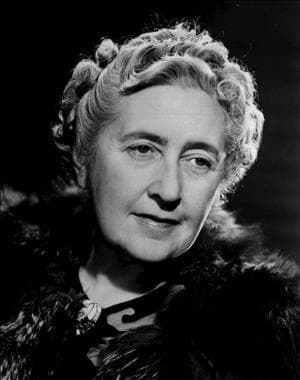
Dame Agatha Mary Clarissa Christie, Lady Mallowan, was an English writer known for her 66 detective novels and 14 short story collections, particularly those revolving around fictional detectives Hercule Poirot and Miss Marple. She also wrote the world's longest-running play, the murder mystery The Mousetrap, which has been performed in the West End since 1952. A writer during the "Golden Age of Detective Fiction", Christie has been called the "Queen of Crime". She also wrote six novels under the pseudonym Mary Westmacott. In 1971, she was made a Dame (DBE) by Queen Elizabeth II for her contributions to literature. Guinness World Records lists Christie as the best-selling fiction writer of all time, her novels having sold more than two billion copies.
Similar books
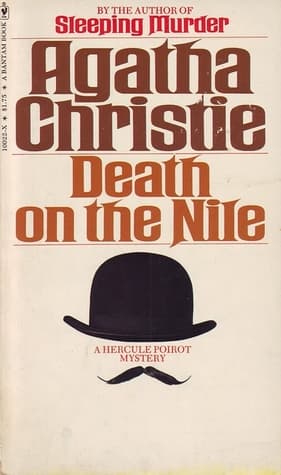
- Death on the Nile
Agatha Christie
4.1 (127k) average on GoodreadsThrillerPoirot investigates a murder among a closed circle of suspects, where the killer's identity is cleverly concealed.
- Gaudy Night
Dorothy L. Sayers
4.2 (23k) average on GoodreadsHistorical FictionA classic Golden Age mystery with a focus on intricate plotting and a seemingly impossible crime, though with less direct murder.
- Angels & Demons
Dan Brown
3.9 (2.7M) average on GoodreadsThrillerA Harvard symbologist races through Rome's ancient sites, deciphering cryptic clues to unmask the Illuminati and stop a vengeful plot to destroy the Vatican with a stolen antimatter weapon.
- Gone Girl
Gillian Flynn
4.1 (2.3M) average on GoodreadsThrillerA wife's sudden disappearance on her fifth anniversary reveals a web of lies and psychological warfare, exposing the secrets within a seemingly perfect marriage.
- The Girl on the Train
Paula Hawkins
3.9 (2.1M) average on GoodreadsThrillerA woman’s fascination with a seemingly perfect couple she watches from her daily train commute leads her into a dark investigation when she witnesses something that shatters their idyllic image.
- The Lovely Bones
Alice Sebold
3.8 (2M) average on GoodreadsFantasyA murdered teenage girl watches from the afterlife as her family struggles with grief and her killer remains free, wanting to bridge the gap between worlds to bring him to justice.




Enjoyed the summary?
A summary gives you the shape of the book. The book itself has the detail, the examples and the voice.
Find Three Act Tragedy on AmazonAs an Amazon Associate, BookBrief earns from qualifying purchases. How we're funded