
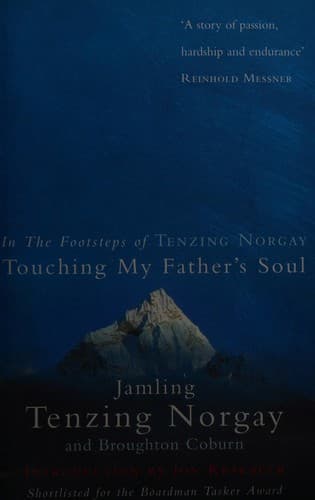
Core Idea
- Difficulty
- Medium
- Read it if
- You are interested in mountaineering, Sherpa culture, the spiritual aspects of climbing, or stories about sons following in their famous fathers' footsteps. This book offers a unique perspective on Everest from a Sherpa's point of view, blending adventure with introspection and cultural insights.
- Skip it if
- You are looking for a purely technical climbing narrative or prefer books without significant spiritual or cultural reflections. If you're not interested in the personal journey of identity or the historical context of Everest expeditions, this might not be for you.
Key Takeaways from Touching my father's soul
Legacy's Weight
Living up to a legendary father's shadow while forging one's own path.
Jamling's main challenge is dealing with the huge legacy of his father, Tenzing Norgay, who was one of the first to climb Everest. The book clearly shows the pressure he felt to live up to his father's achievements, especially within the Sherpa community and the climbing world. This is not just about climbing; it is about who he is. Jamling struggles with the expectation to be a great climber and, more importantly, to embody his father's spirit and values. This internal struggle is a strong look at inherited fame and the search for one's own identity, a theme that applies far beyond the Himalayas.
“My father's name was a heavy pack I carried, sometimes a burden, sometimes a blessing.”
In the book: Jamling's repeated descriptions of his father's fame, the constant comparisons from others, and his own internal dialogue about living up to the 'Norgay' name. His initial reluctance to embrace climbing fully can be seen as a reaction to this pressure.
Try this: Reflect on how inherited expectations, whether from family, culture, or profession, shape your choices. Acknowledge the influence, but actively define your own measures of success and fulfillment.
Related ideas: legacy-burden, identity-formation, inherited-fame
Everest's Dual Nature
The mountain as both sacred deity and commercial commodity.
This book criticizes modern Everest expeditions. Jamling, because of his Sherpa background, sees Everest (Sagarmatha) as deeply spiritual, a living god to be respected. This is very different from the growing commercialization of the mountain, where inexperienced climbers pay a lot for guided climbs, often leaving trash and disrespecting local customs. This dual view is one of the book's best insights. It shows the conflict between traditional values and the demands of adventure tourism. It makes the reader think about the ethics of 'conquering' sacred places.
“To us, Sagarmatha is a goddess, a mother. To many Westerners, she became a trophy, a business.”
In the book: Jamling's descriptions of Sherpa rituals before climbs, his dismay at the litter left by Western expeditions, and his observations of less experienced climbers being 'dragged' up the mountain.
Try this: When engaging with nature or cultural sites, consider the local perspectives and history. Strive for respectful interaction rather than pure consumption or conquest.
Related ideas: sacred-mountains, commercial-tourism, cultural-clash
Sherpa Resilience
The unsung heroes of the Himalayas, their strength, and quiet dignity.
Jamling's story gives an inside look at Sherpa life, culture, and their essential role in high-altitude climbing. He highlights their natural physical abilities, their deep knowledge of the mountains, and their incredible strength in extreme conditions. They are more than just porters; they are guides, protectors, and often rescuers. The book suggests that while Western climbers seek personal glory, Sherpas undertake these dangerous journeys to survive and support their families, often with less recognition or pay. This is an important counter-story to the often Western-focused view of Everest expeditions.
“We are the backbone of the mountains, our strength often taken for granted.”
In the book: Detailed accounts of Sherpa climbing techniques, their physical prowess at altitude, their family structures, and the economic motivations behind their work on expeditions.
Try this: Recognize the contributions of those often in supporting roles, whose labor and expertise enable others' achievements. Advocate for fair recognition and compensation for their efforts.
Related ideas: sherpa-culture, mountaineering-support, unrecognized-labor
The Call of the Mountain
An irresistible pull that transcends logic and danger.
Despite the dangers, physical toll, and emotional difficulties, Jamling keeps returning to the mountains. This shows a deep, almost spiritual, connection many high-altitude climbers feel. It is not just about reaching a summit; it is about the journey, the struggle, the raw experience of nature, and the self-discovery that comes from pushing one's limits. For Jamling, this call is tied to his heritage, making it an even stronger and unavoidable force. The book captures this almost mystical attraction, even while acknowledging the harsh realities.
“Even after all the hardship, the mountain always calls you back. It's a part of who we are.”
In the book: Jamling's repeated expeditions, his descriptions of the beauty and majesty of the Himalayas, and his internal struggle between family responsibilities and the desire to climb.
Try this: Identify the 'call' in your own life – what passion or pursuit draws you back despite challenges? Understand the deeper motivations behind your enduring commitments.
Related ideas: mountain-addiction, spiritual-connection, adventure-motivation
Humility in the Face of Nature
The ultimate lesson taught by the unforgiving Himalayas.
This is a main idea of the book. Jamling always says that the mountain is not 'conquered,' but rather 'allows' climbers to ascend. Everest's sheer power and indifference create deep humility in those who truly understand it. Arrogance or underestimating the mountain's power often leads to tragedy. This view challenges the self-centered stories often linked to extreme sports, reminding readers of the great respect needed when dealing with powerful natural forces. It is a lesson in accepting limits and nature's power.
“The mountain is the ultimate teacher. It teaches you humility, respect, and your own insignificance.”
In the book: Numerous examples of climbers who failed due to hubris, Jamling's own cautious approach to climbing, and the Sherpa tradition of seeking permission from the mountain deities.
Try this: Approach challenges, especially those involving powerful external forces, with humility and respect. Acknowledge your limitations and prepare thoroughly, rather than relying solely on self-belief.
Related ideas: nature-respect, humility-lessons, mountain-ethics
The Burden of Expectations
How the dreams of others can shape, and sometimes constrain, one's own path.
Beyond his father's global fame, Jamling also deals with the different expectations of his immediate family and community. His mother, understandably, fears for his safety and wants him to choose a less dangerous life. His father, through his legacy, implicitly encourages him to follow in his footsteps. This internal and external pressure to fill different roles – the dutiful son, the legendary climber's heir, the safe family man – creates significant tension. This shows how personal goals are often linked to, and sometimes overshadowed by, the hopes and fears of those closest to us, leading to complex decisions.
“My father wanted me to climb. My mother wanted me to stay safe. I was caught between their desires.”
In the book: Jamling's descriptions of his mother's anxieties, his own feelings of obligation to his father's memory, and his eventual choice to pursue climbing despite these conflicts.
Try this: Examine the expectations placed upon you by others. Differentiate between external pressures and your authentic desires. Seek to communicate your own path respectfully while acknowledging their perspectives.
Related ideas: family-expectations, personal-aspirations, conflict-of-desires
The Power of Storytelling
Preserving history and cultural identity through shared narratives.
Jamling's book is an act of storytelling, but he also stresses the importance of oral traditions in Sherpa culture. He tells stories of his father, of ancient Sherpa legends, and stories passed down through generations. This shows how narratives are not just entertainment, but important tools for cultural preservation, identity formation, and passing on knowledge and values. In a world increasingly focused on written history, Jamling reminds us of the profound impact and need for personal and communal storytelling, especially for communities whose histories might otherwise be overlooked or misunderstood by outsiders.
“Our stories are how we remember who we are, how we pass on our spirit.”
In the book: The numerous anecdotes about his father, the retelling of Sherpa myths and legends, and Jamling's own motivation for writing the book to share his perspective.
Try this: Engage with your own family and community stories. Consider how you can contribute to preserving and sharing narratives that are important to your identity and heritage.
Related ideas: oral-tradition, cultural-preservation, identity-through-narrative
The Modern Everest Paradox
Increased accessibility leading to decreased intrinsic value.
This point, mentioned earlier, deserves its own focus. Jamling observes that better gear, guided services, and fixed ropes have made Everest 'accessible' to more climbers, some with little experience. While this seems positive, he quietly regrets the loss of the mountain's wildness and the change of the climb from an epic feat of self-reliance to a managed, though dangerous, tourist experience. This paradox questions whether easier access reduces the challenge and the deep personal growth that once defined such expeditions. It criticizes how technology and business can unintentionally lessen the true meaning of adventure.
“More people can reach the top now, but sometimes I wonder if they truly understand what it means.”
In the book: Descriptions of inexperienced climbers being short-roped by Sherpas, the 'traffic jams' at certain points on the mountain, and the amount of fixed infrastructure and oxygen use.
Try this: When pursuing challenging goals, consider whether shortcuts or external aids detract from the core experience or learning. Seek a balance between support and genuine personal effort.
Related ideas: everest-commercialization, adventure-dilution, technological-impact
The Fragility of Life
A constant companion in the death zone, fostering appreciation for existence.
Life in the death zone (above 8,000 meters) is a harsh, constant fight for survival. Jamling's descriptions of extreme cold, lack of oxygen, and the constant threat of avalanches or falls show how fragile human life is in such an environment. This closeness to death, far from being morbid, often leads to a strong appreciation for life itself, for family, and for the simple act of breathing. The book suggests that facing one's mortality in such a harsh place can lead to a deeper understanding of what truly matters, removing superficial concerns. This is a powerful, if grim, lesson.
“Every breath at that altitude is a reminder of how precious life is, and how easily it can be taken.”
In the book: Descriptions of his own near-death experiences, the deaths of fellow climbers he witnessed or heard about, and the extreme physical and mental toll of high-altitude climbing.
Try this: Reflect on moments of vulnerability in your own life that brought clarity or a renewed appreciation for what you have. Don't wait for extreme circumstances to value your existence and connections.
Related ideas: mortality-awareness, death-zone, life-appreciation
Reconciliation with Legacy
Finding peace by embracing, rather than escaping, one's heritage.
Ultimately, Jamling's journey is about finding peace. He does not entirely escape his father's shadow, nor does he become an exact copy. Instead, he finds a way to combine his legendary heritage with his own identity and goals. His 1996 Everest expedition, a major part of the book, is a personal journey, a way to connect with his father's spirit on the mountain. By the end, he seems to have found a comfortable balance, honoring his father's memory not by imitation, but by following his own path with honesty and respect for the mountains and his Sherpa roots. This resolution offers a hopeful example for anyone dealing with a strong family or cultural legacy.
“I didn't need to be my father, but I could be a son who honored him by finding my own way on the mountain.”
In the book: His successful summiting of Everest in 1996, his reflections on his father's spirit during the climb, and his continued involvement in mountaineering and Sherpa community work post-summit.
Try this: Consider how you can honor your heritage or influential figures in your life while still developing your unique identity and pursuing your own goals. Seek integration rather than complete separation or imitation.
Related ideas: legacy-reconciliation, self-acceptance, honoring-heritage
Touching my father's soul Quotes
“I am not my father. I am Jamling.”
“The mountain does not care about your name, your fame, or your father's fame. It only cares about your respect.”
“Fear is a companion on the mountain, but it should not be the master.”
“To stand on the summit is to feel the weight of the world, and the lightness of being, all at once.”
“My father's ghost walked beside me, but I was determined to find my own path.”
“The silence of the high Himalayas is a silence that speaks volumes.”
“We are all connected, from the Sherpa at base camp to the climber on the summit, and to the people waiting below.”
“The mountain demands everything, but it also gives everything back, if you are willing to listen.”
“It is not just about conquering the mountain; it is about conquering yourself.”
“The greatest risk is not taking the risk.”
“Every step upward is a step away from the ordinary, and a step towards the extraordinary.”
“The wind whispers secrets that only the brave can hear.”
“To be human is to strive, to fall, and to rise again, stronger for the fall.”
“The true summit is not the peak of the mountain, but the peak of one's own potential.”
Quiz
10 questions on the main ideas. Each answer comes with a short explanation.
Question 1
Who is Jamling Tenzing Norgay, the author of "Touching My Father's Soul"?
- The son of Tenzing Norgay, who climbed Mount Everest.
- A renowned mountaineer who climbed K2.
- A Sherpa guide who never reached the summit of Everest.
- A documentary filmmaker.
Show answer
A. The son of Tenzing Norgay, who climbed Mount Everest. Jamling Tenzing Norgay is the son of Tenzing Norgay, one of the first two individuals confirmed to have reached the summit of Mount Everest.
Question 2
What is the primary focus of the book "Touching My Father's Soul"?
- A historical account of the first Everest expedition.
- Jamling's personal journey to climb Mount Everest, following in his father's footsteps.
- The political history of Nepal.
- The cultural traditions of the Sherpa people.
Show answer
B. Jamling's personal journey to climb Mount Everest, following in his father's footsteps. The book chronicles Jamling Tenzing Norgay's own challenging expedition to Mount Everest in 1996, driven by a desire to understand his father's legacy and experience the mountain himself.
Question 3
Which famous mountaineer is Tenzing Norgay often associated with on Mount Everest?
- Reinhold Messner
- Edmund Hillary
- George Mallory
- Chris Bonington
Show answer
B. Edmund Hillary Tenzing Norgay, along with Sir Edmund Hillary, was one of the first two people to reach the summit of Mount Everest on May 29, 1953.
Question 4
What significant event in 1996 is described in the book, which also involved other famous climbers?
- The first successful winter ascent of Everest.
- The deadly storm that claimed several lives on Everest.
- A major discovery of ancient artifacts on the mountain.
- The establishment of a permanent research base camp.
Show answer
B. The deadly storm that claimed several lives on Everest. The 1996 climbing season on Mount Everest was marked by a catastrophic storm that led to the deaths of eight climbers, an event famously documented in Jon Krakauer's "Into Thin Air" and also experienced by Jamling Tenzing Norgay.
Question 5
What does Jamling mean in the context of Sherpa culture, as implied by the book's title?
- Warrior
- Spiritual guide
- Sky
- Spiritual
Show answer
D. Spiritual In Tibetan and Sherpa languages, 'Jamling' often translates to 'spiritual' or 'religious,' reflecting the deep spiritual connection many Sherpas have with the mountains.
Question 6
What was Jamling's initial motivation or internal conflict regarding climbing Everest?
- He was forced to climb by his family.
- He felt pressure to live up to his famous father's legacy and grapple with the mountain's dangers.
- He wanted to prove that Sherpas were better climbers than Westerners.
- He was seeking personal fame and fortune.
Show answer
B. He felt pressure to live up to his famous father's legacy and grapple with the mountain's dangers. Jamling wrestled with the immense pressure of his father's legacy and the inherent dangers of Everest, seeking to understand his father's passion and his own place in that world.
Question 7
Which other famous mountaineer accompanied Jamling on his 1996 Everest expedition and is also a prominent figure in the book?
- Anatoli Boukreev
- Rob Hall
- Scott Fischer
- None of the above (the book focuses primarily on Jamling's personal journey)
Show answer
D. None of the above (the book focuses primarily on Jamling's personal journey) While the 1996 expedition had many notable climbers, the book "Touching My Father's Soul" is primarily Jamling Tenzing Norgay's personal narrative and his interactions with his team members, rather than focusing on specific other famous climbers' individual stories.
Question 8
What is the significance of the 'Khumbu Icefall' as described in the book?
- It is a sacred religious site for the Sherpa people.
- It is the final, easy approach to the summit.
- It is one of the most dangerous and treacherous sections of the climb to Everest's South Col.
- It is a newly discovered cave system.
Show answer
C. It is one of the most dangerous and treacherous sections of the climb to Everest's South Col. The Khumbu Icefall is a notoriously dangerous and unstable section of the lower part of Everest's South Col route, characterized by massive ice blocks (seracs) and deep crevasses, requiring careful navigation.
Question 9
What philosophical or spiritual realization does Jamling Tenzing Norgay often refer to in the book regarding the mountain?
- That the mountain is merely a physical obstacle to be conquered.
- That the mountain is a living entity, a goddess, and demands respect.
- That the mountain is indifferent to human endeavors.
- That the mountain's true value lies in its mineral resources.
Show answer
B. That the mountain is a living entity, a goddess, and demands respect. Jamling often reflects on the Sherpa belief that Chomolungma (Mount Everest) is a sacred goddess, requiring reverence and respect, and that climbers are guests on her domain.
Question 10
What does the title "Touching My Father's Soul" metaphorically represent for Jamling?
- A literal attempt to find his father's physical belongings on the mountain.
- His journey to understand his father's spirit, motivations, and the profound impact of Everest on his life.
- An effort to physically touch the summit his father reached.
- A desire to inherit his father's climbing gear.
Show answer
B. His journey to understand his father's spirit, motivations, and the profound impact of Everest on his life. The title signifies Jamling's deep, personal quest to connect with the essence of his father's experience, his connection to the mountain, and the spiritual journey that Everest represented for Tenzing Norgay.
Touching my father's soul FAQ
What is "Touching My Father's Soul" about?
"Touching My Father's Soul" is a memoir by Jamling Tenzing Norgay, the son of the legendary Sherpa Tenzing Norgay, who first climbed Mount Everest with Sir Edmund Hillary. The book recounts Jamling's own journey to climb Everest and his reflections on his father's legacy.
Who is Jamling Tenzing Norgay?
Jamling Tenzing Norgay is the son of Tenzing Norgay, the first person confirmed to have reached the summit of Mount Everest. Jamling himself is an accomplished mountaineer who followed in his father's footsteps to climb Everest.
What is the significance of Jamling climbing Everest in the book?
Jamling's climb is significant because it allows him to connect with his father's experience and legacy on a profound level. It's a personal pilgrimage to understand the challenges and spiritual aspects of Everest that his father faced.
Does the book focus only on the climb?
While the climb of Everest is a central event, the book delves deeper into Jamling's personal journey, his relationship with his father, the culture and spirituality of the Sherpa people, and the risks and rewards of high-altitude mountaineering.
How does Jamling's experience compare to his father's on Everest?
Jamling shares his own unique challenges and perspectives, often contrasting them with what he imagines his father experienced. The book explores the evolution of climbing technology and the changing face of Everest expeditions over the decades.
What are some practical aspects of climbing Everest discussed in the book?
The book touches upon the physical and mental demands of climbing, the importance of teamwork and Sherpa support, the dangers of the mountain, and the logistical challenges of an expedition.
What is the "soul" Jamling refers to in the title?
The "soul" refers to the spiritual essence and profound connection Jamling seeks with his father's legacy and the sacredness of the mountain. It represents a deep, personal understanding that goes beyond just the physical act of climbing.
What is the role of Sherpas in the book?
The book highlights the crucial and often unsung role of Sherpas in Everest expeditions. It emphasizes their strength, resilience, knowledge of the mountain, and their deep spiritual connection to Chomolungma (Everest).
Is this book suitable for people who aren't mountaineers?
Yes, the book is highly recommended for a broader audience. It offers compelling human stories, cultural insights, and reflections on family, legacy, and the pursuit of challenging goals, making it engaging even for those unfamiliar with climbing.
What makes "Touching My Father's Soul" unique among Everest books?
Its uniqueness lies in its intimate, personal perspective as a son retracing his legendary father's steps. It combines adventure with deep emotional and spiritual exploration, offering a rare glimpse into the life and motivations of a Sherpa climber.
Similar books
- Into Thin Air: A Personal Account of the Mount Everest Disaster
Jon Krakauer
4.2 (395k) average on GoodreadsLifestyleBoth detail Everest expeditions, though 'Touching My Father's Soul' offers a contrasting Sherpa perspective to Krakauer's Western one.
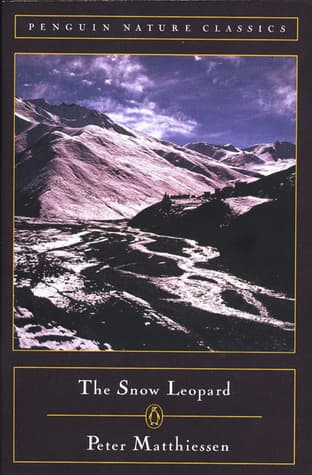
- The Snow Leopard
Peter Matthiessen
4.1 (13k) average on GoodreadsLifestyleA spiritual journey through the Himalayas, combining natural observation with deep personal and philosophical reflection, similar to Jamling's quest.
- Wir Kinder vom Bahnhof Zoo
Kai Hermann
In the gritty world of 1970s West Berlin, Christiane F. descends into addiction and despair, seeking connection and escape on the dangerous streets around the Zoo station.


Enjoyed the summary?
A summary gives you the shape of the book. The book itself has the detail, the examples and the voice.
Find Touching my father's soul on AmazonAs an Amazon Associate, BookBrief earns from qualifying purchases. How we're funded