
Synopsis
Covers the whole plot, including the ending.
- Difficulty
- Medium
- Pacing
- Moderate
- Mood
- Suspenseful, Adventurous, Resilient, Gritty
- Read it if
- You enjoy historical survival stories, tales of resilience in extreme conditions, or books with strong family bonds facing adversity. Perfect for young readers interested in Arctic exploration.
- Skip it if
- You prefer fantasy or sci-fi over historical fiction, or find stories about harsh survival in cold environments too grim.
Trapped in Ice Plot Summary
Covers the whole plot, including the ending.
A Reluctant Journey North
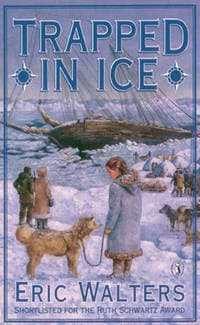
After their father's death, thirteen-year-old Helen and her younger brother, Michael, accompany their mother, Mrs. MacGregor, on the Karluk, an Arctic expedition ship. Mrs. MacGregor has been hired as a seamstress for the journey. Helen is worried about leaving her life in Victoria, British Columbia, and spending six months in the harsh Arctic, especially since she likes a boy named Bob back home. Michael, however, is excited by the adventure. The ship is captained by Robert Bartlett, and their destination is the Beaufort Sea, where the expedition plans to conduct scientific research. Helen begins to record her experiences in a diary, a habit her father encouraged.
Trapped in the Arctic Grip
As the Karluk sails deeper into the Arctic, the initial excitement lessens. The ship encounters heavy ice, and despite Captain Bartlett's navigation, it eventually becomes trapped. The ice pack freezes solid around the hull, making the ship immobile. The expedition's scientific goals are immediately in doubt, and the crew, along with Helen's family, realize they are in for a long, cold, and uncertain winter. The ship's engines are shut down to save coal, and life aboard the frozen vessel settles into a routine of waiting. Helen continues to record the details in her diary, noting the growing tension and boredom among the crew.
Life Aboard the Ice-Bound Ship
Life aboard the ice-bound Karluk becomes a test of endurance. The expedition leader, Vilhjalmur Stefansson, leaves the ship with a small party to hunt, promising to return, but he never does. Captain Bartlett takes full command, implementing strict rationing of food and fuel. Helen observes the various personalities among the crew, including the cook and the Inuit hunters, Kataktovick and Keruk. Michael, always an adventurer, finds ways to entertain himself, often exploring the ice around the ship, which worries Helen. Scurvy and starvation are threats as the months pass with no sign of rescue or thaw.
The Karluk's Final Moments
After months of being trapped, the pressure of the shifting ice pack becomes too great for the Karluk. The ship's hull groans and shudders under immense force. Despite the crew's attempts to reinforce it, the ship is slowly crushed. Captain Bartlett gives the order to abandon ship, and everyone salvages supplies and establishes a camp on the ice. Helen, Michael, and Mrs. MacGregor watch as the Karluk, their only shelter and connection to civilization, slips beneath the frigid water. The sinking of the ship changes their ordeal from an inconvenience into a life-threatening struggle for survival.
A Desperate Trek Begins
With the Karluk gone, the survivors are stranded on a vast, unforgiving expanse of ice. Captain Bartlett organizes the group, distributing remaining supplies and mapping a route towards Wrangel Island, their only hope for land and potential rescue. The journey is hard, with brutal blizzards, treacherous pressure ridges, and the constant threat of open leads in the ice. Helen struggles with the physical demands, pulling a heavy sled alongside her mother and Michael. The group faces starvation, frostbite, and the psychological toll of their situation. Helen's diary entries become more stark, reflecting the grim reality of their daily struggle.
Loss and Division
The harsh conditions take a toll on the survivors. Several men, including some of the Inuit hunters, die from the cold, exhaustion, or illness. Food supplies dwindle further, and morale drops. In a decision, Captain Bartlett, seeing the need for a faster journey, splits the group. He takes the strongest men, including Kataktovick, and sets off to reach land and seek help, leaving the remaining, weaker members, including Helen's family, under the command of another officer. This separation is a difficult moment for Helen, as it shows the desperation of their situation and the lessening hope of survival for all.
A Mother's Strength and a Brother's Hope
Left with the smaller, more vulnerable group, Helen, Michael, and Mrs. MacGregor continue their trek. Helen sees her mother's quiet strength and determination, as Mrs. MacGregor tirelessly pulls her share of the sled and comforts Michael. Michael, despite the hardships, keeps a sense of wonder and optimism, often pointing out wildlife or finding small joys amidst the desolation. His innocence and resilience provide an emotional anchor for Helen. They face terrifying encounters with polar bears, which are both a threat and a potential source of food, and struggle to keep warm and fed with diminishing resources.
Wrangel Island at Last
After weeks of relentless travel and facing incredible odds, Helen's group finally sights land: Wrangel Island. The relief is immense, but the island itself offers little comfort. It is barren and windswept, providing only marginal shelter and very scarce food. They establish a camp, huddling together against the elements. The hope of rescue is rekindled, but the reality of their isolation quickly sets in. They are still thousands of miles from civilization, and their survival now depends entirely on Captain Bartlett's success in reaching the mainland and sending help. Helen records the mix of exhaustion and cautious optimism in her diary.
Waiting for Rescue
Life on Wrangel Island becomes a long test of patience and resilience. The survivors battle scurvy, hunger, and the cold. They hunt what little game they can find, primarily seals and birds, to supplement their meager rations. Helen, Michael, and Mrs. MacGregor huddle together for warmth and comfort. Weeks turn into months, and the hope of rescue begins to lessen for some, leading to despair and arguments. Helen continues her diary, detailing the monotony, the increasing weakness of the group, and her internal struggle to maintain hope, often drawing strength from her mother and Michael's spirit. They scan the horizon daily, desperate for any sign of a ship.
Salvation Arrives
Just as despair threatens to overwhelm the remaining survivors on Wrangel Island, a ship appears on the horizon. It is the rescue vessel, the King and Winge, chartered by Captain Bartlett, who, against all odds, successfully reached the Siberian mainland and organized the rescue mission. The emotional reunion is overwhelming. Helen, Michael, and Mrs. MacGregor are weak but alive, and relieved. They are brought aboard the rescue ship, where they receive medical attention and proper food. The journey home is a mix of relief and sorrow for those who were lost. Helen's final diary entries reflect her gratitude for survival and the impact of her Arctic ordeal.
Principal Figures
Helen MacGregor
Protagonist
Thirteen-year-old girl, chronicler of the expedition's tragic journey.
Helen is the central protagonist and narrator of the story, a thirteen-year-old girl from Victoria, British Columbia. Initially reluctant and somewhat self-absorbed with her crush on Bob, she is forced to mature rapidly as she confronts the harsh realities of the Arctic. She is observant and introspective, using her diary to record the harrowing events, her fears, and her growing appreciation for her family's resilience. Her perspective provides an intimate and emotional account of the Karluk disaster. She often worries for Michael and draws strength from her mother.
Relationships: Michael MacGregor (Younger brother, whom she cares for deeply); Mrs. MacGregor (Mother, whom she initially sees as weak but later admires for her strength); Captain Robert Bartlett (Commander of the Karluk, whom she respects despite his gruff exterior)
Michael MacGregor
Supporting
Helen's nine-year-old brother, full of adventurous spirit and optimism.
Michael is Helen's younger brother, nine years old, and a stark contrast to Helen's initial apprehension. He views the Arctic expedition as a grand adventure, full of wonder and excitement. His unwavering optimism, curiosity, and resilience, even in the direst circumstances, serve as a source of hope and distraction for Helen and his mother. He often explores the ice and finds joy in small things, such as spotting wildlife. His youthful perspective highlights the innocence lost and found during their ordeal.
Relationships: Helen MacGregor (Older sister, who is protective of him); Mrs. MacGregor (Mother, who cares for and comforts him)
Mrs. MacGregor
Supporting
Helen and Michael's mother, a seamstress who displays quiet strength and resilience.
Mrs. MacGregor is Helen and Michael's mother, a widow who takes the job as a seamstress on the Karluk out of necessity after her husband's death. Initially appearing somewhat fragile to Helen, she proves to be incredibly resilient and determined. She is a constant source of comfort and strength for her children, quietly enduring the hardships, pulling her share of the sled, and tending to their needs. Her unwavering love and practical nature are crucial to her family's survival, earning Helen's deep admiration.
Relationships: Helen MacGregor (Daughter, whom she supports and protects); Michael MacGregor (Son, whom she supports and protects)
Captain Robert Bartlett
Supporting
The Karluk's gruff but highly skilled and determined captain.
Captain Robert Bartlett is the experienced and formidable captain of the Karluk. He is a seasoned Arctic explorer, known for his gruff demeanor but also for his exceptional seamanship and leadership skills. When the Karluk becomes trapped and the expedition leader abandons the ship, Bartlett takes full command, making difficult and often unpopular decisions to ensure the survival of his crew and passengers. His determination to reach help and his eventual successful rescue mission are central to the story's resolution. Helen respects his authority and skill, despite his sternness.
Relationships: Helen MacGregor (Passenger under his command, who observes and respects him); Crew members (Commander of the crew, responsible for their lives)
Vilhjalmur Stefansson
Mentioned
The ambitious but ultimately abandoning leader of the Canadian Arctic Expedition.
Stefansson is the official leader of the Canadian Arctic Expedition, but he makes a brief appearance at the beginning of the story before abandoning the Karluk and its occupants. He leaves the ship with a small hunting party early in the expedition, promising to return, but never does. His decision effectively leaves Captain Bartlett and the rest of the crew and passengers to fend for themselves, highlighting the perilous nature of Arctic exploration and the moral complexities of leadership.
Relationships: Captain Robert Bartlett (Commander of his expedition's ship); Helen MacGregor (Expedition member whose fate he abandons)
Kataktovick
Supporting
An Inuit hunter, crucial for survival skills.
Kataktovick is one of the Inuit hunters who joins the Karluk expedition. His knowledge of Arctic survival, hunting, and navigating the treacherous ice is invaluable to the group. He is a skilled hunter, providing much-needed food, and his stoicism and resilience are exemplary. He is among the strongest men who accompany Captain Bartlett on his desperate journey to seek help, playing a vital role in the initial stages of the trek.
Relationships: Captain Robert Bartlett (Fellow survivor, relying on his hunting skills); Helen MacGregor (Fellow survivor, observed for his survival skills)
Keruk
Supporting
An Inuit hunter, companion to Kataktovick.
Keruk is another Inuit hunter on the Karluk expedition, often seen alongside Kataktovick. Like his companion, he possesses invaluable survival skills for the Arctic environment, including hunting and understanding the ice. He is a quiet but essential member of the crew, contributing to the group's efforts to find food and navigate the treacherous landscape after the ship sinks. His presence underscores the importance of local knowledge for survival in extreme conditions.
Relationships: Kataktovick (Fellow Inuit hunter and companion); Helen MacGregor (Fellow survivor)
The Cook
Supporting
The ship's jovial cook, providing some cheer amidst hardship.
The cook aboard the Karluk is a jovial and good-natured man, who, even in the face of dwindling supplies, tries to maintain morale with his cooking and cheerful demeanor. He is one of the more personable figures Helen interacts with, and his presence offers a touch of humanity and normalcy during the initial period of being trapped in the ice. His efforts to make the best of a bad situation provide a small comfort to the crew and passengers.
Relationships: Helen MacGregor (Provides meals and some comfort to her); Crew members (Cook for the crew)
Themes & Insights
Survival and Resilience
The most prominent theme is the human will to survive against overwhelming odds. The MacGregor family, Captain Bartlett, and the crew face starvation, extreme cold, blizzards, and the loss of their ship, yet they continue to fight for their lives. Helen's diary details the daily struggles and the measures taken to stay alive, from rationing food to enduring grueling treks across shifting ice. Mrs. MacGregor's strength and Michael's optimism show different facets of resilience in the face of despair.
“We were not just surviving; we were living, fiercely and defiantly, in the face of certain death.”
Family Bonds and Love
The deep bond between Helen, Michael, and their mother is a central emotional anchor. Their shared trauma strengthens their familial ties, revealing the protective instincts of a mother and the mutual support between siblings. Helen's initial teenage self-absorption gives way to an appreciation for her mother's strength and Michael's joy. Their love for each other provides comfort and motivation to keep going, making their survival a collective effort driven by affection.
“In the vast, empty white, my mother's hand in mine, and Michael's small, brave smile, were all the warmth I needed.”
Loss of Innocence and Maturation
Helen's journey is a coming-of-age story. She begins as a typical teenager, concerned with small things, but the Arctic ordeal removes her innocence, forcing her to confront life-and-death situations. She sees death, starvation, and the realities of nature and human desperation. This experience matures her, shifting her perspective from self-centeredness to a deeper understanding of human endurance, courage, and the preciousness of life. Her diary entries reflect this transformation.
“The Arctic took so much from us, but it also gave me something – a strength I never knew I possessed.”
The Power of Nature
The Arctic environment itself is a formidable antagonist, showing nature's immense, indifferent power. The cold, the crushing ice, the blizzards, and the vast, barren landscape constantly threaten the characters' lives. The story shows how human ambition and technology (the Karluk) are no match for the forces of the natural world. It highlights both the terrifying beauty and the deadly indifference of the polar regions, a constant reminder of humanity's fragility.
“The ice was a living thing, breathing and groaning, slowly but surely consuming our world.”
Leadership and Sacrifice
The actions of Captain Bartlett show strong, sometimes harsh, leadership and the sacrifices required for the greater good. In contrast to Stefansson's abandonment, Bartlett takes full responsibility for his people, making difficult decisions like rationing and splitting the group to maximize survival chances. His personal courage in undertaking the journey for rescue highlights the theme of self-sacrifice for the well-being of others. The story explores the burdens and complexities of leadership in extreme circumstances.
“Captain Bartlett carried the weight of us all, every decision a burden, every life a responsibility.”
Plot Devices & Literary Techniques
First-Person Diary Narration
Provides an intimate, immediate, and emotional perspective on the events.
The entire story is told through Helen's diary entries. This device allows for an immediate and personal connection to the protagonist's thoughts, fears, and observations. It provides a raw, unfiltered account of the unfolding disaster, emphasizing Helen's emotional journey and maturation. The diary entries also serve as a chronological record, marking the passage of time and the progressive deterioration of the situation, making the reader experience the prolonged ordeal alongside Helen. It also highlights the importance of documentation and memory in extreme circumstances.
The Karluk as a Symbol
Represents human ambition, vulnerability, and the illusion of safety.
The Karluk, initially a symbol of scientific exploration and human ingenuity, quickly transforms into a symbol of vulnerability and ultimate loss. Its entrapment in the ice signifies humanity's limited control over nature, and its eventual crushing and sinking represent the shattering of hopes and the end of any illusion of safety. The ship's demise forces the characters into a direct, brutal confrontation with the elements, stripping away their technological comforts and leaving them utterly exposed. It is the catalyst for their true struggle for survival.
The Arctic Environment
Acts as an antagonist, a character in itself, testing human limits.
The Arctic is not merely a setting but a powerful, active force that drives the plot and shapes the characters. Its extreme cold, vastness, shifting ice, blizzards, and scarcity of resources constantly threaten the survivors. It acts as a relentless antagonist, forcing the characters to adapt, endure, and confront their deepest fears. The environment strips away societal conventions, revealing raw human nature and the instinct for survival. It is a character that demands respect and punishes hubris, making every step of the journey a battle.
Foreshadowing (Initial Apprehension)
Helen's early reluctance and unease hint at the disaster to come.
From the very beginning, Helen expresses a strong sense of apprehension about the expedition, missing her home and a boy named Bob. This initial reluctance, contrasting with Michael's excitement, subtly foreshadows the difficulties and dangers that lie ahead. Her unease prepares the reader for the unfolding tragedy, making the eventual entrapment and sinking of the ship feel less like a sudden shock and more like the fulfillment of an unspoken dread. It grounds the fantastical adventure in a relatable sense of foreboding.
Trapped in Ice Quotes
“The wind howled like a banshee, tearing at their flimsy clothing.”
“Every creak and groan of the ship was a reminder of their precarious situation.”
“Hope was a fragile thing, easily shattered by the endless white horizon.”
“We're not just fighting the cold; we're fighting against time itself.”
“A leader isn't just someone who gives orders, but someone who inspires courage when there is none.”
“The silence was the loudest sound of all, a constant reminder of their isolation.”
“Sometimes, the greatest strength is found not in fighting, but in enduring.”
“Every day was a victory, no matter how small.”
“The ice held them in its grip, a silent, powerful captor.”
“Fear can be a useful tool, if you don't let it become your master.”
“They were a small speck in a vast, unforgiving world, but they were together.”
“The aurora borealis painted the sky with impossible colours, a cruel beauty in their desperate situation.”
“To give up was to die. To keep going was to live, even if only for another hour.”
“The true test of character isn't when things are easy, but when all hope seems lost.”
Quiz
10 questions on the plot and the characters. Each answer comes with a short explanation.
Question 1
Why is Helen's family on board the Karluk, an Arctic expedition ship?
- Helen's father was a scientist on the expedition.
- Helen's mother found work as a seamstress for the expedition after her husband's death.
- They were stowaways seeking a new life in the North.
- Michael convinced his family to join a grand adventure.
Show answer
B. Helen's mother found work as a seamstress for the expedition after her husband's death. After the recent death of Helen's father, her mother, a seamstress, found work with the expedition, making it the only option for the family.
Question 2
Who is the captain of the Karluk, responsible for navigating the ship through the Arctic?
- Captain Cook
- Captain Scott
- Captain Robert Bartlett
- Captain Amundsen
Show answer
C. Captain Robert Bartlett The book specifically mentions the ship's hard-bitten captain, Robert Bartlett, who uses his seafaring skill when the ship becomes trapped.
Question 3
What is the primary way Helen records the events and fate of the crew and her family?
- Through letters sent via carrier pigeon
- By sketching scenes in a notebook
- In the pages of her diary
- By telling stories around the campfire
Show answer
C. In the pages of her diary The description states, 'In the pages of her diary, Helen records the fate of the crew and her family.'
Question 4
What significant event forces Captain Bartlett to use all his seafaring skill?
- A mutiny among the crew members.
- The ship becoming trapped in ice.
- Running out of coal in the middle of the ocean.
- An attack by hostile indigenous tribes.
Show answer
B. The ship becoming trapped in ice. The summary explicitly states that Captain Bartlett must use his skill 'when the ship becomes trapped in ice.'
Question 5
How does Helen feel about spending six months on the Karluk at the beginning of the journey?
- She is extremely excited for the adventure.
- She is delighted, like her brother Michael.
- She is not entirely sure she is looking forward to it.
- She is indifferent, seeing it as just another job.
Show answer
C. She is not entirely sure she is looking forward to it. The text states, 'Helen is not entirely sure she is looking forward to spending the next six months on board the Karluk,' contrasting with Michael's delight.
Question 6
What are some of the dangers the family and crew face after leaving the ship to cross the ice?
- Volcanic eruptions and sandstorms.
- Shifting ice flows, blinding blizzards, and polar bears.
- Pirate attacks and tropical diseases.
- Forest fires and stampeding caribou.
Show answer
B. Shifting ice flows, blinding blizzards, and polar bears. Helen's diary records their journey 'across shifting ice flows, through blinding blizzards and past polar bears to safety.'
Question 7
What is Michael's initial reaction to the idea of the Arctic trip?
- He is scared and wants to stay home.
- He is delighted to be off on a real adventure.
- He is indifferent, focused on his studies.
- He is worried about his mother's work.
Show answer
B. He is delighted to be off on a real adventure. The description highlights Michael's excitement: 'Helen's nine year-old brother, Michael, is delighted to be off on a real adventure.'
Question 8
What core theme is explored through Helen's experience on the Karluk and her family's subsequent journey?
- The pursuit of scientific discovery at any cost.
- The triumph of human will against the harshness of nature and the importance of family survival.
- The dangers of unchecked ambition and greed.
- The political tensions between nations over Arctic territories.
Show answer
B. The triumph of human will against the harshness of nature and the importance of family survival. The story centers on the family's struggle for survival against extreme Arctic conditions after their ship is trapped, highlighting their resilience and the fight to reach safety.
Question 9
The book is categorized as 'Historical Fiction.' What aspect of the plot most strongly supports this categorization?
- The use of advanced futuristic technology for Arctic travel.
- The focus on a contemporary environmental crisis in the Arctic.
- The setting of an Arctic expedition ship (Karluk) and the challenges of early 20th-century exploration.
- The exploration of an alternate history where the Arctic is a tropical paradise.
Show answer
C. The setting of an Arctic expedition ship (Karluk) and the challenges of early 20th-century exploration. Historical fiction typically uses real historical settings, events, or figures. An Arctic expedition ship like the Karluk, facing the challenges described, strongly points to a historical context of early 20th-century exploration.
Question 10
What is the primary narrative device used to convey Helen's perspective and the unfolding events?
- A series of letters exchanged between Helen and her relatives.
- A third-person omniscient narrator describing all characters' thoughts.
- Helen's personal diary entries.
- Flashbacks from Helen's adult life reflecting on the journey.
Show answer
C. Helen's personal diary entries. The summary explicitly states, 'In the pages of her diary, Helen records the fate of the crew and her family,' indicating the diary as the central narrative device.
Trapped in Ice FAQ
What is Trapped in Ice about?
Trapped in Ice follows Helen and her younger brother Michael as they embark on an Arctic expedition aboard the Karluk with their mother, a seamstress. After the ship becomes hopelessly trapped in ice, the story chronicles the harrowing struggle for survival of the crew and passengers, led by Captain Robert Bartlett, as they attempt to trek across the frozen, treacherous landscape to safety.
Why should I read Trapped in Ice?
You should read Trapped in Ice for its gripping tale of survival against the unforgiving Arctic wilderness, its historical basis on a real expedition, and the emotional journey of Helen and Michael. It offers a unique perspective on resilience, family bonds, and the harsh realities of early 20th-century exploration through the eyes of young protagonists.
What is the background/setting of Trapped in Ice?
The story is set in the early 20th century, specifically during the ill-fated Canadian Arctic Expedition of 1913-1916, primarily aboard the research vessel Karluk and later across the vast, frozen expanse of the Arctic Ocean. The setting emphasizes the extreme cold, isolation, and constant dangers posed by the environment, including shifting ice, blizzards, and wildlife.
What are the most memorable quotes?
While specific quotes are not provided in the summary, memorable moments likely revolve around Captain Bartlett's stoic leadership, Helen's diary entries reflecting fear and hope, or Michael's childlike wonder contrasting with the grim reality. The stark descriptions of the Arctic environment and the crew's determination would also yield powerful lines.
What writing style does the author use?
Eric Walters employs a direct and engaging writing style, often told from Helen's perspective through her diary entries, which lends an immediate and personal feel to the narrative. This style makes the historical events accessible and emotionally resonant for young adult readers, balancing adventure with the stark realities of survival.
What minor details add significant meaning?
Helen's use of a diary to record events adds significant meaning, transforming a simple plot device into a testament of witness and a coping mechanism for her grief and fear. Her mother's profession as a seamstress might also subtly highlight the resourcefulness needed for survival, perhaps by mending clothes or creating makeshift items in the harsh conditions.
What are some subtle foreshadowing moments?
The initial apprehension Helen feels about the trip, despite Michael's excitement, subtly foreshadows the hardships to come. Captain Bartlett's 'hard-bitten' description could also hint at the severe trials he will face and the tough decisions he will need to make, suggesting that his character is already forged by adversity.
What unexpected character connections exist?
The summary doesn't explicitly detail unexpected connections, but the shared ordeal on the Karluk and the subsequent trek would inevitably forge deep, unexpected bonds between crew members and the family. Perhaps Helen or Michael form a unique relationship with a specific crew member who offers comfort or guidance beyond their expected roles.
What are unspoken character motivations?
Helen's unspoken motivation is likely to protect Michael and honor her father's memory by enduring, while her mother's is to provide for her children even in dire circumstances. Captain Bartlett's motivation, beyond professional duty, likely includes a profound sense of responsibility for every life entrusted to him, driving his relentless efforts.
What psychological complexities do characters exhibit?
Helen exhibits a complex mix of childhood innocence and forced maturity as she processes grief, fear, and the responsibility of recording their ordeal. Michael's initial delight contrasts with the inevitable loss of innocence he experiences, while Captain Bartlett grapples with the immense psychological burden of leadership and the weight of life-or-death decisions.
What are the major emotional turning points?
The ship becoming trapped in ice is a major turning point, shifting the tone from adventure to survival. Leaving the Karluk and embarking on the perilous trek across the ice also marks a significant emotional shift, as hope and fear become intertwined with every step towards an uncertain safety.
How do relationship dynamics evolve?
Helen and Michael's sibling bond likely strengthens under duress, with Helen taking on a more protective role. The relationship between the family and Captain Bartlett evolves from a professional one to one of deep trust and reliance, as he becomes their unwavering guide. The crew's dynamics also shift, fostering camaraderie and conflict in equal measure.
Which parts remain ambiguous or open-ended?
The summary leaves the ultimate fate of Helen, Michael, their mother, and the entire crew ambiguous, only stating their attempt to make their way to safety. The specifics of their journey's end, the psychological scars they carry, and how they reintegrate into society (if they survive) are left for the reader to discover or ponder.
What are controversial scenes or decisions?
Controversial decisions might include Captain Bartlett's strategic choices regarding rationing, abandoning the ship, or the routes taken across the ice, especially if they led to further hardship or loss. Any instances of despair, insubordination, or the harsh realities of survival among the crew could also provoke debate.
Trapped in Ice ending explained: how it ends & what it means
The summary does not provide the ending, but based on the historical context of the Karluk expedition, it's implied that a portion of the crew, including Captain Bartlett and likely Helen and Michael's family, would reach safety, albeit after immense suffering and loss. The ending would signify the triumph of human resilience and the indelible mark of the Arctic experience on the survivors.
About the author

Eric Walters is a Canadian author known for his works of fiction, particularly aimed at young readers. One of his notable books is "Trapped in Ice," which explores themes of survival and resilience in extreme conditions. Walters has written numerous books that often incorporate elements of adventure and personal growth.
Similar books
- Hatchet
Gary Paulsen
3.7 (309k) average on GoodreadsChildren'sA classic survival story where a young protagonist must rely on their wits to survive in the wilderness.
- Angels & Demons
Dan Brown
3.9 (2.7M) average on GoodreadsThrillerA Harvard symbologist races through Rome's ancient sites, deciphering cryptic clues to unmask the Illuminati and stop a vengeful plot to destroy the Vatican with a stolen antimatter weapon.
- Gone Girl
Gillian Flynn
4.1 (2.3M) average on GoodreadsThrillerA wife's sudden disappearance on her fifth anniversary reveals a web of lies and psychological warfare, exposing the secrets within a seemingly perfect marriage.
- The Girl on the Train
Paula Hawkins
3.9 (2.1M) average on GoodreadsThrillerA woman’s fascination with a seemingly perfect couple she watches from her daily train commute leads her into a dark investigation when she witnesses something that shatters their idyllic image.
- The Da Vinci Code
Dan Brown
3.9 (1.9M) average on GoodreadsThrillerA symbologist and a cryptologist race through European landmarks, deciphering ancient codes and uncovering a conspiracy that could rewrite the foundations of Christianity.
- The Guest List
Lucy Foley
3.8 (1.3M) average on GoodreadsThrillerOn a remote Irish island, a glamorous wedding descends into a deadly whodunnit when a guest is found murdered, trapping everyone with their secrets as a storm rages.






Enjoyed the summary?
A summary gives you the shape of the book. The book itself has the detail, the examples and the voice.
Find Trapped in Ice on AmazonAs an Amazon Associate, BookBrief earns from qualifying purchases. How we're funded