

Synopsis
Covers the whole plot, including the ending.
- Difficulty
- Medium
- Pacing
- Variable
- Mood
- Dark, Intense, Psychological, Somber, Reflective
- Read it if
- You are interested in the psychological aftermath of war, moral dilemmas under extreme pressure, and a character's struggle with PTSD.
- Skip it if
- You prefer lighthearted stories, are sensitive to graphic depictions of war injuries, or dislike slow-burn psychological dramas.
Triage Plot Summary
Covers the whole plot, including the ending.
The Blast in Kurdistan
Mark Walsh, an American photojournalist, is in Kurdistan covering the conflict. While with Kurdish forces, he is caught in an artillery barrage. A shell explodes nearby, causing a severe leg wound and leaving him disoriented and bleeding. Chaos erupts; battle sounds continue, but he focuses on the pain and desperate need for medical care. His Kurdish companions get him out of immediate danger, beginning a dangerous journey to find help amid the ongoing conflict. This event starts his physical and psychological decline.
The Mountain Hospital
Mark is eventually taken to a hidden, makeshift hospital deep in the mountains, run by Dr. Vasilek and his small staff. Conditions are primitive, and resources are scarce. Here, Mark sees Vasilek's harsh but practical triage system: severely injured patients get a colored chip. A red chip means intensive care and a chance to live, while a black chip means their condition is beyond help, and they receive palliative care until they die. Mark, despite his critical leg injury, is initially given a black chip, a death sentence in this grim facility, due to the perceived hopelessness of his case and the needs of other patients.
The Fight for a Red Chip
Facing the agonizing reality of his black chip, Mark fears death. He watches other patients and the hospital's routines, understanding what his designation means. Driven to survive, he begins to fake improvement, enduring immense pain to show he can recover. He subtly tries to get Dr. Vasilek's attention, attempting to prove he is not a lost cause. Through sheer will and a strategic display of resilience, he convinces Vasilek to re-evaluate his case, eventually earning a red chip and a chance at treatment, though his leg remains badly damaged.
A Faked Recovery and Escape
Despite some treatment for his leg, Mark's recovery is incomplete. He is in constant pain, his leg a mangled mess. However, the psychological cost of the hospital's brutal environment, combined with his desire to escape death, pushes him to make a desperate decision. He fakes a better recovery than he has achieved, convincing Dr. Vasilek and the staff that he is well enough to be discharged. His main goal is to return to his girlfriend, Elena, in New York, believing her presence will heal him. He manipulates his way out, leaving the mountain hospital with his physical and mental wounds still raw.
Return to New York
Mark finally reaches New York City and the welcoming arms of his girlfriend, Elena. She is overjoyed to see him alive, having endured weeks of agonizing uncertainty. However, the reunion is not the comfort Mark had hoped for. The physical pain from his leg is relentless, and the emotional scars of Kurdistan and the mountain hospital quickly appear. He becomes withdrawn, irritable, and prone to violent outbursts. Elena, initially supportive, soon struggles to cope with the changes in Mark, who is no longer the man she knew. His trauma begins to poison their relationship and his daily life.
The Growing Abyss
In New York, Mark's internal and external wounds fester. His leg injury causes constant, debilitating pain, making movement difficult. He struggles with nightmares, flashbacks, and a deep sense of detachment. He becomes increasingly paranoid, seeing threats everywhere. Elena tries to help him, suggesting therapy and encouraging him to talk, but Mark pushes her away. He resents her attempts to understand, feeling she cannot grasp the horrors he saw. The gap between them widens as Mark retreats further into his suffering, unable to connect with the world outside his trauma.
A Visit from David
Mark receives a visit from his old friend and fellow journalist, David. David, who has also covered conflicts, understands parts of Mark's experience that Elena cannot. Their conversation offers insight into Mark's past as a war correspondent, his motivations, and the risks he took. David observes Mark's deteriorating condition with concern, recognizing signs of deep trauma. While his visit provides a brief connection to his former life, it also highlights how much Mark has changed and how deeply he struggles. David's presence reflects Mark's current state and the stark contrast to his pre-war self.
Elena's Desperation
Elena's patience and emotional reserves are tested by Mark's erratic behavior, his refusal to seek help, and his growing hostility. She sees his rapid decline — his physical pain, emotional numbness, and destructive impulses. After a particularly harrowing episode, Elena reaches her breaking point. She confronts Mark, pleading with him to acknowledge his trauma and seek professional help. She expresses her fear for him and the deep impact his condition has on their relationship, making it clear she cannot bear the burden alone if he refuses to help himself. This confrontation is a desperate plea for Mark to choose life over his self-imposed isolation.
The Haunting of Dr. Vasilek
As Mark struggles in New York, his mind often returns to the mountain hospital and Dr. Vasilek. The doctor's chilling triage system, the arbitrary nature of the colored chips, and the stark choices made under extreme pressure haunt Mark. He grapples with the morality of Vasilek's decisions and the memory of those who received black chips. This obsession is how Mark processes his own near-death experience and the trauma of witnessing such raw suffering and cold pragmatism. He begins to question the value of life and survival, projecting his internal conflict onto Vasilek.
A Dangerous Path
Mark's refusal to confront his trauma and his increasing isolation lead him down a dangerous, self-destructive path. He abuses painkillers for his leg, further numbing himself. His paranoia intensifies, leading to irrational fears and aggressive outbursts. He alienates Elena and withdraws from normal life. Memories of the war and the mountain hospital consume him, blurring lines between past and present, reality and nightmare. He considers extreme actions, his grip on sanity loosening daily. His journey back from the war zone has become a descent into a personal hell, endangering his existence.
Confronting the Past
Through intense internal struggles and external pressures, Mark is eventually forced to confront the full, horrifying scope of his trauma. He can no longer outrun the memories of the blast, the mountain hospital, or the faces of the dying. He must acknowledge the psychological damage he sustained, the severe impact on his relationship with Elena, and the moral compromises he felt forced to make to survive. This confrontation is agonizing, forcing him to relive his most painful experiences and accept the profound changes they have made. It is a necessary, though brutal, step toward any potential healing or redemption.
The Road to Recovery (or Acceptance)
The narrative ends with Mark starting the difficult journey of facing his trauma. There is no easy fix or magic cure, but a recognition that healing will be a long and painful process. He begins to accept his changed self and the lasting impact of his experiences. While the ending may not offer a complete resolution, it suggests a path toward acceptance and the possibility of rebuilding his life, perhaps with Elena's continued support, if he can truly commit to the work. It emphasizes that the war is not over for Mark, but he is finally beginning to fight the battle within himself.
Principal Figures
Mark Walsh
Protagonist
An American war photojournalist crippled by physical and psychological trauma.
Mark Walsh is a driven and experienced war photojournalist, initially defined by his adventurous spirit and ability to capture the raw truth of conflict. After being severely wounded in Kurdistan, he undergoes a profound transformation. He becomes withdrawn, irritable, and consumed by the horrors he witnessed and endured, particularly the brutal triage system of Dr. Vasilek. His physical injuries are mirrored by deep psychological scars, leading to paranoia, emotional numbness, and a destructive pattern of behavior that alienates those closest to him. His inability to process his trauma drives much of the narrative's conflict.
Relationships: Elena (Long-term girlfriend, strained by his trauma); Dr. Vasilek (His doctor and a figure of both salvation and moral ambiguity in his mind); David (Fellow journalist and friend)
Elena
Supporting
Mark's girlfriend, who struggles to cope with his post-war trauma.
Elena is Mark's devoted and loving girlfriend, living in New York. Initially filled with relief and joy at his return, she quickly finds herself overwhelmed by the profound changes in Mark. She is patient and understanding, attempting to support him through his recovery, but her emotional resilience is severely tested by his erratic behavior, his emotional distance, and his refusal to seek help. She represents the 'normal' world Mark left behind and struggles to bridge the growing chasm between them. Her journey reflects the devastating impact of war on the loved ones of those who serve.
Relationships: Mark Walsh (Boyfriend, deeply strained by his trauma)
Dr. Vasilek
Supporting/Antagonist (in Mark's mind)
The enigmatic doctor running a remote, brutal triage hospital.
Dr. Vasilek is a pragmatic and morally ambiguous doctor who runs a makeshift hospital in the mountains of Kurdistan. Faced with overwhelming casualties and severely limited resources, he implements a chilling triage system where patients are assigned colored chips determining their fate (red for treatment, black for palliative care). He is a man hardened by war, making impossible ethical choices to save as many lives as possible, even if it means sacrificing others. To Mark, Vasilek becomes a haunting figure, embodying the harsh realities of survival and the moral compromises forced by extreme circumstances. He represents the cold, hard logic of war that Mark cannot escape.
Relationships: Mark Walsh (Doctor-patient; Vasilek becomes a symbol of moral quandary for Mark)
David
Supporting
Mark's friend and fellow war journalist.
David is a friend and colleague of Mark, also a war journalist. He understands the unique pressures and psychological toll of their profession in a way Elena cannot. His visit to Mark in New York highlights Mark's deterioration and serves as a point of contrast, showing what Mark was like before his injury. David's presence offers a brief moment of connection for Mark, but also underscores his isolation. He represents a link to Mark's past identity and the shared experiences of those who cover conflict.
Relationships: Mark Walsh (Friend and professional colleague)
Kurdish Fighters
Mentioned/Supporting
The soldiers who rescue Mark after his injury.
These are the local Kurdish soldiers with whom Mark Walsh is embedded during his assignment. They are brave and resilient, fighting for their cause in a brutal conflict zone. After Mark is wounded, they are the ones who risk their lives to extract him from the battlefield and transport him to the mountain hospital, showing a sense of camaraderie and duty. Their presence establishes the harsh, unforgiving setting of the initial chapters and the immediate dangers Mark faces.
Relationships: Mark Walsh (Companions in the field, rescuers)
Themes & Insights
The Trauma of War and PTSD
The novel explores the psychological and physical cost of war. Mark Walsh's journey from a battlefield injury to his fragmented life in New York shows the symptoms of PTSD: flashbacks, nightmares, emotional numbness, irritability, and paranoia. The story looks at how trauma is not just about the event but its lasting impact on identity, relationships, and the ability to function. Mark's crippled leg is a physical sign of his internal, unhealed wounds, showing how the war continues long after he leaves the battlefield.
“The war wasn’t over just because he was home. It had followed him, burrowed deep inside, and was now waging a different kind of battle.”
Moral Ambiguity and Survival
The novel addresses the difficult ethical choices made in extreme circumstances, particularly through Dr. Vasilek and his triage system. The arbitrary assignment of red or black chips forces readers to consider the value of individual lives when resources are scarce and death is always present. Mark's survival depends on manipulation — faking recovery to escape a death sentence. This theme highlights that 'good' and 'evil' blur in the desperate fight for survival, making characters and readers question what they would do to live.
“There were no good choices, only less terrible ones, and Vasilek was a master of the terrible.”
The Nature of Identity
Mark's experience in Kurdistan shatters his sense of self. The man who returns to New York is very different from the one who left. His identity as a brave, adventurous journalist is replaced by that of a damaged, struggling survivor. The novel explores how trauma can strip away one's former self, leaving a void and a struggle to redefine who they are. Elena's inability to recognize the 'old Mark' highlights this theme, as Mark himself grapples with the loss of his former identity and the inability to reconnect with it.
“He looked in the mirror and saw a stranger, a ghost of the man he used to be, haunted by the one he had become.”
Isolation and Connection
Mark's trauma leads to deep isolation, pushing away those who care about him, especially Elena. He feels misunderstood and believes no one can truly understand his experiences. This self-imposed emotional barrier prevents him from healing and deepens his suffering. Conversely, the narrative also touches on moments of fragile connection, such as with David, who shares a similar background, or Elena's desperate attempts to reach him. The theme highlights the human need for connection in overcoming adversity and the destructive power of isolation when facing deep-seated trauma.
“He was home, but he was alone in a way he had never been on any battlefield.”
Plot Devices & Literary Techniques
The Colored Chips
A macabre symbol of arbitrary life-and-death decisions.
The red and black chips used in Dr. Vasilek's hospital are a powerful and chilling symbol. They represent the ultimate triage system, where fate is decided by a seemingly random, yet brutally pragmatic, choice. For Mark, receiving a black chip is a death sentence, driving his desperate need to survive. The chips highlight the moral ambiguity of wartime medicine and the dehumanizing aspects of extreme conditions. They serve as a constant reminder of Mark's brush with death and the arbitrary nature of survival, haunting his memories long after he leaves Kurdistan.
Mark's Crippled Leg
A physical manifestation of Mark's internal, psychological wounds.
Mark's severely wounded and perpetually painful leg serves as a potent physical metaphor for his deep-seated psychological trauma. The external injury is a constant, tangible reminder of the blast, the hospital, and his near-death experience. It restricts his movement and his former active life, mirroring his emotional paralysis and inability to move forward. The physical pain he endures parallels the internal agony of his PTSD, emphasizing that his wounds are not just skin-deep but penetrate to the core of his being, affecting every aspect of his life.
Flashbacks and Nightmares
Non-linear narrative elements that immerse the reader in Mark's traumatized mind.
The novel utilizes frequent flashbacks and recurring nightmares to convey Mark's fragmented mental state and the intrusive nature of his trauma. These non-linear narrative elements pull the reader directly into Mark's experience, blurring the lines between past and present, and illustrating how the war continues to manifest in his daily life. They are not merely recollections but vivid, disorienting intrusions that reflect the disorganization and intensity of PTSD, making the reader feel the weight of his psychological burden.
Triage Quotes
“The hardest thing to do is watch someone you love suffer and know there’s nothing you can do to stop it.”
“War doesn't just kill people, it kills something inside the people who survive it.”
“Memory is a treacherous thing. It can be a comfort, or it can be a cage.”
“You can't photograph a feeling. But you can photograph what a feeling does to people.”
“Sometimes, the truth isn't something you find. It's something you create.”
“The past isn't dead. It isn't even past. It just waits.”
“There are things you see that you can never unsee. And those are the things that change you forever.”
“Silence can be louder than any scream.”
“We all have our own wars, some fought on battlefields, others inside our own heads.”
“Hope is a dangerous thing. It can keep you alive, or it can destroy you.”
“The human mind is a battlefield. And sometimes, the casualties are invisible.”
“To truly see someone, you have to look beyond what they show you.”
“Sometimes, the only way to heal is to break completely.”
“The camera doesn't lie, but the person behind it can choose what to show.”
Quiz
10 questions on the plot and the characters. Each answer comes with a short explanation.
Question 1
Where is American journalist Mark Walsh when he is wounded by a shell?
- Syria
- Afghanistan
- Kurdistan
- Iraq
Show answer
C. Kurdistan Mark Walsh is specifically wounded by a shell in Kurdistan, where he is working as a journalist.
Question 2
What is the crucial element that determines a man's future in the local hospital where Mark is treated?
- A doctor's professional judgment
- The availability of medical supplies
- The random choice of a colored chip
- A patient's ability to pay
Show answer
C. The random choice of a colored chip The book states that a man's future in the local hospital is decided by the random choice of a colored chip, highlighting the arbitrary nature of life and death in that setting.
Question 3
What does Mark do to escape the hospital and return home?
- He bribes a nurse for his release.
- He stages a dramatic escape with the help of other patients.
- He fakes a recovery from his injuries.
- He waits for his girlfriend to arrange his transfer.
Show answer
C. He fakes a recovery from his injuries. Desperate to survive and return to Elena, Mark fakes a recovery from his wounds.
Question 4
Who is Elena in relation to Mark Walsh?
- His sister
- His colleague
- His girlfriend
- His doctor
Show answer
C. His girlfriend Elena is Mark's girlfriend, to whom he returns in New York after his ordeal.
Question 5
Upon returning to New York, how is Mark affected by his experiences?
- He quickly resumes his journalistic career without issues.
- He becomes a vocal advocate for war victims.
- He becomes crippled both physically and emotionally.
- He suffers only minor physical injuries but remains mentally strong.
Show answer
C. He becomes crippled both physically and emotionally. The book explicitly states that upon his return, Mark becomes crippled both physically and emotionally, indicating the profound impact of his trauma.
Question 6
What is the central theme suggested by the 'random choice of a coloured chip' in the hospital?
- The importance of medical ethics.
- The arbitrary nature of life and death in conflict zones.
- The scarcity of medical resources.
- The power of hope and resilience.
Show answer
B. The arbitrary nature of life and death in conflict zones. The random choice of a colored chip deciding a man's future symbolizes the unpredictable and often arbitrary nature of survival and death in the context of war and limited care.
Question 7
What specific type of injury does Mark suffer from the shell?
- A gunshot wound to the leg.
- A severe head trauma.
- The description only states he was 'wounded by a shell', implying shrapnel or concussive injury.
- A broken arm and ribs.
Show answer
C. The description only states he was 'wounded by a shell', implying shrapnel or concussive injury. The provided synopsis only states Mark was 'wounded by a shell', not specifying the exact nature of the injury beyond that general description.
Question 8
How does Mark's fake recovery contribute to his later emotional state?
- It gives him a sense of empowerment and control.
- It allows him to process his trauma more effectively.
- The act of deception and the unresolved trauma likely contribute to his emotional crippling.
- It has no direct bearing on his emotional state, only his physical.
Show answer
C. The act of deception and the unresolved trauma likely contribute to his emotional crippling. While not explicitly stated as the *sole* cause, the act of faking recovery implies a suppression of true condition and potentially guilt, contributing to the 'emotionally crippled' state upon his return, alongside the trauma itself.
Question 9
What is the primary conflict Mark faces after returning to New York?
- Financial difficulties due to medical bills.
- Adjusting to civilian life while battling physical and emotional scars.
- Finding a new job in his field.
- Dealing with Elena's disapproval of his past actions.
Show answer
B. Adjusting to civilian life while battling physical and emotional scars. The synopsis highlights that he 'becomes crippled both physically and emotionally' upon returning to New York, indicating his primary struggle is with the lasting impact of his trauma and adjusting to life post-conflict.
Question 10
The title 'Triage' most likely refers to what aspect of the narrative?
- The process of Mark choosing between two career paths.
- The medical system in the local hospital where life-or-death decisions are made.
- Elena's attempt to sort through her feelings for Mark.
- Mark's internal struggle to prioritize his memories.
Show answer
B. The medical system in the local hospital where life-or-death decisions are made. Triage is a process of prioritizing patients based on the severity of their condition, often used in disaster or war zones. This directly relates to the hospital setting where a 'random choice of a coloured chip' decides a man's future, representing a form of triage.
Triage FAQ
What is the central premise of 'Triage'?
The novel 'Triage' follows American photojournalist Mark Walsh after he is severely wounded in Kurdistan. He's treated in a makeshift hospital where a doctor, Dr. Talzani, employs a 'triage' system using colored chips to decide who lives and dies among critical patients, a system Mark barely escapes. This traumatic experience, coupled with his physical injuries, profoundly affects his return to New York and his relationship with his girlfriend, Elena.
Who is Dr. Talzani and what is his role in Mark's initial trauma?
Dr. Talzani is the enigmatic and morally complex doctor at the Kurdish field hospital where Mark is taken after being wounded. He implements a brutal 'triage' system based on colored chips, arbitrarily deciding which gravely injured patients receive life-saving care and which are left to die. Mark, despite his critical condition, manages to feign recovery to avoid Dr. Talzani's fatal selection.
How does Mark's physical injury manifest upon his return to New York?
Upon returning to New York, Mark's physical injury, specifically a wound to his head, causes debilitating headaches, dizziness, and a profound sensitivity to light and sound. These physical ailments are not just symptoms of his trauma but also contribute significantly to his emotional withdrawal and inability to reconnect with his previous life and Elena.
Who is Elena and how does she react to Mark's changed state?
Elena is Mark's girlfriend, a compassionate and initially patient woman who struggles deeply with Mark's post-Kurdistan transformation. She attempts to understand and support him, but his increasing detachment, paranoia, and physical incapacitation push her to her limits, leading to significant strain and eventual breakdown in their relationship.
What is the significance of the 'triage' system beyond the literal hospital setting?
The 'triage' system, initially a literal life-or-death selection process in the Kurdish hospital, becomes a powerful metaphor for Mark's psychological state. He feels as though his own life, and perhaps humanity itself, has been subjected to an arbitrary and cruel selection process, leaving him feeling discarded and without purpose, even in the safety of New York.
Are there any clues early in the book that foreshadow Mark's mental deterioration?
Even before his injury, Mark displays a certain detachment typical of seasoned war journalists, often seeking out dangerous situations. His fascination with the extreme and his initial disregard for his own safety, as noted by Elena in flashbacks, hint at a pre-existing vulnerability that the trauma in Kurdistan exploits and exacerbates, rather than solely creating it.
What is the role of memory and hallucination in Mark's recovery (or lack thereof)?
Mark's memories of the field hospital, particularly Dr. Talzani and the triage process, are vivid and often indistinguishable from reality, blurring the lines with hallucinations. He frequently sees and hears things that aren't there, particularly the faces of those who died, further isolating him and making it impossible for him to process his trauma constructively.
Does the novel suggest that Mark's injuries are entirely physical, or largely psychosomatic?
The novel skillfully blurs the line between physical and psychosomatic. While Mark clearly has a head injury causing real symptoms, his profound sensitivity to light and sound, his paranoia, and his emotional numbness are amplified by his psychological trauma. The story suggests his mind is as deeply wounded as his body, and the two are inextricably linked.
What is the significance of the recurring motif of light and darkness in Mark's perception?
Mark's extreme sensitivity to light, forcing him into darkened rooms, symbolizes his withdrawal from the world and his internal darkness. It represents his inability to face the harsh realities of his trauma and the world outside, preferring the 'safety' of shadows, much like a wounded animal retreats from the light.
How does Mark's profession as a photojournalist contribute to his psychological state?
Mark's profession as a photojournalist involves observing and documenting extreme suffering from a detached perspective, which likely desensitized him to a degree before his injury. However, when he becomes the subject of suffering, this detachment crumbles, leaving him without the emotional defenses he once had, making his trauma even more profound.
Analyze Elena's psychological journey throughout the novel.
Elena begins as a supportive and loving partner, but as Mark deteriorates, she experiences a complex mix of grief, frustration, and eventual despair. She undergoes her own form of secondary trauma, becoming a caregiver who is ultimately rejected and alienated, forcing her to confront the painful reality of losing the man she knew while he is still physically present.
How does 'Triage' explore the themes of survival guilt and moral responsibility?
'Triage' deeply explores survival guilt through Mark's torment over escaping Dr. Talzani's selection while others died. He grapples with the arbitrary nature of his survival and questions his moral right to live when others didn't, leading to self-punishment and a profound sense of unworthiness that fuels his withdrawal.
What psychological defense mechanisms does Mark employ, and how effective are they?
Mark primarily employs withdrawal, isolation, and denial as defense mechanisms. He retreats into darkness, avoids social interaction, and attempts to deny the reality of his trauma by living in a state of suspended animation. These mechanisms are ultimately ineffective, as they prevent him from processing his experiences and lead to further psychological deterioration rather than healing.
Does the novel offer any hope for Mark's recovery, or is his fate sealed?
The novel offers a bleak outlook for Mark's immediate recovery. His profound physical and psychological damage, combined with his inability to connect with others or seek effective help, suggests a long and difficult road, if any, towards healing. The ending leaves his future ambiguous but leans towards a persistent state of brokenness.
How does 'Triage' critique the nature of war and its psychological aftermath?
'Triage' offers a searing critique of war by focusing not on the battlefield heroics, but on the insidious, long-lasting psychological scars it inflicts. It highlights how the trauma of conflict extends far beyond the physical wounds, shattering the minds of those who experience it and devastating the lives of their loved ones back home.
Is Dr. Talzani presented as purely evil, or is there a more nuanced interpretation of his actions?
Dr. Talzani is presented with a disturbing nuance. While his 'triage' system is brutal, the narrative suggests he operates under extreme duress in a war zone with limited resources, making impossible choices. He embodies a chilling utilitarianism, forcing readers to question the morality of survival and the ethics of leadership in dire circumstances, rather than being a one-dimensional villain.
What is the significance of the setting switching between Kurdistan and New York?
The switch in setting emphasizes the pervasive nature of trauma. Kurdistan represents the literal source of Mark's physical and psychological wounds, while New York, a place of supposed safety and familiarity, becomes a metaphor for his internal battlefield. It highlights that the war follows him home, transforming his comfortable environment into another site of suffering.
How does the novel use sensory details to convey Mark's experience?
The novel heavily relies on sensory details, particularly Mark's heightened sensitivity to light and sound, to immerse the reader in his fragmented reality. The descriptions of blinding light, agonizing noise, and phantom pains vividly convey his physical suffering and the overwhelming nature of his internal world, making his isolation palpable.
Similar books
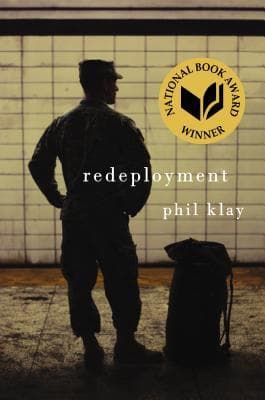
- Redeployment
Phil Klay
4.0 (22k) average on GoodreadsLiterary FictionWhile "Triage" powerfully illustrates individual trauma, it doesn't achieve the broader societal and institutional critique found in Phil Klay's Redeployment. Klay's collection of short stories offers a more expansive view of the military experience, examining the institutional failures, cultural disconnects, and diverse psychological impacts of war from multiple perspectives, providing a wider lens than Anderson's tightly focused narrative on one individual's journey.
- Nineteen Eighty-Four
George Orwell
4.2 (5.5M) average on GoodreadsFictionWinston Smith dreams of truth and rebellion in a world where Big Brother watches all, but he confronts the terrifying power of a regime that controls not just actions, but thoughts.
- The Frozen River
Ariel Lawhon
4.4 (600k) average on GoodreadsFictionIn 1789 Maine, a heroic midwife's diary helps her expose a murder and get justice in a town that wants to silence her.
- A Man Called Ove
Fredrik Backman
4.4 (569k) average on GoodreadsFictionA stubborn widower, who lives by strict rules, finds his quiet world changed by a lively new family next door, making him face his past and find happiness in human connection.
- The Art of Racing in the Rain
Garth Stein
4.2 (452k) average on GoodreadsFictionThrough the eyes of Enzo, a wise and observant dog, a race car driver's family navigates a journey of love, loss, and resilience, learning that life's most important lessons often come in the curves, not just on the straightaways.
- The Colour of Magic
Terry Pratchett
4.0 (425k) average on GoodreadsFictionOn a discworld hurtling through space on the back of a giant turtle, an inept wizard and his naive, walking-luggage-toting tourist embark on a chaotic, belief-fueled journey to the very edge of their flat planet, encountering dragons that only exist if you believe in them.





Enjoyed the summary?
A summary gives you the shape of the book. The book itself has the detail, the examples and the voice.
Find Triage on AmazonAs an Amazon Associate, BookBrief earns from qualifying purchases. How we're funded