BookBrief
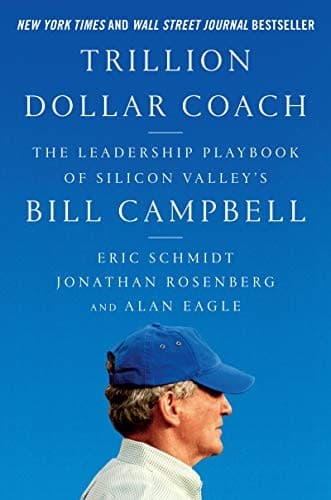
Trillion Dollar Coach cover

Trillion Dollar Coach Summary

Eric Schmidt (2019)

Get the book

Goodreads Rating

3.98/ 5(17,437 reviews)

Genre

General

Summary Read

12 min

Book Length

3 hours

By BookBrief EditorialLast updated August 20, 2026

Track Your Reading

Sign in to track this book

My Notes

Only visible to you
Silicon Valley leaders share the wisdom of Bill Campbell, the legendary coach who guided Google, Apple, and other tech giants to success.

Core Idea

"Trillion Dollar Coach" distills the management philosophy and practices of Bill Campbell, a legendary Silicon Valley executive coach who mentored figures like Steve Jobs, Larry Page, and Eric Schmidt. The book argues that Campbell's unique approach, centered on people, trust, and community, was instrumental in building successful teams and companies. It emphasizes that great management isn't just about strategy or product, but fundamentally about empowering and supporting individuals to achieve their full potential, fostering an environment where candor, respect, and mutual support thrive.
Reading time
3 hours
Difficulty
Easy
✓ Read this if...
you are a manager, leader, or aspiring to be one, looking for practical, human-centered advice on building high-performing teams and fostering a positive work culture. Also, if you're interested in the leadership styles that shaped Silicon Valley giants.
✗ Skip this if...
you are looking for a highly theoretical academic text on organizational behavior or a detailed historical account of Silicon Valley. This book is more about actionable principles through anecdotes.

Chat with this book

Ask anything about Trillion Dollar Coach and get instant answers grounded in the summary.

Key Takeaways from Trillion Dollar Coach

1

The Power of Psychological Safety

Building an environment where everyone feels safe to speak up is paramount.

Quote

The number one thing that all of the best teams had in common was psychological safety.

Bill Campbell always pushed for psychological safety, a concept Google's Project Aristotle later confirmed. He knew that a team works best not just because of individual talent, but because people can take risks, admit mistakes, and give honest feedback without fear. This isn't about being 'nice'; it's about building trust so that open communication leads to better decisions and new ideas. Campbell believed leaders must actively create this safety, often by showing their own vulnerability and genuinely caring for their team.

Supporting evidence

Google's Project Aristotle identified psychological safety as the most important dynamic of effective teams, over factors like individual intelligence or experience.

Apply this

Leaders should actively solicit diverse opinions, encourage dissent, and ensure that all team members feel heard and respected, even when their ideas are challenged. Create clear mechanisms for feedback and conflict resolution that prioritize mutual understanding over blame.


psychological-safetyteam-dynamicsleadership-trust
2

Coaching as a Core Leadership Function

Great leaders don't just manage; they coach their people to unlock their full potential.

Quote

Every single person needs a coach.

Campbell's key insight, and the book's title, is that coaching is for everyone, not just those who need improvement or top executives. He saw coaching as a leader's main job: to help people grow, deal with problems, and reach their goals. This means listening carefully, asking good questions, giving honest feedback, and encouraging people to try new things. It's about developing people, not just telling them what to do. This approach moves beyond old management styles, creating a culture of ongoing learning and improvement that empowe...

Supporting evidence

Campbell coached numerous Silicon Valley legends, including Steve Jobs, Larry Page, and Sergey Brin, demonstrating the universal applicability and impact of his coaching philosophy.

Apply this

Leaders should dedicate time to one-on-one meetings focused on individual growth, career aspirations, and challenges, rather than just task management. Provide specific, actionable feedback regularly and encourage employees to seek out coaching themselves.

executive-coachingemployee-developmentmentorship
3

The Importance of 'Team First'

Prioritizing the team's success above individual ego or glory.

Quote

You can have a great individual, but if they don’t fit the team, they’re not going to be successful.

Campbell strongly believed that the team's success came first. He discouraged internal competition and ego, instead building a culture where people supported each other and celebrated wins together. This often meant making tough choices about talented people who, despite their skills, hurt team unity. His 'team first' idea applied to hiring, where cultural fit and a collaborative mindset were as important as technical ability. While this idea has limits in very individualistic roles, it makes sense for most team-based work.

Supporting evidence

Campbell would often interject in meetings to redirect conversations towards collective goals, ensuring everyone understood their role in the broader team success.

Apply this

During hiring, assess candidates not just for skills but for their collaborative spirit and willingness to put the team first. Within teams, create shared goals and metrics that incentivize collective achievement rather than individual accolades.

team-buildingcollaborationorganizational-culture
4

Radical Candor and Direct Feedback

Care personally, challenge directly for effective communication.

Quote

Care personally and challenge directly.

While Kim Scott coined 'radical candor,' Bill Campbell lived it. He was known for his direct, honest feedback, always given with real care and respect. He believed in telling people difficult truths, but always because he wanted them to succeed. This was different from both aggressive confrontation and 'ruinous empathy' (avoiding hard talks). Campbell's candor built trust because people knew he was always honest and had their best interests at heart, even when the feedback was hard to hear.

Supporting evidence

Campbell famously told Larry Page to 'stop being a dick' during a heated discussion, demonstrating his directness combined with a clear intent to improve the situation and relationship.

Apply this

Practice giving feedback that is specific, actionable, and delivered with empathy. Frame critical feedback around observable behaviors and their impact, rather than personal attacks. Always follow up to ensure understanding and demonstrate support.

feedback-cultureopen-communicationconstructive-criticism
5

The Power of One-on-Ones

Regular, dedicated one-on-one meetings are crucial for individual and team success.

Quote

The purpose of a one-on-one meeting is to help the employee.

Campbell considered one-on-one meetings essential. These were not status updates but dedicated time for an employee to discuss anything: career goals, problems, personal life, or even complaints. He focused on listening and asking insightful questions, offering guidance instead of orders. This practice helped him understand his team members deeply, build strong relationships, and spot potential problems early. This is the book's most useful practical idea for any manager, directly affecting psychological safety and individual growth.

Supporting evidence

Campbell would schedule regular 30-minute one-on-ones with all his direct reports, often using the 'three-question rule' (What's going well? What's not going well? What are you worried about?).

Apply this

Schedule regular, protected time for one-on-one meetings. Let the employee set the agenda for at least part of the meeting. Focus on listening, asking open-ended questions, and understanding their perspective, rather than just giving instructions.

managerial-skillsemployee-engagementactive-listening
6

Building Community and Connection

Beyond work tasks, fostering genuine human connection strengthens teams.

Quote

He didn’t just coach people; he cared about them.

Campbell understood that people are not just parts of a machine; they are whole individuals with lives outside of work. He actively built a sense of community, often through social events, celebrating personal milestones, and simply taking a real interest in people's families and hobbies. This was not superficial; it came from a deep belief that strong personal connections lead to stronger professional relationships and a more resilient team. This human-focused approach built loyalty and made people feel truly valued, unlike leadershi...

Supporting evidence

Campbell frequently hosted informal dinners, attended employees' personal events, and knew details about their families, demonstrating his commitment to their well-being beyond work.

Apply this

Organize regular team social events, encourage informal interactions, and take the time to get to know your team members on a personal level (within appropriate boundaries). Celebrate successes and acknowledge personal milestones.

workplace-cultureemployee-wellbeingsocial-cohesion
7

Leadership Through Decision-Making

Leaders must facilitate robust debate but ultimately make and own decisions.

Quote

Once the decision is made, everyone needs to get behind it.

Campbell believed in open debate and letting all voices be heard, even if it meant intense arguments. However, he also knew that overthinking could stop progress. Once a decision was made, often after lively discussion, he expected everyone to commit fully, regardless of their initial opinion. This ability to separate discussion from execution is important. Leaders, Campbell said, must have the courage to make tough calls and stand by them, while also letting their teams contribute to the decision process.

Supporting evidence

Campbell would often facilitate heated discussions among executives, ensuring all perspectives were aired, but would then press for a definitive decision and expect full alignment afterwards.

Apply this

Encourage vigorous debate before decisions are made, ensuring diverse viewpoints are considered. Once a decision is finalized, communicate it clearly and expect full commitment from the team, addressing any lingering dissent privately.

decision-makingleadership-accountabilitystrategic-alignment
8

Winning is a Mindset, Not Just a Metric

Cultivate a relentless drive for success and a belief in the team's ability to win.

Quote

Success is not about the numbers; it’s about the people.

While Campbell was very competitive and focused on results, his idea of 'winning' went beyond just money. He created a mindset of ambition, resilience, and a deep belief in the team's ability to overcome challenges and achieve great things. This meant celebrating small wins, learning from failures without dwelling on them, and always striving for improvement. This belief system, more than just focusing on performance metrics, built a proactive and optimistic culture where teams felt able to tackle difficult problems.

Supporting evidence

Campbell's background as a football coach deeply influenced his 'win' mentality, translating the drive and camaraderie of sports into the business world.

Apply this

Clearly articulate ambitious but achievable goals. Celebrate progress and learning as much as final outcomes. Encourage a growth mindset, framing setbacks as opportunities for learning and improvement, not as failures.

growth-mindsethigh-performance-cultureresilience
9

Prioritizing People Over Process

While processes are important, human connection and intuition often trump rigid rules.

Quote

The people are the company. The product is just a result of the people.

Campbell was known for his unconventional style, often cutting through bureaucracy and rigid rules to get to the core of an issue or support someone. He knew that while structure is necessary, too much process can stop innovation and make the workplace impersonal. His focus was always on people—their motivations, challenges, and relationships—believing that if the right people were supported, good results would follow. This perspective is a strong counterpoint to organizations that rely too much on process, though it requires leaders ...

Supporting evidence

Campbell would often ignore established protocols to directly intervene in disputes or to provide personal support to employees, demonstrating his 'people first' approach.

Apply this

Evaluate existing processes to identify those that hinder human connection or agility. Empower managers to use their judgment and adapt processes when necessary to better serve their teams and individuals. Invest in leadership training that emphasizes emotional intelligence and people skills.

human-centered-leadershiporganizational-agilityemployee-empowerment
10

The Humility to Learn and Adapt

Even the most successful leaders benefit from continuous learning and self-reflection.

Quote

He learned as much from the people he coached as they learned from him.

Despite his great success, Campbell remained remarkably humble and genuinely curious to learn from everyone. He was not afraid to admit when he did not know something, and he actively sought different viewpoints. This commitment to ongoing learning helped him stay relevant and effective for decades in a fast-changing industry. It shows that leadership is not about having all the answers, but about creating an environment where collective intelligence can thrive and where leaders themselves are open to growth.

Supporting evidence

Campbell was known for his insatiable curiosity, always asking questions and engaging in deep conversations, even with junior employees, to understand their perspectives and learn new things.

Apply this

Cultivate a 'beginner's mind' by regularly seeking out new information and perspectives. Solicit feedback on your own leadership and be open to making changes. Model lifelong learning for your team by sharing your own learning journeys.

servant-leadershiplifelong-learningself-awareness

Trillion Dollar Coach Quotes

If you want to know what a man's like, take a good look at his dome.

Bill Campbell's advice on assessing someone's character, often related to their appearance and demeanor.

The best coaches, the ones who can really make a difference, don't just focus on the technical skills. They focus on the people.

Highlighting the human-centric approach of effective coaching, emphasizing emotional intelligence and personal growth.

When you're in the middle of a crisis, the first thing you do is get your people right.

Emphasizing the importance of team cohesion and leadership during difficult times.

You don't get what you want, you get what you negotiate.

A pragmatic outlook on achieving goals, stressing the power of negotiation.

The most important thing a coach can do is to help you see yourself clearly.

The core function of a coach is to provide self-awareness and perspective.

Success is not a straight line. It's a series of ups and downs, and you need to be prepared for both.

A realistic perspective on the nature of success, acknowledging its inherent volatility.

If you don't have a good team, you're not going to win.

A fundamental principle of business and sports, underscoring the necessity of a strong team.

The best leaders are the ones who are willing to admit they don't have all the answers.

Advocating for humility and transparency in leadership.

It's not about being the smartest person in the room. It's about being the best at bringing out the best in others.

Defining effective leadership not by individual brilliance, but by the ability to empower others.

The only way to get better is to be challenged.

The importance of embracing challenges for personal and professional growth.

You have to be willing to be uncomfortable to achieve great things.

The necessity of stepping outside one's comfort zone for significant achievements.

The best feedback is the kind that you don't want to hear, but you know is true.

Highlighting the value of honest, albeit difficult, feedback for development.

When you have a problem, you don't just solve it. You learn from it.

Emphasizing a learning-oriented approach to problem-solving.

The most valuable asset a company has is its people. And the most important thing a leader can do is to develop those people.

Reinforcing the idea that human capital is the most critical resource and leadership's role in its cultivation.

Quiz

Test Your Knowledge

Ready to see how well you understood this book? Take our interactive quiz with 10 questions.

10
Questions
~5
Minutes
?
Best Score

Trillion Dollar Coach FAQ

Trillion Dollar Coach is a book that shares the wisdom and lessons learned from Bill Campbell, a Silicon Valley executive coach who mentored founders and leaders of some of the world's most successful tech companies. It offers practical advice on leadership, management, and building high-performing teams.

About the author

Eric Schmidt is a seasoned technology executive with extensive experience in leadership and scaling organizations. As a former CEO of Google, he brings invaluable insights into building successful, high-growth companies.

Enjoyed the summary?

Support the author — grab the full book.

As an Amazon Associate, BookBrief earns from qualifying purchases, at no extra cost to you. How we're funded.

Get the book