

Synopsis
Covers the whole plot, including the ending.
- Difficulty
- Easy
- Pacing
- Fast
- Mood
- Suspenseful, Dark, Unsettling, Romantic
- Read it if
- You enjoy psychological thrillers with a strong romantic element, moral ambiguity, and an unreliable narrator, especially if you like stories that keep you guessing until the very end.
- Skip it if
- You prefer clear-cut endings, dislike disturbing themes involving child harm, or find explicit content uncomfortable.
Verity Plot Summary
Covers the whole plot, including the ending.
A Life-Changing Offer
Lowen Ashleigh, a struggling writer facing eviction, has an awkward encounter with Jeremy Crawford at a publishing meeting. Soon after, Jeremy offers her a job: to complete the remaining books in his wife Verity Crawford's bestselling series. Verity, a famous author, is unable to write after a car accident. Lowen is hesitant but needs the money. Jeremy explains that Verity's agent, Corey, recommended Lowen after reading one of her lesser-known works. Lowen accepts the generous offer, which requires her to move into the Crawford home in Vermont to sort through Verity's notes and manuscripts.
Arrival at the Crawford Estate
Lowen arrives at the large, isolated Crawford estate. Jeremy and their young son, Crew, greet her. She immediately notices the house's eerie atmosphere and the strong sense of grief. Jeremy shows her to her room and explains Verity's condition: she is in a vegetative state, needs constant care, and stays in a special room. Lowen feels an immediate, complex attraction to Jeremy. She also meets Verity, who appears unresponsive, though Lowen feels uneasy around her motionless form. Lowen begins to settle in, preparing to start work in Verity's chaotic office.
The Discovery of the Autobiography
Lowen begins the task of organizing Verity's office, a room filled with papers, notebooks, and files. Her goal is to find outlines and notes for Verity's unfinished series. While going through a box of personal belongings, Lowen finds a hidden, red leather-bound manuscript titled 'Soledad.' It is an autobiography, not fiction, written by Verity. Lowen's curiosity grows, and she starts reading, quickly realizing it is no ordinary memoir. The content is disturbing, detailing Verity's dark thoughts, her twisted view of motherhood, and her admissions about her deceased daughters, Harper and Chastin.
Verity's Confessions: Harper's Death
As Lowen reads 'Soledad,' she is horrified by Verity's detailed account of her daughter Harper's death. Verity describes how Harper, a lively and difficult child, became a source of intense frustration. The manuscript details Verity's resentment towards Harper, her feelings of being overwhelmed, and a shocking admission that she intentionally allowed Harper to drown during a swimming lesson. Verity's writing shows a cold, calculating mother who saw her child as an obstacle to her career and relationship with Jeremy. Lowen is sickened by the confession, struggling to see the famous author as the monster described.
Verity's Confessions: Chastin's Death
The autobiography continues to reveal Verity's depravity, moving to the death of her other daughter, Chastin. Verity recounts how Chastin, a seemingly healthy child, suddenly died from an allergic reaction to nuts. However, Verity's narrative hints at a more sinister truth. She describes deliberately exposing Chastin to nuts, knowing her severe allergy, wanting to remove another 'obstacle' from her life. Lowen is aghast, realizing that Verity is confessing to the murder of both her children. The manuscript portrays Verity as a psychopath, lacking maternal affection and consumed by a twisted sense of self-preservation.
Growing Suspicion and Attraction
Lowen is conflicted. She feels a growing attraction to Jeremy, an innocent man grieving his children and his wife, unaware of Verity's secrets. At the same time, her observations of Verity's seemingly comatose state raise questions. Lowen glimpses what she thinks are Verity's eyes following her, or subtle movements too deliberate for someone in a vegetative state. The line between Verity's written confessions and her current physical state blurs, making Lowen increasingly paranoid and suspicious. She struggles with whether to show the manuscript to Jeremy, knowing it would destroy him.
The Revelation to Jeremy
The tension in the house becomes too much for Lowen. After a disturbing incident where she believes Verity is trying to harm her or Crew, Lowen decides to show Jeremy the autobiography. She can no longer bear Verity's secrets, especially with Crew, the last surviving child, in the house. Jeremy is first disbelieving, then devastated as he reads the chilling confessions. His grief turns to horror and rage as he faces the truth about his wife and his daughters' deaths. The revelations shatter his world and his view of Verity.
The Confrontation and Verity's 'Death'
With the autobiography's knowledge, Jeremy confronts Verity. The scene is tense and emotional. Verity, seemingly incapacitated, is in her bed. Jeremy, consumed by fury and betrayal, believes the manuscript is true. In a fit of rage and a desperate attempt to protect Crew and Lowen, Jeremy smothers Verity, ending her life. Lowen witnesses this act, a silent accomplice, believing it a justifiable response to Verity's deeds. They cover up the murder, making it look like Verity's condition simply worsened, and she passed away peacefully.
A New Beginning, A Lingering Doubt
With Verity 'gone,' Lowen and Jeremy begin a new life together, raising Crew. They find solace and love, trying to move past the past's trauma. Lowen finishes the ghostwriting project, and her relationship with Jeremy deepens. However, months later, while packing Verity's belongings to clear the house, Lowen finds a hidden letter in a secret compartment of Verity's old desk. This letter, written by Verity, challenges the entire autobiography's narrative, presenting an alternative, horrifying truth.
Verity's Letter: The Truth Revealed?
The letter, written by Verity, completely changes Lowen's understanding of events. In it, Verity claims the autobiography, 'Soledad,' was a writing exercise, a fictional story to explore a villain's mind, not a true confession. She alleges that Jeremy was abusive and controlling, and that he harmed their children. Verity claims her 'incapacitated' state was a ruse to protect herself and Crew from Jeremy, and that she was trying to communicate this to Lowen. The letter suggests Jeremy staged the car accident and was slowly poisoning her, making her appear ill. Lowen is in shock, questioning everything she believed and the man she loves.
The Unresolved Ending
Lowen now faces two irreconcilable stories: the chilling autobiography implicating Verity as a child murderer, and Verity's letter claiming the autobiography was fiction and Jeremy is the true psychopath. The letter implies that Jeremy was manipulating Lowen all along, using her to get rid of Verity. Lowen is left in confusion and paranoia, unable to tell which version of the truth is real. The book ends with Lowen choosing to burn Verity's letter, burying the second truth and protecting her relationship with Jeremy, but forever haunted by the possibility she made the wrong choice and is now with a dangerous man.
Verity Characters
Lowen Ashleigh
Protagonist
A struggling writer hired to complete Verity Crawford's book series.
Lowen is an introverted and financially struggling writer who unexpectedly finds herself embroiled in the dark secrets of the Crawford family. She is initially timid and observant, but her experiences at the Crawford home force her to confront her own moral boundaries. She has a strong sense of responsibility but is also vulnerable to emotional manipulation and the intense attraction she feels for Jeremy. Her primary motivation is financial stability, but it quickly shifts to uncovering the truth and ensuring Crew's safety.
Relationships: Jeremy Crawford (Employer, then lover; a complex and intense romantic relationship built on tragedy and secrets.); Verity Crawford (The subject of her ghostwriting, then a source of fear and suspicion, and finally a potential victim or manipulator.)
Jeremy Crawford
Love Interest / Antagonist (potentially)
Verity's grieving husband who hires Lowen and becomes her lover.
Jeremy is initially portrayed as a loving, grieving husband and father, devastated by the loss of his daughters and his wife's incapacitation. He is handsome, charming, and attentive, drawing Lowen in with his vulnerability. His primary motivation is to protect his son, Crew, and to find some semblance of peace after immense tragedy. However, the discovery of Verity's autobiography reveals a capacity for extreme violence and deception, leading Lowen (and the reader) to question his true nature and whether he is a victim or a villain.
Relationships: Lowen Ashleigh (Employer, then lover; their relationship is built on shared trauma and a shocking secret.); Verity Crawford (His wife; initially believed to be a loving but complex relationship, later revealed to be fraught with resentment, betrayal, and violence.); Crew Crawford (His son; Jeremy is fiercely protective and loving towards Crew.)
Verity Crawford
Antagonist / Victim (potentially)
A bestselling author in a vegetative state, whose autobiography holds chilling secrets.
Verity is the enigmatic and controversial figure at the heart of the story. Initially presented as a brilliant but now incapacitated author, her true character is gradually revealed through her disturbing autobiography and Lowen's observations. She is portrayed as a manipulative, narcissistic, and possibly psychopathic individual who resented her children and may have been responsible for their deaths. However, a letter discovered at the end casts doubt on this narrative, suggesting she was a victim of Jeremy's abuse and the autobiography was a fictional exercise. Her true nature remains ambiguous, a master manipulator or a tragically misunderstood victim.
Relationships: Lowen Ashleigh (The reader of her secrets, her potential ally or target.); Jeremy Crawford (Her husband; a relationship filled with dark secrets, resentment, and potential abuse on both sides.); Harper Crawford (Her deceased daughter; Verity's autobiography paints her as a resentful and murderous mother.); Chastin Crawford (Her deceased daughter; Verity's autobiography implicates her in Chastin's death.)
Crew Crawford
Supporting
Verity and Jeremy's young, surviving son.
Crew is the innocent and vulnerable son of Verity and Jeremy, the only surviving child after the tragic deaths of his sisters. He is a sweet, often quiet boy who provides a grounding presence amidst the dark secrets of the Crawford household. His presence serves as a constant reminder of the stakes involved in Lowen's discoveries and Jeremy's grief. He represents hope and the future, and his safety becomes a primary concern for Lowen, driving her to reveal Verity's manuscript.
Relationships: Jeremy Crawford (His father; a loving and protective relationship.); Verity Crawford (His mother; a distant and potentially dangerous relationship from Verity's perspective, though Crew appears unaware.); Lowen Ashleigh (A caretaker and protector figure, eventually his stepmother.)
Harper Crawford
Mentioned
Verity and Jeremy's deceased daughter, whose death is detailed in the autobiography.
Harper was Verity and Jeremy's eldest daughter, described in Verity's autobiography as a difficult and attention-seeking child. Her death by drowning is the first major confession in Verity's manuscript, implicating Verity in her deliberate murder. She is a symbol of the tragic past and Verity's alleged depravity. The details of her death are crucial to Lowen's understanding of Verity's character.
Relationships: Verity Crawford (Her mother; portrayed as a source of resentment and the alleged victim of Verity's actions.); Jeremy Crawford (Her father; a source of profound grief.)
Chastin Crawford
Mentioned
Verity and Jeremy's deceased daughter, whose death is also detailed in the autobiography.
Chastin was Verity and Jeremy's second daughter, whose death from an allergic reaction is also recounted in Verity's chilling autobiography. Like Harper, her death is attributed to Verity's malicious intent, further cementing the image of Verity as a child murderer. She represents another layer of the Crawford family's tragic past and Verity's alleged psychopathy.
Relationships: Verity Crawford (Her mother; portrayed as a source of resentment and the alleged victim of Verity's actions.); Jeremy Crawford (Her father; a source of profound grief.)
Corey
Supporting
Verity Crawford's literary agent.
Corey is Verity's long-standing literary agent. He is the one who recommends Lowen Ashleigh to Jeremy for the ghostwriting project, believing Lowen's writing style is a good match for Verity's series. He acts as a bridge between the professional literary world and the intimate, dark world of the Crawford family. He is largely unaware of the family's secrets, serving primarily as a plot device to bring Lowen into the narrative.
Relationships: Verity Crawford (Her literary agent, a professional relationship.); Jeremy Crawford (His contact for the ghostwriting project.); Lowen Ashleigh (Her recommender for the ghostwriting job.)
Verity Themes
The Nature of Truth and Deception
The novel challenges the reader's perception of truth, especially through the conflicting stories in Verity's autobiography and her final letter. Lowen, and the reader, must question which story is real, if either, and how much is made up for personal gain or protection. This theme appears in Lowen's struggle to believe Verity's confessions, her observations of Verity's 'vegetative' state, and the ambiguous ending, where two plausible but contradictory truths exist. The story shows how easily truth can be manipulated and how perception shapes reality, particularly when emotions and self-preservation are involved.
“What Verity wrote in that manuscript was not a confession. It was a practice.”
Maternal Love and Its Absence
A central and disturbing theme is the perversion or absence of maternal love. Verity's autobiography details her resentment, disdain, and alleged murderous intent towards her own children, Harper and Chastin. This contrasts sharply with the societal expectation of a mother's unconditional love. The novel explores the darkest aspects of motherhood, showing a character who sees her children as obstacles. Lowen, by contrast, feels a protective instinct towards Crew, highlighting the range of maternal feelings. This theme makes readers consider the psychological complexities of parenthood and the potential for evil within family structures.
“I didn't want to be a mother. I wanted to be a writer. And the two could not coexist.”
The Power of Narrative
The entire plot relies on the power of narrative, specifically Verity's written words. The autobiography 'Soledad' drives the plot, shaping Lowen's view of Verity. It shows how a written account, regardless of its factual basis, can influence beliefs and actions. The twist at the end, with Verity's letter claiming 'Soledad' was fiction, reinforces this. It demonstrates that narratives can be crafted to manipulate, persuade, and deceive, making the reader question any story's reliability, even one presented as truth. Writing itself becomes a weapon or a shield.
“I was writing a villain. And the only way to write a good villain is to fully understand their perspective.”
Obsession and Morality
Obsession appears in several ways: Lowen's growing obsession with Verity's manuscript and Jeremy, Jeremy's obsession with avenging his daughters, and Verity's alleged obsession with her career and control. Lowen's moral compass is tested as she gets caught in the Crawford family's secrets. She grapples with the ethical dilemma of revealing the manuscript, the implications for Jeremy and Crew, and her developing feelings for Jeremy. The novel explores how extreme circumstances and personal desires can blur moral lines, leading characters to make choices they might otherwise find unthinkable, such as concealing a murder or hiding a potentially exonerating letter.
“I felt like an intruder, but I also felt like a detective, piecing together a crime.”
Plot Devices & Literary Techniques
The Unfinished Autobiography ('Soledad')
A hidden manuscript that reveals chilling confessions and drives the plot.
This is the central plot device. Lowen's discovery of 'Soledad' is the inciting incident that transforms the story from a simple ghostwriting job into a psychological thriller. The manuscript functions as Verity's voice, directly conveying her darkest thoughts and alleged crimes. It provides exposition, creates suspense, and serves as the primary source of conflict and moral dilemma for Lowen. The eventual revelation that it might be a fictional exercise completely reshapes the narrative, making it a powerful tool for ambiguity and misdirection.
Verity's 'Vegetative' State
Verity's apparent incapacitation creates an eerie presence and allows for manipulation.
Verity's physical condition is a crucial plot device. It renders her unable to speak or defend herself, making her a silent, unsettling presence in the house. This state allows Lowen to observe her without direct interaction, leading to growing suspicions about her true condition. It also creates a power imbalance, making Jeremy and Lowen feel safe in discussing and acting upon the autobiography's contents, believing Verity is harmless. The ambiguity of her condition (is she truly incapacitated or faking?) is a source of suspense and ultimately central to the story's twist.
The Conflicting Endings (Verity's Letter)
A final letter that introduces an alternative truth, leaving the ultimate villain ambiguous.
Verity's letter, discovered by Lowen at the very end, is a classic twist device that recontextualizes the entire story. It functions as an unreliable narrator's final attempt to control the narrative, offering a completely different version of events where Jeremy is the true villain and 'Soledad' was a fictional exercise. This device ensures an ambiguous ending, leaving the reader to decide which truth to believe and challenging their perception of the characters. It elevates the thriller aspect by creating profound doubt and moral uncertainty.
Unreliable Narrator
The use of multiple, potentially untrustworthy perspectives to tell the story.
While Lowen is the primary narrator, the story heavily relies on the unreliable narration of Verity through her autobiography and later her letter. Each character presents their version of events, often contradicting the others. Verity's manuscript might be a confession or a fictional exercise, and her letter might be a genuine plea or a final act of manipulation. Lowen herself could be seen as unreliable due to her emotional involvement and her decision to burn the letter. This device forces the reader to actively interpret the evidence and decide what is true, creating a profound sense of psychological suspense and moral ambiguity.
Verity Quotes
“I'm not a person who believes in fate. But I'm also not a person who believes in coincidences.”
“The only way to truly know a person is to live with them.”
“Some people are just born to be destroyers. And some people are just born to be destroyed.”
“What you don't know can't hurt you. Unless what you don't know is literally killing people.”
“It's a strange thing, to feel like you're falling in love with a man who is still in love with his dead wife.”
“Evil isn't born, it's taught. Or, in some cases, it's a choice.”
“There are people who are good at faking it, and then there are people who are good at not faking it.”
“The mind is a powerful thing. It can make you believe anything.”
“I think the scariest thing about a person is the unknown. The parts of them you don't see.”
“Love isn't always pretty. Sometimes you have to get your hands dirty.”
“Sometimes, the best way to get over someone is to get under someone else.”
“I learned a long time ago that the most dangerous people are the ones who don't look dangerous.”
“There are two sides to every story, and then there's the truth.”
“Fear can be a powerful motivator. It can make you do things you never thought you were capable of.”
Quiz
10 questions on the plot and the characters. Each answer comes with a short explanation.
Question 1
What is Lowen Ashleigh's profession before she accepts the job offer from Jeremy Crawford?
- A struggling editor
- A bestselling author
- A struggling writer
- A literary agent
Show answer
C. A struggling writer The synopsis explicitly states Lowen Ashleigh is a 'struggling writer on the brink of financial ruin' when she accepts the job.
Question 2
What is Jeremy Crawford's reason for hiring Lowen Ashleigh?
- To be a live-in nurse for his wife, Verity
- To complete the remaining books in his wife's series
- To help organize Verity's personal belongings
- To investigate the accident that injured Verity
Show answer
B. To complete the remaining books in his wife's series Jeremy hires Lowen 'to complete the remaining books in a successful series his injured wife is unable to finish.'
Question 3
What specific document does Lowen discover in Verity's chaotic office?
- A collection of unsent letters to Jeremy
- A detailed will outlining Verity's estate
- An unfinished autobiography
- A hidden diary detailing her writing process
Show answer
C. An unfinished autobiography Lowen uncovers 'an unfinished autobiography Verity never intended for anyone to read' in the office.
Question 4
What shocking admission does Verity's discovered manuscript contain?
- Her secret financial struggles
- Her recollection of what really happened the day her daughter died
- Her affair with a rival author
- Her plans to leave Jeremy
Show answer
B. Her recollection of what really happened the day her daughter died The manuscript contains 'Page after page of bone-chilling admissions, including Verity's recollection of what really happened the day her daughter died.'
Question 5
What is Lowen's initial decision regarding the autobiography she finds?
- To immediately give it to Jeremy
- To use its contents as inspiration for Verity's series
- To keep the manuscript hidden from Jeremy
- To publish it under her own name
Show answer
C. To keep the manuscript hidden from Jeremy Lowen 'decides to keep the manuscript hidden from Jeremy, knowing its contents would devastate the already grieving father.'
Question 6
Why does Lowen eventually reconsider her decision to keep Verity's manuscript hidden from Jeremy?
- She believes it will help Verity recover faster
- She realizes she could benefit if Jeremy read his wife's words, due to her growing feelings for him
- She is pressured by Verity's agent to reveal it
- She wants to expose Verity's secrets to the public
Show answer
B. She realizes she could benefit if Jeremy read his wife's words, due to her growing feelings for him As Lowen's feelings for Jeremy intensify, 'she recognizes all the ways she could benefit if he were to read his wife's words.'
Question 7
What genre is 'Verity' described as in the provided text?
- Science Fiction, Fantasy
- Thriller, Mystery, Romance
- Historical Fiction, Drama
- Young Adult, Contemporary
Show answer
B. Thriller, Mystery, Romance The description clearly states the book's genres as 'Thriller, Mystery, Romance.'
Question 8
What is the primary internal conflict Lowen faces regarding Verity's manuscript?
- Whether to use Verity's notes for her own writing career
- The moral dilemma of revealing devastating truths versus protecting Jeremy's feelings and her own self-interest
- Struggling to understand Verity's complex writing style
- Deciding if she should stay at the Crawford home or leave
Show answer
B. The moral dilemma of revealing devastating truths versus protecting Jeremy's feelings and her own self-interest Lowen struggles with keeping the manuscript hidden to spare Jeremy pain versus revealing it to benefit her growing relationship with him, highlighting a significant moral conflict.
Question 9
How does Lowen believe Jeremy would react if he read the horrifying truth in Verity's manuscript?
- He would forgive Verity for her past actions
- He would become even more devoted to his injured wife
- It would make it impossible for him to continue to love Verity
- He would seek professional help for Verity
Show answer
C. It would make it impossible for him to continue to love Verity Lowen believes that 'no matter how devoted Jeremy is to his injured wife, a truth this horrifying would make it impossible for him to continue to love her.'
Question 10
What is the implied consequence for Lowen if Jeremy were to read Verity's autobiography?
- She would lose her job completing Verity's series
- Her relationship with Jeremy would likely deepen and potentially become romantic
- She would be forced to leave the Crawford home
- Verity would make a miraculous recovery and expose Lowen
Show answer
B. Her relationship with Jeremy would likely deepen and potentially become romantic The text states, 'as Lowen's feelings for Jeremy begin to intensify, she recognizes all the ways she could benefit if he were to read his wife's words,' implying a personal gain in her relationship with him.
Verity FAQ
What is the central premise of 'Verity'?
Lowen Ashleigh, a struggling writer, is hired by Jeremy Crawford to ghostwrite the remaining books in his wife Verity Crawford's successful series after Verity becomes incapacitated. Lowen moves into the Crawford home and discovers a disturbing, unfinished autobiography written by Verity, detailing horrific admissions about her family.
Who are the main characters in the story?
The main characters are Lowen Ashleigh, the writer hired to complete Verity's series; Jeremy Crawford, Verity's husband; and Verity Crawford, the bestselling author whose dark secrets are uncovered. Crew, Verity and Jeremy's son, also plays a significant role in the domestic setting.
What is the significance of Verity's autobiography?
The autobiography, titled 'So Tell Me Your Darkest Secret,' serves as the core mystery and horror element of the novel. It contains Verity's chilling accounts of her perceived malice towards her daughters, Harper and Chastin, and her involvement in their deaths, profoundly impacting Lowen's perception of the family.
How does Lowen's relationship with Jeremy evolve throughout the book?
Initially, Lowen and Jeremy maintain a professional distance, but their shared grief and proximity in the isolated house lead to a growing attraction. As Lowen reads Verity's manuscript, her feelings for Jeremy intensify, creating a moral dilemma about whether to reveal Verity's disturbing truths.
What is the primary conflict Lowen faces regarding the manuscript?
Lowen struggles with the ethical dilemma of whether to show Jeremy Verity's autobiography. She knows its contents would devastate him but also recognizes that revealing it could solidify her place in his life by exposing Verity's true nature and potentially removing her as an obstacle.
What is the 'twist' at the end of the book concerning Verity's letter?
At the very end, Lowen discovers a hidden letter from Verity, written before her accident, claiming that the autobiography was a creative writing exercise, a fictional villain's perspective, intended to help her understand evil for a new book. This letter suggests that Verity's chilling admissions might have been entirely fabricated.
Are there any subtle clues throughout the book that hint at the possibility of Verity's letter being true?
Yes, some readers point to Verity's almost too-perfect villain persona in the manuscript, her detached and calculating tone, and certain inconsistencies in the narrative as subtle hints that it might be a work of fiction. Her quick recovery from her 'vegetative' state also raises suspicion in retrospect.
What is the significance of the necklace Jeremy gives Lowen?
Jeremy gives Lowen a necklace that belonged to Verity. This gesture is significant as it symbolizes Lowen's growing place in Jeremy's life and household, but also subtly links her to Verity, creating an unsettling echo of the past.
How does Verity's 'accident' play into the ambiguity of the story?
Verity's accident, which leaves her severely injured and mute, is initially presented as a tragic event. However, the letter at the end suggests it might have been an attempted murder by Jeremy, making her 'vegetative' state a performance to avoid consequences, or a genuine accident that Jeremy capitalized on.
How does Lowen's own past trauma influence her actions and perceptions?
Lowen's anxiety and her mother's death, which she revisits in her thoughts, make her vulnerable and empathetic, but also perhaps more susceptible to manipulation or extreme reactions. Her past experiences contribute to her cautious nature and her desire for security and love with Jeremy.
Analyze Jeremy's psychological state throughout the novel.
Jeremy appears to be a deeply grieving husband and father, burdened by tragedy. However, his swift transition to a relationship with Lowen, coupled with the ambiguity surrounding Verity's accident and the letter, suggests a potentially darker, more manipulative, or even violent psychological undercurrent.
What psychological impact does reading Verity's manuscript have on Lowen?
Reading the manuscript profoundly disturbs Lowen, causing paranoia, nightmares, and a distorted view of Verity. It fuels her protectiveness over Jeremy and Crew, but also subtly manipulates her, making her increasingly desperate to expose Verity and secure her own position.
How does Verity's character, as presented in her autobiography, reflect psychopathy or sociopathy?
In her autobiography, Verity describes a complete lack of empathy, a manipulative nature, and a disregard for human life, especially her daughters'. These traits align with characteristics of psychopathy or sociopathy, presenting her as a chilling and calculated villain, even if the account is fictionalized.
Which interpretation of the ending is more compelling: that Verity's manuscript was true, or that her letter was true?
This is highly debatable. If the manuscript is true, Verity is a monstrous mother. If the letter is true, Verity is a victim of Jeremy, who tried to kill her and framed her. Many find the manuscript's explicit horror more compelling, while others appreciate the additional layer of psychological manipulation in the letter.
Does the novel suggest Jeremy is a villain, regardless of Verity's truth?
The novel strongly implies Jeremy could be a villain. If Verity's manuscript was true, Jeremy's actions in killing her are understandable. However, if Verity's letter is true, Jeremy attempted to murder her and then manipulated Lowen, making him a deeply dangerous character. His actions are ambiguous enough to support either.
How does the author use unreliable narration to create suspense and ambiguity?
The author primarily uses Lowen's perspective, which is influenced by Verity's manuscript and her feelings for Jeremy. Both Verity's manuscript and her final letter are also forms of unreliable narration, forcing the reader to constantly question what is true and whose account to believe, creating profound ambiguity.
What is the overarching message or theme of 'Verity'?
One central theme is the deceptive nature of appearances and truth, highlighting how easily reality can be twisted by perspective, desire, and self-preservation. It also explores the dark depths of human psychology and the thin line between love, obsession, and violence.
Is the ending of 'Verity' satisfying, given its ambiguity?
For many readers, the ambiguous ending is highly satisfying as it provokes discussion and allows for personal interpretation, making the story linger. For others, the lack of a definitive answer can be frustrating, leaving them without closure on who the true villain is.
About the author

Colleen Hoover is a prolific American author best known for her contemporary romance and young adult fiction. Her novels often explore complex emotional themes and relationships, resonating deeply with a large readership. Notable works include 'It Ends with Us', 'Verity', and 'Ugly Love', which have achieved widespread commercial success and bestseller status.
Similar books
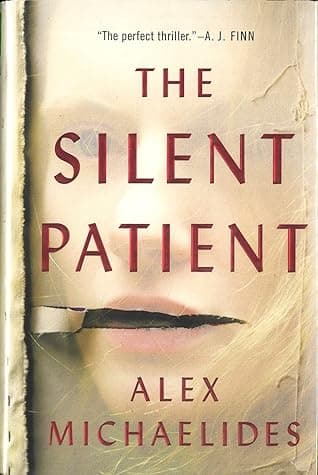
- The Silent Patient
Alex Michaelides
4.1 (507k) average on GoodreadsThrillerFeatures psychological suspense, an unreliable narrative, and a shocking twist.
- Gone Girl
Gillian Flynn
4.1 (2.3M) average on GoodreadsThrillerExplores dark marital secrets, manipulation, and an ambiguous protagonist.
- Behind Her Eyes
Sarah Pinborough
3.8 (80k) average on GoodreadsThrillerBoth Verity and Behind Her Eyes feature shocking, twist-laden endings that fundamentally alter the reader's perception of prior events. However, Verity maintains a more grounded, albeit sensational, psychological battle, whereas Behind Her Eyes ventures into supernatural elements to deliver its final twist, making its narrative less realistic than Verity's.
- Angels & Demons
Dan Brown
3.9 (2.7M) average on GoodreadsThrillerA Harvard symbologist races through Rome's ancient sites, deciphering cryptic clues to unmask the Illuminati and stop a vengeful plot to destroy the Vatican with a stolen antimatter weapon.
- The Girl on the Train
Paula Hawkins
3.9 (2.1M) average on GoodreadsThrillerA woman’s fascination with a seemingly perfect couple she watches from her daily train commute leads her into a dark investigation when she witnesses something that shatters their idyllic image.
- The Da Vinci Code
Dan Brown
3.9 (1.9M) average on GoodreadsThrillerA symbologist and a cryptologist race through European landmarks, deciphering ancient codes and uncovering a conspiracy that could rewrite the foundations of Christianity.





Enjoyed the summary?
A summary gives you the shape of the book. The book itself has the detail, the examples and the voice.
Find Verity on AmazonAs an Amazon Associate, BookBrief earns from qualifying purchases. How we're funded