

Synopsis
Covers the whole plot, including the ending.
- Difficulty
- Medium
- Pacing
- Fast
- Mood
- Suspenseful, Dark, Intense, Gripping
- Read it if
- You enjoy fast-paced thrillers with a detective protagonist, serial killers, and a strong element of psychological suspense.
- Skip it if
- You prefer character-driven narratives over plot-driven ones, or are sensitive to graphic crime descriptions and intense psychological torment.
Violets Are Blue Plot Summary
Covers the whole plot, including the ending.
The Georgetown Murders
The novel begins with the discovery of two joggers, Robert and Margaret Smith, murdered in Georgetown. Their bodies are drained of blood with precise cuts, suggesting a ritualistic killing like a vampire attack. Detective Alex Cross is called to the scene, quickly seeing the sophisticated and almost surgical nature of the wounds. Local police and the FBI are initially confused by the lack of usual clues and the seemingly supernatural aspects of the crime. Cross, despite his disbelief in the supernatural, notes the careful planning and execution, which points to a very smart and dangerous killer. The media sensationalizes the killings, increasing public fear and talk about a 'Vampire' killer.
The Mastermind's Return
During the investigation into the Georgetown murders, Alex Cross gets a series of cryptic and very personal taunts. These messages, sent in different ways, are clearly from his old enemy, the Mastermind. The Mastermind, a brilliant and psychopathic killer from Cross's past, states his goal to ruin Cross's life, not just physically but by targeting everything he cares about. This second threat puts huge pressure on Cross, forcing him to split his attention between the immediate danger of the 'Vampire' killer and the personal vendetta of the Mastermind. The Mastermind's return means a frightening increase in danger for Cross.
Exploring the Underworld of Role-Playing
As the 'Vampire' murders continue, Alex Cross and his partner, John Sampson, start investigating subcultures that might connect to the ritualistic killings. Their search leads them to a hidden world of secret clubs, online forums, and role-playing communities, especially those interested in gothic themes, vampirism, and dark rituals. They meet people who play elaborate fantasy games, some of whom blur the lines between fiction and reality. Cross believes the killer might be someone deeply involved in this world, using role-playing as a cover or inspiration for their terrible acts, or perhaps even a twisted form of 'art.'
The Mastermind's Psychological Warfare
The Mastermind's campaign against Alex Cross grows, moving from taunts to direct psychological attacks. He starts to subtly invade Cross's personal life, threatening his children, Janelle and Damon, and his grandmother, Nana Mama. These threats are meant to terrorize Cross and break his concentration, making him constantly worry about his family's safety. The Mastermind's actions show his deep understanding of Cross's weak points, proving his careful planning and chilling dedication to destroying Cross from within. This makes the 'Vampire' killer investigation even harder for Cross.
A New Victim and a Breakthrough
A new victim, found with similar ritualistic marks, gives a key piece of evidence. Through detailed forensic work and careful analysis of the crime scenes, Cross and his team find a subtle but important detail that helps narrow their search. This discovery leads them to a more specific, elite, and secret group within the role-playing subculture they've been investigating - one that practices more extreme and exclusive rituals. The discovery shifts the investigation from general subcultures to a more focused pursuit, bringing them closer to the killer's identity and motive, while also showing the killer's sophisticated methods.
Confronting the 'Vampire' Killer
After the important discovery, Alex Cross carefully puts together the clues, leading him to identify the 'Vampire' killer as a very smart and disturbed person operating within exclusive role-playing circles. Cross and his team track the killer to their hideout, leading to a tense confrontation. During the encounter, the killer's true reasons are revealed: not supernatural, but a twisted mix of psychological delusion, a desire for control, and a macabre artistic expression inspired by their role-playing fantasies. The killer is caught, ending the terror of the ritualistic murders, but not Cross's personal ordeal.
The Mastermind's Final Game
With the 'Vampire' killer caught, Alex Cross believes he can finally focus only on the Mastermind. However, the Mastermind has been carefully planning his final move, using the 'Vampire' investigation as a distraction. He sets a complex and deadly trap, designed not only to kill Cross but to make him suffer first. The Mastermind's plan targets Cross's weakest points, exploiting his love for his family and his sense of duty. This final game is not just a physical fight but a battle of wits and mental endurance, pushing Cross to his absolute limits.
A Race Against Time
The Mastermind's trap is an elaborate scheme that endangers Cross's family. Alex Cross finds himself in a desperate race against time, following a series of cryptic clues left by the Mastermind. Each clue leads him closer to his family, but also into greater danger, with the Mastermind watching and manipulating every step. Cross must use all his detective skills and physical ability to navigate the dangerous path, knowing that failure means his loved ones will die. The tension is immense as Cross faces his deepest fears and the real chance of losing everything.
The Ultimate Confrontation
The final confrontation between Alex Cross and the Mastermind is a brutal and intense showdown. It happens in a place chosen by the Mastermind, designed to maximize Cross's psychological torment and physical challenge. The battle is not just physical; it is a clash of minds and wills, with the Mastermind showing the full extent of his evil and his long-held obsession with Cross. Cross, driven by his love for his family and his commitment to justice, fights with everything he has, pushing past his own pain and fear to finally end the Mastermind's terror. The stakes are life and death, with no room for error.
The Mastermind's True Identity Revealed
In a shocking and unexpected twist, the Mastermind's true identity is revealed during or immediately after the final confrontation. This revelation shows a connection to Cross's past that is far more personal and disturbing than previously thought. The Mastermind is not a random psychopath but someone with a deep, though twisted, history with Cross, making their long-standing vendetta even more tragic and personal. This discovery leaves Cross reeling, adding a deep layer of emotional complexity and trauma to the already devastating events he has endured.
Aftermath and Lingering Trauma
After the horrific events and the Mastermind's defeat, Alex Cross must cope with deep emotional and psychological trauma. While his family is safe, the experience has left lasting scars. Cross must deal with the aftermath, handling the emotional toll on himself and his loved ones. The Mastermind's identity, in particular, continues to bother him, forcing him to re-evaluate parts of his past. The case's resolution brings a sense of closure but also a lasting unease, as Cross understands that some wounds, especially those caused by such personal evil, may never fully heal.
Violets Are Blue Characters
Alex Cross
Protagonist
A brilliant forensic psychologist and detective for the Washington D.C. police.
Alex Cross is a highly intelligent and empathetic detective, known for his ability to delve into the minds of serial killers. He is a widower raising his two children, Janelle and Damon, and living with his grandmother, Nana Mama, in a close-knit family unit. Cross is driven by a strong sense of justice and a deep love for his family, which often becomes both his greatest strength and his most vulnerable point. He possesses a calm demeanor under pressure but carries the emotional weight of his past cases and personal losses.
Relationships: John Sampson (Best friend and loyal police partner.); Nana Mama (Supportive grandmother and matriarch of his family.); Janelle Cross (His daughter, a source of love and vulnerability.); Damon Cross (His son, a source of love and vulnerability.); The Mastermind (His arch-nemesis, an intelligent and sadistic killer with a personal vendetta.)
John Sampson
Supporting
Alex Cross's loyal and physically imposing police partner and best friend.
John Sampson is a veteran detective, a man of immense physical strength and unwavering loyalty to Alex Cross. He acts as Cross's foil, often providing a more grounded, pragmatic perspective to Cross's psychological insights. Sampson is fiercely protective of Cross and his family, often putting himself in harm's way. He is a steadfast presence, offering emotional support and practical assistance throughout the most harrowing investigations. His friendship with Cross is deep-seated, having endured many dangerous situations together.
Relationships: Alex Cross (Best friend and police partner.)
Nana Mama (Regina Cross)
Supporting
Alex Cross's wise, strong, and deeply loving grandmother.
Nana Mama is the matriarch of the Cross family, a formidable and loving presence who provides stability and wisdom. She raised Alex and now helps him raise his own children. Her faith and practical advice are a constant source of strength for Alex, even as she worries deeply about the dangers he faces. She is fiercely protective of her family and often sees things with a clear, no-nonsense perspective. Her home is the emotional anchor for Alex, representing the family and normalcy that the Mastermind seeks to destroy.
Relationships: Alex Cross (Grandson, whom she raised and deeply loves.); Janelle Cross (Great-granddaughter, whom she cares for.); Damon Cross (Great-grandson, whom she cares for.)
The Mastermind
Antagonist
Alex Cross's brilliant, sadistic, and deeply personal arch-nemesis.
The Mastermind is a super-criminal of unparalleled intellect and depravity, obsessed with destroying Alex Cross. He operates with meticulous planning, psychological manipulation, and extreme cruelty, deriving pleasure from the suffering he inflicts. Unlike other killers, his primary goal is not just murder, but the complete psychological and emotional annihilation of Cross and everything he holds dear. His identity is initially shrouded in mystery, but his methods reveal a deep, personal vendetta rooted in a twisted past with Cross. He is a master of disguise, deception, and technological manipulation.
Relationships: Alex Cross (Arch-nemesis, with a deeply personal and destructive vendetta.)
The 'Vampire' Killer
Antagonist
A ritualistic serial killer inspired by vampire lore and role-playing.
The 'Vampire' Killer is responsible for the gruesome Georgetown murders. This individual is highly intelligent, meticulous, and deeply immersed in a subculture that blurs the lines between fantasy and reality. Their motive is not truly supernatural, but rather a complex psychological delusion, a desire for control, and a macabre artistic expression, all inspired by their fascination with vampirism and dark rituals. They execute their crimes with a chilling precision, making them difficult to track. Their actions create a terrifying distraction for Alex Cross while the Mastermind operates in the background.
Janelle Cross
Supporting
Alex Cross's young daughter.
Janelle is Alex's daughter, a bright and innocent child who represents the purity and hope in Alex's life. She is a source of immense joy for Alex, and her safety is his paramount concern. The Mastermind's threats against Janelle and her brother Damon are particularly devastating for Cross, highlighting his vulnerability and the high stakes of his profession. Her presence underscores the personal sacrifices Alex makes in his pursuit of justice.
Relationships: Alex Cross (Father, whom she loves deeply.); Damon Cross (Brother.); Nana Mama (Great-grandmother.)
Damon Cross
Supporting
Alex Cross's young son.
Damon is Alex's son, also a young and innocent child. Like Janelle, he is a vital part of Alex's family and a constant reminder of what Alex is fighting for. The threats against Damon, along with Janelle, are used by the Mastermind to inflict maximum psychological pain on Alex. Damon represents the future and the normal life Alex strives to protect, making him a critical emotional anchor in the story. His presence reinforces the domestic stakes intertwined with Alex's dangerous professional life.
Relationships: Alex Cross (Father, whom he loves deeply.); Janelle Cross (Sister.); Nana Mama (Great-grandmother.)
Violets Are Blue Themes
The Nature of Evil
The novel explores different types of evil: the ritualistic, almost theatrical evil of the 'Vampire' killer, driven by delusion and subculture, sharply contrasts with the personal, calculated, and destructive evil of the Mastermind. It looks at how bad people can be, showing that the most frightening monsters are often human. The Mastermind's actions, in particular, show an evil that seeks not just death, but the complete psychological destruction of its victim, highlighting the deep darkness that can exist within the human mind. Cross struggles to understand these different kinds of wickedness.
“I've seen true evil, the kind that lurks in the shadows of the human heart, far more terrifying than any monster in a fairy tale.”
The Burden of Family
Alex Cross's family—Nana Mama, Janelle, and Damon—is both his greatest strength and his biggest weakness. His love for them drives his fight against evil, but it also gives the Mastermind the perfect way to torment him. The constant threat to his loved ones creates huge psychological pressure, forcing Cross to balance his work duties with his personal fears. The theme highlights how strong family bonds, while offering comfort and purpose, can also become a heavy burden when targeted by evil, blurring the lines between personal and professional life.
“Every time I look at my children, I see everything I have to lose. And everything I have to fight for.”
The Blurring of Reality and Fantasy
The 'Vampire' killer's crimes come from a subculture where fantasy and role-playing mix with reality. The novel explores how people can get so lost in a fictional world that they lose touch with moral limits, leading to terrible acts. This theme is central to the initial investigation, as Cross must navigate the complex world of secret clubs and online communities where participants take on elaborate roles. It raises questions about how escapism affects people psychologically and how easily dark fantasies can become real-world violence, especially when driven by a disturbed mind.
“They played at monsters until they became one.”
Obsession and Vendetta
The Mastermind's whole purpose in this novel is driven by an intense, long-standing obsession with Alex Cross and a desire for revenge. This theme explores how destructive a personal vendetta can be, showing how it can consume someone and lead to extreme cruelty. The Mastermind's careful planning and psychological torment are all expressions of his deep hatred and desire to completely break Cross. Conversely, Cross's own drive to protect his family and bring the Mastermind to justice is also a powerful force, creating a relentless cat-and-mouse game.
“Some battles aren't about justice. They're about survival against an enemy who lives only to see you fall.”
Plot Devices & Literary Techniques
Red Herring (The 'Vampire' Killer)
The initial serial killer investigation distracts from the true primary antagonist.
The 'Vampire' killer and their ritualistic murders serve as a major red herring throughout the first half of the novel. While a genuine threat, this case occupies Alex Cross's time and resources, diverting his full attention from the Mastermind. The eerie, almost supernatural nature of the 'Vampire' killings is designed to mislead both the characters and the reader, creating a sense of false security regarding the true, more personal danger lurking in the background. This device effectively ratchets up suspense and allows the Mastermind's plans to unfold largely unhindered until the opportune moment.
Psychological Warfare
The Mastermind's primary weapon is the systematic torment and manipulation of Alex Cross's mind.
The Mastermind employs extensive psychological warfare against Alex Cross. This device includes cryptic taunts, threats against his family, and manipulation of events designed to maximize Cross's fear, guilt, and helplessness. The Mastermind doesn't just seek to kill Cross but to break him mentally and emotionally. This tactic highlights Cross's vulnerability as a family man and a psychologist, forcing him to confront his deepest fears. It makes the conflict intensely personal and elevates the stakes beyond mere physical danger, showcasing the Mastermind's unique brand of cruelty.
Ticking Clock
A sense of urgency is created by the Mastermind's impending threats against Cross's family.
The ticking clock device is primarily employed during the Mastermind's final game against Alex Cross. Once the Mastermind's true intentions and the danger to Cross's family are fully revealed, Cross is plunged into a desperate race against time. The Mastermind sets specific deadlines or creates situations where the lives of Cross's loved ones hang precariously in the balance, forcing Cross to make impossible choices under immense pressure. This device generates relentless suspense and propels the narrative forward at a frantic pace, underscoring the high stakes of the climax.
The Unreliable Narrative (of the Mastermind's Identity)
The true identity of the Mastermind is concealed and revealed in a shocking twist.
The novel uses an unreliable narrative regarding the Mastermind's identity, keeping his true connection to Alex Cross a secret until the very end. Clues are sparse or deliberately misleading, and the Mastermind's actions are presented in a way that suggests a detached, almost mythical evil. This device heightens the mystery and suspense, building towards a shocking revelation that recontextualizes much of the prior narrative. The dramatic reveal not only surprises the reader but also inflicts a profound emotional blow on Alex Cross, making the resolution more impactful and traumatic.
Violets Are Blue Quotes
“I'm not trying to be a hero. I'm just trying to do my job.”
“The truth is a funny thing. Sometimes it sets you free, and sometimes it just makes you more miserable.”
“Fear is a powerful motivator. It can make you do things you never thought possible.”
“Every time you think you've seen it all, someone manages to surprise you with a new level of depravity.”
“The past always catches up to you, one way or another.”
“Sometimes the greatest monsters are the ones who look the most normal.”
“Justice is a slow-moving train, but it always gets there eventually.”
“You can't save everyone, but you have to try.”
“The line between genius and madness is often very thin.”
“Love can be a weakness, but it can also be the greatest strength.”
“The city has a way of swallowing people whole, leaving no trace.”
“Even in the darkest places, there's always a flicker of hope.”
“Some secrets are meant to stay buried.”
Quiz
10 questions on the plot and the characters. Each answer comes with a short explanation.
Question 1
What initial type of crime forces Alex Cross to reconsider his disbelief in vampires?
- A series of disappearances in a secluded town.
- Two joggers found slain in a manner suggesting a macabre ritual.
- A break-in at a blood bank with unusual items stolen.
- Reports of strange figures lurking in cemeteries at night.
Show answer
B. Two joggers found slain in a manner suggesting a macabre ritual. The synopsis states that Alex Cross has to reconsider his disbelief in vampires 'when two joggers are found slain in a manner that suggests a macabre ritual.'
Question 2
Who is the lethal super-criminal from Alex Cross's past that stalks and taunts him throughout the book?
- The Collector
- The Shadowman
- The Mastermind
- The Puppeteer
Show answer
C. The Mastermind The synopsis explicitly mentions, 'At the same time, a lethal super-criminal from Cross's past known as the Mastermind is stalking him.'
Question 3
What kind of world does Cross plunge into while investigating the vampire-like murders?
- An underground fight club scene.
- A netherworld of secret clubs and role-players.
- A community of reclusive academics studying ancient myths.
- A network of international art thieves.
Show answer
B. A netherworld of secret clubs and role-players. The synopsis describes Cross taking on the case and plunging 'into a netherworld of secret clubs and role-players, a world full of poseurs and playactors.'
Question 4
What is the primary danger Alex Cross faces from the Mastermind?
- Financial ruin and professional discreditation.
- Being framed for the vampire-like murders.
- Threats to everything he holds dear and a deadly confrontation.
- Exposure of a past secret that could ruin his career.
Show answer
C. Threats to everything he holds dear and a deadly confrontation. The synopsis states the Mastermind is 'threatening everything he holds dear' and that Alex Cross 'must survive a deadly confrontation.'
Question 5
How do the local police and FBI react to the initial bizarre murders?
- They quickly identify a suspect and make an arrest.
- They dismiss the cases as hoaxes.
- Local police are horrified, and even the FBI is baffled.
- They immediately call in Alex Cross due to his expertise.
Show answer
C. Local police are horrified, and even the FBI is baffled. The synopsis notes, 'Local police are horrified, and even the FBI is baffled,' indicating their struggle with the unusual nature of the crimes.
Question 6
What is the ultimate revelation Alex Cross uncovers regarding the Mastermind?
- The Mastermind is a member of the secret clubs he investigated.
- The Mastermind was a former colleague seeking revenge.
- The awful secret of the Mastermind.
- The Mastermind is an international terrorist.
Show answer
C. The awful secret of the Mastermind. The synopsis concludes with, 'Alex Cross must survive a deadly confrontation-only to discover at last the awful secret of the Mastermind.'
Question 7
What is the core internal conflict Alex Cross faces at the beginning of the novel regarding the murders?
- His struggle to balance his family life with his demanding career.
- His initial disbelief in vampires versus the evidence suggesting their involvement.
- His loyalty to the local police versus the FBI's jurisdiction.
- His fear of public scrutiny if the case goes unsolved.
Show answer
B. His initial disbelief in vampires versus the evidence suggesting their involvement. The opening lines state, 'Alex Cross has never believed in vampires. But when two joggers are found slain in a manner that suggests a macabre ritual, he has to reconsider,' highlighting his internal conflict.
Question 8
What is the primary motivation of the individual committing the vampire-like murders?
- To gain notoriety within the role-playing community.
- To fulfill a demented desire to cross the line from dark ritual to real blood.
- To send a political message to the authorities.
- To cover up a separate, unrelated crime.
Show answer
B. To fulfill a demented desire to cross the line from dark ritual to real blood. The synopsis states that among the poseurs and playactors, there is 'someone demented enough to have crossed the line from dark ritual to real blood.'
Question 9
Beyond the physical threat, what makes the Mastermind particularly terrifying for Alex Cross?
- The Mastermind's ability to manipulate the media against Cross.
- The Mastermind's connection to Cross's 'deepest fears' and threats to 'everything he holds dear'.
- The Mastermind's use of supernatural abilities.
- The Mastermind's control over a vast criminal empire.
Show answer
B. The Mastermind's connection to Cross's 'deepest fears' and threats to 'everything he holds dear'. The opening sentence mentions Cross confronting 'his most terrifying nemesis ever-and his own deepest fears' and later that the Mastermind is 'threatening everything he holds dear.' This indicates a deeper, personal terror beyond just physical danger.
Question 10
In the context of the book, what distinguishes the 'netherworld of secret clubs and role-players' from the actual killer?
- The netherworld participants are all innocent, while the killer is an outsider.
- The netherworld consists of 'poseurs and playactors,' while the killer is 'demented enough to have crossed the line from dark ritual to real blood.'
- The netherworld is a cover for the killer's illicit drug operations.
- The netherworld members are actively trying to catch the killer.
Show answer
B. The netherworld consists of 'poseurs and playactors,' while the killer is 'demented enough to have crossed the line from dark ritual to real blood.' The synopsis clarifies this distinction: 'a world full of poseurs and playactors-and someone demented enough to have crossed the line from dark ritual to real blood.' This highlights that while many are role-playing, one individual has taken it to a deadly extreme.
Violets Are Blue FAQ
What is the central mystery Alex Cross investigates in 'Violets Are Blue'?
Alex Cross investigates a series of bizarre murders where victims, primarily joggers, are found slain in a ritualistic manner, leading local police and the FBI to believe a killer is emulating vampire attacks. This macabre pattern forces Cross to consider the dark subcultures involved.
Who is the 'Mastermind' and what is his significance to Alex Cross in this book?
The Mastermind is a lethal super-criminal from Alex Cross's past who resurfaces to stalk, taunt, and threaten Cross and his loved ones throughout the novel. His personal vendetta against Cross runs deep, adding a layer of extreme personal danger to the detective's already complex case.
What kind of subculture does Cross delve into while investigating the 'vampire' murders?
Cross delves into a netherworld of secret clubs, role-players, and dark ritual enthusiasts, a world populated by individuals who blur the lines between fantasy and reality. He must discern between poseurs and the truly disturbed individual responsible for the escalating violence.
How does the 'vampire' case intertwine with the Mastermind's pursuit of Cross?
The Mastermind's taunts and threats occur concurrently with Cross's investigation into the ritualistic murders, creating immense pressure and distraction. While seemingly separate, the dual threats push Cross to his limits, making him question his ability to protect his family and solve the case simultaneously.
What is the ultimate revelation regarding the Mastermind at the novel's conclusion?
The novel concludes with Alex Cross surviving a deadly confrontation, only to finally uncover the awful secret of the Mastermind's identity. This revelation often ties into a deeper, personal connection or motive that has been hidden throughout the narrative.
Are there any specific clues early in the book that hint at the Mastermind's true identity or motivation?
Early clues regarding the Mastermind are often subtle, embedded in the specific nature of the taunts, the choice of victims, or the locations of their attacks. These details, initially seeming random, later reveal a pattern connected to Cross's past cases or personal life.
How does the author use the 'vampire' theme beyond the surface-level murders?
The 'vampire' theme extends beyond the literal murders to symbolize the psychological 'sucking' of life and peace from Cross by the Mastermind. It represents the darkness that preys on the innocent and the moral ambiguity within the subcultures Cross explores, reflecting a deeper societal malaise.
What significance do the 'secret clubs' and 'role-players' have beyond being a setting for the murders?
The secret clubs and role-players serve as a microcosm for the blurring of fantasy and reality, illustrating how easily dark desires can escalate from playacting to real violence. They highlight the psychological vulnerability of individuals seeking extreme experiences, providing fertile ground for a true psychopath to operate.
How does Alex Cross's past influence his approach to this particular case?
Cross's past experiences with cunning, psychologically manipulative criminals inform his cautious and analytical approach, but also make him vulnerable to the Mastermind's personal attacks. His history of confronting evil shapes his determination while simultaneously exposing his deepest fears.
What psychological toll does the Mastermind's relentless pursuit take on Alex Cross?
The Mastermind's relentless pursuit takes a severe psychological toll on Cross, pushing him to the brink of defeat and intensifying his deepest fears for his family's safety. He experiences extreme stress, paranoia, and moments of self-doubt as he grapples with the personal nature of the attacks.
How do the 'vampire' murders challenge Cross's rational, scientific mind?
The 'vampire' murders challenge Cross's rational mind by presenting crimes that defy conventional logic and forensics, forcing him to consider the psychological motivations behind such macabre rituals. He must reconcile his scientific training with the unsettling, almost supernatural, appearance of the crime scenes.
In what ways does the book explore the dark side of human fantasy and escapism?
The book explores the dark side of human fantasy and escapism by depicting how individuals can become dangerously lost in role-playing and dark rituals, blurring the lines between fiction and reality. It shows how the pursuit of extreme experiences can provide cover for genuine psychopathy and violence.
Is the Mastermind's motive purely revenge, or is there a deeper psychological drive?
While revenge is a prominent motive, the Mastermind's actions often suggest a deeper psychological drive, such as a desire for control, recognition, or a twisted form of intellectual superiority over Cross. Their elaborate schemes point to a complex pathology beyond simple retribution.
How does the 'shocking conclusion' regarding the Mastermind redefine the nature of evil in the Alex Cross series?
The shocking conclusion regarding the Mastermind often redefines the nature of evil by revealing it to be intimately connected to Cross's own life or past, rather than an external, detached threat. This makes the evil more personal and deeply unsettling, highlighting its insidious capacity to infiltrate one's most private world.
What is the significance of the title, 'Violets Are Blue,' in relation to the plot or themes?
The title 'Violets Are Blue' could be interpreted as a dark inversion of a classic romantic rhyme, hinting at the distorted perception of love or beauty by the killer, or the melancholic and dangerous world Cross inhabits. It may also subtly reference a specific detail or character within the narrative.
Does the novel suggest a commentary on society's fascination with the macabre?
Yes, the novel implicitly comments on society's fascination with the macabre through its depiction of secret clubs and role-players who engage in dark rituals. It suggests that this fascination, when unchecked, can create an environment where genuine violence can emerge and thrive, blurring moral boundaries.
How does Cross's family play a role in his vulnerability and his resolve?
Cross's family—his children and Nana Mama—serve as both his greatest vulnerability and his strongest source of resolve. The Mastermind targets them to torment Cross, forcing him to confront his deepest fears, but their safety also fuels his relentless determination to catch the criminal.
Are there any specific literary allusions or cultural references used to deepen the 'vampire' theme?
The novel might employ subtle literary allusions to classic vampire lore or gothic literature, or cultural references to modern vampire media, to enhance the atmosphere of dread and ritual. These references would deepen the reader's understanding of the killer's inspirations and the subculture's practices.
About the author

James Patterson is an American author known for his contributions to the thriller and fiction genres. His notable works include "Along Came a Spider," "Kiss the Girls," "1st to Die," "The Angel Experiment," "Suzanne's Diary for Nicholas," and "School's Out—Forever." Patterson has received multiple awards for his writing, including the Edgar Award.
Similar books
- Kiss the Girls
James Patterson
4.0 (313k) average on GoodreadsThrillerFeatures Alex Cross against a complex serial killer, with similar pacing and suspense.
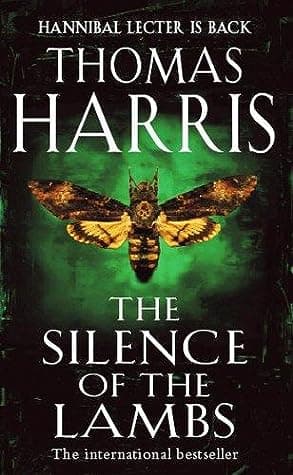
- The Silence of the Lambs
Thomas Harris
4.2 (464k) average on GoodreadsThrillerInvolves a brilliant detective pursuing a terrifying serial killer, with psychological depth.
- Gone Girl
Gillian Flynn
4.1 (2.3M) average on GoodreadsThrillerExplores psychological manipulation and a cat-and-mouse game between characters.
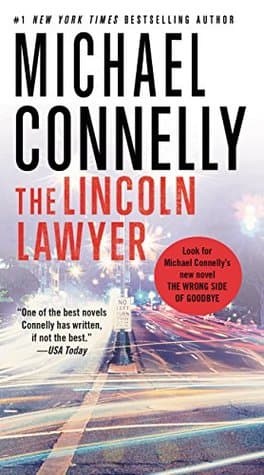
- The Lincoln Lawyer
Michael Connelly
4.2 (193k) average on GoodreadsThrillerConnelly's 'The Lincoln Lawyer' offers a more grounded and procedurally detailed approach to the legal thriller, contrasting with Patterson's high-octane, sometimes fantastical, serial killer narratives. While both authors are known for their strong protagonists, Connelly's Mickey Haller is a morally grey character operating within a realistic legal system, complete with its bureaucratic frustrations and ethical dilemmas. 'Violets Are Blue' leans into sensationalism and a race-against-time urgency, whereas Connelly builds tension through meticulous investigation and courtroom strategy, providing a different kind of intellectual engagement for the reader.
- Angels & Demons
Dan Brown
3.9 (2.7M) average on GoodreadsThrillerA Harvard symbologist races through Rome's ancient sites, deciphering cryptic clues to unmask the Illuminati and stop a vengeful plot to destroy the Vatican with a stolen antimatter weapon.
- The Girl on the Train
Paula Hawkins
3.9 (2.1M) average on GoodreadsThrillerA woman’s fascination with a seemingly perfect couple she watches from her daily train commute leads her into a dark investigation when she witnesses something that shatters their idyllic image.




Enjoyed the summary?
A summary gives you the shape of the book. The book itself has the detail, the examples and the voice.
Find Violets Are Blue on AmazonAs an Amazon Associate, BookBrief earns from qualifying purchases. How we're funded