
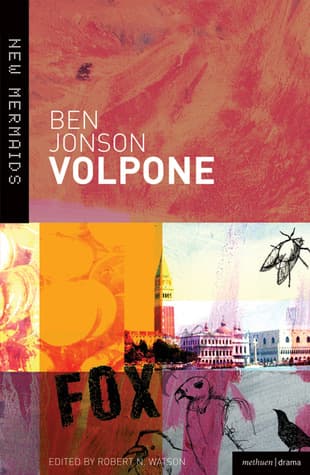
Synopsis
Covers the whole plot, including the ending.
- Difficulty
- Medium
- Pacing
- Moderate
- Mood
- Satirical, Witty, Cynical, Darkly Comedic, Observational
Volpone Plot Summary
Covers the whole plot, including the ending.
The Fox's First Prey
Volpone, a rich Venetian nobleman, pretends to be dying in bed. His servant, Mosca, helps him plan a trick to convince three prominent citizens—Voltore, Corbaccio, and Corvino—that they are his only heirs. Each man brings increasingly valuable gifts, hoping to secure their inheritance. Voltore, a lawyer, offers a gold plate. Corbaccio, an old moneylender, promises a strong medicine. Corvino, a merchant, brings a pearl and a diamond. Volpone enjoys their greed, mocking them privately with Mosca, while keeping up his act of extreme weakness.
A Father's Disinheritance and a Wife's Sacrifice
The tricks grow more complex. Corbaccio, sure he will inherit Volpone's money, disinherits his son, Bonario, in favor of Volpone. Mosca suggests this to Corbaccio, saying it will earn more favor with Volpone. Meanwhile, Corvino, desperate to outdo his rivals, offers his beautiful wife, Celia, to Volpone, believing a night with her will guarantee his inheritance. Volpone, lustful and confident, looks forward to this new conquest, showing how far the suitors' greed will drive them.
Lady Would-be's Persistent Visit
Lady Would-be, a talkative English lady, visits Volpone, hoping to be in his will. She arrives with her servant, Nano, and a dwarf, Castrone. Her constant talk about poetry, fashion, and her own supposed achievements quickly annoys Volpone. He tries various ways to get rid of her, pretending to get sicker or even to fall asleep, but she ignores his discomfort and continues her monologue. Her presence highlights society's self-absorption and superficiality.
The Attempted Seduction and Bonario's Intervention
Corvino brings Celia to Volpone's bedroom, leaving her alone with the 'dying' man. Volpone, suddenly energetic, reveals he is healthy and tries to seduce Celia, promising her wealth if she gives in. When she resists, he threatens her. At this moment, Bonario, Corbaccio's disinherited son, who Mosca had hidden to witness his father's disinheritance, bursts out. He rescues Celia, preventing the assault and exposing Volpone's deception, though others initially misunderstand his actions.
The Court Case and Mosca's Manipulation
The scene moves to a Venetian courtroom, where Volpone, Mosca, and the three dupes—Voltore, Corbaccio, and Corvino—conspire to discredit Bonario and Celia. Voltore, their lawyer, twists the facts, portraying Bonario as a rebellious son trying to murder his father and Celia as an unchaste woman trying to extort Volpone. Mosca, with his quick wit, supports these lies, even involving Lady Would-be in the fabricated story. The judges, influenced by the powerful speeches and the accusers' perceived reputations, begin to believe the false story, putting Bonario and Celia in danger.
The English Travelers and the Imposture
Throughout the play, a subplot involves the English travelers, Sir Politic Would-be and his wife, Lady Would-be. Sir Politic is a foolish, self-important knight obsessed with impractical schemes and political conspiracies. He believes he has found a plot to poison the Venetian Senate and plans to escape in a tortoise shell. His interactions with Peregrine, a more sensible English gentleman, provide comic relief and comment on foreign travelers and their often-absurd ideas. Sir Politic's foolishness contrasts with Volpone and Mosca's more sinister deceptions, showing different kinds of human folly.
Mosca's Rising Ambition
As the court proceedings continue, Mosca's ambition grows. He realizes his power over Volpone and the dupes. He subtly begins to assert himself, even acting important. He sees that he is the true designer of the schemes and that Volpone depends on him. This change in power hints at the eventual conflict between master and servant, as Mosca, no longer content as a mere parasite, begins to imagine a future where he controls Volpone's wealth and position, setting up his betrayal.
Volpone's Second Feigned Death
To further torment his victims and enjoy their reactions, Volpone stages a second 'death.' He arranges for a will to be read publicly, naming Mosca as his sole heir. He then disguises himself as a commendatore (a law officer) to watch Voltore, Corbaccio, and Corvino's reactions. Their rage and despair at being disinherited are immense, giving Volpone great satisfaction. This act of cruelty shows Volpone's deep sadism and his desire to control and humiliate others.
Mosca's Betrayal and Volpone's Panic
Mosca, now officially the heir, fully accepts his new role. When Volpone, still disguised, tries to reveal himself and reclaim his estate, Mosca denies knowing him. He publicly claims Volpone's identity and property, leaving Volpone in shock and panic. Volpone, stripped of his disguise and identity, realizes the extent of Mosca's betrayal. He is trapped by his own deception, unable to expose Mosca without exposing himself and admitting to years of fraud. The situation has reversed, and the hunter is now the hunted.
The Final Exposure and Justice
Cornered and facing the loss of everything, Volpone desperately decides to reveal his true identity and expose the entire scheme in court. He confesses his deceptions, hoping to reclaim his wealth by discrediting Mosca. This confession, however, also implicates Voltore, Corbaccio, and Corvino in their complicity and greed. The judges, finally seeing through the lies, deliver severe punishments. Volpone is sent to prison and his wealth taken. Mosca is condemned to the galleys. The dupes also receive fitting penalties, bringing a form of justice to the play's conclusion.
Principal Figures
Volpone
Protagonist
The wealthy, cunning, and lustful fox.
Volpone is a rich Venetian magnifico who feigns illness and impending death to trick opportunistic heirs into showering him with gifts. He is a master of disguise and manipulation, reveling in the psychological torment he inflicts upon his dupes. Driven by an insatiable love of gold and a perverse pleasure in deception, he is also highly sensual and lustful, attempting to seduce Celia. He represents the avarice and moral decay at the heart of the play. His intelligence is matched only by his arrogance, which ultimately leads to his downfall.
Relationships: Mosca (Master-servant; later, rival); Voltore, Corbaccio, Corvino (Victims of his deception); Celia (Object of his lust)
Mosca
Antagonist/Supporting
Volpone's cunning and ambitious parasite.
Mosca is Volpone's servant and parasite, a brilliant and amoral manipulator who is even more cunning than his master. He orchestrates many of the schemes, subtly guiding the dupes and twisting situations to Volpone's advantage. Initially content with his parasitic role, Mosca's ambition grows throughout the play. He recognizes his own superior intellect and eventually betrays Volpone, attempting to seize his master's entire fortune. He embodies the idea that greed can corrupt even the most loyal of servants, highlighting the pervasive nature of self-interest.
Relationships: Volpone (Servant-master; later, betrayer); Voltore, Corbaccio, Corvino (Manipulator of their greed)
Voltore
Supporting
The avaricious lawyer.
Voltore is one of Volpone's primary dupes, a lawyer whose professional integrity is completely compromised by his desire for Volpone's inheritance. He is eloquent and persuasive, using his legal skills to twist truth and defend falsehoods in court. His greed blinds him to morality, leading him to fabricate stories and accuse innocent people. He represents the corruption of the legal system and the way in which professional ethics can be abandoned in pursuit of wealth. His eventual public disgrace is a consequence of his moral bankruptcy.
Relationships: Volpone (Prospective heir; victim of Volpone's trickery); Mosca (Co-conspirator)
Corbaccio
Supporting
The old, miserly usurer.
Corbaccio is an extremely old and miserly usurer, another of Volpone's dupes. He is so consumed by greed that he disinherits his own son, Bonario, in favor of Volpone, believing it will secure his inheritance. He is depicted as frail, deaf, and easily manipulated, a caricature of extreme old age and avarice. His willingness to sacrifice his familial duty for wealth underscores the play's theme of the destructive power of greed. His actions highlight the complete breakdown of natural human bonds in the face of material desire.
Relationships: Volpone (Prospective heir; victim of Volpone's trickery); Bonario (Father-son (estranged))
Corvino
Supporting
The jealous, avaricious merchant.
Corvino is a jealous and possessive merchant, and the third of Volpone's primary dupes. His desire for Volpone's inheritance is so strong that he forces his beautiful and virtuous wife, Celia, to prostitute herself to Volpone. He is a volatile character, prone to fits of rage and suspicion regarding his wife's fidelity, yet he readily sacrifices her honor for financial gain. Corvino embodies hypocrisy and moral cowardice, prioritizing wealth over his wife's virtue and his own dignity. His actions are among the most shocking in the play, demonstrating the depths of human depravity fueled by greed.
Relationships: Volpone (Prospective heir; victim of Volpone's trickery); Celia (Husband-wife)
Celia
Supporting
The virtuous and chaste wife of Corvino.
Celia is Corvino's beautiful and virtuous wife, who becomes a victim of her husband's greed and Volpone's lust. She is a symbol of innocence and purity, maintaining her chastity despite immense pressure and threats. Her steadfast refusal to yield to Volpone's advances, even when threatened with violence, highlights her moral strength. She represents the potential for goodness and integrity amidst the pervasive corruption of Venetian society. Her suffering evokes sympathy, and her eventual vindication provides a glimmer of justice in the otherwise cynical world of the play.
Relationships: Corvino (Wife-husband); Volpone (Target of his lust); Bonario (Rescuer; fellow victim)
Bonario
Supporting
Corbaccio's honorable but disinherited son.
Bonario is Corbaccio's son, a young man of honor and integrity. He is disinherited by his avaricious father, who hopes to gain favor with Volpone. Bonario attempts to defend his father's honor and later rescues Celia from Volpone's attempted rape. He is initially naive but consistently acts with moral uprightness, standing in stark contrast to the corrupt characters around him. Though initially a victim of manipulation, his actions are crucial in exposing Volpone's villainy. He represents traditional virtue and filial piety, which are largely absent in the play's other characters.
Relationships: Corbaccio (Son-father (estranged)); Celia (Rescuer; fellow victim)
Lady Would-be
Supporting
The verbose and pretentious English tourist.
Lady Would-be is a verbose and self-absorbed Englishwoman who visits Volpone, hoping to be remembered in his will. She is a caricature of the pretentious and gossiping gentlewoman, obsessed with fashion, poetry, and her own supposed intellectual prowess. Her endless chatter and lack of self-awareness provide comic relief but also serve as a satirical commentary on superficiality and social climbing. She is easily manipulated by Mosca and contributes to the chaotic courtroom scene with her misguided testimony. Her character highlights the folly of those who prioritize appearance over substance.
Relationships: Volpone (Prospective heir; annoyance); Sir Politic Would-be (Wife-husband)
Sir Politic Would-be
Supporting
The foolish, scheme-obsessed English knight.
Sir Politic Would-be is a foolish English knight, Lady Would-be's husband. He is obsessed with elaborate, often absurd, political schemes and conspiracy theories. He believes he has a profound understanding of Venetian politics and constantly devises impractical plans, such as escaping in a tortoise shell. He is a figure of pure comic relief, a satirical portrayal of the naive and self-important traveler. His interactions with Peregrine highlight his gullibility and his tendency to invent grand, yet utterly baseless, plots. His character contrasts with the more dangerous deceptions of Volpone, showcasing a different, less malicious form of folly.
Relationships: Lady Would-be (Husband-wife); Peregrine (Acquaintance; target of Peregrine's prank)
Themes & Insights
Greed and Avarice
Greed is the central force in 'Volpone,' motivating nearly every character. Volpone's love for gold is almost spiritual, and his schemes are fueled by a desire not just for more wealth, but for the power and satisfaction of manipulating others through their own avarice. The dupes—Voltore, Corbaccio, and Corvino—are so consumed by the idea of inheritance that they sacrifice their honor, family bonds, and even their wives' virtue. The play shows how greed corrupts individuals and breaks down societal values, turning relationships into business opportunities.
“Good morning to the day; and next, my gold! Open the shrine, that I may see my saint.”
Deception and Manipulation
The entire plot of 'Volpone' relies on layers of deception. Volpone's fake illness is the main lie, but it creates many others, expertly woven by Mosca. Characters constantly use disguises, both literal and figurative, to get what they want. The play explores how easily people can be swayed by false appearances and promises of gain. It highlights how fragile truth is in a society where self-interest rules, and where people quickly believe what they want to believe, regardless of facts.
“I fear I shall begin to grow in love / With my dear self, and my most prosperous parts, / They do so spring and burgeon; I am so fortunate!”
Justice and Injustice
The play presents a cynical view of justice, especially through the courtroom scenes where truth is twisted and innocence is almost condemned. The Venetian legal system is shown to be open to rhetoric, reputation, and the influence of powerful, wealthy individuals. Bonario and Celia, the only truly good characters, face great injustice. However, the play eventually delivers a form of justice, though harsh, as Volpone, Mosca, and their dupes are all punished. This ending suggests that while justice may be slow or imperfect, extreme vice can lead to its own downfall.
“The law / Must have her course, and give her sentence. They / Are all caught in their own trap, and justly.”
Hypocrisy and Moral Decay
Hypocrisy is common in 'Volpone.' Characters constantly pretend to be respectable, pious, or concerned while having bad motives. The dupes, supposedly pillars of Venetian society, do morally wrong things. Volpone, pretending to be dying, is secretly energetic and lustful. This theme shows the large gap between outward appearance and inner reality, suggesting widespread moral decay in society. The play critiques a world where virtue is just an act, and true morality is sacrificed for personal gain, leading to general cynicism.
“O, sir, the wonder / Is, how he could sustain that ample style / Of a magnifico, to have such a parasite / To feed upon him...”
Humanity as Beast
Jonson clearly frames 'Volpone' as a beast fable, with the main characters embodying animal traits. Volpone is the 'fox,' cunning and predatory. Mosca is the 'fly,' a parasitic opportunist. The dupes are 'vultures' (Voltore), 'ravens' (Corvino), and 'crows' (Corbaccio), all birds drawn to the smell of death and potential food. This metaphor emphasizes the characters' base instincts, greed, and predatory nature. It strips away their human dignity, showing them as driven by primal urges rather than reason, satirizing the animal impulses beneath polite society.
“I am Volpone, and this is my Mosca; / The one a wily fox, the other a hungry fly.”
Plot Devices & Literary Techniques
Dramatic Irony
Audience knows more than the characters.
Dramatic irony is a pervasive device in 'Volpone,' particularly through Volpone's feigned illness. The audience is privy to Volpone's true health and his schemes, while the dupes (Voltore, Corbaccio, Corvino) remain completely ignorant, believing him to be on his deathbed. This creates humor and tension, as the audience anticipates the characters' reactions to Volpone's 'recovery' and enjoys their gullibility. It also heightens the satire, making the dupes' avarice and foolishness more pronounced as they continue to offer gifts and make sacrifices to a man they believe is dying.
Satire and Caricature
Exaggerated characters and situations to criticize vice.
'Volpone' is a biting satire, using exaggerated characters and situations to criticize human vices, especially greed, lust, and hypocrisy. The dupes—Voltore, Corbaccio, and Corvino—are caricatures of avarice, each representing a different facet of how wealth corrupts. Lady Would-be and Sir Politic are caricatures of pretentious and foolish travelers. These exaggerated portrayals serve to highlight the absurdity and moral bankruptcy of the characters' actions, making the play a sharp social commentary on the moral decay of society driven by material desires and superficiality.
Disguise
Literal and figurative changes in identity.
Disguise is a crucial plot device. Volpone repeatedly adopts different guises—from the 'dying' magnifico to a mountebank and a commendatore—to observe and manipulate his victims. These literal disguises allow him to move freely and gather information, while also adding to the play's comedic elements. Figuratively, many characters wear disguises of respectability or virtue, masking their true, base motivations. This device underscores the theme of deception and the idea that appearances are often misleading, contributing to the play's cynical view of human nature and society.
Beast Fable
Characters personify animalistic traits.
The play is structured as a beast fable, with the main characters explicitly named or described with animalistic qualities. Volpone is the fox, Mosca the fly, and the three dupes are carrion birds: Voltore (vulture), Corbaccio (raven/crow), and Corvino (crow). This device immediately signals the play's satirical intent, stripping away human pretense and highlighting the characters' base, predatory instincts. It emphasizes their greed, cunning, and willingness to prey on others, reinforcing the theme of humanity's animalistic nature when driven by vice and self-interest.
Quiz
10 questions on the plot and the characters. Each answer comes with a short explanation.
Question 1
What is the primary theme of Ben Jonson's "Volpone" as described in the text?
- The complexities of romantic love and marriage.
- The corrupting influence of money and morals.
- The political intrigues of the 17th-century court.
- The exploration of supernatural elements and witchcraft.
Show answer
B. The corrupting influence of money and morals. The text explicitly states that the play is "the sharpest, funniest play about money and morals in the 17th century," highlighting these as its central themes.
Question 2
Which of the following is NOT mentioned as a vice or disguise depicted in the play?
- Selfishness veiled by sanctimonious speeches.
- Lust disguised as love.
- Cynical legalism presented as justice.
- Generosity disguised as greed.
Show answer
D. Generosity disguised as greed. The text lists selfishness, lust, and cynical legalism as disguised vices. Generosity disguised as greed is not mentioned.
Question 3
The play is described as partly a "beast-fable." Which animal is Volpone compared to, and what does this comparison suggest?
- A lion, suggesting his regal power and authority.
- A fox, suggesting his cunning and trickery.
- A serpent, suggesting his deceitfulness and venom.
- A wolf, suggesting his predatory nature.
Show answer
B. A fox, suggesting his cunning and trickery. The text states, "the wily fox, Volpone, plays dead..." This directly links Volpone to the cunning nature of a fox.
Question 4
According to the text, what is considered the "biggest, greediest scam of them all"?
- Volpone's elaborate deception of his suitors.
- The legal system's corruption.
- Polite society.
- The manipulation of the "flesh-eating birds."
Show answer
C. Polite society. The text concludes the beast-fable comparison by stating, "But the beasts are the human race, and polite society the biggest, greediest scam of them all."
Question 5
Who is Robert N. Watson, and what is his role in relation to this edition of "Volpone"?
- The author of the play "Volpone."
- A critic who wrote a review of the play.
- The editor of this specific student edition.
- A character within the play "Volpone."
Show answer
C. The editor of this specific student edition. The text identifies Robert N. Watson as "Distinguished Professor of English at UCLA" and states, "This student edition contains a lengthy Introduction..." implying his editorial role for this edition.
Question 6
What literary device is employed when the play is described as having "wily protagonists keep a dozen conventional plots spinning in the minds of their dupes"?
- Metaphor
- Personification
- Irony
- Dramatic irony
Show answer
D. Dramatic irony Dramatic irony occurs when the audience knows something that the characters do not. In this context, the audience is aware of the "dupes" being manipulated by the "wily protagonists" and their "plots," creating a sense of dramatic irony.
Question 7
The text suggests that the play's themes remain "wickedly relevant" four centuries later. What does this imply about the nature of the play's critique?
- The play's social commentary is outdated and no longer applies.
- The human flaws and societal issues addressed are timeless.
- The humor relies heavily on specific historical references that are now obscure.
- The play is primarily a historical document rather than a commentary on human nature.
Show answer
B. The human flaws and societal issues addressed are timeless. The phrase "wickedly relevant on the same topics four centuries later" strongly suggests that the play's critique of human flaws like greed, selfishness, and hypocrisy continues to resonate because these issues are enduring aspects of human nature and society.
Question 8
Which of the following statements best describes the "juggling act" mentioned in the text?
- The physical performances of the actors.
- The complex deceptions and manipulations orchestrated by Volpone and his accomplices.
- The intricate legal arguments presented in the courtroom scenes.
- The balancing act between comedy and tragedy in the play's tone.
Show answer
B. The complex deceptions and manipulations orchestrated by Volpone and his accomplices. The context describes the "wily protagonists" spinning plots and the "amazing juggling act" unraveling, indicating that the "juggling act" refers to the complex schemes and deceptions employed by the main characters.
Question 9
The phrase "cynical legalism passing itself off as pure justice" suggests a critique of:
- The efficiency of the legal system.
- The impartiality of judges.
- The manipulation of legal processes for personal gain.
- The fairness of legal representation.
Show answer
C. The manipulation of legal processes for personal gain. The phrase "cynical legalism passing itself off as pure justice" directly points to the misuse or perversion of legal principles and procedures for ulterior, self-serving motives, masking true injustice under the guise of legitimate legal action.
Question 10
Considering the play is a "beast-fable" where "polite society" is the ultimate "scam," what can be inferred about Jonson's view of the social order presented?
- He believed polite society was a necessary structure for civilization.
- He saw polite society as fundamentally corrupt and deceptive, mirroring animalistic instincts.
- He admired the sophisticated social interactions within polite society.
- He thought the "scam" was only perpetuated by a few individuals within society.
Show answer
B. He saw polite society as fundamentally corrupt and deceptive, mirroring animalistic instincts. The text explicitly states that "polite society the biggest, greediest scam of them all." This indicates a deeply critical view, suggesting that the veneer of civility in society masks underlying greed and deception, similar to the predatory nature of the beasts in the fable.
Volpone FAQ
What is Volpone about?
Volpone is a satirical comedy by Ben Jonson that critiques greed, selfishness, and corruption in 17th-century Venetian society. It features the cunning Volpone, who feigns illness to trick wealthy suitors out of their fortunes.
Who is Volpone?
Volpone is the central character, a wealthy and corrupt Venetian gentleman who pretends to be on his deathbed. He uses this deception to manipulate greedy suitors into leaving him their inheritances.
What are the main themes in Volpone?
The play explores themes of greed, deception, corruption, hypocrisy, lust, and the abuse of power. It satirizes human avarice and the moral failings of society.
What is the significance of the beast-fable in Volpone?
Volpone is partly a beast-fable, with characters named after animals like the fox (Volpone), raven, kite, and vulture. This allegorical structure highlights the predatory and base nature of human behavior.
What is the tone of Volpone?
The tone of Volpone is sharply satirical, witty, and cynical. While humorous, it delivers a scathing critique of human morality and societal flaws.
Is Volpone still relevant today?
Yes, Volpone remains relevant due to its timeless exploration of greed, corruption, and the ways people deceive each other for personal gain. These themes resonate strongly in contemporary society.
Who wrote Volpone?
Volpone was written by Ben Jonson, a prominent English Renaissance playwright and poet, known for his sharp wit and satirical comedies.
What is the historical context of Volpone?
Volpone was first performed in 1606 during the Jacobean era in England. It reflects the social and moral anxieties of the time, particularly concerning wealth and corruption.
How does Volpone compare to other Jonson plays?
Like other Jonson comedies such as 'The Alchemist' and 'Bartholomew Fair,' Volpone employs sharp satire and complex plotting to expose human folly and vice, often with a darker, more cynical edge.
What is the role of the lawyer, Voltore, in the play?
Voltore, whose name means 'vulture,' represents legal corruption. He is one of the suitors who pretends to be Volpone's heir, willing to exploit the law for his own greedy ends.
About the author
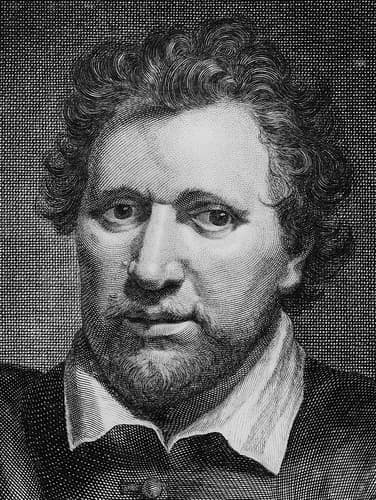
Ben Jonson was a prominent Jacobean playwright and poet, celebrated for his sharp wit and satirical genius. His most famous play, "Volpone," is a masterpiece of English Renaissance theatre, known for its intricate plot and biting social commentary. A contemporary of Shakespeare, Jonson's works explored themes of human vice and folly with unparalleled skill.
Similar books
- Nineteen Eighty-Four
George Orwell
4.2 (5.5M) average on GoodreadsFictionWinston Smith dreams of truth and rebellion in a world where Big Brother watches all, but he confronts the terrifying power of a regime that controls not just actions, but thoughts.
- The Frozen River
Ariel Lawhon
4.4 (600k) average on GoodreadsFictionIn 1789 Maine, a heroic midwife's diary helps her expose a murder and get justice in a town that wants to silence her.
- A Man Called Ove
Fredrik Backman
4.4 (569k) average on GoodreadsFictionA stubborn widower, who lives by strict rules, finds his quiet world changed by a lively new family next door, making him face his past and find happiness in human connection.
- The Art of Racing in the Rain
Garth Stein
4.2 (452k) average on GoodreadsFictionThrough the eyes of Enzo, a wise and observant dog, a race car driver's family navigates a journey of love, loss, and resilience, learning that life's most important lessons often come in the curves, not just on the straightaways.
- The Colour of Magic
Terry Pratchett
4.0 (425k) average on GoodreadsFictionOn a discworld hurtling through space on the back of a giant turtle, an inept wizard and his naive, walking-luggage-toting tourist embark on a chaotic, belief-fueled journey to the very edge of their flat planet, encountering dragons that only exist if you believe in them.
- The Correspondent
Virginia Evans
4.5 (391k) average on GoodreadsFictionA distinguished lawyer's life of carefully written letters, both sent and unsent, reveals a past heartbreak, making her confront forgiveness and the power of written words.





Enjoyed the summary?
A summary gives you the shape of the book. The book itself has the detail, the examples and the voice.
Find Volpone on AmazonAs an Amazon Associate, BookBrief earns from qualifying purchases. How we're funded