
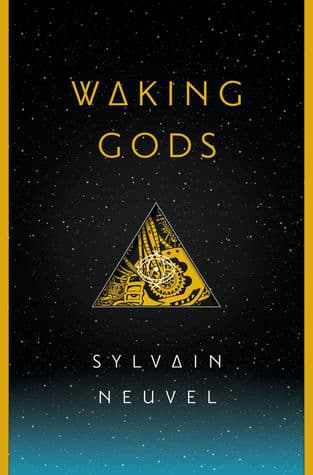
Synopsis
Covers the whole plot, including the ending.
- Difficulty
- Medium
- Pacing
- Fast
- Mood
- Action-packed, Suspenseful, Mind-bending, Existential
- Read it if
- You enjoy epic sci-fi thrillers with a blend of grand-scale alien invasion, intricate technological puzzles, and philosophical questions about humanity's place in the universe.
- Skip it if
- You prefer character-driven narratives over plot-driven action and high-concept science, or if you dislike ambiguous endings.
Waking Gods Plot Summary
Covers the whole plot, including the ending.
The Arrival of the Second God
Ten years after finding and building Themis, the first giant robot, Rose Franklin is a high-ranking member of the Earth Defense Corps (EDC). Her team, including Vincent Couture and Kara Resnik, watches a new energy signature in London. This signature quickly becomes a second, much larger and more powerful robot than Themis. This new machine, called 'The Sentinel,' immediately attacks, causing widespread destruction and deaths. Themis, piloted by Eva, tries to fight the Sentinel, but is quickly outmatched and badly damaged. This shows the huge threat this new alien presence poses. The world falls into chaos, realizing the first robot was not a one-time event but a sign of a possible invasion.
Global Incursions and Desperate Measures
After the Sentinel appears, more alien robots materialize in major cities worldwide, including Beijing, Moscow, and New York. These 'Sentinels' are hostile, causing massive destruction and loss of life. The EDC, led by General Govender, struggles to organize a global defense. Rose, needing to understand and defeat these machines, pushes for aggressive research into Themis's technology to find weaknesses or solutions. World governments, at first divided, are forced to unite, sharing resources and information to face this threat. The scale of the invasion tests humanity's strength and ability to work together.
The Misunderstood Mission of Themis
As the global conflict grows, Rose and her team increase their research into Themis. They find new data suggesting that Themis was not just a dormant artifact but a probe or scout sent by a benevolent alien race, the 'Creators,' to check Earth's readiness. The Sentinels, they think, are an opposing, more aggressive alien group. This changes the understanding of the initial discovery and the ongoing invasion. The EDC shifts its strategy from only defense to understanding how Themis's technology can be used not just for fighting, but for communication or even diplomacy, hoping to find allies or a way to stop the Sentinels without complete destruction.
Eva's Connection and the Alien Language
Eva, Themis's original pilot, finds a deeper connection with the robot's systems. Her unique genetic markers, possibly from early exposure to the Hand, let her interface with Themis in ways no one else can. Through this connection, she starts to understand parts of an alien language in Themis's systems. This breakthrough is important, as it provides the first direct communication channel with the alien technology. Eva's role becomes key, as she is not just a pilot but a link between humanity and the advanced alien intelligence, tasked with interpreting warnings, commands, or historical records from the Creators.
The Genesis Device and the Creator's Message
During their investigations, Rose's team finds another alien artifact, called the 'Genesis Device,' hidden inside Themis's core. This device, once Eva activates it, projects complex holographic sequences and data streams. It shows a detailed history of the Creator race, their conflict with the Sentinels, and their mission to spread life across the galaxy. More importantly, it contains a message: Earth is a 'seed world,' and humanity is a product of the Creators' involvement. The Genesis Device provides a partial, cryptic warning about the Sentinels' true goal and a possible way to defend Earth, but its full meaning remains a puzzle, needing more deciphering.
The Sentinels' True Purpose: Terraforming
As global attacks continue, Rose and her team notice a disturbing pattern: the Sentinels are not just destroying cities; they are changing the environment. Analysis of their activities shows that they are terraforming machines, systematically changing Earth's atmosphere and ecosystem to suit their own biology or that of their masters. This realization is horrifying, as it means the Sentinels are not just trying to conquer Earth but to fundamentally transform it, making it unlivable for humans. The need to find a solution grows, as humanity now faces not just an invasion but an extinction event caused by environmental changes.
The Misguided Alliance and the Betrayal
Under extreme pressure, General Govender, believing in a 'fight fire with fire' approach, starts a risky plan to activate an unknown alien weapon system found in Themis, hoping to turn the tide. He forms an uneasy alliance with an extraterrestrial entity, the 'Children of the Creator,' which he thinks will help humanity. However, this alliance turns out to be a betrayal. The Children of the Creator are manipulative, parasitic species that use other races for their own purposes, and Govender's actions accidentally give them a foothold on Earth, complicating the already bad situation and adding another threat to humanity's survival.
The Sacrifice of Eva and the Rise of the Children
To stop the Children of the Creator from fully taking control of Earth's defense systems and exploiting humanity, Eva makes a sacrifice. She uses her connection to Themis to activate a self-destruct sequence or a system overload that cripples the Children's immediate plans. However, her sacrifice comes at a great cost, leaving Themis severely damaged and Eva's fate uncertain. Despite her efforts, the Children of the Creator manage to establish a significant presence, manipulating the remaining human forces and beginning to implement their own agenda, further complicating the struggle against the Sentinels.
Rose's Desperate Gambit: The Sword of Damocles
With Eva gone and the Children of the Creator now a dominant threat, Rose takes command. She creates a desperate, high-stakes plan to activate a powerful, ancient alien weapon system, called 'The Sword of Damocles,' which was hinted at in the Creator's data. This weapon can cause immense destruction, but activating it is risky and could backfire, potentially destroying Earth itself. Rose plans to use this weapon not just against the Sentinels, but also to neutralize the Children of the Creator, hoping to buy humanity enough time to rebuild and defend itself without outside manipulation.
The Ultimate Choice and the Unforeseen Consequence
Rose's desperate gamble with the Sword of Damocles is partly successful, damaging both the Sentinels and the Children of the Creator. However, the activation has unforeseen results, opening a wormhole or dimensional rift that brings in a new, unknown alien threat or greatly changes Earth's place in the galaxy. The immediate invasion stops, but humanity is left in a difficult position, having survived one threat only to face another, possibly greater one. The novel ends with a sense of both triumph and deep uncertainty, as humanity has gained new knowledge and power but also attracted unwanted attention.
Waking Gods Characters
Rose Franklin
Protagonist
Brilliant scientist leading humanity's defense against alien invasion.
Rose Franklin, now a senior scientist and leader within the Earth Defense Corps, is driven by an insatiable curiosity and a fierce determination to protect humanity. Her childhood discovery of the Hand set her on a path of scientific inquiry, making her uniquely qualified to understand and combat the alien threat. She is intelligent, analytical, and pragmatic, often clashing with military leadership over strategy, but always prioritizing scientific understanding. Her resolve is unwavering, even in the face of overwhelming odds and personal loss.
Relationships: Vincent Couture (Close colleague and confidant, often providing scientific support.); Kara Resnik (Team member and friend, offering emotional support and technical expertise.); Eva (Mentor/mentee relationship, with Rose guiding Eva's understanding of her connection to Themis.); General Govender (Professional rivalry and ideological clash over military vs. scientific approaches.)
Eva
Supporting
The pilot of Themis, uniquely connected to alien technology.
Eva, the original pilot of Themis, possesses a unique genetic makeup that allows her to interface with the alien robot on a profound level. She is initially reserved and somewhat overwhelmed by her role but grows into a courageous and indispensable asset. Her connection to Themis deepens throughout the story, allowing her to decipher alien languages and access critical information. She embodies the potential for human-alien symbiosis and is willing to make the ultimate sacrifice for humanity.
Relationships: Rose Franklin (Mentored by Rose, who helps her understand and utilize her abilities.); Themis (Deep, symbiotic connection, acting as its primary operator and interpreter.)
Vincent Couture
Supporting
Rose's loyal and intelligent scientific colleague.
Vincent Couture is a brilliant scientist and a key member of Rose's team. He is pragmatic, resourceful, and deeply loyal to Rose, often acting as her sounding board and providing crucial technical support. Vincent is skilled in various scientific disciplines, particularly engineering and data analysis, which are vital in understanding and reverse-engineering alien technology. He often provides a grounded perspective, tempering Rose's more audacious ideas with practical considerations.
Relationships: Rose Franklin (Close colleague and trusted friend, working closely on all projects.); Kara Resnik (Colleague and fellow team member.)
Kara Resnik
Supporting
A skilled linguist and cryptographer on Rose's team.
Kara Resnik is a crucial member of Rose's team, specializing in linguistics and cryptography. Her expertise is invaluable in deciphering the alien languages and data streams recovered from Themis and other artifacts. She is intelligent, detail-oriented, and often provides critical insights into the alien motivations and history through her language analysis. Kara also provides emotional support within the team, often acting as a voice of reason or empathy.
Relationships: Rose Franklin (Colleague and friend, working closely on deciphering alien data.); Vincent Couture (Colleague and fellow team member.)
General Govender
Antagonist/Supporting
Head of the EDC, focused on military solutions.
General Govender is the high-ranking military leader of the Earth Defense Corps. He is a hardened, experienced commander, primarily focused on military solutions and strategic defense. While he shares Rose's goal of protecting Earth, his methods often clash with her scientific approach. Govender is willing to take extreme risks and make difficult decisions for the perceived greater good, even if it means sacrificing scientific principles or forming morally ambiguous alliances, leading to tragic consequences.
Relationships: Rose Franklin (Professional rivalry and ideological clash, often at odds over strategy.); The Children of the Creator (Forms a misguided alliance with them, believing they are allies.)
The Interviewer
Mentioned
Unseen narrator/interviewer compiling the story.
The Interviewer is an unseen character whose questions and framing narratives structure the entire book. They are implied to be compiling an official record or historical account of the events, interviewing Rose and other key figures. This character provides an objective, retrospective lens through which the complex events unfold, allowing for exposition and character introspection without breaking the flow of the primary narrative. Their identity remains largely a mystery, serving as a narrative device.
Relationships: Rose Franklin (Interviews her to document the events.)
Themis
Supporting
The first giant alien robot, humanity's primary defense.
Themis is the first giant alien robot discovered and assembled by humanity. Initially believed to be a weapon, it is later understood to be a scout or probe from the benevolent Creator race. It serves as humanity's primary defense against the Sentinels, piloted by Eva. Themis is a marvel of alien engineering, containing advanced technology and data that are crucial to understanding the invasion. Its capabilities and secrets are gradually unlocked throughout the story, revealing its true purpose and potential.
Relationships: Eva (Symbiotic pilot-robot connection.); Rose Franklin (Object of scientific study and tactical deployment.)
The Sentinels
Antagonist
Hostile alien robots invading Earth.
The Sentinels are the primary antagonists of the story, a fleet of colossal alien robots that materialize across Earth, initiating a global invasion. They are highly destructive, seemingly intelligent, and operate with a clear, coordinated objective: to terraform Earth. Their appearance signifies a direct and existential threat to humanity. They represent an opposing alien faction to the Creators, driven by different, hostile motivations, and their advanced technology poses an immense challenge to human defenses.
Relationships: Humanity (Antagonistic, invaders and destroyers.)
The Children of the Creator
Antagonist
A manipulative alien species seeking to exploit Earth.
The Children of the Creator are an additional alien faction introduced later in the story. They are a parasitic and manipulative species that initially present themselves as allies or descendants of the benevolent Creators. However, they quickly reveal their true nature: they seek to exploit Earth and humanity for their own resources and agendas. They are cunning and technologically advanced, capable of influencing human decision-makers and further complicating the already dire situation, becoming a 'third party' threat.
Relationships: General Govender (Manipulate him into a misguided alliance.); Humanity (Exploitative and manipulative.)
Waking Gods Themes
Humanity's Resilience and Adaptability
Despite facing alien threats far beyond human technology, the book shows humanity's ability to be resilient, innovative, and united. From the shock of the Sentinels' arrival to the desperate actions taken to fight back, humans show a strong will to survive. Rose and her team constantly adapt, learning from alien technology and creating new strategies, showing the power of human intellect and cooperation when facing extinction. This is clear in the global sharing of resources and scientific minds to analyze Themis and fight the invasion.
“We were not meant to be alone. But we were meant to fight. And we would.”
The Nature of Good and Evil in the Cosmos
The story questions simple ideas about alien intentions, showing a complex cosmic world. At first, Themis seems like a harmless discovery, but the Sentinels prove hostile. Later, the benevolent 'Creators' are revealed, along with the parasitic 'Children of the Creator,' showing that not all aliens have the same intentions. This theme explores the moral uncertainty of first contact and the struggle to tell friend from foe, forcing humanity to face the possibility of both benevolent guardians and ruthless exploiters among the stars. General Govender's mistaken alliance with the Children of the Creator is an example of this struggle.
“The universe doesn't care about good or evil. It only cares about survival.”
The Price of Knowledge and Power
Gaining alien knowledge and technology, while needed for survival, comes with significant costs and risks. Rose's constant search for understanding leads to discoveries but also to unforeseen dangers, such as activating the Genesis Device or the Sword of Damocles, which attract more attention or have unintended consequences. The power from these discoveries can be a double-edged sword, able to both save and destroy. Eva's connection to Themis, while giving great power, also demands a deep personal sacrifice, showing the high price often linked to using advanced alien capabilities.
“Every answer only leads to more questions, and every power comes with a price.”
The Definition of Humanity's Place in the Universe
The discovery that Earth is a 'seed world' and humanity is a product of the Creators' involvement fundamentally changes how humanity sees itself. This theme explores existential questions about origin, purpose, and independence. Are humans just an experiment, or do they have inherent value and agency? The fight against the Sentinels and the Children of the Creator becomes a battle not just for physical survival, but for humanity's right to self-determination and its claim to its own destiny, separate from the plans of its creators or exploiters. It forces humanity to define its identity in a much larger, more complex universe.
“We were not alone. We were never alone. And that changed everything.”
Plot Devices & Literary Techniques
The Alien Artifacts (Themis, Genesis Device)
Objects of unknown origin that drive the plot and reveal critical information.
These artifacts, particularly Themis and later the Genesis Device, serve as central plot drivers. They are sources of both conflict and solutions. Their discovery and subsequent analysis by Rose and her team provide key exposition about the alien races, their history, and their technology. Unlocking their secrets propels the narrative forward, revealing new threats and potential countermeasures. They act as MacGuffins that constantly evolve in their meaning and function, from a simple discovery to a weapon, a communication device, and finally, a historical archive.
The Interview Format
A retrospective narrative structure where events are recounted through interviews.
The entire story is presented as a series of interviews conducted by an unseen interviewer with Rose Franklin and other key characters. This device allows for a retrospective narrative, providing a sense of immediacy through the characters' recounting of events while also allowing for reflection and foreshadowing. It adds a layer of authenticity and a 'historical record' feel, making the extraordinary events more grounded. It also allows for multiple perspectives on the same events, enriching the narrative and providing exposition in a natural, character-driven way.
The Chosen One Trope (Eva's Connection)
A character with a unique, innate ability to interact with alien technology.
Eva's unique genetic connection to Themis and her ability to interface with alien technology serve as a 'chosen one' trope. This device is crucial for progressing the plot, as only Eva can unlock certain secrets, decipher alien languages, or activate specific systems. Her special ability makes her indispensable to humanity's defense and provides a compelling character arc as she embraces her extraordinary role. It also raises questions about the nature of humanity's interaction with advanced alien races – whether some individuals are inherently predisposed to such connections.
The Red Herring (Benevolent Themis vs. Hostile Sentinels)
Initial misleading information about alien intentions.
The initial understanding of Themis as a benevolent or dormant artifact, contrasted with the immediate hostility of the Sentinels, acts as a red herring. This misdirection leads humanity down certain paths of research and defense before the true, more complex nature of the alien conflict (involving the Creators, Sentinels, and Children of the Creator) is revealed. This device builds suspense, challenges character assumptions, and ultimately deepens the thematic exploration of trust and deception in first contact scenarios, making the later revelations more impactful.
Waking Gods Quotes
“The only difference between a madman and a genius is that the genius gets lucky.”
“Humanity is a virus. We infect, we consume, and then we move on. Until there's nowhere left to go.”
“Sometimes, the only way to save something is to break it first.”
“We build our gods, and then we pray they don't destroy us.”
“The universe doesn't care about your plans. It has its own.”
“Fear is a powerful motivator. But so is hope. And hope is a better one.”
“The greatest threats are often the ones you create yourself.”
“There are no easy answers, only harder questions.”
“To truly understand the future, you must first understand the past. And then forget everything you thought you knew.”
“We are not alone. We were never alone. And that is the most terrifying truth of all.”
“Intelligence without empathy is just a more efficient way to be cruel.”
“The end of the world isn't a single event. It's a series of choices.”
“Even a god can bleed. And once it does, it's just a thing.”
“Sometimes, doing nothing is the most dangerous thing you can do.”
Quiz
10 questions on the plot and the characters. Each answer comes with a short explanation.
Question 1
What is the primary objective of Rose Franklin and her team at the Earth Defense Corps when the second robot materializes?
- To negotiate a peace treaty with the alien invaders.
- To surrender to the new robot's superior force.
- To unlock the last secrets of advanced alien technology to fight back.
- To evacuate Earth's population to another planet.
Show answer
C. To unlock the last secrets of advanced alien technology to fight back. The synopsis states that Rose and her team refuse to surrender and believe they can turn the tide if they can unlock the last secrets of an advanced alien technology.
Question 2
What was Rose Franklin's initial discovery as a child that set her scientific career in motion?
- An ancient alien spaceship.
- A giant metallic hand buried within the earth.
- A new species of dinosaur.
- Evidence of a parallel dimension.
Show answer
B. A giant metallic hand buried within the earth. The synopsis explicitly states that as a child, Rose Franklin made the astonishing discovery of 'a giant metallic hand, buried deep within the earth'.
Question 3
What is the nature of the 'titanic robot' that Rose discovered in pieces around the world?
- It is a human-made weapon system.
- It is of unknown, alien origin.
- It is a natural geological formation.
- It is a relic from an ancient Earth civilization.
Show answer
B. It is of unknown, alien origin. The text describes it as a 'titanic robot of unknown origin', indicating its alien nature.
Question 4
How does the second robot differ from the first robot discovered in pieces?
- It is smaller and less aggressive.
- It is made of organic material rather than metal.
- It is more massive than the first and materializes whole, lashing out with deadly force.
- It is a defensive structure, not a weapon.
Show answer
C. It is more massive than the first and materializes whole, lashing out with deadly force. The synopsis states, 'a second robot, more massive than the first, materializes and lashes out with deadly force.'
Question 5
What is the overarching theme or 'greatest weapon' humanity possesses in the face of the alien invasion, according to the synopsis?
- Military might and advanced weaponry.
- Diplomacy and peaceful coexistence.
- Knowledge and understanding of the alien technology.
- The ability to genetically modify humans for combat.
Show answer
C. Knowledge and understanding of the alien technology. The last sentence of the synopsis explicitly states, 'The greatest weapon humanity wields is knowledge in a do-or-die battle to inherit the Earth . . . and maybe even the stars.'
Question 6
After the second robot's arrival, what becomes a widespread global event?
- A worldwide celebration of alien contact.
- The appearance of more colossal machines touching down across the globe.
- A sudden global warming crisis.
- The discovery of ancient human civilizations.
Show answer
B. The appearance of more colossal machines touching down across the globe. The text states, 'Now humankind faces a nightmare invasion scenario made real, as more colossal machines touch down across the globe.'
Question 7
What is the ultimate stakes for humanity in the conflict described in 'Waking Gods'?
- The acquisition of advanced alien technology for peaceful purposes.
- The right to inherit the Earth and potentially explore the stars.
- To establish diplomatic relations with the alien species.
- To prevent environmental collapse caused by the robots.
Show answer
B. The right to inherit the Earth and potentially explore the stars. The synopsis concludes by saying humanity is in a 'do-or-die battle to inherit the Earth . . . and maybe even the stars.'
Question 8
Given the initial discovery of the first robot in pieces, what was Rose's long-standing research question before the second robot appeared?
- How to weaponize the first robot's parts.
- Why a titanic robot of unknown origin was buried in pieces around the world.
- How to communicate with the dormant robot parts.
- The precise age of the metallic hand.
Show answer
B. Why a titanic robot of unknown origin was buried in pieces around the world. The synopsis states, 'As an adult, she’s dedicated her brilliant scientific career to solving the mystery that began that fateful day: Why was a titanic robot of unknown origin buried in pieces around the world?'
Question 9
What does the phrase 'nightmare invasion scenario made real' imply about humanity's prior understanding or fears regarding alien contact in the context of the book?
- Humanity had never considered alien invasion before.
- The invasion fulfills a long-standing fear or fictional trope of hostile alien encounters.
- It refers to a specific nightmare Rose Franklin had.
- The invasion is actually a dream sequence.
Show answer
B. The invasion fulfills a long-standing fear or fictional trope of hostile alien encounters. The phrase 'nightmare invasion scenario made real' suggests that the events unfolding are a realization of humanity's pre-existing fears or fictionalized concepts of hostile alien contact, rather than something entirely novel or unexpected in concept.
Question 10
What is the primary motivation for Rose Franklin's scientific career, stemming from her childhood discovery?
- To gain fame and recognition for her discovery.
- To understand and solve the mystery surrounding the giant metallic hand and the robot.
- To prove the existence of extraterrestrial life to the world.
- To prevent any further discoveries of alien artifacts.
Show answer
B. To understand and solve the mystery surrounding the giant metallic hand and the robot. The synopsis states, 'As an adult, she’s dedicated her brilliant scientific career to solving the mystery that began that fateful day.' Her career is driven by solving the puzzle of the robot.
Waking Gods FAQ
What is the primary conflict that drives the plot of 'Waking Gods'?
The primary conflict is humanity's struggle for survival against an invasion by a second, more advanced alien robot known as the Sentinel, or the 'Eye of God'. This colossal machine materializes after the first robot, Theia, is partially activated and begins to assemble itself, triggering a hostile response from the new arrival.
Who are the key members of the Earth Defense Corps (EDC) team attempting to combat the alien threat?
The core team includes Dr. Rose Franklin, the brilliant scientist who discovered Theia; Vincent Couture, her loyal and capable second-in-command; General Eugene Govender, the pragmatic military leader; and Eva Solares, the linguist and cultural expert. Each brings unique skills vital to understanding and fighting the alien technology.
How does the discovery of the first robot, Theia, evolve from 'Sleeping Giants' to 'Waking Gods'?
In 'Waking Gods', Theia, initially a collection of buried parts, begins to self-assemble and activate, revealing more of its capabilities and purpose. This activation is not fully controlled by humanity, leading to unforeseen consequences and ultimately drawing the attention of the hostile Sentinel robot.
What is the significance of the 'Eye of God' or the Sentinel robot in the narrative?
The 'Eye of God' is the second, much larger and more aggressive alien robot that serves as the main antagonist. It appears to be a guardian or enforcer, designed to eliminate any advanced technology or life forms that reach a certain level of development, viewing Theia and potentially humanity as threats.
What role does the 'dream' sequence or psychological manipulation play in understanding the alien technology?
Rose Franklin experiences vivid, often disturbing 'dreams' that are revealed to be direct neural interfaces or simulations from Theia. These sequences provide crucial information about the alien creators, their history, and the true purpose of the robots, often presenting it in a non-linear or symbolic manner.
What is the true origin and purpose of the two alien robots, Theia and the Sentinel, as revealed in the book?
Theia was a terraforming and seeding machine, designed to spread life and consciousness across planets, while the Sentinel was a 'cleaner' or 'guardian' robot, designed to eliminate life forms that developed too quickly or became a threat to the galaxy's natural order. They are part of a larger, ancient alien program.
How does the 'language' or communication system of the aliens differ from human understanding, and how is it deciphered?
The alien communication is not based on spoken or written words but on complex geometric patterns, energy signatures, and direct neural interfaces that convey concepts and memories. Eva Solares, with her unique linguistic and pattern recognition skills, plays a crucial role in interpreting these alien 'languages'.
Are there any clues or foreshadowing about the nature of the alien creators themselves, beyond the robots?
Through Rose's 'dreams' and the information extracted from Theia, humanity learns that the creators were a highly advanced, ancient civilization that perished long ago, leaving behind their robotic legacy. There are hints of their philosophical beliefs about life, creation, and destruction embedded within the robots' programming.
What is the significance of the specific locations where Theia's parts were found around the world?
The scattered locations of Theia's parts were not random; they were strategically placed to facilitate its reassembly and activation once a civilization reached a certain technological or cognitive threshold. The placement also allowed for a dispersed energy network, hinting at its vast capabilities.
How does Rose Franklin's past trauma and isolation influence her leadership and decision-making during the crisis?
Rose's past trauma, particularly the loss of her family and her lifelong dedication to Theia, makes her intensely driven and sometimes ruthless in her pursuit of answers. Her emotional isolation allows her to make difficult, pragmatic decisions, but also occasionally blinds her to the human cost of her actions, leading to internal conflict.
Analyze the psychological impact of the 'dream' sequences on Rose Franklin's sanity and identity.
The 'dream' sequences deeply blur the lines between reality and simulation for Rose, causing significant psychological strain. She experiences alien memories and perspectives, which begin to integrate with her own identity, leading to moments of confusion, existential dread, and an evolving sense of self that is part human, part alien-influenced.
How does General Govender's military pragmatism clash with Rose's scientific curiosity, and what is the psychological outcome?
Govender prioritizes immediate tactical advantage and human survival, often clashing with Rose's desire for deeper understanding and experimentation. This creates tension, but also a necessary balance; Govender keeps Rose grounded in reality, while Rose pushes the boundaries of knowledge, forcing both to confront their assumptions under immense pressure.
Discuss the psychological burden carried by Vincent Couture as Rose's second-in-command and confidant.
Vincent carries the immense burden of supporting Rose while often being the moral compass of the team. He grapples with the ethical implications of their actions, the safety of humanity, and the strain of Rose's increasingly alien-influenced perspective. His loyalty is constantly tested by the horrific choices they must make.
What philosophical questions does the existence of the Sentinel robot raise about humanity's right to exist or evolve?
The Sentinel's purpose forces humanity to confront whether its rapid technological growth and potential for galactic expansion are inherently a threat to cosmic balance. It raises questions about the definition of 'pest' versus 'inheritor' and whether any species has an inherent right to evolve unchecked, especially if that evolution might harm others.
How does the ending of 'Waking Gods' reinterpret the concept of 'gods' in the title?
The 'gods' in the title are revealed not as benevolent creators, but as ancient, powerful alien intelligences (or their creations) whose actions profoundly shape the destiny of countless worlds. The 'waking' refers to humanity's realization of these forces and their own potential to become such 'gods' or challenge them.
Is the ultimate goal of the alien robots truly benevolent or malevolent from a human perspective?
From a human perspective, the robots' goals are complex and arguably both. Theia's original purpose was to seed life, which could be seen as benevolent, but the Sentinel's function to 'cleanse' worlds that become too advanced is undeniably malevolent to the species being culled. It's a matter of perspective on cosmic scale.
What is the book's stance on the balance between scientific advancement and ethical responsibility?
The book strongly suggests that scientific advancement without ethical responsibility can lead to catastrophic consequences. Rose's relentless pursuit of knowledge, while crucial for survival, often pushes ethical boundaries, highlighting the constant tension between what can be done and what should be done, especially with alien technology.
How does the narrative challenge the traditional 'first contact' tropes in science fiction?
Instead of a direct, peaceful first contact, the book presents a 'post-mortem' first contact with a long-dead civilization's automated legacy. It challenges the idea of intentional communication, instead forcing humanity to reverse-engineer and interpret fragmented information from ancient, highly dangerous machines, creating a more ambiguous and perilous encounter.
What is the significance of humanity's ability to eventually pilot Theia, and what does it symbolize?
Humanity's ability to pilot Theia symbolizes their mastery over an ancient, powerful alien technology and their potential to inherit the stars. It represents not just survival, but evolution into a spacefaring species capable of defending itself and perhaps even fulfilling Theia's original purpose, albeit with human agency.
About the author
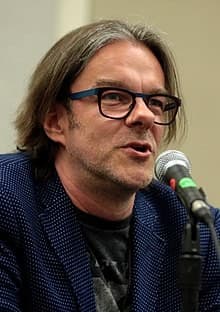
Sylvain Neuvel is a Canadian author known for his work in speculative fiction. His notable books include "Sleeping Giants," which explores the discovery of a giant robot, and its sequel "Waking Gods," which continues the story of humanity's encounter with extraterrestrial forces. Neuvel's writing often combines elements of science fiction with themes of human experience and technology.
Similar books
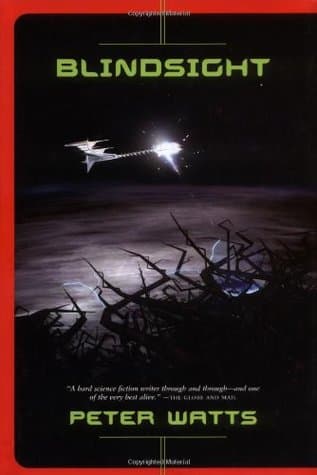
- Blindsight
Peter Watts
4.0 (27k) average on GoodreadsFantasyWatts's Blindsight offers a more traditional third-person narrative, allowing for deeper psychological and philosophical exploration of consciousness and alien intelligence. It presents a bleaker, more intellectually challenging view of first contact compared to Neuvel's blend of mystery and human resilience.
- Angels & Demons
Dan Brown
3.9 (2.7M) average on GoodreadsThrillerA Harvard symbologist races through Rome's ancient sites, deciphering cryptic clues to unmask the Illuminati and stop a vengeful plot to destroy the Vatican with a stolen antimatter weapon.
- Gone Girl
Gillian Flynn
4.1 (2.3M) average on GoodreadsThrillerA wife's sudden disappearance on her fifth anniversary reveals a web of lies and psychological warfare, exposing the secrets within a seemingly perfect marriage.
- The Girl on the Train
Paula Hawkins
3.9 (2.1M) average on GoodreadsThrillerA woman’s fascination with a seemingly perfect couple she watches from her daily train commute leads her into a dark investigation when she witnesses something that shatters their idyllic image.
- The Da Vinci Code
Dan Brown
3.9 (1.9M) average on GoodreadsThrillerA symbologist and a cryptologist race through European landmarks, deciphering ancient codes and uncovering a conspiracy that could rewrite the foundations of Christianity.
- The Guest List
Lucy Foley
3.8 (1.3M) average on GoodreadsThrillerOn a remote Irish island, a glamorous wedding descends into a deadly whodunnit when a guest is found murdered, trapping everyone with their secrets as a storm rages.





Enjoyed the summary?
A summary gives you the shape of the book. The book itself has the detail, the examples and the voice.
Find Waking Gods on AmazonAs an Amazon Associate, BookBrief earns from qualifying purchases. How we're funded