
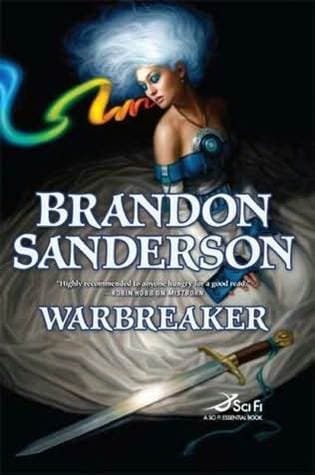
Synopsis
Covers the whole plot, including the ending.
- Difficulty
- Medium
- Pacing
- Variable
- Mood
- Intriguing, Mysterious, Epic, Humorous, Romantic
- Read it if
- You enjoy intricate world-building, a unique magic system based on color and 'breath,' political intrigue, and character-driven stories with morally ambiguous heroes and villains. Perfect for fans of epic fantasy with a touch of romance and mystery.
- Skip it if
- You prefer fast-paced action from the very beginning, dislike multiple character perspectives, or are not a fan of detailed magical explanations and a slower build-up.
Warbreaker Plot Summary
Covers the whole plot, including the ending.
A Royal Sacrifice and a Desperate Journey
Princess Vivenna of Idris prepares for marriage to the God King of Hallandren to prevent war, as required by a treaty. However, her younger sister, Siri, is sent instead due to a last-minute decision by their father, King Dedelin. Siri, unprepared for royal life, is sent into the opulent and foreign court of Hallandren, scared of her marriage to the mysterious and silent God King Susebron. Meanwhile, Vivenna, feeling her life's purpose taken and worried for Siri's safety, secretly travels to Hallandren, determined to rescue her sister and stop the war she believes is coming.
Siri's Captivity and the God King's Secrets
Upon arriving in Hallandren, Siri marries the God King Susebron. She is scared by his presence and inability to speak, thinking him a monster. Confined to the royal palace, Siri struggles with loneliness and the strange customs of Hallandren. She is especially wary of the priests, particularly Denth and Tonk Fah, who seem to be controlling her. Slowly, Siri starts to communicate with Susebron through writing and discovers he is not the monster she imagined, but a kind, intelligent, and lonely person who has been kept voiceless and ignorant by his priests to maintain their control.
Vivenna's Descent into the Undercity
Vivenna arrives in Hallandren, disguised as 'Vivilar'. She is overwhelmed by the colors and BioChromatic magic of the city, which is very different from the simple Idrian culture. Looking for information and allies, she tries to join various groups but is quickly targeted by dishonest people. She eventually joins a mercenary group led by Denth and Tonk Fah, not knowing they are the same people controlling Siri. Vivenna believes they are helping her gather information on Hallandren's war preparations, but they are secretly using her for their own purposes, taking advantage of her naiveté and anti-Hallandren feelings.
Lightsong's Existential Crisis
Lightsong, one of the Returned gods in the Hallandren pantheon, lives a life of luxury and philosophical detachment. He is known for his wit and cynicism, always questioning his divinity and purpose. Unlike other gods, he has no memory of his past life and finds the idea of leading his followers into war unsettling. He spends his days trying to solve riddles and understand the world, often talking with his priest, Llarimar. Lightsong has prophetic dreams and a growing sense of worry, feeling a significant event is coming that will require his attention and possibly his sacrifice.
The mercenaries' betrayal and Vasher's Intervention
Vivenna continues to work with Denth and Tonk Fah, believing they are preparing for a coordinated Idrian uprising. However, her suspicions grow as she sees their ruthlessness and disregard for life. She eventually discovers their true nature: they are not Idrian sympathizers but mercenaries hired by an unknown party, likely to destabilize Hallandren and start a war. When Denth tries to kill her after she learns too much, she is unexpectedly rescued by a mysterious, cynical, and powerful Awakener named Vasher, accompanied by his sentient sword, Nightblood. Vasher reluctantly takes Vivenna in, showing his knowledge of BioChromatic magic and the Hallandren court.
Susebron's Education and the Priests' Manipulation
As Siri and Susebron communicate through writing, Siri starts to teach him about the outside world, Idrian culture, and government basics. She realizes the priests have deliberately kept him uneducated and isolated, using his silence and the fear it creates to strengthen their own power. Siri discovers that the priests, especially the High Priest, are planning to start a war with Idris, believing it will lead to a new Age of the Returned and solidify their control. Susebron, though hesitant at first, starts to assert himself, encouraged by Siri's support and love.
Vasher's Past and Nightblood's Danger
Vasher reluctantly trains Vivenna in the basics of Awakening, showing some of the dangers and details of BioChromatic magic. He explains that his sword, Nightblood, is a unique and powerful Awakened object, but also dangerous, always wanting 'evil' and draining the Breath of anyone nearby. Through their talks, Vivenna learns that Vasher is much older and more knowledgeable than he seems, suggesting a long and troubled past. She starts to suspect his true identity, linking him to the legendary 'Warbreaker the Peaceful' and the origins of Awakening.
Lightsong's Revelation and Sacrifice
Lightsong's prophetic dreams become clearer, showing the true nature of the coming war. He realizes the priests are planning to use the God King's Breath to Awaken a large army, sacrificing Susebron. He also concludes that the priests are trying to manipulate the Idrian people into attacking Hallandren, creating an excuse for war. With this knowledge, Lightsong confronts the other gods and his own doubts. In a key moment, he sacrifices himself to save Siri and Susebron, using his Divine Breath to heal the God King's tongue, allowing him to speak and expose the priests' deceit.
The Truth about Denth, Vasher, and the Returned
The full truth about Denth is revealed: he is a Returned, one of the Five Scholars, and a traitor working with the priests to start war. Vasher is also revealed to be a Returned, and Warbreaker the Peaceful, one of the original Five Scholars who created Nightblood. He explains that the Returned are not gods but individuals who died and came back with a single Divine Breath, a large amount of power, but no memories of their past lives. His goal has always been to prevent the destructive use of Awakening and make up for his past mistakes, especially the creation of Nightblood.
The Confrontation and Aftermath
Susebron, now able to speak thanks to Lightsong's sacrifice, exposes the High Priest's conspiracy to the other gods and the Hallandren people. A battle happens within the palace as Vasher, Vivenna, and Siri confront Denth and his remaining forces. Vasher uses Nightblood, but its destructive power is almost uncontrollable. Denth is defeated. Afterward, the High Priest is arrested, and the immediate threat of war is stopped. Siri and Susebron start to rebuild Hallandren, with Susebron now an active ruler. Vivenna, now a skilled Awakener, decides to stay in Hallandren to help her sister and learn more about Awakening, seeking a new purpose.
Principal Figures
Siri
Protagonist
Youngest princess of Idris, unexpectedly sent to marry the God King.
Siri is the spirited, somewhat rebellious, and initially naive younger princess of Idris. Unprepared for the strictures of Hallandren court life, she is thrown into a terrifying marriage with the silent God King Susebron. Despite her initial fear, Siri possesses a remarkable capacity for empathy and courage. She slowly breaks through Susebron's isolation, teaching him to communicate and uncovering the political machinations of his priests. Her journey is one of growth, from a sheltered princess to a strong, influential queen who actively works to prevent war and bring about peace.
Relationships: Vivenna (Sisterly rivalry and deep love); Susebron (Husband, initially feared, then loved and protected); Lightsong (Ally and friend, whose sacrifice saves her)
Vivenna
Protagonist
Eldest princess of Idris, driven by duty and a desire to save her sister.
Vivenna is the older, more disciplined, and initially judgmental princess of Idris, raised to believe in the superiority of her culture and destined to marry the God King. When Siri is sent instead, Vivenna feels a loss of purpose and guilt, leading her to embark on a dangerous mission to Hallandren. Her journey is one of disillusionment and transformation. She initially views Hallandren as decadent and evil but gradually learns about the complexities of the world, the dangers of prejudice, and the true nature of power and magic through her interactions with Vasher and her experiences in the undercity.
Relationships: Siri (Sisterly rivalry and deep love); Vasher (Mentor and reluctant companion, who challenges her worldview); Denth (Initially trusted ally, later revealed as a treacherous enemy)
Susebron
Supporting
The silent God King of Hallandren, manipulated by his priests.
Susebron is the God King of Hallandren, a Returned figure worshipped by his people. He is initially perceived as a terrifying, silent, and potentially monstrous ruler. In reality, he is a kind, intelligent, and deeply lonely man who has been deliberately kept voiceless and uneducated by his priests since childhood to maintain their control and prevent him from interfering with their political schemes. His inability to speak is a result of his tongue being cut out as a child, a ritual meant to preserve his Divine Breath. Siri helps him to communicate, allowing him to eventually reclaim his voice and his throne.
Relationships: Siri (Wife, who liberates and loves him); High Priest (Manipulator and antagonist); Lightsong (Fellow Returned, whose sacrifice saves him)
Vasher
Supporting
A mysterious and cynical Awakener, one of the original Five Scholars.
Vasher is a enigmatic and powerful Awakener, constantly accompanied by his sentient sword, Nightblood. He is cynical, world-weary, and carries the burden of centuries of experience. Revealed to be Warbreaker the Peaceful, one of the original Five Scholars, he is responsible for the creation of Nightblood and has been trying to atone for past mistakes. He reluctantly takes Vivenna under his wing, teaching her about Awakening and the true history of the Returned. His ultimate goal is to prevent the destructive use of Awakening and ensure Nightblood's power is not unleashed indiscriminately.
Relationships: Vivenna (Mentor and reluctant ally); Nightblood (Sentient sword, his creation and constant burden); Denth (Former friend and fellow Scholar, now an enemy)
Lightsong
Supporting
A cynical and philosophical Returned god of bravery.
Lightsong is a Returned god in the Hallandren pantheon, known for his wit, philosophical musings, and existential doubts. Unlike other gods, he has no memory of his past life and questions the purpose of his divinity, often expressing a desire to be 'un-godded.' He is tasked with leading his followers into war but struggles with the morality of it. Through prophetic dreams and his own investigations, he uncovers the priests' conspiracy and ultimately makes a heroic sacrifice, using his Divine Breath to save Susebron and Siri, proving his true bravery.
Relationships: Llarimar (Devoted priest and confidante); Siri (Friend and recipient of his sacrifice); Susebron (Fellow Returned, whom he ultimately saves)
Denth
Antagonist
A charming but treacherous mercenary, one of the Five Scholars.
Denth initially appears as a charming, capable, and morally ambiguous mercenary who befriends Vivenna, claiming to be an Idrian sympathizer. He is highly skilled in both combat and manipulation, exhibiting a callous disregard for life. His true identity is revealed to be a Returned and one of the original Five Scholars, a former friend of Vasher. He is working with the Hallandren priests to destabilize the region and provoke war, driven by his own warped sense of idealism and a desire for control over Awakening. He is a master of deception and a formidable opponent.
Relationships: Vivenna (Manipulated pawn); Vasher (Old acquaintance and rival); Tonk Fah (Subordinate and accomplice)
Nightblood
Supporting
A sentient, power-hungry Awakened sword.
Nightblood is a unique and incredibly powerful Awakened sword created by Vasher and the other Five Scholars. It is sentient, capable of speech, and constantly hungers to destroy 'evil.' Its power is immense, allowing it to cut through almost anything and instantly drain the Breath of its victims. However, it is also incredibly dangerous, constantly draining the Breath of its wielder and possessing a simplistic, destructive view of morality. It serves as both a powerful weapon and a constant burden for Vasher, symbolizing the dangers of unchecked power.
Relationships: Vasher (Creator and primary wielder); Vivenna (Temporary wielder, nearly consumed by its power)
Llarimar
Supporting
Lightsong's devoted priest and confidant.
Llarimar is Lightsong's loyal and long-suffering priest. He is deeply devoted to his god, patiently enduring Lightsong's cynical remarks and philosophical questions. He often acts as Lightsong's moral compass and a source of information, attempting to guide him towards fulfilling his divine duties. Despite his subservient role, Llarimar is perceptive and genuinely cares for Lightsong, offering quiet support and wisdom. He is a steadfast figure in the pantheon, representing the devout faith of the Hallandren people.
Relationships: Lightsong (Devoted priest and confidante)
Tonk Fah
Mentioned
A brutal and simple-minded mercenary.
Tonk Fah is Denth's boorish and brutal partner. He is less intelligent and more openly cruel than Denth, often reveling in violence and intimidation. He serves as Denth's muscle, carrying out the dirtier aspects of their mercenary work. While not as cunning as Denth, his blunt force and lack of conscience make him a dangerous presence. He is primarily driven by greed and a desire for violence.
Relationships: Denth (Partner and subordinate)
High Priest
Antagonist
The primary orchestrator of the war plot.
The High Priest is the manipulative leader of the Hallandren priesthood and the true mastermind behind the plot to incite war with Idris. He seeks to maintain and expand the power of the priesthood, believing that a new Age of the Returned will solidify their control. He is responsible for keeping Susebron voiceless and ignorant, using him as a puppet ruler. His motivations are rooted in fanaticism and a desire for absolute power, making him a dangerous and cunning adversary.
Relationships: Susebron (Manipulated figurehead)
Themes & Insights
Identity and Self-Discovery
The novel explores how characters define themselves and discover their true identities, often against what society expects. Siri, first defined by her Idrian upbringing and then by her role as the God King's wife, discovers her own strength and voice. Vivenna deals with her ideas and learns that her identity is not just tied to her birthright. Lightsong, a Returned without memories, constantly questions his divine purpose. Vasher, burdened by centuries of his past, tries to reconcile his actions with his current self. Each character's journey is a quest to understand who they are beyond their roles.
“What if I wasn't meant to be a princess? What if I was meant to be something else entirely?”
Prejudice and Cultural Clash
The cultural differences between the simple, Breath-less Idrians and the colorful, BioChromatic-rich Hallandrens cause much of the initial conflict. Vivenna shows Idrian prejudice, seeing Hallandren as decadent, which leads her to make bad judgments. Hallandrens see Idrians as dull. The story shows how these biases lead to misunderstanding and conflict, and how characters like Siri and Vivenna must overcome them to find common ground and prevent war. The novel ultimately supports understanding and empathy between different cultures.
“Ignorance is not wisdom. Prejudice is not strength.”
The Nature of Power and Authority
Warbreaker looks at different forms of power: political authority (the God King, the priests), magical power (Awakening, Breath), and the power of influence. The Hallandren priesthood controls Susebron's authority through his voicelessness, showing how power can be used indirectly. The power of BioChromatic magic, especially Nightblood, is shown to be both amazing and dangerous, requiring responsibility. The novel asks who truly holds power and how it should be used, supporting good leadership over manipulation and control.
“Power is not a thing to be wished for. It is a burden to be carried, and a heavy one at that.”
Sacrifice and Redemption
Sacrifice is a main theme, especially through Lightsong, who gives his life to save Susebron and Siri, finding his purpose in death. Siri's initial 'sacrifice' in marrying the God King, while not actual death, is a personal sacrifice. Vasher's centuries-long quest to prevent the wrong use of Awakening is a form of ongoing atonement for his past mistakes, especially creating Nightblood. These acts show that heroism often involves selflessness and that redemption can be found by making up for past wrongs.
“Perhaps the purpose of a god is not to live, but to die.”
Love and Connection
Despite the political plots and coming war, love and connection are important parts of the story. The bond between Siri and Vivenna, though strained, drives both. Siri's growing love for Susebron allows her to see past his scary appearance and help him reclaim his power. The novel explores different kinds of love – familial, romantic, and platonic – as essential elements that can bridge cultural divides and inspire courage and selflessness, proving to be a powerful force for peace and understanding.
“Love is not something that is earned, it is something that is given.”
Plot Devices & Literary Techniques
BioChromatic Magic (Awakening & Breath)
The unique magic system based on stored life force and color.
BioChromatic magic, or Awakening, is the core magic system of Warbreaker. It relies on 'Breath,' a unit of life force that can be transferred from person to person, and the manipulation of color. Awakened objects obey commands, and the power scales with the amount of Breath and the wielder's knowledge. This system is not just a power source but also a cultural cornerstone for Hallandren, influencing their art, architecture, and social hierarchy. It provides both the means for miracles and for immense destruction, driving much of the plot's conflict and resolution.
The Returned
Individuals who die and return to life with a single Divine Breath and no memories.
The Returned are a central plot device, forming the Hallandren pantheon of gods. These individuals die and inexplicably return to life with a 'Divine Breath'—an immense store of Breath—but no memories of their past lives. Their existence is the foundation of Hallandren's religion and political structure. The mystery of their origin and the implications of their powers (and lack of memories) are crucial to understanding the political machinations and the true history of the world, particularly concerning Vasher and Denth's identities.
Nightblood
A sentient, power-hungry Awakened sword that drains 'evil' and Breath.
Nightblood is a unique and dangerous Awakened sword, created by Vasher, that serves as a powerful and unpredictable plot device. It is sentient, capable of speech, and constantly hungers for 'evil,' draining the Breath of its wielder and victims. Its immense destructive power makes it a weapon of last resort, but its simplistic morality and constant drain on Breath make it a severe liability. Nightblood symbolizes the dangers of unchecked power and the unforeseen consequences of magical creation, pushing characters like Vasher and Vivenna to confront its moral implications.
Cultural Contrast (Idris vs. Hallandren)
The stark differences between two nations that fuel misunderstanding and conflict.
The extreme cultural differences between the austere, monochromatic, and religious Idris and the vibrant, BioChromatic, and hedonistic Hallandren serve as a major plot device. This contrast immediately establishes conflict and prejudice, driving the sisters' individual journeys. Vivenna's initial contempt for Hallandren and Siri's fear of the unknown are direct results of this cultural divide. The eventual bridging of this gap, through understanding and empathy, is key to the story's resolution and thematic exploration of tolerance.
The God King's Silence
Susebron's inability to speak, used as a tool for manipulation.
The God King Susebron's silence is a crucial plot device. It is initially presented as a terrifying, divine mystery, fostering fear and allowing the Hallandren priests to manipulate his image and power. His inability to speak isolates him and prevents him from ruling effectively, making him a puppet. Siri's efforts to communicate with him and Lightsong's ultimate sacrifice to restore his voice are pivotal moments, exposing the priests' conspiracy and allowing Susebron to reclaim his agency, directly impacting the war's outcome.
Warbreaker Quotes
“The only reason you don't like an idea is because you didn't think of it.”
“A man's ethical code is not a suit of clothes he can don or doff at will. It is the man himself.”
“The purpose of a storyteller is not to tell you how to think, but to give you questions to think upon.”
“Sometimes the only way to win is to change the rules.”
“The less you know, the more you believe.”
“Life is a journey of discovery, and you are the only one who can decide what you want to find.”
“A lie is an act of power, and often, an act of kindness.”
“It's easy to be a hero when you're not the one making the sacrifice.”
“The true measure of a man is not how he behaves in moments of comfort and convenience, but how he stands at times of controversy and challenge.”
“You cannot make someone see what they don't want to see.”
“Sometimes, the hardest thing and the right thing are the same.”
“Fear is a tool. You can use it, or it can use you.”
“The greatest truths are often the simplest ones.”
“Just because you have a choice, doesn't mean you have an easy choice.”
Quiz
10 questions on the plot and the characters. Each answer comes with a short explanation.
Question 1
Which kingdom is known for its BioChromatic magic and its Returned gods?
- Idris
- Hallandren
- T'Telir
- Pahn Kahl
Show answer
B. Hallandren Hallandren is the vibrant, colorful capital city and the center of BioChromatic magic and the pantheon of Returned gods. Idris, in contrast, is a more austere, colorless kingdom.
Question 2
What is the primary power source for BioChromatic magic in 'Warbreaker'?
- Divine Investiture
- Stormlight
- Breath
- Lifeforce
Show answer
C. Breath BioChromatic magic is powered by 'Breath,' an essence collected one unit at a time from individual people. The more Breath a person has, the more powerful they can become.
Question 3
Which of the two princesses of Idris is initially sent to marry the God King Susebron?
- Vivenna
- Siri
- Larimar
- Azure
Show answer
B. Siri Siri is the younger, more rebellious princess who is unexpectedly sent to Hallandren to marry the God King, much to the dismay of her older sister, Vivenna, who had prepared her whole life for the role.
Question 4
What is the true nature of the God King Susebron's voice, which is initially believed to be a sign of his divinity?
- He speaks directly into people's minds.
- He is mute and communicates through his priests.
- His voice is so powerful it can shatter glass.
- He can mimic any sound perfectly.
Show answer
B. He is mute and communicates through his priests. It is a major plot twist that Susebron is actually mute, and his priests have kept this secret, speaking for him to maintain the illusion of his divine power and control over the populace.
Question 5
Who is Lightsong, and what is his primary character struggle?
- He is a priest of the God King, struggling with his faith.
- He is a mercenary, struggling with his moral compass.
- He is a Returned god, struggling with the meaninglessness of his existence and his assigned divine purpose.
- He is the king of Idris, struggling to protect his daughters.
Show answer
C. He is a Returned god, struggling with the meaninglessness of his existence and his assigned divine purpose. Lightsong is the reluctant Returned god of Bravery, who finds his divine duties boring and spends his time trying to solve the mystery of his own death and the nature of the gods, questioning his purpose.
Question 6
What is the unique ability of Vasher, also known as Warbreaker?
- He can control the weather.
- He possesses a sentient sword that consumes Breath.
- He can shapeshift into any animal.
- He can instantly heal any wound.
Show answer
B. He possesses a sentient sword that consumes Breath. Vasher wields Nightblood, a sentient sword that speaks to him and 'eats' the Breath of those it strikes, making it incredibly powerful but also dangerous and demanding.
Question 7
What is the primary motivation for Vivenna's initial journey to Hallandren?
- To study BioChromatic magic.
- To rescue Siri from the God King and bring her back to Idris.
- To forge a new alliance between Idris and Hallandren.
- To overthrow the God King and establish a new government.
Show answer
B. To rescue Siri from the God King and bring her back to Idris. Vivenna travels to Hallandren with the express purpose of rescuing Siri, believing her sister is in danger and being held against her will by the God King.
Question 8
What is the true identity of Denth, the mercenary who initially helps Vivenna?
- He is a spy for the Idrian government.
- He is a Returned god, one of the Five Scholars.
- He is a loyal servant of the God King.
- He is a former general from a rival kingdom.
Show answer
B. He is a Returned god, one of the Five Scholars. Denth is revealed to be one of the Five Scholars, a group of ancient Returned who created Nightblood, and he is working against Vivenna and Idris, manipulating events for his own agenda.
Question 9
What is the ultimate fate of Lightsong, the god of bravery?
- He becomes the new God King.
- He loses his Breath and becomes mortal again.
- He sacrifices himself to save Susebron, fulfilling his purpose.
- He leaves Hallandren to live a quiet life in Idris.
Show answer
C. He sacrifices himself to save Susebron, fulfilling his purpose. Lightsong ultimately sacrifices his divine life (his Breath) to revive Susebron and protect him from the priests, finally understanding and embracing his role as the god of bravery.
Question 10
What is the 'mistake' that Vasher, the Warbreaker, has been trying to undo for hundreds of years?
- Causing the war between Idris and Hallandren.
- Creating Nightblood, the sentient sword.
- Allowing the God King to become mute.
- Betraying his fellow Returned Scholars.
Show answer
B. Creating Nightblood, the sentient sword. Vasher (also known as Shashara, the God of Colors, and Kalad) was one of the Five Scholars who created Nightblood. He views the sword as a terrible mistake due to its insatiable hunger for Breath and the destruction it causes, and he has spent centuries trying to contain or destroy it.
Warbreaker FAQ
What is Warbreaker about?
Warbreaker is an epic fantasy about two royal sisters, Vivenna and Siri, from the austere kingdom of Idris, who are thrust into the vibrant, dangerous politics of Hallandren. One is sent to marry the terrifying God King to prevent war, while the other infiltrates the court to save her. Their journey intertwines with reluctant gods, a mysterious immortal swordsman, and a unique magic system based on 'Breath' and color.
Why should I read Warbreaker?
You should read Warbreaker for its unique magic system, BioChromatic magic, which involves 'Breath' and color, its compelling character arcs, especially Vivenna's transformation from naive princess to capable agent, and its intricate plot filled with political intrigue and surprising twists. Brandon Sanderson's signature world-building and satisfying resolutions make it a standout fantasy read, and it's available for free online.
What is the background/setting of Warbreaker?
The story is set in the world of Nalthis, primarily focusing on the stark, traditional kingdom of Idris and the vibrant, technologically advanced empire of Hallandren. Hallandren is ruled by Returned gods, individuals who died glorious deaths and resurrected with divine powers and a need for 'Breath' to survive. The tension between Idris's belief in a single, unseen god and Hallandren's worship of living Returned gods fuels much of the conflict.
What are the most memorable quotes?
Memorable quotes include Vasher's pragmatic wisdom like, "The purpose of a storyteller is not to tell you how to think, but to give you questions to think upon." Lightsong's cynical humor also shines through with lines such as, "I've found that the best way to make a god uncomfortable is to ask him for something personal." These quotes reflect the characters' philosophies and the book's themes of morality and purpose.
What writing style does the author use?
Brandon Sanderson employs a clear, accessible writing style that balances intricate world-building with engaging character perspectives. He uses multiple point-of-view characters, allowing readers to experience the plot from various angles, and his prose is direct yet capable of conveying deep emotional and philosophical themes. The pacing is generally brisk, especially after the initial setup, with a focus on 'hard magic' rules.
What minor details add significant meaning?
The ever-present color in Hallandren, particularly the specific hues associated with each Returned god, subtly reinforces their personalities and domains. For example, Lightsong's disdain for his role is reflected in his lack of vibrant color. Also, the seemingly insignificant squabbles among the lesser gods in the pantheon hint at deeper political machinations and their true power dynamics, foreshadowing the eventual coup attempt.
What are some subtle foreshadowing moments?
Vasher's repeated philosophical discussions about war, swords, and the nature of life and death subtly hint at his past as a legendary warrior and his true identity as Warbreaker. Additionally, the God King Susebron's unusual silence and the priests' strict control over his interactions with Siri hint that he is not the monstrous tyrant he is perceived to be, preparing the reader for his eventual reveal as a gentle, manipulated figure.
What unexpected character connections exist?
The most significant unexpected connection is Vasher's true identity as the legendary immortal Warbreaker, who created Nightblood, and his past relationship with Denth and Tonk Fah. This reveals that the seemingly cynical mercenary Denth was once a loyal follower and friend, now corrupted by centuries of seeking revenge. Additionally, the God King Susebron's connection to the original Returned, and thus to Vasher, is profound.
What are unspoken character motivations?
Vasher's unspoken motivation is his deep-seated guilt over past mistakes, particularly the creation of Nightblood and his role in ancient wars. He seeks to atone and prevent similar destruction, which drives his mentorship of Vivenna and his desire to keep Nightblood contained. Denth's true motivation is not just payment, but a twisted sense of loyalty to a cause he believes was betrayed, leading him to manipulate Vivenna for his own ends.
What psychological complexities do characters exhibit?
Vivenna grapples with profound culture shock, prejudice, and a crisis of faith, forcing her to re-evaluate her rigid worldview and develop independence. Lightsong struggles with existential ennui and a deep-seated fear of failure, despite being the God of Bravery, making him question the meaning of his divinity. Vasher carries the burden of immortality, enduring centuries of guilt, which manifests as a detached, pragmatic cynicism masking profound regret.
What are the major emotional turning points?
One major turning point is Vivenna's realization that her sister Siri is not the naive victim she imagined, and that the Hallandren court is far more complex than her prejudiced upbringing suggested, leading to her decision to actively learn BioChromatic magic. Another is Siri's growing affection and understanding for the silent God King Susebron, transforming her fear into love and revealing his vulnerable humanity.
How do relationship dynamics evolve?
Vivenna's relationship with her sister Siri evolves from a protective, almost condescending one, to a bond of mutual respect and understanding as they both mature through their trials. Siri's relationship with the God King Susebron transforms from one of fear and duty to genuine love and partnership, overcoming the language barrier and their initial prejudices. Vasher and Vivenna's dynamic shifts from reluctant teacher-student to a complex, almost fatherly mentorship.
Which parts remain ambiguous or open-ended?
The long-term political stability of Hallandren after the revolution, particularly how the new government will function without the direct rule of the God King, remains somewhat open. Vasher's ultimate fate and whether he truly achieves peace or continues his centuries-long struggle are not definitively concluded, leaving room for future adventures or reflections. The exact power and reach of the mysterious 'Returned' beyond Hallandren is also left to imagination.
What are controversial scenes or decisions?
One controversial decision is Vivenna's initial willingness to sacrifice her own life and agency by going to Hallandren, driven by a misguided sense of duty and a desire to save her kingdom, rather than supporting Siri's arranged marriage. The existence and nature of Nightblood, a sentient sword that consumes 'Breath' and souls, raises ethical debates about the creation of such a powerful, destructive artifact and its potential for corruption, even when wielded by those with good intentions.
Warbreaker ending explained: how it ends & what it means
The ending sees Siri and Susebron reconciled and in love, with Susebron regaining his voice and choosing to relinquish his divine power, paving the way for a more just Hallandren. Vivenna, having mastered BioChromatic magic and gained a new perspective, returns to Idris to guide her people, now more understanding of Hallandren. Vasher, revealed to be the immortal Warbreaker and creator of Nightblood, departs with the sword, continuing his centuries-long penance. It signifies transformation, the breaking of old cycles, and the power of individual choices to shape destiny.
About the author
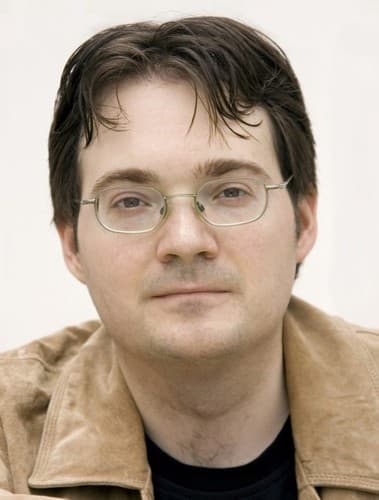
Brandon Sanderson is a prolific American author of epic fantasy and science fiction. He is best known for his expansive Cosmere universe, featuring series like Mistborn and The Stormlight Archive, as well as his completion of Robert Jordan's Wheel of Time series. Sanderson's intricate magic systems and compelling world-building have earned him a dedicated global fanbase and critical acclaim.
Similar books
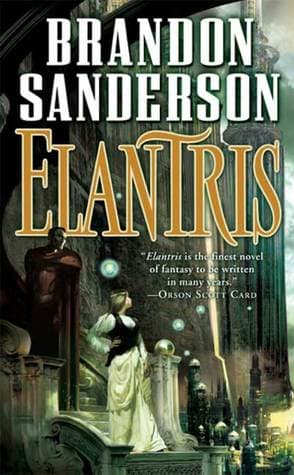
- Elantris
Brandon Sanderson
4.2 (176k) average on GoodreadsFantasyAnother standalone Sanderson novel with a unique magic system and political intrigue.
- The Way of Kings
Brandon Sanderson
4.6 (305k) average on GoodreadsFantasyShares epic scope, intricate world-building, and a large cast of characters, though much longer.
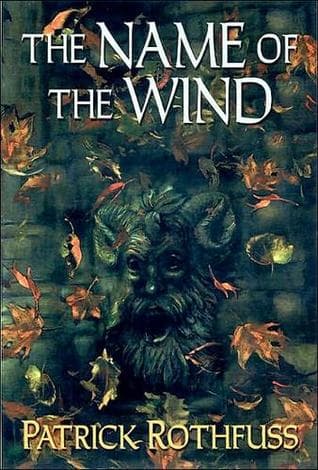
- The Name of the Wind
Patrick Rothfuss
4.5 (716k) average on GoodreadsFantasyWarbreaker is more plot-driven with a multi-POV structure and a 'harder' magic system, contrasting with Rothfuss's lyrical prose, single-POV introspection, and more ambiguous magic.
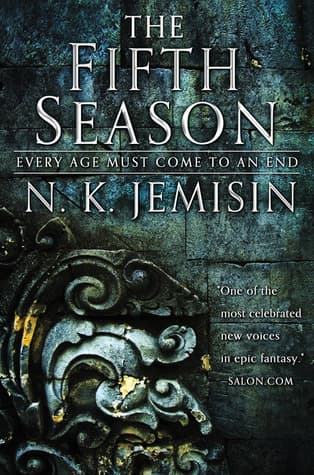
- The Fifth Season
N.K. Jemisin
Warbreaker offers a more traditional fantasy structure with a lighter tone and focus on intricate plot, while Jemisin's work is more thematically complex, structurally innovative, and deeply explores social justice and oppression.
- Harry Potter and the Sorcerer's Stone
J.K. Rowling
4.5 (7M) average on GoodreadsFantasyRescued from a miserable life under the stairs, an orphaned boy discovers he's a wizard destined for a magical school, where he uncovers a dangerous secret tied to the dark wizard who murdered his parents.
- The Hunger Games
Suzanne Collins
4.3 (6.4M) average on GoodreadsFantasyIn a future where children fight to the death on live television, Katniss Everdeen volunteers for the arena, turning a death sentence into a fight for survival and a spark of rebellion.



Enjoyed the summary?
A summary gives you the shape of the book. The book itself has the detail, the examples and the voice.
Find Warbreaker on AmazonAs an Amazon Associate, BookBrief earns from qualifying purchases. How we're funded