

Synopsis
Covers the whole plot, including the ending.
- Difficulty
- Medium
- Pacing
- Fast
- Mood
- Dark, Suspenseful, Disturbing, Psychological
- Read it if
- You enjoy psychological thrillers with an unreliable, disturbing narrator and a deep dive into the mind of a stalker. Perfect for fans of dark, character-driven suspense.
- Skip it if
- You are sensitive to graphic violence, stalking themes, or find it difficult to read from the perspective of a manipulative, murderous protagonist.
You Plot Summary
Covers the whole plot, including the ending.
The First Encounter and Digital Obsession
Joe Goldberg, a manager at Mooney's bookstore in New York City, becomes obsessed with aspiring writer Guinevere Beck when she walks into his store. He uses her credit card information to find her online, looking at her social media profiles. Joe studies her posts, tweets, and location tags, building a detailed profile of her life, friends, and routines. He arranges an encounter at a bar in Brooklyn, where he 'bumps into' her. From this point, Joe begins to get into Beck's life, acting like a charming, attentive, and smart man, all while secretly watching her every move and thought through her digital footprint and physical surveillance.
Eliminating Peach Salinger
Joe quickly sees Beck's wealthy, manipulative best friend, Peach Salinger, as an obstacle to his relationship with Beck. Peach is possessive of Beck and openly dislikes Joe. Joe starts to subtly lessen Peach's influence, but when he sees Peach making a move on Beck, his jealousy grows. He follows Peach to her family's estate in Greenwich, Connecticut, where he attacks her, planning to kill her. He makes her death look like a suicide, pushing her off a cliff and leaving a fake suicide note. The police call it a suicide, and Beck is sad but drawn closer to Joe in her grief.
The Rise and Fall of Benji
Before Joe and Beck officially start dating, Beck has an on-and-off relationship with Benji, a wealthy, pretentious, and neglectful musician. Joe sees Benji as a rival and not a good partner for Beck. He lures Benji to the bookstore's basement, knocks him out, and locks him in the soundproof cage used for rare books. Joe keeps Benji captive, feeding him special foods to avoid detection, and questions him about Beck. When Joe realizes Benji will never truly disappear from Beck's life without suspicion, he poisons him with peanut oil, making his death look like an accidental drug overdose, and disposes of his body.
Becoming Beck's Boyfriend
With Benji gone and Peach 'gone,' Joe becomes Beck's boyfriend. He is her confidant, her supporter, and her seemingly perfect partner. He encourages her writing, listens to her problems, and gives emotional stability. But his obsession does not lessen; instead, it becomes about controlling her thoughts and behaviors. He secretly watches her phone, reads her emails, and continues to follow her, making sure she fits his ideal vision of her. Beck, happy at first, begins to feel stifled and controlled, though she cannot say why.
The Affair and Paco's Role
Feeling stifled by Joe's intensity, Beck starts an affair with her therapist, Dr. Nicky. Joe, through his surveillance, finds out about the affair and is angry. He continues to pretend he does not know, planning how to deal with Dr. Nicky. Meanwhile, Joe forms a bond with Paco, his young neighbor, who lives in an abusive home. Joe acts as a protector and mentor to Paco, sharing books and offering escape from his home life, seeing his own troubled past in the boy and using the relationship to appear as a good person.
Confronting Dr. Nicky
Joe confronts Dr. Nicky, subtly threatening him and making it clear he knows about the affair. He does not kill Dr. Nicky right away, instead choosing to manipulate the situation to make Beck feel guilty and return to him. He uses his knowledge of Beck's insecurities and past to make her believe she is making bad choices, presenting himself as the only one who truly understands and loves her. This manipulation works, and Beck, feeling ashamed and confused, ends the affair and goes back to Joe, further solidifying his control over her life.
Beck's Growing Suspicion
Despite going back to Joe, Beck's unease grows. She starts noticing things that do not add up in his stories and finds a box of her personal items that she thought were lost, hidden in his apartment. This discovery, along with a growing feeling of being watched, leads her to search Joe's apartment more thoroughly. She eventually finds a hidden box containing her old phone, hair, underwear, and other personal items, including Benji's missing tooth and Peach's discarded swimsuit. The horrifying realization comes to her: Joe is a stalker, and he was responsible for Benji and Peach's deaths.
The Capture and Confession
Terrified, Beck tries to run from Joe's apartment. Joe, expecting her discovery, ambushes her and takes her to the soundproof cage in the basement of Mooney's bookstore, the same cage where he held Benji. He holds her captive, at first trying to convince her that his actions were out of love and that he only wanted to protect her. In a twisted attempt to make her understand, Joe confesses to murdering Benji and Peach, detailing his reasons and how far he went for her, believing that once she understands, she will forgive him and they can be together.
Beck's Attempted Escape
Beck, realizing Joe's delusion and the danger she is in, pretends to understand and tries to manipulate Joe into releasing her. She pretends to accept his 'love' and even seduces him, hoping to create an opportunity to escape. She manages to lure him close enough to hit him with a rock and flee the cage. She runs through the bookstore, desperate to get out, but Joe, recovering quickly, chases her. He corners her before she can reach the street, and in a brutal struggle, he strangles her to death.
The Aftermath and New Beginnings
After murdering Beck, Joe carefully stages the scene to frame Dr. Nicky. He plants evidence, including Beck's journal entries about her affair with Dr. Nicky and her supposed fear of him, making it look like the therapist killed her in a fit of passion. The police investigate, and based on Joe's carefully built story and the planted evidence, Dr. Nicky is arrested and charged with Beck's murder. Joe attends Beck's memorial service, appearing as the grieving boyfriend. He successfully avoids suspicion and, soon after, a new aspiring writer walks into Mooney's bookstore, catching Joe's eye and starting the cycle again.
You Characters
Joe Goldberg
Protagonist/Antagonist
A charming, intelligent, and deeply disturbed bookstore manager obsessed with 'saving' the women he loves.
Joe is the first-person narrator, providing a chillingly intimate look into his warped psychology. He sees himself as a romantic hero, destined to rescue women from their flawed lives, despite his extreme and violent methods. He is highly intelligent, well-read, and capable of appearing completely normal and charming to the outside world. His past, particularly his experiences with Mr. Mooney and the cage, shaped his belief system. He justifies his stalking, manipulation, and murder as acts of love and protection, constantly rationalizing his heinous deeds. He is driven by a profound need for control and an idealized vision of love that no real person can ever live up to.
Relationships: Guinevere Beck (Obsessive love interest, victim); Peach Salinger (Rival, victim); Benji (Rival, victim); Paco (Neighbor, surrogate son figure, object of manipulation); Mr. Mooney (Abusive mentor, father figure)
Guinevere Beck
Major Character/Victim
An aspiring writer seeking validation, who becomes Joe's primary obsession and victim.
Beck is a graduate student and aspiring writer living in New York City. She is presented as someone who craves attention and validation, often making choices that are not in her best interest, such as maintaining toxic friendships and engaging in self-sabotaging behavior. She is initially drawn to Joe's apparent charm and attentiveness, seeing him as a stable and intellectual partner. However, she gradually becomes aware of his possessiveness and controlling nature, leading to her fear and eventual discovery of his true identity. Her vulnerabilities and desire for a perfect life make her an easy target for Joe's manipulations.
Relationships: Joe Goldberg (Boyfriend, stalker, murderer); Peach Salinger (Best friend, toxic relationship); Benji (On-again, off-again boyfriend); Dr. Nicky (Therapist, affair partner)
Peach Salinger
Supporting Character/Victim
Beck's wealthy, manipulative, and possessive best friend.
Peach is a trust fund baby and a distant relative of J.D. Salinger. She is fiercely possessive of Beck, often undermining her confidence and controlling her social life. Peach views Joe as an unwelcome intruder into her friendship with Beck and makes her disdain for him clear. She secretly harbors romantic feelings for Beck, which further fuels Joe's hatred and jealousy. Her wealth and social connections make her a formidable obstacle for Joe, but also provide him with a plausible way to stage her 'suicide.'
Relationships: Guinevere Beck (Best friend, unrequited romantic interest); Joe Goldberg (Rival, murderer)
Benji
Supporting Character/Victim
Beck's on-again, off-again musician boyfriend, perceived as a rival by Joe.
Benji is Beck's wealthy, privileged, and often neglectful on-again, off-again boyfriend. He is portrayed as pretentious, self-absorbed, and somewhat of a slacker, lacking ambition. Joe views Benji as an unworthy partner for Beck, seeing him as a symbol of the 'wrong' choices Beck makes in her life. Benji's casual approach to relationships and his general obliviousness make him an easy target for Joe's manipulations and eventual murder. His disappearance is crucial in allowing Joe to step into the role of Beck's official boyfriend.
Relationships: Guinevere Beck (On-again, off-again boyfriend); Joe Goldberg (Rival, murderer)
Paco
Supporting Character
Joe's young, neglected neighbor who looks up to him.
Paco is a young boy who lives in the apartment building next to Joe's, enduring a difficult home life with an abusive stepfather and a neglectful mother. Joe develops a protective, almost fatherly, relationship with Paco, lending him books and offering advice. Joe sees a reflection of his own troubled childhood in Paco and uses the boy to project an image of himself as a good, compassionate person. Paco's admiration for Joe provides Joe with a sense of moral superiority and justifies his actions in his own mind, as he sees himself as a 'good guy' who helps those in need, even while committing atrocities.
Relationships: Joe Goldberg (Neighbor, mentor, object of manipulation)
Dr. Nicky
Supporting Character/Scapegoat
Beck's therapist and affair partner, framed for her murder.
Dr. Nicky is Beck's therapist with whom she begins an affair. He is portrayed as somewhat unprofessional and susceptible to his own desires, blurring the lines of his professional ethics. When Joe discovers the affair, Dr. Nicky becomes another target. Joe doesn't immediately kill him, instead choosing to manipulate the situation to make Beck feel guilty and return to him. Ultimately, Dr. Nicky serves as the perfect scapegoat for Joe, allowing Joe to frame him for Beck's murder due to the clear motive of a therapist having an affair with a patient.
Relationships: Guinevere Beck (Therapist, affair partner); Joe Goldberg (Rival, accuser)
Karen Minty
Supporting Character
Joe's brief girlfriend after Beck breaks up with him.
Karen Minty is a kind, grounded, and normal woman who works as a publicist. Joe dates her during a period when Beck has broken up with him. Karen is everything Beck is not: stable, low-maintenance, and unconcerned with social media validation. Joe genuinely likes her and finds her refreshing, but his obsession with Beck ultimately prevents him from fully investing in their relationship. Karen serves as a contrast to Beck, highlighting Joe's inability to appreciate a healthy, normal relationship because it lacks the 'challenge' and 'project' he seeks in his obsessions.
Relationships: Joe Goldberg (Brief girlfriend)
Mr. Mooney
Mentioned Character
Joe's abusive mentor and former bookstore owner.
Mr. Mooney is Joe's former boss and the owner of Mooney's bookstore. He raised Joe after Joe's mother abandoned him, teaching him about books but also subjecting him to a brutal and isolating upbringing, often locking him in the soundproof cage in the basement. Mooney instilled in Joe a rigid worldview and a cynical view of humanity, particularly women. Joe frequently references Mooney's harsh lessons and philosophical pronouncements, which heavily influence his own twisted moral code and his methods of control and punishment.
Relationships: Joe Goldberg (Abusive mentor, father figure)
You Themes
Obsession and Control
The novel looks at the destructive nature of obsession, especially Joe's focus on Beck. He thinks his obsession is love, but it becomes extreme control over every part of her life, from her friends to her career and even her thoughts. This theme shows how love can be twisted into a reason for manipulation, surveillance, and violence, taking away the person's freedom. Joe's actions, from digitally stalking Beck to physically imprisoning her, are all driven by his need to control and 'perfect' her based on his ideal.
“You are a perfect stranger. And you are mine.”
The Illusion of Connection in the Digital Age
Kepnes explores how social media and the internet create a false sense of closeness and access, making people vulnerable to stalking. Joe uses Beck's public online presence—her Facebook, Twitter, and Instagram—to gather information, create a persona, and predict her movements. The novel critiques how people present their online lives, unknowingly giving stalkers the tools to invade privacy. It shows how easily digital clues can be put together to build a complete, though superficial, picture of someone's life, allowing dangerous real-world intrusions.
“The internet is a gift. It's a way to be close to you. To know you. I know you better than anyone.”
Toxic Masculinity and Entitlement
Joe shows a toxic form of masculinity, believing he is owed Beck's attention, love, and life. He sees women as projects to fix or save, and anyone who does not fit his ideal is an obstacle to remove. His 'love' is not about Beck's happiness but about his own satisfaction and control. He sees himself as a hero, protecting Beck from her 'bad' friends and her 'poor' choices, justifying his violence with a distorted sense of chivalry and ownership. This theme shows the dangerous effects of male entitlement and the objectification of women.
“I wasn't a stalker. I was a man in love. I was saving her. From herself, from her friends, from the world.”
Appearance vs. Reality
A main theme is the difference between how characters appear and their true, often darker, realities. Joe presents himself as a charming, smart, and attentive boyfriend, while secretly being a manipulative, violent stalker. Beck creates an image of a confident, aspiring writer online, but struggles with insecurity in her private life. This theme also applies to other characters like Peach, who seems like a loyal friend but is secretly possessive, and Dr. Nicky, who is a therapist but has an unethical affair. The novel questions the truth of appearances and the hidden facts beneath the surface.
“People are so quick to judge. They see what they want to see. They don't see the real you. They don't see the real me.”
Isolation and Loneliness
Under Joe's aggressive actions is a deep sense of isolation and loneliness, from his traumatic childhood. His inability to form real, healthy connections drives his desperate need to control others, believing that only through complete control can he find true intimacy and belonging. Beck also feels isolated, despite her friends, feeling misunderstood and seeking approval. This theme suggests that while digital connections offer an illusion of closeness, they can make real-world loneliness worse and create conditions for unhealthy obsessions when real human connection is missing.
“All I ever wanted was to be loved. To be seen. To be understood.”
Plot Devices & Literary Techniques
First-Person Unreliable Narrator (Joe Goldberg)
Provides a chilling, biased, and intimate perspective into a stalker's mind.
The entire novel is narrated from Joe Goldberg's perspective, allowing readers direct access to his thoughts, justifications, and twisted logic. This device is crucial as it forces the reader to confront Joe's perspective directly, making his actions unsettlingly understandable within his own warped moral framework. Because Joe is an unreliable narrator, his interpretations of events and other characters are heavily biased, leading the reader to question what is truly happening versus Joe's perception, and creating a sense of dread as his pathology becomes clearer.
Social Media and Digital Footprint
Serves as a primary tool for Joe's stalking and surveillance.
Social media platforms (Facebook, Twitter, Instagram) and online search engines are central to the plot. Joe uses Beck's public digital footprint to meticulously gather information about her life, friends, routines, and vulnerabilities. This device highlights the dangers of oversharing online and the illusion of privacy in the digital age. It's not just a backdrop; it's the engine that drives Joe's initial obsession and allows him to appear omniscient, orchestrating 'chance' encounters and anticipating Beck's every move without her knowledge.
The Glass Cage/Bookstore Basement
A literal and symbolic representation of Joe's control and imprisonment.
The soundproof glass cage in the basement of Mooney's bookstore is a recurring and highly significant plot device. It is where Joe imprisons Benji and later Beck, serving as the physical manifestation of his desire for absolute control. Symbolically, it represents the mental and emotional cage Joe constructs around his victims, isolating them from the outside world and forcing them into his version of reality. Its existence also reveals a dark past, as Joe himself was subjected to similar confinement by Mr. Mooney, illustrating a cycle of abuse and control.
Dramatic Irony
Creates tension and horror by revealing Joe's true intentions to the reader while characters remain oblivious.
Dramatic irony is prevalent throughout the novel. The reader is privy to Joe's internal monologue, his stalking activities, and his murderous intentions, while Beck and other characters remain completely unaware of the danger they are in. This creates intense suspense and horror, as the reader watches Joe manipulate situations and individuals, knowing the grim outcome that the characters cannot foresee. It heightens the sense of helplessness and fear, making Joe's charm even more sinister.
You Quotes
“I’m not a stalker. I’m just a guy who knows what he wants.”
“You are the most beautiful, damaged thing I’ve ever seen. And I need to have you.”
“The problem with people who read, and people who write, is that they live in a constant state of wanting to be someone else.”
“It’s easy to be a good person when you have enough. It’s when you have nothing that you find out who you really are.”
“I want to be your favorite book, the one you can’t put down.”
“You don't just happen to find love. You make it. You build it. And sometimes, you have to break a few things to get there.”
“People are always leaving. And I’m always here.”
“There are no accidents. Only choices we don’t want to admit.”
“The internet is a wonderful thing for a man who wants to know everything about you.”
“Every time I think I’m done with you, you do something to pull me back in.”
“You think you know a person, but you only know the version of them they let you see.”
“Love is a battlefield. But I’m a general, and I’m winning.”
“I’m not a monster. I’m just a man who loves too much.”
“You can’t just walk away from someone you love. Not when you’ve put so much work into them.”
Quiz
10 questions on the plot and the characters. Each answer comes with a short explanation.
Question 1
What is the name of the aspiring writer who first catches Joe Goldberg's attention?
- Peach Salinger
- Karen Minty
- Guinevere Beck
- Candace Stone
Show answer
C. Guinevere Beck The book explicitly states that Joe Googles the name on her credit card, which is Guinevere Beck. She is the central obsession of Joe's in the first book.
Question 2
How does Joe first obtain information about Beck's personal life after her visit to the bookstore?
- He follows her home directly from the bookstore.
- He asks a mutual friend for her contact details.
- He Googles the name on her credit card and finds her social media.
- He finds a diary she left behind in the bookstore.
Show answer
C. He Googles the name on her credit card and finds her social media. Joe's initial method of stalking is through digital means. He uses the name from her credit card to find her public Facebook account and Twitter, learning about her friends, past, and current location.
Question 3
What is the primary reason Joe removes Benji from Beck's life?
- Benji was a rival for Beck's literary attention.
- Joe saw Benji as an obstacle to his relationship with Beck, perceiving him as a bad influence and a barrier.
- Benji owed Joe money and refused to pay it back.
- Benji discovered Joe's stalking behavior and threatened to expose him.
Show answer
B. Joe saw Benji as an obstacle to his relationship with Beck, perceiving him as a bad influence and a barrier. Joe views Benji as a deplorable character who is holding Beck back and preventing her from reaching her full potential. He believes Benji's presence is detrimental to Beck and thus eliminates him to clear his path to her.
Question 4
Which of Beck's friends becomes suspicious of Joe and is eventually targeted by him?
- Annika
- Lynn
- Peach Salinger
- Claudia
Show answer
C. Peach Salinger Peach Salinger, Beck's wealthy best friend, is highly possessive of Beck and becomes increasingly distrustful of Joe. Her suspicions lead her to investigate him, making her a direct threat in Joe's eyes.
Question 5
What is the primary theme explored through Joe's use of social media to stalk Beck?
- The benefits of digital connectivity for building relationships.
- The dangers of oversharing personal information online and vulnerability to manipulation in the digital age.
- The importance of privacy settings on social media platforms.
- The ease of conducting background checks using public records.
Show answer
B. The dangers of oversharing personal information online and vulnerability to manipulation in the digital age. The book highlights how readily available information on social media allows Joe to construct a detailed profile of Beck, making her incredibly vulnerable to his stalking and manipulation. It's a key commentary on our hyper-connected digital age.
Question 6
Where does Joe initially trap Beck to prevent her from leaving him?
- In her own apartment, after disabling her phone.
- In Peach Salinger's country home, after isolating her.
- In the bookstore's basement, which he has converted into a soundproof cage.
- In a remote cabin he rented, far from the city.
Show answer
C. In the bookstore's basement, which he has converted into a soundproof cage. Joe constructs a meticulously planned, soundproof cage in the basement of the bookstore where he works. This becomes his primary means of imprisoning Beck and other victims.
Question 7
What is Joe's internal justification for his violent actions throughout the book?
- He believes he is protecting Beck and helping her become the best version of herself.
- He is driven by a desire for financial gain and revenge against those who wronged him.
- He acts under the delusion that he is being controlled by an external force.
- He is simply sadistic and enjoys causing pain to others.
Show answer
A. He believes he is protecting Beck and helping her become the best version of herself. Joe rationalizes his extreme actions, including murder, by convincing himself that he is doing it all for Beck's own good. He sees himself as her savior, removing obstacles and guiding her towards what he perceives as a better life, despite the horrific means.
Question 8
What happens to Beck at the end of the novel?
- She escapes Joe and exposes his crimes to the police.
- She successfully publishes her novel and leaves New York.
- She is murdered by Joe in the bookstore basement.
- She fakes her own death and disappears.
Show answer
C. She is murdered by Joe in the bookstore basement. Despite her attempts to escape, Beck is ultimately killed by Joe in the bookstore basement. Joe then frames her therapist, Dr. Nicky, for her murder.
Question 9
Who is Candace Stone in relation to Joe?
- She is Joe's current girlfriend at the start of the book.
- She is Joe's ex-girlfriend who mysteriously disappeared before the events of the book.
- She is a rival bookseller who tries to expose Joe.
- She is Beck's sister who moves in with her temporarily.
Show answer
B. She is Joe's ex-girlfriend who mysteriously disappeared before the events of the book. Candace is Joe's previous girlfriend whose sudden disappearance is hinted at throughout the novel, suggesting a similar, dark fate. Her story is a precursor to what happens to Beck.
Question 10
After Beck's death, what public narrative does Joe help construct about her?
- That she ran away to pursue her literary dreams.
- That she was the victim of a random act of violence.
- That she was murdered by her therapist, Dr. Nicky, who is subsequently arrested.
- That she committed suicide due to her struggles as a writer.
Show answer
C. That she was murdered by her therapist, Dr. Nicky, who is subsequently arrested. Joe meticulously frames Dr. Nicky for Beck's murder, planting evidence and manipulating the narrative to ensure the therapist is arrested and convicted, thus diverting suspicion from himself.
You FAQ
What is "You" about?
"You" is a psychological thriller about Joe Goldberg, a bookstore manager in New York City, who becomes obsessed with Guinevere Beck, an aspiring writer. Joe uses social media and stalking to insinuate himself into her life, manipulating situations and eliminating anyone he perceives as an obstacle to their relationship, ultimately leading to murder and his complete control over Beck.
Why should I read "You"?
You should read "You" for its chilling first-person perspective into the mind of a charming yet terrifying stalker, Joe Goldberg. It offers a disturbing commentary on modern technology, privacy, and the vulnerability of individuals in the digital age, making for a suspenseful and thought-provoking read that will keep you on edge.
What is the background/setting of "You"?
The story is primarily set in contemporary New York City, specifically the East Village where Joe works at a bookstore, and various trendy neighborhoods where Beck and her friends frequent. The urban backdrop provides a sense of anonymity that Joe exploits, allowing him to stalk Beck and operate largely unnoticed within the bustling city.
What are the most memorable quotes?
One memorable quote is Joe's internal monologue: "I am a man who knows what he wants. And what I want is you." Another chilling line reflecting his twisted logic is, "You are so busy being you that you have no idea how utterly new you are." These quotes encapsulate Joe's possessiveness and his distorted perception of Beck.
What writing style does the author use?
Caroline Kepnes employs a distinctive, intimate first-person narrative from Joe Goldberg's perspective. The style is conversational, darkly humorous, and highly analytical, allowing readers direct access to Joe's disturbing thought processes, justifications, and obsessive rationalizations, which makes his actions feel disturbingly logical to him.
What minor details add significant meaning?
Joe's meticulous tracking of Beck's digital footprint – her tweets, Facebook posts, and even Google searches – highlights the pervasive nature of online information and how easily it can be weaponized. The detailed descriptions of his surveillance, like watching her through her window, emphasize the complete erosion of her privacy long before she even knows him.
What are some subtle foreshadowing moments?
Early in the novel, Joe's internal monologues reveal his deep-seated issues with women and his possessive nature, hinting at his capacity for violence. For instance, his casual dismissal of Candace's disappearance and his internal justifications for his actions toward Peach Salinger subtly foreshadow the tragic fate awaiting Beck and others who cross him.
What unexpected character connections exist?
An unexpected connection is Joe's twisted mentorship under Mr. Mooney, the bookstore owner, who subjected Joe to extreme punishments and isolation as a child. This background explains Joe's warped worldview, his capacity for cruelty, and his belief that he is 'saving' people by controlling them, much like he was 'saved' by Mooney.
What are unspoken character motivations?
Joe's unspoken motivation stems from a profound need for control and an idealized vision of love, likely influenced by his traumatic past with Mr. Mooney and his abandonment issues. He projects his fantasies onto Beck, believing he understands and loves the 'real' her, while simultaneously punishing her for not living up to his impossible standards.
What psychological complexities do characters exhibit?
Joe exhibits extreme narcissistic personality traits, sociopathy, and delusional thinking, believing his stalking and violence are acts of love. Beck, on the other hand, displays a complex mix of insecurity, a desire for validation, and a struggle with her own identity, making her vulnerable to Joe's manipulative charm despite her underlying intelligence.
What are the major emotional turning points?
A major emotional turning point for Beck is when she discovers Joe's hidden box of trophies, including her old phone and mementos from Benji and Peach. This revelation shatters her perception of Joe and forces her to confront the terrifying reality of his true nature and the danger she is in.
How do relationship dynamics evolve?
The relationship between Joe and Beck evolves from a seemingly chance encounter to a whirlwind romance, secretly orchestrated and controlled by Joe. It then devolves into a terrifying power struggle once Beck uncovers his true nature, culminating in her desperate attempts to escape his clutches and his ultimate, fatal control over her.
Which parts remain ambiguous or open-ended?
While Beck's ultimate fate is clear, the long-term consequences for Joe remain somewhat open-ended at the novel's conclusion. He continues to operate with impunity, setting his sights on a new victim, leaving the reader to ponder if he will ever truly face justice or if his cycle of obsession and murder will continue indefinitely.
What are controversial scenes or decisions?
The most controversial aspect is Joe's internal justification for his actions, particularly the murders of Benji and Peach Salinger, which he frames as necessary evils for Beck's well-being. His decision to imprison Beck in the bookstore's cage, believing it's for her own good and a way to 'fix' her, is also deeply disturbing and morally reprehensible.
"You" ending explained: how it ends & what it means
The novel ends with Joe killing Beck by strangulation in the bookstore's cage after she attempts to escape. He disposes of her body and frames Dr. Nicky for her murder, effectively getting away with his crimes. The ending signifies Joe's complete lack of remorse and the terrifying reality that his cycle of obsession and violence will continue, as he quickly finds a new woman to stalk and idealize.
About the author

Caroline Kepnes is the author of the critically acclaimed novels "You" and "Hidden Bodies," which explore dark psychological themes and obsessive relationships. Her work is known for its sharp, suspenseful prose and unflinching look at the complexities of human desire. Kepnes's writing has been lauded for its originality and has been adapted into a popular television series.
Similar books
- Gone Girl
Gillian Flynn
4.1 (2.3M) average on GoodreadsThrillerFeatures an unreliable narrator and explores the dark side of relationships and obsession.
- The Girl on the Train
Paula Hawkins
3.9 (2.1M) average on GoodreadsThrillerInvolves obsession, voyeurism, and a protagonist deeply entangled in a mystery.
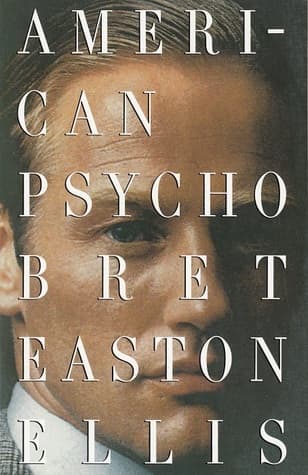
- American Psycho
Bret Easton Ellis
3.8 (242k) average on GoodreadsThrillerExplores the mind of a serial killer with a detailed, first-person narrative.
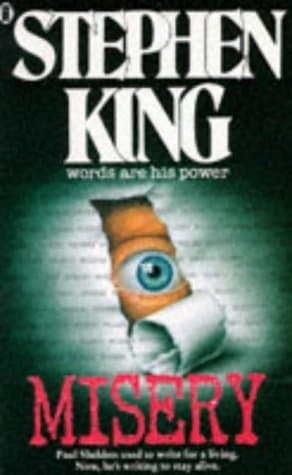
- Misery
Stephen King
4.2 (499k) average on GoodreadsThrillerMisery similarly explores themes of obsessive fandom and captivity, but from the perspective of the victim (Paul Sheldon) trapped by his captor (Annie Wilkes). You, in contrast, immerses the reader within the mind of the obsessive perpetrator himself, detailing his twisted justifications and internal world, offering a different kind of psychological horror focused on the stalker's internal landscape rather than the external terror of the captive.
- Angels & Demons
Dan Brown
3.9 (2.7M) average on GoodreadsThrillerA Harvard symbologist races through Rome's ancient sites, deciphering cryptic clues to unmask the Illuminati and stop a vengeful plot to destroy the Vatican with a stolen antimatter weapon.
- The Da Vinci Code
Dan Brown
3.9 (1.9M) average on GoodreadsThrillerA symbologist and a cryptologist race through European landmarks, deciphering ancient codes and uncovering a conspiracy that could rewrite the foundations of Christianity.




Enjoyed the summary?
A summary gives you the shape of the book. The book itself has the detail, the examples and the voice.
Find You on AmazonAs an Amazon Associate, BookBrief earns from qualifying purchases. How we're funded