

Arthur Koestler
Born: 09-04-1905
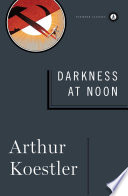
Arthur Koestler was a Hungarian-British author and journalist, renowned for his penetrating explorations of political and philosophical themes. Born in Budapest in 1905, Koestler's experiences spanned several ideologies, notably communism, which he later critiqued in works like "Darkness at Noon." A prolific writer, his oeuvre includes novels, essays, and autobiographies, reflecting his deep intellectual curiosity and commitment to examining the human condition. Koestler passed away in 1983.
Book summaries for books written by Arthur Koestler
Quotes
The only stupidity that was on his conscience and for which he could not forgive himself was that he had once believed that one could have a success without any victims.
In the chaos of a noisy day, only a few fragments of words ever reached us, and because of this, no corrective or restraining purpose could be achieved by argument.
But love was like an enigmatic mirror, which gave shape to his personal destiny, yet infected and obscured it so that one could hardly see one's own face.
Our strongest opponents are not those who oppose us openly, but those who oppose us secretly and conceal their dissent under the cloak of true friendship.
The only reason why we act with passion is because we're trying to prove that we're worth something.
The right of self-defense exists only as long as the intention of attack is genuine and real.
There are no more confident conventionalists than those who have been deprived of their convictions.
He who is ruthless can only claim innocence by virtue of his ignorance.
When a man admits that his entire life has been built on a lie, his soul cannot find rest.
Only weakness could justify murder and despotism.
It's not enough to fight, one must know how to win.
Absolute loyalty and blind obedience are two sides of the same coin.