

Baruch Spinoza
Born: 11-23-1632
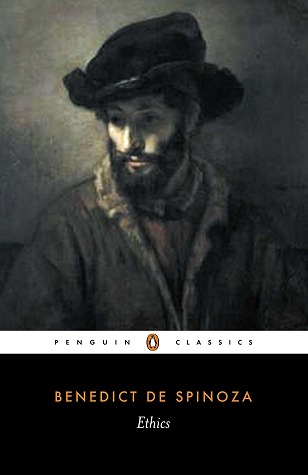
Baruch Spinoza was a 17th-century Dutch philosopher renowned for his work in ethics and rationalism. Born in Amsterdam in 1632, he challenged traditional religious and philosophical views, advocating for a pantheistic understanding of God and nature. His seminal work, "Ethics," laid the foundation for modern biblical criticism and Enlightenment thought. Spinoza's ideas on freedom and democracy continue to influence contemporary philosophical discourse.
Book summaries for books written by Baruch Spinoza
Quotes
All things excellent are as difficult as they are rare.
Peace is not the absence of war, but a virtue based on strength of character.
Desire is the very essence of man.
The mind's highest good is the knowledge of God, and the mind's highest virtue is to know God.
Emotion, which is suffering, ceases to be suffering as soon as we form a clear and precise picture of it.
The more clearly we understand our emotions, the more power we have over them.
The ultimate aim of the state is not to rule, or to restrain, but to free every individual from fear so that they may live in all possible security.
The highest virtue is to act without passion and to be unaffected by external events.
Nothing comes to pass in nature, which can be set down to a flaw therein; for nature is always the same, and everywhere one and the same in her efficacy and power of action.
The more we understand individual things, the more we understand God.
When we say that the mind is eternal, we mean that its existence cannot be defined by time or explained through time.
The good which a man desires for himself and loves, he will love still more when he beholds it in others.