
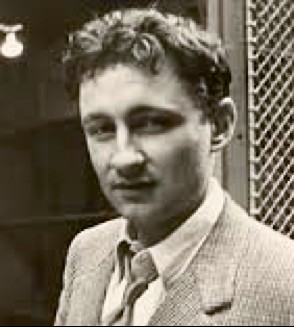
Guy Debord
Born: 01-01-1931
Guy Debord was a French Marxist theorist, philosopher, and filmmaker, renowned for his pivotal role in the Situationist International movement. Born in 1931, his influential work, "The Society of the Spectacle," critiqued contemporary consumer culture and mass media. Debord's ideas have profoundly impacted cultural criticism, emphasizing the alienation in modern societies. His legacy endures through his innovative thoughts on art, politics, and social interaction.
Book summaries for books written by Guy Debord

Quotes
The spectacle is not a collection of images; it is a social relation between people that is mediated by images.
In societies where modern conditions of production prevail, all of life presents itself as an immense accumulation of spectacles. Everything that was directly lived has receded into a representation.
The spectacle presents itself as something enormously positive, indisputable, inaccessible. It says nothing more than 'that which appears is good, that which is good appears.'
The spectacle is the nightmare of imprisoned modern society which ultimately expresses nothing more than its desire to sleep. The spectacle is the guardian of sleep.
The spectacle appears at once as society itself, as a part of society and as a means of unification. As a part of society, it is that sector where all attention, all consciousness, converges.
The first phase of the domination of the economy over social life brought into the definition of all human realization the obvious degradation of being into having.
Separation is the alpha and omega of the spectacle.
The spectacle is capital accumulated to the point where it becomes images.
The spectacle is the other side of money: it is the general abstract equivalent of all commodities.
The spectacle is the ruling order's nonstop discourse about itself, its never-ending monologue of self-praise.
The spectacle is the sun that never sets over the empire of modern passivity. It covers the entire surface of the world and bathes endlessly in its own glory.
The spectacle is the existing order's uninterrupted discourse about itself, its laudatory monologue. It is the self-portrait of power in the age of power's totalitarian rule over the conditions of existence.