

Julian Barnes
Born: 01-18-1946
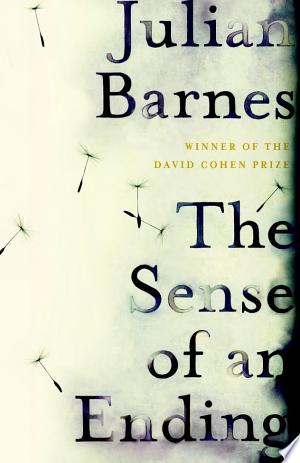
Julian Barnes is a celebrated English author known for his sharp wit and profound exploration of themes like memory, love, and mortality. Born in 1946, he has penned numerous acclaimed novels, including "Flaubert's Parrot" and the Booker Prize-winning "The Sense of an Ending." Barnes's narrative style often blends fiction with philosophical reflection, earning him a prominent place in contemporary literature. His works are translated into multiple languages worldwide.
Book summaries for books written by Julian Barnes


Quotes
There is accumulation. There is responsibility. And beyond these, there is unrest. There is great unrest.
What you end up remembering isn't always the same as what you have witnessed.
There is accumulation, but there is also loss. And in this, our life is as sturdy as a paper bag, and as full of water.
I remember this quote from a book: “There is no you, there is only history.” The truth is there is no “you” at all. There is only what really happened.
History is that certainty produced at the point where the imperfections of memory meet the inadequacies of documentation.
We muddle along, we do our jobs, we raise our families, we give ourselves barely enough time to be human.
How often do we enact this scenario in our lives: seeking to make real, to bring to the surface through action, what we have constructed as certain internally?
It strikes me that this may be one of the differences between youth and age: when we are young, we invent different futures for ourselves; when we are old, we invent different pasts for others.
I suppose it's fortunate that what happened later can never obliterate what happened at the time.
How often do we tell our own life story? How often do we adjust, embellish, make sly cuts? And the longer life goes on, the fewer are those around to challenge our account, to remind us that our life is not our life, merely the story we have told about our life. Told to others, but—mainly—to ourselves.
I don't know if you've noticed this, but first impressions are often entirely wrong.
We thought we were being mature when we were only being safe. We imagined we were merely following a trend, but perhaps what we called trends were simply our atavistic instincts.