
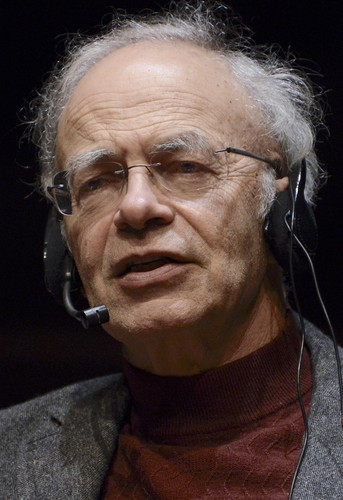
Peter Singer
Born: 07-05-1946
Peter Singer is an Australian moral philosopher renowned for his work in bioethics and applied ethics. He is a professor at Princeton University and the University of Melbourne. Singer gained prominence with his book "Animal Liberation," which sparked the animal rights movement. His utilitarian approach challenges readers to consider the ethical implications of their actions, advocating for altruism and effective altruism. Singer's influential ideas continue to provoke thought and debate worldwide.
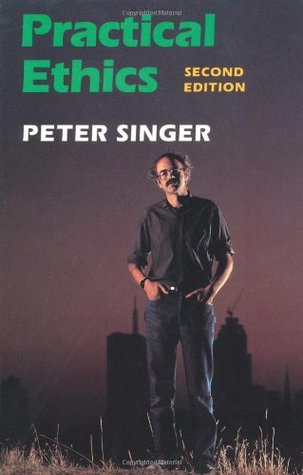
Book summaries for books written by Peter Singer

Quotes
The capacity for suffering and enjoying things is a prerequisite for having interests at all, a condition that must be satisfied before we can speak of interests in any meaningful way.
All animals have the ability to suffer in the same way and to the same degree that humans do.
The notion that human life is sacred just because it is human life is medieval.
The fact that a being is human, and alive, does not in itself tell us whether it is wrong to take that being's life.
Utilitarianism requires us to consider the interests of every being affected by our actions and to give equal weight to each being's interests.
The ethical demands that we make on others should be no greater than the demands we make on ourselves.
We should extend our moral concern beyond our own species and consider the interests of all sentient beings.
The suffering of non-human animals matters morally and should be taken into account in our ethical decision-making.
If we can prevent something bad from happening without sacrificing anything of comparable moral importance, we ought to do it.
It is not species membership alone that confers moral status, but the capacity to suffer and experience enjoyment.
Our ethical obligations should be based on the inherent value of all individuals, regardless of their species.
The moral imperative is to strive for the greatest overall balance of happiness over suffering.