
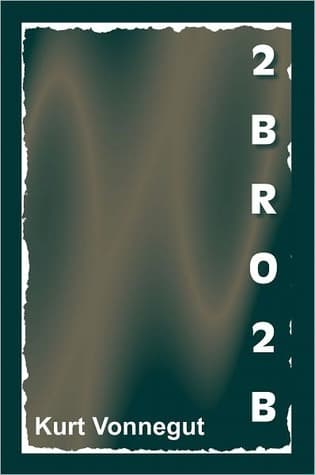
Synopsis
Covers the whole plot, including the ending.
- Difficulty
- Easy
- Pacing
- Moderate
- Mood
- Dystopian, Satirical, Dark, Reflective
- Read it if
- You enjoy thought-provoking dystopian short stories with dark humor and a critical look at societal 'perfection.'
- Skip it if
- You prefer longer, more character-driven narratives, or find themes of population control and assisted suicide too grim.
2BR02B Plot Summary
Covers the whole plot, including the ending.
The Perfect World and the Hospital Waiting Room
The story opens in the Federal Bureau of Termination's waiting room at a Chicago Lying-In Hospital. Edward Wehling Jr. is anxiously awaiting the birth of his triplets. In this future world, overpopulation has been solved by a strict population control policy, no one can be born unless someone volunteers to die. For every birth, a death must occur, maintaining a stable global population of forty million. Wehling is stressed because he needs three volunteers for his three children, and only his grandfather has volunteered so far. He is speaking with a Dr. Hitz, the hospital's Chief Obstetrician, who supports the system, and an orderly named Leora Duncan, who is admiring a mural depicting the 'perfect' society.
The Mural and the Orderly's Admiration
Leora Duncan, a 93-year-old orderly, is carefully cleaning the waiting room and admiring a mural painted by the artist Louis Le Rue. The mural depicts a serene, utopian society where people are smiling, well-dressed, and seemingly content, with the Federal Bureau of Termination at its center. Leora, a strong supporter of the population control system, expresses her gratitude for the system that has brought such order and peace to the world. She tells Dr. Hitz and Wehling that she believes it's a beautiful world, praising the efficiency and the perceived happiness of its citizens, all thanks to the work of the Federal Bureau of Termination and the general population's willingness to volunteer for termination.
Wehling's Desperation and the System's Flaw
Edward Wehling Jr. is increasingly agitated as he still needs two more volunteers for termination to allow his other two children to live. Dr. Hitz, while sympathetic in a detached way, reminds Wehling of the strict rules. He suggests that Wehling could volunteer himself if he wanted to save his children, a proposition Wehling finds abhorrent. Wehling's grandfather, a volunteer, is already scheduled for termination. The system forces individuals into unimaginable choices, showing the cold, utilitarian logic that underpins this 'perfect' society. The tension grows as Wehling grapples with the ethical dilemma.
The Arrival of the Triplets
The nurse enters the waiting room to announce the successful birth of Wehling's triplets, three healthy boys. This news, while joyous in any other context, only deepens Wehling's despair. He now has three lives dependent on three deaths, and only one volunteer confirmed. The nurse, unaware of his internal torment, offers congratulations. Wehling knows that if he cannot find two more volunteers, two of his sons will be taken away and terminated, as per the law. The happy occasion is overshadowed by the grim reality of the world's population control.
Leora's Philosophical Ruminations
Leora Duncan continues her work, cleaning the waiting room, and talking with Dr. Hitz about the beauty of their world. She praises the 'efficiency' of the system, stating that it has eliminated war, poverty, and disease, creating a harmonious society. She expresses her contentment with her long life and her admiration for those who volunteer for termination, seeing it as the ultimate act of civic duty. Her perspective shows the indoctrination within this society, where death is not mourned but celebrated as a necessary component of societal balance, further contrasting with Wehling's personal anguish.
The Unveiling of the Mural's Artist
Dr. Hitz mentions that the artist of the mural, Louis Le Rue, is still alive and, in fact, 201 years old. He is currently on the waiting list for termination, having lived an exceptionally long life. This detail shows the system's reach, even celebrated artists must eventually volunteer. Leora expresses delight at the thought of such a long life, reinforcing the idea that longevity is a reward for contributing to society, and termination is an honorable end. This also subtly introduces the idea that even those who have lived to extreme old age must eventually make way for new life.
Wehling's Desperate Act
Driven to the brink of madness by the impossible choice and the efficiency of the system, Edward Wehling Jr. snaps. He pulls out a revolver and, in a moment of desperate rage, shoots Dr. Hitz, the Chief Obstetrician, and then Leora Duncan, the orderly. His act is not one of malice, but of a desperate father creating two 'vacancies' for his children. The sudden violence shatters the calm of the hospital waiting room and the illusion of the 'perfect' society. Wehling's actions are a direct, though tragic, response to the dehumanizing logic of population control.
The Aftermath and the Final Call
After shooting Dr. Hitz and Leora Duncan, Edward Wehling Jr. then turns the gun on himself, creating a third vacancy. He has sacrificed himself to ensure all three of his sons can live. The scene is now one of tragedy and silence. A moment later, the telephone rings. It is the Federal Bureau of Termination calling to confirm the three new vacancies, now available for Wehling's triplets. The impersonal nature of the call, even in the face of such violence, shows the chilling efficiency and detachment of the system, which simply registers deaths as statistics, fulfilling its quota.
The System Continues Unchanged
The story concludes with the phone call from the Federal Bureau of Termination, which operates under the number '2BR02B' (a play on Shakespeare's 'To be or not to be'). The immediate acceptance of the three new deaths as valid 'vacancies' for the triplets shows the cold, bureaucratic nature of the system. Wehling's desperate act, while ensuring his children's survival, does nothing to dismantle or question the underlying principles of population control. The world, with its forty million inhabitants, will continue its cycle of mandated death for new life, with the mural of the 'perfect' society still adorning the wall.
Principal Figures
Edward Wehling Jr.
Protagonist
A distraught father desperate to save his newborn triplets.
Edward Wehling Jr. is presented as a typical man in an extraordinary, dystopian situation. He is a loving father, overwhelmed by the strict population control laws that demand a death for every birth. His desperation to ensure all three of his newborn sons can live drives his actions. He represents the individual struggling against an oppressive, dehumanizing system, ultimately choosing a tragic, violent path to protect his family. His anguish makes him the most relatable character, highlighting the moral bankruptcy of the 'perfect' society.
Relationships: His Grandfather (Volunteer for termination to save one of Wehling's children); Dr. Hitz (Obstetrician, representative of the system's cold logic); Leora Duncan (Orderly, staunch supporter of the system)
Dr. Hitz
Supporting
The Chief Obstetrician and an advocate of the population control system.
Dr. Hitz embodies the detached, scientific, and almost bureaucratic face of the 'perfect' society. As Chief Obstetrician, he is responsible for managing births within the strict population limits. He genuinely believes in the system's efficacy and beneficence, seeing it as the solution to societal ills. His calm, rational demeanor, even when discussing the termination of lives, makes him a chilling figure. He is unshakeable in his faith in the system until he becomes its victim, illustrating the system's own inherent brutality.
Relationships: Edward Wehling Jr. (Patient's father, to whom Hitz explains the rules); Leora Duncan (Colleague, with whom he discusses the system)
Leora Duncan
Supporting
A 93-year-old orderly who is a fervent supporter of the population control system.
Leora Duncan is a seemingly contented, elderly orderly who is a zealous proponent of the population control system. She cleans the waiting room with meticulous care and expresses profound admiration for the 'perfect' world it has created. Her long life and her cheerful acceptance of the system highlight the extent of societal indoctrination. She genuinely believes in the beauty and necessity of mandated termination, viewing those who volunteer as heroes. Her unwavering faith in the system makes her a symbol of its successful ideological control.
Relationships: Dr. Hitz (Colleague, with whom she discusses the system); Louis Le Rue (Artist of the mural she admires)
Louis Le Rue
Mentioned
The 201-year-old artist of the waiting room mural.
Louis Le Rue is the unseen artist of the impressive mural in the Federal Bureau of Termination's waiting room. At 201 years old, he is a testament to the extended lifespans possible in this society, yet he is also on the waiting list for termination. His mural depicts a utopian vision of the world, serving as a constant visual reminder of the 'benefits' of population control. His existence and impending termination underscore that even the most celebrated individuals are subject to the system's rules.
Relationships: Leora Duncan (Admirer of his artwork)
Wehling's Grandfather
Supporting
The first volunteer for termination to allow one of Wehling's triplets to live.
Wehling's grandfather is a minor but crucial character, embodying the 'heroic' volunteer in this society. He has already gone to the Federal Bureau of Termination to offer his life, securing one 'vacancy' for his grandchild. His self-sacrifice, while presented as a civic duty, highlights the grim reality families face. He represents the personal cost of the system, even when individuals 'willingly' participate.
Relationships: Edward Wehling Jr. (Grandson, whose children he is helping to save)
The Nurse
Supporting
The medical professional who announces the birth of Wehling's triplets.
The nurse is a minor character who delivers the news of the triplets' birth. Her interaction with Wehling is brief and professional, showing no particular empathy for his predicament, further emphasizing the detached nature of the medical establishment in this dystopian world. She is simply a functionary within the system, performing her duties without questioning the moral implications of her society's laws.
Relationships: Edward Wehling Jr. (Communicates news about his children)
Themes & Insights
The Dehumanization of Bureaucracy
The story shows how a system designed for societal 'efficiency' can strip individuals of their humanity. The Federal Bureau of Termination, with its impersonal 'vacancies' and 'volunteers,' reduces human lives to mere statistics. Wehling's anguish is treated as an inconvenience by Dr. Hitz, and Leora Duncan celebrates death as a civic duty. The cold, utilitarian logic of population control prioritizes the collective over individual suffering, culminating in Wehling's desperate act to reclaim his children's right to exist, outside of the system's calculations.
“'But how in hell,' Wehling wanted to know, 'can a man be expected to make time for that sort of thing?' 'We ask the best of you, sir,' said Dr. Hitz, 'the very best.”
The Perils of Utopianism
Vonnegut critiques the pursuit of a 'perfect' society, revealing its flaws and cruelties. The world of '2BR02B' has eliminated war, poverty, and disease through extreme population control, yet it has sacrificed individual freedom, emotional depth, and moral integrity. The mural depicting a serene, smiling populace is a constant, ironic reminder of the superficiality of this 'utopia.' The story suggests that such an ordered world, achieved through the negation of fundamental human rights, is ultimately a dystopia in disguise, where human life is no longer inherently valuable.
“It was a beautiful world,' said Leora Duncan, 'and we were all so happy.”
Life, Death, and Choice
At its core, the story explores questions of life, death, and the right to choose. In this society, the 'choice' to live is conditional upon another's 'choice' to die. Wehling's struggle shows the moral dilemma when the state dictates such fundamental aspects of existence. His violent act, though shocking, is a desperate assertion of his children's right to life and his own agency in a world that denies it. The title itself, '2BR02B,' directly references Shakespeare's soliloquy on existence, showing the story's central theme of being or not being, but under the chilling specter of state control.
“''2BR02B,' the telephone number of the Federal Bureau of Termination, was printed in black on every public telephone. It was the only number you could dial without being charged.”
Indoctrination and Acceptance
The story shows how easily a population can be taught to accept even the most horrific policies as normal and beneficial. Leora Duncan, a cheerful elderly orderly, fully embraces the system, viewing termination as a noble act. Dr. Hitz calmly enforces the rules, without moral qualms. This widespread acceptance, even celebration, of population control shows the power of propaganda and societal conditioning. Only Wehling, driven by the instinct of parenthood, breaks from this collective delusion, revealing the true cost of such widespread ideological conformity.
“Every time somebody is born, somebody has to die,' she said. 'It's a beautiful world.”
Plot Devices & Literary Techniques
The Federal Bureau of Termination
The central institution enforcing population control.
The Federal Bureau of Termination (FBT) is the dystopian government agency responsible for maintaining the global population at exactly forty million. It serves as the primary antagonist, a faceless bureaucracy that dictates life and death. Its phone number, '2BR02B,' is a direct reference to Shakespeare, highlighting the story's central theme. The FBT symbolizes the ultimate overreach of state power, where human life is treated as a commodity to be balanced and controlled, stripped of its inherent value. Its pervasive presence underscores the suffocating control of the government.
The Mural
A propaganda tool depicting the 'perfect' society.
The mural, painted by Louis Le Rue, adorns the waiting room of the Federal Bureau of Termination. It depicts a serene, utopian society with smiling, well-dressed people, symbolizing the 'peace' and 'order' achieved through population control. This artwork functions as a powerful piece of propaganda, constantly reinforcing the perceived benefits of the system. Its idealized imagery stands in stark contrast to Wehling's despair and the grim reality of the 'vacancies' being created, serving as an ironic visual commentary on the superficiality of the 'perfect' world.
'2BR02B' (The Title and Phone Number)
A direct allusion to Shakespeare, highlighting the central theme of existence.
The title of the story, '2BR02B,' is the phone number for the Federal Bureau of Termination and a phonetic play on Hamlet's famous soliloquy, 'To be or not to be.' This direct literary allusion immediately establishes the story's central theme: the question of existence and the value of life in a world where it is regulated by the state. It frames the entire narrative within a philosophical debate about life and death, choice and fate, and underscores the profound moral implications of the dystopian society Vonnegut has created. It's a stark, memorable symbol of the story's core conflict.
The Triplets
A narrative device to heighten the protagonist's impossible dilemma.
The birth of triplets, rather than a single child, serves as a crucial plot device to amplify Edward Wehling Jr.'s predicament. If he had only one child, his grandfather's sacrifice would have sufficed. The need for three 'vacancies' forces Wehling into an impossible situation, escalating his desperation to the point of violence. This choice by the author heightens the tension and dramatically underscores the inherent cruelty and dehumanizing nature of the population control system, pushing Wehling to a breaking point that a single birth might not have achieved.
2BR02B Quotes
“Everything was perfectly swell. There were no prisons, no slums, no insane asylums, no cripples, no poverty, no wars. All diseases were conquered. So was old age.”
“The Federal Bureau of Termination was right next door to the hospital.”
“If you're going to live on this planet, you've got to be willing to make room for newcomers.”
“I'm going to be a grandfather for the first time, and I'm going to kill myself.”
“The waiting list for a volunteer was about a year long.”
“It was a bright, clean, cheerful place. It was painted white, and it was full of plans for the future.”
“I'm not going to kill myself. I'm going to stay alive and just keep making trouble.”
“The only way you can get competent medical attention is to produce a volunteer for termination.”
“We're all in this together, by golly.”
“The service was free, and the waiting room was clean and air-conditioned.”
“I'm going to do what a man has to do.”
“There were no buttons to push, no switches to throw. The machine did it all.”
“It's a beautiful world.”
“The only thing that wasn't perfect was the people.”
Quiz
10 questions on the plot and the characters. Each answer comes with a short explanation.
Question 1
What is the primary setting of '2BR02B'?
- A futuristic hospital in Chicago
- A space colony on Mars
- A dystopian prison facility
- A government office building
Show answer
A. A futuristic hospital in Chicago The story takes place in a Chicago hospital in a future where population control is strictly enforced, with the hospital serving as the central location for births and deaths.
Question 2
What does the phone number '2BR02B' represent in the story?
- A suicide hotline
- A government assistance line
- The Federal Bureau of Termination
- A hospital emergency number
Show answer
C. The Federal Bureau of Termination The title '2BR02B' is a phone number that spells 'To Be or Not To Be,' which connects to the Federal Bureau of Termination where people can volunteer to die to make room for new births.
Question 3
Why does Edward K. Wehling visit the hospital at the beginning of the story?
- To volunteer for termination
- To witness the birth of his triplets
- To protest the population laws
- To work as a doctor
Show answer
B. To witness the birth of his triplets Wehling is at the hospital because his wife is giving birth to triplets, but under the population control laws, he must find three volunteers to die to make room for them.
Question 4
What is the role of Dr. Benjamin Hitz in the story?
- He is the hospital's chief surgeon
- He volunteers to die for Wehling's children
- He leads the Federal Bureau of Termination
- He is Wehling's father-in-law
Show answer
A. He is the hospital's chief surgeon Dr. Hitz is the hospital's chief surgeon who explains the population control system to Wehling and later becomes a victim in the story's climax.
Question 5
How does the society in '2BR02B' enforce population control?
- By limiting births to one child per family
- By requiring a death for every birth
- By exiling excess people to other planets
- By imposing heavy taxes on large families
Show answer
B. By requiring a death for every birth The society maintains a stable population by mandating that for every birth, someone must volunteer to die through the Federal Bureau of Termination, creating a grim balance.
Question 6
What does the mural in the hospital waiting room depict?
- A scene of overpopulation and chaos
- The founders of the population control system
- A garden with men and women in white robes
- A futuristic cityscape
Show answer
C. A garden with men and women in white robes The mural shows a garden with men and women in white robes, symbolizing the idealized, controlled society, which contrasts with the dark reality of the termination system.
Question 7
What is Leora Duncan's profession?
- A nurse at the hospital
- A volunteer for termination
- A hostess at the Federal Bureau of Termination
- A painter who works on the hospital mural
Show answer
D. A painter who works on the hospital mural Leora Duncan is a painter who is adding faces to the mural in the hospital waiting room, and she becomes involved in the story's events when Wehling seeks volunteers.
Question 8
How does Edward K. Wehling resolve the dilemma of his triplets' births?
- He finds three volunteers to die
- He shoots Dr. Hitz, Leora Duncan, and himself
- He flees the hospital with his family
- He petitions the government for an exception
Show answer
B. He shoots Dr. Hitz, Leora Duncan, and himself In a desperate act, Wehling shoots Dr. Hitz and Leora Duncan, then himself, providing the three deaths required for his triplets to live, highlighting the story's critique of utilitarian ethics.
Question 9
What theme is most directly explored through the character of the orderly?
- The inevitability of death
- The dehumanization of individuals in a controlled society
- The importance of artistic expression
- The benefits of technological advancement
Show answer
B. The dehumanization of individuals in a controlled society The orderly, who calmly cleans up after the shootings, represents how society has become desensitized to death and loss of individuality under strict population control.
Question 10
What is the significance of the story's title in relation to its ending?
- It foreshadows Wehling's decision to kill and be killed
- It refers to the phone number Wehling calls for help
- It symbolizes the choice between life and death for the triplets
- It is the name of the government policy
Show answer
A. It foreshadows Wehling's decision to kill and be killed The title '2BR02B' (To Be or Not To Be) echoes Hamlet's soliloquy about existence, mirroring Wehling's ultimate choice to enact violence to ensure his children's survival, questioning the value of life in a controlled society.
2BR02B FAQ
What is '2BR02B' about?
'2BR02B' is a dystopian short story set in a future where aging and disease have been eliminated, but population control is enforced through a government program. To have a child, someone must volunteer to die, and the plot follows Mr. Wehling, who is about to become a father but must arrange three deaths to legally have his triplets. The story explores themes of life, death, and the cost of utopia.
Why should I read '2BR02B'?
You should read '2BR02B' for its sharp, satirical critique of utopian ideals and population control, delivered in Vonnegut's signature darkly humorous style. It's a concise yet powerful exploration of ethical dilemmas, making it a thought-provoking classic of dystopian science fiction that resonates with contemporary issues.
What is the background/setting of '2BR02B'?
The story is set in Chicago in the year 2000, in a society where medical advancements have eradicated aging and disease, leading to zero population growth. This utopia is maintained by the Federal Bureau of Termination, where citizens can volunteer to die via gas chambers, symbolized by the phone number '2BR02B' (to be or not to be).
What are the most memorable quotes?
Memorable quotes include the title's reference '2BR02B' (to be or not to be), highlighting the existential choice, and lines like 'Everything was perfectly swell,' which ironically underscores the dystopian facade. Another key quote is Dr. Hitz's justification of the system: 'If you're going to live in a society, you've got to have rules.'
What writing style does the author use?
Kurt Vonnegut Jr. uses a concise, satirical, and darkly humorous writing style, blending science fiction with social commentary. The narrative is straightforward yet layered with irony, using simple language to convey complex ethical questions, characteristic of Vonnegut's critique of human folly and societal structures.
What minor details add significant meaning?
Minor details like the mural in the hospital depicting historical figures associated with death (e.g., the Grim Reaper) foreshadow the story's themes. The phone number '2BR02B' itself is a subtle nod to Shakespeare's Hamlet, emphasizing the existential dilemma of life and death central to the plot.
What are some subtle foreshadowing moments?
Foreshadowing includes the orderly's casual mention of the gas chamber's efficiency and the mural's imagery of death, which hint at the impending violence. Mr. Wehling's initial hesitation and the painter's cynical remarks about the system subtly predict the tragic climax where multiple characters die.
What unexpected character connections exist?
Unexpected connections include Dr. Hitz, who designed the population control system, being directly involved in Mr. Wehling's dilemma, and the painter, Leora Duncan, who initially seems detached but becomes a key figure in the final deaths. These ties highlight how the system entangles everyone in its moral compromises.
What are unspoken character motivations?
Mr. Wehling's unspoken motivation is a deep desperation to have children despite the horrific cost, driven by paternal love and societal pressure. Dr. Hitz is motivated by a blind faith in the system's necessity, masking any personal guilt, while the painter Leora Duncan may harbor hidden resentment toward the utopia she decorates.
What psychological complexities do characters exhibit?
Characters exhibit psychological complexities such as Mr. Wehling's conflict between joy for his newborns and horror at the required sacrifices, leading to his breakdown. Dr. Hitz displays cognitive dissonance, rationalizing murder as a civic duty, while Leora Duncan shows ambivalence, participating in the system yet subtly criticizing it through her art.
What are the major emotional turning points?
Major emotional turning points include Mr. Wehling's realization that he must arrange three deaths, causing distress; the moment he pulls a gun, escalating tension; and the climax where he kills Dr. Hitz, Leora Duncan, and himself, followed by the painter's suicide, revealing the system's brutal emotional toll.
How do relationship dynamics evolve?
Relationship dynamics evolve from bureaucratic interactions to violent confrontations: Mr. Wehling starts as a compliant citizen but turns against Dr. Hitz in defiance. Leora Duncan shifts from a passive observer to an active participant in death, and the orderly remains detached, symbolizing the system's dehumanizing effect on human connections.
Which parts remain ambiguous or open-ended?
Ambiguous parts include whether the painter's final suicide is an act of protest or despair, and the broader societal impact of the murders—whether they spark change or are just another statistic. The story leaves open whether this utopia can sustain itself or is doomed by its inherent contradictions.
What are controversial scenes or decisions?
Controversial scenes include the government-sanctioned murders for population control and Mr. Wehling's decision to kill multiple people, including himself, to save his babies. These moments spark debate on ethics, the value of life, and whether such extreme measures can ever be justified, even in a utopian context.
'2BR02B' ending explained: how it ends & what it means
The story ends with Mr. Wehling shooting Dr. Hitz and Leora Duncan, then himself, allowing his triplets to be born as the painter also commits suicide. This violent climax signifies the collapse of the utopian facade, suggesting that systems built on forced sacrifice are unsustainable and lead to tragedy, questioning the cost of perfect societies.
About the author
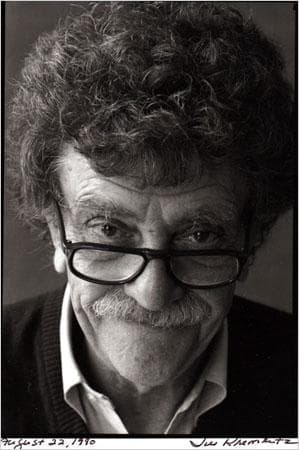
Kurt Vonnegut Jr. was an American author known for his satirical and often darkly humorous fiction. His notable works include "Breakfast of Champions," "Mother Night," "Player Piano," "A Man Without a Country," "Bluebeard," and "Timequake." Vonnegut's writing frequently explores themes of free will, technology, and the absurdity of human existence.
Similar books
- Brave New World
Aldous Huxley
4.0 (1.4M) average on GoodreadsFantasyExplores a technologically advanced society that sacrifices individual freedom and natural processes for stability.
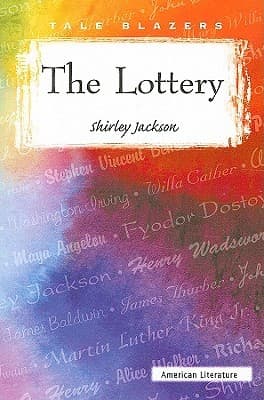
- The Lottery
Shirley Jackson
4.1 (58k) average on GoodreadsScience FictionFeatures a chilling societal ritual that maintains order through a dark, unthinking tradition.
- Harrison Bergeron
Kurt Vonnegut Jr.
4.2 (14k) average on GoodreadsScience FictionAnother Vonnegut short story critiquing enforced equality and the suppression of individuality in a dystopian future.
- Nineteen Eighty-Four
George Orwell
4.2 (5.5M) average on GoodreadsFictionWhile both "2BR02B" and Nineteen Eighty-Four portray totalitarian societies, their methods of control differ significantly. Orwell's Oceania relies on constant surveillance, fear, propaganda, and physical torture to maintain power, with an emphasis on suppressing thought and memory. Vonnegut's society, in contrast, maintains order through a seemingly benevolent, yet ultimately deadly, system of population management that has been internalized and accepted by its citizens. The horror in Nineteen Eighty-Four is overt and oppressive, whereas in "2BR02B," it lies in the disturbing normalization and cheerful participation in a system of death, making its critique more insidious and perhaps more unsettling in its implications for human complicity.
- Harry Potter and the Sorcerer's Stone
J.K. Rowling
4.5 (7M) average on GoodreadsFantasyRescued from a miserable life under the stairs, an orphaned boy discovers he's a wizard destined for a magical school, where he uncovers a dangerous secret tied to the dark wizard who murdered his parents.
- The Hunger Games
Suzanne Collins
4.3 (6.4M) average on GoodreadsFantasyIn a future where children fight to the death on live television, Katniss Everdeen volunteers for the arena, turning a death sentence into a fight for survival and a spark of rebellion.




Enjoyed the summary?
A summary gives you the shape of the book. The book itself has the detail, the examples and the voice.
Find 2BR02B on AmazonAs an Amazon Associate, BookBrief earns from qualifying purchases. How we're funded