

Synopsis
Covers the whole plot, including the ending.
- Difficulty
- Medium
- Pacing
- Moderate
- Mood
- Dystopian, Philosophical, Thought-provoking, Dark, Satirical
- Read it if
- You enjoy thought-provoking dystopian fiction, philosophical debates on freedom vs. happiness, and critiques of societal control. Fans of classic science fiction with a strong social commentary will appreciate it.
- Skip it if
- You prefer fast-paced action, lighthearted stories, or narratives without significant philosophical undertones. Those sensitive to dark themes and a bleak outlook might find it challenging.
Brave New World Plot Summary
Covers the whole plot, including the ending.
The World State's Conditioning and Social Structure
The novel starts at the Central London Hatchery and Conditioning Centre. Director Thomas (Tomakin) and Assistant Director of Predestination and Conditioning Henry Foster show students how humans are created and conditioned. Embryos are engineered and grown in bottles, then conditioned with methods like sleep-teaching to accept their assigned caste roles (Alpha, Beta, Gamma, Delta, Epsilon) and jobs. Citizens are encouraged to have casual sex, use the drug soma for instant happiness, and consume constantly. All this keeps the World State stable and stops individual thought or emotion. Lenina Crowne, a Beta-Plus, is an ideal citizen, while Bernard Marx, an Alpha-Plus psychologist, feels out of place and wants more.
Bernard's Dissatisfaction and Lenina's Conventionality
Bernard Marx, an Alpha-Plus, is smaller than others in his caste. It is rumored he received alcohol in his blood during development, which led to him being an outcast and feeling inadequate. He does not like the casual sex and constant distractions of the World State. He prefers being alone and having serious conversations, which makes him an outsider. He likes Lenina Crowne, who is beautiful and popular. She is a perfectly conditioned citizen, enjoying casual sex and soma without question. Their relationship is strained by Bernard's desire for real connection and Lenina's inability to understand this. Her conditioning makes her uncomfortable with his unusual views and sad moods.
A Trip to the Savage Reservation
Bernard wants to impress Lenina and perhaps find a sense of belonging. He gets permission from the Director to visit the New Mexico Savage Reservation. Before they leave, the Director says he once visited the Reservation years ago with a woman who got pregnant and was lost there. This is a scandalous admission in the World State. During their trip, Bernard and Lenina see a Native American ritual with self-harm and sacrifice. Lenina is very disturbed by this, finding the customs barbaric and dirty. Bernard, however, is interested in the raw emotion and spiritual aspects. He senses a freedom missing in his own society. Here, they meet John and his mother, Linda.
Discovery of Linda and John
While visiting the Reservation, Bernard and Lenina meet Linda. She is an older, overweight woman with missing teeth, an outcast from both the Reservation and the World State. Bernard is surprised when Linda says she is the woman who went with the Director years ago and got pregnant, giving birth to John. She explains she was left behind and forced to live among the 'savages.' She adopted their customs but still remembered the World State, especially her love for soma. John, her son, is a young man raised with Reservation traditions and an old copy of Shakespeare's complete works, which he values and uses to understand the world.
The Return to the World State and the Director's Downfall
Bernard sees a chance to gain status and perhaps get back at the Director. He arranges for Linda and John to return to the World State. When they arrive, Bernard sets up a public confrontation at the Conditioning Centre. He reveals Linda and John are the Director's lost lover and son. This causes a scandal, as parenthood is an obscene idea in the World State, and the Director's personal involvement with a 'savage' is a major breach of social rules. Overwhelmed by shame and public mockery, the Director resigns, ending his career and influence. Bernard is satisfied for a time.
John's Initial Fascination and Disillusionment
John, the 'Savage,' becomes a celebrity in the World State right away. At first, he is fascinated by the technology, cleanliness, and apparent happiness of the society. He is especially drawn to Lenina, seeing her as a beautiful Juliet, and dreams of a romantic, Shakespearean courtship. However, his initial wonder quickly turns to disgust. He is horrified by the casual sex, the common soma, the lack of real emotion, and the dehumanizing aspects of conditioning. He finds the World State's citizens shallow and their lives pointless, a sharp contrast to the deep emotions and struggles he learned from Shakespeare and the Reservation.
Linda's Demise and John's Grief
Linda cannot adjust to the World State's customs or her aging body. She is given unlimited soma to keep her calm. She spends her days in a drugged state, slowly getting worse. When John visits her as she is dying, he is upset by her condition and the uncaring nurses. Her death, from a soma overdose, devastates John. In a public display of raw, unconditioned grief, he yells at the nurses and then throws packages of soma out of a hospital window. He tries to free the Deltas from their conditioning. This act of defiance causes a riot and gets the attention of the authorities.
Confrontation with Mustapha Mond
After the soma riot, John, Bernard, and Helmholtz Watson (Bernard's intellectual friend who also feels out of place) are arrested. They are brought before Mustapha Mond, the Resident World Controller for Western Europe. Mond has a deep philosophical debate with them. He explains the World State's reasons for giving up art, science, religion, and real human emotion for stability and universal happiness. He reveals his own past as a scientist who chose to become a Controller rather than be exiled for his forbidden knowledge. Mond argues that happiness, stability, and no suffering are most important, even if it means suppressing individuality and truth.
Exile and John's Retreat
Because of their rebellion, Bernard and Helmholtz are exiled to islands. There, they can live among others who share their independent thoughts and feelings. Helmholtz accepts this fate, but Bernard still fears it. John, however, refuses exile. He seeks refuge in an abandoned lighthouse in the countryside. He wants to live a life of solitude, penance, and self-sufficiency, free from the World State's influence. He tries to purify himself through self-harm and gardening, hoping to find a meaningful existence. But his unique life is soon discovered by curious World State citizens who come to watch him.
The Orgy-Porgy and John's Tragic End
The public's interest in John grows, turning his isolated life into a show. A reporter films John self-harming, which becomes a popular 'Feelie,' attracting even bigger crowds. Overwhelmed by the constant intrusion and seeing Lenina among the onlookers, John is pulled into a frenzied 'Orgy-porgy' ritual. This is a chaotic dance of sex and soma, fueled by the crowd's excitement. The experience leaves him distraught and disgusted with himself. He feels completely compromised and unable to match his ideals with his situation. The next morning, found by the curious crowds, John hangs himself from the archway of his lighthouse. His last act is a desperate escape from a world he could not tolerate.
Principal Figures
John (The Savage)
Protagonist
A young man raised on the Savage Reservation, representing natural humanity and individual freedom.
John is the son of Linda and the Director, born and raised on the New Mexico Savage Reservation. He is an outsider in both worlds, scorned by the 'savages' for his World State heritage and horrified by the World State's values. His worldview is heavily shaped by a tattered copy of Shakespeare's complete works, which he uses to interpret love, loss, and morality. He embodies natural human emotion, a desire for truth, and a longing for individual freedom, contrasting sharply with the conditioned citizens of the World State. He is a tragic figure, unable to reconcile the beauty of his ideals with the superficiality and control of the 'brave new world'.
Relationships: Linda (His mother, whom he loves and cares for deeply despite her flaws.); Director Thomas (Tomakin) (His biological father, whose identity he publicly exposes.); Lenina Crowne (Object of his romantic and idealistic affections, later source of his disgust.); Bernard Marx (His initial 'friend' and guide to the World State, who exploits his uniqueness.); Mustapha Mond (His philosophical adversary, who represents the World State's ideology.)
Bernard Marx
Protagonist/Supporting
An Alpha-Plus psychologist who feels alienated and longs for individuality, but lacks true courage.
Bernard Marx is an Alpha-Plus who is physically smaller and less robust than others in his caste, leading to rumors of an error in his embryonic conditioning. This physical difference makes him self-conscious and fuels his feelings of alienation. He dislikes the casual sex, soma, and superficiality of the World State, yearning for genuine connection and emotional depth. However, his desire for individuality is often intertwined with a craving for social acceptance and power. He is a complex character who criticizes the system but often succumbs to its temptations or exploits others for his own gain, particularly John, for a temporary boost in status.
Relationships: Lenina Crowne (His romantic interest, whose conventionality he finds both attractive and frustrating.); Helmholtz Watson (His only true friend, with whom he shares intellectual dissatisfaction.); John (The Savage) (His protégé and means to social status, whom he ultimately exploits.); Director Thomas (Tomakin) (His superior and rival, whom he publicly humiliates.)
Lenina Crowne
Supporting
A beautiful, perfectly conditioned Beta-Plus embodying the World State's ideal citizen.
Lenina Crowne is a Beta-Plus vaccination worker, attractive, popular, and a model citizen of the World State. She embodies the society's values: promiscuous, enthusiastic about soma, and unquestioning of the established order. She genuinely tries to be 'normal' and finds Bernard's melancholic moods and John's emotional intensity deeply unsettling and confusing. She is incapable of understanding concepts like monogamy, self-sacrifice, or deep emotional pain, as her conditioning has eradicated such feelings. Despite her conventionality, she is not malicious, simply a product of her environment, making her a sympathetic figure in her inability to grasp a different way of life.
Relationships: Bernard Marx (Her romantic partner for a time, whose unconventionality she struggles with.); Henry Foster (Her primary sexual partner at the novel's beginning.); John (The Savage) (Object of his intense, idealized love, which she cannot reciprocate or understand.)
Helmholtz Watson
Supporting
An Alpha-Plus lecturer and writer, too intelligent and emotionally aware for the World State.
Helmholtz Watson is an Alpha-Plus lecturer at the College of Emotional Engineering and a gifted writer. He is physically imposing and socially successful, but like Bernard, he feels an intellectual and emotional dissatisfaction. His exceptional intelligence and creativity lead him to feel that his talents are wasted on propaganda and trivial slogans. He longs to write something meaningful and powerful, but the World State offers no outlet for such profound expression. He is more genuinely independent and courageous than Bernard, accepting his exile with enthusiasm as an opportunity for true freedom and self-discovery.
Relationships: Bernard Marx (His friend, sharing a bond of intellectual alienation.); John (The Savage) (Admires John's emotional depth and Shakespearean language, finding a kindred spirit in their shared desire for profound expression.)
Mustapha Mond
Antagonist/Supporting
The Resident World Controller for Western Europe, who defends the World State's philosophy.
Mustapha Mond is one of the ten World Controllers and a former scientist who chose to become a Controller rather than be exiled for his forbidden knowledge. He represents the intellectual and philosophical justification for the World State's totalitarian control. He is highly intelligent, well-read (possessing forbidden books like the Bible and Shakespeare), and fully aware of the costs of universal happiness and stability. He argues eloquently that individual freedom, art, science, and deep emotion must be sacrificed to prevent suffering and ensure social harmony. He is a pragmatic idealist, convinced that his system, though it denies humanity its full potential, provides the greatest good for the greatest number.
Relationships: John (The Savage) (His primary philosophical adversary, engaging in profound debates about society and human nature.)
Linda
Supporting
John's mother and the Director's long-lost partner, exiled to the Savage Reservation.
Linda is John's mother and the woman who accompanied the Director to the Savage Reservation years ago, becoming pregnant and being left behind. She is a Beta-Minus and a product of the World State, but her conditioning has deteriorated due to her life on the Reservation. She is obese, toothless, and clings to memories of soma and casual sex, unable to adapt to the 'savage' way of life. Her return to the World State, where she is given unlimited soma, leads to her rapid decline and death. She represents the tragic consequences of being caught between two incompatible worlds and the World State's solution for 'problem' individuals.
Relationships: John (The Savage) (Her son, whom she loves in her own conditioned way, but struggles to parent effectively.); Director Thomas (Tomakin) (Her former lover and John's father, whose career she inadvertently destroys.); Popé (Her lover on the Reservation, hated by John.)
Director Thomas (Tomakin)
Supporting
The head of the Central London Hatchery and Conditioning Centre, publicly humiliated by Bernard and John.
The Director of Hatcheries and Conditioning (D.H.C.) is a figure of authority in the World State, responsible for overseeing the creation and early conditioning of new citizens. He is a staunch upholder of World State values, often chastising Bernard Marx for his unconventional behavior. His past is revealed to be scandalously un-World State: he once visited the Savage Reservation and fathered a child with a woman who was lost there. His public humiliation by Bernard and John, exposing his forbidden personal history, leads to his immediate resignation and disappearance from the narrative, demonstrating the World State's intolerance for any deviation from its norms, even among its leaders.
Relationships: Bernard Marx (His subordinate, whom he dislikes and attempts to transfer.); Linda (His former lover and mother of his child.); John (The Savage) (His biological son, who publicly exposes him.)
Henry Foster
Supporting
An Alpha-Plus and typical World State citizen, embodying its conventionality.
Henry Foster is an Alpha-Plus, a successful and perfectly conditioned member of the World State. He is a model citizen, efficient in his work, enthusiastic about soma, and engages in casual, promiscuous sex without emotional attachment. He is one of Lenina Crowne's regular partners and is often used by Huxley to illustrate the conventional, superficial attitudes of the World State's upper castes. He is incapable of understanding Bernard's or John's deeper emotional or intellectual needs, viewing their struggles as aberrations to be cured by conditioning or soma. He serves as a contrast to Bernard and Helmholtz, highlighting their alienation.
Relationships: Lenina Crowne (His regular sexual partner.); Bernard Marx (His colleague, whose unconventionality he finds puzzling.)
Fanny Crowne
Supporting
Lenina's friend and confidante, representing the societal norms for women.
Fanny Crowne is Lenina's friend and colleague. She is a typical World State woman, fully conditioned and unquestioning of societal norms. She frequently advises Lenina on proper behavior, encouraging her to be more promiscuous, take more soma, and generally conform to the World State's expectations. Her conversations with Lenina serve to reinforce the societal values presented in the novel, particularly regarding sex, contraception, and the importance of avoiding emotional attachment. She is a minor character but essential in demonstrating the pervasive influence of conditioning on daily life and personal relationships.
Relationships: Lenina Crowne (Her close friend and confidante.)
Themes & Insights
The Dangers of Totalitarianism and Social Control
The World State in 'Brave New World' shows a society where a totalitarian government controls every part of human life, from birth to death. Through genetic engineering, sleep-teaching, and conditioning, people lose their free will, individuality, and deep emotions. The Controllers value stability and happiness above all else. They achieve this by suppressing art, science, history, and real human connection. The novel warns about the appeal of a seemingly perfect society that trades freedom for comfort and order. It shows how such control leads to people becoming less human, seen in the robotic obedience of most citizens and John the Savage's final despair.
“'But I don't want comfort. I want God, I want poetry, I want real danger, I want freedom, I want goodness. I want sin.”
Loss of Individuality and Human Connection
A main theme is how individuality and real human connection are removed in the World State. Citizens are mass-produced and conditioned to fit into set castes. Unique thoughts and feelings are suppressed from childhood. Relationships are superficial and casual, without love, commitment, or deep emotional bonds. The idea of family is considered disgusting, and being alone is seen as abnormal. Bernard Marx's feeling of being an outsider and John the Savage's strong desire for real love and friendship show the deep emptiness that comes from this loss. The novel suggests that true humanity needs individual thought, personal suffering, and real relationships.
“'Everybody belongs to everybody else,' he repeated. 'Everybody belongs to everybody else.”
Happiness vs. Truth and Freedom
Huxley explores the conflict between engineered, widespread happiness and the search for truth and individual freedom. The World State gives its citizens constant pleasure through soma, casual sex, and constant distraction. It removes pain, suffering, and difficult emotions. Mustapha Mond argues that this engineered happiness is better than a life with uncomfortable truths, real art, and complex human experiences. However, John the Savage, and to some extent Bernard and Helmholtz, find this happiness shallow and meaningless. They want the depth, beauty, and even the pain that come with real human existence. This shows that a life without challenges and deep meaning is ultimately unfulfilling, even if it is 'happy'.
“'The world's stable now. People are happy; they get what they want, and they never want what they can't get.”
The Impact of Technology and Science on Humanity
The novel looks closely at how advanced technology and science can be used for social control instead of human improvement. Genetic engineering, conditioning, and reproductive technologies create a perfectly ordered, caste-based society. Soma, a strong mood-altering drug, is a scientific achievement used to suppress disagreement and ensure contentment. While these advances remove disease, aging, and war, they also strip humanity of its essence, making people mere parts of a societal machine. Huxley warns that uncontrolled scientific progress, without ethical thought and human values, can lead to a dystopian future where humanity's greatest achievements become its biggest chains.
“'We can make a new world, a world where people are happy all the time.”
Consumerism and Distraction as Control Mechanisms
The World State controls its people not only through direct conditioning but also through a widespread culture of consumerism and distraction. Citizens are always encouraged to buy new products, engage in superficial entertainment (Feelies, Obstacle Golf), and have endless casual sex. This constant stimulation and focus on material pleasure stops any deep thought, critical analysis, or emotional reflection. The goal is to keep citizens busy and satisfied with surface pleasures, diverting their attention from any unhappiness with their controlled lives. This theme shows how a society can be controlled not by force, but by engineered contentment and endless consumption.
“'Ending is better than mending. The more stitches, the less riches.”
Plot Devices & Literary Techniques
Dystopian Setting
A futuristic society that appears utopian but is inherently repressive.
The World State serves as a classic dystopian setting, presenting a seemingly perfect society free from war, poverty, and suffering, achieved through scientific control. However, this perfection comes at the cost of individual freedom, emotional depth, and genuine human experience. The contrast between the World State's promises and its dehumanizing reality is central to the novel's critique of totalitarianism and unchecked scientific progress. The setting allows Huxley to explore the dark side of a 'utopian' vision, where happiness is enforced and individuality eradicated.
Hypnopaedia (Sleep-Teaching)
A method of conditioning used to instill societal values and beliefs during sleep.
Hypnopaedia is a key conditioning technique used by the World State to instill moral and social values, as well as caste-specific beliefs, into children while they sleep. It is not used for intellectual learning but for moral conditioning, ensuring that citizens internalize the World State's slogans and ideologies from an early age. This device highlights the insidious nature of brainwashing and how deeply ingrained societal norms can become when implanted subconsciously, making rebellion or even individual thought incredibly difficult for the conditioned citizens, as exemplified by Lenina's inability to question her programming.
Soma
A powerful tranquilizing drug used to maintain social stability and individual happiness.
Soma is a ubiquitous, mood-altering drug provided by the World State to its citizens. It offers instant happiness, dulls pain, and suppresses any unpleasant emotions or thoughts, acting as a powerful tool for social control. It allows citizens to escape reality and avoid confronting any underlying dissatisfaction with their lives. The drug symbolizes the World State's promise of perpetual contentment and its method of pacifying its population, demonstrating how a government can control its people not through fear, but through engineered pleasure and distraction, making them willingly compliant. John's attempt to throw away soma highlights its role as a key mechanism of enslavement.
The Savage Reservation
A contrasting environment that preserves traditional, 'primitive' human life.
The Savage Reservation serves as a crucial foil to the World State, representing a 'primitive' and uncontrolled way of life. It is a place where natural birth, family, religion, and suffering still exist, providing a stark contrast to the sterile, engineered existence of the civilized world. This setting allows Huxley to introduce John the Savage, whose upbringing on the Reservation provides him with a unique perspective and a critical lens through which to view the World State. The Reservation highlights what has been lost in the pursuit of stability and happiness, serving as a reminder of traditional human values and experiences.
Shakespearean Allusions
John the Savage's reliance on Shakespeare to interpret his world.
John the Savage's deep familiarity with Shakespeare's plays, particularly 'Romeo and Juliet' and 'Othello', provides him with a vocabulary and framework for understanding human emotion, love, tragedy, and morality that is entirely absent in the World State. His constant quoting of Shakespeare highlights the richness and complexity of human experience that has been suppressed by the World State. This device emphasizes the power of art and literature to convey profound truths and emotions, contrasting sharply with the superficial and conditioned language of the civilized world, and underscoring John's tragic inability to find an outlet for such depth in his new environment.
Brave New World Quotes
“Words can be like X-rays if you use them properly—they’ll go through anything. You read and you’re pierced.”
“But I don't want comfort. I want God, I want poetry, I want real danger, I want freedom, I want goodness. I want sin.”
“A gramme is better than a damn.”
“Ending is better than mending. The more stitches, the less riches.”
“Everyone belongs to everyone else.”
“I ate civilization. It poisoned me; I was defiled. And then... I ate my own wickedness.”
“Happiness is never grand.”
“One believes things because one has been conditioned to believe them.”
“The world's stable now. People are happy; they get what they want, and they never want what they can't get.”
“I want to know what passion is. I want to feel something strongly.”
“Civilization is sterilization.”
“You can't make tragedies without social instability.”
“O brave new world that has such people in it.”
Quiz
10 questions on the plot and the characters. Each answer comes with a short explanation.
Question 1
What is the primary method used by the World State to condition its citizens into accepting their predetermined social roles?
- Physical punishment and imprisonment
- Hypnopaedia (sleep-teaching) and Pavlovian conditioning
- Forced labor and economic sanctions
- Public executions and fear tactics
Show answer
B. Hypnopaedia (sleep-teaching) and Pavlovian conditioning The World State uses hypnopaedia (sleep-teaching) to implant societal values and Pavlovian conditioning with loud noises and electric shocks to create aversions to nature and books, ensuring citizens accept their roles without question.
Question 2
What is the name of the drug that citizens in the World State regularly consume to avoid negative emotions?
- Soma
- Opium
- FeelGood
- Bliss
Show answer
A. Soma Soma is a hallucinogenic drug distributed by the government to promote happiness and social stability, with slogans like 'A gramme is better than a damn' encouraging its use to escape discomfort.
Question 3
Why is Bernard Marx initially discontented in the World State, despite its promises of happiness?
- He is physically weaker than other Alphas
- He questions the lack of individual freedom and meaningful relationships
- He is denied promotions at work
- He suffers from chronic illness not cured by soma
Show answer
B. He questions the lack of individual freedom and meaningful relationships Bernard feels alienated due to his smaller stature (possibly from alcohol in his blood-surrogate) and harbors unorthodox desires for solitude and genuine emotion, which conflict with the World State's enforced conformity.
Question 4
What event leads John the Savage to be brought from the Savage Reservation to the World State?
- He is captured as a scientific specimen for study
- Bernard Marx arranges his visit as a publicity stunt
- He volunteers to experience advanced technology
- The World Controllers force him to come as punishment
Show answer
B. Bernard Marx arranges his visit as a publicity stunt Bernard discovers John (the son of the Director) on the reservation and brings him back to London to gain social status and rebel against the system, though this backfires.
Question 5
In the World State, what is the purpose of the 'Feelies'?
- To provide sensory-enhanced entertainment that replaces art and literature
- To train citizens in combat skills for hypothetical wars
- To simulate historical events for educational purposes
- To test new drugs on voluntary subjects
Show answer
A. To provide sensory-enhanced entertainment that replaces art and literature The Feelies are movies that provide tactile sensations, exemplifying the World State's use of shallow, sensory pleasures to distract citizens from deeper thought or discontent.
Question 6
How does Mustapha Mond justify the World State's suppression of science, art, and religion?
- He claims they are unnecessary in a society focused on economic efficiency
- He argues they cause instability and unhappiness, threatening social order
- He says they are too expensive to maintain in a post-scarcity world
- He believes they have been perfected and no longer need development
Show answer
B. He argues they cause instability and unhappiness, threatening social order As one of the World Controllers, Mond explains that truth and beauty are sacrificed for stability and happiness, as seen in his debate with John, where he defends censorship and conditioning.
Question 7
What ultimately happens to John the Savage after his failed attempt to live apart from society?
- He is exiled back to the Savage Reservation
- He commits suicide after being overwhelmed by guilt and crowds
- He accepts soma and integrates into the World State
- He leads a successful rebellion against the Controllers
Show answer
B. He commits suicide after being overwhelmed by guilt and crowds John retreats to an abandoned lighthouse to purify himself through fasting and self-flagellation, but when crowds flock to watch him, he hangs himself in despair, symbolizing the incompatibility of his values with the World State.
Question 8
What is the significance of the phrase 'Ending is better than mending' in the World State?
- It encourages euthanasia for the elderly to maintain population control
- It promotes consumerism by discouraging repair and favoring disposal of goods
- It is a military slogan advocating decisive battles over prolonged conflicts
- It refers to ending relationships quickly to avoid emotional pain
Show answer
B. It promotes consumerism by discouraging repair and favoring disposal of goods This hypnopaedic slogan reinforces the World State's economy based on constant consumption and planned obsolescence, critiquing capitalist waste and the loss of craftsmanship.
Question 9
How does the World State ensure population stability and control?
- Through mandatory birth permits and family planning education
- By using the Bokanovsky Process and Podsnap's Technique for artificial reproduction
- By imposing heavy taxes on large families
- Through natural selection and genetic mutations
Show answer
B. By using the Bokanovsky Process and Podsnap's Technique for artificial reproduction The Bokanovsky Process allows one egg to bud into up to 96 identical twins, while Podsnap's Technique speeds up maturation, enabling mass production of humans tailored to specific social castes (Alphas to Epsilons).
Question 10
In the novel, what does the character Helmholtz Watson represent in contrast to Bernard Marx?
- A perfect conformist who excels in World State propaganda
- An intellectual who seeks artistic expression beyond societal limits
- A savage who rejects technology entirely
- A World Controller who secretly opposes the system
Show answer
B. An intellectual who seeks artistic expression beyond societal limits Helmholtz is an Alpha-Plus lecturer who feels his writing is shallow and yearns for meaningful art, making him a more profound rebel than Bernard, whose discontent is often self-centered. He is exiled for his subversive poetry.
Brave New World FAQ
What is 'Brave New World' about?
'Brave New World' depicts a dystopian future where the World State maintains stability through genetic engineering, conditioning, and pleasure-based control. The story follows Bernard Marx, an Alpha who feels alienated in this 'perfect' society, and John the Savage, who is brought from a reservation where old-world values persist, leading to a clash between civilization and humanity.
Why should I read 'Brave New World'?
The novel offers a profound critique of consumerism, technological control, and the sacrifice of individuality for happiness, making it eerily relevant to modern society. Huxley's exploration of free will versus conditioned contentment, through characters like John and Mustapha Mond, provides timeless philosophical insights.
What is the background/setting of 'Brave New World'?
Set in AF 632 (After Ford), the World State is a global society divided into castes (Alphas to Epsilons) created via Bokanovsky's Process. It emphasizes stability through soma (a happiness drug), promiscuity, and the eradication of family, art, and religion, contrasting with the Savage Reservation in New Mexico where traditional life persists.
What are the most memorable quotes?
Key quotes include 'Community, Identity, Stability'—the World State's motto—and John's lament 'But I don't want comfort. I want God, I want poetry, I want real danger, I want freedom, I want goodness. I want sin.' These encapsulate the novel's central conflict between engineered happiness and authentic human experience.
What writing style does the author use?
Huxley employs a satirical and philosophical style, blending sharp social commentary with speculative fiction. The narrative shifts between clinical descriptions of the World State's mechanisms and introspective moments, as seen in Bernard's doubts and John's Shakespearean outbursts, creating a thought-provoking tone.
What minor details add significant meaning?
Details like the use of 'Ford' instead of 'Lord' in exclamations (e.g., 'Ford help him!') highlight the replacement of religion with industrial worship. The conditioning rhymes for children, such as 'Ending is better than mending,' subtly reinforce consumerism and disposability in the World State.
What are some subtle foreshadowing moments?
Early mentions of Bernard's physical inferiority and social awkwardness foreshadow his eventual rebellion and downfall. Lenina's discomfort with monogamy, shown in her relationship with Henry Foster, hints at her later conflicted attraction to John and the societal norms she challenges.
What unexpected character connections exist?
John the Savage is revealed to be the son of the Director of Hatcheries, Thomas, and Linda—a Beta who was stranded on the reservation. This connection exposes the hypocrisy of the World State's leaders and drives the plot's climax when Thomas is publicly shamed.
What are unspoken character motivations?
Bernard's desire for freedom stems not from ideological conviction but from personal insecurity and a need for validation, as seen in his brief popularity after bringing John back. Mustapha Mond, despite enforcing the system, harbors a secret appreciation for banned art and science, suggesting internal conflict.
What psychological complexities do characters exhibit?
John embodies the trauma of cultural dislocation, grappling with his mother Linda's degradation and his own ideals of purity versus desire. Lenina represents conditioned happiness clashing with nascent individuality, as shown in her attraction to John despite societal taboos against monogamy.
What are the major emotional turning points?
Key moments include John's first encounter with the World State, where his shock at its hedonism triggers his rebellion, and the death of Linda, which deepens his despair. The final confrontation with Mustapha Mond, where John chooses self-flagellation over conformity, marks the emotional climax.
How do relationship dynamics evolve?
Bernard and Helmholtz Watson's friendship shifts from mutual alienation to a bond over dissent, culminating in their exile. John and Lenina's relationship deteriorates from fascination to horror, as John's romantic ideals clash with Lenina's conditioned promiscuity, leading to his violent rejection of her.
Which parts remain ambiguous or open-ended?
The fate of Bernard and Helmholtz after their exile to an island is left unclear, inviting debate on whether it's punishment or liberation. The ultimate impact of John's suicide on the World State is ambiguous, leaving readers to ponder if change is possible in such a controlled society.
What are controversial scenes or decisions?
John's self-flagellation and eventual suicide are controversial, interpreted as either a tragic defeat or a final act of free will. The World State's use of soma and conditioning to eliminate suffering sparks debate on whether happiness at the cost of truth is ethical.
'Brave New World' ending explained: how it ends & what it means
The novel ends with John's suicide after being overwhelmed by the World State's hedonism and his own guilt. This symbolizes the impossibility of individuality in a society that prioritizes stability, suggesting that true humanity cannot survive in such a controlled environment, leaving a bleak commentary on modern trends.
About the author
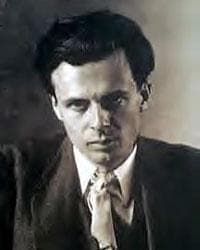
Aldous Leonard Huxley was an English writer and philosopher. His bibliography spans nearly 50 books, including novels and non-fiction works, as well as essays, narratives, and poems.
Similar books
- Nineteen Eighty-Four
George Orwell
4.2 (5.5M) average on GoodreadsFictionExplores totalitarian control and the suppression of individuality in a dystopian future.
- Fahrenheit 451
Ray Bradbury
4.0 (1.7M) average on GoodreadsFantasyFeatures a society where intellectualism and true emotion are suppressed for manufactured happiness.
- The Handmaid's Tale
Margaret Atwood
4.1 (1.5M) average on GoodreadsFantasyPresents a chilling vision of a future society with strict social hierarchies and control over individuals.
- Harry Potter and the Sorcerer's Stone
J.K. Rowling
4.5 (7M) average on GoodreadsFantasyRescued from a miserable life under the stairs, an orphaned boy discovers he's a wizard destined for a magical school, where he uncovers a dangerous secret tied to the dark wizard who murdered his parents.
- The Hunger Games
Suzanne Collins
4.3 (6.4M) average on GoodreadsFantasyIn a future where children fight to the death on live television, Katniss Everdeen volunteers for the arena, turning a death sentence into a fight for survival and a spark of rebellion.
- 1984
George Orwell
4.2 (3.1M) average on GoodreadsPoliticsIn a future where surveillance and thought control are absolute, a man's search for truth clashes with the Party, showing that hope can be a form of rebellion.






Enjoyed the summary?
A summary gives you the shape of the book. The book itself has the detail, the examples and the voice.
Find Brave New World on AmazonAs an Amazon Associate, BookBrief earns from qualifying purchases. How we're funded