
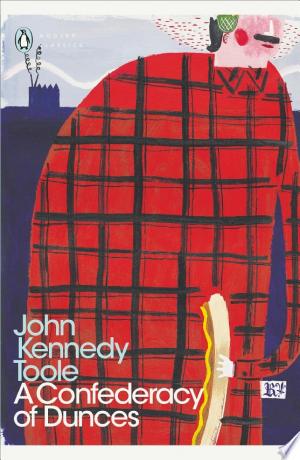

Estimated read time: 9 min read
One Sentence Summary
An eccentric, lazy, and opinionated man named Ignatius J. Reilly stumbles through a series of comic misadventures in 1960s New Orleans, clashing with society at every turn.
Table of Contents
Introduction
Welcome to the wild, weird, and wickedly funny world of A Confederacy of Dunces by John Kennedy Toole. This cult classic, set in the vibrant chaos of 1960s New Orleans, is a rollicking ride through eccentricity, misadventure, and biting social satire. The book’s hero—or more accurately, antihero—is Ignatius J. Reilly, a bombastic, over-educated, and outrageously opinionated medievalist who barrels through modern life like a bull in a china shop.
But A Confederacy of Dunces is more than just a comedic romp; it’s an exploration of alienation, ambition, and the absurdities of American society. Far from your typical campus novel, Toole’s masterpiece has earned a place in literary history for its unmatched humor, unforgettable characters, and tragic backstory. If you’ve ever felt out of step with the world, Ignatius might just be your spirit animal—or your worst nightmare.
Historical Context
New Orleans: A City of Contradictions
The novel is set in early 1960s New Orleans, a city famous for its jazz, food, and multicultural flair—and for its deep social divides. The civil rights movement is simmering, and the city is caught between tradition and change. Toole’s New Orleans is a place of faded grandeur, quirky characters, and class tensions, painted with loving, if satirical, detail.
The Tragic Genesis of a Masterpiece
John Kennedy Toole wrote A Confederacy of Dunces in the 1960s but faced repeated rejections from publishers. Heartbroken, Toole died by suicide in 1969. The novel might have been lost forever, but Toole’s mother, Thelma, championed the manuscript, eventually convincing novelist Walker Percy to read it. Published in 1980, the novel went on to win the Pulitzer Prize for Fiction in 1981 and is now considered a modern classic.
Brief Synopsis
Plot Overview
Ignatius J. Reilly is a 30-year-old man-child living with his mother in New Orleans. Possessed of a formidable intellect and an even more formidable waistline, Ignatius considers himself the last bastion of taste and decency in a corrupt world. His life is upended when his mother’s car accident forces him to seek employment, plunging him into a series of bizarre jobs and even stranger encounters.
Along the way, Ignatius crosses paths with a motley crew of characters: a hapless hot dog vendor, a neurotic strip club owner, a socialist girlfriend, and more. Each episode is a riot of misunderstandings, misadventures, and social commentary.
Setting
The action unfolds across New Orleans: from the French Quarter’s raucous streets to the dingy offices of the Levy Pants Company, to the chaotic world of the Night of Joy bar. The city is both backdrop and character, its quirks and contradictions fueling the novel’s humor and pathos. The atmosphere is humid, lively, and tinged with melancholy—a perfect stage for Ignatius’s theatrical antics.
Main Characters
Here’s a quick guide to the novel’s unforgettable cast:
| Name | Role | Key Traits | Importance to Plot |
|---|---|---|---|
| Ignatius J. Reilly | Protagonist | Eccentric, erudite, lazy, self-righteous | Drives the plot; his misadventures shape the story |
| Irene Reilly | Ignatius’s mother | Worried, alcoholic, well-meaning | Forces Ignatius to get a job; catalyst for action |
| Myrna Minkoff | Ignatius’s pen pal/girlfriend | Activist, outspoken, intellectual | Ignatius’s foil and motivator |
| Lana Lee | Bar owner | Scheming, exploitative, suspicious | Antagonist; Night of Joy subplot |
| Dorian Greene | Party-throwing socialite | Flamboyant, mischievous | Adds comic chaos; exposes Ignatius |
| Jones | Bar porter | Cynical, streetwise, sardonic | Observes and comments on injustice |
| Mr. Gonzalez | Office manager | Nervous, indecisive, rule-bound | Represents bureaucratic frustration |
| Santa Battaglia | Family friend | Loud, brash, opinionated | Comic relief; supports Irene |
| Claude Robichaux | Railroad worker | Earnest, justice-minded | Irene’s suitor; seeks fairness |
| Mrs. Trixie | Elderly office worker | Senile, stubborn, confused | Symbolizes workplace futility |
Plot Summary
Part I: Ignatius at Home
Meet Ignatius J. Reilly, a medievalist trapped in the 20th century. He spends his days writing scathing journal entries, scarfing down hot dogs, and arguing with his beleaguered mother. When Irene crashes their car, the resulting debt forces Ignatius into the workforce—a development he greets with apocalyptic despair.
Part II: Levy Pants and the Art of Sabotage
Ignatius lands a job at the decrepit Levy Pants Company, where his medieval sensibilities clash hilariously with modern office routines. He attempts to “liberate” the overworked factory workers, orchestrating a disastrous uprising that gets him fired. The farce is complete with bumbling managers, an elderly office worker who can’t remember her job, and Ignatius’s own overblown sense of purpose.
Part III: The Hot Dog Cart Debacle
Next, Ignatius becomes a hot dog vendor, a gig that goes about as well as you’d expect. He eats most of the merchandise, gets into public arguments, and invents elaborate justifications for his failures. His flamboyant presence quickly draws the attention—and ire—of the neighborhood.
Part IV: Night of Joy and the Web of Schemes
Ignatius’s misadventures intertwine with the world of the Night of Joy bar, run by the conniving Lana Lee. Here, Jones, a sardonic porter, plots escape from his exploitative boss. A subplot involving a pornography ring and police corruption further complicates the action, as various schemes collide in a hilarious crescendo.
Part V: Myrna, Mayhem, and Resolution
Throughout the novel, Ignatius corresponds with his radical ex-girlfriend, Myrna Minkoff. Their letters are a battle of wits, with each convinced the other is hopelessly misguided. Myrna’s eventual arrival in New Orleans sets the stage for the book’s unpredictable climax—a blend of chaos, catharsis, and a glimmer of hope for Ignatius.
Themes and Motifs
The Misfit and Modernity
Ignatius is a man out of time—obsessed with medieval philosophy, appalled by modern vulgarity. His struggle is a comic but poignant take on the alienation many feel in a changing world.
Satire of American Society
Toole skewers everything: consumerism, bureaucracy, class, race, and the American Dream itself. No one escapes unscathed, from clueless managers to overzealous activists.
The Absurdity of Existence
Life in A Confederacy of Dunces is one long, surreal farce. The novel’s events often spiral from the ridiculous to the sublime, highlighting the randomness and unpredictability of fate.
Alienation and Yearning
Despite his bluster, Ignatius is deeply lonely, longing for understanding and connection. His letters to Myrna—and his fraught relationship with his mother—reveal a vulnerability beneath the bombast.
Social Injustice
Through characters like Jones, Toole critiques racial and economic exploitation, exposing the casual cruelty of those in power.
Motifs
- Hot dogs: Symbolize Ignatius’s indulgence and failures.
- Medievalism: A lens through which Ignatius views the world, highlighting his alienation.
- Letters: Offer insight into characters’ psyches and drive plot development.
Literary Techniques and Style
Narrative Structure
Toole employs a third-person omniscient narrative, allowing him to leap between the minds of various characters. This creates a rich tapestry of voices, each with their own quirks and agendas.
Humor and Satire
The novel is, above all, uproariously funny. Toole’s wit ranges from slapstick to sharp social commentary. Ignatius’s grandiose speeches, misadventures, and misunderstandings are balanced by moments of genuine pathos.
Characterization
Characters are vivid, larger-than-life, yet grounded in real human foibles. Toole’s genius lies in making even the most outlandish figures feel relatable.
Dialogue
Dialogue crackles with regional color and personality. New Orleans comes alive through its voices—whether it’s Irene’s anxious drawl or Jones’s streetwise sarcasm.
Symbolism
- Ignatius’s pyloric valve: A running gag, it symbolizes his hypochondria and disconnect from reality.
- The Night of Joy bar: Represents the seedy underbelly of the city and the blurred lines between respectability and vice.
Author's Background
John Kennedy Toole: A Tragic Genius
Toole was born in 1937 in New Orleans. A prodigy, he earned degrees from Tulane and Columbia and taught English at various colleges. Despite his talent, Toole struggled with depression and professional setbacks. His inability to publish A Confederacy of Dunces contributed to his suicide at age 31.
Posthumous Success
Toole’s mother, Thelma, became the novel’s champion, ultimately securing its publication with Walker Percy’s help. The book’s Pulitzer Prize win is both a triumph and a bittersweet coda to Toole’s life.
Legacy
Toole’s singular voice has inspired generations of writers and readers. A Confederacy of Dunces is hailed as a masterpiece of American humor, a meditation on alienation, and a love letter to New Orleans.
Key Takeaways
- Ignatius J. Reilly is one of literature’s most memorable (and maddening) antiheroes.
- The novel is a biting satire of American society, skewering everything from bureaucracy to bohemian culture.
- Toole’s love-hate relationship with New Orleans shines through, capturing the city’s beauty and absurdity.
- Themes of alienation, longing, and the search for meaning resonate beneath the humor.
- A Confederacy of Dunces is a testament to the power of resilience—both in its hero’s stubborn survival and in its author’s posthumous triumph.
Reader’s Takeaway
Reading A Confederacy of Dunces is like attending a Mardi Gras parade with nowhere to go but everywhere. You’ll laugh, cringe, and maybe even see yourself in its cast of misfits. For students, it’s a lesson in satire, character, and the art of comic timing. For lecturers, it’s a treasure trove of discussion topics: What does it mean to be an outsider? How do humor and tragedy intertwine? Why do we root for deeply flawed heroes?
But above all, the novel reminds us that life is messy, unpredictable, and frequently absurd—and that sometimes, the best we can do is laugh along.
Conclusion
A Confederacy of Dunces is a wild, unmissable carnival of a novel. It’s a celebration of the weird, the wonderful, and the woeful. Toole’s masterpiece invites us to question our own assumptions, to find humor in hardship, and to embrace the beautiful chaos of life. Whether you’re a student, a lecturer, or simply a lover of great literature, this book will challenge, delight, and haunt you long after the final page.
So grab a hot dog, brace yourself for Ignatius’s rants, and dive into New Orleans as you’ve never seen it before. You’ll be glad you did—and you just might find a bit of Ignatius in yourself.
A Confederacy of Dunces FAQ
What is 'A Confederacy of Dunces' about?
'A Confederacy of Dunces' is a comedic novel set in 1960s New Orleans that follows the eccentric and slothful Ignatius J. Reilly as he navigates a series of misadventures, interactions with oddball characters, and his tumultuous relationship with his mother.
Who is the main character in the novel?
The main character is Ignatius J. Reilly, an overweight, highly educated, and eccentric man who lives with his mother and has a unique perspective on the world.
What genre is 'A Confederacy of Dunces'?
The novel is primarily a comedic satire that also incorporates elements of picaresque and Southern Gothic literature.
Who wrote 'A Confederacy of Dunces' and when was it published?
The book was written by John Kennedy Toole and was published posthumously in 1980.
Why is 'A Confederacy of Dunces' considered a classic?
The book is celebrated for its memorable characters, witty and satirical prose, vivid depiction of New Orleans, and sharp social commentary, making it a unique and influential work in American literature.
Did 'A Confederacy of Dunces' win any major awards?
Yes, it won the Pulitzer Prize for Fiction in 1981.
What inspired the title of the novel?
The title comes from a quote by Jonathan Swift: 'When a true genius appears in the world, you may know him by this sign, that the dunces are all in confederacy against him.'
Is 'A Confederacy of Dunces' based on real events?
No, the book is a work of fiction, though it draws heavily on the culture and atmosphere of New Orleans.
How was the book published after the author's death?
John Kennedy Toole's mother, Thelma Toole, championed the unpublished manuscript after her son's death, eventually convincing author Walker Percy to help get it published.
Who would enjoy reading 'A Confederacy of Dunces'?
Fans of satirical, character-driven novels, those interested in the eccentricities of New Orleans, or readers who appreciate dark humor and social commentary would enjoy this book.



