

Synopsis
Covers the whole plot, including the ending.
- Difficulty
- Medium
- Pacing
- Moderate
- Mood
- Absurdist, Satirical, Humorous, Chaotic, New Orleans-centric
- Read it if
- You enjoy satirical, character-driven literary fiction with a strong sense of place and a protagonist you love to hate.
- Skip it if
- You prefer fast-paced plots, sympathetic characters, or stories with clear moral lessons.
A Confederacy of Dunces Plot Summary
Covers the whole plot, including the ending.
The Duality of Man (and Hot Dogs)
The novel opens with Ignatius J. Reilly, an obese, self-proclaimed genius and medievalist, waiting under the clock at D.H. Holmes department store on Canal Street, observed by a police officer. Ignatius is dressed in an old-fashioned hunting cap and tweed jacket, clutching a Big Chief tablet where he records his observations on modern society's decline. His mother, Irene Reilly, arrives, and a heated argument starts about Ignatius's lack of employment and his general laziness. The police officer, Patrolman Mancuso, tries to intervene, leading to a funny chase and Ignatius's mother threatening to have him arrested. This public scene ends with Mrs. Reilly declaring that Ignatius must get a job to pay for the damages he caused, setting the stage for his reluctant entry into the working world.
The Levy Pants Debacle
Reluctantly, Ignatius gets a job at Levy Pants, a struggling garment factory owned by Gus Levy. His role is initially to inspect pants, but he quickly reinterprets his duties, seeing himself as an intellectual provocateur sent to reform the company's unethical practices. He begins writing subversive letters to Gus Levy, accusing him of exploitation and moral decay, and tries to unionize the Black factory workers, especially Miss Trixie, an elderly, senile employee. Ignatius's actions, including his attempts to organize a worker's revolution and his general disruptive behavior, lead to chaos and a significant decline in productivity. His time at Levy Pants is short and ends in his dramatic dismissal, much to the relief of the bewildered management.
The Night of the Pirate's Booty
After his dismissal from Levy Pants, Ignatius takes a job selling hot dogs from a cart, dressed in a pirate costume, for Lana Lee, the owner of the Night of Joy bar. He sees this new role as a chance to observe the depravity of the modern world firsthand. However, his eccentric behavior and the unsanitary conditions of his cart, combined with his constant philosophical musings to unsuspecting customers, make him an ineffective vendor. Meanwhile, Lana Lee is running a pornographic photography ring from the Night of Joy, exploiting Burma Jones, a Black employee, to distribute the illicit materials. Ignatius's presence accidentally creates more problems for Lana, as his self-righteous statements and meddling disrupt her illegal operations.
Myrna Minkoff's Return and the Call to Action
Myrna Minkoff, Ignatius's former college acquaintance and self-proclaimed radical, arrives in New Orleans from New York. Myrna represents everything Ignatius outwardly dislikes: modernism, social activism, and a lack of 'theology and geometry.' Despite their constant intellectual arguments through letters, Myrna believes Ignatius is a kindred spirit and tries to recruit him for various social causes, including a protest against the exploitation of homosexuals. Ignatius, however, cares more about his own comfort and philosophical pursuits, mostly dismissing Myrna's earnest attempts to get him involved in direct action. Her arrival highlights Ignatius's hypocrisy and his preference for armchair rebellion over actual engagement.
The Night of Joy's Downfall
Patrolman Mancuso, determined to prove his worth after a series of mistakes, is working undercover at the Night of Joy, trying to expose Lana Lee's pornography ring. He eventually gathers enough evidence to organize a raid on the bar. The raid is chaotic, involving various eccentric characters, including Ignatius, who is present, and Burma Jones, who is caught in the crossfire. Lana Lee's operation is shut down, and she is arrested. This event leads to the scattering of several characters and further complicates Ignatius's already tumultuous life, as he is now without a job and accidentally involved in the criminal underworld he claims to despise.
Mancuso's Redemption
After his successful raid on the Night of Joy, Patrolman Mancuso, who had been relegated to working in the men's room at the bus station due to his incompetence, is finally reinstated to active duty. His capture of Lana Lee and the dismantling of her pornography ring earns him the respect of his superiors and a renewed sense of self-worth. Mancuso's journey throughout the novel is one of constant humiliation and striving for recognition, and this event marks a turning point for him, allowing him to escape the cycle of failure and ridicule that had plagued him. His success contrasts with Ignatius's continued misfortunes.
Ignatius's Grand Scheme for a New Party
Following his dismissal from Lana Lee's employ, Ignatius tries to form a new political party among the Black workers of New Orleans, especially those from the Levy Pants factory and the Night of Joy. He writes a manifesto outlining his vision for a return to medieval values and a rejection of modern industrialism. He tries to enlist Burma Jones and other workers, promising them a utopian society free from exploitation. However, his efforts are met with confusion and skepticism, as the workers are more concerned with practical matters like wages and working conditions than with Ignatius's abstract philosophical ideals. His grand scheme ultimately fails to gain any traction.
The Fortune Teller and the Prophecy
Ignatius, increasingly desperate and paranoid about his mother's threats to commit him to a mental institution, visits a fortune teller named Miss Inez. Miss Inez, a rather unconvincing psychic, gives Ignatius a vague and unsettling prophecy that reinforces his existing anxieties about his fate and the forces conspiring against him. The encounter further fuels his belief in a grand, malevolent conspiracy and strengthens his resolve to escape his perceived persecutors. This episode shows Ignatius's tendency to interpret external events through the lens of his own elaborate inner world and his deep-seated fear of losing control.
The Plot to Commit Ignatius
Driven to her wit's end by Ignatius's continued laziness, insolence, and the financial burden he represents, Mrs. Reilly, with the encouragement of her suitor Claude Robichaux and the advice of Dr. Talc, begins to seriously consider having Ignatius committed to a mental institution. She gathers evidence of his erratic behavior, including his bizarre writings and public outbursts. This plot is the culmination of Mrs. Reilly's frustration and her desperate attempt to regain control of her life and escape Ignatius's oppressive presence. The impending commitment hangs over Ignatius, creating a sense of urgency and threat.
Myrna's Intervention and the Escape
As Mrs. Reilly prepares to have Ignatius committed, Myrna Minkoff, having received a frantic letter from Ignatius detailing his predicament, arrives to intervene. Myrna, despite her constant disagreements with Ignatius, believes he is being unfairly persecuted and organizes his escape. She helps him pack his belongings, including his cherished Big Chief tablets, and arranges for him to leave New Orleans with her. This dramatic rescue is a key moment, as it offers Ignatius a chance to escape his mother's clutches and the impending institutionalization, though it means leaving behind the familiar, albeit despised, world of New Orleans.
The Open Road and an Uncertain Future
Ignatius, with Myrna's help, makes a hasty escape from New Orleans, leaving behind his mother, Claude Robichaux, and the city he both loved and loathed. He is driven away in Myrna's car, clutching his Big Chief tablets and contemplating his uncertain future. The novel ends with Ignatius on the open road, his fate linked with Myrna's, suggesting a continuation of their intellectual battles and a new chapter in his life, though one he approaches with his characteristic blend of disdain and self-pity. This ambiguous ending leaves the reader to ponder whether Ignatius will ever truly change or if he is destined to remain a 'confederacy of dunces' unto himself, perpetually at odds with the modern world.
Principal Figures
Ignatius J. Reilly
Protagonist
An obese, intellectual, and anachronistic medievalist living in New Orleans.
Ignatius is the central figure, a colossal man consumed by his own intellect and an unwavering disdain for modernity. He believes himself to be a brilliant philosopher, a last bastion of medieval values in a world of 'dunces.' He is a walking contradiction: deeply learned yet utterly impractical, a self-proclaimed revolutionary who is terrified of change, and fiercely independent yet completely dependent on his mother. He spends his days writing his magnum opus on Big Chief tablets, railing against popular culture, capitalism, and anything he deems 'degenerate.' His physical appearance reflects his internal chaos: he is morbidly obese, prone to flatulence, and often suffers from various psychosomatic ailments, particularly his 'valve' which closes when stressed.
Relationships: Irene Reilly (Dependent son, constant antagonist); Myrna Minkoff (Intellectual sparring partner, reluctant savior); Burma Jones (Unwitting pawn in Ignatius's schemes, victim of his prejudice); Lana Lee (Employer, object of his disdain)
Irene Reilly
Supporting
Ignatius's long-suffering and increasingly exasperated mother.
Mrs. Reilly is a widow in her late fifties, perpetually frustrated by her indolent and demanding son. She loves Ignatius in her own way but is constantly at odds with his bizarre behavior, his refusal to work, and his financial drain on her meager resources. She is a simple woman who enjoys her television and occasional social outings, but her life is dominated by Ignatius's needs and eccentricities. Her patience wears thin throughout the novel, leading her to increasingly desperate measures, including threatening to commit him to a mental institution. She represents the exasperated 'normal' world trying to cope with Ignatius's abnormality.
Relationships: Ignatius J. Reilly (Mother, constant antagonist); Claude Robichaux (Suitor, potential escape from Ignatius); Santa Battaglia (Friend, confidante)
Myrna Minkoff
Supporting
Ignatius's radical, intellectual, and sexually liberated college acquaintance.
Myrna is Ignatius's long-distance intellectual sparring partner, an outspoken feminist, Marxist, and social activist from New York. She represents everything Ignatius claims to despise about modernism and progressive thought, yet he maintains a voluminous correspondence with her. Myrna genuinely believes in social justice and attempts to draw Ignatius into various causes, seeing him as a fellow intellectual, despite his reactionary views. She is confident, articulate, and often the voice of reason (or at least, a different kind of reason) in contrast to Ignatius's self-absorbed rants. Her eventual arrival in New Orleans is a catalyst for the novel's climax.
Relationships: Ignatius J. Reilly (Intellectual sparring partner, eventual rescuer)
Patrolman Mancuso
Supporting
An incompetent and unlucky police officer desperately trying to prove himself.
Mancuso is a well-meaning but utterly inept police officer who is constantly being humiliated and demoted by his superior, Sergeant Guidry. He is prone to making mistakes and often finds himself in absurd situations, such as being forced to work undercover in a gay bar. Mancuso yearns for respect and a sense of purpose, often concocting elaborate schemes to catch criminals, which invariably backfire. His journey is one of continuous failure and striving for redemption, making him a sympathetic figure despite his professional shortcomings. He serves as a foil to Ignatius, representing a different kind of 'dunces' in the modern world.
Relationships: Sergeant Guidry (Superior officer, source of humiliation); Lana Lee (Target of his investigation)
Lana Lee
Supporting
The proprietor of the seedy Night of Joy bar and a pornographer.
Lana Lee is a cynical and opportunistic woman who runs the Night of Joy, a dive bar frequented by an eclectic mix of misfits and outcasts. She also secretly operates a pornographic photography business, exploiting her employees, particularly Burma Jones, to distribute her illicit materials. Lana is hardened by life, pragmatic, and entirely focused on her own survival and profit. She views Ignatius as a nuisance but hires him out of desperation. Her character embodies the seedier, more exploitative side of New Orleans, against which Ignatius rails, often hypocritically. Her eventual arrest brings about a significant plot development.
Relationships: Ignatius J. Reilly (Employer, source of frustration); Burma Jones (Employee, victim of exploitation); Patrolman Mancuso (Investigator, antagonist)
Burma Jones
Supporting
A black employee at the Night of Joy, exploited by Lana Lee.
Burma Jones is a black man who works at the Night of Joy, constantly struggling to make ends meet and avoid being exploited. He is street-smart and resourceful, often narrating his experiences in a distinct, unpunctuated stream of consciousness. Lana Lee forces him to distribute her pornographic photos, threatening him with job loss if he refuses. Burma's primary goal is to escape the cycle of poverty and exploitation, and he often expresses his desire for a better life. He is a victim of systemic racism and economic hardship, which Ignatius, in his self-absorbed way, fails to truly comprehend.
Relationships: Lana Lee (Employer, exploiter); Ignatius J. Reilly (Co-worker, object of his bewilderment)
Miss Trixie
Supporting
An elderly, senile employee at Levy Pants.
Miss Trixie is an ancient, nearly deaf, and senile woman who works at Levy Pants. She is a tragicomic figure, constantly falling asleep at her machine and being exploited by Gus Levy, who keeps her employed out of a misguided sense of charity or guilt. Ignatius attempts to 'save' her from her perceived exploitation, though his efforts only add to her confusion and distress. Her character highlights the absurdity of the factory environment and the different forms of exploitation present in the novel.
Relationships: Ignatius J. Reilly (Co-worker, misguided 'savior'); Gus Levy (Employer)
Claude Robichaux
Supporting
Mrs. Reilly's suitor and a practical, if somewhat dull, man.
Claude Robichaux is a kind, unassuming, and rather conventional man who develops a romantic interest in Mrs. Reilly. He is a widower who enjoys simple pleasures and offers Mrs. Reilly a potential escape from her burdensome life with Ignatius. He is practical and well-meaning but completely bewildered by Ignatius's eccentricities. He encourages Mrs. Reilly to take action against Ignatius, seeing him as an obstacle to their potential happiness. Claude represents the possibility of a normal, stable life that Mrs. Reilly craves.
Relationships: Irene Reilly (Suitor, potential partner)
Gus Levy
Supporting
The owner of Levy Pants, a struggling garment factory.
Gus Levy is the owner of Levy Pants, a once-thriving garment factory that is now in decline. He is a nervous and somewhat ineffectual businessman, constantly worried about his company's financial state and his wife's extravagant spending. He hires Ignatius out of desperation, hoping he can bring some new ideas to the company, only to be met with chaos and disruption. Gus is a symbol of the struggling small business owner trying to navigate a changing economic landscape, and his anxieties are exacerbated by Ignatius's presence.
Relationships: Ignatius J. Reilly (Employer, victim of his employee's antics); Miss Trixie (Employee)
Themes & Insights
The Decline of Modernity and the Search for Meaning
Ignatius J. Reilly is a firm critic of the modern world, which he sees as a 'confederacy of dunces.' He constantly rants against popular culture, capitalism, technology, and what he sees as a lack of 'theology and geometry.' His pursuit of a medieval ideal is a desperate attempt to find meaning and order in a world he views as chaotic and degenerate. However, his criticisms are often hypocritical, as he benefits from the very systems he condemns and fails to offer any practical solutions. This theme is clear in his Big Chief tablets, where he meticulously documents society's failings, and in his attempts to 'reform' Levy Pants, only to create more chaos.
“I am at the moment writing a lengthy indictment against our century. When my brain begins to reel from my literary labors, I make an occasional cheese dip.”
Indolence vs. Industry
A central tension in the novel is the conflict between Ignatius's extreme laziness and the societal expectation of work. Ignatius views manual labor and conventional employment with disdain, preferring to dedicate himself to philosophical contemplation and the writing of his 'magnum opus.' His various attempts at employment, such as his disastrous time at Levy Pants and his chaotic hot dog vending, highlight his complete unsuitability for the working world. This theme is also explored through characters like Burma Jones, who desperately seeks honest work, and Mrs. Reilly, who is burdened by Ignatius's refusal to contribute financially. The novel satirizes both the absurdity of Ignatius's laziness and the often soul-crushing nature of modern work.
“I am a walking anachronism, a medieval mind in a modern world.”
The Nature of Eccentricity and Madness
The novel constantly blurs the line between eccentricity, genius, and outright madness. Ignatius's bizarre behavior, his old-fashioned dress, his philosophical rants, and his psychosomatic ailments lead many to believe he is insane. His mother's attempts to commit him to an asylum underscore this. However, the novel also suggests that the 'normal' world around him is equally absurd and often more destructive. Characters like Patrolman Mancuso, Lana Lee, and even Mrs. Reilly show their own forms of eccentricity and irrationality. The theme questions what truly constitutes 'sanity' and whether Ignatius's unique perspective, however flawed, offers a different kind of truth about the world.
“I am not mad. I am merely a genius in a world of dunces.”
The Search for Identity and Self-Worth
Many characters in the novel are grappling with their identity and trying to find a sense of self-worth in a world that often dismisses them. Patrolman Mancuso desperately seeks respect and recognition as a competent police officer. Burma Jones struggles to maintain his dignity and independence in the face of exploitation. Even Mrs. Reilly tries to reclaim her own identity separate from her demanding son. Ignatius, despite his grandiose self-image, constantly seeks validation for his intellectual superiority, even as he alienates everyone around him. Their individual struggles highlight the universal human need for purpose and recognition.
“I will not be a victim, I will not be a victim.”
The Absurdity of Life
At its core, 'A Confederacy of Dunces' is a deeply absurd novel. The plot unfolds through a series of increasingly farcical events, coincidences, and misunderstandings. Ignatius's grandiose statements are constantly undermined by his physical reality and the mundane chaos of his life. The interactions between the various eccentric characters often devolve into slapstick and ludicrous situations, such as Ignatius's hot dog cart escapades or Mancuso's undercover assignments. The novel uses humor and exaggeration to highlight the inherent irrationality and meaninglessness that can be found in everyday existence, inviting the reader to laugh at the human condition.
“When the sun shines on the mustard, it's very cheerful.”
Plot Devices & Literary Techniques
The Big Chief Tablets
Ignatius's journals, serving as both his philosophical outlet and a characterization tool.
The Big Chief tablets are central to Ignatius's character. They are where he records his voluminous, rambling, and often contradictory philosophical musings, his 'magnum opus' on the decline of Western civilization. They serve as a window into his inner world, revealing his intellectual pretensions, his deep-seated prejudices, and his elaborate justifications for his indolence. The tablets also function as a plot device, as their contents are sometimes discovered or read by others, leading to misunderstandings or providing evidence of his 'madness.' They are a physical manifestation of his intellectual vanity and his detachment from reality.
The 'Valve'
Ignatius's psychosomatic ailment, a metaphor for his emotional and physical fragility.
Ignatius frequently complains of a 'valve' in his stomach that 'closes' when he experiences stress, anxiety, or emotional upset, causing him physical pain and discomfort. This 'valve' is a psychosomatic manifestation of his inability to cope with the modern world and his extreme sensitivity to anything that disrupts his carefully constructed inner peace. It acts as a convenient excuse for his inaction and a means of manipulating his mother. The 'valve' is a recurring motif that highlights Ignatius's hypochondria, his self-pity, and his profound psychological distress when confronted with reality.
The Hot Dog Cart and Pirate Costume
A symbol of Ignatius's absurd attempts at conformity and his theatrical nature.
When forced to work for Lana Lee, Ignatius is given a hot dog cart and a pirate costume. This combination is a potent symbol of his absurdity and his inability to fit into conventional roles. The pirate costume allows him to indulge his theatricality and his disdain for the mundane, while the hot dog cart, a symbol of capitalist enterprise, is something he openly despises. His attempts to sell hot dogs become a platform for his philosophical rants, further highlighting the comedic juxtaposition between his intellectual pretensions and his ludicrous circumstances. It also represents his temporary, and disastrous, integration into the working world.
The Correspondence with Myrna Minkoff
A literary device for intellectual debate and a precursor to plot developments.
The letters exchanged between Ignatius and Myrna Minkoff serve multiple purposes. They allow for lengthy intellectual debates and provide insight into their contrasting worldviews – Ignatius's medievalism versus Myrna's radical modernism. The letters also act as a narrative device, providing exposition about their past relationship and foreshadowing Myrna's eventual arrival in New Orleans. Crucially, Myrna's receipt of Ignatius's frantic letter about his mother's plans to commit him is what ultimately prompts her intervention and the novel's climax. The letters highlight Ignatius's need for an intellectual foil, even one he constantly disparages.
A Confederacy of Dunces Quotes
“I am at the moment writing a lengthy indictment against our century. When my brain begins to reel from my literary labors, I make an extra-strong Martini and smoke a cigarette.”
“When a true genius appears in the world, you may know him by this sign, that the dunces are all in confederacy against him.”
“I am a man of taste and sensibility. I am not a savage. I have a soul.”
“My mind has been corrupted by a steady diet of trash.”
“The only thing that held him back from a life of pure hedonism was the constant nagging of his conscience, which he had named 'Thelma.'”
“Oh, my God, what a world! What a world! I am going to have to do something about this.”
“He was a walking anachronism, a medieval mind in a modern world.”
“I demand to be taken seriously!”
“The hot dog man, Gus, was doing a brisk business.”
“He had a way of turning every conversation into a philosophical debate, usually about the decline of Western civilization.”
“Perhaps I shall found an order of the new knighthood, or rather, the old knighthood revived.”
“Life is a forest of mediocrity and decay.”
“My mother is going to have a stroke.”
“I am a victim of the times.”
“The entire system is a fraud.”
Quiz
10 questions on the plot and the characters. Each answer comes with a short explanation.
Question 1
What is the primary reason Ignatius J. Reilly is forced by his mother to seek employment?
- To fund his research into medieval philosophy.
- To pay off a debt incurred by a traffic accident.
- To contribute to household expenses after his mother loses her own job.
- To socialize and become a more well-rounded individual.
Show answer
B. To pay off a debt incurred by a traffic accident. Ignatius's mother insists he get a job to pay for the damages and fines resulting from a traffic accident he caused.
Question 2
What kind of headwear does Ignatius J. Reilly frequently wear, which is a distinctive part of his appearance?
- A beret
- A deerstalker cap
- A green hunting cap with earflaps
- A fedora
Show answer
C. A green hunting cap with earflaps Ignatius is almost always described wearing his distinctive green hunting cap with earflaps, even indoors.
Question 3
Which of the following describes Ignatius J. Reilly's primary philosophical complaint about the modern world?
- The lack of appreciation for classical music.
- The decline of morality and the absence of a structured, medieval worldview.
- The overreliance on technology and automation.
- The deterioration of the English language.
Show answer
B. The decline of morality and the absence of a structured, medieval worldview. Ignatius constantly laments the moral decay and the shift away from what he perceives as the order and piety of the Middle Ages, which he frequently references in his internal monologues and rants.
Question 4
At which establishment does Ignatius initially find employment, pushing a hot-dog cart?
- Paradise Hot Dogs
- Lucky Dog stands
- Frank's Franks
- Crescent City Wieners
Show answer
A. Paradise Hot Dogs Ignatius's first job, after his mother forces him to work, is at Paradise Hot Dogs, where he is given a pirate costume and a hot-dog cart.
Question 5
What is the name of the strip club where Burma Jones is employed and spies for Lana Lee?
- The Blue Dahlia
- The Night of Joy
- The Gilded Lily
- The Velvet Curtain
Show answer
B. The Night of Joy Burma Jones works at The Night of Joy, a seedy strip club owned by Lana Lee, where he is paid to report on the dancers' activities.
Question 6
What is the main function of the 'Crusade for Moorish Dignity' that Ignatius attempts to organize?
- To protest against the mistreatment of African American workers.
- To advocate for the preservation of historical architecture.
- To incite a rebellion among factory workers against their capitalist employers.
- To promote the study of medieval Islamic culture.
Show answer
C. To incite a rebellion among factory workers against their capitalist employers. Ignatius uses his position at Levy Pants to distribute revolutionary pamphlets and attempt to organize the factory workers into a 'Crusade for Moorish Dignity,' which is essentially a communist-inspired uprising.
Question 7
What is Myrna Minkoff's primary role in Ignatius's life, despite her physical absence for most of the novel?
- She is a romantic interest Ignatius secretly pines for.
- She is a pen pal and intellectual foil with whom Ignatius frequently exchanges letters, debating their differing worldviews.
- She is a former professor who greatly influenced Ignatius's philosophical development.
- She is a relative who often sends Ignatius money.
Show answer
B. She is a pen pal and intellectual foil with whom Ignatius frequently exchanges letters, debating their differing worldviews. Myrna Minkoff is Ignatius's long-standing intellectual sparring partner, with whom he exchanges letters that reveal much about his philosophy and grievances.
Question 8
What is the ultimate fate of the factory, Levy Pants, after Ignatius's brief employment there?
- It is successfully unionized by the workers.
- It is bought out by a larger corporation.
- It goes out of business due to financial mismanagement and the chaos Ignatius caused.
- It becomes a cooperative owned by the employees.
Show answer
C. It goes out of business due to financial mismanagement and the chaos Ignatius caused. Due to Ignatius's disruptive presence, his attempts at organizing the workers, and the ensuing chaos, Levy Pants ultimately fails and is forced to close down.
Question 9
What unique physical characteristic does Patrolman Mancuso exhibit?
- He has a prosthetic leg.
- He frequently falls asleep while on duty.
- He often has to hide in various places to avoid being seen by his captain.
- He compulsively cleans his uniform.
Show answer
C. He often has to hide in various places to avoid being seen by his captain. Patrolman Mancuso is constantly trying to avoid his captain, who is always looking for him, leading Mancuso to hide in places like the bus terminal restroom.
Question 10
By the end of the novel, what action does Ignatius's mother attempt to take regarding his behavior and living situation?
- She decides to move out and live with a relative.
- She enrolls him in a vocational training program.
- She tries to have him committed to a mental institution.
- She forces him to move to another city to start fresh.
Show answer
C. She tries to have him committed to a mental institution. Driven to her wit's end by Ignatius's behavior and the chaos he creates, Mrs. Reilly eventually decides to have him committed to a mental asylum.
A Confederacy of Dunces FAQ
What is the central conflict driving Ignatius J. Reilly's adventures in New Orleans?
Ignatius J. Reilly, a self-proclaimed intellectual and medievalist, believes he is on a noble crusade against the modern world's vice, ignorance, and lack of theological understanding. His central conflict arises when his long-suffering mother, Irene Reilly, forces him to get a job after they incur damages in a bus accident, disrupting his carefully constructed life of indolence and philosophical rumination in his bedroom.
Who are some of the key supporting characters Ignatius interacts with, and how do they challenge him?
Ignatius interacts with a diverse cast, including the downtrodden burlesque dancer Myrna Minkoff, his intellectual nemesis and former lover; Miss Trixie, an elderly, exploited office worker; and Burma Jones, a Black worker at the Night of Joy bar. These characters often challenge Ignatius's worldview, either by embodying the 'modern' he despises, or by being victims of the very society he criticizes, yet through their own distinct struggles.
What are Ignatius's two primary jobs throughout the novel, and how does he perform them?
Ignatius first works at Levy Pants, a failing pajama factory, where he tries to incite a worker's revolution by writing incendiary letters. He then takes a job as a hot dog vendor for Lana Lee's 'Paradise Vendors,' where he dresses in a pirate costume and uses his cart to sell not just hot dogs, but also to further his 'crusade' by handing out pamphlets and moralizing to customers.
How does the city of New Orleans function as more than just a setting in the novel?
New Orleans is almost a character itself, with its vibrant, decaying, and often absurd atmosphere reflecting the chaos and 'degeneracy' Ignatius rails against. The city's unique blend of historical charm, poverty, diverse subcultures, and general eccentricity provides the perfect backdrop for Ignatius's anachronistic worldview and the various 'dunces' he encounters.
What is the significance of the title 'A Confederacy of Dunces'?
The title, a quote from Jonathan Swift, refers to the idea that when true genius (like Ignatius perceives himself) appears in the world, all the 'dunces' conspire against it. It encapsulates Ignatius's self-important belief that he is an enlightened individual surrounded by a world of fools who fail to appreciate his intellectual superiority and moral insights.
Are there any subtle allusions to Don Quixote beyond the obvious comparison in the book's description?
Beyond the direct comparison, Ignatius's perception of himself as a noble knight battling modern windmills (like the Levy Pants factory or the Night of Joy bar) mirrors Quixote's delusional chivalry. His 'quest' is often self-imposed and misdirected, and his attempts to 'right wrongs' frequently cause more harm than good, much like his Spanish literary predecessor.
What is the significance of Ignatius's physical ailments, such as his pyloric valve, in relation to his personality?
Ignatius frequently complains about his 'pyloric valve,' attributing his various discomforts and anxieties to its supposed malfunctions. This serves as a psychosomatic manifestation of his inability to 'digest' or cope with the modern world. His physical complaints become an excuse for his indolence and a dramatic tool to elicit sympathy or manipulate his mother.
How do the various subplots, such as Patrolman Mancuso's plainclothes assignments or Dorian Greene's party, subtly comment on societal expectations?
Patrolman Mancuso's forced plainclothes assignments highlight the absurdity of bureaucratic systems and the struggle of individuals to conform to arbitrary rules. Dorian Greene's decadent party and his search for the 'perfect' boy subtly critique superficiality and the commodification of relationships, contrasting sharply with Ignatius's rigid moral code, yet both revealing different forms of societal dysfunction.
What is the underlying psychological motivation behind Ignatius's extreme sloth and his constant need for a captive audience?
Ignatius's sloth can be interpreted as a defense mechanism against a world he finds overwhelming and morally corrupt, allowing him to maintain a sense of intellectual superiority without engaging. His constant need for an audience, whether his mother or unsuspecting strangers, stems from a deep-seated narcissism and a desire for validation for his elaborate, often anachronistic, worldview.
How does Ignatius's relationship with his mother, Irene, reflect a deeper psychological dynamic?
Their relationship is a classic example of codependency, characterized by Irene's enabling and Ignatius's manipulative dependency. Ignatius psychologically exploits his mother's guilt and anxieties, while Irene, despite her complaints, finds a perverse sense of purpose in caring for and complaining about her demanding son, maintaining a dysfunctional equilibrium.
To what extent is Ignatius's 'crusade' a genuine philosophical pursuit versus a manifestation of his own neuroses?
While Ignatius possesses genuine intellectual capacity and a vast knowledge of medieval philosophy, his 'crusade' is largely a manifestation of his neuroses. His philosophical arguments often serve as rationalizations for his personal failures, anxieties, and inability to adapt to the modern world, rather than being a consistent or truly altruistic pursuit of truth.
How does the character of Myrna Minkoff serve as a psychological foil to Ignatius?
Myrna Minkoff, with her radical left-wing views and sexual liberation, acts as Ignatius's primary psychological foil. She represents everything he despises about modernism and liberalism, yet she also mirrors his intellectual arrogance and self-righteousness. Their long-distance correspondence highlights their shared, albeit opposing, intellectual elitism and their inability to truly connect with others.
Is Ignatius J. Reilly meant to be a sympathetic character, or is he purely an object of satire?
Ignatius is largely an object of satire, designed to expose the absurdities of intellectual pretension and misanthropy. However, many readers find a strange, begrudging sympathy for him due to his vulnerability, his occasional flashes of insight, and the sheer force of his unique personality, making him a complex figure rather than purely a caricature.
What is the novel's ultimate message about intellectualism versus common sense?
The novel suggests a critical view of intellectualism divorced from common sense and empathy. Ignatius, despite his vast knowledge, is utterly impractical and destructive. In contrast, many of the 'dunces' he despises, like Burma Jones or Gus Levy, possess a street smarts and resilience that allow them to navigate the world more effectively, implying that practical wisdom often trumps theoretical knowledge.
How does the tragic backstory of John Kennedy Toole, the author, influence the interpretation of the novel's ending?
Knowing that John Kennedy Toole committed suicide after failing to get the novel published adds a layer of poignancy and tragedy to the book's relatively hopeful, if ambiguous, ending for Ignatius. It suggests a tragic irony, as the author's own despair stands in stark contrast to Ignatius's escape, making readers reflect on the thin line between the author's personal struggles and the fictional world he created.
Is there a definitive 'winner' in the ideological battle between Ignatius and the modern world he despises?
There is no definitive 'winner.' Ignatius is rescued from institutionalization by Myrna, seemingly escaping the immediate consequences of his actions, but he remains unchanged in his core beliefs. The modern world, despite his efforts, continues unabated. The novel suggests a stalemate, where individual eccentricity persists despite, or perhaps because of, societal pressures.
What is the significance of the recurring motif of food and Ignatius's eating habits?
Food is a central motif, symbolizing Ignatius's gluttony, his indulgence, and his inability to control his appetites, both literal and metaphorical. His elaborate descriptions of food and his constant consumption, often unhealthy, reflect his general excess and his physical manifestation of his disdain for a disciplined, modern existence. It also ties into his 'pyloric valve' complaints.
How does the novel satirize different facets of New Orleans society beyond just Ignatius?
The novel satirizes various aspects of New Orleans society: the exploitation of workers at Levy Pants, the seedy underbelly of the French Quarter with Lana Lee's burlesque bar and pornography ring, the incompetence of the police force through Patrolman Mancuso, and the superficiality of certain artistic and intellectual circles. Each character and setting reveals a distinct societal flaw.
About the author

John Kennedy Toole was an American novelist from New Orleans, Louisiana, whose posthumously published novel, A Confederacy of Dunces, won the Pulitzer Prize for Fiction in 1981; he also wrote The Neon Bible. Although several people in the literary world felt his writing skills were praiseworthy, Toole's novels were rejected during his lifetime. Due in part to these failures, he suffered from paranoia and depression, dying by suicide at the age of 31.
Similar books
- Catch-22
Joseph Heller
4.0 (723k) average on GoodreadsHistorical FictionShares a darkly comedic, satirical tone and a cast of eccentric characters navigating an absurd system.
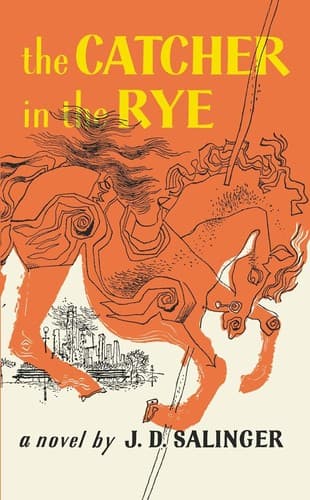
- The Catcher in the Rye
J.D. Salinger
3.8 (2.7M) average on GoodreadsYoung AdultBoth novels feature highly opinionated, alienated protagonists who express disdain for the 'phoniness' of the adult world. Holden Caulfield, however, is a disaffected adolescent grappling with innocence lost and the transition to adulthood, his critiques stemming from a place of vulnerability and emotional fragility. Ignatius J. Reilly, in contrast, is an adult whose alienation is rooted in a highly developed, anachronistic intellectual framework and a profound contempt for modernity. While both narrators are unreliable to a degree, Ignatius's unreliability is often played for comedic effect, whereas Holden's reflects his psychological distress. Salinger's prose is more restrained and introspective, focusing on internal monologue and psychological realism, while Toole's is bombastic and theatrical, emphasizing external absurdity and social satire.
- The Old Man and the Sea
Ernest Hemingway
3.8 (831k) average on GoodreadsLiterary FictionA Cuban fisherman's long struggle with a giant marlin becomes a story of endurance and dignity, now retold for young adults with illustrations, phonetic guides, and writing prompts in Traditional Chinese.
- One Hundred Years of Solitude
Gabriel García Márquez
4.1 (753k) average on GoodreadsLiterary FictionThrough the multi-generational story of the Buendía family, a mythical town deals with the repeating patterns of time, love, and solitude, as the extraordinary mixes with the ordinary.
- The Goldfinch
Donna Tartt
3.9 (720k) average on GoodreadsLiterary FictionHaunted by a tragic explosion and clutching a stolen Dutch masterpiece, a young orphan navigates the opulent drawing rooms of New York and the gritty underbelly of the art world, desperately seeking connection and redemption amidst a life spiraling into crime and obsession.
- Little Fires Everywhere
Celeste Ng
4.1 (713k) average on GoodreadsLiterary FictionIn Shaker Heights, an artist and her daughter move in, and their free-spirited lives clash with a rule-bound matriarch, revealing hidden conflicts beneath a perfect surface.




Enjoyed the summary?
A summary gives you the shape of the book. The book itself has the detail, the examples and the voice.
Find A Confederacy of Dunces on AmazonAs an Amazon Associate, BookBrief earns from qualifying purchases. How we're funded