

Synopsis
Covers the whole plot, including the ending.
- Difficulty
- Medium
- Pacing
- Moderate
- Mood
- Atmospheric, Suspenseful, Introspective, Cozy but Dark
- Read it if
- You enjoy character-driven mysteries set in picturesque, close-knit communities with a touch of dark humor and psychological depth.
- Skip it if
- You prefer fast-paced thrillers or mysteries with minimal character introspection and more action.
A Fatal Grace Plot Summary
Covers the whole plot, including the ending.
The Christmas Curling Match and a Shocking Death
The village of Three Pines celebrates its yearly Christmas curling match on the frozen lake, an event most residents attend. Among them is CC de Poitiers, a disliked lifestyle guru who recently moved to the village and has upset nearly everyone, including her husband, Charles Hay; her daughter, Lily; and her lover, Richard. As CC stands alone on the ice, watching the game, a sudden flash of light and a scream fill the air. She collapses, dead, electrocuted in front of dozens of witnesses, yet no one saw how. Chief Inspector Armand Gamache and his team from the Sûreté du Québec are called to investigate this strange public murder.
Gamache Arrives and the Initial Investigation
Chief Inspector Armand Gamache arrives in Three Pines with his second-in-command, Jean-Guy Beauvoir, and other officers. The scene on the frozen lake is confusing: CC de Poitiers was electrocuted, but there are no visible wires or clear ways for the killer to have acted without being seen. Gamache quickly learns that CC was a cruel, manipulative woman who was good at making enemies. He interviews the villagers, including Gabri Dubeau, Olivier Brulé, Clara Morrow, Peter Morrow, Myrna Landers, and Ruth Zardo, all of whom give honest, often harsh, opinions of CC. The initial thought is that almost everyone had a reason, making the killer's identity even harder to find.
Unraveling CC's Life and Schemes
As Gamache and his team investigate, they find out how truly deceitful and cruel CC de Poitiers was. Her 'lifestyle guru' business, 'Live Your Best Life,' was a pyramid scheme that took advantage of vulnerable people. She had financially ruined several people, including a former friend, and used her platform to publicly embarrass others. Her husband, Charles Hay, depended on her financially and seemed stuck in the marriage. Her lover, Richard, was also under her control, and her daughter, Lily, suffered from CC's emotional abuse and neglect. Gamache realizes that CC's death is not just about a personal grudge, but possibly about the widespread harm she caused.
The Strange Case of the Missing Wires
The method of CC's murder remains a big challenge for Gamache. The medical examiner confirms electrocution, but the question of how electricity reached her on the open ice, without anyone seeing wires or a device, is puzzling. Gamache and Beauvoir carefully examine the scene, the surrounding area, and CC's belongings. They consider various possibilities, including remote-controlled devices, hidden wiring, or a very complex setup. The lack of any clear mechanism or weapon further complicates the investigation, suggesting a killer with a strong reason and significant cleverness and planning.
The Confessions and Red Herrings
Due to CC's unpopularity, several villagers, including Clara Morrow and Ruth Zardo, jokingly (or half-jokingly) confess to the murder, expressing relief at her death. While these are quickly dismissed as not serious, they show the strong dislike for CC. More seriously, Richard, CC's lover, eventually confesses, but his story does not fully match the evidence. Gamache suspects he is either covering for someone or truly believes he committed the crime during a blackout. These false leads force Gamache to sort through layers of emotion and anger, making it hard to tell real guilt from the general hatred for the victim.
The Revelation of the Electric Fence
Through careful thought and observation, Gamache finally puts together the clever murder plot. He realizes that the killer used a portable, battery-powered electric fence, like those used for livestock, which was cleverly hidden until the moment of the murder. The current went through a wire that ran from the fence, along the ice, to a specific spot where CC was standing. A remote trigger, perhaps hidden as an everyday object, activated the current at the right moment. This explains why no one saw wires beforehand and why the electrocution seemed so sudden and unexplainable.
The Killer's Motive and Identity
The discovery of the electric fence leads Gamache to focus on those with both a reason and the technical knowledge or access to such a device. He eventually confronts Charles Hay, CC's quiet and seemingly timid husband. Charles confesses to the murder, explaining how years of emotional abuse, public humiliation, and financial manipulation pushed him to his limit. He describes how he carefully planned the murder, using his knowledge of electronics and the busy curling match to carry out his plan. His confession reveals a man destroyed by his wife, driven to a desperate act.
The Aftermath and Charles's Confession
Charles Hay tells the exact details of his plan: how he built the device, hid the wires, and chose the precise moment to activate it during the curling match. He describes the years of emotional pain he endured, leading to his decision to end CC's life. His confession is not regret for the act itself, but a deep sadness for the situation that led him to it. Gamache, while understanding the great pressure Charles was under, notes the sad results of his actions. The villagers, though shocked by Charles's guilt, are not entirely surprised given CC's character.
Gamache's Personal Struggles
Throughout the investigation, Chief Inspector Gamache deals with his own personal issues and the demands of his job. The previous case, involving a corrupt colleague and a brutal event, still troubles him, affecting his sleep and peace of mind. He struggles with the unclear morals of justice and the deep effect violence has on both victims and perpetrators. His care for humanity, even for the killer, is clear, but it also affects his emotional well-being. He confides in Beauvoir, showing the depth of his internal struggles, which are often hidden behind his calm appearance.
The Lingering Threat and a Warning
As the Three Pines case ends, Gamache receives a disturbing anonymous letter, suggesting that the threats from his previous case are not over. The letter, delivered in a way that implies a smart and dangerous enemy, warns him that he is being watched and that his life, and possibly the lives of those he cares about, are still at risk. This ominous event shifts the focus from the solved murder to a larger, ongoing fight against corruption within the Sûreté, hinting at a continuing personal struggle for Gamache that goes beyond the peaceful village of Three Pines.
A Fatal Grace Characters
Chief Inspector Armand Gamache
Protagonist
Head of the Sûreté du Québec homicide department, renowned for his compassion and keen intellect.
Armand Gamache is a thoughtful, empathetic, and highly intelligent detective who approaches his cases with a deep understanding of human nature. He is known for his calm demeanor, his ability to see beyond the obvious, and his unwavering moral compass. Despite his professional success, he carries the burden of past cases and the darkness they expose. He values truth and justice but also understands the complexities of human suffering and the motivations behind even the most heinous crimes.
Relationships: Jean-Guy Beauvoir (His loyal and sometimes impatient second-in-command and son-in-law.); Reine-Marie Gamache (His loving and supportive wife.)
Jean-Guy Beauvoir
Supporting
Gamache's second-in-command, a capable but often cynical detective.
Jean-Guy Beauvoir is a dedicated and efficient detective, fiercely loyal to Gamache. He is more outwardly cynical than Gamache and often struggles with the emotional toll of their work, sometimes resorting to gallows humor. He is intelligent and observant but lacks Gamache's profound empathy. He looks up to Gamache as a mentor and father figure, despite their occasional differences in approach.
Relationships: Armand Gamache (His superior, mentor, and father-in-law.); Annie Gamache (Gamache's daughter and Beauvoir's wife.)
CC de Poitiers (Constance de Poitiers)
Victim/Antagonist
The universally despised lifestyle guru and murder victim.
CC de Poitiers is the central victim of the murder. She is portrayed as a cruel, manipulative, and narcissistic woman who used her 'lifestyle guru' persona to exploit and humiliate others. She ran a fraudulent pyramid scheme, emotionally abused her husband and daughter, and antagonized nearly everyone she encountered in Three Pines. Her death is met with a collective sigh of relief rather than sorrow, highlighting her profound unpopularity and the widespread motives for her murder.
Relationships: Charles Hay (Her long-suffering and abused husband.); Richard (Her spineless lover.); Lily (Her neglected and abused daughter.)
Charles Hay
Antagonist/Perpetrator
CC de Poitiers's quiet, abused husband and her eventual murderer.
Charles Hay is initially presented as a meek, unassuming man, completely overshadowed by his domineering wife, CC de Poitiers. He appears to be a victim of her emotional and financial abuse, having lost his own career and self-worth under her influence. His quiet demeanor hides years of simmering resentment and despair. His intellectual capabilities and technical knowledge are underestimated by many, allowing him to meticulously plan and execute CC's murder.
Relationships: CC de Poitiers (His abusive wife, whom he eventually murders.)
Clara Morrow
Supporting
A talented and eccentric artist, resident of Three Pines and friend to Gamache.
Clara Morrow is a warm, spirited artist who lives in Three Pines with her husband, Peter. She is observant and intuitive, often providing Gamache with unique insights into the villagers. She has a complex relationship with her art and her husband, and she openly disliked CC de Poitiers, even jokingly 'confessing' to the murder. Her home is often a gathering place for the community.
Relationships: Peter Morrow (Her artist husband.); Armand Gamache (A close friend.)
Peter Morrow
Supporting
Clara's husband, also an artist, struggling with his career and self-worth.
Peter Morrow is Clara's husband and a fellow artist. He struggles with professional jealousy towards Clara's success and his own artistic insecurities. He is often moody and withdrawn, and his resentment towards CC de Poitiers is palpable, as she had publicly criticized his art. His character highlights the artistic tensions and personal struggles within the seemingly idyllic village.
Relationships: Clara Morrow (His wife, with whom he has a complicated artistic and personal relationship.)
Ruth Zardo
Supporting
An elderly, foul-mouthed, and highly acclaimed poet, resident of Three Pines.
Ruth Zardo is an eccentric, often outrageous, and fiercely independent poet. She is known for her sharp wit, her love of gin, and her pet duck, Rosa. Despite her gruff exterior, she possesses a deep wisdom and a surprising vulnerability. She was one of CC de Poitiers's most vocal critics, openly despising the woman and her superficiality. Her observations, though often crude, are frequently insightful.
Relationships: Gabri Dubeau (Friend and fellow villager.); Olivier Brulé (Friend and fellow villager.)
Gabri Dubeau
Supporting
Co-owner of the bistro in Three Pines.
Gabri Dubeau, along with Olivier Brulé, runs the popular bistro in Three Pines, which serves as a central gathering place for the villagers. He is generally kind and good-natured, though he shared the general dislike for CC de Poitiers, who often made trouble at their establishment. He is observant of human nature and often provides a grounded perspective.
Relationships: Olivier Brulé (His partner and co-owner of the bistro.)
Olivier Brulé
Supporting
Co-owner of the bistro in Three Pines.
Olivier Brulé is Gabri's partner and co-owner of the bistro. He is often more sensitive and prone to gossip than Gabri, but equally kind. He also harbored a strong dislike for CC de Poitiers, who frequently caused drama and disruption. He is an integral part of the Three Pines community, providing comfort and sustenance to its residents.
Relationships: Gabri Dubeau (His partner and co-owner of the bistro.)
A Fatal Grace Themes
The Nature of Evil and Its Manifestations
The novel shows how evil can appear not just through violence, but also through emotional abuse, manipulation, and destroying others' self-worth. CC de Poitiers represents this harmful kind of evil, constantly tearing down those around her. Her actions, though not physically violent, lead Charles Hay to commit murder, showing the strong and destructive impact of emotional cruelty. Gamache considers that some evils are so widespread they can push even quiet people to extreme acts, blurring the lines between victim and offender.
“Evil is the absence of good. It's not a thing. It's a hole. And it's contagious.”
The Hidden Depths of Human Suffering
Beneath Three Pines' peaceful surface, many characters, especially Charles Hay, hide deep, unacknowledged pain. Charles's quiet manner hides years of abuse and humiliation from CC, leading him to a desperate act. Gamache also carries his own hidden burdens from past cases, showing that even those who seem strong can be battling deep internal pain. This theme highlights how unaddressed suffering can grow and ultimately lead to destructive outcomes for both individuals and the community.
“Sometimes the greatest pain is the one that's hidden, the one that can't be spoken.”
The Contrast Between Appearance and Reality
Three Pines seems like a perfect, peaceful village, especially during Christmas. However, this facade hides deep resentments, dark secrets, and the simmering hatred that leads to murder. CC de Poitiers herself is good at appearances, presenting herself as a lifestyle guru while secretly being a cruel manipulator. Gamache's job is to uncover these layers of illusion, exposing the often uncomfortable truths underneath. This theme suggests that peaceful settings can often hide the deepest human darkness, and that outward perfection rarely matches inner reality.
“The snow may cover the dirt, but it doesn't make it disappear.”
Justice vs. Vengeance
The novel explores the complex relationship between justice and revenge. While Gamache seeks justice for CC's murder, the common feeling among the villagers is relief, almost satisfaction, at her death. Charles Hay's act, while a crime, is presented as a desperate form of revenge for years of abuse. Gamache understands the reason but must uphold the law, forcing him to face the unclear morals of the situation. This theme questions whether true justice can ever be achieved when the victim is so disliked, and whether the law can fully account for the depth of human suffering that drives such acts.
“There's a difference between what we want to happen and what should happen.”
Plot Devices & Literary Techniques
The Locked-Room Mystery (or open-air equivalent)
A murder committed in plain sight, baffling witnesses and investigators.
CC de Poitiers is electrocuted on a frozen lake during a public event, in front of dozens of witnesses, yet no one sees how the crime is committed. This creates a classic 'impossible crime' scenario. Gamache must unravel how the killer managed to deliver the fatal current without being observed, turning the method of murder into the central puzzle. This device heightens the suspense and showcases the killer's ingenuity and the detective's deductive skills.
The Unreliable Narrator (via character testimonies)
Multiple, often biased, perspectives on the victim and events.
While the overall narration is third-person, the information about CC de Poitiers and the events leading to her death is filtered through the highly subjective and often prejudiced testimonies of the villagers. Everyone hated CC, leading to a chorus of negative opinions and even false 'confessions.' This makes it challenging for Gamache to discern truth from hyperbole and complicates the identification of a genuine motive amidst widespread animosity.
The Idyllic Setting as a Contrast
A picturesque, charming village that masks dark secrets and human cruelty.
Three Pines, with its quaint shops, close-knit community, and beautiful winter landscape, serves as a stark contrast to the ugliness of the murder and the victim's character. The peaceful, festive setting of a Christmas curling match makes the shocking act of violence even more jarring. This device highlights the novel's exploration of appearance versus reality, suggesting that darkness can lurk even in the most beautiful and seemingly innocent places.
The Red Herring Confessions
Multiple characters falsely confessing or hinting at culpability.
Due to CC de Poitiers's universal unpopularity, several villagers, including Clara Morrow and Ruth Zardo, either jokingly or in earnest moments of frustration, 'confess' to having wanted to kill her. Richard, CC's lover, also gives a more serious but ultimately misleading confession. These numerous false leads serve to distract Gamache and the reader, emphasizing the widespread hatred for the victim and making the true killer's identification more difficult and surprising.
A Fatal Grace Quotes
“It was not a happy place. In fact, it was a place of deep sadness. But it was a place where kindness could still bloom, even in the coldest ground.”
“Evil was not just an absence of good, it was a positive, active force. And it had found a home, for a time, in Three Pines.”
“She was a woman who had spent her life creating beauty, only to have it turn on her. Or had she turned on it?”
“Sometimes the most obvious things are the ones we fail to see, because we're looking for something more complicated.”
“He knew that beneath the placid surface of every life, there were currents, sometimes raging, sometimes barely perceptible, but always there.”
“The greatest gift you can give someone is your honest attention. And the greatest insult is to withhold it.”
“It wasn't just a murder, it was a desecration. A violation of the very peace of this place.”
“He believed that kindness was not a weakness, but a strength. A quiet, powerful strength that could disarm even the most hardened heart.”
“We often mistake cruelty for honesty, and kindness for weakness. It’s a dangerous error.”
“Grief was a living thing, a hungry beast that consumed everything in its path.”
“The past was never truly past. It was always there, lurking in the shadows, waiting for its moment to emerge.”
“Three Pines was a place where people came to heal, or to hide. And sometimes, to commit the most terrible acts.”
“It’s not just about finding who did it, Jean Guy. It’s about understanding why. And sometimes, the why is more important than the who.”
“The truth was rarely simple. It was often tangled, messy, and painful. But it was always worth seeking.”
“Happiness, he mused, was often a choice. A deliberate act of will, even in the face of despair.”
Quiz
10 questions on the plot and the characters. Each answer comes with a short explanation.
Question 1
Where does the murder of CC de Poitiers take place?
- In her home during a Christmas party
- On a frozen lake during a curling tournament
- In the village bistro, dressed as Santa
- At the local church during a Christmas service
Show answer
B. On a frozen lake during a curling tournament CC de Poitiers was electrocuted in the middle of a frozen lake, in front of the entire village, as she watched the annual curling tournament.
Question 2
What is the primary method of murder used to kill CC de Poitiers?
- Poisoning
- Stabbing
- Electrocution
- Blunt force trauma
Show answer
C. Electrocution The synopsis explicitly states that CC de Poitiers was electrocuted.
Question 3
Which character is the chief investigator assigned to the case?
- Inspector Beauvoir
- Chief Inspector Armand Gamache
- Sergeant Lacoste
- Constable Nichol
Show answer
B. Chief Inspector Armand Gamache Chief Inspector Armand Gamache, of the Sûreté du Québec, is called to investigate the murder.
Question 4
What is the general sentiment of the villagers towards CC de Poitiers before her death?
- She was beloved and respected.
- She was tolerated but largely ignored.
- No one liked her, and she alienated everyone.
- She was a mysterious figure, rarely seen.
Show answer
C. No one liked her, and she alienated everyone. The synopsis states, 'No one liked CC de Poitiers... CC de Poitiers managed to alienate everyone.'
Question 5
What kind of event were the villagers attending when CC de Poitiers was murdered?
- A Christmas pageant
- The annual curling tournament
- A village market
- A New Year's Eve celebration
Show answer
B. The annual curling tournament She was electrocuted 'as she watched the annual curling tournament.'
Question 6
What is the specific challenge Gamache faces regarding witnesses to the murder?
- There were no witnesses present at all.
- Everyone saw something, but their stories conflict wildly.
- The entire village was present, yet no one saw anything.
- The only witness is a child who is too traumatized to speak.
Show answer
C. The entire village was present, yet no one saw anything. The text notes, 'She was electrocuted in the middle of a frozen lake, in front of the entire village, as she watched the annual curling tournament. And yet no one saw anything.'
Question 7
What is a prominent theme introduced by the setting of the novel?
- The warmth and openness of rural communities
- The deceptive beauty and hidden dangers of a Quebec winter
- The struggle for survival in harsh wilderness conditions
- The festive spirit of Christmas overcoming all obstacles
Show answer
B. The deceptive beauty and hidden dangers of a Quebec winter The synopsis states, 'For a Quebec winter is not only staggeringly beautiful but deadly, and the people of Three Pines know better than to reveal too much of themselves.' This highlights the theme of deceptive beauty and hidden dangers.
Question 8
Beyond the murder investigation, what other danger is hinted to be approaching Chief Inspector Gamache?
- A natural disaster threatening Three Pines
- A personal threat or 'something even more chilling' coming for him
- The loss of his job due to the complexity of the case
- A romantic entanglement with a villager
Show answer
B. A personal threat or 'something even more chilling' coming for him The last sentence mentions, 'As a bitter wind blows into the village, something even more chilling is coming for Gamache himself,' indicating a personal danger.
Question 9
What character trait is highlighted as being central to Chief Inspector Gamache's approach?
- Ruthlessness and intimidation
- Sarcasm and cynicism
- Compassion and courage
- Detachment and objectivity
Show answer
C. Compassion and courage The synopsis describes Gamache as investigating 'With his trademark compassion and courage'.
Question 10
What does Gamache realize about the murderer based on the method of CC de Poitiers' death?
- The killer was highly emotional and impulsive.
- The killer was either insane enough to try such a macabre method or brilliant enough to succeed.
- The killer lacked any planning or forethought.
- The killer was likely an outsider unfamiliar with Three Pines.
Show answer
B. The killer was either insane enough to try such a macabre method or brilliant enough to succeed. Gamache considers, 'Who could have been insane enough to try such a macabre method of murder—or brilliant enough to succeed?'
A Fatal Grace FAQ
What is the central mystery in 'A Fatal Grace'?
The central mystery revolves around the murder of CC de Poitiers, who is electrocuted on a frozen lake during the annual curling tournament in the village of Three Pines. The puzzle lies in how she was killed in full view of many witnesses, yet no one saw the actual act of murder, making the method seem impossible.
Who is CC de Poitiers and why is she so disliked?
CC de Poitiers is the victim, a universally loathed woman known for her cruel, manipulative, and emotionally abusive behavior. She alienated everyone, including her husband, lover, and daughter, through constant criticism and a complete lack of empathy, making her a target for many.
Who is Chief Inspector Armand Gamache and what is his role?
Chief Inspector Armand Gamache of the Sûreté du Québec is the lead investigator called to Three Pines to solve CC de Poitiers' murder. He is known for his calm demeanor, insightful psychological understanding, and compassionate approach to both victims and suspects, often looking beyond the obvious.
What is the setting of the novel and how does it influence the plot?
The novel is set in the idyllic, isolated Quebec village of Three Pines during a harsh winter, leading up to Christmas. The picturesque, frozen landscape provides a deceptive backdrop to the dark secrets and resentments simmering beneath the surface, and the cold, icy conditions play a role in the murder method and the overall atmosphere.
How was CC de Poitiers actually murdered, given she was on a frozen lake?
CC de Poitiers was murdered using an electric cattle prod, disguised as her walking stick, which was then connected to a hidden power source. The killer exploited the frozen lake and the distraction of the curling game to deliver the fatal shock without being directly observed.
What is the significance of the 'Grace' in the title?
The 'Grace' in the title is a deliberate double entendre. It refers to the victim, CC de Poitiers, who was anything but graceful in life, but also to the concept of divine grace, or the lack thereof, in the lives of the characters affected by her. It highlights the spiritual and moral dimensions of the story.
What hidden connection does Gamache uncover between CC and the villagers?
Gamache discovers that CC de Poitiers held significant financial and emotional leverage over several villagers, often through blackmail or manipulation. For instance, she knew about Olivier's secret past and used it against him, and she exploited Gabri's insecurities.
Who is the killer and what was their primary motive?
The killer is Gabri Dubeau, the owner of the bistro, and his motive was a complex mix of revenge and desperation. CC de Poitiers was blackmailing Gabri and his partner Olivier, threatening to expose a past transgression, which pushed Gabri to his breaking point.
How does Gamache's past trauma or ongoing personal struggles affect his investigation in this book?
In 'A Fatal Grace,' Gamache is dealing with the psychological aftermath of a previous, traumatic case that involved the corruption within the Sûreté. This lingering trauma makes him more introspective and cautious, influencing his interactions with his team and his deep empathy for the victims and the morally compromised.
What role does Clara Morrow play in the investigation, beyond being a villager?
Clara Morrow, a prominent artist, plays a crucial role by observing subtle details and expressing her unique artistic perspective on the events and characters. Her insights, particularly regarding human nature and hidden emotions, often provide Gamache with valuable clues or different angles to consider.
How does the book explore the psychology of abuse, particularly emotional abuse?
The book deeply explores the psychology of emotional abuse through CC de Poitiers's character and her victims. It shows how her constant belittling, manipulation, and gaslighting eroded the self-worth of her husband, lover, and daughter, leaving them psychologically scarred and desperate.
What is the significance of the Christmas setting in a murder mystery?
The Christmas setting provides a poignant contrast to the dark events. It highlights themes of community, peace, and goodwill, which are shattered by the murder, making the violence feel even more jarring. It also underscores the idea that darkness can hide even in the most festive and seemingly innocent times.
How does the novel portray the concept of 'evil' through CC de Poitiers?
The novel portrays CC de Poitiers as a form of everyday evil, not through grand acts of violence, but through relentless psychological torment and manipulation. Her evil lies in her complete lack of empathy, her enjoyment of others' suffering, and her ability to destroy lives with words and emotional abuse.
What does the ending suggest about justice and forgiveness in Three Pines?
The ending suggests a complex view of justice, where the letter of the law is applied, but also a deeper understanding of the circumstances leading to the crime. While the killer is apprehended, there's an undercurrent of sympathy for their plight, hinting at the community's struggle with forgiveness and the long-term impact of abuse.
How does the relationship between Gamache and Beauvoir evolve in this book?
In 'A Fatal Grace,' the relationship between Gamache and his second-in-command, Jean-Guy Beauvoir, continues to deepen. Beauvoir demonstrates growing respect and understanding for Gamache's intuitive methods, while Gamache trusts Beauvoir's dedication and investigative skills, solidifying their partnership amidst personal challenges.
What themes of community and isolation are explored in the novel?
The novel explores the duality of community in Three Pines: a close-knit, supportive haven for some, but also a place where secrets are buried deep and outsiders like CC de Poitiers can be collectively ostracized. The isolation of the village allows both profound connections and profound loneliness to flourish.
What is the role of poetry or art in the narrative, if any?
While not as central as in some other books, art, particularly Clara's painting, serves as a lens through which to view truth and character. The beauty of the winter landscape also functions as a form of art, contrasting with the ugliness of the crime and providing a backdrop for reflection.
How does the weather contribute to the atmosphere and plot?
The severe Quebec winter, with its snow, ice, and bitter cold, is almost a character itself. It creates a sense of isolation and beauty, but also danger and harshness. The frozen lake is central to the murder method, and the chilling weather reflects the chilling nature of CC de Poitiers and the secrets of the village.
About the author

Louise Penny is a Canadian author known for her mystery novels set in the fictional village of Three Pines. Her notable works include A Fatal Grace, The Cruelest Month, and Bury Your Dead, among others. Penny's writing has received significant recognition, including multiple awards for her contributions to the genre.
Similar books
- Still Life
Louise Penny
3.9 (2k) average on GoodreadsLiterary FictionThe first book in the Chief Inspector Gamache series, establishing the characters and setting.
- The Cruelest Month
Louise Penny
4.2 (57k) average on GoodreadsMysteryAnother Three Pines mystery with a focus on village secrets and psychological depth.
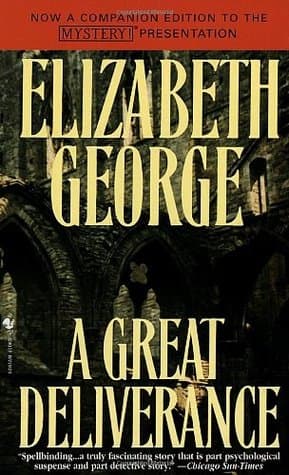
- A Great Deliverance
Elizabeth George
4.0 (40k) average on GoodreadsThrillerFeatures a thoughtful, compassionate detective investigating a complex murder in a rural English setting.
- The Likeness
Tana French
4.0 (126k) average on GoodreadsThrillerBoth are character-driven and set in tight-knit communities. French's novel delves into darker, more morally ambiguous territory with a grittier realism and psychological intensity. Penny maintains a more contemplative and ultimately hopeful tone regarding human nature, even amidst tragedy, and a focus on Gamache's internal moral compass.
- Angels & Demons
Dan Brown
3.9 (2.7M) average on GoodreadsThrillerA Harvard symbologist races through Rome's ancient sites, deciphering cryptic clues to unmask the Illuminati and stop a vengeful plot to destroy the Vatican with a stolen antimatter weapon.
- Gone Girl
Gillian Flynn
4.1 (2.3M) average on GoodreadsThrillerA wife's sudden disappearance on her fifth anniversary reveals a web of lies and psychological warfare, exposing the secrets within a seemingly perfect marriage.





Enjoyed the summary?
A summary gives you the shape of the book. The book itself has the detail, the examples and the voice.
Find A Fatal Grace on AmazonAs an Amazon Associate, BookBrief earns from qualifying purchases. How we're funded