The Discovery
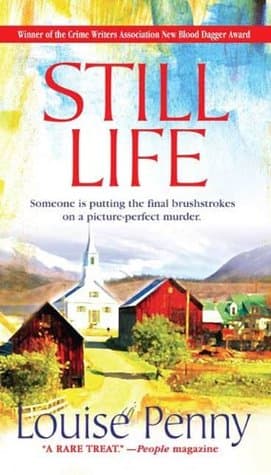
On Thanksgiving Sunday in the quiet, remote village of Three Pines, Quebec, peace ends when Jane Neal, a retired schoolteacher and artist, is found dead in the woods. She was shot through the heart with an arrow. The villagers, including her close friends Myrna Landers, Olivier Brûlé, Gabri Dubeau, and Clara Morrow, first think it was a hunting accident. Local constable Yvette Nichol, overwhelmed, calls the Sûreté du Québec. Chief Inspector Armand Gamache, with his second-in-command, Jean-Guy Beauvoir, arrives to investigate. He brings a quiet focus and a sharp understanding of people. The immediate puzzle is not just who shot Jane, but why anyone would hurt such a kind person in a place that seems free of malice.
Initial Impressions and Suspects
Chief Inspector Gamache and Beauvoir start their investigation, interviewing the close-knit residents of Three Pines. They learn that Jane Neal was getting ready for an art show and had recently finished a mysterious painting she refused to show anyone, even her closest friends. Early suspects include Peter Morrow, Clara's husband and an artist, who had a professional rivalry with Jane; Ben Hadly, a recluse and hunter known for odd behavior; and Ruth Zardo, the local eccentric whose sharp words often hid deeper feelings. Gamache watches the villagers, noticing the subtle currents of jealousy, resentment, and old secrets appearing under the calm surface of small-town life.
The Painting's Significance
The investigation soon focuses on Jane Neal's last painting, which she had kept hidden. After much searching, the painting is found. It shows a peaceful scene of Three Pines residents, but with a disturbing detail: one figure has a distorted, monstrous face, and another appears to be crying. Gamache believes the painting holds the key to Jane's murder, suggesting it either revealed a secret about a villager or was the reason for her death. The search for the painting's meaning grows, forcing residents to face uncomfortable truths about themselves and their relationships. It shows that Jane was more observant than many thought.
Unveiling Secrets
As Gamache looks closer, the seemingly perfect lives of Three Pines residents begin to fall apart. Myrna Landers, a former psychologist, shares her complicated past. Olivier Brûlé and Gabri Dubeau, bistro owners, act protective but sometimes evasive. Peter Morrow's professional frustrations and envy of Jane's talent are explored, while Clara Morrow deals with her own artistic doubts and loyalty to her friends. Gamache learns about old feuds, unrequited loves, and the quiet despair that can build under a calm exterior. The investigation becomes less about a random act and more about the complex web of human connections and the secrets people keep, even from those closest to them.
The Archery Connection
That Jane Neal was killed with an arrow is an important detail. Gamache establishes that the shot was skilled, not an accident, meaning the killer was good with a bow and arrow. This greatly reduces the number of suspects, as few villagers have this skill. Ben Hadly, the reclusive hunter, becomes a stronger suspect because of his known hunting habits and isolated life. However, Gamache remains unconvinced, sensing that Ben, despite his rough manner, might not be capable of such planned violence. The focus shifts to other residents who might have had access to or knowledge of archery, pushing the team to look beyond the obvious.
The Old Mill
The investigation leads Gamache to an old, abandoned mill outside Three Pines, a place Jane Neal was known to visit. Inside, they find evidence that Jane had used the mill as a secret studio, further proving the importance of her hidden painting. The mill's isolation and its history in the village suggest it was a place where Jane felt she could truly express herself, away from prying eyes. Finding the mill as her secret workspace strengthens the idea that Jane was actively trying to keep something private, making the final painting's contents even more important to understanding her death. This location adds another layer to Jane's complex, artistic personality.
Confronting Ruth Zardo
Ruth Zardo, the village's difficult and often drunk poet, turns out to be a surprisingly insightful source of information. Her sharp wit and direct observations, though often cynical, frequently come close to the truth. Gamache talks with Ruth, who, despite her rough exterior, clearly had a deep, if complicated, affection for Jane. Ruth's cryptic remarks and unusual wisdom often give Gamache subtle clues or new ways of thinking, helping him connect different parts of the puzzle. She represents the unvarnished truth of Three Pines, a contrast to the polite appearances, and her insights are very valuable in understanding the hidden community dynamics.
The Art Show
The upcoming art show, which Jane Neal was preparing for, becomes a key part of the investigation. It turns out that Jane had submitted a controversial piece to the show, one that questioned common ideas of art and beauty. This artistic statement, along with her hidden painting, suggests Jane was using her art to express something important and perhaps unsettling about her community. The reactions of the other artists, especially Peter Morrow, to Jane's work and talent, show the underlying professional jealousies and rivalries that exist even in a seemingly peaceful village. The art show, meant as a celebration, becomes a test that reveals hidden resentments and ambitions.
The True Meaning of the Painting
Through careful observation and a deep understanding of people, Gamache finally understands Jane Neal's hidden painting. He realizes it is not a literal picture of a monstrous villager, but a symbol of a deep secret and a past wrong. The distorted face in the painting represents a lie or a transgression committed by a respected community member, while the crying figure symbolizes the suffering caused by this secret. The painting subtly points to an old event involving a villager and a serious ethical breach, which Jane, with her sharp observational skills, had finally understood and was preparing to expose through her art.
The Confrontation and Confession
Gamache confronts the killer, who is a seemingly harmless and respected community member: Clara Morrow's father, Jean-Guy Beauvoir's own godfather, who had recently moved to Three Pines. The reason for Jane's murder was not a hunting accident or a simple rivalry, but a desperate act to stop Jane from exposing an old secret. Years ago, the killer had stolen a large sum of money from Jane's family, leading to their financial ruin and her father's early death. Jane had finally put the truth together through her research and was preparing to reveal it through her art. The killer, fearing exposure and the ruin of his life, chose to silence Jane permanently.
Aftermath and Reflection
With the killer caught, Three Pines must deal with the terrible truth. The revelation that one of their own committed such a terrible act shatters the village's idea of perfect safety and innocence. The community must now come to terms with the betrayal and the long-hidden darkness that grew beneath their peaceful lives. Chief Inspector Gamache, though successful in solving the case, carries the burden of the human tragedy. He thinks about good and evil, the fragility of peace, and the lasting power of secrets to corrupt. The villagers begin the slow process of healing, changed forever by the events, but perhaps also more connected by their shared experience of loss and revelation.