
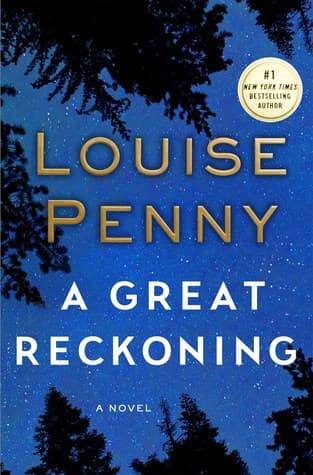
Synopsis
Covers the whole plot, including the ending.
- Difficulty
- Medium
- Pacing
- Moderate
- Mood
- Atmospheric, Suspenseful, Thought-provoking, Dark
- Read it if
- You enjoy character-driven mysteries with a strong sense of place, intricate plots, and explorations of morality and corruption within institutions.
- Skip it if
- You prefer fast-paced, action-heavy thrillers without much introspection or detailed character development.
A Great Reckoning Plot Summary
Covers the whole plot, including the ending.
A Mysterious Map and a New Beginning
Armand Gamache arrives at the Sûreté du Québec Academy in Nicolet to start his new job as commandant, with the goal of ending corruption. On his first day, the outgoing commandant, Superintendent Fontaine, gives him a mysterious, old, hand-drawn map. This map, called 'The Plage,' shows an area that seems to mix real and imaginary places, with Latin phrases and strange symbols. At the same time, in Three Pines, Gabri and Olivier find a similar map in a wall of the bistro during renovations. Soon after Gamache starts at the Academy, Professor Stephen Horowitz, a respected but controversial lecturer, is found murdered in his room. Next to his body is a copy of the same unusual map.
The Cadets and the Investigation Begins
Gamache quickly identifies four cadets who were close to Professor Horowitz: Amelia Choquet, a troubled young woman with a criminal past; Serge Leduc, a smart but arrogant cadet; Sophie Dubois, quiet and observant; and Veronique Tremblay, earnest and seemingly innocent. These four were in a special seminar with Horowitz, where they discussed ethics and the difficult parts of policing. As Inspector Lacoste from Homicide begins investigating Horowitz's murder, Gamache becomes a suspect because of his new position and the map found with the body, which he also has. The cadets, especially Amelia, become key to the mystery, as each has possible reasons and secrets.
Amelia Choquet's Past and the Academy's Corruption
It comes out that Gamache has a personal connection to Amelia Choquet. Years earlier, he had saved her from a life of crime and encouraged her to join the Sûreté, seeing her potential despite her difficult past of abuse and neglect. This connection makes his role in the murder investigation more complicated. As Gamache starts his work as commandant, he finds the Academy full of systemic corruption, a problem he was brought in to fix. He notices the subtle ways cadets are tested, not just academically but morally, and how the institution itself seems to continue certain bad traditions and power structures, especially concerning a secret group called 'the Plage.'
The Plage and Horowitz's Legacy
Gamache, with Jean-Guy Beauvoir and Isabelle Lacoste, looks into the history of 'The Plage.' They discover it is not just a fictional place on the map but a secret, powerful, and corrupt organization within the Sûreté, going back decades. Professor Horowitz had been researching this secret group, planning to expose its members and activities. His seminar with the four cadets was partly a way to test their moral judgment and prepare them for the tough realities of policing, possibly even getting them ready to help him with his exposé. The Latin phrases on the map, at first thought to be just obscure, are found to be clues and warnings about this shadowy group.
A Second Death and Heightened Stakes
The investigation takes a bad turn when a second body is found: Veronique Tremblay, one of the four cadets in Horowitz's seminar, is found dead, an apparent suicide. However, Gamache and his team quickly suspect murder. Veronique had been upset and had told others she felt threatened. Her death, like Horowitz's, is connected to 'the Plage' and the secrets Horowitz was trying to uncover. This second death raises the stakes a lot, suggesting the killer is still active within the Academy and is targeting those close to Horowitz's research. Suspicion falls more heavily on the remaining cadets and even on Gamache himself, as his reform efforts are seen as a threat.
The Map's True Meaning and Three Pines Connection
The map found in Three Pines by Gabri and Olivier, and the copies found at the Academy, are more than just interesting items. They are a literal and symbolic guide to the Sûreté's corruption and a key to understanding Horowitz's murder. 'The Plage' on the map represents the secret, elite, and very corrupt group within the Sûreté, whose members have protected each other for years. The map also points to a specific place in Three Pines – the stained-glass window in the church. This window, showing Saint Jude, holds a hidden secret central to 'the Plage's' activities and the cover-up of past crimes, connecting the quiet village to the Academy's dark side.
The Stained Glass Window and Past Crimes
Gamache, with his family and friends in Three Pines, including Myrna and Ruth, finds a hidden compartment behind the stained-glass window of Saint Jude in the village church. Inside, they find old documents, photographs, and records that show 'the Plage's' long history of covering up crimes, framing innocent people, and protecting its own. These documents specifically detail a cold case from decades ago, where a young woman was falsely accused and jailed for a murder committed by a member of 'the Plage.' This discovery proves Horowitz's theories about the deep corruption and provides solid evidence against the secret group, confirming his dangerous research.
The Confession of Serge Leduc
Under great pressure and with growing evidence against him, Cadet Serge Leduc confesses to the murders of Professor Horowitz and Veronique Tremblay. He claims he killed Horowitz to protect 'the Plage' and Veronique because she was about to expose him. While the confession seems to end the case, Gamache is not convinced. He believes Leduc is a pawn, forced or tricked into confessing to protect a larger group of corrupt officers. Gamache suspects that the real person behind the murders, and the leader of 'the Plage,' remains hidden, controlling things from the shadows. The confession feels too easy, too simple, for the complex corruption they have uncovered.
The True Mastermind Revealed
By careful thought and understanding the subtle clues left by Horowitz and the map, Gamache realizes that Superintendent Fontaine, the former commandant who gave him the map, is the true leader of 'the Plage' and the one who planned the murders. Fontaine had been using Leduc as a scapegoat and had carefully planned Horowitz's murder to prevent 'the Plage' from being exposed. He had also made Veronique's death look like a suicide. Gamache confronts Fontaine, revealing his knowledge of Fontaine's long history of corruption, his role in the old cover-up, and his ultimate responsibility for the recent deaths. Fontaine's reason was to protect 'the Plage' and his own power within the Sûreté.
A Great Reckoning and Future Hopes
In a final confrontation, Gamache exposes Fontaine's crimes and his leadership of 'the Plage' to the authorities. Fontaine is arrested, and the old, corrupt secret group within the Sûreté is finally broken up. The evidence found in the Three Pines church, along with Horowitz's research and Gamache's careful investigation, ensures that justice is served, not only for Horowitz and Veronique but also for the victims of 'the Plage's' past wrongdoings. Amelia Choquet, after going through the emotional difficulties and dangers of the investigation, finds a sense of purpose and belonging. She chooses to stay at the Academy, committed to upholding the true values of policing, now under Gamache's guidance, suggesting a new, hopeful time for the Sûreté du Québec.
Principal Figures
Armand Gamache
Protagonist
New commandant of the Sûreté Academy, tasked with rooting out corruption and solving a murder.
Armand Gamache is the former Chief of Homicide for the Sûreté du Québec, now appointed commandant of the Sûreté Academy. He is deeply ethical, intuitive, and possesses an unwavering moral compass. His move to the Academy is a strategic one, aimed at dismantling systemic corruption from within. Gamache is burdened by past traumas and the weight of responsibility, yet remains steadfast in his pursuit of truth and justice. He sees the potential for good in even the most troubled individuals, as evidenced by his relationship with Amelia Choquet. His quiet strength and profound understanding of human nature are central to his investigative prowess.
Relationships: Reine-Marie Gamache (wife, confidante); Jean-Guy Beauvoir (son-in-law, trusted colleague); Isabelle Lacoste (colleague, lead investigator); Amelia Choquet (protégée, former criminal he mentored); Stephen Horowitz (murder victim, subject of investigation)
Amelia Choquet
Supporting
A troubled Sûreté cadet with a criminal past, mentored by Gamache and central to the investigation.
Amelia Choquet is a young Sûreté cadet, distinguished by her tattoos, piercings, and guarded demeanor. She comes from a background of abuse and neglect, having spent time on the streets and involved in petty crime. Gamache saw potential in her years ago and encouraged her to join the Sûreté, believing she could channel her experiences into becoming a good officer. She is fiercely intelligent but deeply mistrustful of authority and slow to open up. Amelia was a favored student of Professor Horowitz, and her unique perspective and connections to the underworld prove invaluable, making her both a suspect and a key witness in the murder investigation.
Relationships: Armand Gamache (mentor, father figure); Stephen Horowitz (professor, mentor); Serge Leduc (fellow cadet, rival)
Stephen Horowitz
Mentioned/Catalyst
The murdered professor at the Sûreté Academy, whose research into corruption sets the plot in motion.
Professor Stephen Horowitz was a highly respected, albeit controversial, ethics professor at the Sûreté Academy. Known for his unconventional teaching methods and his deep interest in the dark side of policing, he was secretly investigating a corrupt secret society within the Sûreté known as 'the Plage.' His lectures often challenged cadets to confront difficult moral dilemmas. His murder, found with a copy of the mysterious map, is the central mystery of the novel. Horowitz was a mentor to Amelia Choquet and had been using his seminar to subtly test and prepare a select group of cadets to potentially help him expose the widespread corruption.
Relationships: Armand Gamache (acquaintance, subject of investigation); Amelia Choquet (mentor, student); Serge Leduc (student); Sophie Dubois (student); Veronique Tremblay (student)
Jean-Guy Beauvoir
Supporting
Gamache's son-in-law and former second-in-command, assisting him in the investigation.
Jean-Guy Beauvoir is Gamache's son-in-law and former second-in-command from Homicide. He is fiercely loyal to Gamache and possesses a sharp investigative mind. Despite his own past struggles with addiction, he has found stability and purpose working alongside Gamache. He joins Gamache at the Academy, though initially with some reluctance, to help him in his mission. Beauvoir's pragmatic approach and dedication to justice complement Gamache's more philosophical nature. He plays a crucial role in piecing together the evidence and supporting Gamache through the dangerous and politically charged investigation.
Relationships: Armand Gamache (father-in-law, mentor, colleague); Annie Gamache (wife); Isabelle Lacoste (colleague)
Isabelle Lacoste
Supporting
The lead homicide investigator for Horowitz's murder, initially suspicious of Gamache.
Inspector Isabelle Lacoste is the lead homicide investigator assigned to Professor Horowitz's murder. She is a highly competent and by-the-book officer, known for her thoroughness and integrity. Initially, she views Gamache with suspicion due to his new position and his personal connection to Amelia Choquet and the map. However, as the investigation progresses, she comes to trust Gamache's instincts and judgment, recognizing his deep commitment to justice. Lacoste represents the honest and dedicated elements within the Sûreté, and her unbiased pursuit of the truth is vital in uncovering the Academy's corruption.
Relationships: Armand Gamache (colleague, subject of investigation, eventual ally); Jean-Guy Beauvoir (colleague)
Serge Leduc
Supporting/Antagonist
A brilliant but arrogant cadet, involved in Horowitz's seminar and the 'Plage' conspiracy.
Serge Leduc is one of the four cadets in Professor Horowitz's seminar. He is exceptionally intelligent, highly ambitious, and possesses a sharp, analytical mind. However, he is also arrogant, manipulative, and deeply cynical about human nature and policing. Leduc comes from a wealthy, influential family with connections within the Sûreté. He is secretly involved with 'the Plage' and attempts to outmaneuver both his fellow cadets and the investigators. His confession to the murders is a pivotal moment, though it is later revealed to be a calculated move orchestrated by a higher power.
Relationships: Stephen Horowitz (professor, mentor); Amelia Choquet (fellow cadet, rival); Superintendent Fontaine (mentor, handler)
Superintendent Fontaine
Antagonist
The corrupt former commandant of the Sûreté Academy and leader of 'the Plage.'
Superintendent Fontaine is the former commandant of the Sûreté Academy, who hands Gamache the mysterious map upon his arrival. He appears outwardly amiable and helpful, but he is, in fact, the cunning and ruthless leader of 'the Plage,' the corrupt secret society within the Sûreté. Fontaine has meticulously protected this organization for decades, orchestrating cover-ups and manipulating individuals to maintain his power and influence. He is the true mastermind behind Horowitz's murder and the manipulation of Serge Leduc, attempting to frame Gamache and preserve the 'Plage's' existence. His betrayal is a shock, revealing the depth of institutional corruption.
Relationships: Armand Gamache (successor, adversary); Serge Leduc (pawn, manipulated subordinate)
Ruth Zardo
Supporting
Eccentric and wise poet, resident of Three Pines, offering cryptic insights.
Ruth Zardo is an elderly, foul-mouthed, and highly acclaimed poet who resides in Three Pines. She is known for her acerbic wit, her pet duck Rosa, and her profound, often cryptic, insights into human nature and morality. Despite her gruff exterior, Ruth possesses a deep understanding of truth and justice. She often provides Gamache with unexpected wisdom or observations that help him piece together the puzzle. Her unique perspective on language and hidden meanings, particularly regarding the Latin phrases on the map, proves subtly instrumental in the investigation, drawing parallels between art and truth.
Relationships: Armand Gamache (friend, recipient of cryptic advice); Myrna Landers (friend, fellow villager)
Myrna Landers
Supporting
Retired psychologist and Three Pines bookstore owner, offering emotional support and astute observations.
Myrna Landers is a kind and empathetic retired psychologist who owns the bookstore in Three Pines. She is a close friend to Gamache and his family, providing a calm and supportive presence amidst the chaos. Myrna's background in psychology gives her a keen understanding of human behavior and motivation, which she often shares with Gamache in a gentle, insightful manner. She is instrumental in helping Gamache process the emotional toll of his work and offers astute observations about the characters involved in the case, particularly the cadets.
Relationships: Armand Gamache (friend, confidante); Ruth Zardo (friend, fellow villager)
Themes & Insights
Corruption and Integrity
The main theme is the deep corruption within the Sûreté du Québec, shown by 'the Plage' and its leader, Superintendent Fontaine. Gamache's job at the Academy is to expose and get rid of this corruption, leading to a conflict between institutional decay and individual honesty. The novel explores how corruption can become normal over time, affecting generations of officers, and the great courage needed to oppose it, as shown by Horowitz's research and Gamache's strong moral stance. The cadets' moral choices reflect the struggle between giving in to or resisting this widespread influence.
“Evil is the lack of empathy. If you can understand that, you can understand a lot.”
Mentorship and Legacy
Mentorship is important, especially through Gamache's relationship with Amelia Choquet and Professor Horowitz's effect on his cadets. Gamache's past kindness to Amelia directly leads to her being at the Academy, making her a key, though complicated, part of the investigation. Horowitz, through his seminar and the map, tries to leave a legacy of telling the truth, even after his death, guiding Gamache to uncover 'the Plage.' The novel explores how mentors greatly affect their protégés, shaping their moral values and influencing their choices for good or bad, and how these legacies can either continue or break cycles of corruption.
“What you permit, you promote.”
The Nature of Truth and Deception
The story constantly deals with how hard it is to find truth, hidden under layers of lies, secrets, and institutional cover-ups. The mysterious map itself is a symbol of this, a mix of truth and fiction meant to both reveal and hide. Characters like Fontaine act through complex deceptions, manipulating others to protect their secrets. Gamache's role is to remove these layers, telling real clues from false ones. The cadets, too, must learn to tell truth from the tempting lies of power, making them face uncomfortable facts about themselves and the institution they want to join.
“It took a very long time for them to realize that the map was not of a place, but of a time. A history.”
Redemption and Second Chances
Amelia Choquet's journey shows the theme of redemption and second chances. Despite a troubled past of crime and difficult situations, Gamache believes she can change and offers her a way to a new life within the Sûreté. Her struggles during the investigation show how hard it is to overcome one's past and the prejudices that come with it. The novel suggests that even institutions, like the Sûreté, can seek redemption through reform, getting rid of their corrupt parts to become forces for good. Gamache's own past decisions and their results also reflect this theme, as he tries to correct past wrongs.
“We are all capable of good and evil. The question is, which do we choose to feed?”
The Power of Symbols and Language
Symbols and language are important in the mystery, especially the puzzling map with its Latin phrases and strange drawings. The map is not just a plot device but a key to understanding the deeper history of corruption. The stained-glass window in the Three Pines church, with its hidden compartment, is also a strong symbol, hiding evidence of past injustices. Ruth Zardo, a poet, often gives insights into the hidden meanings of words and symbols, helping Gamache look beyond the obvious. This theme shows how truth can be coded and kept in unexpected forms, waiting to be understood.
“Sometimes the smallest word holds the greatest truth.”
Plot Devices & Literary Techniques
The Plage Map
A mysterious, hand-drawn map that serves as both a literal and metaphorical guide to corruption.
The 'Plage' map is the central plot device, initially given to Gamache and later found with Horowitz's body. It depicts a combination of real and fictional locations, filled with Latin phrases and cryptic symbols. It functions as a puzzle, gradually revealing the existence and history of 'the Plage' – a secret, corrupt society within the Sûreté. The map acts as Horowitz's posthumous guide, leading Gamache to uncover the truth. Its duality, being both a physical object and a metaphorical representation of a hidden world, drives the entire investigation, linking past crimes to present ones and tying the Academy to Three Pines.
The Sûreté Academy Setting
The primary setting, symbolizing institutional corruption and the crucible for future officers.
The Sûreté Academy in Nicolet serves as a critical plot device. It is not just a backdrop but a character in itself, embodying the institutional corruption Gamache is tasked with rooting out. The Academy's traditions, its power dynamics, and its secret societies ('the Plage') are integral to the plot. It acts as a microcosm of the larger Sûreté, where young cadets are either groomed for integrity or drawn into the corrupt system. The confined, high-pressure environment intensifies the mystery and forces confrontations, highlighting the challenges of reform from within a deeply flawed institution.
The Stained Glass Window
A symbolic and literal hiding place for evidence of historical corruption.
The stained-glass window of Saint Jude in the Three Pines church is a significant symbolic and literal plot device. It initially appears as a beautiful, unremarkable piece of art, but it conceals a hidden compartment containing crucial documents. These documents expose the historical misdeeds and cover-ups orchestrated by 'the Plage,' providing concrete evidence to support Horowitz's research and Gamache's suspicions. The window symbolizes how truth can be hidden in plain sight within seemingly innocent or sacred spaces, connecting the idyllic village to the Sûreté's dark past and providing the ultimate 'reckoning' for the corrupt.
The Four Cadets (Amelia, Serge, Sophie, Veronique)
A group of characters who represent different moral choices and avenues of investigation.
The four cadets in Professor Horowitz's seminar – Amelia Choquet, Serge Leduc, Sophie Dubois, and Veronique Tremblay – function as a collective plot device. Each cadet represents a different response to the corrupt environment and a different facet of the investigation. Their individual backstories, motivations, and relationships with Horowitz and each other provide multiple avenues for suspicion and discovery. They serve as a moral compass for the reader, showcasing the pressures faced by those entering a flawed system. Their interactions and secrets are crucial in unraveling the murder and exposing 'the Plage.'
A Great Reckoning Quotes
“It was the most astonishing thing, to realize that the person you thought you knew, the person you loved, was capable of such a thing. And not just capable, but had done it. And done it for years.”
“Evil isn't born, it's made. And it's made by us. By our choices. By our indifference. By our silence.”
“The past isn't dead. It isn't even past. It just keeps circling back, sometimes in disguise, sometimes in plain sight.”
“Courage isn't the absence of fear, it's the triumph over it.”
“We're all broken. That's how the light gets in.”
“The greatest trick the devil ever pulled was convincing the world he didn't exist.”
“Sometimes the kindest thing you can do is to let go. To let go of the anger, the pain, the need for revenge.”
“Every secret comes with a cost. And the longer you keep it, the higher the price.”
“It’s not just about finding the killer. It’s about understanding the darkness that led to the killing.”
“The truth has a way of coming out, eventually. Like a stubborn weed, it pushes through the cracks.”
“We are defined not by our mistakes, but by how we recover from them.”
“There’s a difference between being right and doing right.”
“Life is a series of choices. And each choice has a ripple effect.”
Quiz
10 questions on the plot and the characters. Each answer comes with a short explanation.
Question 1
What object is initially discovered in the walls of the bistro in Three Pines, sparking the central mystery?
- An antique locket
- A hidden diary
- An intricate old map
- A bundle of old letters
Show answer
C. An intricate old map The discovery of an intricate old map stuffed into the walls of the bistro is the catalyst for the entire mystery, eventually given to Gamache as a gift.
Question 2
Where does Armand Gamache begin his new job, receiving the mysterious map as a gift?
- Chief of Homicide for the Sûreté du Québec
- Head of the Sûreté academy
- A private investigator in Three Pines
- A special task force in Montreal
Show answer
B. Head of the Sûreté academy Gamache starts a new position at the Sûreté academy, where he receives the map and soon encounters the murder of a professor and the four cadets.
Question 3
Who is Amelia Choquet, a key character in the investigation?
- A seasoned detective working with Gamache
- A resident of Three Pines with a connection to the map
- One of the four young cadets at the Sûreté academy
- The victim's estranged relative
Show answer
C. One of the four young cadets at the Sûreté academy Amelia Choquet is introduced as one of the four young cadets at the Sûreté academy, a protégée of the murdered professor, and a central figure in Gamache's investigation.
Question 4
What is found with the body of the murdered professor at the Sûreté academy?
- A cryptic note detailing the killer's motive
- A copy of the old, odd map
- The professor's personal journal
- A weapon engraved with a symbol
Show answer
B. A copy of the old, odd map The presence of a copy of the same mysterious map found with the dead professor directly links the academy murder to the initial discovery in Three Pines.
Question 5
Why does the focus of the investigation shift to Gamache himself?
- He was the last person seen with the professor
- His mysterious relationship with Amelia Choquet and possible involvement in the crime
- His past actions as Chief of Homicide are being re-examined
- He confessed to knowing the killer's identity but withheld it
Show answer
B. His mysterious relationship with Amelia Choquet and possible involvement in the crime The summary states, 'The focus of the investigation soon turns to Gamache himself and his mysterious relationship with Amelia, and his possible involvement in the crime,' making him a suspect.
Question 6
What characteristic is used to describe Amelia Choquet's appearance and demeanor?
- Quiet and studious, always in the library
- Outgoing and charismatic, a natural leader
- Tattooed and pierced, guarded and angry
- Elegant and reserved, from a prominent family
Show answer
C. Tattooed and pierced, guarded and angry Amelia Choquet is explicitly described as 'Tattooed and pierced. Guarded and angry,' suggesting she is an unconventional cadet and a complex character.
Question 7
The frantic search for answers eventually leads investigators back to what specific location in Three Pines?
- The Old Hadley House
- A stained glass window with its own horrific secrets
- The general store, where the map was purchased
- Ruth Zardo's cottage, where the map was drawn
Show answer
B. A stained glass window with its own horrific secrets The investigation circles back to Three Pines, specifically to 'a stained glass window with its own horrific secrets,' indicating a deep, hidden connection to the past.
Question 8
What is the significance of the phrase 'A Great Reckoning' in the context of the novel's title and plot?
- It refers to a large financial audit Gamache must perform for the Sûreté.
- It signifies a final confrontation with past truths and consequences for both Gamache and Amelia.
- It's the name of a historical battle depicted on the map.
- It describes the vast number of suspects Gamache must 'reckon' with.
Show answer
B. It signifies a final confrontation with past truths and consequences for both Gamache and Amelia. The summary states, 'For both Amelia Choquet and Armand Gamache, the time has come for a great reckoning,' implying a moment of accounting for past actions, secrets, and their ultimate consequences.
Question 9
The discovered map leads Gamache to 'an old friend and older adversary.' What does this suggest about the nature of the secrets he uncovers?
- The secrets are purely historical and unrelated to living individuals.
- The secrets are tied to long-standing personal relationships, both positive and negative, from Gamache's past.
- The map is a forgery created by a contemporary rival.
- The adversary is a new enemy Gamache makes at the academy.
Show answer
B. The secrets are tied to long-standing personal relationships, both positive and negative, from Gamache's past. The mention of 'an old friend and older adversary' indicates that the secrets unearthed by the map are deeply personal and involve individuals from Gamache's past, complicating the investigation with his own history.
Question 10
What overarching emotional truth does the author, Louise Penny, aim to reveal in this novel, according to the description?
- The fragility of rural life in Quebec.
- The mundane realities of police procedural work.
- A brilliant and emotionally powerful truth.
- The timeless appeal of antique cartography.
Show answer
C. A brilliant and emotionally powerful truth. The description concludes by stating Louise Penny 'pulls back the layers to reveal a brilliant and emotionally powerful truth,' highlighting the novel's depth beyond just the mystery.
A Great Reckoning FAQ
What is "A Great Reckoning" about?
"A Great Reckoning" sees former Chief Inspector Armand Gamache begin a new role as commandant of the Sûreté academy, where he uncovers corruption and murder. A mysterious old map, found in the walls of the bistro in Three Pines, connects to a dead professor at the academy and implicates Gamache himself in the unfolding mystery. The investigation delves into his past, his relationship with a troubled cadet named Amelia Choquet, and the dark secrets hidden within the academy and Three Pines.
Why should I read "A Great Reckoning"?
You should read "A Great Reckoning" for its intricate plotting, deep character development, and exploration of moral complexities within the police force. It offers a compelling mystery that intertwines past and present, challenging Gamache's integrity and forcing him to confront personal demons while exposing systemic corruption. The novel provides a rich emotional experience with its themes of redemption, trust, and the search for truth.
What is the background/setting of "A Great Reckoning"?
The primary settings are the idyllic, seemingly peaceful village of Three Pines, where a mysterious old map is discovered, and the Sûreté du Québec academy, a place meant to train future police officers but which Gamache finds riddled with a culture of bullying and corruption. The contrast between these two environments highlights the pervasive nature of secrets and the struggle between good and evil, even within institutions designed to uphold justice.
What are the most memorable quotes?
Memorable quotes often revolve around Gamache's wisdom and observations on human nature, such as his recurring thought about the importance of kindness, or his reflections on the nature of evil and courage. The book emphasizes the idea that 'the path to paradise begins in hell,' suggesting that profound truths and peace often emerge from confronting difficult realities.
What writing style does the author use?
Louise Penny employs a rich, descriptive, and often introspective writing style. She blends detailed atmospheric descriptions with deep psychological insights into her characters, using elegant prose that often incorporates literary allusions and philosophical musings. The narrative is carefully paced, allowing for both the unfolding of the mystery and the exploration of emotional and ethical dilemmas.
What minor details add significant meaning?
The intricate old map itself is a minor detail that becomes central, revealing not just geographical locations but also hidden symbols and codes that point to a secret society within the Sûreté. Also, the stained glass window in Three Pines, initially a beautiful piece of art, is revealed to hold horrific secrets, linking the village's past to the academy's present corruption.
What are some subtle foreshadowing moments?
Subtle foreshadowing includes the initial discovery of the map, which seems like a mere curiosity but is hinted to hold deeper significance, and the early glimpses into the toxic culture at the Sûreté academy before the murder occurs. Gamache's unease and intuition about the academy's hidden dark side, even before the body is found, also subtly prepares the reader for the corruption he will uncover.
What unexpected character connections exist?
An unexpected connection is between the murdered professor and the troubled cadet Amelia Choquet, who was his protégée despite her difficult background. More profoundly, the connection between Gamache's past decisions and the present corruption at the academy, particularly involving his old friend and adversary, implicates him in ways he couldn't have foreseen, revealing a complex web of loyalty and betrayal.
What are unspoken character motivations?
Amelia Choquet's unspoken motivation is a deep yearning for belonging and justice, despite her outward anger and defiance, stemming from a traumatic past. Gamache's unspoken motivation often involves a desire to atone for past professional failures or to protect those he cares about, even when it puts him in personal jeopardy, driven by a profound moral compass.
What psychological complexities do characters exhibit?
Gamache exhibits immense psychological complexity, grappling with the weight of leadership, the burden of past decisions, and the challenge of maintaining integrity in a corrupt system. Amelia Choquet demonstrates a complex blend of vulnerability and hardened cynicism, a result of her difficult upbringing and her struggle to trust authority figures, including Gamache.
What are the major emotional turning points?
A major emotional turning point is when Gamache realizes the extent of the corruption within the Sûreté academy, forcing him to confront the dark side of an institution he once revered. Another is Amelia Choquet's gradual decision to trust Gamache, which marks a significant shift from her initial hostility and defiance, demonstrating her capacity for connection and hope.
How do relationship dynamics evolve?
The relationship between Gamache and Amelia Choquet evolves from initial suspicion and animosity to a profound mentor-protégée bond built on trust and mutual respect. Gamache's relationships with his former colleagues and superiors also evolve, as he challenges their authority and exposes their complicity, leading to a reckoning of loyalties and betrayals within the Sûreté.
Which parts remain ambiguous or open-ended?
While the central mystery is resolved, the long-term repercussions of Gamache's actions within the Sûreté academy and the full extent of the systemic changes required remain somewhat open-ended. The future of certain characters involved in the corruption, and the complete healing of Amelia Choquet's trauma, also suggest ongoing journeys rather than definitive conclusions.
What are controversial scenes or decisions?
Gamache's decision to expose the deeply entrenched corruption within the Sûreté, even at great personal and professional risk, can be seen as controversial by those who prefer to maintain the institution's facade. His methods for testing and sometimes manipulating the cadets, particularly Amelia, to reveal their true character and motivations, might also be debated as ethically grey.
"A Great Reckoning" ending explained: how it ends & what it means
The ending sees Gamache successfully expose the murderers and the deep-seated corruption within the Sûreté academy, leading to significant upheaval and a 'great reckoning' for the institution. The mysterious map is fully deciphered, revealing a secret society and its nefarious activities. It signifies Gamache's triumph in upholding justice, but also highlights the immense personal cost and the ongoing battle against darkness. For Amelia Choquet, it means a chance at a new beginning, having found a mentor and a path forward, symbolizing hope amidst systemic brokenness.
About the author

Louise Penny is a Canadian author known for her mystery novels set in the fictional village of Three Pines. Her notable works include A Fatal Grace, The Cruelest Month, and Bury Your Dead, among others. Penny's writing has received significant recognition, including multiple awards for her contributions to the genre.
Similar books
- Still Life
Louise Penny
3.9 (2k) average on GoodreadsLiterary FictionFirst book in the Chief Inspector Gamache series, sharing characters and setting.
- The Silent Patient
Alex Michaelides
4.1 (507k) average on GoodreadsThrillerFeatures a psychological mystery with a focus on uncovering hidden truths and past traumas.
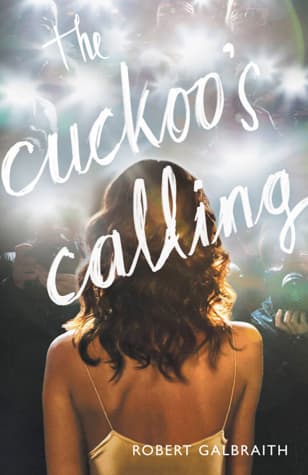
- The Cuckoo's Calling
Robert Galbraith
3.9 (482k) average on GoodreadsThrillerWhile both "A Great Reckoning" and "The Cuckoo's Calling" feature intelligent detectives solving complex mysteries, their approaches differ significantly. Galbraith's Cormoran Strike series, like "The Cuckoo's Calling," often focuses on gritty urban settings and the seedy underbelly of society, with a more direct, procedural investigation style. Penny, in "A Great Reckoning," offers a more contemplative and character-driven narrative, exploring the internal lives of her characters and the ethical dimensions of their choices. Penny's prose is often more lyrical and reflective, while Galbraith's is more direct and propulsive, catering to different reader preferences within the mystery genre. Penny's focus on institutional corruption and philosophical inquiry sets it apart from the more personal, celebrity-focused mystery of "The Cuckoo's Calling."
- Angels & Demons
Dan Brown
3.9 (2.7M) average on GoodreadsThrillerA Harvard symbologist races through Rome's ancient sites, deciphering cryptic clues to unmask the Illuminati and stop a vengeful plot to destroy the Vatican with a stolen antimatter weapon.
- Gone Girl
Gillian Flynn
4.1 (2.3M) average on GoodreadsThrillerA wife's sudden disappearance on her fifth anniversary reveals a web of lies and psychological warfare, exposing the secrets within a seemingly perfect marriage.
- The Girl on the Train
Paula Hawkins
3.9 (2.1M) average on GoodreadsThrillerA woman’s fascination with a seemingly perfect couple she watches from her daily train commute leads her into a dark investigation when she witnesses something that shatters their idyllic image.





Enjoyed the summary?
A summary gives you the shape of the book. The book itself has the detail, the examples and the voice.
Find A Great Reckoning on AmazonAs an Amazon Associate, BookBrief earns from qualifying purchases. How we're funded