
Synopsis
Covers the whole plot, including the ending.
- Difficulty
- Medium
- Pacing
- Slow
- Mood
- Dark, Suspenseful, Psychological, Despairing
- Read it if
- You enjoy psychological thrillers with a strong focus on character internal struggle and a slow-burn reveal of dark secrets.
- Skip it if
- You prefer fast-paced action thrillers or find themes of prolonged captivity and psychological manipulation too disturbing.
A House Without Windows Plot Summary
Covers the whole plot, including the ending.
The Captive's Awakening
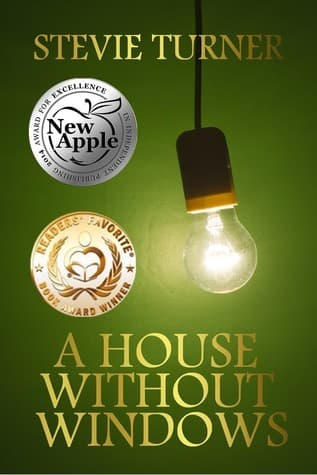
Dr. Beth Nichols wakes up in a confined, windowless room. Her memory is hazy, but her despair is clear. She believes Edwin Evans has held her captive for eight or nine years. Her only constant is a perpetually lit light bulb and the gnawing uncertainty of her situation. Beth clings to fragmented memories of her past life, especially her deep love for her fiancé, Liam, a romance she idealizes. She spends her days in a fog of grief and hope, praying Liam is still searching for her, even as the years blur into an agonizing stretch of time under Edwin's control.
The Arrival of the New Patient
A new patient, Emily, is brought into the facility, disrupting Beth's isolated routine. Emily is young, frightened, and disoriented. Beth observes her closely, noting the same blank stares and confused utterances she often experiences. This new arrival sparks something in Beth – a sense of responsibility, but also unease. Emily's presence, along with the strange behavior of the staff, makes Beth look at her surroundings more critically, rather than simply accepting her fate. She starts to notice inconsistencies, especially regarding the 'hospital' and its 'patients'.
Whispers and Doubts
Beth starts to hear hushed conversations between staff and snippets that do not fit her idea of a typical hospital. She hears terms like 'delusions,' 'treatment plans,' and 'stabilization,' but the context feels sinister. Her initial belief that Edwin is her captor begins to waver as she realizes the man she sees as Edwin might just be a doctor, and that her 'captivity' might be something else. The constant light, the lack of windows, and the repetitive routines now feel less like a prison and more like a carefully controlled environment for something she cannot grasp. Memories of Liam become more vivid, yet also more fragile, as her current reality begins to unravel.
The Illusion of Freedom
Occasionally, Beth experiences brief moments of clarity, where her perceived prison walls seem to thin. She catches glimpses of what she believes to be the outside world – a fleeting image of a garden, the sound of birds, or a brief, confusing interaction with someone who is not staff. These moments are disorienting, often with intense headaches, and quickly recede, leaving her more confused. She thinks her mind is playing tricks, or that Edwin's control has temporarily slipped. However, these brief 'freedoms' also plant seeds of doubt about her own mind's stability and the reliability of her memories, especially those of Liam.
The Doctor's Visits
Dr. Edwin Evans, whom Beth initially sees as her captor, regularly visits her, trying to talk about her past. He asks about Liam, her life before, and her feelings of being trapped. Beth resists, clinging to her story of captivity, convinced he is manipulating her. She sees his questions as cruel reminders of what she has lost. Dr. Evans remains patient, often leaving her with small, seemingly harmless pieces of information or observations that, over time, begin to chip away at her deeply held beliefs about her situation. He never confirms her captivity but subtly challenges her perception of it, pushing her to re-evaluate her memories.
Liam's Fading Shadow
As Beth's hold on her 'captivity' story loosens, so does the clarity of her memories of Liam. The perfect romance she cherished begins to show flaws. She recalls arguments, inconsistencies, and a possessiveness in Liam that she had previously overlooked or romanticized. The image of him searching tirelessly for her starts to feel less like a comforting truth and more like a desperate fantasy she created. This internal conflict is agonizing, as letting go of the idealized Liam means confronting a potentially more painful reality about her past and her mental state. She fears that if Liam is not real, then neither is her hope.
The Truth Revealed
Through carefully managed revelations by Dr. Evans and her own growing lucidity, Beth finally grasps the devastating truth. She is not a captive, but a patient in a psychiatric facility. The 'captivity' she has experienced is a manifestation of her severe mental illness, likely dissociative amnesia and paranoid delusions, triggered by a traumatic event. Dr. Edwin Evans is not her captor, but her psychiatrist, working to help her recover. The 'windowless room' is a therapeutic environment, and the constant light regulates her sleep patterns and prevents further disorientation. This realization is both a crushing blow and a fragile beacon of hope.
Confronting the Past
With Dr. Evans' guidance, Beth begins the painful process of unearthing suppressed memories of her past. She recalls a tumultuous relationship with Liam, marked by jealousy and control, ending in a violent confrontation. The 'greatest romance of all' was, in reality, deeply unhealthy. The trauma of this relationship, combined with other stressors, led to a complete mental breakdown, resulting in her current condition. Each recovered memory is a fresh wound, but also a step towards understanding. She realizes the 'eight or nine years' of captivity were a distorted perception of a much shorter, but equally devastating, period.
Reconciliation and Acceptance
After the initial shock and grief, Beth slowly begins to accept her diagnosis and the reality of her situation. She starts to participate more actively in therapy, no longer seeing Dr. Evans as an enemy but as an ally. She processes the trauma of her relationship with Liam and the subsequent breakdown, understanding that her mind created the 'captivity' as a coping mechanism. This acceptance marks a significant turning point in her recovery. She begins to see a future beyond her illness, a future where she can rebuild her life, free from the delusions that once imprisoned her.
A Glimmer of the Outside
As Beth's condition improves, she is gradually allowed more interaction with the outside world, not just fleeting glimpses. She might be allowed supervised time in a hospital garden, or interactions with other stabilized patients. These experiences are no longer disorienting but grounding, helping her reconnect with reality. The 'windowless room' becomes less of a prison and more of a sanctuary where she can process her thoughts. She begins to see the world not through fear and delusion, but with newfound clarity, ready to face the challenges of her recovery and eventual reintegration into society.
Principal Figures
Dr. Beth Nichols
Protagonist
A woman suffering from severe mental illness, believing herself to be a captive.
Beth is a highly intelligent woman, formerly a doctor, whose mind has constructed an elaborate delusion of captivity to cope with profound trauma. She is initially stubborn, clinging fiercely to her perceived reality, and deeply grieved by the loss of her idealized fiancé, Liam. Her resilience is evident in her persistent hope for rescue, even as her memories are fragmented. She is driven by a deep-seated need for truth, even if that truth is painful, and eventually demonstrates a remarkable capacity for self-reflection and healing.
Relationships: Liam (Her idealized fiancé, later revealed to be an abusive partner.); Dr. Edwin Evans (Initially perceived as her captor, later revealed to be her compassionate psychiatrist.); Emily (A fellow patient whose presence sparks Beth's critical observation.)
Dr. Edwin Evans
Supporting
Beth's compassionate and patient psychiatrist.
Dr. Evans is a dedicated psychiatrist, tasked with helping Beth navigate her complex mental illness. He is calm, empathetic, and persistent, never directly challenging Beth's delusions but subtly guiding her towards reality. He understands the delicate balance required to break through her carefully constructed world. His methods are gentle yet firm, focusing on building trust and encouraging self-discovery rather than forced confrontation. He represents the voice of reason and therapeutic intervention in Beth's disoriented world.
Relationships: Dr. Beth Nichols (Her psychiatrist, working to help her recover from mental illness.)
Liam
Mentioned/Flashback
Beth's idealized fiancé, later revealed to be an abusive figure.
Liam exists primarily in Beth's fragmented memories, initially as the perfect fiancé, the 'greatest romance of all.' He is the anchor of her hope for rescue. As Beth's delusions unravel, Liam's true nature is revealed: a possessive and ultimately abusive partner whose actions contributed significantly to Beth's psychological breakdown. He is a symbol of both Beth's past love and the trauma she has suppressed.
Relationships: Dr. Beth Nichols (Her fiancé, later revealed to be an abusive partner.)
Emily
Supporting
A new patient whose presence helps Beth question her reality.
Emily is a young, disoriented patient brought into the facility. She serves as a mirror for Beth, exhibiting similar signs of confusion and detachment. Her presence is crucial in prompting Beth to observe her surroundings more critically and to question the nature of her own 'captivity.' Emily's vulnerability evokes a protective instinct in Beth, subtly shifting her focus from purely self-preservation to a broader awareness of her environment and its inhabitants.
Relationships: Dr. Beth Nichols (A fellow patient whose behavior mirrors Beth's own initial state.)
Hospital Staff (Nurses/Attendants)
Supporting
The caregivers in the psychiatric facility.
The hospital staff are initially perceived by Beth as her 'guards' or 'wardens,' part of Edwin's oppressive regime. They are seen as cold, uncommunicative, and complicit in her captivity. As Beth's lucidity grows, she begins to see them for what they are: dedicated medical professionals performing their duties, offering care within the structured environment of a psychiatric hospital. Their actions, initially seen as restrictive, are later understood as therapeutic and necessary.
Relationships: Dr. Beth Nichols (Her caregivers in the psychiatric facility.)
Themes & Insights
The Nature of Reality and Perception
The novel explores how an individual's perception can create an entirely different reality. Beth's 'captivity' is not an external physical prison, but an internal mental one, a complex delusion her mind created to cope with trauma. The constant light, the windowless room, and Edwin's 'control' are all interpreted through her illness. The story challenges the reader to question what is real, as Beth's journey involves slowly dismantling her perceived reality to uncover the objective truth, showing the fragile boundary between sanity and delusion. The initial mystery relies entirely on the narrator's unreliable perception.
“She lies awake at night, looks up at the light bulb that is never switched off, and prays that he is still out there somewhere searching for her..........”
Trauma and Memory
The book examines the impact of trauma on memory and identity. Beth's severe mental illness comes from unresolved trauma, specifically an abusive relationship with Liam. Her mind has repressed the painful truth, replacing it with an idealized past and a story of external captivity. Her recovery involves slowly, painfully unearthing these suppressed memories, confronting the true nature of her past and its role in her breakdown. It shows how the mind can both protect and imprison itself through selective memory and delusion, and the difficult journey required to integrate those fragmented pieces.
“Amidst her grief she often thinks back to happier times with her fiancée Liam; theirs was the greatest romance of all.”
Illusion vs. Reality
A central theme is the contrast between Beth's illusions and the reality of her situation. Her belief in being Edwin Evans' captive, her idealized romance with Liam, and her hope of rescue are all powerful illusions that protect her from a more painful truth. The story carefully peels back these layers of illusion, revealing that Edwin is her doctor, her 'captivity' is a psychiatric ward, and Liam was not the perfect partner. This theme explores the human capacity for self-deception and the difficult, often painful, process of confronting reality, even when it shatters cherished beliefs.
“Dr Beth Nichols thinks she has been held captive by Edwin Evans for probably 8 or 9 years now.”
Hope and Despair
Throughout her perceived captivity, Beth moves between deep despair and a persistent, almost irrational hope. Her despair comes from her isolation and the belief that she has lost years of her life. Yet, she clings to the hope that Liam is still searching for her, a hope that fuels her will to survive. As the true nature of her situation is revealed, this hope shifts; it changes from a desperate wish for external rescue to an internal resolve for recovery and self-reintegration. The theme explores how hope can both sustain and mislead, and how its nature changes when confronted with reality.
“She lies awake at night, looks up at the light bulb that is never switched off, and prays that he is still out there somewhere searching for her..........”
Plot Devices & Literary Techniques
Unreliable Narrator
Beth's subjective and deluded perspective shapes the entire narrative.
The entire story is filtered through the consciousness of Dr. Beth Nichols, who is suffering from severe mental illness. Her perception of events, characters (especially Edwin and Liam), and her environment is heavily distorted by her delusions. This device is crucial for creating the initial mystery and suspense, as the reader is led to believe Beth's account of captivity. The gradual unraveling of her perceived reality is the core of the plot, making the reader constantly question what is real and what is a product of her mind. It challenges the reader to piece together the truth from a biased perspective.
Confined Setting
The 'windowless room' symbolizes Beth's mental state.
The primary setting of Beth's 'captivity' is a confined, windowless room with a perpetually lit light bulb. This physical confinement serves as a powerful metaphor for Beth's mental state – trapped within her own delusions, unable to see the outside world or the truth. The lack of windows symbolizes her inability to perceive reality clearly, while the constant light prevents her from finding true rest or escaping her internal turmoil. As Beth's mental state improves, the perception of this room shifts, highlighting her journey towards mental freedom.
Flashbacks and Fragmented Memories
Disjointed recollections that slowly reveal the truth.
The narrative employs flashbacks and fragmented memories to slowly reveal Beth's past. Initially, these memories are idealized, focusing on her perfect romance with Liam. As her delusions begin to break down, the memories become more disjointed, revealing inconsistencies and darker aspects of her past. This device allows the author to gradually build suspense and reveal the truth about Beth's trauma and the events leading to her breakdown, without giving everything away at once. It mirrors Beth's own therapeutic process of recalling and reintegrating her past.
The Gaslight Effect (Internalized)
Beth's internal struggle with her own sanity.
While not directly caused by another character manipulating her, Beth experiences an internal version of the gaslight effect, where her own mind is constantly challenging her perceptions. As Dr. Evans subtly introduces inconsistencies into her narrative, Beth begins to doubt her own memories and sanity. This internal conflict is agonizing, as she questions whether her 'captivity' is real or a product of her imagination. This device effectively portrays the disorienting and terrifying experience of mental illness, where one's own mind becomes an unreliable source of truth.
A House Without Windows Quotes
“The house stood like a sentinel, watching the world with its dark, empty eyes.”
“Some secrets are buried so deep, they refuse to stay down.”
“Fear has a way of making you see things that aren't there, and ignore the things that are.”
“Every lock has a key, and sometimes, the key is just another secret.”
“The past isn't just a story; it's a living, breathing entity that can reach out and grab you.”
“Trust is a fragile thing, easily shattered by a whisper of doubt.”
“A house without windows isn't just dark; it's blind to the truth outside.”
“Sometimes the monster isn't under the bed; it's sitting right across from you.”
“The silence in that house was heavier than any sound, full of unspoken words and forgotten screams.”
“Truth has a habit of bleeding through, no matter how tightly you try to bandage it up.”
“The line between sanity and madness can be as thin as a cobweb in the dark.”
“Not all cages have bars; some are built from fear and guilt.”
“The darkest corners of a house often hide the darkest corners of the human heart.”
“Even in the deepest shadows, a flicker of light can expose everything.”
Quiz
10 questions on the plot and the characters. Each answer comes with a short explanation.
Question 1
Who does Dr. Beth Nichols believe has been holding her captive?
- Liam
- Edwin Evans
- An unknown abductor
- Her family
Show answer
B. Edwin Evans The provided text explicitly states that Dr. Beth Nichols thinks she has been held captive by Edwin Evans.
Question 2
Approximately how long does Dr. Beth Nichols believe she has been held captive?
- 1-2 years
- 3-4 years
- 5-6 years
- 8-9 years
Show answer
D. 8-9 years The text states, 'Dr Beth Nichols thinks she has been held captive by Edwin Evans for probably 8 or 9 years now.'
Question 3
Who is Liam in relation to Dr. Beth Nichols?
- Her brother
- Her captor
- Her fiancée
- Her doctor
Show answer
C. Her fiancée The text mentions Beth's 'fiancée Liam,' indicating their romantic relationship.
Question 4
What is the primary emotion Dr. Beth Nichols experiences amidst her captivity, as described in the excerpt?
- Anger
- Hope
- Grief
- Fear
Show answer
C. Grief The text explicitly states, 'Amidst her grief she often thinks back to happier times with her fiancée Liam.'
Question 5
What specific detail about her confinement does Beth observe nightly?
- The lack of windows
- The sound of a ticking clock
- A light bulb that is never switched off
- The door to her cell
Show answer
C. A light bulb that is never switched off The text mentions, 'She lies awake at night, looks up at the light bulb that is never switched off.'
Question 6
What is Dr. Beth Nichols's main hope regarding Liam while she is captive?
- That he has forgotten her and moved on
- That he is still out there somewhere searching for her
- That he will eventually join her in captivity
- That he has found happiness with someone else
Show answer
B. That he is still out there somewhere searching for her The text states she 'prays that he is still out there somewhere searching for her.'
Question 7
The description of Beth's past with Liam as 'the greatest romance of all' serves what thematic purpose in the excerpt?
- To suggest Liam might be her captor in disguise.
- To highlight the stark contrast between her past happiness and current despair.
- To imply that her captivity is a test of their love.
- To foreshadow a happy reunion in the near future.
Show answer
B. To highlight the stark contrast between her past happiness and current despair. Her reflection on 'happier times' and 'the greatest romance' while in captivity emphasizes her current suffering and loss, creating a strong emotional contrast.
Question 8
Given the genre is 'Thriller, Mystery,' what is a likely implication of Beth's belief about her captivity and captor?
- Her memories are entirely accurate and unbiased.
- The identity of her captor or the duration of her captivity might be unreliable or part of a larger deception.
- Edwin Evans is definitively the sole antagonist of the story.
- Liam is secretly involved in her abduction.
Show answer
B. The identity of her captor or the duration of her captivity might be unreliable or part of a larger deception. In thrillers and mysteries, a character's perception (especially when stated as 'thinks' or 'probably') is often subject to twists, suggesting unreliable narration or a deeper mystery about the truth of her situation.
Question 9
The title 'A House Without Windows' is not directly mentioned in the excerpt, but based on Beth's situation, what could it most strongly symbolize?
- A literal description of her physical prison.
- Her complete isolation and lack of connection to the outside world.
- Her inability to see a future with Liam.
- The dark nature of her captor's personality.
Show answer
B. Her complete isolation and lack of connection to the outside world. Windows typically offer a view to the outside world. A 'house without windows' strongly symbolizes a complete lack of external connection, light, or escape, aligning with her captive state and isolation.
Question 10
What literary device is primarily used when Beth 'thinks back to happier times with her fiancée Liam' amidst her current despair?
- Foreshadowing
- Irony
- Flashback
- Metaphor
Show answer
C. Flashback A flashback is a scene that takes the narrative back in time from the current point, which is exactly what happens when Beth recalls her past with Liam.
A House Without Windows FAQ
What is the central premise of 'A House Without Windows'?
The novel centers on Dr. Beth Nichols, who believes she has been held captive by Edwin Evans for nearly a decade. Her daily existence is a struggle between enduring her present nightmare and clinging to idealized memories of her past relationship with her fiancée, Liam, hoping he is still searching for her.
Who is Edwin Evans and what is his role in Beth's perceived captivity?
Edwin Evans is identified by Beth as her captor, the individual responsible for her prolonged imprisonment. He controls her environment, including the perpetually lit light bulb, and represents the immediate source of her torment and isolation within the 'house without windows'.
How long does Beth believe she has been held captive, and what impact does this duration have on her?
Beth believes she has been held captive for 'probably 8 or 9 years'. This extended period of isolation and uncertainty profoundly affects her mental state, blurring the lines between reality and memory, and intensifying her grief and longing for her past life with Liam.
What role do Beth's memories of Liam play in her current situation?
Memories of Liam and their 'greatest romance' serve as Beth's primary coping mechanism and a source of hope during her captivity. These idealized recollections provide an escape from her grim reality and fuel her belief that someone is still out there looking for her.
What is the significance of the 'house without windows' mentioned in the title?
The 'house without windows' is a metaphorical and possibly literal representation of Beth's confinement and isolation. It symbolizes her lack of connection to the outside world, her inability to perceive reality clearly, and the psychological walls built around her.
Is there any indication early on that Beth's perception of her captivity might be unreliable?
The phrase 'thinks she has been held captive' and the uncertainty in 'probably 8 or 9 years' subtly hint at potential unreliability in Beth's narration. This ambiguity suggests that her perception of events, her captor, or even her location might be subject to distortion or manipulation.
What could be the deeper meaning behind the light bulb that is 'never switched off'?
The perpetually lit light bulb could symbolize constant surveillance, sleep deprivation as a form of torture, or an attempt to disorient Beth and warp her sense of time. It might also represent a false sense of security or a twisted 'guidance' from her captor.
Are there clues that suggest Edwin Evans might not be who Beth thinks he is, or that his role is more complex?
The initial description focuses solely on Beth's perspective of Edwin as her captor. The lack of external details about him, coupled with the unreliability of Beth's memory, could imply that Edwin's identity or his relationship to Beth might be significantly different from what she perceives.
How does Beth's grief manifest, and what specific details are given about it?
Beth's grief is deeply intertwined with her captivity, manifesting as constant longing for Liam and their past. Her thoughts frequently drift to 'happier times' and their 'greatest romance', indicating a profound sense of loss not just for her freedom, but for her entire former life and love.
What psychological effects might prolonged isolation and sensory deprivation (like a windowless room) have on Beth?
Prolonged isolation and sensory deprivation can lead to severe psychological effects such as hallucinations, delusions, disorientation, and a distorted sense of time. Beth's uncertain timeline and her vivid, idealized memories of Liam could be manifestations of these effects.
How does Beth's idealization of Liam and their romance serve her psychologically in captivity?
Idealizing Liam and their romance provides Beth with a crucial emotional anchor and a powerful reason to survive. It offers an escape from her grim reality, a source of hope, and a framework for her identity that exists outside her current suffering, helping her maintain a semblance of self.
What could be the psychological impact of the constant prayer for Liam to be searching for her?
This constant prayer is a desperate act of hope and a way for Beth to maintain a connection to the outside world, however tenuous. It could also represent a form of denial, preventing her from fully confronting the possibility that Liam might have moved on or given up, or that her memories are flawed.
Is Beth a reliable narrator, and what elements in the synopsis suggest this might be a key question for the reader?
Beth's reliability as a narrator is highly questionable, indicated by phrases like 'thinks she has been held captive' and 'probably 8 or 9 years'. Her intense grief and prolonged isolation also suggest a mind under extreme duress, making her perceptions potentially unreliable and central to the mystery.
Could Edwin Evans be a figment of Beth's imagination, or a manifestation of her own trauma?
Given the ambiguity of Beth's perception, it's plausible that Edwin Evans could be a symbolic figure, a projection of her own trauma, or even an internalized aspect of her psychological state rather than an external captor. This interpretation would deepen the psychological thriller aspect.
What is the potential significance of the alternate-cover edition note for the reader?
The note about an 'alternate-cover edition' might subtly hint at multiple perspectives or layers within the story, suggesting that what appears on the surface (the cover, the initial synopsis) might not fully represent the deeper narrative or its twists. It could prepare the reader for revelations.
How might the title 'A House Without Windows' be interpreted metaphorically beyond physical confinement?
Metaphorically, the title could represent Beth's mental state – a mind closed off from reality, unable to see truth or external perspectives. It might also symbolize a life devoid of hope, clarity, or connection, where she is trapped within her own internal world of memories and fears.
What kind of twist or reveal might be foreshadowed by the uncertainty surrounding Beth's captivity?
The uncertainty strongly foreshadows a major twist, possibly revealing that Beth is not physically captive but mentally ill, or that Edwin Evans is a protector rather than a captor, or even that Liam is involved in her current situation in an unexpected way. The truth is likely far from her perception.
How does the author use the concept of memory to build suspense and mystery?
The author uses Beth's reliance on idealized memories of Liam and her past to contrast with her grim present, creating suspense about the veracity of these memories. The stark difference between her perceived past and present fuels the mystery of what truly happened and whether her memories are accurate or a coping mechanism.
About the author

Stevie Turner is a fiction author known for her novel "A House Without Windows." Her works often explore themes of relationships and personal struggles, reflecting her interest in human emotions and experiences. Turner has published several other novels, contributing to her presence in contemporary fiction.
Similar books
- Room
Emma Donoghue
4.1 (714k) average on GoodreadsThrillerExplores themes of captivity, survival, and the psychological impact of isolation from a confined perspective.
- The Silent Patient
Alex Michaelides
4.1 (507k) average on GoodreadsThrillerFeatures a mystery centered around a seemingly uncommunicative patient and a deep dive into psychological trauma.
- Gone Girl
Gillian Flynn
4.1 (2.3M) average on GoodreadsThriller"A House Without Windows" shares themes of psychological manipulation and truth-unveiling. However, "Gone Girl" uses dual perspectives and a more intricate, often shocking plot structure, offering a broader scope of narrative surprise. Turner's book is more linear and intensely focused on the captive's internal experience.
- Behind Closed Doors
B.A. Paris
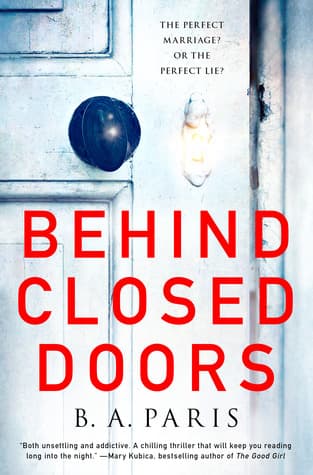
3.9 (1k) average on GoodreadsThrillerBoth books explore a woman trapped in a controlling relationship and create an atmosphere of dread. "Behind Closed Doors" often features a more immediate sense of physical danger alongside psychological torment, whereas Turner's work emphasizes the internal struggle, memory unraveling, and a more introspective path to reconciliation.
- Angels & Demons
Dan Brown
3.9 (2.7M) average on GoodreadsThrillerA Harvard symbologist races through Rome's ancient sites, deciphering cryptic clues to unmask the Illuminati and stop a vengeful plot to destroy the Vatican with a stolen antimatter weapon.
- The Girl on the Train
Paula Hawkins
3.9 (2.1M) average on GoodreadsThrillerA woman’s fascination with a seemingly perfect couple she watches from her daily train commute leads her into a dark investigation when she witnesses something that shatters their idyllic image.





Enjoyed the summary?
A summary gives you the shape of the book. The book itself has the detail, the examples and the voice.
Find A House Without Windows on AmazonAs an Amazon Associate, BookBrief earns from qualifying purchases. How we're funded