

Core Idea
- Difficulty
- Easy
- Read it if
- You want a highly accessible, engaging, and empathetic overview of world history for a general audience, especially younger readers, that focuses on storytelling rather than dry facts.
- Skip it if
- You are looking for an academic, deeply detailed, or critically analytical historical text with extensive footnotes and historiographical debate.
Key Takeaways from A Little History of the World
The Human Story Unfolds Chronologically
History is a continuous, interconnected narrative, not just a series of isolated events.
Gombrich shows history as a continuous flow, focusing on how human civilization developed in order. He shows how each period builds on the last, illustrating the cause-and-effect that drives societal change. This helps readers grasp the broad sweep of human experience, from early hunter-gatherers to the modern world, making different events fit into a clear, understandable journey. It offers a strong alternative to the often fragmented way history is taught, revealing the logic and progress of human efforts.
“All history is the history of man.”
In the book: The book's forty chapters are structured chronologically, starting with the Stone Age and progressing through ancient civilizations, the Middle Ages, the Renaissance, and up to the 20th century with the atomic bomb, each chapter naturally flowing into the next.
Try this: When learning about any historical event, always consider what came before it and what came after. Try to connect it to broader trends and developments rather than viewing it in isolation. Create personal timelines for specific topics to visualize the progression.
Related ideas: chronological-narrative, historical-continuity, human-progress
Empathy for the Past
Understanding historical figures requires stepping into their shoes and appreciating their context.
Gombrich encourages readers to understand people and societies from the past. He avoids judging them by today's standards, instead explaining why people acted as they did within the limits and beliefs of their time. This means acknowledging different moral ideas, scientific knowledge, and social norms without necessarily agreeing with them. By doing this, he helps readers gain a deeper, more nuanced appreciation for history's complexities and prevents simple dismissal of whole eras or cultures. It's about trying to understand, not just to criticize or praise.
“We must try to understand the people of the past, not judge them by our standards.”
In the book: Gombrich often explains the motivations behind seemingly 'primitive' or 'barbaric' practices in ancient cultures, such as human sacrifice or the rigid social hierarchies of the pharaohs, by contextualizing them within their belief systems and societal needs, rather than just stating them as facts.
Try this: When encountering a historical event or figure that seems morally questionable by today's standards, pause and research the prevailing beliefs, technologies, and social structures of that specific time. Ask: 'What would it have been like to live then?'
Related ideas: historical-empathy, contextual-understanding, anachronism
The Impermanence of Empires
No civilization, however mighty, lasts forever; rise and fall are constant historical rhythms.
A repeated idea in Gombrich's story is how power changes and how empires' glory is temporary. From the Egyptians and Persians to the Romans, Mongols, and later European colonial powers, he details their rise, times of power, and eventual fall or change. This constant shift is a strong reminder of how fragile human creations are and how change is certain. It gives a serious view of grand goals and shows that even the strongest civilizations are affected by time, internal conflicts, and outside pressures.
“Empires, like waves, rise and fall, one after another.”
In the book: The book explicitly charts the rise and fall of numerous empires: the Assyrians, Babylonians, Persians, Greeks (via Alexander's empire), Romans, the Carolingian Empire, the Mongol Empire, and later the Spanish, French, and British empires, showing how each eventually gave way to new powers or fragmented.
Try this: Recognize that current geopolitical structures are not permanent. Study the factors that led to the decline of past empires (e.g., overextension, internal corruption, environmental changes) to better understand potential vulnerabilities in contemporary societies.
Related ideas: decline-of-civilizations, imperial-cycles, transience-of-power
The Enduring Human Spirit
Despite conflict and catastrophe, humanity consistently demonstrates resilience and creativity.
Even with wars, conquests, and dark times, Gombrich consistently highlights the strength of the human spirit. He celebrates humanity's ability to innovate, create art, think philosophically, and constantly strive to rebuild and improve. From early human cave paintings to the grand cathedrals of the Middle Ages, the scientific discoveries of the Renaissance, and modern technological wonders, he shows how creativity and progress always reappear. This is not naive hope, but an observation of a basic human trait: the ability to overcome hardship and add to our shared heritage.
“Time and again, people have picked themselves up and started anew, building beautiful things.”
In the book: Gombrich details the flourishing of art and philosophy in Ancient Greece after periods of conflict, the intellectual revival during the Renaissance following the 'Dark Ages,' and the rapid advancements in science and technology even after devastating wars.
Try this: In times of personal or societal challenge, look to historical examples of resilience and creativity for inspiration. Understand that setbacks are often followed by periods of innovation and rebuilding. Support arts, sciences, and education as manifestations of this enduring spirit.
Related ideas: human-resilience, creativity-in-history, cultural-endurance
The Power of Ideas and Beliefs
Religious, philosophical, and scientific ideas are potent forces shaping societies.
Gombrich repeatedly shows how abstract ideas and belief systems often have more lasting power than military strength or political structures. He traces the deep impact of religions like Judaism, Christianity, and Islam, the philosophical ideas of ancient Greece, and the big changes brought by scientific thought. These intellectual and spiritual currents shaped lives, set laws, inspired art, caused conflicts, and guided civilizations. He argues that understanding these core ideas is essential to understanding what motivated people throughout history.
“What people believe can change the world more profoundly than any army.”
In the book: He explains how the spread of Christianity transformed the Roman Empire, how Islamic scholarship preserved and advanced knowledge during Europe's Middle Ages, and how the scientific method of figures like Galileo and Newton fundamentally altered humanity's understanding of the universe.
Try this: When analyzing current events, look beyond surface-level political or economic factors to identify the underlying ideologies, belief systems, and philosophical frameworks that are influencing decisions and societal trends. Engage with diverse intellectual traditions.
Related ideas: history-of-ideas, impact-of-religion, philosophical-influence, scientific-revolution
The Paradox of Progress
Advancement often comes with unforeseen consequences and new forms of conflict.
Gombrich does not present history as a straight path of unavoidable progress. While celebrating human achievements, he also notes the downsides of advancement. New technologies, political systems, or philosophical ideas, while solving old problems, often create new ones or worsen existing tensions. The development of stronger weapons, the difficulties of larger empires, or the conflicts from new beliefs constantly remind us that 'progress' often has two sides. This balanced view prevents a simple, overly positive story and encourages careful thought about the real costs and benefits of human development.
“Every step forward seems to bring new dangers.”
In the book: He discusses how the invention of gunpowder revolutionized warfare, leading to greater destruction; how the expansion of empires, while bringing order, also led to oppression and massive conflicts; and how the atomic bomb, a pinnacle of scientific achievement, introduced the existential threat of global annihilation.
Try this: Before embracing new technologies or societal changes, critically evaluate their potential negative consequences and ethical implications alongside their benefits. Advocate for thoughtful implementation and regulation to mitigate risks.
Related ideas: unintended-consequences, technological-dilemmas, moral-progress
The Role of Great Individuals
While broad forces shape history, pivotal figures can dramatically alter its course.
Gombrich balances the importance of 'great men' with broader social forces. While recognizing economic, environmental, and cultural trends, he also gives credit to individuals whose genius, ambition, or strong will greatly affected their times. Figures like Alexander the Great, Julius Caesar, Jesus, Muhammad, Charlemagne, Martin Luther, and Napoleon are shown not just as products of their era but as people who caused significant change. Their decisions, insights, and actions, good or bad, often changed the course of history, showing the strong interaction between individual actions and existing conditions.
“Sometimes, one man's will changes the fate of millions.”
In the book: He attributes the Hellenistic age to Alexander's conquests, the spread of Christianity to Jesus and his apostles, the unified Frankish kingdom to Charlemagne, and the Reformation to Martin Luther's challenge to the Church.
Try this: Recognize the potential for individual action to create change, even within larger systems. Study the leadership qualities and decision-making processes of influential historical figures to inform your own approach to challenges and opportunities.
Related ideas: great-man-theory, individual-agency, leadership-in-history
History as a Story, Not a List
Engaging narratives make history accessible and memorable, especially for younger minds.
Gombrich's skill is in turning what could be a dry list of dates and names into a compelling story. He uses a conversational, almost fireside-chat style, drawing the reader in with clear descriptions, relatable comparisons, and an engaging story arc. This storytelling approach is key to making complex historical periods and figures understandable and interesting, especially for his young audience. It shows that history is fundamentally about human drama, successes, and failures, and presenting it this way is the most effective way to teach lasting understanding and appreciation.
“I tried to tell a story, not just list a lot of dull facts.”
In the book: The entire book is written in a highly accessible, conversational style, often addressing the reader directly ('Now, imagine...', 'You will remember...'). He uses anecdotes and vivid imagery to explain complex events, such as describing the Roman Empire as a vast 'spider's web' of roads.
Try this: When explaining complex information, whether historical or otherwise, strive to frame it as a narrative. Identify the key characters, conflicts, and resolutions to make it more engaging and memorable for your audience.
Related ideas: historical-narrative, storytelling-in-education, accessible-history
The Interconnectedness of Cultures
No civilization develops in isolation; cross-cultural exchange is a constant driver of change.
Gombrich consistently shows how cultures and civilizations have always interacted. He highlights the constant movement of ideas, technologies, goods, and people across borders, often through trade, migration, or conquest. The Greeks learned from the Egyptians, the Romans from the Greeks, the Islamic world kept and advanced knowledge from both, which later influenced the European Renaissance. This shows that human progress is a group effort, built on previous societies, and that cultural exchange, even during conflict, drives innovation and development. It highlights our shared human heritage.
“People are always learning from each other, even when they are fighting.”
In the book: He discusses the influence of Egyptian mathematics and astronomy on the Greeks, the Roman adoption of Greek art and philosophy, the transmission of Indian numerals and paper-making technology via the Arab world to Europe, and the global exchanges spurred by the Age of Discovery.
Try this: Seek out diverse perspectives and learn about different cultures to broaden your understanding and foster innovation. Recognize that many 'original' ideas have roots in cross-cultural exchanges. Support international cooperation and cultural diplomacy.
Related ideas: cultural-exchange, global-interconnectedness, diffusion-of-ideas
History's Lessons for the Present
Understanding the past provides crucial insights for navigating contemporary challenges.
Though written for younger readers, Gombrich's 'Little History' resonates deeply because it quietly argues that the past is still important. By telling the story of humanity's repeated struggles with power, justice, conflict, and progress, he holds a mirror to our own times. The patterns of human behavior, the rise and fall of ideas, and the results of choices made by leaders and societies are not just in old books. They offer vital lessons for understanding today's political tensions, social movements, and ethical problems. The book strongly argues that knowing history is essential for being an informed citizen and making wise decisions now.
“To know what has happened is to understand what is happening now.”
In the book: Gombrich concludes his narrative with the advent of the atomic bomb, leaving the reader with a poignant reflection on humanity's capacity for both creation and destruction, implicitly urging reflection on the future. His constant emphasis on human nature and recurring themes (power, belief, conflict) serves as a continuous parallel to contemporary issues.
Try this: Actively draw parallels between historical events and current affairs. Use historical precedents to anticipate potential outcomes of present decisions. Advocate for robust historical education as a cornerstone of critical thinking and civic engagement.
Related ideas: historical-relevance, lessons-from-history, informed-citizenship
A Little History of the World Quotes
“But for us, there is no going back. We can only go forward. And we have learned something from the past: that the world is always changing, and that we must change with it.”
“And that is what history is: the story of how people lived in the past, and how they thought and felt, and what they did.”
“For it is always the same story, the story of people wanting to live in peace and happiness, and of others wanting to lord it over them.”
“We are still living in the world they made, and we are still struggling with the problems they left behind.”
“And so it went on, for thousands and thousands of years, with one discovery leading to another, and one invention making another possible.”
“What do we learn from all this? Only that people are always people, whether they wear animal skins or suits of armour, or modern clothes.”
“They had great ideas and did great things, but they also made terrible mistakes and caused much suffering.”
“And it is astonishing how many truly great people there have been in the world, in all ages and in all countries.”
“We must try to understand them, not to judge them, for they were like us, only living in a different time.”
“Every age has its own particular way of seeing the world, and its own particular problems.”
“For history is not just a collection of facts, but a story that helps us understand ourselves and the world we live in.”
“And the most important thing is that we should never stop asking questions.”
“The past is like a long dream, from which we can learn much, if we only listen carefully.”
“It is a wonderful thing to be human, and to be able to think and learn and create.”
Quiz
10 questions on the main ideas. Each answer comes with a short explanation.
Question 1
According to Gombrich, what was the primary reason for the 'Great Migration' of Germanic tribes into the Roman Empire?
- They were seeking better agricultural lands and trade opportunities.
- They were pushed westward by the Huns, a fierce nomadic people from Asia.
- They were invited by the Roman emperors to serve as mercenary soldiers.
- They desired to convert to Christianity and integrate into Roman society.
Show answer
B. They were pushed westward by the Huns, a fierce nomadic people from Asia. Gombrich explains that the Huns, a terrifying nomadic people, pushed the Germanic tribes from their homelands, forcing them to seek refuge within the Roman Empire's borders, leading to significant conflicts and the eventual fall of the Western Roman Empire.
Question 2
Which ancient civilization is credited by Gombrich with inventing the first known system of writing, cuneiform?
- Ancient Egypt
- Indus Valley Civilization
- Sumerians
- Ancient China
Show answer
C. Sumerians Gombrich details how the Sumerians, living in Mesopotamia, developed cuneiform writing, initially for keeping records of goods and transactions, marking a pivotal moment in human history.
Question 3
Gombrich frequently emphasizes the role of 'ideas' in shaping history. Which major idea, originating in India, spread significantly across Asia and advocated for an end to suffering through enlightenment?
- Confucianism
- Buddhism
- Hinduism
- Zoroastrianism
Show answer
B. Buddhism Gombrich describes the origins and spread of Buddhism, founded by Siddhartha Gautama, as a powerful idea that offered a path to peace and an escape from the cycle of suffering, influencing vast regions of Asia.
Question 4
What was the significance of the invention of the printing press by Johannes Gutenberg, as presented by Gombrich?
- It allowed for the rapid spread of religious texts, particularly the Bible, challenging the authority of the Church.
- It primarily led to the mass production of government decrees and legal documents.
- It made books cheaper and more accessible only to the wealthy elite, thus preserving knowledge.
- It was initially used for printing playing cards and artistic prints rather than books.
Show answer
A. It allowed for the rapid spread of religious texts, particularly the Bible, challenging the authority of the Church. Gombrich highlights the printing press as a revolutionary invention that democratized knowledge. By allowing books, especially the Bible, to be produced quickly and affordably, it significantly contributed to the Protestant Reformation and the spread of new ideas.
Question 5
Gombrich discusses the 'Age of Exploration.' Which explorer is famously credited with the first circumnavigation of the Earth, though he himself died during the voyage?
- Christopher Columbus
- Vasco da Gama
- Ferdinand Magellan
- James Cook
Show answer
C. Ferdinand Magellan Gombrich recounts Magellan's ambitious voyage, which, despite his death in the Philippines, ultimately proved that the Earth was round and opened up new understandings of global geography.
Question 6
What does Gombrich argue was a key long-term consequence of the Crusades for European society?
- They led to a permanent conquest of the Holy Land by European powers.
- They fostered a lasting alliance between European Christendom and the Islamic world.
- They stimulated trade, introduced new ideas and goods from the East, and weakened the feudal system.
- They resulted in the conversion of most of the Middle East to Christianity.
Show answer
C. They stimulated trade, introduced new ideas and goods from the East, and weakened the feudal system. Gombrich explains that while the Crusades failed in their ultimate military objective, they had profound unintended consequences for Europe, including increased contact with the sophisticated Islamic world, which brought new goods, knowledge, and spurred economic and social changes that contributed to the decline of feudalism.
Question 7
Gombrich describes the 'Enlightenment' as a period where thinkers emphasized which core values?
- Faith, tradition, and absolute monarchy.
- Reason, liberty, and individual rights.
- Mysticism, emotionalism, and feudal loyalty.
- Nationalism, imperialism, and military strength.
Show answer
B. Reason, liberty, and individual rights. Gombrich characterizes the Enlightenment as a movement that championed human reason as the primary source of authority and legitimacy, leading to radical ideas about individual freedom, rights, and the questioning of traditional power structures, heavily influencing subsequent revolutions.
Question 8
When discussing the rise of empires, Gombrich notes that the Roman Empire's longevity was partly due to its pragmatic approach to conquered peoples. What was a key aspect of this approach?
- They immediately enslaved all conquered populations.
- They offered citizenship and integration into the Roman system to many conquered peoples.
- They systematically destroyed all local cultures and religions.
- They allowed conquered territories complete autonomy and self-governance.
Show answer
B. They offered citizenship and integration into the Roman system to many conquered peoples. Gombrich emphasizes that unlike some empires, Rome often integrated conquered peoples into its vast system, sometimes offering citizenship or local administration, which fostered loyalty and contributed to the empire's stability and expansion.
Question 9
Gombrich concludes his 'Little History' with the atomic bomb. What is the overarching message or reflection he offers in bringing the narrative to this point?
- That humanity's progress in science inevitably leads to its self-destruction.
- That despite humanity's incredible achievements, its capacity for destruction remains a profound and unresolved challenge.
- That the atomic bomb marked the end of large-scale warfare and ushered in an era of peace.
- That technological advancements always lead to moral progress.
Show answer
B. That despite humanity's incredible achievements, its capacity for destruction remains a profound and unresolved challenge. Gombrich uses the atomic bomb as a powerful symbol of humanity's dual nature: its immense ingenuity and capacity for scientific advancement, juxtaposed with its persistent failure to overcome its destructive impulses, leaving the future uncertain but highlighting the ongoing human challenge.
Question 10
In his discussion of the Renaissance, Gombrich highlights a shift in artistic and intellectual focus. What was a primary characteristic of this shift?
- A renewed emphasis on abstract art and symbolism, rejecting classical forms.
- A return to the ideals and aesthetics of ancient Greece and Rome, with a focus on humanism.
- An exclusive focus on religious subjects, moving away from secular themes.
- The rejection of individual genius in favor of communal artistic efforts.
Show answer
B. A return to the ideals and aesthetics of ancient Greece and Rome, with a focus on humanism. Gombrich describes the Renaissance as a 'rebirth' of interest in the classical world, emphasizing human potential, rationality, and beauty, which manifested in art, literature, and philosophy, moving away from the purely theological focus of the Middle Ages.
A Little History of the World FAQ
What is 'A Little History of the World' about?
'A Little History of the World' by E.H. Gombrich provides a comprehensive yet concise narrative of human history, from the Stone Age to the atomic bomb. It focuses on the broad sweep of mankind's experience, highlighting achievements, frailties, and significant cultural and scientific developments rather than just dates and facts.
Who is the target audience for this book?
Originally written for younger readers, this book is accessible and engaging for a broad audience, including children and adults alike. Its clear, narrative style makes complex historical periods understandable for anyone interested in a general overview of world history.
Does 'A Little History of the World' cover all major historical events?
While it covers the full span of human history from the Stone Age to the atomic bomb, the book focuses on key developments, significant figures, and major trends rather than an exhaustive list of every event. It aims to provide an intelligible and engaging narrative of mankind's journey.
What makes Gombrich's approach to history unique?
Gombrich's unique approach prioritizes storytelling and understanding the human experience over rote memorization of dates and facts. He weaves a lively narrative that emphasizes the interconnectedness of events, the evolution of ideas, and the common threads of human nature across centuries.
How is 'A Little History of the World' different from other history books for children?
Unlike many children's history books that might simplify or compartmentalize events, Gombrich's work offers a continuous, flowing narrative that presents history as a connected story. It maintains intellectual rigor while remaining engaging and accessible, offering a more holistic and humane perspective.
Is 'A Little History of the World' suitable for adults?
Absolutely. While initially for younger readers, adults consistently praise the book for its clarity, engaging prose, and insightful overview of world history. It serves as an excellent refresher or an enjoyable first read for anyone seeking a broad understanding of human civilization.
What is the significance of the book being revised and translated by Gombrich himself?
The revision and English translation by Gombrich himself ensure that the final English edition truly reflects his original intent and mature reflections. This personal involvement makes the English version an authentic and definitive presentation of his lifelong work and perspective.
Does the book contain illustrations or maps?
Yes, the English translation of 'A Little History of the World' is superbly designed and freshly illustrated. These visual elements complement Gombrich's engaging text, helping readers visualize the historical periods and concepts discussed throughout the forty concise chapters.
What historical period does the book conclude with?
The book concludes with the era of the atomic bomb, bringing the narrative up to a significant point in the 20th century. This allows Gombrich to cover the vast span of human history from its earliest beginnings to the modern age.
About the author

E.H. Gombrich was an art historian and writer known for his contributions to the understanding of art and culture. His notable works include "The Story of Art," a comprehensive overview of Western art history, and "A Little History of the World," which presents a narrative of world history for a general audience. Gombrich's writings have been influential in both academic and popular contexts.
Similar books
- Sapiens: A Brief History of Humankind
Yuval Noah Harari
4.4 (502k) average on GoodreadsPsychologyOffers a broad, accessible narrative of human history, though with a more thematic and analytical approach.
- A Short History of Nearly Everything
Bill Bryson
4.2 (298k) average on GoodreadsHistoryExplores complex topics (science, history) in an engaging, narrative-driven, and accessible style for a general audience.
- A People's History of the United States
Howard Zinn
4.1 (192k) average on GoodreadsPoliticsZinn's A People's History radically diverges from Gombrich's approach, even though both aim to tell a compelling historical narrative. Zinn explicitly focuses on history 'from the bottom up,' emphasizing the experiences of marginalized groups, workers, women, and ethnic minorities, and challenging official narratives of power. Gombrich, while humanistic, generally presents a more traditional, overarching chronological account, often through the lens of prominent figures and empires. Zinn's work is overtly critical and politically charged, seeking to expose injustices and provide an alternative perspective to mainstream history. Gombrich, conversely, aims for a more neutral, empathetic, and unifying narrative that introduces readers to the grand sweep of human events without a specific political agenda, making it suitable for a much younger and broader audience.
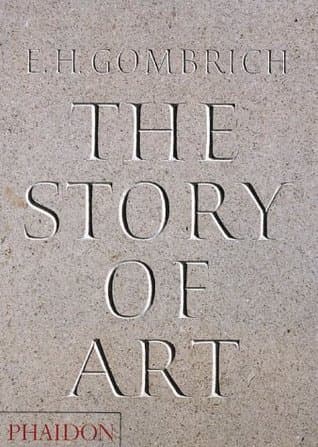
- The Story of Art
E.H. Gombrich
3.9 (311k) average on GoodreadsReferenceExplore thousands of years of human creativity, from ancient cave art to modern masterpieces, with Gombrich's classic account, updated with new insights into art's changing story.
- The New Drawing on the Right Side of the Brain
Betty Edwards
3.9 (297k) average on GoodreadsPsychologyLearn to draw by using the often-ignored visual side of your brain, changing how you see the world.
- Go Ask Alice
Anonymous
3.7 (293k) average on GoodreadsReferenceA teenage girl's diary chronicles her swift decline into 1970s drug culture, from an innocent game to addiction, ending in her tragic death.




Enjoyed the summary?
A summary gives you the shape of the book. The book itself has the detail, the examples and the voice.
Find A Little History of the World on AmazonAs an Amazon Associate, BookBrief earns from qualifying purchases. How we're funded