

Core Idea
- Difficulty
- Medium
- Read it if
- You are interested in a critical, bottom-up perspective on American history that challenges conventional narratives and emphasizes the experiences of the oppressed and the role of class struggle, resistance, and social movements. You want to understand the historical roots of modern inequality and social justice issues.
- Skip it if
- You prefer a traditional, top-down account of American history focusing on great leaders, national unity, and a more celebratory view of American exceptionalism. You are not open to a highly critical examination of U.S. government actions and policies throughout history, or you find a strong Marxist-influenced interpretation of history unappealing.
Key Takeaways from A People's History of the United States
History from Below
Challenging the 'official' narrative by focusing on the marginalized.
Zinn changes how we view history, claiming that common historical accounts, often written by or for those in power, leave out or twist the experiences of the oppressed. Instead of praising presidents and generals, Zinn rebuilds American history through the eyes of Native Americans, enslaved Africans, indentured servants, factory workers, women, and anti-war activists. This 'history from below' shows a continuous fight against unfairness, proving that progress was rarely a gift from elites but a victory won through constant grassroots resistance. It is a strong reminder that a nation's story depends on whose experiences are told and whose are ignored, and that a full understanding requires recognizing the experiences of all its people.
“There is an underside to every age, and to ignore it is to ignore the truth of that age.”
In the book: Zinn's opening chapters dramatically reframe Columbus's 'discovery' as an invasion, detailing the genocide of the Arawak people through the journals of Columbus himself and Bartolomé de las Casas, contrasting sharply with traditional heroic portrayals.
Try this: When evaluating any historical event or contemporary issue, actively seek out the perspectives of those most affected but least represented in dominant narratives. Question who benefits from the prevailing story and whose suffering is overlooked.
Related ideas: counter-history, subaltern-studies, historical-revisionism
Class Struggle as a Core Driver
American history is defined by persistent conflict between economic classes.
Zinn argues that the United States has always been a place of class conflict, not a unified nation. He shows how the ruling elite—whether early colonial landowners, slave owners, or industrial capitalists—used government power, laws, and even cultural stories to keep their economic control and suppress working-class movements. This struggle appears in everything from early slave revolts and tenant uprisings to the violent stopping of labor strikes and the weakening of reform movements. Zinn argues that this basic economic division is a more accurate way to understand American social and political changes than national unity or patriotism, showing a constant pattern of exploitation and resistance.
“The history of any country, presented as the history of a family, conceals fierce conflicts of interest (sometimes exploding, most often repressed) between conquerors and conquered, masters and slaves, capitalists and workers, dominators and dominated in race and sex.”
In the book: Zinn meticulously details the Pullman Strike of 1894, showing how the federal government, led by President Grover Cleveland, deployed troops to break the strike, prioritizing corporate interests over the rights of workers and demonstrating the state's role in class warfare.
Try this: Analyze current political and economic policies through the lens of class interest: who benefits most, and who bears the greatest burden? Support policies and movements that advocate for economic justice and worker empowerment.
Related ideas: marxist-history, labor-history, economic-inequality
War as a Tool of Elite Control
Wars often serve to divert dissent and expand elite power, not necessarily national interest.
Zinn examines America's involvement in various wars, from the Revolutionary War to Vietnam, claiming they were often started or continued not for noble reasons, but to serve the economic and political interests of the ruling class. Wars, he argues, help unite a divided population against an outside enemy, thus stopping internal class conflicts and disagreement. They also open new markets, secure resources, and expand power, often at a great cost of working-class lives and freedoms. This view challenges the usual heroic stories of war, showing the real reasons and the greater suffering of the poor and marginalized.
“War is the health of the state. It consolidates power, diverts attention from internal problems, and creates a sense of national unity against an external enemy.”
In the book: Zinn highlights the Spanish-American War, arguing that it was driven by American business interests seeking new markets and resources, fueled by sensationalist press, rather than a genuine concern for Cuban liberation. He details the subsequent brutal Philippine-American War and the atrocities committed in the name of 'liberation.'
Try this: Approach declarations of war or military interventions with skepticism, critically examining the stated justifications against potential economic or political motives of powerful interests. Advocate for peaceful conflict resolution and robust anti-war movements.
Related ideas: anti-imperialism, military-industrial-complex, war-profiteering
The Illusion of Consensus
National unity often masks deep divisions and the suppression of dissent.
Zinn exposes the idea of a unified American national interest, arguing that those in power often use this idea to silence opposition and gain support for policies that mainly benefit themselves. He shows how historical moments presented as times of national agreement—like the early republic, the Gilded Age, or the Cold War—were actually marked by fierce internal struggles, dissent, and harsh repression of those who challenged the status quo. The 'agreement' was often created through propaganda, fear, and the pushing aside of alternative voices, making it seem like there was a shared purpose while real conflicts of interest remained. This challenges the romanticized view of American history as a steady move toward unity.
“The cry of 'national interest' is often a device to create a consensus when none exists, and to make people believe that they have a common interest when their interests are in fact opposed.”
In the book: Zinn recounts the intense opposition to World War I, including widespread socialist and labor resistance, and the subsequent government crackdown through the Espionage and Sedition Acts, demonstrating how 'national interest' was used to crush dissent.
Try this: Be wary of appeals to 'national unity' or 'common interest' that shut down debate or demonize dissent. Actively seek out and amplify marginalized voices and alternative perspectives in public discourse.
Related ideas: propaganda, manufactured-consent, political-repression
Resistance is Constant
Despite oppression, people consistently fight for freedom and justice.
A main idea in Zinn's work is the constant, often heroic, struggle of ordinary people against different types of oppression. From slave revolts and Native American resistance to labor strikes, women's suffrage movements, and civil rights activism, Zinn details a continuous tradition of defiance. He shows that even against great power, violence, and unfair systems, individuals and groups have consistently found ways to resist, organize, and demand their rights. This story of sustained resistance provides a strong contrast to a history often dominated by the actions of powerful elites, highlighting the agency and strength of those who have been exploited and marginalized throughout American history. It is a hopeful message, stressing the lasting human spirit of rebellion against tyranny.
“The very act of writing history from the perspective of the exploited is an act of resistance.”
In the book: Zinn dedicates significant space to details of runaway slave communities (maroons), the Nat Turner rebellion, and the underground railroad, illustrating the active, often violent, resistance of enslaved people against their bondage, challenging passive victim narratives.
Try this: Recognize and support contemporary social movements and acts of resistance against injustice. Understand that social change is often the result of sustained pressure from below, not just top-down reforms.
Related ideas: social-movements, civil-disobedience, grassroots-activism
The Hypocrisy of American Ideals
The gap between stated ideals and actual practices is a recurring feature of U.S. history.
Zinn shows the deep differences between America's stated ideals of liberty, equality, and democracy and its actual history. He argues that the nation began with the contradiction of slavery, was built on stolen land, and kept going by exploiting its own working class. The Declaration of Independence, promising 'life, liberty, and the pursuit of happiness,' existed alongside genocide and slavery. The Constitution, a document of freedom, prioritized property rights over human rights for many people. This constant gap between words and reality, Zinn suggests, is not just a series of unfortunate events but a core tension that has shaped American history, driving both oppression and the movements for justice that try to fulfill those broken promises.
“From the very beginning, a certain hypocrisy was woven into the fabric of the nation.”
In the book: Zinn contrasts the rhetoric of the American Revolution, emphasizing freedom and natural rights, with the continued enslavement of Africans and the violent displacement of Native Americans, demonstrating the selective application of these ideals from the nation's inception.
Try this: Critically examine contemporary political rhetoric and policies, comparing them against their actual impact on marginalized communities. Demand accountability when actions diverge from stated values.
Related ideas: american-exceptionalism, post-colonialism, critical-race-theory
The Role of the Intellectual and Historian
Historians have a moral obligation to challenge power and advocate for justice.
Zinn clearly rejects the idea of objective, detached historical study. He argues that all history is biased, and so, historians have a moral duty to choose a side: the side of the oppressed. For Zinn, history is not just about recording facts but about inspiring action and helping social change. He sees the historian's role as uncovering forgotten struggles, exposing injustices, and providing a useful past for those fighting for a fairer future. This view turns history from an academic exercise into a tool for political involvement, urging readers to actively shape a better world rather than passively observe the past. His own work shows this involved and activist approach to history.
“To be neutral in a situation of injustice is to have chosen the side of the oppressor.”
In the book: Zinn's decision to write 'A People's History' itself is the primary evidence. He explicitly states his intent to provide a counter-narrative to traditional histories, which he views as serving the interests of the powerful, making his own bias clear and purposeful.
Try this: Engage with history and current events not just as a consumer of information, but as a critical thinker and potential agent of change. Support educational approaches that encourage critical thinking and social responsibility.
Related ideas: public-history, activist-scholarship, engaged-pedagogy
Race and Class Intertwined
Racial division is often used to prevent class solidarity.
Zinn shows how racial prejudice and discrimination have been used throughout American history not just as goals in themselves, but as tools to stop different racial groups from forming a common front. By creating divisions between white workers and Black, Indigenous, or immigrant laborers, elites could control a divided working class, preventing unified movements for economic justice. He shows how early colonial authorities created racial hierarchies, how slavery was justified and maintained through racist ideas, and how later waves of immigration faced nativism and racial scapegoating. This analysis reveals that racism is not just an individual fault but a structural mechanism vital to keeping power and economic inequality in the United States.
“Racism is not a natural phenomenon, but a social construction used to divide and conquer.”
In the book: Zinn details how Bacon's Rebellion (1676), which saw poor whites and enslaved Africans unite, terrified the Virginia elite, leading to the deliberate creation of more stringent racial laws to prevent future cross-racial alliances among the laboring poor.
Try this: Actively challenge racial stereotypes and divisions in your community and workplace. Advocate for policies that address both racial and economic injustice, understanding their interconnectedness.
Related ideas: intersectionality, systemic-racism, divide-and-conquer
The Limits of Reform
Significant change often requires sustained pressure beyond mere legislative fixes.
Zinn critically looks at various reform movements and legislative changes throughout American history, often showing their limits and how they often failed to address basic injustices. He argues that while reforms can offer small improvements, they are often concessions given under pressure from popular movements, rather than real shifts in elite power. Furthermore, Zinn shows how reforms can sometimes be taken over, watered down, or even used to calm dissent, thus stopping more radical, systemic change. True progress, he suggests, is rarely a smooth, legislative process but a continuous struggle requiring sustained grassroots activism, direct action, and a willingness to challenge the structures of power, not just their symptoms. This message urges alertness and continued activism, even after apparent wins.
“Real change comes not from the top down, but from the bottom up.”
In the book: Zinn analyzes the New Deal, acknowledging its benefits but also critiquing its exclusions (e.g., agricultural and domestic workers, largely Black, were often left out of key protections) and its ultimate failure to fundamentally alter the capitalist structure or address deep racial inequalities.
Try this: Support and participate in grassroots movements that push for transformative change, rather than relying solely on electoral politics or top-down reforms. Be critical of reforms that appear to solve problems without addressing root causes.
Related ideas: radical-change, social-justice, structural-inequality
The Power of Ordinary People
History is made by countless acts of courage from everyday individuals.
Zinn's most important message is empowering: history is not just the story of great men, but the collective story of ordinary people who, through their courage, sacrifice, and unity, have shaped events. He fills his narrative with many examples of individuals—anonymous factory workers, enslaved field hands, suffragettes, anti-war protesters—who risked everything to fight for a better world. By focusing on these often-forgotten heroes, Zinn inspires readers to see their own potential for action and impact. He argues that understanding this 'people's history' is important because it shows that power ultimately rests not just with those at the top, but with the collective action of many. It is a call to action, reminding us that we are not helpless observers but active participants in the ongoing fight for justice.
“If history is to be useful to us, it must be retold in such a way as to show the possibilities for human liberation.”
In the book: Throughout the book, Zinn highlights lesser-known individuals and collective actions, like the women of the Lowell mills striking, the Bonus Army marchers, or the Freedom Riders, emphasizing their collective impact over individual 'great leaders'.
Try this: Recognize your own power and the power of collective action to effect change. Seek out and support community organizing efforts and participate actively in democratic processes and social movements.
Related ideas: collective-action, agency, popular-sovereignty
A People's History of the United States Quotes
“There is no such thing as a pure fact, innocent of interpretation. Behind every fact presented to the world is a decision.”
“The memory of the state is the memory of its rulers.”
“The cry for 'unity' behind the flag, behind the President, for 'national security' and 'national interest' is a cry for silence from the people.”
“If a nation is to be wise and if it is to prosper, it must produce more than it consumes. It must produce justice.”
“The problem is not civil disobedience. The problem is civil obedience.”
“What is important is not the history of the United States, but the history of the people of the United States.”
“War is the health of the state.”
“History is not a parade of heroes or villains, but a complex interplay of forces, movements, and individuals.”
“The greatest danger is not that we will fail, but that we will succeed in doing the wrong things.”
“To be neutral in a situation of injustice is to have chosen the side of the oppressor.”
“The cry for 'law and order' has been used again and again, in the past and in our time, to justify the suppression of human rights.”
“The future is not a gift. It is an achievement.”
“History is powerful. It can be used to justify the present. It can be used to inspire action for change.”
“The government is not us. The government is an instrument of power, and it can be used for good or for ill.”
Quiz
10 questions on the main ideas. Each answer comes with a short explanation.
Question 1
According to Zinn, what was the primary motivation behind Christopher Columbus's voyages to the Americas, as opposed to the commonly taught narrative of exploration?
- To establish peaceful trade routes with indigenous populations.
- To prove the Earth was round and expand geographical knowledge.
- To acquire gold and other riches, often through violence and exploitation.
- To spread Christianity and convert native peoples.
Show answer
C. To acquire gold and other riches, often through violence and exploitation. Zinn heavily emphasizes that Columbus's primary drive, as evidenced by his own writings and actions, was the pursuit of wealth, particularly gold, leading directly to the brutal subjugation of the Arawak people.
Question 2
Zinn argues that the American Revolution, while presented as a unified struggle for liberty, also served to consolidate power for which specific group?
- Enslaved Africans seeking freedom.
- Poor farmers and urban laborers.
- Native American tribes defending their lands.
- The wealthy elite and founding fathers.
Show answer
D. The wealthy elite and founding fathers. Zinn contends that the Revolution, while inspiring, was also a strategic move by the colonial elite to secure their own economic interests and maintain control over the lower classes, deflecting internal class conflict towards an external enemy (Britain).
Question 3
Which of the following best encapsulates Zinn's perspective on the U.S. Constitution?
- A perfect document that enshrined universal rights for all citizens.
- A compromise that balanced the interests of all social classes equally.
- A document designed primarily to protect the property and power of the wealthy, while offering some concessions to the general population.
- A revolutionary text that entirely dismantled existing hierarchies.
Show answer
C. A document designed primarily to protect the property and power of the wealthy, while offering some concessions to the general population. Zinn meticulously details how the Constitution, while containing elements of liberty, was fundamentally shaped to protect the economic interests of the propertied class and control potential rebellions from below, such as Shays' Rebellion.
Question 4
Zinn frequently highlights the role of which group in challenging established power structures throughout American history?
- Political parties.
- Mainstream media organizations.
- Grassroots movements, labor unions, and marginalized communities.
- International corporations.
Show answer
C. Grassroots movements, labor unions, and marginalized communities. A core theme of Zinn's work is the 'people's history,' focusing on how ordinary citizens, often from oppressed groups, organized and fought for change from the bottom up, rather than relying on top-down reforms.
Question 5
How does Zinn generally portray U.S. involvement in major wars, such as the Spanish-American War or World War I?
- As purely defensive actions to protect American sovereignty.
- As altruistic efforts to spread democracy and freedom globally.
- As driven by economic expansion, imperialistic ambitions, and the interests of powerful elites.
- As unavoidable conflicts forced upon a reluctant nation.
Show answer
C. As driven by economic expansion, imperialistic ambitions, and the interests of powerful elites. Zinn consistently argues that U.S. wars, despite official rhetoric, were often instigated or prolonged by the desire for economic gain, access to resources, and the expansion of American power abroad, benefiting specific corporate and political interests.
Question 6
Zinn critiques the traditional historical narrative for its tendency to omit or downplay the experiences of which specific group when discussing the early American labor movement?
- Factory owners and industrialists.
- Government regulators and politicians.
- Women, immigrants, and African Americans who were often at the forefront of strikes and organizing.
- Skilled craftsmen and artisans.
Show answer
C. Women, immigrants, and African Americans who were often at the forefront of strikes and organizing. Zinn makes a point of highlighting how the struggles of marginalized workers—women in textile mills, Chinese railroad workers, Black sharecroppers—were central to the labor movement but often ignored in favor of narratives focusing on white male union leaders.
Question 7
What is Zinn's central argument regarding the concept of 'American exceptionalism'?
- That America is uniquely destined for global leadership due to its democratic ideals.
- That America's history is fundamentally different and morally superior to other nations.
- That 'American exceptionalism' is a myth used to obscure acts of injustice, exploitation, and imperialism.
- That America's unique geography has led to its distinct historical path.
Show answer
C. That 'American exceptionalism' is a myth used to obscure acts of injustice, exploitation, and imperialism. Zinn directly challenges the notion of American exceptionalism, arguing that it serves as a justification for injustices and a way to avoid critical self-reflection on the nation's often violent and exploitative history.
Question 8
In his discussion of the Civil Rights Movement, Zinn emphasizes that progress was primarily achieved through:
- Legislative action initiated by sympathetic politicians in Washington D.C.
- The unanimous support of federal courts and judges.
- Persistent direct action, civil disobedience, and grassroots organizing by African Americans and their allies.
- Economic boycotts organized by powerful corporations.
Show answer
C. Persistent direct action, civil disobedience, and grassroots organizing by African Americans and their allies. Zinn consistently highlights the agency of the oppressed. For the Civil Rights Movement, he stresses that changes came about through the courageous and sustained efforts of activists on the ground, forcing the hand of federal institutions.
Question 9
Zinn extensively details the suppression of dissent throughout U.S. history. Which of the following is NOT an example he frequently cites?
- The government's response to labor strikes, often involving military force.
- The Palmer Raids against suspected radicals after World War I.
- The McCarthy era's blacklisting and persecution of alleged communists.
- Widespread public celebrations of free speech during times of national crisis.
Show answer
D. Widespread public celebrations of free speech during times of national crisis. Zinn argues the opposite; he details how free speech and dissent are often curtailed, not celebrated, during national crises, using examples like the Espionage and Sedition Acts during WWI.
Question 10
Applying Zinn's framework, how might one analyze a contemporary social movement like 'Occupy Wall Street' or 'Black Lives Matter'?
- As isolated incidents with no historical precedent in American society.
- As evidence of America's perfect democratic process allowing all voices to be heard equally.
- As manifestations of ongoing class struggle and racial injustice, driven by ordinary people challenging entrenched power.
- As movements primarily orchestrated by foreign adversaries to destabilize the nation.
Show answer
C. As manifestations of ongoing class struggle and racial injustice, driven by ordinary people challenging entrenched power. Zinn's entire approach emphasizes understanding history from the perspective of the marginalized and recognizing continuous struggles against inequality. These movements fit perfectly into his analysis of people challenging power structures.
A People's History of the United States FAQ
What is the main premise of A People's History of the United States?
Howard Zinn's A People's History of the United States re-examines American history from the perspective of marginalized groups, including Native Americans, slaves, laborers, and women, rather than focusing on the traditional narratives of leaders and conquerors. It aims to reveal the struggles, resistance, and often-overlooked experiences of those at the bottom of society.
Does A People's History of the United States offer a balanced view of American history?
Zinn intentionally presents a counter-narrative to traditional histories, highlighting injustices and the perspectives of the oppressed. While not claiming to be 'objective' in the conventional sense, its purpose is to provide a necessary corrective to what Zinn saw as an imbalanced historical record, offering a different kind of balance by focusing on previously omitted voices.
What is Zinn's concept of 'history from below'?
History from below, as practiced by Zinn, involves telling history through the experiences and struggles of ordinary people, especially those who have been exploited or disenfranchised. It shifts the focus away from the actions of elites, governments, and military leaders to emphasize popular movements, resistance, and the social conditions of the masses.
How is A People's History different from standard American history textbooks?
Unlike many standard textbooks that often present a more celebratory or top-down view of American history, Zinn's work critically analyzes power structures, conflicts, and the persistent struggles for equality. It frequently challenges national myths and emphasizes class conflict, racial injustice, and imperialistic tendencies, offering a stark contrast in interpretation and focus.
Does A People's History of the United States work as a primary textbook for students?
While it can be a valuable supplementary text for students, providing a crucial alternative perspective, many educators suggest pairing it with more traditional histories to offer a comprehensive understanding of historical events. Its critical approach makes it an excellent tool for fostering historical inquiry and critical thinking.
What impact has A People's History had on American education?
The book has significantly influenced how American history is taught, encouraging educators to incorporate diverse perspectives and challenge conventional narratives. It has inspired critical thinking about historical sources and power dynamics, leading to a broader and more inclusive approach to historical studies in many classrooms and universities.
Where can I find examples of the book's influence in popular culture?
A People's History has been referenced and featured in numerous popular media, including scenes in films like 'Good Will Hunting,' episodes of TV shows such as 'The Sopranos' and 'The Simpsons,' and the documentary 'The People Speak.' These appearances highlight its enduring relevance and widespread cultural impact beyond academic circles.
Is A People's History of the United States still relevant today?
Yes, the book remains highly relevant as it addresses ongoing themes of social justice, inequality, power dynamics, and the importance of challenging dominant narratives. Its insights into historical struggles continue to resonate with contemporary issues and movements for change, making it a powerful resource for understanding current events.
About the author
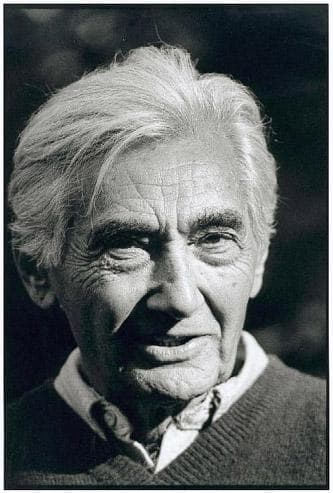
Howard Zinn was an American historian, playwright, and social activist, best known for his work "A People's History of the United States." This influential book presents an alternative perspective on American history, focusing on the experiences of marginalized groups. Zinn's writings primarily explore themes of social justice and civil rights.
Similar books
- 1984
George Orwell
4.2 (3.1M) average on GoodreadsPoliticsIn a future where surveillance and thought control are absolute, a man's search for truth clashes with the Party, showing that hope can be a form of rebellion.
- Animal Farm
George Orwell
4.0 (2.7M) average on GoodreadsPoliticsA farm animals' rebellion against humans turns into a pig-led dictatorship, showing how power corrupts and revolutionary ideals are betrayed.
- Freakonomics: A Rogue Economist Explores the Hidden Side of Everything
Steven D. Levitt
4.0 (709k) average on GoodreadsBusinessThis book uses economic principles to reveal the surprising incentives behind everything from drug dealing and real estate to cheating teachers and the decline of crime.
- I Am Malala: The Story of the Girl Who Stood Up for Education and Was Shot by the Taliban
Malala Yousafzai
4.1 (419k) average on GoodreadsPoliticsA teenage girl from a Taliban-controlled valley refuses to give up her books, becoming a global voice for education even after an assassination attempt.
- Atlas Shrugged
Ayn Rand
3.7 (354k) average on GoodreadsPoliticsIn a dystopian America where innovators vanish, a brilliant heiress races to uncover the truth behind the disappearing industrialists and the enigmatic John Galt, who vows to stop the world's progress.
- The Art of War
Sun Tzu
4.0 (330k) average on GoodreadsBusinessLearn ancient strategies for outsmarting rivals, whether on the battlefield or in the boardroom.






Enjoyed the summary?
A summary gives you the shape of the book. The book itself has the detail, the examples and the voice.
Find A People's History of the United States on AmazonAs an Amazon Associate, BookBrief earns from qualifying purchases. How we're funded